
Can a single dish capture the soul of a thousand-year-old heritage while simultaneously conquering the modern digital world with a single, molten cheese pull? While many are drawn to the vibrant energy of historic Bussorah Street by the scent of our Mixed Grill, it’s the kunefe that often leaves the most lasting impression on the palate. You might feel a bit lost between the different spellings like knafeh or kanafa, or perhaps you’re unsure which specific cheese creates that divine, stretchy texture that has defined Middle Eastern hospitality since 2009 at Beirut Grill.
It’s natural to crave a deeper understanding of a dessert that has become a global sensation, especially as the Middle East chocolate and sweets market is projected to reach USD 3.94 billion by 2031. We promise to reveal the secrets behind this beloved masterpiece, from its ancient origins to the precise balance of temperature and texture. You’ll learn how to distinguish between regional styles and discover why our $20.00 flavoured version is considered a masterclass in culinary tradition. This guide offers a preview into the cultural significance and sensory details that make this hidden gem a truly divine dining experience.
Key Takeaways
- Identify the hallmark characteristics of a sensory masterpiece, where salty, stretchy cheese meets a honeyed, golden crust.
- Differentiate between traditional pastry textures like fine Kadayif threads and smooth semolina Farah to ensure you’re enjoying an authentic version.
- Explore regional variations that define the Middle East, from Turkish standalone plates to the unique Lebanese tradition of the decadent dessert sandwich.
- Learn the precise ritual of the ‘flip’ and why the temperature of the syrup is the most critical factor in achieving a perfect crunch.
- Uncover the secret techniques used at Beirut Grill on historic Bussorah Street since 2009 to craft a truly authentic kunefe using premium imported cheeses.
What is Kunefe? The Sensory Masterpiece of Middle Eastern Dessert
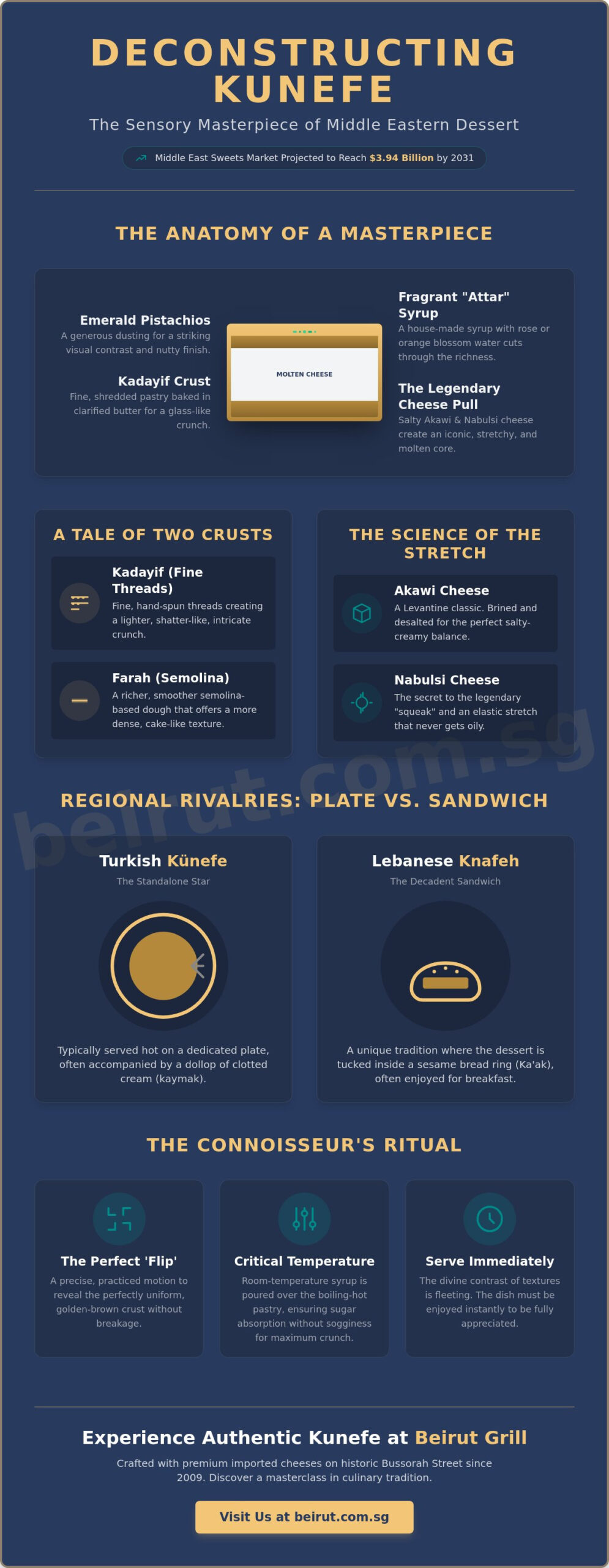
Imagine sitting on historic Bussorah Street, the majestic Sultan Mosque standing tall in the distance. Before you arrives a sizzling plate of kunefe, its vibrant orange-gold crust glowing under the warm evening lights. This isn’t just a dessert; it’s a sensory masterpiece that balances the sharp saltiness of molten cheese with a delicate, honeyed crunch. To truly understand What is Knafeh, one must look past the simple ingredients and see it as a union of heritage and indulgence. The visual allure is completed by a generous dusting of emerald-green pistachios, creating a striking contrast against the warm, buttery pastry.
The true magic happens with the first forkful. The iconic cheese pull is a legendary sight on social media in 2023, yet it remains the ultimate indicator of freshness. This molten stretch signifies that the dish has been prepared with the precision it deserves. Binding these elements together is the “Attar,” a house-made syrup infused with rose or orange blossom water. This floral soul provides a fragrant lift that cuts through the richness of the cheese and butter, transporting the guest to the bustling markets of the Levant.
The Contrast of Textures: Crunch Meets Cream
The foundation of this experience lies in the “Kadayif,” a shredded pastry that’s spun into fine, delicate threads. When baked with clarified butter, it achieves a glass-like crispness that shatters upon the first bite. The secret to its structural integrity is the hot-cold contrast. We pour room-temperature syrup over the boiling, fresh-from-the-oven pastry, ensuring the sugar absorbs without making the crust soggy. Because this balance is so delicate, the dish must be served immediately to preserve its divine texture.
A Cultural Icon: From Royal Courts to Modern Tables
Tracing its lineage back to the 15th-century Levant, this dessert was once a luxury reserved for royal courts and festive celebrations. In Lebanese culture, it serves as a powerful symbol of hospitality, often marking the conclusion of a grand feast or a joyous family gathering. While it has roots deep in history, kunefe has transformed into a global sensation. In 2023, viral digital storytelling helped propel Middle Eastern sweets into the global spotlight, making it a must-try for culinary explorers visiting our boutique space. Since 2009, Beirut Grill has honored these ancient techniques, ensuring every guest experiences the same pride and indulgence that has defined this dish for centuries.
The Anatomy of Authenticity: Ingredients that Define the Dish
Authenticity isn’t just a buzzword at Beirut Grill; it’s a commitment to the specific raw materials that have crossed borders for centuries. While the sensory experience described previously sets the stage, the true soul of kunefe lies in its anatomy. Achieving that perfect, award-winning balance requires more than just heat. It demands a curated selection of ingredients that honor the Levant. From the choice of fat to the specific floral essences, every element is a deliberate nod to our heritage on historic Bussorah Street.
The foundation begins with the choice of crust. Connoisseurs distinguish between “Kadayif,” the fine, hand-spun threads that resemble golden vermicelli, and “Farah,” a richer, smoother semolina-based dough. While both provide a satisfying crunch, the Kadayif offers a lighter, more intricate texture that shatters beautifully under the fork. Binding these threads is “Smen,” or clarified butter. This isn’t your standard grocery store butter. It’s a pure, golden fat with a high smoke point that allows the pastry to fry to a deep, nutty brown without burning. This specific fat is the secret behind the mouth-watering aroma that has defined our kitchen since 2009.
The Science of the Stretch: Selecting the Right Cheese
Most digital recipes lazily suggest using “any melting cheese,” but an authentic Lebanese experience requires the salt-kissed profile of Akawi. This Levantine cheese is traditionally soaked in brine and must undergo a meticulous desalting process to reach the perfect flavor profile. For that legendary “squeak” and elastic stretch, we often look to Nabulsi cheese. This regional specialty is celebrated in literary circles, as seen in Knafeh and a Vision of the World Without Borders, for its ability to melt into a molten pool of creaminess without ever becoming oily or heavy.
Floral Aromatics: The Role of Rose and Orange Blossom
The finishing touch is the “Attar,” a fragrant syrup that serves as the dish’s binding force. It’s a delicate reduction of sugar and lemon, but the true sophistication comes from the infusion of rose water or orange blossom water. In Lebanese pastry, rose water provides a deep, romantic top note, while orange blossom offers a bright, citrusy finish. These essences cut through the rich butter and cheese, ensuring each bite remains refreshing. Attar is the fragrant syrup that binds the dish’s elements into a singular, harmonious experience. Those who appreciate these delicate floral aromatics in Lebanese desserts may also find the same fragrant elegance in mouhalabieh, the sophisticated Lebanese milk pudding that shares this ancient tradition of rose and orange blossom infusion.
Finally, no plate is complete without a vibrant garnish of emerald-green pistachios. We insist on high-quality Iranian or Turkish varieties for their superior oil content and crunch. If you’re ready to experience this level of craftsmanship, we invite you to book a table at Beirut Grill and taste the difference that authentic ingredients make in every bite.
Regional Rivalries: Lebanese Kunafa vs. Turkish Künefe
The debate over the perfect kunefe is more than a culinary preference; it’s a matter of deep regional pride that spans the Levant and Anatolia. While our guests at Beirut Grill often seek the classic Lebanese experience, it’s essential to recognize the distinct identities that have emerged from Nablus in Palestine and Hatay in Turkey. These two cities claim the throne of this dessert’s heritage, each offering a unique interpretation of the history of kunefe. In Lebanon, the preference often leans toward “Knafeh Na’ameh,” a version characterized by a smooth, fine semolina crust that creates a velvety mouthfeel. Contrast this with the Turkish style, which celebrates the intricate, bird’s-nest texture of shredded kadayif.
Syrup profiles also act as a cultural signature. Lebanese variations typically embrace a bold floral identity, where the “Attar” syrup is heavily perfumed with orange blossom and rose water. This creates a botanical elegance that lingers on the palate. In contrast, Turkish versions often prioritize a simpler sugar syrup, allowing the nutty notes of the clarified butter and the richness of the cheese to take center stage. Since 2009, we’ve curated an experience that honors these nuances, ensuring our guests understand the sophisticated layers of tradition within every bite.
The Lebanese Kaak: A Breakfast Revolution
In the bustling streets of Beirut, the morning doesn’t begin with eggs or toast, but with a “Kaak” sandwich. This unique tradition involves tucking a warm slice of molten cheese pastry inside a sesame-crusted bread known as Kaak. It’s a quintessential street food experience where the salty, chewy bread provides a structural counterpoint to the sweet, gooey filling. It’s a breakfast of champions that challenges the idea of dessert as a late-night indulgence, offering a divine start to the day that rewards the curious traveler.
Turkish Künefe: The Art of the Metal Plate
Across the border in Turkey, the service is a theatrical display of heat and metal. Chefs utilize small, circular metal pans called “tepsi” to bake individual portions of kunefe over an open flame. This technique ensures the kadayif threads reach a level of glass-like crispness that’s difficult to achieve in larger batches. A truly indulgent Turkish serving is often topped with a dollop of “Kaymak,” a thick clotted cream that adds a cold, velvety layer to the piping hot pastry. This interplay of temperatures and textures is a hallmark of the Turkish connoisseur’s ritual, creating a mouth-watering contrast that has become a viral sensation in the 2020s.
The Connoisseur’s Ritual: How to Serve and Enjoy Kunefe
To witness the serving of a culinary masterpiece is to understand the soul of Lebanese hospitality. At Beirut Grill, located in the heart of historic Bussorah Street, the arrival of kunefe is a carefully choreographed event. The most critical moment is the “flip.” This is when the chef inverts the baking pan onto a serving platter, revealing the perfectly uniform, golden-orange crust that has been crisping against the metal. This reveal isn’t just for show; it ensures the molten cheese remains trapped beneath the heat-retaining pastry, maintaining its divine texture until the very first bite. While many guests refer to this specific preparation by its Turkish-influenced name, it’s helpful to recognize kunafa as the broader, ancient category that encompasses these diverse regional styles.
Precision defines the ritual, especially regarding temperature control. The “Attar” syrup must be kept at room temperature, while the pastry remains boiling hot from the oven. This specific contrast allows the syrup to penetrate the semolina or kadayif threads without compromising the crunch. If both were hot, the dish would turn into a soggy mass; if both were cold, the syrup would simply slide off. Because of this delicate structural integrity, kunefe is traditionally a communal dish. It’s designed to be portioned and shared immediately among friends and family, reflecting the generous spirit that has been our hallmark since 2009.
Traditional Beverage Pairings
A true connoisseur knows that the right drink elevates the sensory experience. For a sophisticated evening, the anise-notes of arak serve as a brilliant palate cleanser, cutting through the richness of the Smen and cheese. If you prefer a non-alcoholic pairing, the intense bitterness of a traditional Lebanese coffee provides a necessary counterpoint to the floral sweetness of the syrup. For those enjoying a long afternoon in our boutique space, Moroccan Mint Tea offers a lighter, refreshing alternative that bridges the gap between the savory and the sweet.
The Etiquette of the Feast
Ordering this dessert is the crowning moment of any middle eastern food singapore banquet. However, timing is everything. You have a narrow five-minute window of peak texture where the cheese pull is at its most majestic. Don’t let the conversation distract you from the sizzle. Regarding the syrup, the art of the drizzle is a personal choice, but a true master knows that less is often more to preserve the pastry’s shatter-crisp finish. We invite you to reserve your experience at Beirut Grill and discover why our ritual has been critically acclaimed for over a decade.
Experience the Divine: Authentic Kunefe at Beirut Grill
Nestled beneath the majestic silhouette of the Sultan Mosque, Beirut Grill has served as a sanctuary for those seeking the genuine flavours of the Levant since 2009. While our charcoal-grilled Mixed Grill often captures the initial spotlight, the culinary journey is only truly complete once the kunefe arrives at your table. It stands as the logical conclusion to a feast, a final act of indulgence that rewards the visitor’s curiosity with a masterclass in texture and temperature. In the vibrant heart of the historic district, this dessert is more than a sweet treat; it’s a sensory bridge to the heritage of Lebanon.
The atmosphere of our boutique space on historic Bussorah Street provides the perfect backdrop for this indulgent finale. As the scent of grilled meats fades, the aromatic notes of rose water and clarified butter take over the air. We’ve spent over a decade perfecting the rhythm of the Middle Eastern dining experience, ensuring that every guest feels the warm, inviting hospitality that defines our award-winning service. Since our establishment, we’ve remained a cornerstone of authenticity, offering a space where history and gastronomy meet in a single, mouth-watering bite.
Crafted with Heritage
Our chef’s process is one of patience and precision, rooted in techniques passed down through generations. We begin by meticulously desalting premium imported Akawi cheese, a labor-intensive ritual that ensures the perfect savory-sweet balance without an overpowering saltiness. This molten core is then enveloped in hand-spun pastry and baked until it reaches a critically acclaimed golden hue. In our pork-free kitchen, we maintain strict authentic Middle Eastern standards, ensuring every guest enjoys a divine dining experience that is both culturally respectful and gastronomically superior.
Your Invitation to Indulge
As the evening settles over the city, we invite you to soak up the ambiance and pair your dessert with a selection from our curated cellar. There is no finer way to conclude your meal than by enjoying our kunefe alongside a glass of prestigious Lebanese wine from Chateau Musar or Chateau Kefraya. Our longevity has earned us a reputation as a hidden gem for mediterranean food singapore, attracting those who value heritage as much as flavour. According to our October 2025 menu, our flavoured variety is available for $20.00, offering a premium taste of the Beqaa Valley right here in Singapore. For guests who prefer a lighter, equally refined conclusion to their meal, our mouhalabieh Lebanese milk pudding offers a delicate, fragrant alternative steeped in the same Levantine heritage. We invite you to reserve your table at Beirut Grill today and experience this divine journey for yourself.
Embark on Your Own Sensory Journey
As the sun sets behind the minarets of the Sultan Mosque, the allure of a perfectly crafted dessert becomes irresistible. You now understand that a true masterpiece requires more than just sugar; it demands the meticulous balance of desalted Akawi cheese, nutty clarified butter, and the floral soul of Attar syrup. Whether you prefer the fine semolina crust of the Lebanese style or the bird’s-nest texture of Turkish kadayif, identifying the hallmarks of authenticity ensures your culinary journey is a rewarding one. Since 2009, Beirut Grill has remained a custodian of these traditions on historic Bussorah Street. We invite you to move beyond the digital screens and taste the heritage of the Beqaa Valley through our critically acclaimed kunefe. Our award-winning kitchen continues to source premium ingredients to provide a sophisticated dining experience that has defined our legacy for 17 years. Don’t settle for anything less than a divine encounter with tradition.
Book Your Divine Kunefe Experience at Beirut Grill
We look forward to welcoming you to our hidden gem for a finale that captures the very essence of Middle Eastern hospitality.
Frequently Asked Questions
What is the difference between Kunefe and Knafeh?
Kunefe and Knafeh refer to the same iconic dessert, with “Künefe” being the Turkish transliteration and “Knafeh” or “Kunafa” being the Arabic versions. While the name changes across borders, the core identity of cheese enveloped in pastry remains consistent. At Beirut Grill, we honor the Lebanese style which emphasizes a delicate floral syrup and a fine semolina or kadayif crust.
Is Kunefe supposed to be very sweet?
A truly authentic version should never be cloyingly sweet, as the primary goal is a sophisticated balance between the salty cheese and the honeyed syrup. The “Attar” serves to enhance the creamy dairy notes rather than mask them. This savory-sweet harmony is what has made the dish a staple of Middle Eastern hospitality for centuries.
What kind of cheese is traditionally used in Lebanese Kunefe?
Traditional Lebanese recipes rely on Akawi and Nabulsi cheeses, both of which are semi-hard brine-soaked varieties from the Levant. These cheeses must undergo a meticulous desalting process in fresh water before baking. This ensures the kunefe achieves its signature molten stretch without an overwhelming salt content.
Can I eat Kunefe cold or should it always be hot?
This dessert is designed to be enjoyed piping hot, ideally within five minutes of leaving the oven. As the pastry cools, the cheese begins to lose its elasticity and the “Kadayif” threads can lose their glass-like crunch. For the most indulgent experience, we always recommend dining in our boutique setting on Bussorah Street to capture the peak sensory moment of your kunefe.
Is Kunefe vegetarian-friendly?
Yes, the dish is entirely vegetarian-friendly as it contains no meat products. It’s composed of shredded pastry, clarified butter, sugar syrup, and fresh cheese. It remains one of the most popular vegetarian-friendly options for guests looking to end their meal on a divine note since our opening in 2009.
What is the best drink to pair with Kunefe?
The most sophisticated pairings involve beverages that offer a sharp contrast to the dish’s richness, such as the anise-flavored Arak or a bitter Lebanese coffee. These drinks act as palate cleansers, allowing you to appreciate the floral nuances of the rose water syrup. For a non-alcoholic afternoon indulgence, Moroccan Mint Tea provides a refreshing, herbal lift.
Why is the pastry sometimes orange in color?
The vibrant orange hue is a traditional aesthetic choice achieved through a small amount of food coloring added to the pastry or the butter. This visual marker has historical roots in the Levant, helping the dessert stand out as a majestic centerpiece during celebrations. It signals the richness of the ingredients and the celebratory nature of the feast.
How many calories are in a typical serving of Kunefe?
A typical 100g serving contains approximately 400 to 600 calories, depending on the amount of syrup and butter used in the preparation. While it’s a calorie-dense treat, it’s traditionally served as a communal dish meant for sharing among friends and family. This reflects the social etiquette of Middle Eastern dining where indulgence is a collective experience.