
The most profound culinary experiences aren’t found in the loudest flavors, but in the quietest whispers of rose and orange blossom. While many desserts rely on an overwhelming rush of sugar, the true crown jewel of Lebanese sweets is the elegant mouhalabieh. For years, Beirut Grill has perfected this sophisticated milk pudding to offer a refined alternative for those who find modern treats lack complexity. It’s a dish that invites you to slow down and soak up the heritage of our culinary tradition.
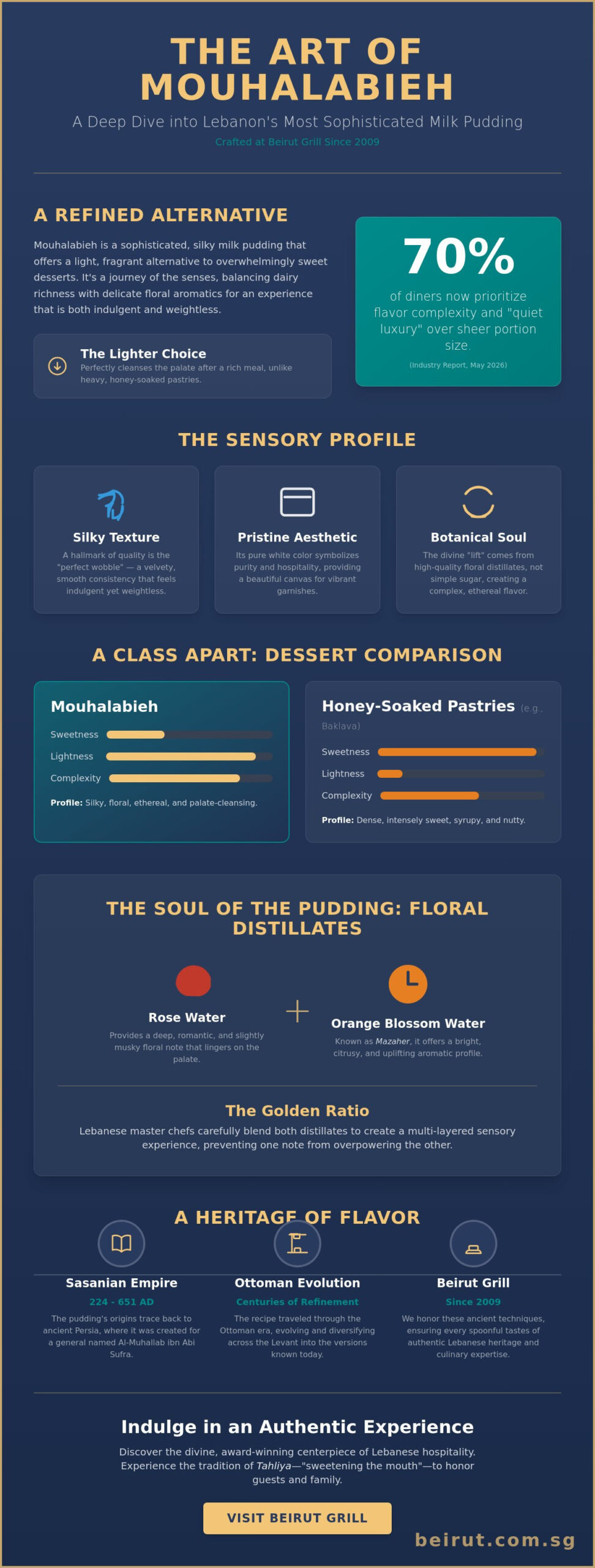
You likely agree that a dessert should be a balanced journey of the senses rather than a simple sugar hit. Recent industry reports from May 2026 indicate that 70% of consumers now prefer smaller, flavor-dense portions over bulk, reflecting a shift toward quiet luxury in the culinary world. In this guide, you’ll discover the delicate artistry and fragrant history of this ancient Sasanian legacy. We’ll explore the specific floral distillates that distinguish an authentic version from common imitations like Sahlab, ensuring you can identify the divine quality that defines a premium Lebanese experience.
Key Takeaways
- Discover why mouhalabieh is celebrated as the lighter, more sophisticated alternative to honey-soaked pastries, offering a silky texture and subtle botanical sweetness.
- Learn to identify the “soul” of an authentic pudding through the nuanced use of high-quality rose and orange blossom distillates.
- Understand the cultural ritual of Tahliya, the traditional Lebanese practice of “sweetening the mouth” to honor guests and family.
- Gain insights into the delicate sensory balance and pure white aesthetic that distinguishes a premium milk-based dessert from common, mass-produced versions.
- Explore the heritage techniques used at Beirut Grill since 2009 to craft this divine, award-winning centerpiece of Lebanese hospitality.
What is Mouhalabieh? Lebanon’s Most Elegant Milk Pudding
Within the sun-dappled surroundings of historic Bussorah Street, guests often seek a conclusion to their meal that is as light as the Singapore breeze. Mouhalabieh serves as that perfect finale. It is a silky, cream-based pudding traditionally thickened with rice flour or cornstarch. Mouhalabieh is a centuries-old Levantine staple that balances dairy richness with floral aromatics. This mouth-watering experience feels both indulgent and weightless, making it a divine dining choice for those who appreciate the finer details of Lebanese cuisine.
Its distinctive white aesthetic isn’t just a culinary choice; it’s a cultural statement. In Middle Eastern hospitality, this pristine color symbolizes purity and a “white heart” toward the guest. Unlike heavier desserts that might feel burdensome in a tropical climate, this is a naturally gluten-free indulgence. It relies on a velvety, structural texture rather than heavy fats for satisfaction. This focus on craftsmanship aligns with 2026 consumer data showing that 70% of diners now prioritize flavor complexity and “quiet luxury” over sheer portion size.
The Ancient Roots of Muhallebi
The history of mouhalabieh stretches back to the Sasanian Empire of Persia, spanning from 224 to 651 AD. Legend tells of an Arab cook who created the dish for a celebrated general named Al-Muhallab ibn Abi Sufra. He was so enamored with the pudding that he gave it his name. Over centuries, the recipe moved through the Ottoman era, evolving into the refined Lebanese version we serve at Beirut Grill today. Our kitchen has honored these traditional techniques since 2009, ensuring every spoonful tastes of ancient heritage and seasoned expertise.
Regional Variations Across the Middle East
While the core concept remains, regional nuances define the dessert’s character across the Mediterranean. Turkish Muhallebi often incorporates mastic, a resin that provides a unique, slightly resinous chewiness. Egyptian Mahalabia frequently leans into heavier spice profiles, often topped with a dusting of cinnamon or toasted nuts for a more rustic feel. The Lebanese distinction lies in its restraint and elegance. We focus on premium floral distillates like rose and orange blossom water to create an ethereal, botanical lift. This profile perfectly cleanses the palate after a rich meal of Mixed Grill or Lamb Kofta, rewarding the visitor’s curiosity with a truly sophisticated finish.
The Sensory Science: Rose Water, Orange Blossom, and Aromatics
The true essence of mouhalabieh lies in its botanical soul, a delicate profile that transcends the simple sweetness of typical dairy desserts. While many contemporary recipes settle for synthetic extracts, an authentic Lebanese version demands high-quality floral waters to achieve its signature “lift.” At Beirut Grill, we understand that these aromatics are non-negotiable. To maintain the award-winning standards we established on historic Bussorah Street since 2009, we ensure our distillates are sourced from the Beqaa Valley. This region is world-renowned for producing floral waters with a potency and purity that artificial alternatives simply cannot replicate. The result is a mouth-watering balance where the creaminess of the pudding serves as a canvas for the sophisticated notes of the Levant.
Visual presentation is equally vital to the sensory experience. The pristine white surface of the pudding provides a striking contrast to the vibrant green of crushed Aleppo pistachios and the deep crimson of dried rose petals. This color palette isn’t merely for aesthetics; it provides a textural interplay that rewards the visitor’s curiosity. Each spoonful offers a crunch that breaks through the velvet-smooth base, creating a multi-dimensional treat. If you are exploring the heritage of Kampong Glam, you can experience this sensory masterpiece at our boutique restaurant, where every dish is a tribute to Lebanese tradition.
Rose Water vs. Orange Blossom Water
Mastering the “soul” of this dish requires an understanding of two distinct distillates. Rose water provides a deep, romantic, and slightly musky floral note that lingers on the palate. In contrast, orange blossom water, known as Mazaher, offers a bright, citrusy, and uplifting aromatic profile. Lebanese master chefs often employ a “Golden Ratio,” carefully blending both to create a multi-layered sensory experience. This prevents one flower from overpowering the other, ensuring the mouhalabieh remains light and ethereal rather than cloying.
The Importance of Texture and Temperature
Achieving the “perfect wobble” is a hallmark of culinary expertise. The pudding should be neither too liquid nor too firm; it must hold its shape on the spoon while melting instantly on the tongue. This velvet-smooth mouthfeel is achieved through patient, slow-simmering to ensure the thickening agents are fully integrated without lumps. Temperature is the final critical factor. We serve our puddings chilled but never frozen. This specific temperature range is essential for releasing the floral vapors, allowing the delicate aromatics to bloom as you enjoy each bite.
Comparing Lebanese Classics: Mouhalabieh vs. Baklava and Kunefe
Within the heart of Singapore’s historic Kampong Glam, the choice of dessert is a reflection of your dining mood and the journey your palate has already taken. Baklava and Kunefe are legendary pillars of the Middle Eastern table, yet they carry a significantly different weight compared to the ethereal mouhalabieh. Baklava is characterized by its honey-soaked intensity and the concentrated energy of walnuts or pistachios. Kunefe, meanwhile, is a warm, decadent affair featuring melted cheese and a syrup-drenched crust. In contrast, mouhalabieh stands as the lighter alternative, offering a subtle, infused sweetness that doesn’t overwhelm the senses. While Baklava offers the rhythmic shatter of buttered phyllo, mouhalabieh provides a seamless transition into a cool, velvet-smooth cream.
The sugar profiles of these classics represent two distinct philosophies of indulgence. Traditional pastries like Baklava rely on the deep, amber richness of sugar syrups to provide a high-impact finish. However, as palates in 2026 trend toward complexity over sheer sweetness, the botanical “lift” of a milk pudding becomes increasingly attractive. It’s the difference between a bold, celebratory statement and a quiet, sophisticated whisper. Choosing a refreshing pudding over a warm, cheesy Kunefe is often a matter of the environment; on a humid Singapore evening, the chilled, floral notes of a pudding offer a level of sensory relief that heavier, heat-retaining desserts cannot match.
The Sophisticate’s Choice: Why Mouhalabieh Wins After a Heavy Grill
After a feast of charcoal-grilled meats like our Mixed Grill or Beirut Lamb Chops, your palate often craves a botanical reset. The floral waters in our pudding act as a natural palate cleanser, cutting through the savory richness of the main course. This superior digestibility is why a milk-based pudding is the preferred finish for a multi-course mezze feast, ensuring you leave the table feeling satisfied rather than burdened. You can learn more about the contrast in our ultimate guide to kunafa.
A Connoisseur’s Comparison Table
For the modern Singapore diner, selecting the right dessert is about matching the unique selling point of each dish to the occasion. Baklava provides a crunchy, nutty, and high-energy companion to a strong Lebanese coffee. Kunefe offers a warm, savory-sweet indulgence that serves as the ultimate comfort food. Mouhalabieh is the connoisseur’s choice, providing a cold, floral, and aromatic finish that emphasizes heritage and restraint. To understand the complexity of our pastry-based options, explore the layers of authentic baklava for a different textural journey.
The Art of the Lebanese Dessert Course: Pairings and Traditions
In the Levant, the conclusion of a meal is never a hurried affair. It centers on the ancient tradition of Tahliya, or “Sweetening the Mouth.” This ritual represents the ultimate gesture of hospitality, where mouhalabieh often serves as the elegant centerpiece. For a family gathering or a boutique dining experience on historic Bussorah Street, this pudding is more than a dish; it’s a social bridge. Its presence signals that the host values the guests’ comfort and wishes to leave them with a lingering sense of sweetness and purity. Since 2009, Beirut Grill has upheld this tradition, ensuring that every guest feels the warm, inviting hospitality that defines our heritage.
To truly elevate the experience, one must consider the beverage. Our Lebanese Coffee, rich with the warmth of cardamom, provides a necessary bitterness that complements the floral sweetness of the pudding. For those seeking a more indulgent pairing, a late-harvest dessert wine from the Beqaa Valley creates a majestic harmony. The natural sugars of the wine, perhaps from a prestigious estate like Chateau Musar, mirror the botanical aromatics of the mouhalabieh. This results in a mouth-watering finish that rewards the visitor’s curiosity. If you’re ready to explore these timeless traditions, book your table at Beirut Grill today and experience the divine flavors of Lebanon.
Beverage Pairings for the Perfect Finish
Lebanese Coffee remains the essential companion for any milk-based dessert, as its robust profile balances the delicate dairy. For a lighter touch, Moroccan Mint Tea offers a refreshing, herbaceous contrast that cleanses the palate with every sip. Daring connoisseurs might even explore a pairing with Arak. The aniseed spirit provides a bold, cooling sensation that dances alongside the rose and orange blossom notes, creating a sophisticated sensory journey that’s unique to the Middle Eastern table.
Etiquette and Presentation
Presentation is a vital component of the Lebanese dessert course. We serve our puddings in individual glass bowls to showcase the dish’s pristine white color and silky texture. Garnishing with crushed pistachios and rose petals happens only moments before serving. This timing is critical to maintain the crunch of the nuts against the velvet-smooth base. Mouhalabieh plays a central role in festive celebrations, solidifying its place in the vibrant landscape of Middle Eastern food in Singapore. Whether enjoyed during a quiet dinner or a grand celebration, the dish remains a hallmark of refined indulgence and cultural pride.
Indulge in Authentic Mouhalabieh at Beirut Grill
Stepping into our boutique space on historic Bussorah Street is more than just a meal; it is an invitation to witness a legacy. Since 2009, Beirut Grill has stood as a reliable curator of Lebanese heritage in Singapore. While our savory mezza and grills often take the spotlight, our mouhalabieh has quietly become a critically acclaimed hidden gem for those who seek a truly sophisticated finish. We don’t believe in shortcuts. Every bowl of this delicate pudding is hand-crafted using traditional techniques that prioritize the subtle, ethereal texture over mass-produced convenience. It’s this unwavering commitment to authenticity that has defined our award-winning authority for over 15 years.
The “Beirut Grill touch” resides in the meticulous sourcing of our ingredients. We infuse our puddings with premium orange blossom and rose distillates that carry the aromatic soul of the Beqaa Valley. This sensory journey is enhanced by the atmosphere of our dining room, where the rhythmic storytelling of our heritage meets the modern vibrancy of Kampong Glam. Each spoonful of our mouhalabieh offers a velvet-smooth mouthfeel, providing a mouth-watering contrast to the bustling energy outside. It is a divine dining experience designed to slow you down and reward your curiosity.
A Divine Dining Experience Since 2009
- Our chefs maintain a legendary consistency, ensuring the “perfect wobble” remains a signature of our dessert menu.
- The pudding serves as the ideal botanical reset after indulging in our signature Mixed Grill or citrus-marinated Shish Taouk.
- Explore the broader landscape of mediterranean food in Singapore through our carefully curated dessert selection.
Visit Us for a Taste of Lebanon
True hospitality is found in the details, from the temperature of the chilled glass to the freshness of the crushed pistachios. We invite you to soak up the ambiance of our historic location and discover why our patrons return time and again for this taste of the Levant. Every dish we serve is a chapter in our ongoing story of cultural pride and culinary excellence. Don’t leave your journey to chance; Book your table at Beirut Grill and experience the magic of Mouhalabieh for yourself.
Experience the Timeless Elegance of Lebanese Hospitality
The journey through the fragrant history and delicate artistry of this Levantine staple reveals a dessert that’s as much a cultural bridge as it’s a culinary delight. You now understand how the subtle botanical “lift” of orange blossom and rose water distinguishes a premium mouhalabieh from common imitations. By choosing this silky pudding, you embrace the ritual of Tahliya and a lighter form of indulgence that respects both tradition and the modern palate’s desire for complexity.
At Beirut Grill, we’ve remained a reliable curator of heritage on historic Bussorah Street since 2009. Our award-winning kitchen utilizes authentic ingredients imported directly from the Beqaa Valley to ensure every spoonful is a divine dining experience. This dedication to craftsmanship has made our desserts highly acclaimed by food critics across Singapore for their refined excellence. We invite you to soak up the ambiance of our boutique space and finish your meal with a true masterpiece of the Levant.
Indulge in Singapore’s most authentic Mouhalabieh at Beirut Grill and discover the sensory allure of Lebanon’s finest flavors. We look forward to welcoming you to our table for an unforgettable cultural journey.
Frequently Asked Questions
Is Mouhalabieh gluten-free?
Yes, authentic mouhalabieh is naturally gluten-free because it relies on rice flour or cornstarch as thickening agents rather than wheat flour. This makes it a divine choice for diners with specific dietary requirements in Singapore. Since 2009, we’ve focused on these traditional recipes to ensure every guest can indulge without worry. It’s a light, accessible finish to a meal that maintains its structural integrity through pure, starch-based techniques.
What is the difference between Mouhalabieh and Muhallebi?
The difference is primarily regional and linguistic, as “Muhallebi” is the broader Turkish and Ottoman term, while “mouhalabieh” refers specifically to the Lebanese style. While the Turkish version might use mastic for a chewy texture, the Lebanese variant emphasizes a lighter, more ethereal consistency. We focus on the botanical elegance of the Levant, using premium distillates to create a refined sensory experience that rewards the visitor’s curiosity.
Can Mouhalabieh be made vegan?
Yes, you can create a vegan version by substituting dairy with almond or coconut milk. While the traditional heritage of the dish is rooted in fresh dairy, these plant-based alternatives still carry the floral aromatics of rose and orange blossom water beautifully. In the modern Singapore dining landscape, such adaptations allow more guests to experience the majestic flavors of Lebanon while adhering to their personal lifestyle choices.
What are the traditional toppings for Lebanese milk pudding?
Traditional Lebanese toppings include a vibrant layer of crushed Aleppo pistachios and a delicate scattering of dried rose petals. These provide a necessary textural contrast to the velvet-smooth pudding. Some variations also include a light drizzle of orange blossom syrup or a few slivers of blanched almonds. These garnishes are added moments before serving to ensure the crunch remains intact, providing a mouth-watering interplay of sensations.
How long does Mouhalabieh stay fresh in the fridge?
Mouhalabieh stays fresh for approximately 2 to 3 days when kept in a chilled environment. It’s essential to keep the pudding covered to prevent it from absorbing other scents in the fridge, as the delicate floral notes are easily compromised. For the best experience, we recommend enjoying it within 48 hours. This ensures the texture remains silky and the botanical vapors are at their most potent and evocative.
What gives Mouhalabieh its unique floral scent?
The signature scent comes from the inclusion of high-quality rose water and orange blossom water, known as Mazaher. These distillates are added at the end of the cooking process to preserve their volatile aromatics. We source our floral waters from the Beqaa Valley to ensure a professional, award-winning fragrance. This botanical infusion is what transforms a simple milk pudding into a sophisticated sensory journey that’s uniquely Lebanese.
Is Mouhalabieh suitable for children?
Yes, it’s an excellent choice for children due to its gentle texture and natural ingredients. The pudding is light on the stomach and lacks the heavy fats or intense caffeine found in other desserts. Its subtle sweetness and smooth consistency make it a favorite for younger guests at Beirut Grill. It’s a wholesome way to introduce children to the diverse flavors of Middle Eastern heritage in a familiar, creamy format.
Why is Mouhalabieh served cold?
Serving the dish cold is critical for both its structural integrity and its aromatic profile. The chilling process allows the thickening agents to set into the “perfect wobble” that defines the dish. Additionally, the cool temperature acts as a refreshing counterpoint to the tropical Singapore heat. It ensures the floral vapors release slowly as the pudding warms slightly on the palate, creating a majestic and lingering finish.