
True baklava is a sophisticated architectural marvel of Lebanese heritage, not just another tray of honeyed nuts. With social media conversations about this pastry rising by 23.10% over the last year, the world is clearly hungry for genuine cultural experiences. It’s frustrating when you’re served a soggy, cloyingly sweet imitation instead of the crisp, floral-scented delicacy you deserve. As pistachio prices reached $4.57 per pound in April 2026, the distinction between high-quality craftsmanship and mass-produced shortcuts has never been more vital for the true connoisseur.
You understand that a dessert should be an indulgence of the senses rather than a simple sugar rush. This guide promises to transform your appreciation by uncovering the intricate history and sensory delights of genuine Lebanese baklava. We’ll walk you through the precision of the layering process, show you how to pair these treats with traditional beverages, and explain why Beirut Grill on historic Bussorah Street has remained a “hidden gem” for authentic sweets since 2009.
Key Takeaways
- Trace the majestic legacy of the Levant to understand how historical craftsmanship transformed simple ingredients into a royal dessert.
- Uncover the technical precision required to layer 40 sheets of micro-thin phyllo for that signature, mouth-watering crunch.
- Identify the subtle differences that make Lebanese baklava unique, focusing on its lighter texture and the use of aromatic floral syrups.
- Learn the professional secret of serving these pastries at room temperature to ensure the premium clarified butter reaches its ideal consistency.
- Discover how to find a boutique dining experience in Singapore that honors these centuries-old traditions through heritage-rich techniques.
The Essence of Baklava: A Majestic Legacy of the Levant
To understand the soul of a Lebanese table, one must first appreciate the architectural beauty of baklava. It isn’t merely a dessert; it’s a labor-intensive masterpiece composed of dozens of paper-thin phyllo layers, premium hand-picked nuts, and delicate aromatic syrups. While the history of baklava traces its origins to the opulent imperial kitchens of the Ottoman Topkapi Palace, it was in the sophisticated patisseries of Beirut where the pastry achieved its most refined, floral expression. This journey from royal courts to the bustling Mediterranean coast has transformed the sweet into a global icon of hospitality.
Today, this pastry remains a cultural powerhouse. Social media conversations about the dessert increased by 23.10% over the last year, proving that modern diners still crave these ancient flavors. However, there’s a vast gulf between an artisanal creation and the soggy, mass-produced versions found in frozen aisles. True quality requires a commitment to heritage that refuses to cut corners on time or ingredients.
The Cultural Significance of the Golden Square
With the majestic Sultan Mosque as a backdrop to our daily service, we view these pastries as the crowning glory of a traditional Lebanese feast. The craftsmanship required to achieve the perfect crunch, a sound that should resonate clearly across the table, is a skill passed down through generations. In diplomatic and social circles, presenting a box of these golden squares remains a gift of prestige. It signals deep respect and a commitment to quality that transcends a simple sugar rush.
Why Authenticity Matters in Every Layer
Authenticity is found in the specific ingredients that mass-produced alternatives often sacrifice for profit. Artisanal baklava relies on pure clarified butter rather than generic vegetable oils to achieve a clean, rich finish. Sourcing is equally critical. With pistachio prices hitting $4.57 per pound in April 2026 due to regional supply shifts, the temptation to use fillers is high. True Lebanese sweets prioritize premium walnuts and pistachios for a depth of flavor that lingers. Since 2009, Beirut Grill has upheld these uncompromising standards on historic Bussorah Street, ensuring every guest enjoys a divine experience that honors our heritage.
The Architecture of Flavor: How Authentic Baklava is Crafted
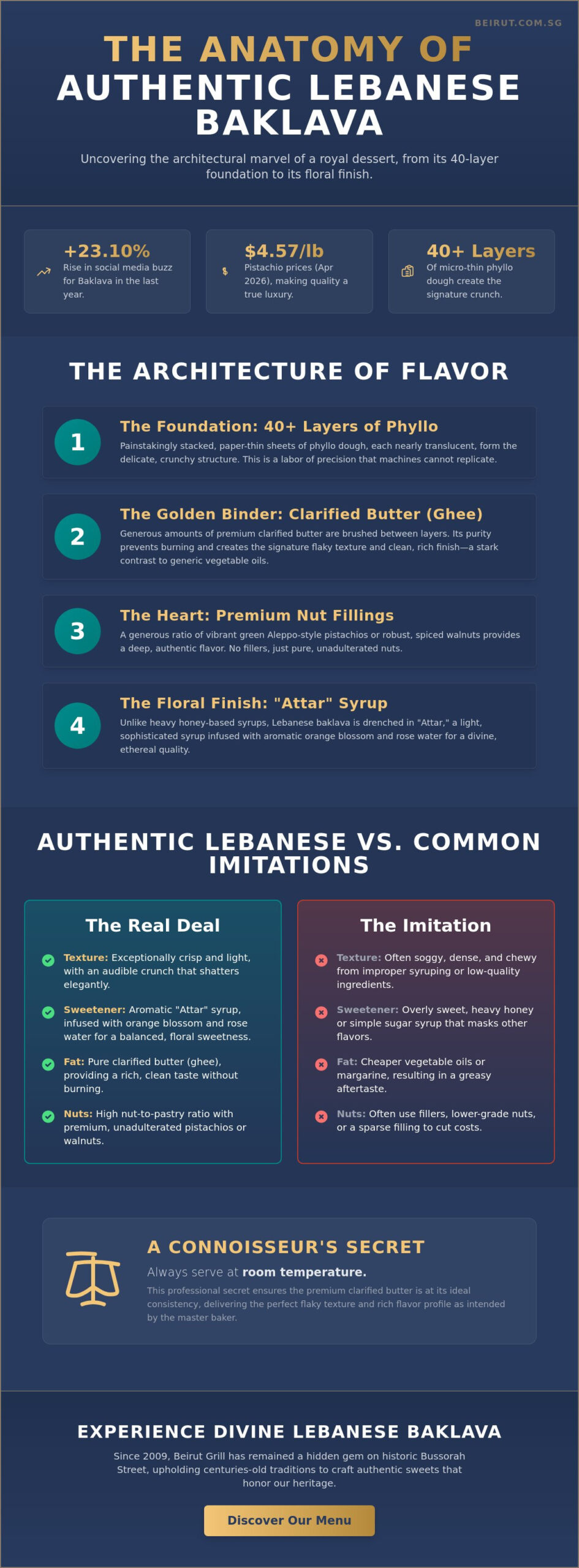
Creating a masterpiece of Lebanese pastry requires more than just a recipe; it demands the steady hand of a master artisan. While the global frozen baklava market reached a value of USD 1.24 billion in 2024, the soul of the dish resides in the fresh, labor-intensive assembly that no machine can replicate. The process begins with the painstaking layering of 40 or more sheets of micro-thin phyllo dough. Each sheet is so delicate it’s almost translucent, requiring a gentle touch to prevent tearing as they are stacked to create the pastry’s majestic height.
Between these rhythmic layers, the baker applies generous amounts of premium clarified butter, or ghee. This specific fat is essential because it lacks the milk solids found in standard butter, allowing the pastry to bake at high temperatures without burning. It’s this clarified gold that creates the signature flaky texture, ensuring every bite provides a mouth-watering crunch that shatters elegantly. Once the layers are set, the baker uses a sharp blade to hand-cut the tray into traditional diamond or square shapes with mathematical precision. To ensure optimal absorption and a perfect texture, the master baker pours boiling hot syrup over the cold pastry immediately after it leaves the oven.
The Secret of Attar: Floral-Infused Syrups
Unlike regional variations that rely heavily on honey, the Lebanese tradition favors “Attar,” a sophisticated syrup infused with orange blossom and rose water. This floral essence provides a light, ethereal quality that balances the intense richness of the clarified butter and nuts. Before you even take a bite, a divine scent profile of blooming Mediterranean gardens greets you. It’s a sensory detail that distinguishes a refined dining experience from a generic sweet shop offering.
Premium Nut Fillings: Pistachio vs. Walnut
The heart of the pastry lies in its nut-to-pastry ratio, which is the ultimate mark of a master baker. We favor vibrant green Aleppo-style pistachios for their sophisticated, earthy sweetness and striking color. For those seeking a more robust profile, lightly spiced walnuts offer a deep, traditional flavor that grounds the sweetness of the syrup. With pistachio prices reaching $4.57 per pound in April 2026, the choice to use pure, unadulterated nuts is a commitment to the “award-winning” authority we’ve maintained on historic Bussorah Street since 2009. These premium fillings ensure that each golden square is a dense, indulgent treasure rather than a hollow shell.
Lebanese Baklava vs. Global Variations: A Comparison
While 2.25% of U.S. restaurants now feature this dessert on their menus, the version you encounter varies wildly depending on its geographic roots. For the discerning palate, the Lebanese style represents the pinnacle of refinement. It’s often categorized as a “dry” baklava, a term that describes a specific technique rather than a lack of moisture. In this tradition, the application of syrup is restrained and precise. This lighter touch ensures the pastry remains crisp for longer and allows the natural, earthy flavors of the premium nuts to take center stage without being drowned in liquid sugar.
The choice of fat is another defining characteristic of the Levant that sets it apart from mass-market imitations. Authentic Lebanese artisans insist on high-quality clarified butter to achieve a clean, buttery finish that doesn’t leave a heavy or greasy coating on the tongue. This commitment to superior ingredients creates a sophisticated profile that rewards the visitor’s curiosity. It’s a subtle distinction that separates a divine dining experience from a generic, overly sweet treat found in a standard bakery.
The Greek Tradition: Honey and Cinnamon
In many Greek households and tavernas, the recipe is a rustic, hearty affair that leans heavily on the forest. You’ll frequently find a prominent use of honey and warm cinnamon, which creates a darker, more robust flavor profile. This version traditionally features 33 layers of dough, a specific number chosen to symbolize the years of Christ’s life. While this style is undeniably delicious, it prioritizes a dense, syrupy sweetness and a spice-forward aroma that contrasts sharply with the airy, floral-forward approach favored in the sophisticated patisseries of Beirut.
Turkish Style: Intensity and Syrup
Turkey is a global powerhouse of production, churning out an average of 950 tons of baklava daily as of May 2026. Their “wet” style is famous for its intense sugar saturation, where the pastry is often submerged in a thick, heavy syrup. This version frequently showcases the Antep pistachio, a nut known for its deep flavor and high oil content. While Turkish exports reached $20 million over the last five years, the experience is one of pure, high-intensity indulgence. In contrast, the Lebanese method seeks a poetic balance. By using orange blossom and rose water to lift the flavors, Lebanese chefs create a majestic dessert that feels light and ethereal rather than heavy. This delicate approach has defined our heritage since 2009, offering a boutique experience that honors the true art of the pastry.
A Connoisseur’s Guide to Pairing and Enjoying Baklava
To truly appreciate baklava, one must engage all the senses in a deliberate ritual. It begins with the visual allure of the golden glaze, a shimmering promise of the sweetness within. Before taking a bite, notice the architectural precision of the layers we discussed earlier. The most critical rule for the connoisseur is temperature. You should always enjoy these pastries at room temperature. This allows the premium clarified butter to soften, releasing its full aromatic profile and ensuring the texture is supple rather than brittle. If the pastry is too cold, the fats seize, masking the delicate floral notes of the rose water and orange blossom.
There is a specific technique favored by experts known as the “upside-down” method. By turning the pastry over so the bottom layer touches your tongue first, the nut filling makes direct contact with your taste buds. This immediate hit of earthy pistachio or spiced walnut provides a savory counterpoint to the syrup, creating a balanced flavor explosion. This level of detail is what separates a casual snack from a truly Middle Eastern food in Singapore: The Ultimate 2026 Connoisseur’s Guide experience. Exploring these nuances helps you navigate the rich culinary landscape of the city with confidence.
Traditional Pairings: Coffee and Tea
The beverage you choose is just as important as the pastry itself. A small cup of dark, bitter Lebanese coffee is the classic companion. The intense, roasted notes of the coffee act as a sharp foil to the honeyed sweetness of the dessert. Similarly, a hot glass of Moroccan Mint Tea offers a refreshing, herbaceous contrast that cleanses the palate between bites. A vital tip for the authentic experience: never add sugar to your coffee or tea when eating these sweets. The pastry provides all the sweetness you need, and a plain beverage allows the subtle spices of the filling to shine through.
Sophisticated Spirits: Arak and Lebanese Wine
For those seeking a more indulgent conclusion to their meal, spirits offer a surprising and sophisticated pairing. Arak, the traditional Levantine spirit, is an exceptional choice. Its bold anise flavor acts as a digestive and a palate cleanser, cutting through the richness of the ghee. Alternatively, a sweet Lebanese dessert wine from prestigious estates like Chateau Musar can elevate the occasion. These pairings transform a simple plate of sweets into a divine dining experience that lingers long after the final crumb is gone. If you’re ready to experience this sensory journey firsthand, we invite you to reserve your table at Beirut Grill and discover our award-winning selections on historic Bussorah Street.
Experience Divine Lebanese Baklava at Beirut Grill
Finding a truly authentic baklava in a sea of mass-produced alternatives requires a discerning eye and a reliable host. Since 2009, Beirut Grill has served as a boutique custodian of Middle Eastern culture on historic Bussorah Street. We don’t just serve dessert; we provide a curated journey that honors the centuries of craftsmanship explored in this guide. Every piece is a testament to our commitment to traditional techniques, using premium imported nuts and floral essences that transport you straight to the heart of the Levant. Our status as a hidden gem is built on this unwavering dedication to quality.
After indulging in the smoky, charred flavors of our signature Shish Taouk or a robust Mixed Grill, the palate craves a sophisticated finish. Our pastries offer that perfect finale, balancing the savory richness of the main course with a light, aromatic sweetness. It’s a divine dining experience that rewards the visitor’s curiosity, ensuring that every meal ends on a note of high-status indulgence. Whether you’re a long-time connoisseur or a curious newcomer, our space offers a refined sanctuary to enjoy the finest Lebanese style sweets in the heart of Singapore.
The Beirut Grill Dessert Platter
For those who find it impossible to choose just one treat, our Baklava Platter, priced at $15.00 as of October 2025, offers a majestic variety of textures and flavors. This selection is designed for sharing, reflecting the generous Lebanese spirit of hospitality that defines our heritage. The platter often features a mix of nut-filled squares alongside other regional icons like kunafa and the irresistibly molten kunefe, providing a comprehensive taste of the Beqaa Valley. We also recommend exploring the delicate elegance of mouhalabieh, a fragrant Lebanese milk pudding that offers a lighter, floral counterpoint to the richness of our nut-filled pastries. We take immense pride in maintaining a pork-free, halal-friendly menu, ensuring that our kitchen remains accessible and welcoming to all guests seeking a mouth-watering cultural journey.
Planning Your Visit
We invite you to slow down and soak up the ambiance of our unique location. With the majestic Sultan Mosque as a backdrop, dining at Beirut Grill feels like stepping into a scenic historical stage. It’s the ideal setting for corporate dinners, intimate celebrations, or a sophisticated night out with friends. Our seasoned expertise ensures that every detail, from the first mezza to the final crunch of baklava, is executed with professional authority. We recommend making a reservation to secure your place in our atmospheric dining room, where the heritage of Lebanon meets the vibrant energy of Singapore. Come and discover why we’ve remained a critically acclaimed destination for authentic culture for over fifteen years.
Embrace the Golden Tradition of the Levant
You’ve now uncovered the technical precision and cultural soul that defines authentic baklava. From the delicate infusion of floral Attar to the rhythmic stacking of 40 micro-thin phyllo sheets, it’s clear that genuine Lebanese pastry is a world away from mass-produced imitations. You understand why room-temperature service and the “upside-down” tasting technique are essential for a truly sophisticated palate. These details transform a simple sweet into a majestic celebration of heritage that rewards your curiosity.
Since 2009, Beirut Grill has remained a critically acclaimed sanctuary for those seeking this level of culinary integrity. Our award-winning kitchen uses authentic imported ingredients and traditional techniques to ensure every bite is a divine sensory journey. We invite you to step into our boutique space on historic Bussorah Street to soak up the atmosphere and taste our storied legacy for yourself. It’s an experience designed to transport you to the vibrant heart of the Middle East.
Book Your Divine Lebanese Dining Experience at Beirut Grill. We look forward to serving as your knowledgeable host for an unforgettable cultural journey.
Frequently Asked Questions
Is baklava supposed to be soggy or crunchy?
Authentic baklava must be crisp and provide a distinct, mouth-watering crunch when you bite into it. A soggy texture is usually a sign of poor storage or a mass-produced frozen product that has absorbed too much moisture. To maintain its structural integrity, artisanal bakers ensure the pastry is cooled before the hot syrup is applied, preventing the 40 layers of phyllo from becoming soft or limp.
What is the difference between Lebanese and Greek baklava?
The primary difference lies in the syrup and spices used in the preparation. Lebanese versions use a sophisticated, floral-infused syrup called Attar, which features orange blossom and rose water for a light, ethereal finish. Greek recipes typically rely on honey and heavy cinnamon, creating a more rustic and syrupy profile. Lebanese pastries are often categorized as “dry” because the syrup application is restrained and precise.
Is baklava suitable for vegans or vegetarians?
While this dessert is always suitable for vegetarians, it’s rarely vegan in its authentic form. Traditional Lebanese recipes rely on pure clarified butter, or ghee, to achieve a rich and flaky texture. Some modern innovations use vegetable oils to cater to the 6.3% growth in the frozen market seen in 2025, but at our boutique restaurant, we’ve upheld the traditional use of dairy since 2009 to ensure a divine dining experience.
How long can I store authentic baklava?
You can store these pastries for up to 14 days in an airtight container at room temperature. It’s a common mistake to refrigerate them; doing so causes the clarified butter to seize and the phyllo to lose its signature crunch. According to regional food safety standards updated in April 2026, the high sugar content in the syrup acts as a natural preservative, keeping the treats fresh and safe for two weeks.
Why is orange blossom water used in Lebanese baklava?
Orange blossom water is used to provide a sophisticated floral counterpoint to the intense richness of the nuts and butter. This aromatic essence is a hallmark of the Beqaa Valley culinary tradition. It lifts the flavor profile, ensuring the sweetness doesn’t become cloying. This scent is often the first thing that greets a guest, setting the stage for a majestic and sensory-rich dessert experience. For those who appreciate these delicate floral notes, the sophisticated Lebanese milk pudding mouhalabieh offers another exquisite expression of rose and orange blossom in the Levantine dessert tradition.
What is the best drink to pair with baklava?
Bitter Lebanese coffee or a hot cup of unsweetened Moroccan Mint Tea are the premier choices for pairing. The sharp bitterness of the coffee or the herbaceous notes of the tea cleanse the palate between bites of the sweet pastry. For a more decadent celebration, a glass of Arak or a sweet Lebanese wine from Chateau Musar provides a high-status conclusion to a traditional meal.
Does baklava contain honey?
Lebanese baklava typically does not contain honey, favoring a sugar-based syrup infused with floral waters instead. This distinction is vital for the flavor profile, as honey can sometimes overpower the delicate taste of premium pistachios or walnuts. By using a clean sugar syrup, the master baker allows the earthy and toasted notes of the imported nuts to remain the primary focus of the dish.
Can I find gluten-free baklava?
Traditional versions are not gluten-free because they require wheat-based phyllo dough to achieve the necessary paper-thin layers. As of May 2026, while some specialty boutiques are experimenting with alternative flours, the structural integrity required for 40 layers of dough remains difficult to replicate without gluten. For those with sensitivities, we recommend focusing on other flourless Lebanese desserts like certain types of nut-based mezza or puddings.