
That intoxicating, seductive aroma rising from live coals isn’t simply the smell of burning timber; it is the culinary alchemy of real fire reinventing the food itself. While modern gas grills offer swift push-button convenience, they frequently leave spiced meats, lamb, and seafood tasting flat, uniform, or faintly steamed. If you have ever wondered why charcoal grill tastes better, the secret stretches far beyond ordinary carbon smoke.
The true magic begins where blistering infrared heat meets falling rendered juices. In this guide, you’ll discover the precise culinary science, heat dynamics, and centuries-old live-fire traditions that make glowing charcoal cooking incomparably superior. We unravel how live coals unlock aromatic compounds like guaiacol and syringol, instantly vaporising marinades to coat skewered meats in an unforgettable, savoury glaze while keeping textures remarkably succulent within. Here is your definitive look into the molecular chemistry and timeless craft behind the world’s most evocative dining experience.
Key Takeaways
- Discover how radiant infrared heat sears exterior surfaces instantly, locking in natural juices without the dehydrating convection currents of gas and electric alternatives.
- Unpack the molecular chemistry behind why charcoal grill tastes better, revealing how fat drippings atomise against glowing embers to create rich aromatic compounds like guaiacol.
- Explore how high-temperature charcoal caramelises intricate Levantine spice rubs and citrus marinades on traditional skewers such as Shish Taouk and Lamb Kofta.
- Understand the heat mechanics and ember management techniques essential for mastering complex multi-protein platters like the signature Mixed Grill.
The Thermodynamics of Live Embers: Infrared Heat vs Convection
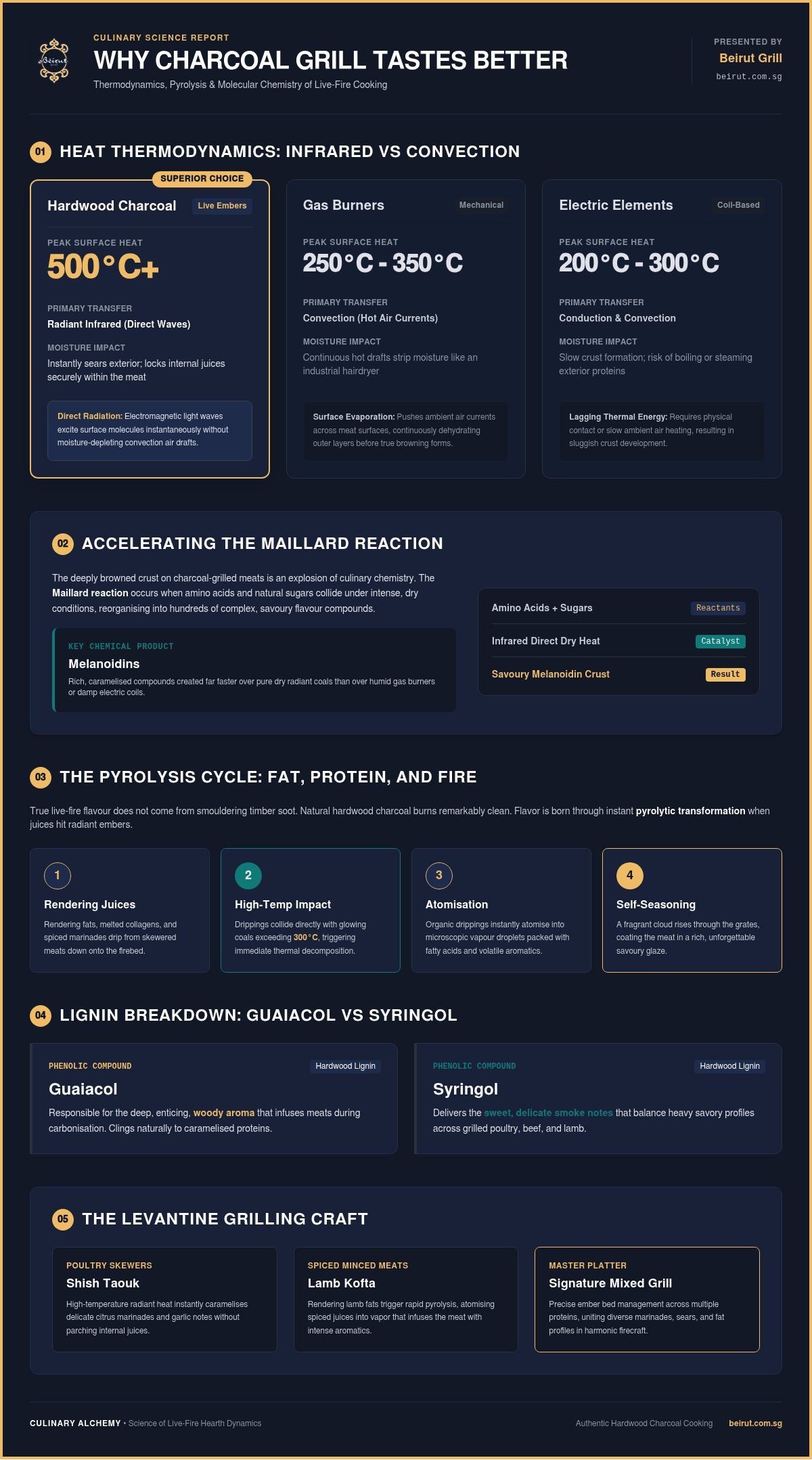
Stepping before a bed of glowing coals reveals the profound mechanical difference between mechanical heat and true hearth craft. At a fundamental thermodynamic level, the foundational reason why charcoal grill tastes better lies in the method of heat transfer. Gas burners and electric coils cook primarily via convection, relying on circulating air currents that push warmth around the cooking chamber. In contrast, burning charcoal generates fierce radiant infrared energy. This radiant energy travels as electromagnetic light waves directly into the food, effortlessly delivering intense heat capable of exceeding 500 degrees Celsius without suffocating the fire bed.
How Radiant Heat Penetrates Without Drying
Convection currents in standard gas grills behave much like an industrial hairdryer, continuously sweeping air across the grate and stripping away delicate exterior moisture before genuine browning can form. Infrared radiation operates along entirely different electromagnetic wavelengths. Because it radiates directly from the embers into the meat without depending on hot drafts, it excites surface molecules instantaneously. This flash of direct energy crisps the outer layers within seconds, sealing proteins and locking succulent, natural juices securely within the interior of lamb, poultry, or seafood skewers.
The Superior Sear: Accelerating the Maillard Reaction
That coveted, deeply browned crust is far more than an aesthetic triumph; it is an explosion of culinary chemistry. The Maillard reaction occurs when amino acids and natural sugars collide under intense, dry conditions, reorganising into hundreds of complex, savory flavor compounds known as melanoidins. Because live coals provide purely radiant, moisture-free heat, they spark this reaction far faster than humid gas burners, underscoring why charcoal grill tastes better with every rich, caramelised bite. This powerful browning process is just as crucial in premier meat venues like Pine Lodge Steakhouse, where hand-cut steaks rely on high-heat searing to build a deep crust while preserving tenderness within.
| Heat Source | Primary Heat Transfer | Peak Surface Heat | Moisture Impact |
|---|---|---|---|
| Hardwood Charcoal | Radiant Infrared (Direct) | 500°C+ | Instantly sears; seals internal moisture |
| Gas Burners | Convection (Air Currents) | 250°C to 350°C | Evaporates surface moisture continuously |
| Electric Elements | Conduction and Convection | 200°C to 300°C | Slow crust formation; risk of steaming |
The Flavor Chemistry: How Vaporised Drippings Create True Smoke
A common misconception among modern cooks is that traditional barbecue flavor derives strictly from smouldering wood soot or dirty carbon fumes. In reality, pure hardwood lump charcoal burns remarkably clean and virtually odorless, serving as a pristine, high-heat canvas. The authentic soul of live-fire dining awakens the moment rendering fats, melted collagens, and spiced juices tumble from skewers directly onto white-hot coals. This instant pyrolytic transformation explains precisely why charcoal grill tastes better than cooking over an inert metal burner.
The Pyrolysis Cycle: Fat, Protein, and Fire
When natural juices hit embers exceeding 300 degrees Celsius, they do not merely burn; they undergo rapid thermal decomposition known as pyrolysis. These organic drippings instantly atomise into microscopic vapor droplets filled with fatty acids and aromatic molecules. As this fragrant, billowing cloud rises through the grates, it coats the meat, infusing the surface with deep, savoury compounds that no metal flavoriser bar can ever mimic. Flavor vaporisation is the definitive hallmark of real live-fire cooking, creating a dynamic culinary cycle where the food actively seasons itself over live coals. This vapor cloud intertwines with the Maillard reaction, layering complex nuances across the crust.
Lignin Breakdown: Guaiacol and Syringol Compounds
Beyond vaporised drippings, the natural timber source of genuine charcoal contributes subtle chemical wonders. During the ancient carbonisation process, dense hardwood lignins degrade into aromatic phenolic molecules, most notably guaiacol and syringol. Guaiacol yields an enticing, woody aroma, while syringol delivers sweet, delicate smoke notes that cling naturally to the caramelised exterior of poultry, beef, and lamb.
Unlike cheap briquettes bound with mineral additives or ignited with chemical accelerants that taint food with acrid petroleum aftertastes, natural lump charcoal preserves pure flavor integrity. For those who appreciate the marriage of live embers and culinary heritage, tasting the skewered creations at Beirut Grill demonstrates firsthand how masterfully managed coals elevate tender spiced meats to artisanal heights.
Charcoal vs Gas and Electric: A Comprehensive Performance Breakdown
Convenience often demands a quiet culinary compromise. While turning a gas dial or switching on an electric element provides instant warmth, it fundamentally alters how heat interacts with protein. Food prepared over standard gas burners frequently lacks the crisp, toothsome snap that fire devotees crave. When evaluating crust depth, moisture retention, and dynamic thermal control, understanding the physics of your fuel source clarifies why charcoal grill tastes better than modern, push-button alternatives.
The Moisture Paradox: Why Gas Can Steam Your Meat
Clean combustion of hydrocarbon fuels like propane and butane intrinsically produces two main byproducts: carbon dioxide and water vapor. For every kilogram of fuel burned, a significant volume of moisture pumps directly into the cooking chamber. Trapped beneath a closed lid, this ambient humidity bathes the meat, delaying crust formation and subtly steaming exterior surfaces. Charcoal combustion, by contrast, is entirely moisture-free. It produces a bone-dry cooking environment where surface moisture evaporates instantly, yielding a shatteringly crisp outer crust.
Temperature Versatility and Zone Cooking
Electric heating coils suffer from sluggish thermal recovery, and gas burners generate rigid, linear hot zones tied to fixed tubes. A skilled cook over live charcoal builds nuanced temperature landscapes simply by shaping the ember bed:
- Direct High-Heat Zone: Concentrating glowing embers beneath metal skewers produces blisteringly high temperatures, perfect for blistering marinades on tender lamb and chicken within minutes.
- Indirect Roasting Zone: Pushing coals to one flank creates a gentle, aromatic chamber where denser meats roast evenly to core temperature without scorching delicate spice coatings.
While gas units offer speed and electric plates provide effortless indoor utility, neither can reproduce the dry, intense heat architecture that makes charcoal cooking so exceptionally flavorful and dynamic. If you appreciate the dedication to traditional culinary craft and dishes designed to pair seamlessly with fine wines, check out Via Trenta Osteria & Wine Bar for an inspiring look at authentic regional dining.
In Levantine culinary tradition, the open-flame mangal stands as the beating heart of genuine hospitality. Live coals do far more than cook meat; they awaken complex layers of seasoning that modern stovetops simply leave dormant. Experiencing this ancient marriage of heritage spice blends, silky marinades, and glowing embers highlights why charcoal grill tastes better across every single tender skewer.
How Live Coals Caramelise Traditional Marinades
Consider Shish Taouk, where succulent poultry marinates in citrus, crushed garlic, warm coriander, and rich strained yogurt. Convection gas ovens tend to dissolve this delicate marinade into a thin, watery coating. Intense infrared coals achieve the exact opposite. The blistering, dry heat flashes across yogurt sugars and fruit acids, crystallising them instantly into a golden, lacquered crust laced with tangy sumac.
Minced skewers like Lamb Kofta equally rely on this instantaneous thermal binding. Pure radiant heat quickly sets the meat’s surface proteins, sealing the seasoned mince firmly around wide flat skewers while internal juices remain trapped within. As unctuous fat naturally renders from sizzling Beirut Lamb Chops onto live embers below, the rising aromatics envelop the dining room in the unmistakable perfume of the finest Mediterranean food Singapore has to offer.
Balancing Smoke with Fresh Cold Mezze
The smoky intensity of live-fire meats finds its ideal harmony when paired with the cool, velvety textures of traditional mezze. A bite of succulent, fire-licked lamb gains luxurious depth when drawn through silky Hummus or wood-roasted Baba Ghanoush. Meanwhile, the bright lemon dressing and crisp parsley of fresh Tabbouleh cut cleanly through rich, rendered juices, refreshing the palate between bites.
This deliberate dialogue between fierce fire and vibrant, garden-fresh dips forms the cornerstone of authentic Middle Eastern food Singapore diners celebrate. To discover this live-fire balance for yourself, book your authentic dining journey at Beirut Grill and savor the incomparable craft of glowing charcoal embers.
Experiencing Master Charcoal Grilling: The Signature Mixed Grill
Orchestrating an authentic feast over glowing embers is an exercise in timing, thermal geometry, and sensory intuition. While conventional kitchens rely on uniform thermostat dials, charcoal cooking demands constant micro-adjustments of airflow and skewer elevation. This tactile precision proves why charcoal grill tastes better when executed by seasoned culinary hands, turning simple cuts of protein into a symphony of textures.
The Craft of Skewer Spacing and Ember Control
A true grill master balances cuts with vastly different fat contents and densities over the same open hearth. Wide, flat metal skewers serve a vital thermodynamic purpose here: the metal conducts thermal energy directly into the skewer’s core, cooking the interior gently while radiant embers sear the surface. Grilling artisans continually adjust skewer rotations and vary their proximity to the embers, controlling flare-ups while capturing the rising vapor cloud. The crimson glow of the hearth, accompanied by the gentle hiss of rendered juices, transforms open charcoal cooking into an alluring dining spectacle.
The Ultimate Feast: Pairing Live-Fire Meats at Beirut Grill
Serving authentic charcoal-grilled Lebanese cuisine since 2009, Beirut Grill captures this live-fire artistry through its centerpiece Mixed Grill. This lavish presentation showcases the best of the charcoal hearth: tender yogurt-marinated Shish Taouk, spiced Lamb Kofta, and succulent Beirut Lamb Chops, each displaying a delicate balance of caramelised crust and juicy interior.
To complete the journey, pair these rich, fire-roasted skewers with a curated bottle of Lebanese Wine or a chilled glass of anise-scented Arak, both of which cut effortlessly through rich lamb drippings. Conclude your evening with the crisp, floral sweetness of warm kunafa layered with stretchy cheese. Reserve a table at Beirut Grill to immerse yourself in the true heritage of Levantine charcoal dining.
Savor the True Mastery of Real Live-Fire Dining
The culinary brilliance of live-fire cooking is unmistakable. From intense radiant infrared waves that seal moisture within seconds to the instant atomisation of sizzling juices, science reveals why charcoal grill tastes better than any push-button alternative. It is an ancient culinary alchemy where intense heat, fragrant vapor, and delicate spice marinades unite to produce unforgettable textures.
Since 2009, Beirut Grill has celebrated this enduring Levantine heritage through uncompromising hearth craft. Every plate showcases this mastery, whether you are indulging in the fragrant warmth of spiced Lamb Kofta, tender skewers of citrus-marinated Shish Taouk, or succulent, fire-kissed Beirut Lamb Chops. Paired alongside silky mezze and boutique Lebanese wines, each dish transforms dinner into a rich sensory journey. Reserve your table at Beirut Grill today, and experience the unforgettable magic that only glowing charcoal embers can create.
Frequently Asked Questions
Why does charcoal taste better than gas when grilling meat?
Charcoal cooks via radiant infrared heat rather than humid convection currents, producing a drier, hotter searing environment. This dynamic explains why charcoal grill tastes better: rendering fats and marinades drop directly onto glowing coals, instantly vaporising into aromatic compounds that rise back up to coat the meat. In contrast, gas combustion releases moisture that can subtly steam proteins and delay crisp crust development.
Does the charcoal itself give food its smoky flavor?
No, pure hardwood charcoal burns cleanly and contributes minimal aroma on its own because the carbonisation process removes raw resins. The signature smoky taste actually originates from the food itself. When rendered fat and juices drip onto white-hot embers, they instantly atomise. This rising pyrolytic vapor coats the exterior, while natural hardwood lignins contribute delicate traces of sweet guaiacol and syringol.
Can you replicate authentic charcoal flavor using a gas grill?
You can’t completely replicate authentic charcoal results on a gas unit. Adding wood chip smoker boxes or metal deflector bars produces surface smoke, but gas combustion continuously releases water vapor, dampening the cooking chamber. Gas burners also lack the intense, dry infrared radiation required to flash-sear skewers and instantly vaporise drippings without boiling them.
Is cooking meat over charcoal healthy and safe?
Grilling over live charcoal is safe and wholesome when managed with proper fire craft. The secret lies in avoiding aggressive grease flare-ups and bitter soot. Using all-natural lump charcoal free from chemical accelerants, rotating skewers frequently, and letting drippings atomise cleanly on hot embers ensures delicate caramelisation without harsh charring.
What is the difference between lump charcoal and charcoal briquettes?
Natural lump charcoal consists of pure charred hardwood pieces that burn exceptionally hot, ignite quickly, and leave minimal ash. Briquettes are made from compressed sawdust and mineral binders, burning steadily at moderate temperatures. Culinary artisans prefer natural lump charcoal because its intense heat accelerates surface crust formation without leaving synthetic chemical residues.
Why do Middle Eastern restaurants cook kebabs over open charcoal?
Traditional Levantine kitchens rely on open hearths because radiant charcoal heat instantly sets spiced marinades and minced meats. Cooking skewers like Lamb Kofta and Beef Kebab over glowing embers caramelises ground seasonings while holding the meat securely to flat metal skewers. This heritage technique underscores why charcoal grill tastes better, balancing crisp, lacquered edges with succulent interiors.
How does charcoal grilling keep chicken skewers like Shish Taouk juicy?
Charcoal preserves tenderness by searing the chicken exterior within seconds through direct radiant infrared energy. This immediate flash of dry heat seals the yogurt, lemon, and garlic marinade, locking natural moisture deep inside each piece. Standard gas air currents tend to dehydrate poultry before a crust forms, whereas glowing embers caramelise the surface while keeping the meat wonderfully succulent.