
If you believe a simple vegetable cannot hold the charred essence of an ancient landscape, you have yet to experience the transformative power of fire on a Levantine eggplant. For many, the first taste of this velvety, smoke-kissed cream is a revelation that forever changes their perception of the mezze table. To truly understand what is baba ghanoush, one must look beyond the bowl to the flickering flames and the rich heritage of a cuisine recently ranked 20th globally in the 2025-2026 TasteAtlas standings.
You likely appreciate the communal joy of a shared meal, yet it’s easy to feel lost when trying to distinguish this dish from its cousin, moutabal. Achieving that authentic, deep-seated smokiness at home often feels like an impossible task for the uninitiated. This guide promises to transport you through the history and preparation of the Middle East’s most evocative dip. We’ll explore the traditional techniques used to master that signature flavor, clarify regional nuances, and show you how to identify a prestigious version that honors its cultural roots.
Key Takeaways
- Uncover the poetic history of the “pampered father” and how this storied dish became a cornerstone of Levantine heritage and hospitality.
- Learn exactly what is baba ghanoush by exploring the alchemy of charcoal grilling that creates its legendary smoky depth and velvety texture.
- Distinguish between regional variations like moutabal to refine your culinary vocabulary and navigate authentic mezze menus with professional ease.
- Master the sensory details of traditional presentation, from the essential well of premium olive oil to the vibrant, tart dusting of sumac.
- Discover the legacy of Beirut Grill’s commitment to artisanal preparation, a tradition of culinary excellence we have upheld since our founding in 2009.
Defining the ‘Pampered Father’: The Essence of Baba Ghanoush
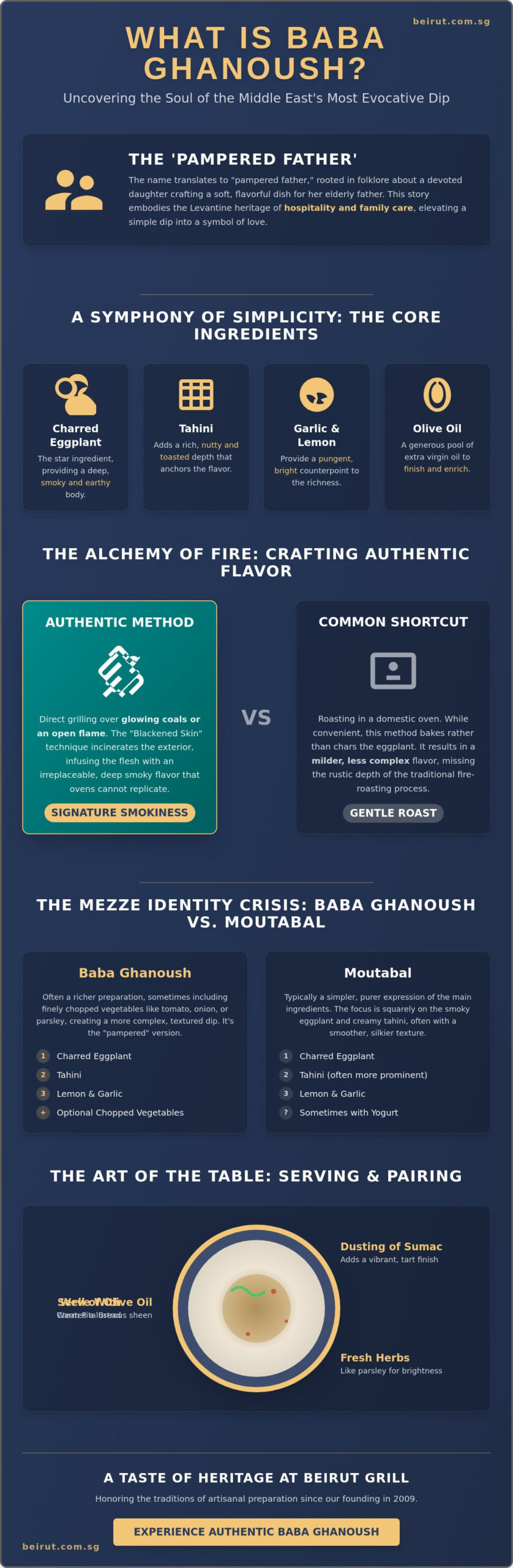
To truly grasp what is baba ghanoush, one must look beyond the simple classification of a vegetable dip and see it as a storied artifact of Levantine culture. This exquisite preparation, often the centerpiece of a prestigious cold mezze selection, represents a culinary lineage that rewards the curious diner with layers of smoke and silk. It’s an evocative masterpiece where the ruggedness of charred skin gives way to a pale, tender interior, creating a sensory profile that is simultaneously rustic and refined. As a cornerstone of the Lebanese table, it serves as an invitation to slow down and immerse oneself in a heritage defined by hospitality and the transformative power of the hearth.
The name carries a rhythmic, storytelling quality that reflects the warmth of Middle Eastern family life. Translating literally to “pampered father” or “spoiled old man,” the etymology hints at a legacy of indulgence. Folklore suggests the dish was a labor of love, crafted by a devoted daughter to be so soft and flavorful that her elderly father could feast without effort. By the 19th century, Baba ghanoush had established itself across the Levant as a “luxury of simplicity,” proving that humble ingredients can reach heights of culinary prestige when treated with patience and respect.
The Etymology and Levantine Lore
The eggplant has long been hailed as the “queen of the garden” in Middle Eastern households, acting as a symbol of domestic abundance and seasonal rhythm. In the historic Levant, the ability to transform this bitter, raw fruit into a creamy delicacy was a mark of a sophisticated kitchen. This transformation relies on a specific cultural symbolism where the eggplant represents the earth’s generosity, while the preparation method honors the ancient tradition of communal cooking over open embers. It’s a dish that places the reader in a specific geographic context, evoking the scent of woodsmoke drifting through stone-walled courtyards from Beirut to Damascus.
Core Ingredients: A Symphony of Simplicity
The brilliance of this dish lies in its “Holy Trinity” of ingredients: charred globe eggplant, rich tahini, and pungent garlic. While the eggplant provides the smoky, earthy body, the tahini introduces a nutty, toasted depth that anchors the flavor profile. Fresh lemon juice serves as a non-negotiable brightener, cutting through the richness to balance the heavy smoke. Finally, a generous pool of high-quality extra virgin olive oil finishes the dish, creating a lustrous sheen that invites the guest to indulge. These components work in harmony to create a velvety texture that has made the dish a global ambassador for Lebanese culinary excellence.
The Alchemy of Fire: How Authentic Baba Ghanoush is Crafted
The transition from a raw vegetable to a culinary masterpiece requires a mastery of the elements. It begins with the selection of the globe eggplant, which must be firm to the touch and surprisingly heavy for its size. This weight indicates a high moisture content, essential for maintaining a silky interior after the trials of the fire. To understand what is baba ghanoush in its most authentic form, one must envision the eggplant not as a side dish, but as a vessel for the ancient scent of charcoal. The quality of the vegetable is the foundation upon which the entire sensory experience is built.
While many home cooks might seek a shortcut through oven roasting, the true character of the dish is born from the direct, unforgiving heat of a flame. This process isn’t about gentle cooking; it’s about a deliberate incineration of the skin. This aggressive charring is what infuses the flesh with its legendary depth, a feat that no domestic oven can truly replicate. The smoke doesn’t just sit on the surface; it permeates the very fibers of the vegetable, creating a flavor profile that is both primitive and sophisticated.
The Charred Eggplant: The Secret of the Smoke
In professional Lebanese kitchens, the “Blackened Skin” technique is treated with the reverence of a ritual. The eggplant is rotated over glowing coals until the exterior is brittle and carbonized. This intense heat triggers the Maillard reaction, a chemical transformation that replaces the vegetable’s raw bitterness with a complex, caramelized sweetness. Once the flesh is tender, the eggplant is allowed to cool before the charred shell is meticulously peeled away. This step requires a delicate touch to keep the smoky-sweet interior pristine and free of ash, much like the precision found in a classic baba ghanoush recipe.
Texture over Technology: Why Hand-Mashing Matters
Modern convenience often tempts the cook to use a food processor, but this is a mistake that compromises the dish’s identity. Mechanical blades aerate the mixture, resulting in a soupy, anonymous puree that loses the vegetable’s structural integrity. Authentic baba ghanoush demands a rustic, hand-mashed texture. By using a fork or a traditional mortar and pestle, you preserve the delicate fibers of the eggplant. This manual approach allows the tahini to emulsify into the juices without overwhelming the vegetable’s identity. The result is a dip that feels substantial on the palate, rewarding the guest with a texture that is both velvety and defined. You can taste this commitment to heritage in every serving at Beirut Grill, where we refuse to let technology replace tradition.
The Mezze Identity Crisis: Baba Ghanoush vs. Moutabal
Step into any traditional kitchen in the Levant, and you’ll find a spirited debate regarding the precise taxonomy of eggplant dips. For many travelers, the names on a mezze menu can feel like a labyrinth of synonyms. However, to the seasoned host, the distinction is clear. Understanding what is baba ghanoush requires more than just a recipe; it demands an appreciation for the subtle boundaries that separate it from its opulent cousin, Moutabal. While both share the charred foundation of the grill, their personalities on the plate are distinct and intentional.
Moutabal is the indulgent member of the family. It’s characterized by a significantly higher ratio of tahini and the frequent addition of thick, strained yogurt, which creates a rich, pale cream. This version is designed for those who seek a decadent, almost buttery mouthfeel. Baba Ghanoush, by contrast, is the lighter, more vegetable-forward option. It celebrates the eggplant’s raw, smoky essence without the heavy masking of dairy. While both preparations utilize sesame paste, the latter remains closer to the earth, offering a translucent quality that honors the vegetable’s natural texture. This clarity is essential for anyone wishing to navigate a prestigious Lebanese menu or explain what is baba ghanoush to fellow diners with confidence.
The Tahini and Creaminess Spectrum
The ratio of sesame paste serves as the primary indicator of which dish sits before you. Moutabal is dense and opaque, often appearing nearly white due to the tahini and yogurt. In Syrian households, this richness is sometimes cut with pomegranate molasses for a complex acidity. If the texture is more fibrous and the color reflects the dark embers of the grill, you’ve found an authentic Baba Ghanoush.
Regional Variations across the Levant
Lebanese tradition favors a purist approach, balancing sharp lemon with pungent garlic. In Turkey, ‘Patlıcan Salatası’ often leans further into the salad category, sometimes omitting tahini for a bright vinaigrette. In rural Levantine villages, you might see Baba Ghanoush enriched with diced tomatoes or green peppers. These additions transform the dip into a chunky medley, proving the dish’s soul is as varied as the landscape.
The Art of the Table: Serving and Pairing your Eggplant Dip
In the Levantine tradition, a meal is never a solitary affair; it’s a sprawling, communal ritual that begins with the arrival of the cold mezze. To understand the social weight of what is baba ghanoush, one must see it as the anchor of this opening act. It isn’t merely placed on the table; it is presented as a gift of hospitality. The host creates a deep well in the center of the dip, filling it with lustrous extra virgin olive oil that catches the light of the room. A dusting of crimson sumac provides a tart, vibrant counterpoint to the smoke, signaling to the guests that the evening’s journey has officially commenced.
Etiquette dictates that the hands are the primary tools of the table. You don’t use a spoon to enjoy this delicacy; you use a torn piece of warm, pillowy pita to scoop the velvet cream from the plate. This tactile experience fosters a sense of intimacy among diners, encouraging a slow, deliberate pace that honors the heritage of the dish. As the cold mezze plates are eventually cleared, the palate is perfectly primed for the arrival of hot, charcoal-grilled meats. This transition marks a seamless progression in the culinary narrative, moving from the garden to the grill.
Traditional Accompaniments and Garnishes
The presence of fresh, warm Lebanese flatbread is non-negotiable for a truly authentic experience. Its soft, yielding texture provides the perfect canvas for the smoky intensity of the eggplant. For a prestigious presentation, we often crown the dish with ruby-red pomegranate seeds, fresh parsley, or toasted walnuts to add a sophisticated crunch. Pairing the dip with vibrant salads like Tabbouleh or Fattoush introduces a necessary acidity. These bright, herb-forward flavors cleanse the palate between bites of the rich, nutty tahini mixture.
The Connoisseur’s Choice: Wine and Arak Pairings
True aficionados know that the smoky depth of the eggplant finds its perfect partner in the anise-scented clarity of Arak. This traditional spirit cuts through the richness of the sesame paste with a refreshing sharpness that few other beverages can match. Alternatively, a crisp Lebanese white wine offers a floral elegance that complements the earthy notes of the vegetable. These beverage choices are designed to elevate the senses, preparing you for the more robust flavors of our charcoal-grilled Lamb Kofta. We invite you to experience this authentic ritual for yourself by joining us for a meal at Beirut Grill.
A Taste of Heritage: Experiencing Baba Ghanoush at Beirut Grill
Since our founding in 2009, Beirut Grill has served as a prestigious sanctuary for those seeking the authentic flavors of Lebanon. We believe that to truly understand what is baba ghanoush, one must experience it within an environment that honors the slow, deliberate pace of Middle Eastern hospitality. Our kitchen is a place where time-honored techniques are preserved with fierce pride, ensuring that every guest who walks through our doors is transported to the sun-drenched courtyards of the Levant. This isn’t just a meal; it’s a curated journey through a heritage that spans generations.
The centerpiece of this experience is our signature charcoal-roasting process. While others may settle for modern shortcuts, our chefs remain committed to the flickering flames of the grill to achieve that elusive, deep-seated smokiness. This dedication to the craft ensures that the eggplant’s transition from garden to table is marked by the authentic char that defines the dish’s soul. It serves as the perfect, light-handed opening for a grand Mixed Grill feast, preparing your senses for the robust, spice-laden journey that follows.
The Beirut Grill Secret: Quality and Authenticity
Our commitment to excellence begins with the provenance of our ingredients. We utilize only premium imported tahini and the finest cold-pressed extra virgin olive oil to ensure a lustrous, high-status finish on every plate. Our chefs possess a seasoned expertise in balancing the delicate ratio of pungent garlic and sharp lemon, a skill refined over nearly two decades of service. Guests can indulge with absolute peace of mind, knowing they are in a strictly pork-free environment that prioritizes the purity and integrity of traditional Middle Eastern culinary laws.
Completing the Culinary Journey
The sensory allure of Beirut Grill extends beyond the initial mezze. As you linger in our atmospheric setting, the transition from the smoky depths of the eggplant to the honeyed warmth of a traditional dessert is essential. We invite you to conclude your evening with a serving of our iconic Kunafa, a sweet masterpiece that provides the perfect rhythmic end to your cultural exploration. Every detail, from the architectural echoes of our dining room to the aromatic steam of Lebanese coffee, is designed to reward your curiosity. Reserve your table at Beirut Grill to taste the Levant and discover why we remain a hallmark of credibility in the local dining scene.
Embrace the Legacy of the Levantine Table
The journey from the flickering embers of a charcoal grill to the velvety spread on your plate reveals the true heart of Lebanese hospitality. You’ve discovered that understanding what is baba ghanoush involves more than just identifying ingredients; it’s about respecting the ancient alchemy of fire and the delicate art of hand-mashing. From its poetic origins as the “pampered father” to its distinct identity apart from the creamier moutabal, this dish stands as a testament to a culture that finds luxury in simplicity.
At Beirut Grill, we’ve remained steadfast curators of these traditions since 2009. Our pork-free kitchen serves as a prestigious destination where authentic charcoal-grilled techniques are never compromised for convenience. We invite you to step into our heritage-rich atmosphere and allow us to be your guide through a sensory landscape of smoke, silk, and spice. Experience authentic Lebanese Baba Ghanoush at Beirut Grill and let the soul of the Levant reward your curiosity. We look forward to welcoming you to our table soon.
Frequently Asked Questions
Is baba ghanoush vegan and gluten-free?
Baba ghanoush is inherently vegan and gluten-free, making it a versatile jewel of the Middle Eastern table. It relies entirely on the earth’s bounty; charred eggplant, sesame paste, fresh citrus, and garlic. While the dip itself contains no animal products or wheat, guests should always be mindful of the bread served alongside it. For those seeking a prestigious plant-based experience, this dish offers a rich, indulgent profile without compromising dietary choices.
What is the difference between baba ghanoush and hummus?
The primary difference lies in the foundational ingredient and the resulting sensory profile. While hummus relies on the dense, nutty protein of chickpeas, the heart of what is baba ghanoush is the smoky, fibrous eggplant. This creates a lighter, more atmospheric texture compared to the creamy weight of hummus. Both share a love for tahini and garlic, yet they play different roles in the rhythmic progression of a traditional Lebanese feast.
Can I make baba ghanoush without tahini?
While tahini provides a signature nutty depth, you can certainly craft variations that omit it. In certain rural Levantine traditions, the dip is prepared as a salad where the smoky eggplant is tossed with diced tomatoes, peppers, and a sharp lemon-oil dressing. This version is often favored in specific villages where the vegetable’s purity is the focus. Removing tahini results in a more translucent, vegetable-forward experience that highlights the garden’s freshness.
How long does fresh baba ghanoush last in the fridge?
Freshly prepared eggplant dip is at its peak within the first 48 hours, though it remains safe in the fridge for three to five days. The ethereal, smoky essence that defines the dish is fugitive and begins to fade over time. To preserve its prestigious quality, store it in an airtight glass container with a thin layer of olive oil on top. This prevents oxidation and keeps the flavors vibrant before you return to enjoy the spread.
Why is my baba ghanoush bitter?
Bitterness usually stems from either the age of the eggplant or a slight misstep in the roasting process. Older vegetables often possess large, bitter seeds that can overwhelm the dip’s sweetness. Additionally, if the charred skin isn’t meticulously removed, carbonized fragments can infuse the flesh with an acrid taste. Using high-quality, fresh globe eggplants and premium tahini is essential for maintaining the sophisticated balance of flavors that define an authentic Lebanese version.
What are the health benefits of eating baba ghanoush?
This dish is a powerhouse of nutrition, offering a wealth of dietary fiber and heart-healthy fats from sesame seeds. Eggplants are rich in nasunin, a potent antioxidant that supports brain health. When you consider what is baba ghanoush from a wellness perspective, it’s a clean-label indulgence. It provides essential minerals like manganese and copper while remaining low in calories, fitting perfectly into the growing global trend toward plant-based, nutritious diets.
Is baba ghanoush served hot or cold?
Tradition dictates that this dip is served chilled or at room temperature as a cornerstone of the Cold Mezze category. This cool temperature provides a refreshing contrast to the intense heat of the charcoal-grilled meats that typically follow. Serving it cold allows the garlic and lemon notes to sharpen, cutting through the richness of the tahini. It acts as a deliberate, cooling prelude that prepares the palate for the robust spices of a Lebanese Mixed Grill.