
A Middle Eastern menu is far more than a simple list of dishes; it’s a meticulously choreographed narrative of hospitality that has been refined over centuries. When you’re focused on understanding a Middle Eastern menu, it’s natural to feel a brief moment of hesitation as terms like Moutabal, Kibbeh, and Shish Taouk blur together. You might worry about accidentally ordering overlapping textures or missing the essential balance that defines an authentic Levantine feast. We’ve all been there, unsure if the table needs another dip or a heavier protein to round out the experience.
Mastering this culinary language allows you to transform a meal into a synchronized journey where every spice serves a specific purpose. Since 2009, we’ve welcomed guests into this rich heritage, helping them move beyond the surface of unfamiliar names to discover the soul of our cuisine. You’ll learn how to bridge the gap between velvety cold mezze and the robust, smoke-kissed intensity of a signature Mixed Grill. This guide explores the traditional structure of a feast, ensuring your next visit to a prestigious Singapore destination is both confident and indulgent.
Key Takeaways
- Embrace the rhythmic cadence of a traditional Levantine feast, where the unhurried arrival of dishes transforms a simple meal into a shared cultural narrative.
- Master the delicate art of balancing silk-textured cold dips with crisp, golden pastries so you’ll awaken your palate for the journey ahead.
- Gain absolute confidence in understanding a middle eastern menu by learning the precise blueprint for ordering a harmonious spread of mezze and mains.
- Discover why authentic charcoal grilling is the soul of the kitchen, providing the signature aromatic intensity you’ll find in our iconic Beirut Lamb Chops.
- Learn to conclude your experience with the refined sweetness of honey-drenched Baklava and traditional digestive teas that honor centuries of hospitality.
Decoding the Culinary Roadmap: The Architecture of a Middle Eastern Menu
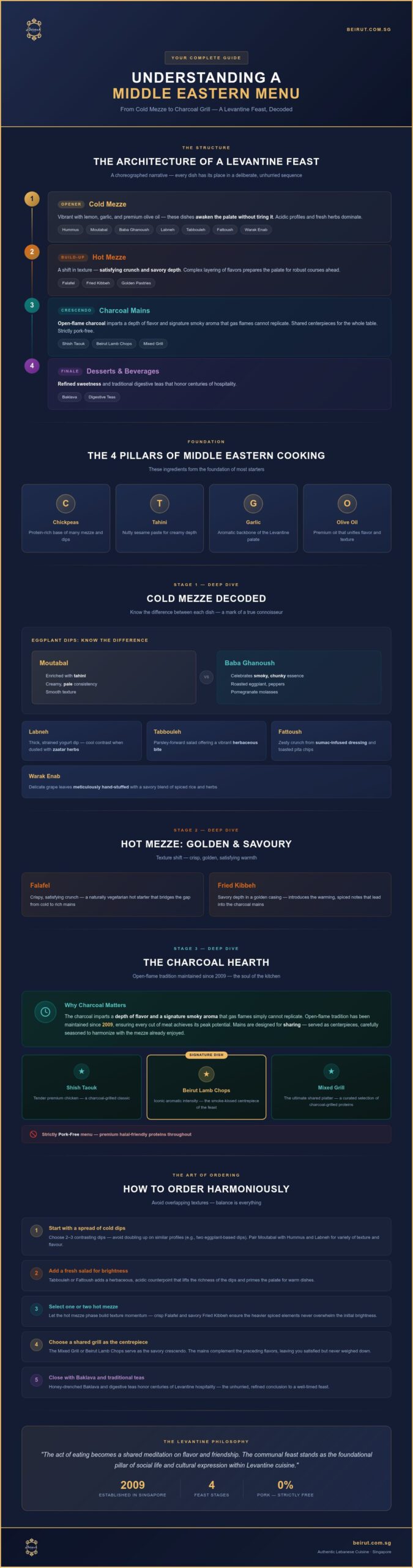
Beneath the warm glow of amber lanterns, the menu reveals itself as a meticulously crafted map of history and heritage. Truly understanding a middle eastern menu involves recognizing that it isn’t a random collection of plates; it’s a choreographed narrative of generosity. Every dish has its place in a sequence that honors the guest through a deliberate, unhurried cadence of service. This approach reflects a deep-seated philosophical emphasis on hospitality, where the act of eating becomes a shared meditation on flavor and friendship. The communal feast stands as the foundational pillar of social life and cultural expression within Levantine cuisine. To follow this roadmap, one must recognize the traditional divisions: refreshing cold mezze, savory hot mezze, charcoal-grilled mains, and heritage desserts.
The Rhythmic Flow from Cold to Hot Mezze
The experience always commences with the cooling grace of cold mezze. These dishes, often vibrant with lemon, garlic, and premium olive oil, serve to awaken the palate without tiring it. You’ll find that acidic profiles and fresh herbs dominate this opening phase, featuring staples like Moutabal or a crisp Fattoush salad. Once the senses are primed, the kitchen introduces the hot mezze. This phase brings a shift in texture, offering the satisfying crunch of Falafel or the savory depth of Fried Kibbeh. By moving from cold to hot, the meal builds a complex layering of flavors that prepares you for the robust courses to come. It’s a transition that ensures the heavier, spiced elements never overwhelm the initial brightness of the fresh vegetables.
The Centerpiece Charcoal Grills and Shared Mains
Our strictly pork-free menu highlights premium proteins like the tender Shish Taouk or our signature Beirut Lamb Chops. These mains are served as centerpieces for the table, designed for sharing among friends and family. They are substantial yet carefully seasoned to harmonize with the mezze you’ve already enjoyed. This balance ensures the feast feels complete, leaving you satisfied but never weighed down, even in the tropical heat of a Singapore evening. The mains are intended to complement the preceding flavors, acting as the savory crescendo of a well-timed culinary performance.
The Mezze Tapestry: Understanding Essential Cold and Hot Starters
In the heart of Levantine culture, the mezze table serves as a vibrant social anchor where conversation flows as freely as the olive oil. Rather than a mere prelude to a meal, mezze represents a collection of small plates designed to foster connection and shared discovery. To master understanding a middle eastern menu, one must first appreciate the four pillars that define the basics of Middle Eastern cooking: protein-rich chickpeas, nutty tahini, aromatic garlic, and premium olive oil. These ingredients form the foundation of most starters, many of which are naturally vegetarian, offering a sophisticated array of choices for every guest.
Velvet Dips and Fresh Salads: The Cold Mezze
The journey begins with silk-textured dips and garden-fresh salads that brighten the palate. While many guests recognize Hummus, the distinction between our eggplant-based offerings is a mark of a true connoisseur. Moutabal is enriched with tahini to create a creamy, pale consistency, whereas Baba Ghanoush celebrates the smoky, chunky essence of roasted eggplant mixed with peppers and pomegranate molasses. Labneh, a thick, strained yogurt dip, provides a cool contrast when dusted with zaatar herbs. For those seeking vibrant greens, the parsley-forward Tabbouleh offers a herbaceous bite, while the Fattoush salad introduces a zesty crunch through sumac-infused dressing and toasted pita chips. You should also look for Warak Enab, which are delicate grape leaves meticulously hand-stuffed with a savory blend of spiced rice and herbs.
Golden Pastries and Savoury Bites: The Hot Mezze
As the meal progresses, the table welcomes the warmth of golden textures and spiced fillings. Falafel remains a beloved staple, appearing as crispy chickpea croquettes seasoned with coriander and cumin. The artistry of the kitchen is further revealed in our heritage pastries. Sambousek and Spinach Fatayer offer a delightful contrast, with the former featuring savory fillings tucked into crisp dough and the latter providing a tangy, lemon-kissed green center. Fried Kibbeh is perhaps the most iconic hot starter, showcasing a torpedo-shaped shell of cracked bulgur wheat that encases a finely minced, aromatic filling. For a unique textural experience, Grilled Halloumi provides a warm, squeaky cheese bite that pairs beautifully with fresh flatbread. You can explore our full selection of mezze to see how these traditional techniques create a balanced start to your feast.
By thoughtfully selecting a mix of these textures, you ensure a meal that is both varied and deeply satisfying. This progression from cold, acidic notes to warm, savory bites is the secret to a perfectly synchronized Middle Eastern experience.
From the Charcoal Hearth: Demystifying Middle Eastern Main Courses
The transition from the vibrant mezze table to the robust main courses is marked by the unmistakable, evocative scent of the charcoal hearth. In the journey of understanding a middle eastern menu, one must recognize that authentic flavor isn’t born from modern gas flames, but from the traditional intensity of glowing embers. This charcoal mastery ensures a tender, aromatic finish that defines our heritage. Since 2009, we’ve upheld a strictly pork-free menu, focusing instead on the premium quality of imported lamb, beef, and poultry. These meats are elevated by essential marinades; vibrant blends of garlic, fresh lemon juice, and cooling yogurt, accented by the warmth of allspice and cinnamon. For a deeper dive into these traditions, you might explore the ultimate 2026 connoisseur’s guide to Middle Eastern food.
The Art of the Kebab: Kofta, Shish Taouk, and Beyond
Skewered meats represent a pinnacle of Levantine culinary art. When you’re focused on understanding a middle eastern menu, the nuance of the marinade is often what distinguishes a standard meal from a true feast. The Lamb Kofta is a masterclass in balance, featuring finely minced meat blended with fresh parsley, onions, and a secret ratio of aromatic spices before being hand-molded onto the skewer. In contrast, the Shish Taouk showcases the power of the marinade; tender cubes of chicken breast are steeped in a garlic-yogurt blend that keeps the meat succulent even under the high heat of the grill. The classic Beef Kebab relies on the prestige of the cut, using only the most tender portions to ensure a melt-in-the-mouth experience. For those seeking a lighter alternative without sacrificing the smoky depth of the grill, succulent Grilled Prawns and delicate Grilled Fish Fillets provide an elegant seafood narrative.
The Crowning Glory: The Mixed Grill Experience
The ultimate expression of our kitchen’s expertise is found in the Mixed Grill. This platter isn’t merely a meal; it’s a curated showcase of various textures and flavor profiles designed for communal indulgence. It brings together the zesty brightness of chicken with the rich, savory depth of lamb and beef. Among these, the Beirut Lamb Chops stand out as a signature inclusion. Celebrated for their exquisite seasoning and the perfect char achieved over the open flame, they represent the gold standard of charcoal grilling. This harmonious assembly ensures that every guest experiences the full breadth of the hearth’s capabilities, reinforcing why these dishes remain the heartbeat of any authentic feast.
Liquid Heritage and Sweet Finales: Navigating Desserts and Beverages
The final movement of a Levantine meal isn’t a heavy conclusion, but a delicate transition into the aromatic and the ethereal. When you’re understanding a middle eastern menu, you’ll notice a distinct departure from the dairy-heavy desserts common in other culinary traditions. Instead, our sweet finales rely on the sophisticated interplay of floral waters, hand-picked nuts, and pure honey. This lighter approach serves a specific purpose; it allows the guest to indulge without feeling weighed down after a robust series of charcoal-grilled mains. To truly finish the ritual, one must embrace the digestive beverages that act as a sensory bridge between the feast and the lingering conversation.
Layered Pastries and Delicate Puddings
Baklava stands as the crowning achievement of pastry craft, featuring paper-thin layers of filo dough that shatter delicately to reveal a heart of crushed pistachios or walnuts, all bound by a light, sweet syrup. For those seeking a more decadent experience, our ultimate guide to Kunafa explains the allure of this iconic warm, spun-pastry dessert layered with melted cheese. If you prefer something cooler, Mouhalabieh offers a silky, milk-based pudding experience. It’s subtly perfumed with orange blossom or rose water, providing a refreshing, botanical end to the meal that cleanses the palate with every spoonful.
From Vine to Cup: Lebanese Wine, Arak, and Traditional Teas
The beverage selection is just as rooted in heritage as the cuisine itself. Lebanese Wine carries a historic legacy that dates back millennia, representing one of the oldest wine-producing regions in the world. It offers a sophisticated pairing for those who appreciate a drink with a deep sense of place. For a traditional palate cleanser, Arak is the spirit of choice. This unsweetened, anise-flavored liquid is typically served diluted with water and ice, turning a milky white as it releases its aromatic oils.
As the evening winds down, the choice often falls between the bold, cardamom-infused intensity of Lebanese Coffee or the cooling, restorative notes of Moroccan Mint Tea. These drinks aren’t just an afterthought; they’re essential to understanding a middle eastern menu as a complete sensory journey. We invite you to view our curated beverage and dessert menu to complete your authentic cultural journey in the heart of our prestigious Singapore destination.
Cultivating the Feast: How to Order Harmoniously
Achieving the perfect balance at the table is an art form that transforms a collection of individual plates into a cohesive culinary narrative. When you’re focused on understanding a middle eastern menu, the secret lies in the ratio of the spread. For a pair, a harmonious start typically involves two cold mezze and one hot starter, followed by a shared charcoal centerpiece. Larger groups should aim for a diverse array of four to six mezze to ensure the table remains vibrant and conversational. This blueprint ensures every guest experiences the full spectrum of Levantine flavors without the risk of overlapping textures or redundant profiles.
Balancing Flavours, Textures, and Dietary Preferences
A well-ordered table thrives on contrast. It’s wise to pair rich, velvet-textured dips like Hummus with the vibrant, acidic notes of a sumac-infused Fattoush salad. This acidity cuts through the creaminess of the tahini, refreshing the palate for the next bite. You can accommodate vegetarians seamlessly by selecting a diverse array of mezze such as golden Falafel and tangy, lemon-kissed Spinach Fatayer. These dishes are so deeply satisfying that they often become favorites for every guest at the table. To create a multi-sensory experience, focus on contrasting textures; the delicate, crisp shell of a baked Sambousek provides the perfect foil to the succulent, smoke-kissed tenderness of our charcoal-grilled kebabs. By choosing varied preparation methods, you ensure the meal remains dynamic from the first dip to the final bite.
Experiencing Authentic Hospitality with a Curated Menu
True authenticity is found in the details that only a venue with a rich heritage can provide. Since our establishment in 2009, we’ve taken pride in acting as a knowledgeable host for guests understanding a middle eastern menu for the first time. An experienced team can guide you through the nuances of the day’s freshest ingredients, ensuring your selections flow logically from the initial refreshing bites to the internal warmth of the hearth. For a deeper exploration into these traditions, you may wish to consult our authentic guide to Mediterranean flavours and heritage. We invite you to experience the pinnacle of Levantine culinary art, where every ingredient is selected with care and every dish tells a story of pride and indulgence.
Elevate your next dining experience by reserving a table at Beirut Grill, where the spirit of the Levant is captured in every charcoal-grilled bite and every warm, inviting welcome.
Your Invitation to a Masterful Levantine Feast
Mastering the art of the traditional table transforms a simple dinner into a sophisticated cultural immersion that rewards your curiosity. By recognizing the deliberate, rhythmic flow from refreshing cold mezze to the aromatic intensity of the charcoal hearth, you’ve gained the essential confidence for understanding a middle eastern menu in its truest form. You now know that a perfect meal relies on the meticulous harmony between silk-textured dips, golden pastries, and premium, pork-free proteins. Since 2009, we’ve dedicated ourselves to preserving this heritage, offering an immersive dining experience where every Beirut Lamb Chop and every hand-poured glass of Arak serves as a hallmark of our seasoned expertise. This knowledge allows you to navigate our offerings not just as a guest, but as a true connoisseur of authentic hospitality. The embers are glowing. The table is set for your arrival at our prestigious destination. Savour the true essence of the Levant and reserve your table at Beirut Grill today.
Frequently Asked Questions
What is the difference between Hummus, Baba Ghanoush, and Moutabal?
Hummus is a velvety blend of chickpeas and tahini, while the eggplant-based dips are distinguished by their texture and additional ingredients. Moutabal uses roasted eggplant whipped with tahini for a pale, creamy consistency. In contrast, Baba Ghanoush is a more rustic, chunky preparation featuring roasted eggplant mixed with peppers, onions, and tangy pomegranate molasses. These distinctions are vital for understanding a middle eastern menu and ensuring a varied selection of textures for your table.
Is Middle Eastern food suitable for vegetarians and vegans?
Middle Eastern cuisine is exceptionally accommodating for both vegetarians and vegans due to its heavy reliance on legumes, fresh vegetables, and grains. Staples like Hummus, Falafel, Tabbouleh, and Warak Enab are naturally plant-based and rich in protein. While some dishes like Labneh or Grilled Halloumi involve dairy, the vast majority of the mezze section offers indulgent, flavorful options that align perfectly with vegan requirements without sacrificing authenticity or cultural depth.
What exactly is a Mixed Grill, and what meats are typically included?
A Mixed Grill is a curated platter that showcases the kitchen’s mastery over the charcoal hearth, offering a sampling of various premium meats. Typically, this centerpiece includes succulent skewers of Shish Taouk, savory Lamb Kofta, and tender Beef Kebab. At Beirut Grill, we often elevate this experience with our signature Beirut Lamb Chops. It’s designed for sharing, allowing guests to appreciate the different marinades and textures that define traditional Levantine grilling techniques.
Are there any pork products used in authentic Middle Eastern cooking?
Authentic Lebanese and Middle Eastern menus are strictly pork-free, adhering to long-standing regional dietary traditions and preparation standards. Instead of pork, the cuisine focuses on the superior quality and flavor profiles of premium lamb, beef, and poultry. Since 2009, we’ve maintained this commitment to authenticity, ensuring that every dish, from the savory Sambousek to the Fried Kibbeh, is prepared using traditional, high-quality ingredients that respect the heritage of the Levant.
What is Arak, and how should it be consumed during a meal?
Arak is a potent, unsweetened anise-flavored spirit that serves as the traditional accompaniment to a long, unhurried mezze feast. It’s clear in the bottle but turns a distinctive milky white when diluted with water and ice, a phenomenon known as the louche effect. Ideally, it’s sipped slowly throughout the meal, as its crisp, licorice-like notes act as a superb palate cleanser between rich bites of charcoal-grilled meats and creamy dips.
How many mezze plates should I order for a group of two or four people?
For a pair of diners, ordering three to four mezze plates alongside a single main course usually provides a balanced and satisfying experience. If you’re dining in a group of four, aim for six to eight different mezze to foster a truly communal and diverse table. This strategy is key to understanding a middle eastern menu, as it allows you to explore a wide spectrum of flavors, from acidic salads to savory golden pastries.
What makes Lebanese wine distinct from Western wine varieties?
Lebanese wine is distinguished by a historic legacy that spans over 5,000 years, rooted in one of the world’s oldest viticultural regions. Unlike many Western varieties, these wines often reflect a unique terroir influenced by high-altitude vineyards and Mediterranean breezes. While you’ll find familiar grapes like Cabernet Sauvignon, they’re often blended with indigenous varieties, resulting in robust, spicy profiles that are specifically structured to complement the complex, aromatic spices found in Middle Eastern cuisine.