
Could the creamy, golden swirl on your plate be less of a simple dish and more of a sensory journey through the heart of Lebanese heritage? For many, the encounter with hummus has been restricted to the grainy, uninspired tubs found in supermarket aisles, leaving a sense of disappointment for those seeking the true gold standard of Middle Eastern hospitality. We recognize that frustration and the longing for a texture so velvet-smooth it feels like an indulgence. Since 2009, Beirut Grill has anchored itself in Singapore’s vibrant Bussorah Street as a curator of authentic culture, dedicated to the meticulous craft of traditional mezze.
In this definitive guide, you’ll discover the artistry, history, and sophisticated pairing secrets behind the world’s most iconic dip. We’ll reveal the hallmarks of premium preparation that distinguish a true Lebanese masterpiece from a common spread. You’ll also learn the refined etiquette of the mezze table and discover professional secrets for pairing your hummus with our signature Mixed Grill and prestigious Lebanese Wine for a meal that rewards your curiosity.
Key Takeaways
- Understand the cultural soul of Lebanese dining through the four essential pillars that define the “king of mezze.”
- Learn the professional secrets of temperature and ratio that achieve a legendary, velvet-smooth texture in every serving of hummus.
- Discover how to identify heritage-quality preparations by understanding why traditional olive oil should only ever be a finishing garnish.
- Master the art of the “Perfect Bite” by pairing creamy dips with the smoky, charcoal-grilled excellence of a Mixed Grill.
- Immerse yourself in a culinary legacy that rewards curiosity through the seasoned expertise and hospitality of Beirut Grill.
What is Authentic Hummus? The Essence of Lebanese Tradition
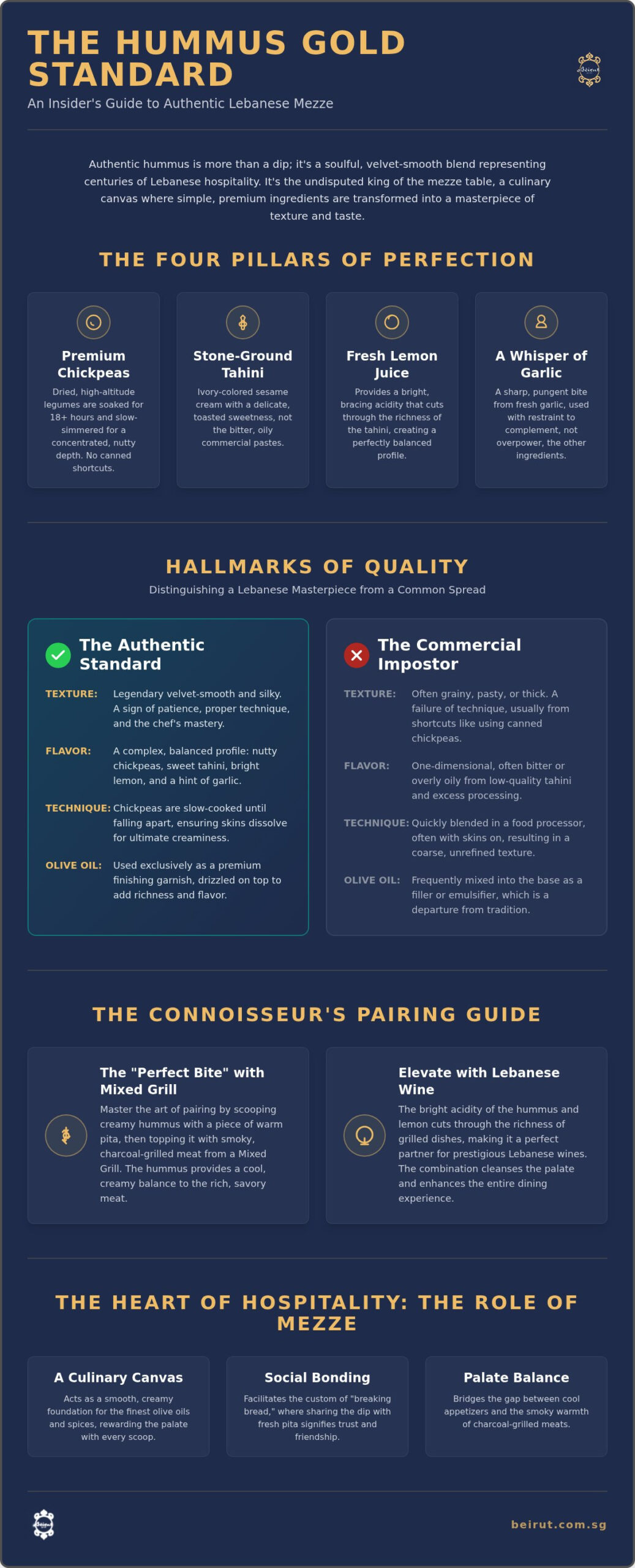
To step into a traditional Lebanese dining room is to be greeted by a rhythm of hospitality that has remained unchanged for centuries. At the center of this ritual sits a dish that is both humble and regal. Authentic hummus is a soulful, velvet-smooth blend of premium chickpeas, rich tahini, bright lemon juice, and a whisper of garlic. It’s not merely a dip; it represents the culinary alchemy of the Levant, where simple ingredients from the earth are transformed into a masterpiece of texture and taste. Since 2009, Beirut Grill has served as a sanctuary for this heritage in Singapore, ensuring that every guest experiences the gold standard of this iconic offering.
The Etymology and Roots of the Levant
The word itself is rooted deeply in the Arabic language, where “hummus” literally translates to chickpea. This linguistic simplicity belies a complex history of hummus that stretches across the ancient trade routes of the Middle East. For generations, Lebanese families perfected the art of the puree using a heavy mortar and pestle. This was a labor-intensive process that demanded patience to achieve the desired silkiness. While many regions claim its origin, the Levant remains the heartland where the specific balance of tahini and lemon was refined into the sophisticated profile we celebrate today. This tradition is a testament to a culture that prizes the slow, deliberate preparation of food as an act of love.
The Role of Mezze in Middle Eastern Hospitality
In Lebanese culture, dining is never a solitary act. It’s a communal celebration known as mezze, a sophisticated ritual involving a parade of small plates designed to encourage conversation and connection. Hummus is the undisputed king of this spread. It provides a cooling, creamy foundation that anchors the more vibrant flavors of dishes like Tabbouleh or the heat of Batata Harra. This cultural cornerstone serves several vital roles at the table:
- A Culinary Canvas: It acts as a smooth base for the finest olive oils and dusted spices, rewarding the palate with every scoop.
- Social Bonding: The dish facilitates the ancient custom of “breaking bread,” where guests use fresh pita to share the dip, a gesture that signifies trust and shared friendship.
- Palate Balance: It bridges the gap between cold appetizers and the smoky warmth of charcoal-grilled meats, such as our signature Mixed Grill.
By positioning this iconic dip at the start of the meal, we invite guests to slow down. It’s a sensory invitation to immerse oneself in a dining experience where every bite tells a story of longevity and cultural pride. This is the essence of Lebanese hospitality, where the quality of the food is matched only by the warmth of the welcome.
The Culinary Alchemy: Crafting the Perfect Velvet Texture
Achieving the legendary silkiness of a true Lebanese dip is an exercise in patience and precision. While home cooks often prioritize speed, the professional kitchen views the creation of hummus as a form of culinary alchemy. It’s a process where the ratio and quality of raw ingredients are paramount. In a traditional setting, “smooth” is not merely a texture preference; it’s a technical requirement that signals the chef’s mastery over their craft. A grainy texture is considered a failure of technique, a departure from the standards that have defined this dish for centuries. To experience this level of craftsmanship, one must look beyond the convenience of modern shortcuts.
Sourcing Premium Ingredients
The foundation of the gold standard begins with the chickpea. We favor small-batch, high-altitude legumes because they possess a concentrated, nutty depth that larger, mass-produced varieties lack. Unlike the shortcut of using canned alternatives, dried chickpeas are soaked for eighteen hours, allowing them to hydrate fully before a long, slow simmer. The tahini factor is equally critical. We distinguish between the bitter, oily commercial pastes found in most stores and a premium, stone-ground sesame cream. This cream should be ivory in color and possess a delicate, toasted sweetness. When combined with the bracing acidity of hand-squeezed lemon juice and the sharp, pungent bite of fresh garlic, these ingredients form a profile that is both complex and impeccably balanced.
The Professional Technique: Beyond the Food Processor
True craftsmanship involves over-cooking the chickpeas until they are nearly falling apart, a step that ensures the skins are soft enough to vanish during the blending process. While the debate over the origins of hummus continues across borders, the Lebanese technique of using ice during blending is a widely recognized secret of the trade. By adding ice cubes to the blender, professional chefs lower the temperature of the friction-heated blades, which prevents the tahini from seizing and helps to aerate the mixture. The emulsification stage is the precise moment when the heavy chickpea puree and the rich tahini collide to become a singular, airy cream. This aeration creates a lightness that allows the dip to practically melt on the tongue, passing the “velvet test” every time.
This level of dedication to texture is what transforms a simple appetizer into a prestigious culinary event. It requires a refined touch and a respect for the ingredients that only years of experience can provide. If you’re seeking to taste the result of this meticulous process, we invite you to discover the authentic flavors prepared daily in our kitchen, where heritage and hospitality meet.
Authentic vs. Commercial: Identifying the Hallmarks of Quality
The modern culinary landscape has seen a proliferation of variations that stray far from the ancestral roots of the Levant. While the global popularity of the dish is a testament to its appeal, the emergence of “dessert hummus” infused with chocolate or pumpkin spice represents a significant departure from culinary heritage. To the discerning palate, these iterations aren’t merely variations but a dilution of a sacred tradition. Authenticity is defined by a specific restraint, where the purity of the four core ingredients is never compromised by trendy additions or industrial shortcuts. One of the most glaring markers of a commercial spread is the inclusion of vegetable oils or even olive oil within the blend itself. In a prestigious Lebanese kitchen, olive oil is never an ingredient used to achieve texture; rather, it is a luxurious crown, poured into the reservoir of a finished plate to enhance the sensory experience.
The Preservative Problem
Walking through a supermarket aisle, one often finds tubs with shelf lives spanning weeks, a feat made possible only through chemical intervention. Ingredients like citric acid and potassium sorbate are frequently employed to maintain stability, but they inevitably ruin the delicate balance of fresh tahini and hand-pressed garlic. These additives lend a metallic, sharp aftertaste that masks the natural nuttiness of the chickpeas. Authentic hummus is a living, breathing dish that should ideally be consumed within 48 hours of its creation to capture its peak vibrancy. This lack of preservatives results in a remarkable lightness that contrasts sharply with the “heavy” or cloying sensation often associated with store-bought alternatives. At Beirut Grill, our commitment to freshness ensures that the dip remains an airy, indulgent experience rather than a processed convenience.
Garnish and Presentation: The Visual Language
Placing the final touches on a mezze plate is a visual dialogue between the host and the guest, communicating a respect for tradition through specific artistic cues. A hallmark of quality is the “swirl” technique, where a spoon is used to create a deep, circular well in the cream. This isn’t merely for aesthetics; it creates a functional reservoir designed to hold a generous drizzle of premium extra virgin olive oil. Traditional garnishes are then applied with a deliberate touch, often including a cluster of tender, whole chickpeas at the center and a vibrant dust of sumac or paprika. Those seeking the most refined Mediterranean food in Singapore will recognize that this attention to visual artistry is a signature of authenticity. A scattered garnish of fresh, flat-leaf parsley adds a final herbaceous note, completing a plate that is as beautiful as it is delicious. This meticulous plating rewards the guest’s curiosity, signaling that they are about to partake in a legacy that has been curated with pride since our founding in 2009.
The Connoisseur’s Pairing Guide: Elevating the Experience
To truly appreciate the artistry of Lebanese cuisine, one must understand that hummus is far more than a standalone appetizer. In the refined setting of a traditional feast, it functions as a sophisticated counterpoint to the intense, smoky aromas of the charcoal grill. While many modern interpretations relegate this dip to a simple snack paired with crackers, the connoisseur knows that its true purpose is to harmonize with the richness of a main course. The bright acidity of the lemon and the creamy depth of the tahini serve a vital technical role. They cut through the succulent fats of premium lamb and beef, providing a refreshing lift that prepares the palate for the next savory encounter.
The hallmark of an expert diner is the pursuit of “The Perfect Bite.” This is a deliberate assembly where a fragment of warm, pillowy bread is used to scoop a generous portion of velvet-smooth dip before being topped with a morsel of charred meat. This combination offers a study in contrasts: the cooling creaminess of the hummus perfectly balances the heat of traditional Lebanese seasonings. It’s a sensory reward that honors the complexity of the ingredients while elevating the entire dining experience to a level of prestigious indulgence.
The Mixed Grill Harmony
When exploring our menu, the synergy between the mezze and the mains becomes clear. The garlic-infused notes of the dip are a natural companion to Shish Taouk, where the charred, marinated chicken finds a soulmate in the creamy chickpea puree. Similarly, the Lamb Kofta offers a robust, savory contrast that is softened by the dip’s delicate texture. This interplay is a central theme in our Ultimate Guide to the Best Mixed Grill in Singapore, which details how these elements create a balanced Lebanese feast. The dip acts as a cooling agent, ensuring that the bold spices of the meat never overwhelm the guest’s palate.
Arak and Lebanese Wine Pairings
A sophisticated meal is never complete without the right beverage to mirror the quality of the food. For those seeking a traditional experience, a crisp Lebanese Wine from the renowned Bekaa Valley is an exceptional choice. The mineral-forward whites of this region possess a brightness that complements the nuttiness of the tahini without masking it. Alternatively, one might indulge in Arak, the legendary “Lion’s Milk” of Lebanon. This anise-flavored spirit, when diluted with water and ice, provides a potent palate cleanser. The sophisticated interplay between the licorice notes of the Arak and the earthy creaminess of the hummus creates a rhythmic flow to the meal, allowing the guest to fully immerse themselves in the heritage of the Levant. To experience these masterful pairings for yourself, we invite you to reserve your table at Beirut Grill today.
Experience the Legacy: Hummus at Beirut Grill
Nestled within the historic architectural charm of Bussorah Street, Beirut Grill stands as a prestigious destination for those seeking a truly authentic cultural journey. Since 2009, we’ve dedicated ourselves to preserving the culinary integrity of the Levant, positioning our kitchen as a sanctuary for traditional Lebanese flavors that transport the guest with every bite. Every bowl of hummus served within our walls is a testament to this commitment, crafted with a level of precision and artistry that rewards the visitor’s curiosity. The atmosphere here is one of sophisticated indulgence, where the evocative scent of charcoal-grilled meats mingles with the warm, inviting hospitality that defines our long-standing heritage.
A Heritage of Excellence Since 2009
Our role as a curator of authentic culture is built upon a foundation of reliability and seasoned expertise. By strictly maintaining a pork-free menu, we ensure that every dish adheres to the highest Middle Eastern standards, allowing the pure, unadulterated flavors of our premium imported ingredients to take center stage. This dedication to authenticity extends far beyond our mezze to our specialized mastery of the charcoal grill. We believe that the smoke-kissed notes of our signature meats provide the ultimate partner to our creamy dips, creating a sensory synergy that has made us a hallmark of credibility in Singapore’s dining scene for over fifteen years. Our kitchen remains a place where time-honored techniques are respected, ensuring that the legacy of Lebanese cuisine is preserved for every guest who walks through our doors.
The Complete Lebanese Feast
To fully embrace the immersive culinary journey we offer, we encourage guests to look beyond a single plate and experience the rhythmic, storytelling flow of a traditional feast. Begin your evening by sharing our velvet-smooth hummus, but allow it to act as the cooling, sophisticated foundation for the robust flavors of our Lamb Kofta or the tender, perfectly charred Shish Taouk. This progression of tastes is designed to slow the reader down, encouraging you to immerse yourself in the sensory details of every bite. As the main course concludes, there is no finer way to reward your palate than with a serving of authentic Kunafa, a dessert that captures the very soul of Lebanese sweetness through its delicate balance of texture and syrup.
We invite you to step away from the urban bustle and join us for an evening that feels both exclusive and welcoming. Whether you’re a seasoned connoisseur of Middle Eastern flavors or a curious newcomer seeking an elevated dining experience, our table is prepared to offer you a sensory-rich encounter with a legacy that has been refined since our founding in 2009. We encourage you to reserve your table at Beirut Grill today and discover why we remain the gold standard for Lebanese hospitality and authentic cuisine in the heart of the city.
Embrace the Art of the Lebanese Table
Mastering the nuances of authentic hummus is a transition from viewing food as mere sustenance to experiencing it as a storied cultural legacy. You’ve discovered that the secret to a legendary velvet texture lies in the meticulous balance of premium tahini and the patient, traditional preparation of sun-ripened chickpeas. True excellence is found in the absence of industrial preservatives and the presence of ancient rituals, from the deep swirl of the plate to the sophisticated pairings with charcoal-grilled meats. This is the gold standard of hospitality that we’ve championed since our founding in 2009.
At Beirut Grill, we invite you to move beyond the theory and immerse yourself in the practice of a pork-free Lebanese feast. Our kitchen remains a sanctuary where heritage is honored through every hand-pressed lemon and every expertly charred skewer. We take pride in our role as specialists of the charcoal grill, providing the smoky counterpoint that your palate deserves. It’s time to reward your curiosity with a dining experience that feels both exclusive and deeply welcoming. Book Your Authentic Lebanese Experience at Beirut Grill and allow us to host your next sensory-rich journey through the Levant.
Frequently Asked Questions
Is hummus healthy and what are its nutritional benefits?
Hummus is a nutrient-dense masterpiece that offers a wealth of plant-based protein and essential fiber. The combination of chickpeas and sesame-rich tahini provides a balanced profile of healthy fats and minerals like iron and folate. It’s a cornerstone of the Mediterranean diet, celebrated for its ability to provide sustained energy while remaining a naturally indulgent part of any meal.
What is the difference between hummus and baba ghanoush?
The primary distinction lies in the base ingredient, where the former uses chickpeas and the latter features smoky, roasted eggplant. While both share the creamy embrace of tahini, lemon, and garlic, baba ghanoush offers a deeper, charred flavor profile. Both serve as essential pillars of the mezze table, providing contrasting textures that reward the guest’s palate during a traditional feast.
Can I eat hummus if I am on a vegan or gluten-free diet?
Traditional Lebanese preparations are naturally vegan and gluten-free, making them an inclusive choice for the modern diner. We rely on the purity of legumes, sesame cream, and fresh citrus, ensuring that no animal products or wheat-based fillers enter the blend. It’s a prestigious offering that accommodates diverse dietary needs without ever compromising on the richness of our cultural heritage.
Why is tahini so important in an authentic hummus recipe?
Tahini is the soul of the dish, providing the essential fats required for that legendary, velvet-smooth emulsification. Without high-quality, stone-ground sesame cream, the chickpeas would remain a simple puree rather than an airy, indulgent dip. It contributes a delicate nuttiness and a luxurious mouthfeel that distinguishes a professionally crafted Lebanese masterpiece from a common supermarket spread.
How should I store fresh hummus to keep it creamy?
To preserve the creamy integrity of a fresh batch, store it in an airtight container within the refrigerator. A traditional secret is to smooth the surface and apply a thin, protective layer of premium olive oil before sealing the lid. This prevents the dip from drying out and maintains its vibrancy, though we recommend enjoying it within 48 hours for the most evocative flavor.
What is the best type of bread to serve with hummus?
Warm, pillowy pita bread, known traditionally as khubz, is the undisputed partner for this iconic dip. The bread should be fresh and flexible, acting as a soft vessel to scoop the cream and its reservoir of olive oil. In our dining room, we prioritize bread that’s served at the perfect temperature to complement the cooling, earthy texture of the mezze.
Why does restaurant hummus always taste better than store-bought?
The superiority of restaurant-grade preparations stems from a refusal to use industrial preservatives or metallic-tasting citric acid. At Beirut Grill, our chefs employ professional techniques like aeration and specific temperature controls to achieve a lightness that commercial tubs cannot replicate. We prioritize the freshness of small-batch legumes and hand-pressed citrus, ensuring a sensory profile that’s both bright and deeply nuanced.
Can hummus be served warm or should it always be cold?
While traditionally served at room temperature or slightly chilled as a cooling mezze, certain sophisticated variations are presented warm. Dishes topped with sizzling sautéed lamb or spiced pine nuts offer a beautiful play on temperatures. This contrast between the cool cream and the hot, savory topping creates a rhythmic dining experience that honors the indulgence and hospitality of the Levant.