
Could the secret to unlocking the complex layers of a 5,000-year-old culinary tradition be hidden within the sun-drenched limestone soils of the Bekaa Valley? It’s natural to feel a flicker of hesitation when pairing wine with middle eastern food, particularly when you’re navigating the sharp acidity of lemon, the pungency of garlic, or the intense, smoky char of a Mixed Grill. You’ve likely felt the frustration of a delicate bottle being completely overshadowed by the vibrant, often overwhelming spice profiles that define our table.
We’re here to replace that confusion with the seasoned expertise of a refined host, ensuring every pour enhances rather than competes with your meal. You’ll discover how to elevate your dining experience by masterfully matching prestigious Lebanese wines and global varietals with the intricate flavors of the Levant. We will examine the influence of regional terroir and provide a clear strategy for selecting the perfect bottle to create a balanced sensory journey that rewards your curiosity. From the award-winning whites of 2026 to the robust reds that anchor our heritage, you will gain the confidence to curate a truly exceptional table.
Key Takeaways
- Learn to navigate the vibrant acidity and earthy spices of the Levant by selecting high-acid whites and dry rosés that refresh the palate between bites of mezze.
- Discover why robust reds like Syrah and Cabernet Sauvignon are the ideal companions for the smoky, charcoal-grilled flavors of our Mixed Grill and Lamb Kofta.
- Gain a deeper appreciation for the ancient terroir of the Bekaa Valley, where the world’s oldest winemaking traditions enhance the art of pairing wine with middle eastern food.
- Master the traditional ritual of Arak, including the essential dilution techniques that transform this spirit into a sophisticated palate cleanser for complex flavor profiles.
The Sophisticated Challenge: Why Pairing Wine with Middle Eastern Food Rewards the Curious
The table is set with a mosaic of small plates, each releasing a bouquet of toasted cumin, bright sumac, and the citrusy lift of fresh parsley. To master the art of pairing wine with middle eastern food, one must look past the individual ingredients and into the very soul of the Levant. It is a philosophy of balance. We seek to harmonize the vibrant acidity of lemon with the earthy depth of ancient spices and the indulgent richness of cold-pressed olive oils. This isn’t merely a meal; it’s a sensory performance where the beverage serves as the essential supporting cast.
Many diners fall victim to the spice myth, assuming that because our cuisine is richly flavored, it must be hot in a way that clashes with fine wine. In reality, the heat of the Levant is aromatic rather than incendiary. Unlike chili-heavy cuisines that can numb the tongue, spices like cardamom and cinnamon invite the wine to participate in the conversation. A well-chosen bottle acts as a necessary palate cleanser, especially when enjoying tahini-heavy dishes like Moutabal or Hummus. The wine’s structure must sweep away the coating oils to prepare your senses for the next discovery.
This journey is most rewarding when we practice terroir-matching. There is an undeniable synergy when you pour a vintage born from the same sun-drenched limestone as the vegetables and grains on your plate. Exploring the Lebanese wine history reveals a winemaking tradition that predates most European vineyards by millennia, offering a natural, historical blueprint for these culinary unions. It is about drinking from the same soil that nourished the food.
Decoding the Levant Palate
The secret to a successful match lies in the interplay between tannins and tartness. Sumac and Za’atar possess a citrusy edge that can make low-acid wines taste flat, while the pungency of garlic requires a partner with enough backbone to stand firm. The Beirut style of hospitality is an immersive experience where the table is a landscape of shared stories, anchored by flavors that are as bold as they are refined. You need a wine that can match that storied intensity without faltering.
The Balance of Weight and Texture
Texture is just as vital as taste. The silkiness of Hummus demands a white wine with a certain weight, perhaps an oaked Chardonnay or a traditional Lebanese blend. When the saltiness of Grilled Halloumi meets the glass, you need a wine that matches its physical density. For those exploring the vibrant Middle Eastern food Singapore scene, understanding these weight dynamics transforms a simple dinner into a prestigious cultural journey. It’s about ensuring the wine feels as substantial as the heritage it accompanies.
The Mezze Symphony: Crisp Whites and Rosés for Cold Appetizers
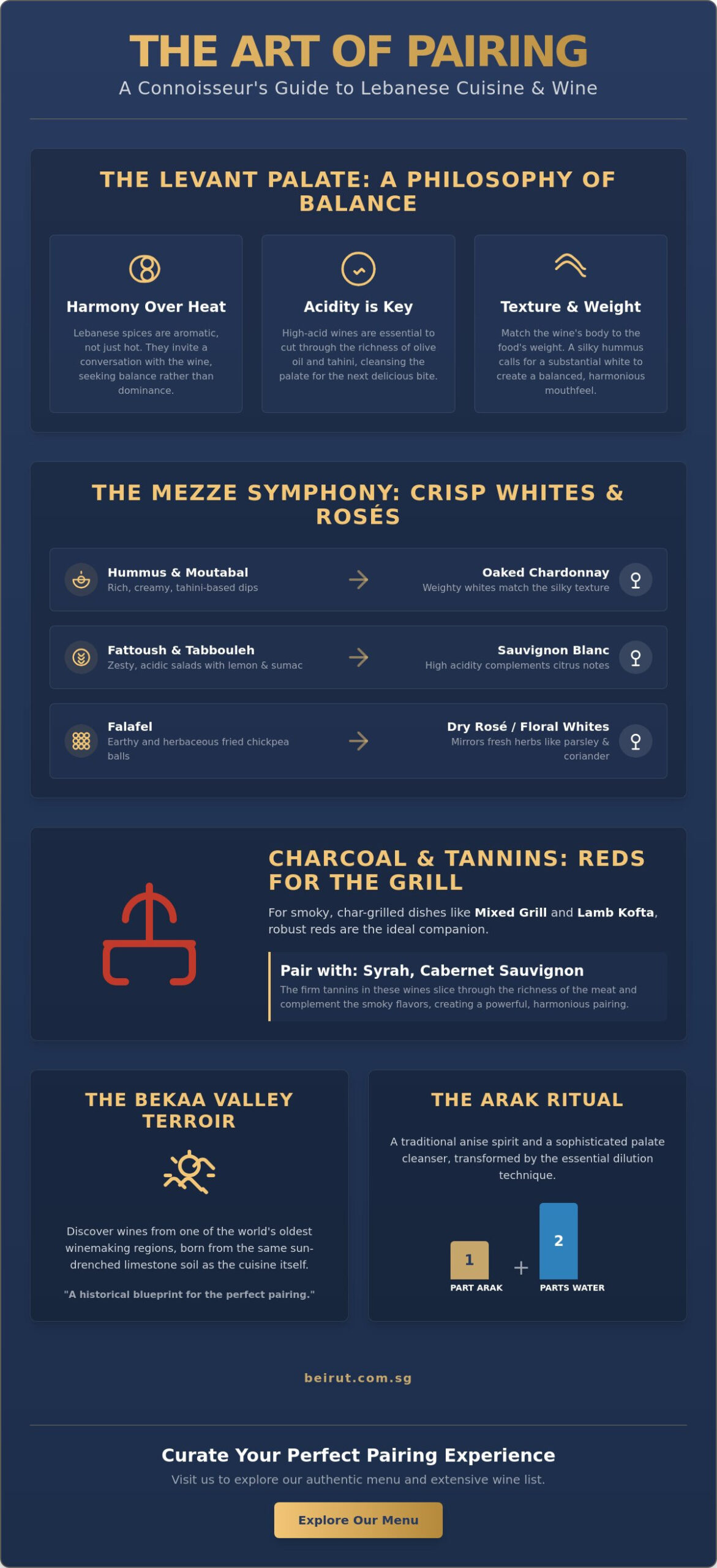
The arrival of the mezze platter marks the true commencement of a Lebanese feast, a vibrant mosaic of textures that demands a thoughtful approach to the glass. When you’re pairing wine with middle eastern food, the initial challenge is the generous use of lemon and high-quality olive oil that defines our cold appetizers. High-acid whites, such as a sharp Sauvignon Blanc or a mineral-driven Assyrtiko, are indispensable here. These wines possess the necessary “cut” to pierce through the richness of olive oil, refreshing your palate between bites of silky Hummus or zesty Tabbouleh.
The herbaceous profile of Falafel, often brightened with fresh parsley and coriander, finds a natural ally in floral white wines. These varietals mirror the garden-fresh aromatics of the dish without being overwhelmed by the earthy chickpeas. For those seeking more inspiration, there are many delicious wine and Middle Eastern pairings that highlight how crisp acidity can slice through the richness of tahini. To handle the famous “garlic punch” found in authentic Lebanese dips, look for wines with a clean, citrus finish that can neutralize the lingering pungency of garlic without turning bitter.
White Wine Pairings for Dips and Salads
A bright Sauvignon Blanc is the definitive choice for a lemon-heavy Fattoush, as its citrus notes dance alongside the sumac-dusted pita chips. For the creamier textures of Labneh or a traditional Hummus, an unoaked Chardonnay provides a rounded mouthfeel that complements the dairy and sesame without the distraction of heavy vanilla. If your table is crowded with a diverse array of mezze, a neutral Pinot Grigio acts as a sophisticated bridge, allowing the intricate spices of each dish to remain the protagonist of the evening.
The Power of the Lebanese Rosé
In the sun-baked vineyards of our heritage, Cinsault-based rosés have long been the secret weapon of the connoisseur. These wines offer a delicate fruitiness that provides a stunning contrast to the smoky, charred skin of Baba Ghanoush. The versatility of a dry rosé is unmatched, as it balances the earthy depth of eggplant with a bright, berry-forward acidity. Understanding these nuances is essential for anyone exploring the high standards of mediterranean food Singapore enthusiasts have come to expect. You might find yourself longing to experience these harmonies firsthand at our table, where every bottle is selected to honor these ancient culinary bonds. Our cellar is curated to ensure your journey through the mezze course is nothing short of prestigious.
Charcoal and Tannins: Selecting Red Wines for the Mixed Grill
As the aroma of glowing charcoal fills the air, the dining experience shifts from the bright, citrusy lift of mezze to the deep, resonant flavors of the hearth. Fire is the ultimate transformer. When you’re mastering the art of pairing wine with Middle Eastern food, you must understand how the elemental force of smoke alters the profile of a vintage. The char from the grill introduces a specific bitterness and a savory depth that can make delicate wines feel thin or metallic. To achieve a prestigious balance, you need a red wine with enough structure and dark fruit intensity to embrace the smoke rather than flee from it.
The relationship between charcoal and tannins is a delicate dance of chemistry and heritage. While heavy oak can sometimes clash with traditional spices, the natural tannins found in bold red varietals are essential for cutting through the rich fats of our signature meats. A well-selected red doesn’t just sit alongside the dish; it actively prepares your senses for the next succulent bite. The charcoal-grill method demands a robust red that possesses both the weight to match the meat and the fruit-forward character to complement the caramelized edges of the grill.
The Mixed Grill Masterclass
For our Mixed Grill, a Syrah or Shiraz is often the most evocative choice. Its natural peppery notes act as a mirror to the Lebanese seven-spice blend, creating a seamless transition between the glass and the plate. If your focus is the Beirut Lamb Chops, the architectural structure of a Cabernet Sauvignon is unrivaled. Its assertive tannins work to dissolve the marbling of the lamb, leaving a clean finish. For a Beef Kebab, consider the unexpected brilliance of a Malbec. Its plum and blackberry notes provide a lush, velvety contrast to the savory char, rewarding those who dare to step beyond traditional borders.
Managing Spice and Heat in Reds
Precision is required when navigating the heat of dishes like Batata Harra. High-alcohol reds can act as an accelerant to chili, creating an unpleasant burn on the tongue that masks the flavor of the potato and coriander. Instead, seek out ‘juicy’ reds with lower alcohol levels and higher acidity to provide a refreshing relief from dry spice rubs. A medium-bodied Merlot or a vibrant Tempranillo is the ideal partner for Shish Taouk. These varietals offer a soft, fruit-driven profile that respects the delicate nature of grilled chicken while standing firm against the aromatic garlic marinade.
The Lebanese Terroir: Why Heritage Wines are the Ultimate Pairing
To truly understand the art of pairing wine with middle eastern food, one must travel in spirit to the Bekaa Valley. This high-altitude plateau, cradled between the Mount Lebanon and Anti-Lebanon ranges, is arguably the oldest winemaking region on Earth. With a viticultural history stretching back over 5,000 years, the terroir here has been specifically shaped by the same sun and limestone that nourish the ingredients on your plate. By the late 2010s, the number of producers in this storied landscape grew to nearly 80 wineries, each contributing to a renaissance of ancient techniques refined by modern precision.
The sophisticated character of Lebanese viticulture owes much to the French influence that shaped the industry in the early 20th century. This unique cultural intersection merged thousands of years of heritage with European structural standards, creating wines that possess a rare combination of old-world soul and new-world vibrancy. Because these vines grow in high-altitude vineyards with significant day-night temperature shifts, the grapes retain a natural, bracing acidity. This acidity is the secret weapon for pairing wine with middle eastern food; it provides a necessary lift that balances the rich fats of olive oil and the complex, earthy spices of the Levant.
The Icons of the Bekaa Valley
No exploration of this terroir is complete without acknowledging the legendary Chateau Musar. Known for its age-worthy reds that evolve beautifully over decades, it remains a high-status marker for any serious connoisseur. In contrast, Chateau Ksara offers vibrant, accessible labels that define the modern Lebanese palate, providing a consistent bridge between tradition and contemporary taste. Finding these prestigious labels at an authentic Lebanese restaurant is essential for anyone seeking to experience the full narrative of our culinary history. These wines don’t just accompany the meal; they anchor it in a specific sense of place.
Indigenous Grapes: Obaideh and Merwah
While international varietals flourish here, the true rewards for the curious diner lie in the rediscovery of indigenous white grapes like Obaideh and Merwah. These ancient vines produce wines with honeyed, nutty profiles and a distinctive mineral backbone. They are the ultimate partners for our traditional desserts, cutting through the sweetness of Baklava or the creamy richness of Kunefe with effortless grace. Since our founding in 2009, Beirut Grill has acted as a proud curator of these labels, ensuring our guests can taste the literal roots of our heritage. We invite you to reserve your table and discover how these 5,000-year-old traditions transform a simple dinner into a prestigious cultural journey.
Arak and Beyond: Completing Your Authentic Lebanese Dining Experience
While the previous chapters of this guide explored the intricate art of pairing wine with middle eastern food, no Levantine table is truly complete without the presence of Arak. Known affectionately as “The Lion’s Milk,” this potent, grape-based spirit infused with aniseed serves as the ultimate palate cleanser. It possesses a unique ability to slice through the intense richness of grilled meats and the creamy density of tahini-based dips. The ritual of Arak is a deliberate, atmospheric experience that encourages guests to slow down and savor the communal nature of the meal, acting as a bridge between the varied flavors of a traditional feast.
Achieving the perfect balance requires a refined touch and adherence to the traditional “1/3 rule.” This involves pouring one part Arak followed by two parts cool water, a process that triggers the “louche” effect. This chemical reaction transforms the clear spirit into a milky, opalescent elixir that is as visually captivating as it is refreshing. This visual theater is a hallmark of Lebanese hospitality, signaling a sophisticated transition into the heart of the dining experience.
The Arak Experience
Arak’s assertive aniseed profile offers a cooling counterpoint to the deep savoriness of Lamb Kofta or Beirut Lamb Chops. While a robust red wine provides the tannin structure to match the meat, Arak offers a crispness that resets the senses entirely. Prestigious labels such as Arak Brun or Massaya Arak represent the pinnacle of this craft, offering a smooth finish that lingers elegantly. Choosing between wine and Arak often depends on the rhythm of your evening; wine invites a contemplative, narrative flow, while Arak fosters a spirited, high-energy atmosphere during a long mezze session.
Sweet Conclusions
As the savory courses recede, the focus shifts to the indulgent final acts of the evening. Pairing a late-harvest dessert wine with a cheese-rich Kunafa creates a prestigious harmony of salt and sugar. The wine’s honeyed notes embrace the orange blossom syrup, while its natural acidity prevents the pastry from feeling overly heavy on the palate. Following this, a steaming glass of Moroccan Mint Tea or a cup of potent Lebanese Coffee serves to ground the senses, providing a final, aromatic reset after the complexity of the wine.
To host a sophisticated Middle Eastern wine dinner, remember that the progression of beverages should mirror the intensity of the food. Begin with crisp whites and rosés for the mezze, move to structured heritage reds for the grill, and introduce Arak as a traditional interlude. This thoughtful orchestration is what distinguishes a simple meal from a prestigious cultural journey. We invite you to book your next heritage-rich dinner at Beirut Grill, where our expertise ensures every pour is a tribute to our 5,000-year-old history.
Master the Art of the Levantine Table
Your journey through the sun-drenched vineyards of the Bekaa and the aromatic hearths of the Levant has revealed that pairing wine with middle eastern food is a pursuit of profound harmony. You now understand how the bracing acidity of a crisp white slices through silken hummus, while the structured tannins of a heritage red embrace the savory char of the grill. These are not merely rules; they are invitations to participate in a 5,000-year-old narrative that rewards the curious and the bold. By balancing the weight of the wine with the intensity of the spice, you transform a simple meal into a prestigious cultural odyssey.
Since our founding in 2009, we’ve dedicated ourselves to being the custodians of this storied heritage. Our cellar is a curated sanctuary featuring legendary labels like Chateau Musar and Chateau Ksara, specifically selected to complement the authentic flavors born from our traditional charcoal-grill techniques. Whether you’re seeking a celebratory vintage or the ritualistic theater of a perfectly diluted Arak, we provide the physical and sensory stage for an unforgettable experience. Experience the perfect pairing; book your table at Beirut Grill today. We look forward to hosting you for an evening of indulgence and discovery.
Frequently Asked Questions
What is the best wine to pair with Hummus?
An unoaked Chardonnay or a full-bodied indigenous white like Obaideh is the premier choice for Hummus. These wines possess the necessary weight to complement the creamy tahini without being overshadowed by the garlic. The rounded mouthfeel of the wine harmonizes with the silkiness of the dip, creating a prestigious balance on the palate that rewards the guest’s curiosity.
Can I drink red wine with Middle Eastern food?
Red wine is an exceptional companion for many Levantine dishes, particularly those prepared over our traditional charcoal grill. While whites excel with cold mezze, structured reds like Syrah or Cabernet Sauvignon are essential for the richer, savory notes of our main courses. The key is selecting a bottle with enough dark fruit and tannin to stand up to the smoky char of the hearth.
What wine goes best with Lamb Kofta and Mixed Grill?
A peppery Syrah or a robust Bekaa Valley red blend provides the ideal structure for Lamb Kofta and our signature Mixed Grill. The natural spice notes in these varietals mirror the aromatic complexity of our Lebanese seven-spice seasoning. This creates a seamless transition between the glass and the plate, ensuring the wine enhances the succulent, charred flavors of the meat.
Is Lebanese wine similar to French wine?
Lebanese wine shares a sophisticated structural DNA with French wine due to historical influences, yet it remains distinct through its unique high-altitude terroir. While you might recognize French varietals like Cabernet Sauvignon or Cinsault, the intense sun and limestone soils of the Bekaa Valley impart a specific ripeness and mineral depth. This heritage results in wines that offer both old-world elegance and a vibrant, Levantine soul.
How do I pair wine with spicy Middle Eastern dishes?
Selecting a low-alcohol, high-acidity wine is the most effective strategy for pairing wine with middle eastern food when heat is involved. For a dish like Batata Harra, a juicy red with soft tannins or a crisp, off-dry white prevents the spice from becoming overwhelming. These selections provide a refreshing relief that cleanses the palate without acting as an accelerant to the chili.
What is Arak and should I drink it with my meal?
Arak is a traditional, grape-based spirit infused with aniseed that serves as a prestigious palate cleanser throughout your meal. When diluted using the 1/3 rule, it transforms into a milky elixir that cuts through the richest fats and most complex spices. It is particularly rewarding when enjoyed alongside a variety of cold mezze, offering a cooling contrast that resets your senses for the next course.
Should I choose white or rosé for a vegetarian Middle Eastern feast?
A dry, Cinsault-based rosé is the most versatile choice for a vegetarian Middle Eastern feast. Its delicate fruitiness provides a stunning bridge between the earthiness of Falafel and the smoky depth of Baba Ghanoush. While a crisp white is excellent for salads, a rosé offers the additional body required to stand alongside richer vegetarian options like Grilled Halloumi or Spinach Fatayer.
What wine pairs well with Tabbouleh and acidic salads?
High-acid white wines like Sauvignon Blanc or Assyrtiko are the definitive partners for Tabbouleh and other lemon-heavy salads. These varietals possess a sharp, citrusy edge that can match the vibrancy of fresh parsley and sumac. For successful pairing wine with middle eastern food of this nature, you need a wine that won’t turn flat when confronted by the bright acidity of the dressing.