
A true Lebanese feast is far more than a collection of dishes; it is a storied narrative of heritage that unfolds across a communal table. You likely appreciate that the best meals are shared, yet the sprawling variety of a traditional menu can often lead to a flicker of uncertainty. Whether you are confused by the nuances between different mezze or unsure how much to order for your party, the pressure to curate a perfect evening is real.
This guide will help you master the art of lebanese sharing platters, transforming a simple dinner into a sophisticated journey through the Levant. Since 2009, our kitchen has served as a prestigious destination for those seeking the smoky allure of charcoal-grilled mixed grills and the velvet texture of authentic hummus. You will learn to order a balanced feast with confidence, understand the deep cultural significance of these convivial traditions, and discover which prestigious Lebanese wines best complement the bold flavors of the grill. By the end, you will be prepared to enjoy an authentic feasting experience that rewards your curiosity and indulges your senses.
Key Takeaways
- Balance your table with the “Golden Ratio” of cold mezze, vibrant salads, and hot pastries to create a harmonious flow of flavors.
- Discover how to curate authentic lebanese sharing platters that cater to everyone, including a rich variety of naturally vegetarian options like Falafel and Spinach Fatayer.
- Understand the culinary mastery behind the charcoal-grilled Mixed Grill, ensuring your centerpiece features perfectly seasoned Shish Taouk and Beef Kebab.
- Elevate your dining experience by pairing your meal with heritage Lebanese wines or the traditional “Lion’s Milk” known as Arak.
- Gain the confidence to navigate a professional Lebanese menu and appreciate the hospitality of a destination with over 15 years of heritage.
The Mezze Tradition: More Than Just a Starter
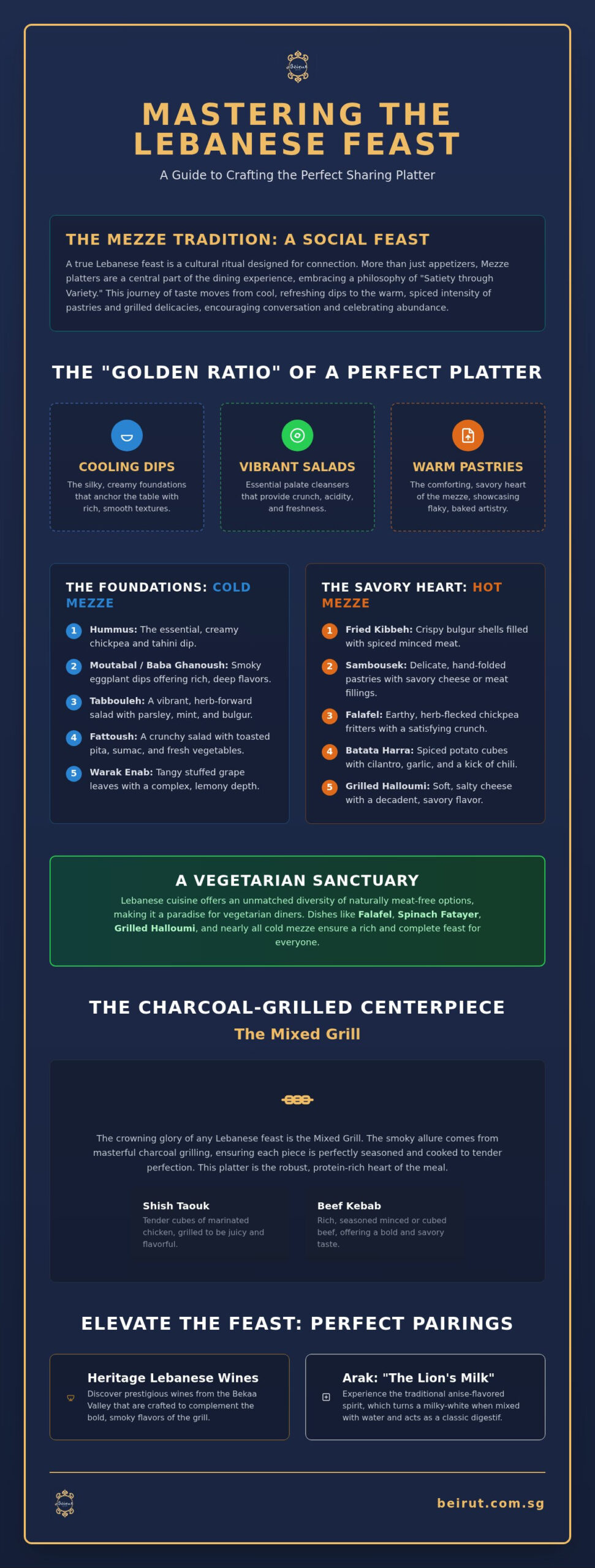
In the heart of Lebanese hospitality lies a tradition that transcends the mere consumption of food. The Mezze is a cornerstone of Levant culture, representing a generous invitation to slow down and connect through a curated spread of small, vibrant plates. Unlike Western appetizers, these dishes are not a prelude but a central ritual designed to foster conversation and celebrate abundance. The philosophy of “Satiety through Variety” ensures that every guest finds something to love, moving from the cool, refreshing notes of cold dips to the warm, spiced intensity of grilled delicacies.
The Cultural Significance of Sharing
The concept of the Tawlet, or dining table, serves as the spiritual center of the home. When ordering lebanese sharing platters, you aren’t just selecting menu items; you’re participating in a slow, sensory journey that prioritizes community over convenience. Authenticity is found in the details. The sharp scent of freshly chopped parsley, the golden pool of premium olive oil, and the bright acidity of hand-pressed lemons are the hallmarks of a kitchen that honors its roots. This deliberate pace allows the palate to adjust between textures, ensuring that the meal remains an indulgence rather than a race. It’s a social choreography where the passing of plates creates a rhythmic, storytelling quality to the evening.
Cold Mezze: The Silky Foundations
Every exceptional sharing experience begins with the silky foundations of the cold mezze. Hummus and Baba Ghanoush are the essential pillars, offering creamy textures that anchor the table. While many people are familiar with these, a true connoisseur understands the nuances of Moutabal, a smoky eggplant dip rich with tahini, and the cooling, tangy presence of Labneh. These yogurt and vegetable bases provide a smooth contrast to the more robust flavors arriving later. To balance these rich textures, salads provide the necessary crunch and acidity. Tabbouleh, with its herb-forward profile, and Fattoush, featuring toasted pita and sumac, act as vital palate cleansers. These dishes prepare the senses for the heavier, charcoal-grilled courses to follow, making lebanese sharing platters a masterclass in culinary balance. By starting with these foundations, you establish a harmonious base that defines the authentic Levantine feast.
Curating the Perfect Lebanese Sharing Platter
To curate a spread that truly honors the Levantine tradition, you must look beyond simple appetizers and embrace a structured narrative of taste. The secret lies in achieving the “Golden Ratio,” which is a precise equilibrium of cooling dips, vibrant salads, and the comforting warmth of artisanal pastries. This arrangement isn’t just aesthetically pleasing; it aligns with the renowned health benefits of the Mediterranean diet, emphasizing fresh vegetables, heart-healthy oils, and lean proteins. When assembling lebanese sharing platters, the focus is on a diversity of textures that reward your curiosity at every turn, ensuring each bite offers a new discovery.
Lebanese cuisine is a sanctuary for meat-free diners, offering a level of vegetarian diversity that is rarely matched in other global traditions. The inclusion of Grilled Halloumi provides a soft, salty decadence that contrasts beautifully with the earthy, herb-flecked crunch of Falafel. To bind these disparate elements together, fresh, pillow-soft pita bread serves as the ultimate edible utensil. It’s the vessel through which the meal is experienced, allowing guests to scoop, wrap, and savor the intricate flavors of the Levant in a tactile, communal fashion.
The Hot Mezze Essentials
The protein-rich heart of the hot selection often begins with Fried Kibbeh and golden, crisp Falafel. While these offer a satisfying, robust bite, the true artistry of the pastry chef is revealed in Sambousek and Spinach Fatayer. These delicate parcels are hand-folded with precision, encasing savory fillings that provide a buttery, flaky counterpoint to the rest of the spread. You shouldn’t overlook Batata Harra; these cubed, spiced potatoes are tossed with fresh cilantro, garlic, and chili. They act as the unsung heroes of the table, adding a necessary kick of heat and a satisfying starchiness to the feast.
Balancing Flavors and Textures
A balanced platter requires a thoughtful dialogue between ingredients to prevent sensory fatigue. The dense, velvet creaminess of Hummus finds its perfect match in the sharp, citrus-heavy acidity of Tabbouleh. For an earthy, sophisticated undertone, Warak Enab (stuffed grape leaves) offers a complex, lemony depth that rounds out the palate. For a group of four, we typically recommend selecting six to eight varied mezze before moving to the main charcoal-grilled courses. This ensures a sense of abundance without overwhelming the guests. If you’re looking to host your own gathering or simply wish to indulge in a masterfully prepared spread, exploring the authentic menu at Beirut Grill provides an excellent blueprint for a professional feast.
The Charcoal-Grilled Centerpiece: The Mixed Grill
While the mezze provides a vibrant opening, the true soul of lebanese sharing platters is found in the aromatic cloud of the charcoal grill. This traditional method is far superior to modern gas or electric alternatives; the intense heat of natural coals creates a rapid sear that locks in moisture while imparting a complex, smoky depth. This is the stage where the meal moves from refreshing lightness to a robust, indulgent climax. Each piece of meat is treated as a individual masterpiece, seasoned with a precise alchemy of garlic, lemon, and heritage spices that have defined our kitchen since 2009.
The Mixed Grill is a grand assembly designed for communal enjoyment. It features an array of textures and flavors, from the charred, savory exterior of the Beef Kebab to the succulent interior of expertly spiced poultry. When these meats are presented on a sprawling platter, the sensory experience is undeniable. The sizzle of the grill still echoes as the aroma of toasted spices and rendered fats invites guests to dive back into the sharing ritual. It transforms the table into a prestigious destination where every guest participates in the legacy of Levantine fire-cooking.
Shish Taouk vs. Lamb Kofta
Within this assembly, the Shish Taouk and Lamb Kofta offer a fascinating study in contrast. Our Shish Taouk consists of prime chicken breast, marinated for hours in a garlic-heavy brine that ensures every bite is tender and fragrant. In contrast, the Lamb Kofta is a delicate blend of finely minced lamb, fresh parsley, and onions. It’s a testament to the chef’s skill to achieve a texture that is firm enough for the skewer yet melts on the palate. No lebanese sharing platters are complete without a generous serving of Toum. This potent, fluffy garlic sauce is the essential bridge that elevates the charcoal-kissed meats to their highest potential.
Premium Additions: Lamb Chops and Seafood
For those seeking a truly elevated feast, the inclusion of Beirut Lamb Chops marks the difference between a standard meal and a premium culinary journey. These high-quality cuts are selected for their marbling and flavor, representing the pinnacle of our charcoal-grill mastery. To reflect the Mediterranean’s coastal influence, many guests choose to incorporate Grilled Prawns or a delicate Grilled Fish Fillet into their spread. Regardless of the selection, the final secret lies in the resting period. Allowing the meats to sit for a few moments before serving ensures the juices are preserved, delivering a succulent experience that honors the ingredients and the guest alike.
Elevating the Feast: Lebanese Wine and Arak Pairings
A sophisticated dining experience is never truly complete without the curated accompaniment of heritage beverages. Lebanon’s winemaking history stretches back over 5,000 years, a legacy that began with the Phoenicians and continues today through world-renowned labels. These drinks are more than mere refreshments; they are cultural signatures that enhance the complex layers of lebanese sharing platters. By selecting a pairing that mirrors the intensity of the grill or the acidity of the mezze, you transform a simple dinner into a prestigious cultural journey.
The Heritage of Lebanese Wine
The heart of Lebanese viticulture lies in the Bekaa Valley, a high-altitude plateau where the sun-drenched terroir produces wines of remarkable character. When you’re indulging in the smoky richness of our Lamb Kofta or Beef Kebab, a robust red blend from this region offers the perfect structural counterpoint. Conversely, the delicate sweetness of Grilled Prawns or a light fish fillet is best served alongside a crisp, mineral-forward white varietal. For a deeper dive into the culinary landscape of the region, explore our Middle Eastern Food in Singapore: The Ultimate 2026 Connoisseur’s Guide.
The Ritual of Arak
No authentic feasting experience is finished without the ritual of Arak, the potent, anise-flavored spirit known affectionately as “Lion’s Milk”. This beverage is traditionally served in small glasses, diluted with two parts water and a single ice cube. It’s during this process that the clear liquid undergoes a fascinating transformation, turning a milky, opaque white. This “louche” effect is as much a part of the theater as the meal itself. Arak serves as the ultimate palate cleanser for diverse lebanese sharing platters, its cooling anise notes cutting through the richness of tahini and the intensity of charcoal-grilled meats. Etiquette dictates small sips and shared toasts, reinforcing the communal spirit of the table.
As the evening winds down, the transition to digestifs is equally deliberate. The cooling, herbaceous notes of Moroccan Mint Tea or the dark, cardamom-infused depth of Lebanese Coffee provide a necessary moment of reflection. These beverages help to settle the palate after an indulgent spread, ensuring the sensory journey ends on a note of refined comfort. To experience this heritage firsthand, we invite you to book your table at Beirut Grill and explore our curated selection of imported spirits and wines.
Experience the Ultimate Sharing Feast at Beirut Grill
Since our founding in 2009, Beirut Grill has stood as a beacon of authentic Levantine culture in Singapore. We’ve spent over 15 years refining the art of lebanese sharing platters, ensuring that every guest who walks through our doors is transported to the vibrant, storied streets of Beirut. Our commitment to heritage is reflected in our signature Mixed Grill, which serves as the undeniable pinnacle of charcoal-grilled mastery. It’s a dish that rewards your curiosity with every bite, offering a sensory-rich experience that only seasoned expertise can provide. By anchoring our identity to our long-standing presence in the industry, we offer a reliability that transforms a simple dinner into a prestigious cultural destination.
The Beirut Grill Difference
Our kitchen remains steadfast in its dedication to traditional techniques, utilizing premium imported ingredients to maintain the integrity of every dish. This meticulous approach creates an immersive atmosphere that makes us the preferred destination for sophisticated corporate dinners and prestigious celebratory gatherings. We don’t just serve food; we curate an environment that invites you to slow down and immerse yourself in the surroundings. Our pork-free menu reflects our dedication to inclusive, authentic hospitality, ensuring that every guest can partake in the abundance of the table. To better understand the broader context of our culinary philosophy, you can read our guide on Mediterranean Food in Singapore: An Authentic Guide to Flavours and Heritage.
Planning Your Visit
When organizing a feast for a large group, we recommend a curated sequence of our most celebrated dishes to ensure a balanced experience. Begin with a diverse array of mezze, ensuring you include our silky hummus and crisp falafel, before moving to the grand assembly of the Mixed Grill. Our commitment to providing the finest lebanese sharing platters ensures that your event is both memorable and authentic. To conclude the journey on a note of indulgence, our traditional desserts are essential. The warm, cheese-filled Kunefe and the flaky, honey-drenched Baklava provide the ultimate sweet finale. You’ll find that our Kunefe is particularly beloved as a communal dish, perfect for sharing among friends and family. For those interested in the history of this iconic treat, we’ve prepared The Ultimate Guide to Kunafa: Discovering the Middle East’s Most Iconic Dessert. Whether you’re visiting for an intimate evening or a grand celebration, we welcome you to join our table and experience the enduring legacy of Lebanese hospitality.
Embrace the Spirit of the Levantine Table
Mastering the intricacies of lebanese sharing platters allows you to move beyond the role of a diner and become a true connoisseur of hospitality. By balancing the silky textures of cold mezze with the smoky intensity of a charcoal-grilled Mixed Grill, you create a meal that’s both a social ritual and a sensory indulgence. Since 2009, our kitchen has remained a prestigious destination where these traditions are honored with professional authority and warm, inviting hospitality. Whether you’re navigating an extensive selection of Lebanese wines or participating in the ritual of Arak, every element of the feast is designed to transport you to the heart of the Levant.
We invite you to experience this legacy of culinary excellence firsthand in our sophisticated Singapore setting. Our commitment to premium ingredients and time-honored techniques ensures that each visit is a rewarding journey through heritage and flavor. Don’t simply eat; indulge in a story that’s been centuries in the making. Your seat at the table awaits, promising a convivial atmosphere that rewards curiosity and celebrates abundance.
Book Your Authentic Lebanese Feast at Beirut Grill and discover the pinnacle of an elevated sharing experience.
Frequently Asked Questions
What is typically included in a traditional Lebanese sharing platter?
A traditional spread features a balance of cold and hot mezze followed by grilled meats. Essential components include silky Hummus, smoky Baba Ghanoush, and vibrant salads like Tabbouleh. These are joined by hot delicacies such as Falafel, Sambousek, and Spinach Fatayer. The centerpiece of authentic lebanese sharing platters is often the Mixed Grill, which presents charcoal-kissed Shish Taouk and Lamb Kofta alongside fresh pita bread.
How many mezze dishes should I order for a group of four?
For a group of four, we recommend selecting six to eight varied mezze dishes to ensure a sense of abundance. This allows your party to experience the full spectrum of Levantine flavors without overwhelming the table. A balanced order typically includes three cold dips, two fresh salads, and three hot pastries or vegetable dishes. This progression creates a harmonious flow before the arrival of the main charcoal-grilled centerpiece.
Is Lebanese sharing food suitable for vegetarians and vegans?
Lebanese cuisine is exceptionally accommodating for plant-based diets, offering a wealth of naturally vegetarian and vegan options. Iconic dishes like Hummus, Moutabal, and Tabbouleh are vegan by tradition. For hot selections, Falafel and Batata Harra provide robust, protein-rich alternatives to meat. Vegetarians will especially enjoy the salty decadence of Grilled Halloumi. Our menu ensures that every guest can participate fully in the communal spirit of lebanese sharing platters.
What is the difference between Lebanese Mixed Grill and other kebabs?
The primary distinction lies in the traditional use of charcoal-grilling and specific heritage marinades. Unlike standard kebabs, a Lebanese Mixed Grill is a curated assembly of Shish Taouk, Lamb Kofta, and Beef Kebab, each prepared with unique spice blends. The chicken is often brined in garlic and lemon, while the lamb is minced with fresh parsley and onions. This method ensures a superior smoky depth and succulence that honors our 15 year culinary legacy.
How do you drink Arak with a Lebanese meal?
Arak is traditionally enjoyed by diluting the clear spirit with water, which creates its signature milky louche effect. The standard ratio is one part Arak to two parts water, served in a small glass with a single ice cube added last. This “Lion’s Milk” acts as a potent palate cleanser, its cooling anise notes cutting through the richness of tahini and grilled meats. It’s a slow, social ritual meant for shared toasts.
What are the best Lebanese wines to pair with grilled lamb?
Bold red blends from the Bekaa Valley are the most prestigious choice for pairing with grilled lamb. These wines often feature Cabernet Sauvignon or Syrah grapes, offering the structure and tannins needed to complement the smoky intensity of the charcoal grill. The sun-drenched terroir of Lebanon’s high-altitude vineyards imparts a unique complexity to heritage labels. These reds elevate the savory notes of Lamb Kofta and Beirut Lamb Chops to a new level.
Is Beirut Grill a pork-free restaurant?
Yes, Beirut Grill has maintained a strictly pork-free menu since our founding in 2009. We prioritize authentic Lebanese hospitality and ingredient integrity, ensuring our offerings are accessible to a diverse range of guests in Singapore. Our focus remains on the highest quality cuts of lamb, beef, and poultry, alongside fresh Mediterranean seafood. This commitment allows us to serve as a trusted destination for both corporate gatherings and intimate family celebrations.
What is the best way to share mezze without being impolite?
The etiquette of the Lebanese table is rooted in generosity and communal flow. You should use the provided fresh pita bread as an edible utensil to scoop dips, ensuring you don’t double dip directly into the communal bowls. It’s customary to pass plates around the table, allowing everyone to sample each delicacy. This slow, interactive pace encourages conversation and ensures the meal remains a sensory journey rather than a hurried experience.