
Resting on a foundation of centuries-old tradition, the true soul of Middle Eastern hospitality is found in the molten, golden heart of a perfectly prepared kunefe. While many newcomers to Lebanese cuisine might mistake this warm treasure for its honey-soaked cousins, true connoisseurs recognize it as the crown jewel of the dessert table. Since Beirut Grill first opened its doors in 2009, we’ve watched guests marvel at the dramatic contrast between the crisp, amber exterior and the savory, stretching cheese that defines this iconic pastry. It’s a sensory experience that demands more than just an appetite; it requires an appreciation for a craft honed over generations.
You probably agree that finding an authentic version of such a complex dish can feel like a daunting task amidst so many modern imitations. This guide promises to lead you through the rich heritage, intricate preparation, and sensory indulgence of authentic kunefe. We’ll demystify the specific cheeses used in the Levant, explain how to identify a high-quality preparation, and reveal the perfect beverage pairings to complete your culinary journey. By the end, you’ll understand why this dish remains the essential finale to any traditional charcoal-grilled feast in our historic setting.
Key Takeaways
- Understand the fundamental sensory appeal of this dessert, characterized by the delicate tension between a crisp exterior and a molten, stretchy heart.
- Learn to identify the hallmarks of authentic kunefe by exploring the essential roles of traditional Akkawi cheese and floral-scented syrups.
- Discover the nuanced differences between regional styles, from the Lebanese tradition of serving it in sesame-crusted bread to the Turkish preference for small metal plates.
- Master the art of the perfect pairing by balancing the pastry’s rich sweetness with the bold, cardamom-infused notes of traditional Lebanese coffee.
- Gain insight into the specialized techniques used by heritage destinations to ensure the perfect “cheese pull” and textural harmony in every serving.
What is Kunefe? Defining the Soul of Middle Eastern Sweets
Stepping into a space where the air is thick with the scent of charcoal and orange blossom, one quickly realizes that Middle Eastern cuisine is as much about the final sweet note as it is about the savory beginning. At its heart, What is Kunefe but a masterclass in textural architecture? This traditional Levantine cheese pastry, often referred to as Knafeh, Kunafa, or Künefe depending on the regional dialect, represents the pinnacle of Lebanese hospitality. It isn’t merely a dessert; it’s a celebratory gesture, a symbol of shared joy that has graced tables from the Mediterranean coast to the bustling streets of Singapore since we first shared our heritage here in 2009.
The soul of this dish resides in the delicate tension between salt and sugar. It serves as the essential finale to a traditional Mixed Grill feast, providing a rich, satisfying conclusion that lingers on the palate. For many, the first encounter with kunefe is a revelation, challenging the perception of what a pastry can be by introducing savory elements into a sweet context.
The Sensory Experience of a Perfect Kunefe
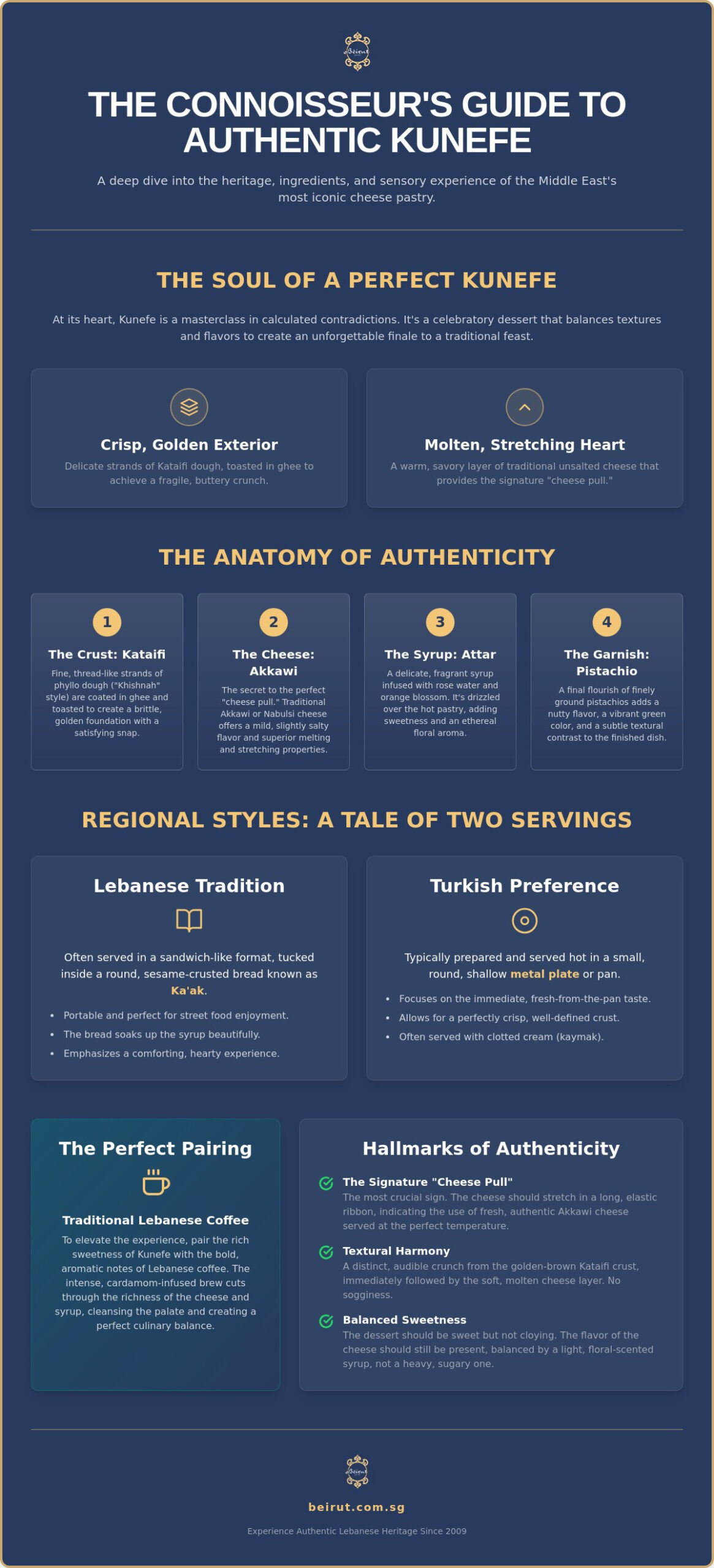
The appeal of a truly authentic kunefe lies in its calculated contradictions. You’re first met with the crisp, golden-brown strands of kataifi dough, which have been meticulously toasted to achieve a fragile, buttery crunch. Beneath this amber surface lies a molten layer of unsalted cheese, which provides a mild, savory counterpoint to the sweetness. The experience is defined by the “cheese pull”, that long, elastic ribbon of warmth that signals the dish has been prepared with the freshest ingredients and served at the exact moment of perfection. To finish, a delicate drizzle of attar, a syrup infused with the ethereal notes of rose water and orange blossom, binds the elements together in a fragrant, floral embrace.
A Brief History of a Prestigious Delicacy
Tracing the lineage of this prestigious delicacy takes us back to the grand courts of the Fatimid or Umayyad periods. While historians debate the exact origin, it’s clear that this pastry began its life as a royal indulgence, crafted by master confectioners for the elite. Over the centuries, it evolved from a palace secret into a beloved staple of both the vibrant street markets and the most refined dining rooms. Today, it remains an essential part of modern Middle Eastern festive traditions, serving as the centerpiece for weddings, Eid celebrations, and intimate family gatherings. We honor this long-standing legacy by using traditional techniques that transport our guests back to the historic kitchens of the Levant.
The Anatomy of Authenticity: Essential Kunefe Ingredients
To truly understand the allure of kunefe, one must look beyond the golden surface to the precise alchemy of its components. Authenticity isn’t a vague concept; it’s a rigorous standard maintained through the sourcing of specific, high-end ingredients. While modern shortcuts often suggest simple substitutions like mozzarella, the Essential Kunefe Ingredients remain unchanged for those who value heritage. In our kitchen, which has served as a gateway to Lebanese culture since 2009, we know that the “cheese pull” and the signature crunch aren’t accidental results. They’re the product of a deliberate selection process that honors the culinary traditions of the Levant.
Kataifi vs. Basma: The Texture Debate
The foundation of the dish begins with the crust, which typically takes one of two forms. The version most beloved in professional Singaporean kitchens is the “Khishnah” or rough variety. It uses long, thin strands of shredded phyllo pastry known as kataifi, which are meticulously coated in high-quality ghee or clarified butter to ensure every strand achieves a brittle, golden finish. This texture provides a satisfying snap that gives way to the soft interior.
Contrast this with the “Naameh” or fine version, often referred to as Basma. It uses a smoother, semolina-based dough that creates a soft, almost cake-like crust. While both styles have their devotees, the intricate texture of kataifi provides a more dramatic contrast to the molten cheese. This textural harmony is why it remains a favorite for those seeking the ultimate sensory experience.
The Secret of the Cheese Blend
The heart of the pastry is the cheese, where the balance of salt and creaminess is paramount. Traditionalists insist on Akkawi or Nabulsi cheese as the gold standard. Akkawi cheese is a semi-hard unripened brined cheese originating from Acre. Because it’s stored in brine, the desalination process is critical to the final flavor profile. We soak the cheese for hours, changing the water frequently to remove the salt while preserving the rich, milky essence that defines the dish.
Relying on a single variety rarely produces the desired result. Expert chefs often use a proprietary blend of cheeses to ensure the perfect “pull” while maintaining a flavor that doesn’t overwhelm the delicate floral notes of the syrup. This careful preparation ensures the cheese remains stretchy and soft, even as the pastry cools. The final flourish is the “Attar”, a syrup crafted with a precise balance of sugar and the ethereal essences of rose water and orange blossom. When this fragrant liquid hits the hot pastry, it’s absorbed into the dough, creating a succulent finish that makes it the ideal companion to a hearty Mixed Grill feast.
Comparing Regional Styles: Lebanese vs. Turkish Kunefe
While the fundamental components of cheese and pastry remain constant, the geographical journey from the Anatolian plains to the sun-drenched coast of Beirut reveals fascinating variations in Regional Kunefe Styles. In Turkey, particularly in the culinary heart of Hatay, the dish is known as künefe and is defined by its intimacy. It is typically prepared in individual, shallow metal plates called sahan, cooked over a direct flame until the base is perfectly scorched. This version is frequently crowned with a dollop of kaymak, a thick, clotted cream that adds a luxurious, velvety dimension to the heat of the pastry. The Turkish syrup tends to be more concentrated, creating a deeply caramelized sweetness that anchors the dish—a standard of excellence also upheld by Erciyes Turkish Restaurant, which has specialized in authentic Turkish cuisine since 1985.
The Lebanese tradition, which we have proudly shared with Singapore since 2009, offers a distinct sensory profile that emphasizes aromatic elegance. Here, the infusion of orange blossom water is more pronounced, lending an ethereal, floral fragrance that cuts through the richness of the cheese. A unique hallmark of the Lebanese experience is the “Kunefe Kaak”. This involves placing a warm slice of the pastry inside a sesame-crusted bread pocket, creating a portable, decadent breakfast or street-side treat. It’s a testament to the dish’s versatility, moving seamlessly from a royal centerpiece to a daily indulgence that rewards the curious palate.
Preparation Methods: Oven-Baked vs. Stove-Top
The theatricality of Turkish preparation involves flipping the pastry mid-cook between two metal plates on a stove-top to ensure both sides achieve a uniform, glassy crunch. Conversely, the Lebanese technique often involves baking larger, communal trays in high-temperature ovens. This method allows the heat to circulate evenly, creating a consistent golden crust across a vast surface. In professional kitchens, achieving this level of perfection requires a seasoned hand to monitor the exact moment the floral syrup is poured, ensuring the pastry absorbs the sweetness without losing its structural integrity.
Serving Traditions and Accompaniments
No serving is complete without a generous dusting of vibrant green, crushed pistachios. This mandatory garnish provides a nutty depth and a final layer of texture that contrasts the molten interior. While traditionalists prefer the purity of the cheese and syrup, modern variations often include a side of vanilla bean ice cream to create a temperature contrast. For those eager to delve deeper into these nuances, our Ultimate Guide to Kunafa explores how these regional signatures have evolved over centuries. Whether enjoyed as a plated dessert or a morning kaak, kunefe remains a masterclass in regional identity and culinary pride.
The Perfect Pairing: Elevating the Kunefe Experience
Indulging in a slice of warm kunefe is a journey of textures, but the experience only reaches its full potential when accompanied by a thoughtfully selected beverage. The inherent richness of the molten cheese and the floral sweetness of the attar syrup require a deliberate counterpoint to prevent the palate from becoming overwhelmed. True hospitality, as we’ve practiced it since 2009, lies in the art of the pairing. By selecting drinks with bitter, acidic, or herbaceous profiles, you can cleanse the palate and ensure every bite feels as vibrant as the first. This balance is what transforms a simple sweet into a prestigious culinary event.
Lebanese Wine and Arak Pairings
For those seeking a sophisticated adult accompaniment, the prestigious vineyards of the Bekaa Valley offer exceptional solutions. A crisp, dry Lebanese white wine, with its bright acidity and mineral notes, effectively cuts through the decadent fats of the cheese. However, the most traditional choice remains Arak, often heralded as the “Lion’s Milk.” This potent, grape-based spirit is served diluted with water and ice, clouding into a milky white elixir that serves as an unparalleled digestif. The sharp, cooling aniseed flavor of Arak creates a unique contrast with the warm, sweet syrup of the pastry. It’s a bold combination that rewards the adventurous guest with a complex interplay of heat and spice, cleansing the tongue for the next indulgent mouthful.
The Ritual of Lebanese Coffee
Perhaps no pairing is more iconic than the marriage of sweet pastry and Lebanese Coffee. Served in traditional small cups, this brew is characterized by its incredibly fine grind and the aromatic inclusion of cardamom. These spicy, earthy notes provide a natural bridge to the orange blossom and rose water within the kunefe. The ritual of pouring and sipping coffee after a heavy meal is a cornerstone of our culture, offering a moment of reflection and digestion. It encourages guests to slow down and savor the lingering notes of their meal in our atmospheric surroundings. To fully appreciate how these traditions fit into the local culinary landscape, you can explore our comprehensive guide to Middle Eastern Food in Singapore.
If you prefer a lighter, more refreshing finish, Moroccan Mint Tea offers a fragrant alternative. The natural astringency of the tea leaves, combined with the cooling properties of fresh mint, provides a palate-cleansing effect that balances the syrup’s intensity. Whether you choose the intensity of a dark roast or the herbal clarity of tea, the right beverage transforms a simple dessert into a complete cultural immersion. We invite you to book your table at Beirut Grill to discover these curated pairings and experience the ultimate finale to your feast.
Experience Authentic Kunefe at Beirut Grill
Nestled within a setting that whispers stories of old-world charm, Beirut Grill has served as a prestigious destination for those seeking a true cultural journey since 2009. We believe that a meal is a narrative, one that begins with the robust, smoky aromas of the Levant and finds its lyrical conclusion in the delicate sweetness of our signature kunefe. Our commitment to heritage isn’t just a promise; it’s a practice we’ve refined over 15 years. By anchoring our identity in the historic heart of Singapore, we offer more than just a menu. We provide an immersive atmosphere where the hospitality of Beirut is felt in every detail, from the warmth of our welcome to the precision of our culinary techniques.
From the Charcoal Grill to the Dessert Plate
The journey at our table often begins with the primal, evocative scent of our charcoal grill. The savory richness of a signature Mixed Grill or the spice-infused depth of our Lamb Kofta sets a dramatic stage for what’s to come. This progression from the intense, fire-kissed flavors of our meats to the floral elegance of our pastries is a deliberate sensory arc. Because we maintain a strictly pork-free menu, we ensure that every guest can indulge in our offerings with complete peace of mind. As you dine amidst the historic charm of our location, you’ll find that the transition to dessert feels like a natural evolution of the evening’s story.
Our chefs treat the preparation of the pastry as a sacred ritual. We use traditional Lebanese techniques to ensure the molten heart of the dish achieves that legendary “cheese pull” that signifies absolute freshness. When the warm, golden-brown kataifi is finally presented at your table, it represents the culmination of hours of meticulous preparation, from the desalination of the cheese to the careful simmering of the floral syrup. It’s a masterclass in textural harmony that rewards the visitor’s curiosity and honors the culinary standards we’ve upheld since our founding.
A Legacy of Lebanese Hospitality
With over 15 years of seasoned expertise in the Singapore dining scene, we’ve emerged as a curator of authentic culture rather than just a provider of food. Our longevity is a hallmark of our reliability, a testament to the consistency and passion we bring to every plate. We invite you to embark on a full Mediterranean Food in Singapore journey, where the flavors of the coast and the mountains meet in a sophisticated, urban setting. Every visit is an opportunity to slow down, immerse yourself in our atmospheric surroundings, and celebrate the enduring spirit of Lebanese hospitality.
The final note of your feast should be as memorable as the first. We invite you to Book your table at Beirut Grill to savor authentic Kunefe and discover why this iconic cheese dessert remains the crown jewel of our culinary heritage. Experience the perfect harmony of salt, sugar, and smoke in a destination designed to transport you to the very heart of the Middle East.
Embrace the Golden Tradition of Lebanese Confectionery
The journey through the intricate layers of this iconic dessert reveals that a perfect preparation is far more than a simple sweet; it’s a masterclass in culinary balance. By understanding the vital role of traditional Akkawi cheese and the aromatic influence of floral-scented syrups, you can now distinguish a truly authentic experience from modern imitations. Whether you prefer the portable delight of a sesame-crusted kaak or the refined elegance of a plated serving topped with crushed pistachios, the key remains the harmony between the crisp, amber exterior and the molten heart.
Since 2009, we’ve dedicated ourselves to preserving these prestigious techniques within our historic Singaporean home. Our strictly pork-free menu and extensive selection of imported Lebanese wines provide the perfect context for a complete cultural immersion. We invite you to slow down and savor the results of our seasoned expertise in a setting that rewards your curiosity and transports you to the Levant.
Indulge in Singapore’s finest kunefe at Beirut Grill, Book Now to secure your place at our table. We look forward to welcoming you to a sensory experience that celebrates the very soul of our heritage with warmth and hospitality.
Frequently Asked Questions
Is Kunefe the same as Baklava?
No, these two prestigious sweets represent entirely different facets of Middle Eastern confectionery. While Baklava relies on many translucent layers of phyllo dough and a heart of crushed nuts, kunefe is defined by its molten cheese center and shredded pastry exterior. The sensory experience is distinct; one offers a flaky, honeyed crunch, while the other provides a savory, stretching indulgence that is traditionally served warm.
What kind of cheese is traditionally used in Kunefe?
Authentic versions of this dish utilize traditional Levantine cheeses like Akkawi or Nabulsi. Akkawi, a semi-hard unripened brined cheese originating from Acre, is the gold standard for achieving the perfect texture. We meticulously desalinate the cheese through a lengthy soaking process to ensure it retains its rich, milky essence without being overly salty, allowing the floral notes of the syrup to shine through.
Is Kunefe served hot or cold?
This dessert must be enjoyed warm to fully appreciate its unique textural contrast. Serving it hot ensures the cheese remains in its molten, elastic state, providing the signature “cheese pull” that connoisseurs look for. If left to cool completely, the interior loses its supple stretch and the outer kataifi dough may lose its fragile, buttery crunch, diminishing the sensory allure of the dish.
Can I find vegetarian-friendly Kunefe in Singapore?
Yes, you can find authentic, vegetarian-friendly kunefe at our historic location in Singapore. Since 2009, we’ve prepared this dish using traditional techniques that focus on high-quality cheese and pastry without any meat-based ingredients. It serves as a sophisticated and indulgent finale for our guests who prefer vegetarian options, ensuring everyone can partake in the rich heritage of Lebanese hospitality.
What makes Lebanese Kunefe different from other versions?
The Lebanese style is distinguished by its ethereal, floral aromatic profile and its unique serving traditions. We place a significant emphasis on infusing the “Attar” syrup with orange blossom water and rose water, creating a fragrant experience that is deeply evocative of Beirut. Additionally, the Lebanese tradition of serving the pastry inside a sesame-crusted kaak bread pocket offers a delightful textural variation not found in other regional styles.
Why is Kunefe often orange in color?
The vibrant orange hue often associated with this pastry is a traditional aesthetic choice achieved through food coloring or, historically, precious saffron. This vivid color serves to highlight the toasted nature of the dough and adds a sense of celebration to the presentation. In our kitchen, we focus on achieving a natural, golden-brown amber through meticulous baking, though regional variations often embrace the iconic sunset-orange visual for festive occasions.
How should I eat Kunefe for the best experience?
To fully immerse yourself in the experience, enjoy the kunefe immediately while it’s warm and the cheese is at its most elastic. We recommend using a small fork to cut through the crisp upper layer to reveal the molten heart beneath. For a truly authentic ritual, pair it with a cup of bitter Lebanese coffee or a refreshing Moroccan mint tea to balance the richness of the syrup and cheese.
Is the syrup in Kunefe just sugar water?
No, the syrup, known as “Attar,” is a sophisticated infusion that goes far beyond simple sugar water. It is a carefully simmered reduction of sugar and water, meticulously scented with the delicate essences of orange blossom and rose water. This fragrant liquid is what gives the dish its soul, binding the savory cheese and buttery pastry together with a floral sweetness—much like the nuanced complexity of Balqees Honey—that lingers beautifully on the palate.