
A common misconception often keeps diners away from the vibrant tables of the Levant: the belief that every dish carries the searing heat of a chili pepper. Since our founding, we have welcomed many guests who hesitate at the menu, fearing a culinary fire that might mask the delicate nature of the ingredients. The truth is that non-spicy lebanese food is the heartbeat of our heritage, relying on the zest of sun-ripened lemons and the earthy perfume of wild herbs rather than raw heat.
It’s understandable to feel hesitant when you aren’t sure if “seasoned” means “hot”, or to feel restricted to just bread and dip while others enjoy the full feast. In this guide, you’ll discover how to navigate a traditional menu with absolute confidence, unlocking a world of rich, aromatic flavors that satisfy the palate without the burn. We will explore a curated selection of mild masterpieces, from the citrus-marinated Shish Taouk to the golden, salty perfection of Grilled Halloumi, ensuring your next multi-course journey is as comfortable as it is indulgent.
Key Takeaways
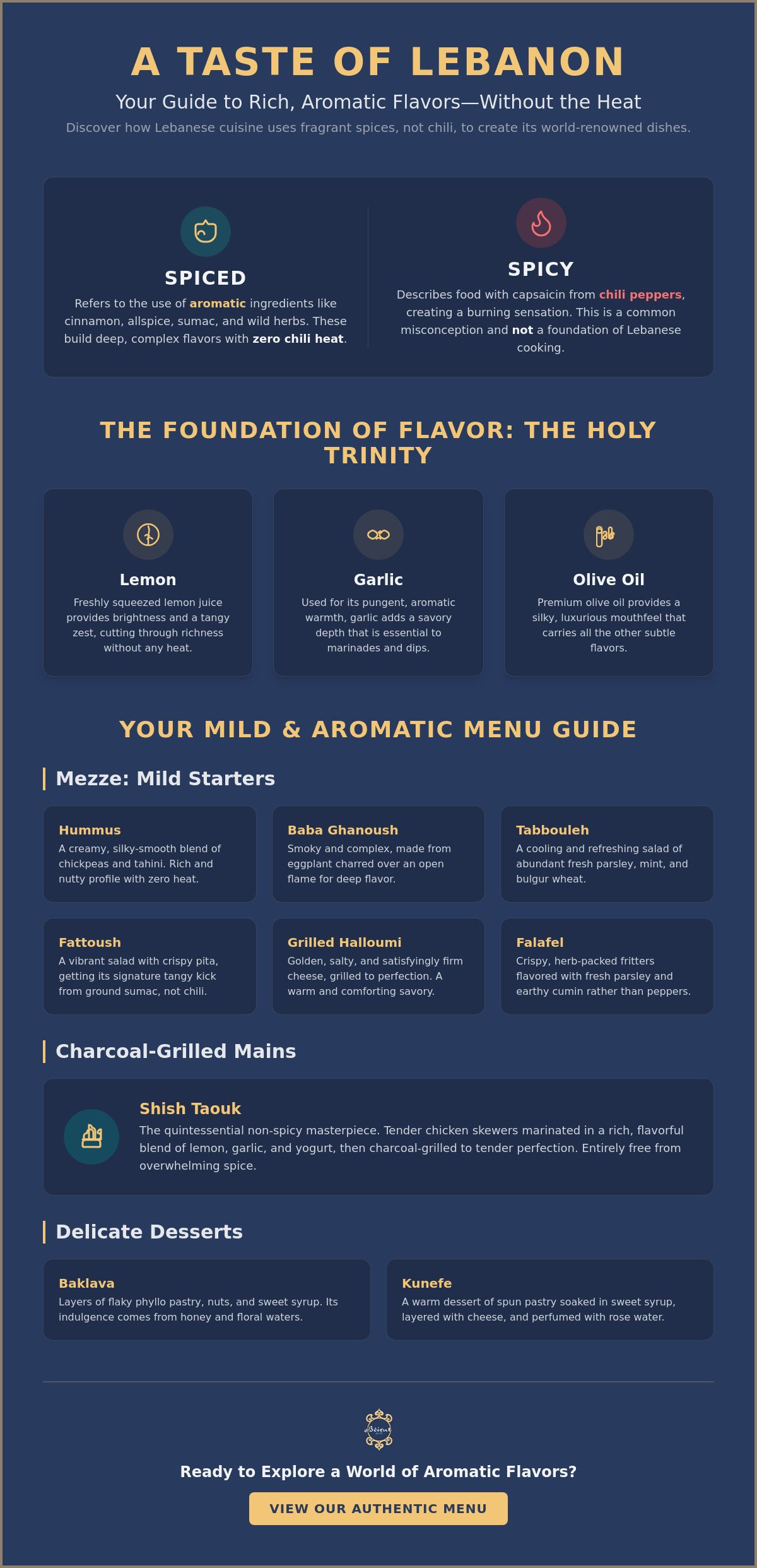
- Learn the vital distinction between “spiced” and “spicy” to appreciate how ancient aromatics like cinnamon and allspice provide depth without any chili heat.
- Identify the “Holy Trinity” of lemon, garlic, and premium olive oil that forms the fragrant foundation of authentic non-spicy lebanese food.
- Navigate the mezze table with confidence by choosing creamy, mild staples like Hummus and Baba Ghanoush that celebrate texture and subtle smokiness.
- Select charcoal-grilled masterpieces such as Shish Taouk to enjoy tender, garlic-marinated poultry that’s entirely free from overwhelming spice.
- Finish your culinary journey with sophisticated desserts like Baklava and Kunefe, which rely on floral waters and honey for a delicate, indulgent sweetness.
The Lebanese Flavour Profile: Aromatic Heritage vs. Chili Heat
Step into the sun-drenched kitchens of the Levant, where the air is thick with the scent of dried herbs rather than the sting of chili. For many, the word “spice” immediately conjures images of stinging heat, yet Lebanese cuisine operates on a different, more nuanced frequency. True non-spicy lebanese food is a masterclass in aromatics, where “spiced” refers to the depth of flavor rather than the level of burn. While other regions might lean on the capsaicin of the chili pepper, our heritage is built upon “The Holy Trinity”: the brightness of freshly squeezed lemon, the pungent warmth of garlic, and the silkiness of premium olive oil.
This culinary philosophy is a delicate balance of fresh garden herbs and earthy, mild spices. Instead of heat, we use sumac, a ground berry that offers a tart, almost vinegary zing, and za’atar, a blend of wild thyme and toasted sesame that provides a savoury, nutty depth. These ingredients provide the complexity diners crave without the fear of a dish being too hot to enjoy. It’s a profile that rewards curiosity with layers of flavour that reveal themselves slowly on the palate.
The Role of Aromatic Spices
In our kitchens, spices like cinnamon and cloves aren’t reserved solely for the bakery. They’re used in savoury meat dishes to provide a comforting warmth that grounds the meal. Cumin and coriander are frequently paired with legumes and grains, offering earthy undertones that feel substantial and satisfying. This focus on fragrance rather than fire makes non-spicy lebanese food one of the most accessible Middle Eastern cuisines for beginners. It invites exploration without the risk of discomfort, allowing the natural quality of the ingredients to shine through.
Citrus and Herbs: The Natural Flavour Enhancers
The vibrancy of our table often comes from the garden. Fresh parsley and mint are used with such abundance that they become primary ingredients rather than mere garnishes. In a dish like Tabbouleh, these herbs provide a cooling, refreshing contrast to richer elements. Lemon juice acts as a bright, non-spicy alternative to vinegar, cutting through fats and lifting the entire flavour profile. Finally, the use of high-quality olive oil creates a luxurious mouthfeel that carries these subtle notes across the tongue, ensuring every bite is a sophisticated journey of discovery.
The Mezze Table: Mild Starters for Every Palate
The Lebanese table is rarely a solitary affair. It begins with the mezze, a social ritual where dozens of small plates arrive in a choreographed sequence of colours and aromas. For the diner who prefers to avoid the sting of chili, this stage of the meal is particularly rewarding. The mezze table celebrates the purity of aromatic Lebanese ingredients, focusing on the sophisticated interplay between creaminess, acidity, and earthiness. This communal style of dining offers an ideal gateway for those seeking non-spicy lebanese food, as the spread is dominated by velvety textures and bright citrus notes rather than raw heat.
At the heart of every spread lie the pillars of Lebanese hospitality: Hummus and Baba Ghanoush. Our Hummus is a silk-smooth blend of chickpeas and tahini, finished with a generous pool of golden olive oil. It’s the ultimate “safe” entry point, offering a rich, nutty profile that satisfies without a hint of heat. Similarly, Baba Ghanoush provides a complex, smoky depth derived from charring eggplants over an open flame. When paired with Labneh, a thick, strained yogurt that acts as a cooling balm for the palate, these starters create a foundation of comfort. For those seeking a bit of crunch, Falafel serves as a non-spicy vegetarian staple, packed with fresh parsley and cumin rather than peppers.
Cold Mezze: Freshness in Every Bite
Beyond the common dips, the cold mezze selection offers sophisticated variations like Moutabal, which shares the smoky eggplant base of Baba Ghanoush but incorporates more tahini for a richer, more decadent finish. Warak Enab, or stuffed grape leaves, are simmered in a bath of lemon and olive oil to achieve a delicate, citrusy profile that is entirely mild. Even the salads are designed for those seeking non-spicy lebanese food. Fattoush, for instance, avoids the heat of traditional vinegars or chilies, instead using ground sumac to provide its signature tangy kick. If you’re ready to experience these heritage flavours, exploring our authentic mezze selection is the perfect first step toward a mild feast.
Hot Mezze: Warm and Comforting Savouries
The transition to warm dishes continues the theme of aromatic indulgence. Grilled Halloumi is a perennial favourite, offering a salty, squeaky delight that relies on the quality of the cheese and the sear of the grill rather than any spice rub. For those who enjoy pastry, Spinach Fatayer are small, hand-folded triangles filled with a zesty mixture of greens and onion. Finally, Sambousek provides a savoury bite in the form of meat or cheese-filled pastries. These parcels are seasoned with heritage herbs like mint and allspice, ensuring a deep, savoury experience that remains gentle on the tongue.
Charcoal-Grilled Excellence: Mains Without the Sting
The transition from the cold mezze to the charcoal grill is marked by a shift in atmosphere. At Beirut Grill, we honour the primordial relationship between fire and meat, using traditional charcoal grilling techniques to impart a sophisticated smokiness that chili could never replicate. For those looking to master these techniques at home, using high-quality equipment and fuel from The BBQ Experts can make all the difference. This method doesn’t rely on heat to excite the palate; instead, it uses the gentle singe of the flame to caramelize marinades and lock in natural juices. For those who prioritize flavour over fire, the grill offers a curated selection of non-spicy lebanese food that satisfies the soul without overwhelming the senses.
Shish Taouk stands as the gold standard for those seeking a mild yet deeply flavourful main course. These tender cubes of chicken are marinated in a velvet-smooth blend of yogurt, lemon, and a significant amount of garlic. When they hit the charcoal, the yogurt creates a protective char that keeps the meat incredibly moist. Similarly, our Lamb Kofta and Beef Kebab are masterclasses in herb-rich seasoning. Rather than peppers, these meats are kneaded with fresh parsley, onions, and a touch of allspice, resulting in a savoury profile that feels both hearty and refined. If you find yourself unable to choose, the Mixed Grill serves as the ultimate solution, allowing you to sample a majestic array of these mild meats in a single, indulgent sitting.
The Art of the Lebanese Marinade
The secret to our tender meats lies in the science of the marinade. We use yogurt-based foundations because the lactic acid gently breaks down fibres, ensuring every bite is succulent. In this culinary tradition, garlic, or Toum, serves as the primary flavour powerhouse. It provides a pungent, creamy “kick” that satisfies the need for intensity without the lingering burn of capsaicin. Our Beirut Lamb Chops exemplify this approach; they’re rubbed with a proprietary blend of aromatic herbs and ancient spices that highlight the quality of the grass-fed lamb rather than masking it behind a veil of spice.
Seafood: A Coastal Lebanese Tradition
Lebanon’s long Mediterranean coastline has birthed a tradition of seafood preparation that is as light as a sea breeze. Our Grilled Prawns are a testament to this simplicity, focusing on the natural, briny sweetness of the sea enhanced only by a whisper of lemon and premium olive oil. For a more substantial yet equally gentle option, the Grilled Fish Fillet offers a flaky, delicate texture that pairs beautifully with a side of Lebanese Rice. This combination provides a complete, non-spicy lebanese food experience that feels both light and luxurious, proving that a full multi-course meal can be immensely satisfying without a single chili pepper in sight.
Vegetarian and Vegan Gems: Earthy and Filling
Long before modern dietary trends emerged, the Lebanese table was a sanctuary for plant-based eaters. Our culinary heritage is a pioneer in vegetarian-friendly dining, where the focus remains on the nutritional density of earth-grown ingredients. By utilizing hearty bases such as chickpeas, lentils, and cracked bulgur wheat, we create dishes that are both filling and sophisticated. This approach ensures that non-spicy lebanese food is never synonymous with “bland.” Instead, these fiber-rich offerings rely on the deep, savoury notes of toasted seeds and sun-dried pulses to satisfy the curious guest. It’s a tradition that celebrates the garden’s bounty with a refined, professional authority.
For those who want to incorporate more of these nutrient-dense principles into their daily meals, Meghna’s Food Magic is a fantastic resource for discovering health-conscious recipes that are as nourishing as they are delicious.
While our menu is overwhelmingly mild, we provide one specific caution for those truly sensitive to heat: Batata Harra. These cubed potatoes are tossed with fresh coriander and garlic, but they also include a dash of chili that gives them a distinct kick. It’s the rare exception in a cuisine that otherwise prioritizes the cooling properties of herbs and the earthy warmth of cumin. For those seeking a purely gentle experience, we recommend focusing on the myriad of other vegetable-forward treasures that define our kitchen, where the only “heat” comes from the warmth of our hospitality.
The Power of Legumes
It’s a mistake to view Hummus only as a starter. When served as a main course, topped with toasted pine nuts or sautéed vegetables, this protein-rich dip becomes a substantial feast. Similarly, our Falafel platters offer a complete meal, centering on chickpea bites that are infused with fresh coriander and leeks rather than chili. These dishes represent the soul of our non-spicy lebanese food tradition, proving that meat is not a requirement for an indulgent dining experience. Discover more in our guide to Mediterranean food in Singapore to understand how these heritage ingredients have shaped the local dining scene.
Salads as a Centerpiece
In a traditional Lebanese meal, salads are far more than a simple garnish. Tabbouleh serves as the ultimate palate cleanser, its parsley-heavy composition offering a bright, herbaceous counterpoint to richer dishes. For those seeking texture, Fattoush combines a medley of fresh vegetables with toasted pita bread, all tied together by a tangy sumac dressing that provides zest without the sting of pepper. These salads balance the richness of our grilled offerings, ensuring the meal remains light and refreshing throughout the evening. If you’re ready to explore these vibrant, plant-based delights, reserve your table for a vegetarian feast and experience the true diversity of our heritage menu.
A Sweet Conclusion: Desserts and Mild Pairings
As the charcoal embers fade and the last of the mezze plates are cleared, the Lebanese table prepares for its final, most indulgent act. The world of Levantine sweets is a sanctuary of floral nectar and delicate textures, where the robust aromatics of the main courses give way to the ethereal scents of rose water and orange blossom. Just as with our savoury offerings, the dessert menu remains a bastion of non-spicy lebanese food, relying on honey and crushed nuts rather than heat to create a lasting impression. This sweet conclusion isn’t merely a course; it’s an orchestrated gesture of hospitality that rewards the guest’s curiosity with a refined sense of place.
The transition from savoury to sweet is seamless, maintaining the focus on high-quality, imported ingredients that define our heritage. These desserts are designed to linger on the tongue, offering a sophisticated sweetness that never overwhelms. Whether you’re enjoying the crunch of pastry or the silkiness of a milk pudding like Mouhalabieh, the experience is one of pure, mild indulgence. It’s the perfect way to conclude a multi-course journey, ensuring that your final memory of the meal is one of balance and grace.
Heritage Desserts
Baklava is often the first introduction for many to our sweet traditions, featuring paper-thin layers of filo pastry and premium pistachios or walnuts. These layers are bound together not by heavy spices, but by a light, floral syrup that carries the essence of Lebanese gardens. Then there is Kunefe, the iconic cheese-based dessert that serves as the pinnacle of Middle Eastern indulgence. Its warm, melting interior and crunchy semolina topping represent the heart of our culinary identity. Explore the ultimate guide to Kunafa to understand why this specific dish remains a cherished signature of our heritage.
Traditional Sips
No Levantine feast is truly complete without the accompanying rituals of the beverage menu. Lebanese Coffee offers a bold, dark finish, yet its intensity is balanced by the inclusion of mild cardamom, which provides a cooling, aromatic bridge between the coffee’s bitterness and the dessert’s sweetness. For those seeking a lighter digestive, Moroccan Mint Tea provides a soothing, sweet clarity that cleanses the palate. Finally, for those who wish to elevate their entire non-spicy lebanese food journey, we offer a selection of prestigious Lebanese Wine. These labels, often sourced from the high-altitude vineyards of the Bekaa Valley, possess a unique mineral profile that perfectly complements the aromatic herbs and citrus notes found throughout our menu. It’s a sophisticated pairing that anchors the meal in its historical roots while offering a modern, indulgent finish.
Experience the Fragrant Traditions of the Levant
The vibrant world of Lebanese dining is an invitation to explore a sensory landscape where aromatics reign supreme. We’ve journeyed through a culinary tradition that prioritizes the delicate balance of citrus, garlic, and wild herbs to create profiles that are intensely flavourful without needing a single chili. From the velvet-smooth textures of the mezze table to the sophisticated smokiness of our charcoal-grilled mains, every dish is a testament to a heritage that values nuance over heat. This mastery of non-spicy lebanese food ensures that every guest can indulge in a full multi-course feast with complete confidence.
For those who wish to extend this sensory experience beyond the table, you can learn more about Boujee Life and their premium candle collections, which feature regional scents like Sultana and Zafran.
Since our founding in 2009, we’ve remained dedicated to authentic charcoal-grilled techniques and the warm hospitality of our ancestors. We invite you to slow down and immerse yourself in an environment where heritage is served alongside an extensive selection of Lebanese wines and traditional Arak. Whether you’re a long-time devotee or a curious newcomer, your seat at our table is waiting. Book Your Table at Beirut Grill and Experience Authentic Lebanese Hospitality today. Discover a world of mild, aromatic wonders that will redefine your understanding of Middle Eastern excellence. We look forward to hosting your next cultural journey.
Frequently Asked Questions
Is all Lebanese food spicy?
No, the vast majority of traditional Lebanese dishes are entirely free from chili heat. The cuisine’s reputation for being “spiced” refers to the depth of flavour achieved through cinnamon, allspice, and sumac rather than capsaicin. It is a heritage built on the brightness of citrus and the perfume of fresh garden herbs, making it a sophisticated choice for those who prefer mild profiles.
What are the best Lebanese dishes for someone who hates chili?
For a guaranteed mild experience, you should look toward the mezze staples and charcoal-grilled poultry. Dishes like Hummus, Shish Taouk, and Grilled Halloumi are excellent examples of non-spicy lebanese food that prioritize texture and aroma. These selections allow you to enjoy a full multi-course meal without ever encountering the sting of a chili pepper.
Is Shish Taouk spicy?
Shish Taouk is not spicy. It is a tender, garlic-marinated chicken dish that relies on a yogurt-based foundation to achieve its signature succulence. The marinade uses lemon and garlic to provide a pungent zest that satisfies the palate without any lingering burn. It remains a perennial favourite for diners seeking a gentle yet flavourful main course.
What is the difference between Lebanese and other Middle Eastern cuisines regarding spice?
Lebanese cuisine is generally more herb-forward and citrus-heavy than the cuisines of North Africa or the Arabian Peninsula. While some regional neighbours use harissa or dried chili flakes, our tradition emphasizes “The Holy Trinity” of lemon, garlic, and olive oil. This focus on freshness and aromatic warmth makes it one of the most accessible and mildest culinary journeys in the Middle East.
What should I avoid at a Lebanese restaurant if I don’t like heat?
You should primarily avoid Batata Harra, which are cubed potatoes specifically seasoned with chili and coriander. While most of the menu is gentle, this dish is the notable exception designed for those who enjoy a bit of fire. Always ask your host about house-made sauces, though traditional Lebanese dips like Hummus and Moutabal are naturally mild and safe for all palates.
Are Lebanese dips like Hummus and Baba Ghanoush spicy?
Traditional dips like Hummus and Baba Ghanoush are never spicy. Hummus is a rich, nutty blend of chickpeas and tahini, while Baba Ghanoush offers a complex, smoky depth from fire-roasted eggplants. These pillars of hospitality celebrate the purity of their ingredients and are always served with a cooling drizzle of premium olive oil rather than any heat-inducing elements.
Can I find non-spicy vegetarian options in Lebanese cuisine?
Lebanese cuisine is a pioneer in plant-based dining, offering a vast array of non-spicy lebanese food for vegetarians and vegans. You can indulge in Falafel, Spinach Fatayer, and protein-rich lentil dishes that rely on cumin and fresh parsley for their hearty flavour. These fiber-rich options are designed to be filling and sophisticated without the need for chili heat.
Is Lebanese coffee spicy because of the cardamom?
Lebanese coffee is aromatic rather than spicy. The inclusion of ground cardamom provides a cooling, floral top note that balances the bold intensity of the dark roast. It is a sophisticated sensory experience that clears the palate after a rich meal, offering a fragrant warmth that is entirely separate from the sting of peppers or the burn of capsaicin.