
To the uninitiated, a cup of tea is a simple beverage; however, Moroccan mint tea is the “Whiskey Berbère,” a non-alcoholic elixir that defines the very rhythm of Middle Eastern hospitality and social connection. Since Beirut Grill was established in 2009, we’ve observed how this aromatic blend of gunpowder green tea and fresh “nana” mint transforms a standard meal into a sacred ceremony. You likely recognize that the most memorable dining experiences are those that transport you to another place through sensory details and deep-seated tradition.
While many confuse this ritual with generic herbal infusions, the authentic preparation is a sophisticated art form rooted in centuries of heritage. You’ll discover the health benefits and meticulous brewing rituals behind the world’s most evocative mint tea. We’ll guide you through the cultural significance of the traditional “high pour” technique and explain the proper etiquette for enjoying it. By the end, you’ll know exactly how to pair this refreshing digestive with a rich Mixed Grill or decadent Baklava during your next visit to a prestigious destination.
Key Takeaways
- Understand why “Whiskey Berbère” is more than a simple drink, representing a vital social pillar in Middle Eastern hospitality.
- Master the alchemy of the “high pour” and learn why authentic moroccan mint tea requires a specific combination of gunpowder green tea and fresh “nana” mint.
- Discover how the natural menthol in spearmint serves as a powerful digestive aid; it’s the ideal conclusion to a rich feast of charcoal-grilled meats.
- Learn to curate the perfect sensory experience by pairing the tea’s sweetness with the saltiness of Grilled Halloumi or the creamy texture of Hummus.
- Experience the immersive atmosphere of a heritage-rich sanctuary where traditional brewing techniques have been honored since 2009.
The Soul of the Maghreb: Understanding the Essence of Moroccan Mint Tea
To step into a traditional Middle Eastern salon is to be greeted by the invigorating steam of moroccan mint tea. This fragrant liquid tapestry is woven from three fundamental elements: robust gunpowder green tea, a generous handful of fresh spearmint, and a deliberate sweetness of sugar. Known locally as “Atay,” this preparation is far more than a simple beverage; it is the lifeblood of social interaction and a sacred pillar of hospitality. Whether you’re in a humble mountain village or a palatial courtyard, the quality of the welcome remains identical. It is a social equalizer that invites guests to slow down and savor the moment.
This philosophy of unhurried excellence and meticulous care is a hallmark of Middle Eastern culture, extending from the tea table to the grooming chair. For those who value the same level of precision in their personal presentation, you can explore Mens Haircuts at The Barber House, where traditional hospitality meets the art of modern styling.
In a culture where alcohol is absent from the traditional table, this tea earned the playful moniker “Whiskey Berbère.” The name reflects its role as the primary catalyst for spirited conversation and social lubrication. Since 2009, Beirut Grill has served as a sanctuary for those seeking this authentic experience, where the ritual of the pour is treated with the same prestige as the finest vintage. It represents a commitment to a heritage that rewards curiosity with sensory indulgence.
A Brief History of the Green Tea Trade
The story of Maghrebi mint tea is a fascinating tale of global convergence. During the mid-19th century, British merchants found themselves with an excess of Gunpowder green tea due to trade disruptions. They offloaded their cargo at Moroccan ports like Essaouira and Tangier, where local residents adopted the dried pellets. These residents combined the imported tea with “nana” mint, a wild spearmint that grew abundantly across the region. This fusion didn’t just create a new recipe; it forged a national identity that transformed a foreign commodity into a local treasure. Today, it remains a symbol of Morocco’s historic role as a bridge between the East and the West.
The Three Cups: A Narrative of Life
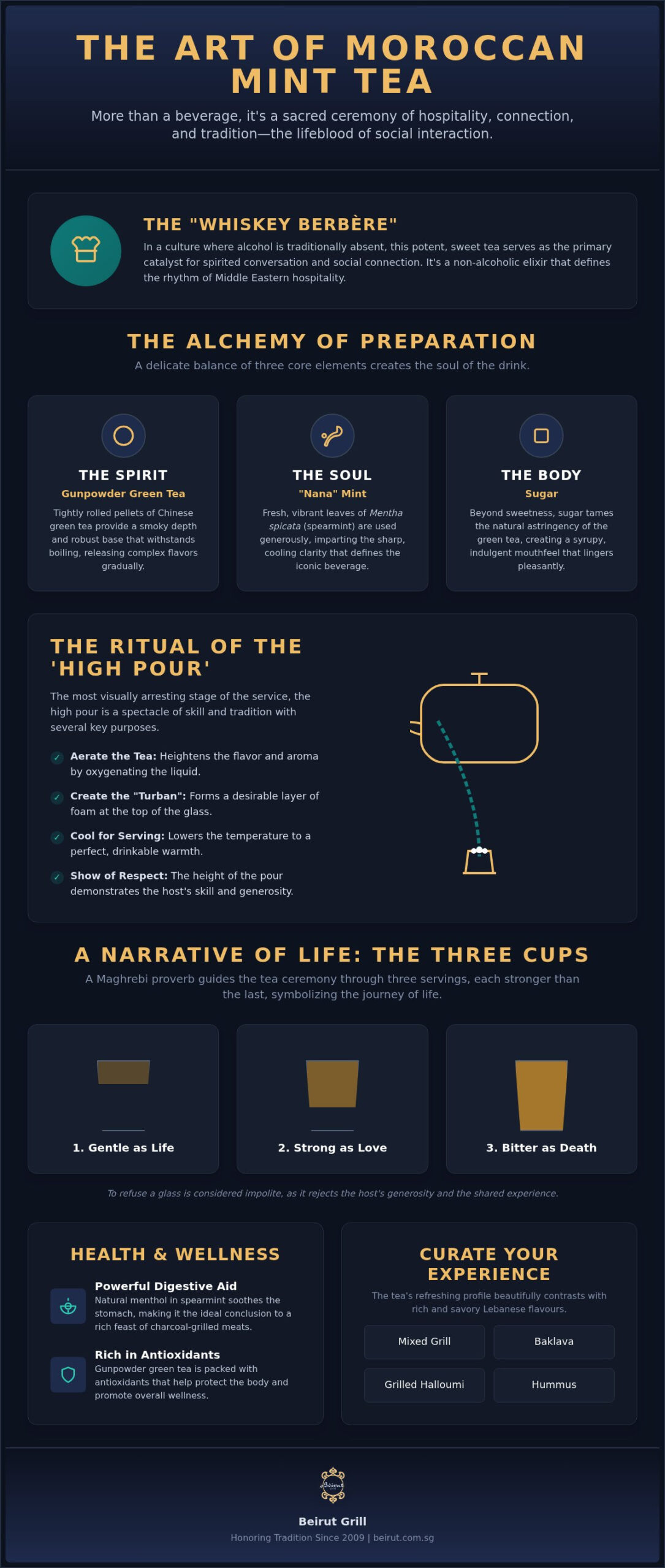
When you partake in a tea ceremony, you’re often presented with three distinct servings, each representing a stage of the human journey. A famous Maghrebi proverb dictates the progression: the first cup is as gentle as life, the second is as strong as love, and the third is as bitter as death. This sequence isn’t merely poetic; the tea actually grows stronger and more tannic as it steeps in the pot, mirroring the complexity of aging. The three cups of tea are a liquid metaphor for the human experience, guiding the guest through the varied stages of existence.
Acceptance is key to the ritual. Refusing a second or third glass is traditionally considered impolite, as it signals a rejection of the host’s generosity. By lingering over each glass, you honor the time and effort invested in the preparation. At Beirut Grill, we maintain these traditional techniques to ensure that every guest feels the weight of this ancient hospitality, making every visit a prestigious cultural journey.
The Alchemy of Preparation: Gunpowder, Nana, and the High Pour
The preparation of authentic moroccan mint tea is a delicate balancing act of three distinct forces that represent the spirit, soul, and body of the drink. First is the “Spirit,” represented by Gunpowder green tea. These tightly rolled pellets of Chinese green tea are chosen for their smoky depth and ability to withstand boiling water without losing their structural integrity. Next comes the “Soul,” found in the vibrant leaves of Mentha spicata, known locally as “Nana” mint. This specific variety provides the sharp, cooling clarity that defines the beverage. Finally, the “Body” is formed by the addition of sugar, which serves a functional purpose beyond mere sweetness. It tames the natural astringency of the green tea, creating a syrupy, indulgent mouthfeel that lingers. This alchemy takes place within the traditional silver teapot, or Berrad, whose metallic surface ensures optimal heat retention throughout the long social gatherings typical of Middle Eastern culture.
Beyond the complex flavor profile, many guests appreciate the Health benefits of Moroccan mint tea, which include improved digestion and a wealth of antioxidants. These properties make it a functional choice as well as a cultural one. At Beirut Grill, we treat every pot as a curated experience, ensuring the ingredients are handled with the same reverence they receive in a traditional Maghrebi home.
The Ritual of the ‘High Pour’
The most visually arresting stage of the service is the “high pour.” By raising the teapot significantly above the glass, the host allows the tea to aerate as it falls in a steady, rhythmic stream. This technique isn’t just for show. It cools the liquid to a drinkable temperature and creates a delicate layer of froth on the surface, known as the “turban” or “crown.” A thick, persistent foam is a hallmark of a masterfully prepared brew. It signals that the tea has been properly mixed and the flavors are fully developed. The sound of the splashing liquid against the glass adds a percussive element to the sensory experience, signaling to everyone in the room that the moment of hospitality has arrived.
Step-by-Step Traditional Brewing
True mastery lies in the sequence of the brew. The process begins by “washing” the tea leaves; a small amount of boiling water is added to the pot, swirled, and then poured out. This first “wash” preserves the spirit of the tea while removing the harshest tannins. After steeping the Gunpowder leaves for several minutes, the host adds a generous handful of fresh mint and a substantial block of sugar. The final step is the “reblowing,” where the host pours a glass of tea and immediately returns it to the pot. Repeating this several times ensures the sugar is dissolved and the mint essence is distributed evenly. It’s a meticulous process we’ve honored at Beirut Grill since our doors opened in 2009, ensuring every guest experiences the same prestige they would in a traditional Maghrebi courtyard.
Health Benefits and the Social Etiquette of the Tea Circle
Beyond its aromatic allure, moroccan mint tea serves as a potent functional elixir designed to restore balance to both the body and the mind. The inclusion of fresh spearmint isn’t merely for flavor; the high concentration of menthol acts as a natural carminative, relaxing the intestinal muscles to provide unparalleled digestive excellence after a heavy meal. When paired with the polyphenols and antioxidants found in Gunpowder green tea, the brew becomes a synergistic powerhouse that combats oxidative stress. It offers a unique state of mental clarity, where the gentle caffeine lift from the tea leaves is tempered by the soothing, vasodilating properties of the mint. This creates a focused yet tranquil atmosphere, making it the perfect social lubricant for the deep, unhurried conversations that have defined our hospitality since 2009.
The experience is deeply tied to the physical objects used in the service. The Moroccan Tea Set, with its intricate silver engravings and colorful glasses, isn’t just decoration; it’s a testament to a culture that elevates the act of drinking to an art form. At Beirut Grill, we ensure that every element of this set reflects the prestige our guests expect from a storied Singapore destination, where the environment is as carefully curated as the menu.
Etiquette for the Modern Connoisseur
Partaking in the tea circle requires a certain level of finesse and an awareness of tradition. When you’re served in a traditional “beldi” glass, you’ll notice the absence of a handle. To avoid the heat, sophisticated drinkers hold the glass by the rim using their thumb and index finger, allowing the liquid to cool slightly before the first sip. Patience is a virtue here; waiting for the tea to reach the perfect temperature is part of the sensory journey. Traditionally, the host always pours the first glass for themselves. This isn’t an act of selfishness, but a vital quality control measure to test the “spirit” and sweetness of the brew before offering it to the guest. It ensures that every pour meets the high standards of the house.
A Remedy for All Seasons
In the tropical climate of Singapore, this tea acts as a vital cooling agent during humid afternoons. The menthol found in fresh spearmint leaves triggers the body’s cold-sensitive receptors, creating a physiological cooling sensation that lowers the perceived body temperature even when the liquid itself is hot. During a sudden tropical downpour, the same cup transforms into a source of warmth and comfort. The steam carries the scent of the Mediterranean, providing a sensory escape from the damp streets outside. It’s a versatile companion that adapts to the environment, rewarding the visitor’s curiosity with a sense of place and well-being regardless of the weather.
Curating the Experience: Pairing Tea with Middle Eastern Flavours
To truly appreciate the culinary landscape of the Levant, one must understand the symbiotic relationship between the plate and the glass. A pot of moroccan mint tea serves as a vital bridge between courses, particularly when navigating the robust flavors of a Mixed Grill. The tea’s natural astringency cuts through the richness of charcoal-grilled meats like Lamb Kofta and Shish Taouk, effectively refreshing the palate for each subsequent bite. This is a deliberate choice made by seasoned diners who understand that the right beverage elevates a meal from simple sustenance to a curated event. Since 2009, we’ve seen how this aromatic infusion transforms the dining experience at our prestigious destination.
When exploring mediterranean food singapore, the presence of hot tea is a traditional necessity rather than a mere preference. While a cold drink might seem tempting in the tropical humidity, a warm infusion is far superior for the digestion of grilled proteins. The heat helps to emulsify fats, while the mint provides a cooling sensation that balances the smoky intensity of the charcoal grill. This interaction is particularly evident when enjoying a Mezze spread; the sharp saltiness of Grilled Halloumi and the creamy, earthy profile of Hummus are harmoniously balanced by the tea’s sweetness and cooling “nana” notes.
The Baklava and Kunafa Harmony
The most celebrated pairing occurs at the conclusion of the feast. Middle Eastern desserts are renowned for their indulgence, often featuring layers of honey, nuts, and floral syrups. The crisp, buttery texture of Baklava requires a beverage that can stand up to its intensity without being overwhelmed. The subtle bitterness of the gunpowder green tea provides the necessary contrast to the sugar, while the mint adds a bright, lifting finish. For those seeking the pinnacle of this sweet experience, we recommend consulting the ultimate guide to kunafa to understand how this iconic cheese-based pastry interacts with the aromatic steam of the brew.
Savory Pairings: From Falafel to Lamb Kofta
Beyond sweets, the tea acts as a sophisticated palate cleanser between savory courses. The herbaceous notes of Falafel and the complex spice blends in our Lebanese offerings find a natural ally in the fresh mint. This synergy ensures that the palate remains sensitive to the nuanced flavors of each dish. For a complete understanding of how these flavors coalesce, our comprehensive guide to middle eastern food singapore provides the essential culinary context for the modern connoisseur. We invite you to experience this authentic harmony firsthand at Beirut Grill, where every pairing is a testament to our commitment to heritage and quality.
A Prestigious Destination: Moroccan Mint Tea at Beirut Grill
Since its founding in 2009, Beirut Grill has stood as a sanctuary of Lebanese and Middle Eastern heritage in the vibrant heart of Singapore. The air within our walls is thick with the evocative aromas of charcoal grills, where the scent of searing meats mingles with the cooling fragrance of fresh herbs. It’s an environment designed to transport you, rewarding your curiosity with an experience that feels both exclusive and deeply welcoming. The service of moroccan mint tea is the crowning jewel of this atmosphere, prepared with a level of meticulous detail that honors its ancient Maghrebi roots. It represents the perfect finale to a sophisticated dinner, offering a moment of tranquility before you return to the bustle of the city.
Our preparation is a performance of precision and grace. We serve the tea in traditional silver teapots, ensuring that every pour maintains the ideal heat and creates the signature “turban” of foam that signifies a masterfully brewed pot. It isn’t merely a drink; it’s a sensory experience that invites you to linger long after the last course has been cleared. In a fast-paced urban setting, this ritual offers a rare opportunity for stillness and reflection, mirroring the deliberate rhythm of a traditional tea circle.
Hospitality Rooted in Tradition
We take immense pride in the authenticity of our offerings, sourcing premium ingredients to recreate the exact flavor profile found in the storied tea houses of the Middle East. Our hospitality is characterized by a warm, inviting service that treats every guest as a prestigious visitor to a private home. As a pork-free establishment, we provide an inclusive environment where the focus remains entirely on the heritage and culinary excellence of the Levant. This commitment to traditional techniques ensures that every sip of moroccan mint tea carries the weight of history and the warmth of genuine connection.
Planning Your Cultural Journey
Whether you’re hosting a corporate dinner or seeking an intimate exploration of heritage, the transition from a savory feast to reflective tea service is seamless. The progression of an evening at Beirut Grill follows a logical, immersive flow:
- Begin with a vibrant spread of Hummus, Moutabal, and Tabbouleh.
- Indulge in the smoky richness of Shish Taouk, Lamb Kofta, or our signature Mixed Grill.
- Conclude with the refreshing clarity of the “Whiskey Berbère” and a selection of honey-soaked Baklava.
This non-alcoholic indulgence provides the perfect balance to a rich meal, acting as both a functional digestive aid and a sophisticated catalyst for conversation. We invite you to step away from the mundane and immerse yourself in a destination where time slows down. At Beirut Grill, the tea ceremony is an invitation to join a legacy of hospitality that we have perfected over nearly two decades, ensuring every visit is a prestigious cultural journey.
Savor the Timeless Ritual of the Levant
Savoring a glass of moroccan mint tea is far more than a simple culinary choice; it’s an immersion into a heritage that values connection and unhurried hospitality. You’ve discovered the alchemy of the high pour and the way fresh “nana” mint serves as a vital digestive aid after a rich feast. From the first gentle sip to the final drop, this ritual provides the essential counterpoint to the smoky intensity of charcoal-grilled meats and the floral sweetness of traditional pastries.
Since 2009, Beirut Grill has stood as Singapore’s premier destination for those seeking an authentic sanctuary of Lebanese culture. Our pork-free menu and curated beverage list are meticulously designed to transport you to the heart of the Maghreb and the Levant. Whether you’re gathering for a corporate event or an intimate evening of heritage exploration, we invite you to experience the prestige of our traditions firsthand.
Book Your Authentic Middle Eastern Experience at Beirut Grill
We look forward to welcoming you to our table and sharing the evocative stories that live within every pot of tea.
Frequently Asked Questions
What is the difference between regular mint tea and Moroccan mint tea?
Regular mint tea is typically a simple herbal infusion made from dried or fresh mint leaves. In contrast, authentic moroccan mint tea is a complex, brewed beverage that uses Chinese gunpowder green tea as its foundational “spirit.” This base is combined with a generous quantity of fresh “nana” spearmint and sugar to create a layered, caffeinated drink. It’s a structured recipe rather than a simple herbal tisane.
Is Moroccan mint tea high in caffeine?
This tea contains a moderate level of caffeine because of its green tea base. While it doesn’t reach the intensity of a cup of coffee or black tea, the gunpowder leaves provide a sustained energy boost. The menthol in the fresh mint helps to temper this lift, resulting in a state of relaxed mental clarity. It’s an ideal choice for those seeking a gentle stimulant during a long social gathering.
Why is Moroccan mint tea poured from a height?
Pouring the tea from a significant height is a deliberate technique used to aerate the liquid and develop a signature layer of foam. This froth, often called the “turban,” is a visual indicator of a successfully prepared brew. Additionally, the long fall through the air helps cool the tea to a drinkable temperature before it reaches the glass. This ensures the guest can enjoy the first sip immediately without discomfort.
Can I drink Moroccan mint tea if I am on a sugar-free diet?
You can certainly enjoy the tea without sugar, though the traditional preparation relies on sweetness to balance the natural astringency of the green tea. At Beirut Grill, we’re happy to accommodate your dietary needs by serving the infusion unsweetened. You’ll still experience the refreshing “soul” of the fresh mint and the smoky depth of the gunpowder tea, even without the syrupy body of the classic version.
What kind of mint is used in authentic Moroccan tea?
Authentic recipes exclusively use “nana” mint, which is a specific variety of spearmint known as Mentha spicata. This plant is preferred over peppermint because it lacks the harsh, medicinal bite found in other varieties. Nana mint offers a clear, bright, and cooling aromatic profile that harmonizes perfectly with the smoky notes of the tea leaves. It’s the essential ingredient for achieving the prestigious flavor our guests expect.
Is it better to drink Moroccan mint tea hot or cold?
Tradition dictates that the tea should be served hot, regardless of the external temperature. In the humid climate of Singapore, drinking a hot infusion actually triggers the body’s natural cooling mechanisms more effectively than a cold drink. The heat helps the menthol in the mint to vaporize, providing an immediate sensation of freshness. While iced versions are available, the hot service remains the standard for authentic Middle Eastern hospitality.
What are the primary health benefits of drinking Moroccan mint tea?
The tea is celebrated for its exceptional digestive properties and high antioxidant content. The green tea base provides essential polyphenols that support metabolic health, while the spearmint acts as a natural carminative to soothe the stomach after a heavy meal. This combination makes it a functional powerhouse for post-meal comfort. It’s a wellness ritual that has been practiced for centuries to maintain balance within the body.
How many times a day do people traditionally drink this tea in the Middle East?
There is no limit to how often this tea is consumed; it’s a continuous thread throughout the day. It’s common to enjoy a pot during breakfast, as a digestive aid after lunch and dinner, and whenever a guest arrives. In many households, the teapot is rarely empty, as the act of sharing a glass is the primary way to honor visitors and maintain social bonds. It’s the heartbeat of daily life.