
What if the vibrant mezze table you adore isn’t a single culinary tradition, but a sophisticated dialogue between two distinct empires of taste? It is a common experience for diners in Singapore to find themselves at a crossroads of choice, perhaps feeling a gentle uncertainty when navigating the nuanced differences of lebanese vs turkish food. You might recognize the shared DNA of a smoky baba ghanoush or a perfectly charred kebab, yet feel that the true essence of their individual heritages remains just out of reach.
We believe that a true connoisseur seeks more than just a meal; they seek a story told through spice and technique. This guide promises to unveil the subtle nuances and bold distinctions between the zesty, herb-forward plates of Lebanon and the rich, spice-laden legacy of Turkish cuisine. We’ll explore how the historical overlap of the Ottoman Empire shaped both regions while allowing each to cultivate a unique culinary identity. You will learn to distinguish these flavor palettes and identify signature dishes like authentic spinach fatayer or decadent kunefe with the confidence of a seasoned traveler.
Key Takeaways
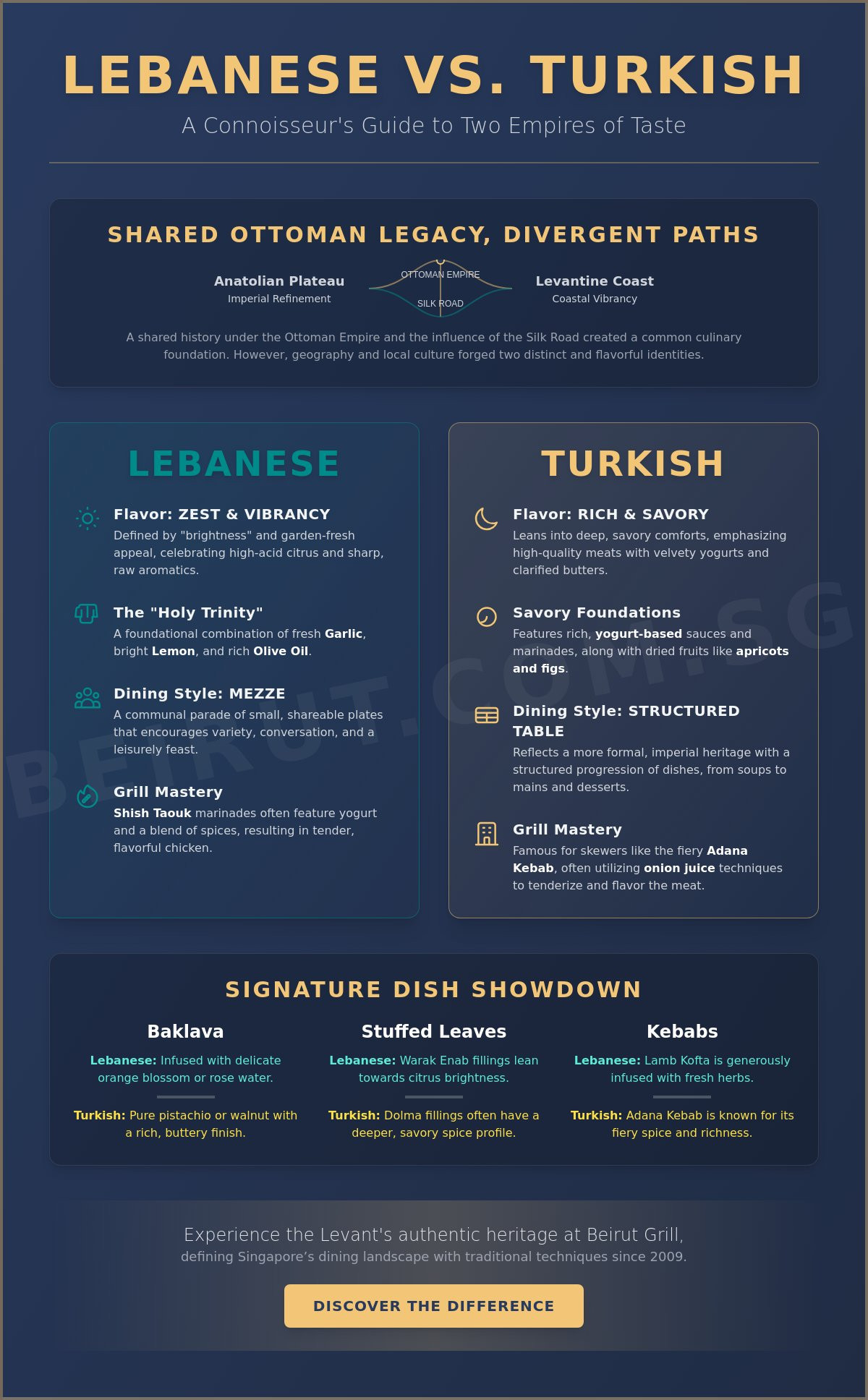
- Trace the shared Ottoman history that unified Mediterranean ingredients while allowing the Silk Road to influence the distinct spice paths of Anatolia and the Levant.
- Distinguish the “Holy Trinity” of Lebanese zest, comprising garlic, lemon, and olive oil, from the rich and savory yogurt-based profiles that define Turkish culinary heritage.
- Master the nuances of lebanese vs turkish food by understanding the difference between the communal parade of Lebanese mezze and the structured Turkish table.
- Identify the secrets of the charcoal grill by contrasting the yogurt and spice marinades of Lebanese Shish Taouk with the onion juice techniques of Turkish skewers.
- Experience the Levant’s authentic heritage at Beirut Grill, where traditional techniques and imported ingredients have defined Singapore’s dining landscape since 2009.
The Ottoman Legacy: Tracing the Shared Roots of Lebanese and Turkish Cuisine
To understand the modern distinction of lebanese vs turkish food, one must first look back to the expansive reach of the Ottoman Empire. For centuries, this imperial power unified the vast territories of the Mediterranean, creating a culinary dialogue that stretched from the rugged Anatolian plateau to the sun-drenched shores of the Levant. This shared era birthed a foundational Ottoman cuisine, a sophisticated tapestry woven with ingredients that remain staples in both cultures today. The Silk Road acted as a vital artery for this exchange, carrying exotic spices from the Far East through the bustling markets of Istanbul and Beirut. This ensured that cinnamon, cloves, and sumac became essential to the regional identity, even as local techniques began to diverge.
While the ingredients were often identical, the geographic divide between the high Anatolian plateau and the Mediterranean coast dictated how they were used. Consider these shared treasures that evolved into distinct regional variations:
- Baklava: Turkish versions often lean toward pure pistachio or walnut with a buttery finish; Lebanese varieties frequently incorporate delicate floral essences like orange blossom or rose water.
- Dolma and Warak Enab: The art of stuffing vegetables and vine leaves is a shared heritage, though the spicing of the rice fillings reflects local preferences for either savory depth or citrus brightness.
- Kebabs: From the fiery Adana of Turkey to the herb-infused Lamb Kofta of Lebanon, the charcoal grill remains the ultimate symbol of this unified history.
While both nations share a profound love for the flame, the subtle distinctions in marinades and aromatics continue to define the connoisseur’s debate of lebanese vs turkish food.
The Imperial Kitchen: Turkey’s Culinary Refinement
The grand kitchens of the Topkapi Palace served as the epicenter of Turkish culinary evolution. Here, thousands of chefs dedicated their lives to refining the “pure” quality of ingredients, transforming nomadic Central Asian traditions into a sophisticated imperial standard. This cuisine became a magnificent bridge, marrying the hearty influences of the Silk Road with the refined techniques of European courts. It emphasizes the natural essence of high-quality meats, often finished with rich, velvety yogurts or clarified butters that speak to a legacy of imperial indulgence.
The Levantine Crossroads: Lebanon’s Coastal Vibrancy
Lebanon’s culinary soul is rooted in its ancient Phoenician legacy of maritime trade. As a crossroads of the world, it embraced fresh ingredients from across the Mediterranean, later integrating elegant French sensibilities into its heritage. This coastal vibrancy led to a lighter, more herb-forward evolution compared to the imperial fare of the north. Lebanese heritage celebrates the “zest” of life, prioritizing abundance through fresh parsley, mint, and the citrus punch of lemon. It’s an artisanal approach that feels both historic and remarkably vibrant.
Zest vs. Savoury: Comparing the Flavour Palettes of Lebanon and Turkey
Stepping into a kitchen where the air is thick with the scent of roasting meat and crushed herbs reveals the first true distinction in the debate of lebanese vs turkish food. While both cultures share a geographical heart, their flavor palettes represent two different philosophies of indulgence. Lebanese cuisine is defined by its “brightness”; it’s a celebration of the sun, characterized by high-acid citrus and the sharp punch of raw aromatics. In contrast, Turkish food leans into a “rich” profile, favoring the deep, savory comforts of dairy and the mellow sweetness of dried fruits like apricots and figs.
The foundation of the Lebanese table rests upon a “Holy Trinity” of garlic, lemon, and olive oil. This combination creates a vibrant, zesty backbone for almost every dish. Where a Turkish chef might reach for a knob of butter to finish a sauce, a Lebanese cook will pour a stream of golden, cold-pressed olive oil, ensuring the meal remains light yet deeply flavorful. This preference for fresh herbs like flat-leaf parsley and mint over dried alternatives gives the cuisine its signature garden-fresh appeal. This contrast is essential for anyone seeking to understand the flavor profile of Mediterranean herbs and how they vary across borders.
The Lebanese Zest: Sumac, Garlic, and Fresh Herbs
One cannot discuss the tang of authentic Mediterranean food in Singapore without honoring sumac. This ground red berry provides a unique, astringent sourness that defines dishes like Fattoush. It’s the secret behind the vibrant acidity that cuts through the richness of grilled meats. In a traditional Tabbouleh, the ratio is famously herb-heavy, using vast quantities of finely chopped flat-leaf parsley to create a salad that is more green than grain. For those seeking the ultimate aromatic experience, the legendary Toum; a cloud-like garlic whip; provides an intense, creamy heat that is essential for any poultry dish.
The Turkish Savoury: Aleppo Pepper and Yogurt
Turkish cuisine finds its soul in the warmth of Pul Biber, also known as Aleppo pepper. This spice offers a mild, fruity heat with oily undertones that linger on the palate without overwhelming the delicate notes of wild oregano or dill. Yogurt is the cornerstone of this palette, appearing in refreshing Cacik or as a cooling crown atop Manti. To elevate these dishes, chefs often drizzle browned butter infused with paprika over the top, adding a nutty depth and an alluring aroma that is quintessentially Anatolian. This interplay between cream and spice is a hallmark of the region when comparing lebanese vs turkish food.
If you’re eager to taste these vibrant contrasts for yourself, exploring our authentic menu offers the perfect introduction to the zesty soul of the Levant.
The Art of the Feast: Lebanese Mezze vs. Turkish Table Traditions
In the heart of a Lebanese home, a meal isn’t a mere event; it’s a social symphony that unfolds over hours. To truly grasp the difference between lebanese vs turkish food, one must observe the choreography of the table. In Lebanon, the mezze is the undisputed star, a lavish parade of small plates that often constitutes the entire meal. In contrast, the Turkish tradition treats its “meze” as a sophisticated prelude, a collection of appetizers designed to awaken the palate before the arrival of the “Ana Yemek,” or the substantial main course. This distinction reflects a deeper cultural philosophy regarding hospitality and the rhythm of communal dining.
The role of bread further illustrates this regional divide. The Lebanese table is anchored by the Khibbiz, a soft, thin pita that acts as both a vessel and a utensil for scooping up silky dips. Turkish dining, however, celebrates a wider variety of leavened textures, from the sesame-crusted Simit to the pillowy, boat-shaped Pide. These breads serve as a bridge to the past, reminding us of The Ottoman Legacy on Levantine Cuisine, where imperial baking techniques were adapted to suit the coastal preferences of the Mediterranean.
The Lebanese Mezze: A Social Symphony
A traditional Lebanese feast begins with a cold mezze trio that has become globally iconic: Hummus, Baba Ghanoush, and the smoky, eggplant-based Moutabal. These are quickly followed by a second act of hot mezze staples, including the crunch of Falafel, the spiced complexity of Fried Kibbeh, and the delicate pastry of Sambousek. This sequence isn’t accidental; it’s a carefully curated experience designed to stimulate every sensory gate. For those seeking authentic Middle Eastern food in Singapore, this communal sharing remains the cornerstone of the experience, fostering a sense of connection that transcends the plate.
The Turkish Table: From Meze to Main
Turkish dining follows a more linear progression, moving from cold starters to hearty, soul-warming mains. While a Turkish meze spread is undeniably impressive, the meal’s gravity shifts toward heavy stews or the centerpiece of “Pilav” (rice). This rice is often cooked with butter and orzo, serving as a rich foundation for the courses to follow. Additionally, the Turkish table frequently features a variety of “Chorba” (soups), which are enjoyed year-round as a comforting transition between the lighter appetizers and the robust grilled meats that define the Anatolian diet. This structured approach offers a different kind of indulgence when compared to the fluid, non-stop arrival of dishes found in lebanese vs turkish food traditions.
From the Charcoal: Mastery of the Lebanese Mixed Grill
The crackle of charcoal is the heartbeat of a Mediterranean kitchen, a sound that signals the transition from patient preparation to the sensory peak of the meal. To truly appreciate the differences in lebanese vs turkish food, one must stand before the grill. While the flame is a shared element, the philosophy of the skewer varies significantly between the Anatolian plateau and the coastal Levant. Turkish masters often seek to highlight the natural richness of the animal, whereas Lebanese chefs use the flame to caramelize intricate layers of garlic, citrus, and artisanal spice blends.
The mastery of the charcoal is not merely about heat; it is about the smoky finish that defines the Lebanese palate. This specific aroma is achieved through high-heat searing that locks in moisture while creating a charred, flavorful crust. This technique ensures that even the leanest cuts of meat remain tender and infused with the essence of the wood fire, a hallmark of the premium experience we have curated in Singapore since 2009. This nuanced approach to the flame is what truly distinguishes the experience of lebanese vs turkish food for the discerning diner who values the intersection of technique and heritage.
The Precision of the Turkish Skewer
Turkish grilling is an exercise in refined simplicity. The iconic Adana Kebab, for instance, is a masterpiece of texture; hand-minced lamb blended with tail fat to ensure a succulent, buttery finish. In traditional Anatolian Sis Kebab, the marination is frequently minimalist, using onion juice and salt to tenderize the lamb without masking its inherent flavor. These skewers are typically accompanied by the charred sweetness of grilled tomatoes and long green peppers, creating a balanced, savory plate that honors the purity of the ingredients and the nomadic roots of the region.
The Intensity of the Lebanese Grill
In contrast, the Lebanese grill is a celebration of vibrant marinades and herb-rich blends. The Shish Taouk is a perfect example, relying on a zesty, garlic-heavy yogurt marinade to achieve its legendary tenderness and bright flavor profile. The Lamb Kofta takes a different path, incorporating a dense aromatic blend of fresh parsley and onions directly into the meat before it meets the charcoal. The Lebanese Mixed Grill stands as the pinnacle of this artistry, offering a diverse parade of textures and flavors; from the citrus notes of poultry to the robust depth of Beef Kebab; all unified by the deep, smoky finish of the charcoal flame. It is a dish that rewards curiosity and provides a true taste of Levantine mastery through every charred bite.
Experience the smoky allure of our authentic Mixed Grill at Beirut Grill, where every skewer is a tribute to heritage.
A Sophisticated Heritage: Experiencing the Levant at Beirut Grill
Since 2009, Beirut Grill has stood as a prestigious bastion of authentic Levantine culture in the heart of Singapore. While the theoretical debate of lebanese vs turkish food often centers on ingredient lists, the true distinction is found in the atmosphere of the table and the precision of the flame. We invite you to step into a space where the scent of the charcoal grill tells a story of centuries-old techniques. It’s a destination that rewards the curious diner with an immersive sensory journey through the heart of the Levant, positioning itself not merely as a restaurant, but as a curator of a deeply rooted heritage.
Our commitment to authenticity is reflected in every detail, from the premium nature of our imported ingredients to the rhythmic, storytelling quality of our service. By anchoring our identity to our specific physical location and our founding year, we offer a persona of reliability and seasoned expertise. Whether you’re a long-standing guest or a first-time visitor seeking to understand the nuanced differences of lebanese vs turkish food, the experience we provide is designed to slow you down and encourage total immersion in your surroundings.
Lebanese Viticulture and the Arak Ritual
Lebanon’s wine-making history is one of the oldest in the world, boasting a prestige that rivals the finest European estates. At Beirut Grill, we curate a selection of Lebanese Wine that captures the unique terroir of the Bekaa Valley, offering a high-status marker for any meal. To truly dine like a local, one must participate in the ritual of Arak. Known as the “Lion’s Milk,” this potent, anise-flavored spirit turns a milky white when mixed with water and ice. It serves as the perfect palate cleanser between courses of rich meats and zesty salads. As the evening progresses, the transition to a steaming pot of Moroccan Mint Tea or a cup of thick, aromatic Lebanese Coffee provides a moment of reflection and warmth.
A Sweet Finale: Baklava and Kunefe
No cultural journey is complete without honoring the sweet traditions of the region. While Turkish baklava is often celebrated for its buttery intensity, Lebanese Baklava offers a more delicate profile, using layers of phyllo pastry infused with orange blossom or rose water for a floral finish. However, the true centerpiece of our dessert menu is the Kunefe. This iconic dessert, with its golden, crunchy exterior and molten cheese center, represents the ultimate indulgence. It’s a dish that perfectly encapsulates the pride we take in our culinary roots. Ready to experience the vibrancy of Lebanon? Book your table at Beirut Grill today and begin your own culinary story.
Embark on Your Own Culinary Odyssey
Understanding the sophisticated nuances of lebanese vs turkish food reveals that this journey is less about choosing a favorite and more about celebrating two distinct culinary souls. You’ve discovered how the bright, citrus-forward notes of the Levant contrast with the savory, yogurt-rich comforts of Anatolia. From the communal artistry of the mezze parade to the smoky intensity of the charcoal grill, these traditions offer a profound connection to a storied history that continues to evolve on the modern plate.
At Beirut Grill, we’ve been the dedicated curators of this vibrant heritage in Singapore since 2009. We invite you to experience the sensory allure of our time-honored charcoal-grilled techniques and explore our prestigious selection of Lebanese wines and Arak. Every dish we serve is a tribute to the longevity of our craft and the premium ingredients we source to ensure an authentic cultural journey. Discover the authentic flavours of the Levant; reserve your table at Beirut Grill today. We look forward to hosting you for an evening that rewards your curiosity and indulges your senses.
Frequently Asked Questions
Is Lebanese food spicier than Turkish food?
Lebanese cuisine isn’t typically “spicy” in terms of chili heat; it’s more “zesty” and aromatic. While Turkish dishes often incorporate the gentle warmth of Aleppo pepper or Pul Biber, Lebanese flavor profiles focus on the brightness of fresh lemon, garlic, and sumac. This creates a vibrant acidity that cuts through grilled meats without the lingering heat often found in some Anatolian specialties.
What is the main difference between Lebanese and Turkish kebabs?
The primary distinction lies in the marination and texture of the meat. Turkish kebabs like the Adana rely on hand-minced lamb and tail fat for a rich, buttery mouthfeel. Lebanese variations, such as Shish Taouk, utilize yogurt-based marinades and a blend of seven spices to achieve a tender, fragrant finish. This contrast is a key element when exploring lebanese vs turkish food at a connoisseur’s level.
Do both cuisines use the same type of bread?
While both cultures revere bread as a sacred staple, the textures and styles vary significantly. Lebanese dining is anchored by the thin, flexible Khibbiz, which is designed for scooping up mezze. Turkish traditions offer a wider variety of leavened textures, including the iconic sesame-crusted Simit and the pillowy, boat-shaped Pide, reflecting the diverse history of the imperial baking tradition.
Which cuisine is better for vegetarians: Lebanese or Turkish?
Lebanese cuisine is often considered the gold standard for vegetarians due to its diverse and ancient mezze culture. Dishes like Falafel, Hummus, and Spinach Fatayer provide a complete and indulgent experience without the need for meat. Turkish cuisine also offers excellent plant-based options, though it often leans more heavily on yogurt and butter than the olive oil based Lebanese alternatives.
What is Arak, and how does it differ from Turkish Raki?
Arak is the legendary “Lion’s Milk” of Lebanon, a potent anise-flavored spirit distilled from grapes. While Turkish Raki shares a similar flavor profile and the milky transformation when mixed with water, Arak is often regarded as having a more intense, artisanal purity. Both serve as the ultimate accompaniment to a social feast, acting as a sophisticated palate cleanser between flavorful courses.
Is Hummus a Lebanese or Turkish dish?
Hummus is fundamentally a Levantine creation, deeply rooted in Lebanese heritage and identity. While it has migrated into southern Turkish regions over the centuries, it remains the undisputed signature of the Lebanese table. In the context of lebanese vs turkish food, the Lebanese version is distinguished by its silky texture and a precise balance of premium tahini and fresh lemon.
What are the must-try dishes for a first-time visitor to a Lebanese restaurant?
A first-time visitor should start with a traditional mezze spread to experience the full spectrum of Lebanese hospitality. We recommend beginning with Hummus and Tabbouleh, followed by hot starters like Fried Kibbeh and Spinach Fatayer. For the main event, a Mixed Grill featuring Shish Taouk and Lamb Kofta offers the perfect introduction to the mastery of the charcoal flame.
How does the use of yogurt differ between these two cultures?
Turkish chefs frequently use yogurt as a primary cooking medium, incorporating it into hot stews or using it as a base for sauces like Cacik. In Lebanon, yogurt is more often strained to create Labneh, a thick, creamy dip, or used as a tenderizing marinade for poultry. This reflects the Lebanese preference for using dairy as a cooling contrast rather than a primary cooking base.