
What if two jars labelled zaatar could taste entirely different and both still belong at the table? The answer lies in the zaatar spice blend ingredients: recipes often combine aromatic dried herbs, tangy sumac and toasted sesame, but the proportions and additions vary from one region, family or maker to another. There’s another small source of confusion, too: “zaatar” can name both the herb and the finished blend.
If you’ve found recipes with different ingredient lists or ratios, your instincts are sound. There isn’t one universal formula to memorise. Knowing what each core ingredient contributes makes it easier to compare blends or adjust one at home without losing zaatar’s fragrant, savoury character. This guide explores the herbs at the heart of the blend, sumac’s bright tang and sesame’s nutty crunch, then looks at why recipes can differ. It’s a closer look at one distinctive seasoning and the wider Lebanese culinary traditions that give every ingredient its place.
Key Takeaways
- Zaatar can refer to an herb or a mixed seasoning, so check the context when a recipe uses the name.
- The zaatar spice blend ingredients create different layers of aroma, tang and texture, with no single formula used everywhere.
- Regional and household preferences can shape a blend, but they’re guides rather than fixed rules.
- When mixing zaatar at home, start with a small batch and adjust the balance gradually to suit your taste.
- Exploring zaatar offers a glimpse into Lebanon’s varied food traditions, from mezze to charcoal-grilled dishes.
What Is Zaatar Spice Blend, and What Does the Name Mean?
Zaatar is both a name used for certain aromatic herbs in Levantine cooking and the name of a seasoning blend made with dried herbs and other ingredients. That double meaning explains why a recipe might call for “zaatar” without saying whether it means a particular herb or a prepared mixture. Context usually helps: a jar or a measured spoonful points to the blend, while a reference to fresh leaves may mean the herb.
There’s no single formula behind every jar. Household traditions, local ingredient preferences and the dish being prepared all shape the mix. One cook may favour a pronounced herbal character; another may prefer more tartness, nuttiness or savoury depth. So different lists of zaatar spice blend ingredients aren’t necessarily contradictory. They can reflect distinct interpretations of a shared culinary name, rather than one recipe being right and another wrong.
Is zaatar an herb or a spice blend?
It can be either. The herb name is used for related aromatic plants in regional cooking, while the blend is a prepared seasoning that commonly combines dried herbs with other flavourings. Local naming conventions and transliterations also vary, so “zaatar” or “za’atar” may appear in recipes with different meanings. Botanical identification should be checked against a reliable botanical reference for the specific plant, rather than assumed from the culinary name alone.
The Za’atar Wikipedia article offers a broad overview of the name, history and culinary uses, but a recipe’s ingredient list is the clearest guide to what its author means. Look for clues in the method: a recipe that asks you to crush or mix dried components describes a seasoning, while one that calls for fresh leaves refers to an herb.
What flavour does zaatar bring to food?
Zaatar is a flexible Levantine seasoning with an herbal, savoury core, balanced by tang and, in some blends, toasted nuttiness. That’s a useful shorthand, not a promise that every mixture tastes identical. The proportions shift the balance: a herb-forward mix can feel fragrant and green, while more sumac or sesame can make the finish sharper or toastier.
That balance helps explain why zaatar suits varied cooking. Its savoury herbal notes can bring depth, while a tangier edge lifts rich or mild flavours. Toasted notes add warmth and texture, but may be subtle or prominent depending on the recipe. When comparing blends, taste a small amount before deciding how to use it. The aroma and balance tell you more than the name on the label alone.
The Core Zaatar Spice Blend Ingredients and What Each Adds
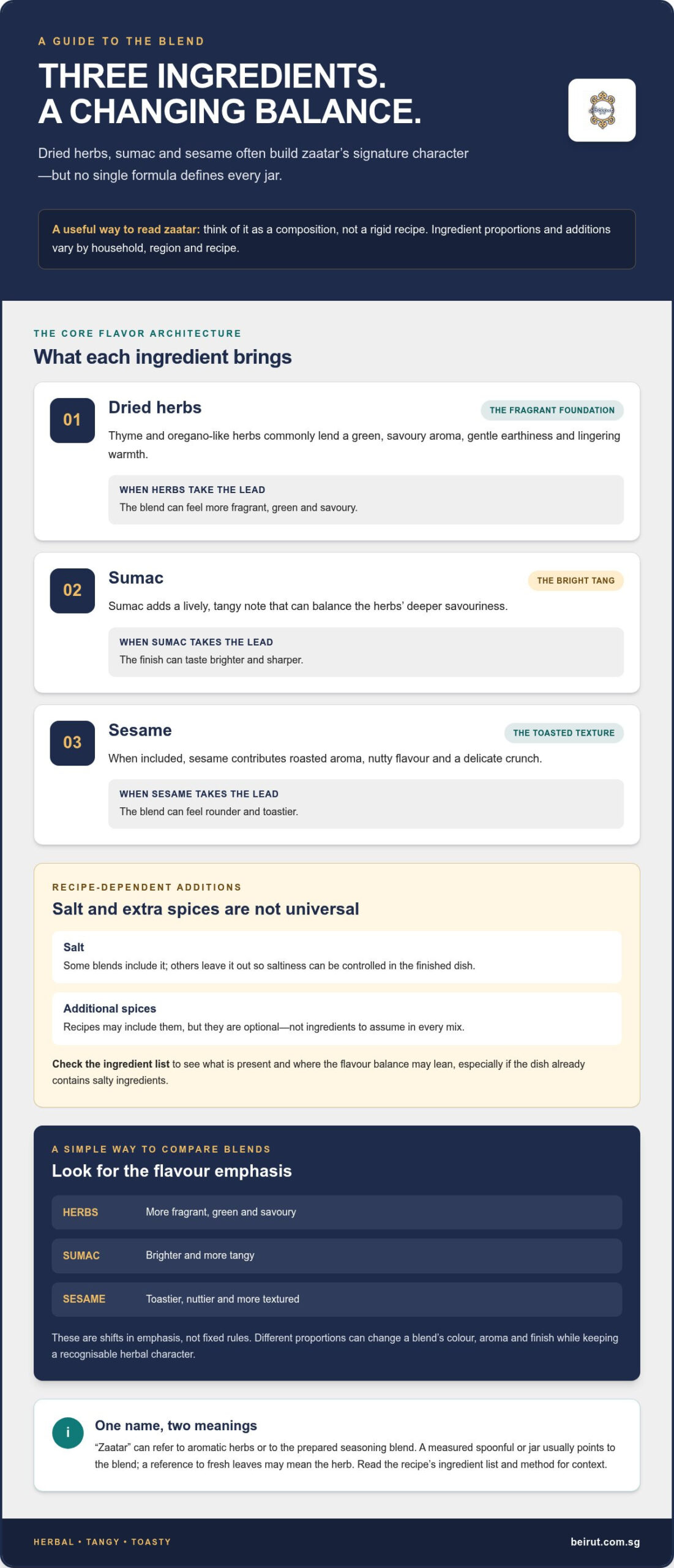
Think of zaatar as a composition rather than a rigid recipe. Many versions are built around dried herbs, with sumac and sesame often contributing tang and toasted richness. The balance depends on local preferences and individual recipes. Salt may be included, left out or adjusted separately. To understand a blend, consider what each component brings, then read its ingredient list as one cook’s interpretation rather than a universal standard.
Herbs in zaatar: thyme, oregano, and related varieties
Dried thyme and oregano-like herbs are common in zaatar recipes, giving the blend its fragrant, green and savoury foundation. Their aromas can suggest warm, sun-dried herbs, with a gentle earthiness that lingers after sharper flavours fade. Some recipes use one herb prominently; others combine several. Culinary names such as “thyme” and “oregano” don’t always identify a precise botanical species, and regional terms can refer to related plants. A familiar name alone shouldn’t be treated as proof of a plant’s exact botanical identity.
Sumac, sesame, and other supporting ingredients
Sumac brings a bright, tangy note that can make the blend taste lively and balance the herbs’ deeper savouriness. Sesame, when included, adds a roasted aroma, nutty flavour and delicate crunch. The amount of each changes the experience: more sumac can make a mixture taste sharper, while more sesame can make it rounder and toastier. Neither profile defines every zaatar blend.
A useful shorthand: zaatar commonly pairs aromatic dried herbs with sumac and sesame, while proportions and additions vary by recipe and region. That’s a guide, not a fixed formula. It explains why two blends can share a recognisable herbal character yet differ in colour, aroma and finish.
Salt is recipe-dependent. Some blends include it for seasoning; others leave it out so the cook can control saltiness in the finished dish. Recipes may also call for additional spices, but these are optional rather than ingredients to assume in every mix. Check the label or recipe, especially if you’re using the blend in a dish that already contains salty ingredients. The ingredient list tells you what’s present and where the flavour balance is likely to lean.
For a broader taste of the culinary traditions behind these ingredients, explore Lebanese mezze and grilled dishes as part of Beirut Grill’s Lebanese dining experience.
Why Zaatar Ingredients and Proportions Differ Between Recipes
Once you know what each component contributes, differences between blends become easier to understand. A recipe may lean on herbs for a fragrant, savoury profile, give sumac more room for sharper tang, or increase sesame for a toastier finish. These are shifts in emphasis, not rules that every cook in a region follows. Household preferences, available ingredients and the dish the seasoning is meant to accompany can all shape the balance.
| Ingredient emphasis | Likely flavour effect | Possible recipe context |
|---|---|---|
| Herbs | More fragrant, green and savoury | A blend where herbal aroma takes centre stage |
| Sumac | Brighter and more tangy | A mix intended to bring a sharper lift |
| Sesame | Toastier, rounder and more textured | A blend where nutty notes and a gentle crunch stand out |
The table describes flavour tendencies, not a prescribed formula. Even the same ingredient can taste more or less pronounced depending on its freshness, grind and how it’s combined with the others. Salt, if included, also affects the overall impression, so a seasoned blend may taste different from an unsalted one even when their herbs, sumac and sesame are similar.
How ingredient proportions change the blend
Think in terms of balance. More herbs tend to strengthen the aroma and savoury foundation. More sumac generally makes the blend tarter and livelier, while additional sesame gives it a richer toasted character and more noticeable texture. These changes can be subtle or striking; there’s no need to assume one exact proportion makes a blend authentic.
Let the intended use guide your choice. For herbal fragrance, choose a blend where herbs lead. For a more vivid tang, look for sumac higher on the ingredient list; for warmth and crunch, choose one with more noticeable sesame. When comparing recipes, note which ingredient leads and whether salt or other additions are included. Treat any example ratio as specific to that recipe, not as a universal standard.
Why there is no single universal zaatar recipe
Family practice, regional naming and ingredient availability all help explain why lists of zaatar spice blend ingredients vary. Cooks may inherit a preferred balance, use herbs familiar to their community or adapt a mixture to what’s available. Names also travel across languages and recipes, so the same word doesn’t guarantee an identical mix.
Zaatar recipes differ because the name carries shared culinary meaning, while each cook’s ingredients and proportions express a particular preference and tradition. Regional descriptions can offer useful context, but they aren’t fixed formulas for every household. Read them as signposts, then use the actual ingredient list to understand the blend in front of you.
How to Choose, Mix, and Keep Zaatar Ingredients at Home
A homemade blend is easiest to adjust when you treat it as a small tasting exercise, not a bulk pantry project. Start with fresh, dry ingredients and a recipe that lists its proportions. Keep those measurements tied to that specific recipe rather than treating them as a universal formula. Once mixed, taste the result and decide whether it needs more herbal aroma, tang or toasted depth.
A simple method for combining a homemade blend
Choose a recipe that names its ingredients and measurements, then gather the dried herbs, sumac, sesame and any other components it specifies. Check that everything is dry and free of clumps before you begin. If the recipe includes salt, note that too, since it affects the seasoning’s overall taste and how you use it later.
- Make a small batch. Scale down the selected recipe while keeping its proportions consistent. This lets you explore the flavour without committing a large quantity.
- Combine evenly. Put the measured ingredients in a clean, dry bowl and stir until the herbs, sumac and sesame are distributed throughout.
- Taste with food. Try a small pinch over plain bread or labneh. Tasting the blend alongside food gives a more useful impression than sampling it alone.
- Adjust gradually. If the flavour seems too sharp, too herbal or not toasty enough, add a small amount of the ingredient that could shift that balance. Mix again and retaste before adding more.
Make a note of any changes so you can recreate a version you enjoy. Your finished blend reflects that recipe and your preference, not a single standard for every kitchen.
How to store dried zaatar ingredients
Keep the finished seasoning and its separate dried ingredients in airtight containers in a cool, dry place away from direct light. Moisture can cause clumping, while heat, air and light can gradually dull aroma and flavour. Close containers promptly and avoid leaving them beside a hot hob or in a steamy cooking area.
Use your senses rather than relying on an assumed shelf-life figure. Dried herbs should have a distinct aroma; roasted sesame should smell clean and pleasantly toasted. Ingredients that have lost their fragrance, look unusually discoloured or show signs of moisture may no longer give the blend its best character. Always use a clean, dry spoon to keep dampness out of the container.
Curious to explore the Lebanese food traditions that make ingredient details so rewarding? Discover Beirut Grill’s Lebanese dining experience, from mezze to charcoal-grilled dishes.
From Zaatar Ingredients to the Wider Lebanese Table
Following zaatar from its herbs to its supporting ingredients opens a window onto a much broader culinary landscape. Lebanese and Levantine food traditions aren’t defined by one seasoning, one recipe or one menu. A blend may carry memories of a family kitchen or reflect a cook’s preferred balance, but it can’t stand in for every Lebanese cook or dining table. Its meaning becomes richer when considered alongside the variety of dishes, textures and traditions that make up a meal.
A seasoning blend within a broader food tradition
Seasonings can hold associations beyond flavour: they may be familiar from household cooking, shared meals or local food customs. Those associations are personal and varied, not evidence of a single origin story or definitive formula. The Middle Eastern food guide offers a wider introduction to the cuisines and dining traditions that give context to ingredients such as zaatar.
That wider view is useful when comparing zaatar spice blend ingredients. An ingredient list can tell you how a particular recipe builds its flavour, but it doesn’t define an entire cuisine. Names and proportions may differ between households, and one cook’s preferred blend shouldn’t be treated as the measure of another’s tradition. Let the recipe speak for itself, while recognising that it belongs to a much larger, varied food culture.
Discover Lebanese cuisine beyond one ingredient
A Lebanese meal can unfold through distinct courses and contrasts. Mezze brings smaller dishes to the table, with options such as hummus, baba ghanoush, tabbouleh, fattoush, labneh and falafel. Each offers its own character, from creamy and savoury to fresh and herbaceous. These dishes are part of a varied dining experience, not a checklist that represents every table or occasion.
Charcoal-grilled dishes add another dimension, bringing together the aroma of the grill and the richness of carefully prepared ingredients. Beirut Grill’s menu includes lamb kofta, shish taouk, beef kebab, grilled halloumi and Beirut lamb chops, alongside mezze and traditional Lebanese beverages. These dishes are examples of the broader Lebanese dining experience; no particular one should be assumed to contain zaatar. Ingredient knowledge can deepen curiosity, while the full table offers other ways to discover the cuisine.
Beirut Grill serves Lebanese and Middle Eastern dining, with a menu that brings together mezze, charcoal-grilled dishes and traditional beverages. If learning about zaatar has whetted your appetite for more than one flavour, explore Beirut Grill’s Lebanese menu and discover the variety of the Lebanese table.
Let Your Curiosity Lead to the Table
Understanding zaatar spice blend ingredients can be a starting point for more attentive tasting: notice how fragrance, texture and acidity shape what you enjoy, then carry that curiosity into a meal. No single seasoning can tell the whole story of Lebanese cuisine. The pleasure lies in discovering how varied flavours meet across the table, from generous mezze to dishes lifted by the warmth of the charcoal grill.
Beirut Grill brings Lebanese and Middle Eastern dining to the table with a menu that invites you to linger over shared plates and savour the variety. Explore traditional mezze, charcoal-grilled meats and Lebanese beverages as part of a wider culinary experience.
Explore Beirut Grill’s Lebanese dining experience and discover the menu.
Frequently Asked Questions
Is zaatar spice blend gluten-free?
It can be gluten-free if its ingredients contain no wheat, barley or other gluten sources, but the name alone doesn’t guarantee this. Some recipes or commercial blends may include additional ingredients, and cross-contact can occur during processing. If you need to avoid gluten, read the full ingredient and allergen information on the package. For a homemade mix, use ingredients labelled gluten-free and prepare it with clean utensils and surfaces.
Can zaatar spice blend contain allergens?
Yes. Sesame is a common component and is a recognised food allergen; some blends may also contain wheat or other additions, and cross-contact is possible. Check packaged product labels carefully, especially if you have a sesame allergy or another food allergy. For a blend from a shared kitchen or bulk container, the ingredient list may not tell the whole story, so avoid it if you can’t establish whether it’s safe for you.
Is zaatar spicy?
Usually, zaatar isn’t hot like a chilli seasoning. Its lively edge tends to come from tangy or aromatic ingredients rather than heat. A particular recipe might add chilli or another warming spice, so the blend can vary. If you’re sensitive to heat, check the ingredient list or taste a small pinch before using it generously. Remember that the food you sprinkle it over can also affect how bold it seems.
How do you pronounce zaatar?
In English, zaatar is often pronounced “zah-tar,” with the first syllable sounding like “za” in “father.” You may also see it written as “za’atar,” which signals a sound that English spelling doesn’t capture precisely. Pronunciation shifts across Arabic-speaking communities and among English speakers, so you may hear slight differences. If you’re ordering or discussing the seasoning, either spelling is widely recognisable in English-language food contexts.
Can I use fresh herbs instead of dried herbs in zaatar?
Fresh herbs can bring a vivid, leafy aroma, but they don’t behave like dried herbs in a pantry blend. Their moisture can make a mixture clump or spoil in storage, and their flavour may change as they sit. For an immediate meal, finely chop fresh herbs and combine them with the other ingredients just before serving. For a mix you want to keep, use dried herbs and store the blend dry.
Does zaatar always contain sumac?
No, sumac isn’t guaranteed in every version. It’s common in many recipes, where its tartness gives the blend a bright lift, but ingredient lists and household preferences differ. If you’re following a recipe, use its listed ingredients rather than assuming sumac is included. If a blend without sumac tastes less tangy than expected, you can add a little separately when using it, adjusting to the food and your preference.
Can I make zaatar without sesame?
Yes, you can leave sesame out, whether because of an allergy or personal preference. The result will have less toasted nuttiness and crunch, so the texture and flavour will differ from a sesame-containing mix. Omitting sesame doesn’t automatically make a blend safe for someone with an allergy if ingredients or utensils may have been exposed to it. Use uncontaminated ingredients and equipment.