
Your choice of attire is the first ingredient in a truly immersive dining experience, setting the stage for the sensory journey that follows. When deciding what to wear to a middle eastern restaurant, the challenge isn’t just about looking good; it’s about honoring a rich heritage while preparing for an evening of shared plates and deep conversation. You likely want to avoid the awkwardness of being underdressed for a premium setting, yet you need to ensure you’re comfortable enough to enjoy a multi-course feast of fried kibbeh and grilled lamb kofta.
We understand that navigating cultural expectations while maintaining your personal style can feel like a delicate balancing act. This guide promises to help you discover the perfect blend of smart-casual elegance, ensuring you feel confident and respectful of traditional modesty requirements. We will explore how to curate an outfit that rewards your curiosity and mirrors the sophisticated atmosphere of a world-class establishment. From breathable fabrics that accommodate a long, indulgent night of Lebanese wine to the silhouettes that define modern refinement, you’ll find everything you need to prepare for your next cultural journey.
Key Takeaways
- Learn why dressing with intention is considered a mark of respect for the host and the centuries-old tradition of Lebanese generosity.
- Master the art of what to wear to a middle eastern restaurant with a definitive checklist for achieving a polished, smart-casual look.
- Understand the subtle distinction between religious requirements and cultural modesty to ensure you feel confident in any premium setting.
- Discover which specific fabrics and silhouettes provide the necessary comfort for a long evening of indulging in a rich, multi-course Mixed Grill.
- Find out how to tailor your style to match the historic ambiance and elevated standards of a destination like Beirut Grill.
The Atmosphere of Middle Eastern Dining: Why Your Attire Matters
Stepping into a prestigious Middle Eastern establishment is less like entering a dining room and more like arriving at a curated destination. The air is often heavy with the evocative scent of charcoal grills and the complex, aromatic profile of imported spices. It’s a sensory environment where the decor frequently reflects a deep pride in architectural heritage, featuring intricate patterns and plush textures that demand a certain level of respect. Understanding what to wear to a middle eastern restaurant begins with recognizing that these spaces are designed to transport you. While the atmosphere is warm and the hospitality is famously generous, the setting remains sophisticated and elevated.
Dressing with intention is a silent way of honoring your host and the centuries-old tradition of Lebanese generosity. In these venues, where the menu is meticulously halal and pork-free, the prestige is often signaled through high-status markers like a selection of fine Lebanese Wine or the traditional serving of Arak. Your presentation should mirror this level of refinement. A well-chosen outfit signals that you aren’t just there for a meal; you’re there to participate in an authentic cultural journey. It shows you appreciate the effort put into the hand-crafted Hummus, the perfectly charred Shish Taouk, and the historical gravity of the setting itself.
The Intersection of Heritage and Modernity
Modern Middle Eastern dining successfully bridges the gap between ancient hospitality and contemporary luxury. When you enter a space that balances historic architectural elements with modern, high-end finishes, your attire should follow suit. A “well-put-together” look enhances the immersive experience for everyone at the table. It isn’t just about personal vanity; it’s about contributing to the collective “vibe” of the evening. Adhering to Cultural Considerations: Modesty and Respect ensures you navigate this intersection with grace. By choosing smart-casual elegance, you align yourself with the restaurant’s role as a curator of authentic culture, making the transition from the bustling street to the tranquil, aromatic interior feel seamless.
The Social Nature of the Mezze Table
Middle Eastern dining is rarely a hurried affair. It’s a rhythmic, multi-hour social event that moves deliberately from cold mezze like Tabbouleh and Baba Ghanoush to hot starters like Fried Kibbeh, before finally reaching the signature charcoal-grilled meats. This progression requires a specific type of sartorial planning. Your attire needs to be versatile enough to transition through these stages. While you want to maintain a sharp, professional appearance that fits a prestigious venue, you must also account for the “feast factor.” The goal is to look refined while remaining comfortable enough to indulge in a full Mixed Grill and stay for a final round of Moroccan Mint Tea. Lounging comfort is essential for these long, communal feasts, but it should never come at the expense of a polished silhouette.
Defining Smart-Casual Elegance for the Middle Eastern Table
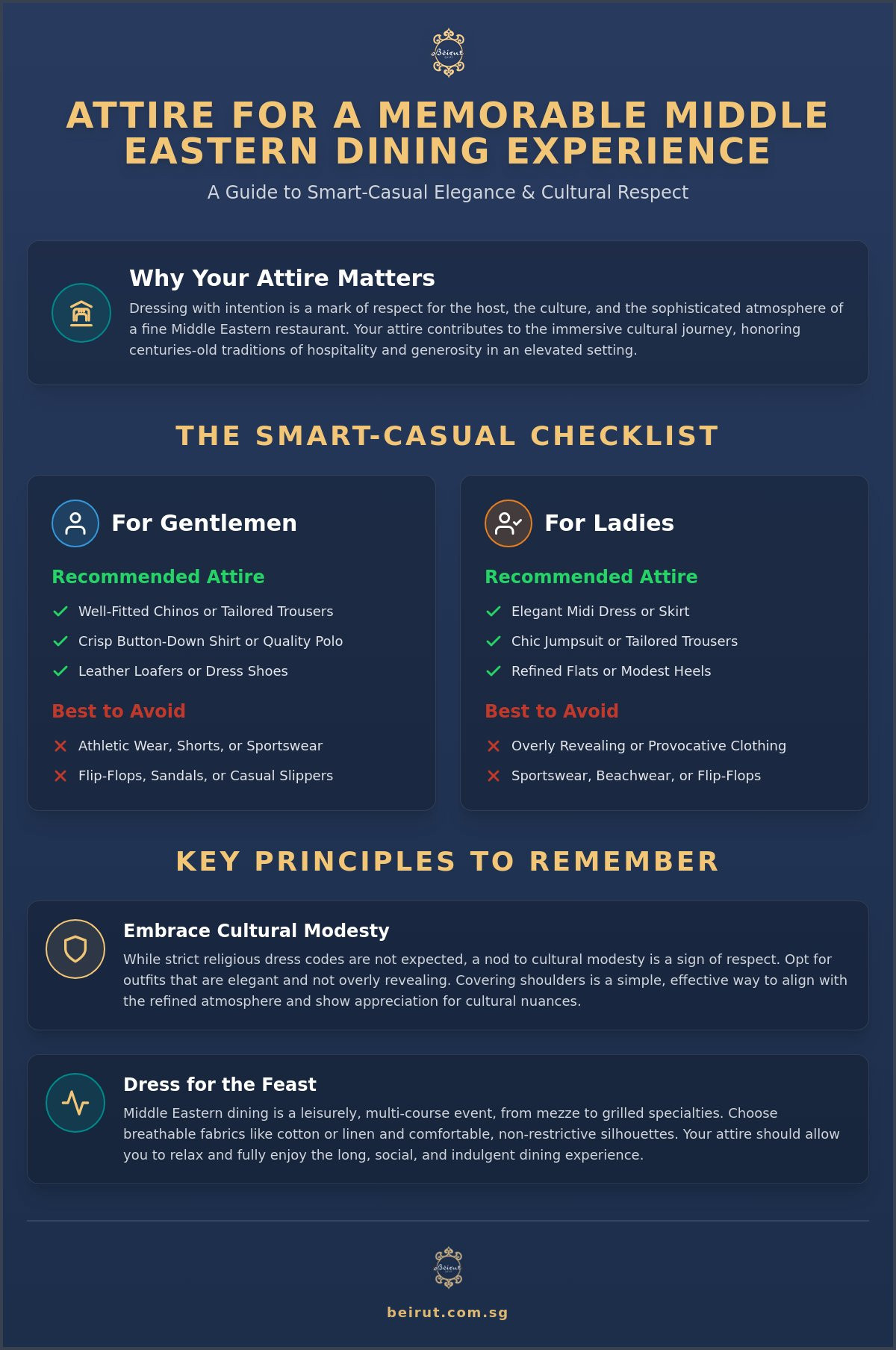
Achieving the perfect look for a night of refined dining involves a thoughtful blend of structure and relaxation. When considering what to wear to a middle eastern restaurant, the goal is to present a silhouette that is as polished as the surroundings. For gentlemen, the foundation of a smart-casual ensemble should be a pair of well-fitted chinos or tailored trousers. Pair these with a crisp, long-sleeved button-down shirt or a high-quality polo in a neutral tone. This combination strikes the ideal balance between professional authority and the warm, inviting hospitality expected in a prestigious Lebanese setting.
Ladies can embrace the flowing elegance of a midi dress or the modern sophistication of a chic jumpsuit. These garments offer the necessary movement for a communal meal while maintaining a silhouette that feels both stylish and respectful. Footwear serves as the finishing touch that anchors your presence. Opt for leather loafers, dress shoes, or refined flats that suggest a sense of occasion. Avoiding overly casual slippers, flip-flops, or athletic wear is essential to match the prestige of a venue that prides itself on being a destination for authentic culture.
Before you step out, take a moment to ensure your attire reflects the level of effort the kitchen puts into every dish. If you’re looking for a venue that rewards such sartorial care, you might consider reserving a table at Beirut Grill to experience this elegance firsthand.
The “Singapore Standard” for Indoor Dining
In our vibrant city, the transition from tropical humidity to a cooled, atmospheric interior requires a strategic approach to fashion. A light blazer or a fine pashmina is a strategic choice, providing warmth against the air-conditioning while adding a layer of sophistication. This “Singapore Standard” ensures you remain comfortable as you transition from the warmth of the street to the sophisticated, air-conditioned embrace of a heritage grill house. In these settings, the neatness of your presentation often carries more weight than visible brand names. A well-pressed garment speaks volumes about your respect for the environment and the host’s hospitality.
Accessorizing with a Nod to the Levant
Thoughtful details can elevate a simple look into something truly memorable. Use jewelry or scarves to add a touch of personal flair that pays a subtle nod to the Levant without being distracting. A statement watch or an elegant handbag completes the profile of a sophisticated diner who appreciates the finer details. However, in a culinary environment rich with the scents of Sumac and charcoal-grilled meats, a “less is more” approach to fragrance is recommended. You want your scent to complement, not compete with, the evocative and aromatic allure of the cuisine.
Cultural Considerations: Modesty and Respect
Determining what to wear to a middle eastern restaurant requires a nuanced understanding of the social contract between a guest and a heritage-rich establishment. While a public dining room does not carry the same strict religious requirements as a place of worship, adhering to a code of cultural respect is a hallmark of the sophisticated traveler. In many Middle Eastern cultures, modesty is inextricably linked to the concept of dignity and grace. Choosing attire that avoids being overly revealing is more than a fashion choice; it’s a silent gesture of appreciation for the traditions that produced the very cuisine you’ve come to enjoy. A polished, smart-casual look naturally aligns with these Levantine norms, ensuring you feel entirely at home amidst the plush interiors and historic echoes of a premium venue.
Safe and respectful choices often involve silhouettes that provide appropriate coverage without sacrificing modern style. While most cosmopolitan venues are deeply inclusive and welcoming to all, arriving in a well-curated ensemble prevents any sense of being out of place. It signals a level of preparation that matches the restaurant’s own dedication to excellence, from the hand-pressed Labneh to the meticulously sourced Lebanese Wine. By opting for refinement over trend-heavy or skimpy outfits, you honor the host’s commitment to creating a prestigious destination for all generations.
Understanding the Pork-Free and Halal Environment
The values of a halal-certified or pork-free establishment often extend beyond the kitchen and into the very soul of the dining experience. In these spaces, there is a profound emphasis on “purity” and “cleanliness,” concepts that are central to Middle Eastern food preparation. Your presence as a guest should ideally complement this atmosphere. Dressing well mirrors the care taken in crafting a signature Mixed Grill or a vibrant Tabbouleh. It contributes to an environment that is simultaneously family-friendly and highly sophisticated. When your presentation reflects the “neatness” valued by the culture, you enhance the collective experience of everyone sharing the space, from the regular patrons to the dedicated staff.
Modesty as a Fashion Statement
The global rise of “Modest Chic” has proven that coverage and high-end style are far from mutually exclusive. For the discerning diner, this movement offers a wealth of inspiration for the Middle Eastern table. Choosing silhouettes like high-necked silk blouses, wide-leg linen trousers, or long-sleeved midi dresses allows for a look that is both flattering and culturally resonant. Breathable, natural fibers like linen and silk are the gold standard for this type of elegant modesty. They provide a soft, luxurious feel that keeps you cool in a tropical climate while maintaining a structured, professional appearance. This approach to fashion ensures you remain comfortable throughout a long evening of indulgence, allowing the focus to remain on the sensory delights of the Shish Taouk and the warm hospitality of your surroundings.
Dressing for the Feast: Practical Tips for Comfort
The Middle Eastern table is a landscape of abundance, where a single order of a Mixed Grill often evolves into a multi-hour exploration of heritage and flavor. This style of dining, centered around the concept of the “feast,” requires a sartorial strategy that prioritizes both elegance and physical ease. When considering what to wear to a middle eastern restaurant, you must account for the physical reality of a long, indulgent meal. Restrictive clothing can quickly turn a celebratory night into a lesson in discomfort as you navigate through courses of Hummus, Falafel, and succulent Lamb Kofta.
Selecting the right silhouette is essential for maintaining your composure throughout the evening. The “Waistline Rule” suggests that high-waisted trousers or A-line dresses are superior choices for these social events. These styles offer a forgiving fit that remains structured and sophisticated even after the final plate of Baklava has been cleared. Layering also plays a vital role in your comfort. While the interior of a prestigious grill house is often kept cool, the proximity to traditional charcoal grills can create pockets of aromatic warmth. A light, breathable layer allows you to adjust your personal climate without sacrificing your polished appearance.
Managing the “Mixed Grill” Commitment
Committing to a full Lebanese feast means preparing for a marathon of hospitality. It’s wise to avoid restrictive belts or skin-tight garments that might feel uncomfortably snug as the Mezze plates accumulate. Instead, opt for “forgiving” cuts like tailored chinos with a hint of stretch or flowing midi skirts. Draping is the ideal technique for combining elegance with post-dinner comfort, allowing the fabric to move with you rather than against you. To see these principles in action at a venue that celebrates the art of the feast, you can book your next dining experience here and enjoy the comfort of a truly refined setting.
Fabric Science for the Diner
The science of your fabric choice is just as important as the cut. Natural fibers like cotton, linen, or light wool are the gold standard because they allow the skin to breathe, keeping you fresh even near the aromatic smoke of the grill. While synthetics can trap heat and odors, linen remains crisp and cool. For those concerned about the occasional drip of Baba Ghanoush or Moutabal, darker colors or intricate patterns provide a practical advantage. Corporate diners arriving straight from the office should prioritize wrinkle-free natural blends. This ensures you maintain a sharp, professional profile from the first bite of Warak Enab to the final sip of Lebanese Coffee.
Experience the Sophistication of Beirut Grill
Founded in 2009, Beirut Grill has established itself as a cornerstone of authentic Lebanese culture, offering a dining experience that is as much about heritage as it is about flavor. When you’re deciding what to wear to a middle eastern restaurant of this caliber, the answer lies in matching the prestige of the environment. Our historic setting and the meticulous preparation of charcoal-grilled signatures like Shish Taouk and Beirut Lamb Chops create an atmosphere that rewards a touch of smart-casual effort. It’s a place where the surroundings are as thoughtfully curated as the menu, making your attire an essential part of the evening’s narrative. Dressing with intention signals your appreciation for the craft that goes into every plate of hand-crafted Hummus and every perfectly seasoned kebab.
The beverage service at Beirut Grill further elevates the dress code expectations. Imagine yourself seated amidst evocative decor, enjoying a traditional Arak service or a glass of premium Lebanese Wine from renowned regional producers. These high-status markers signal that you aren’t merely stopping for a quick bite; you’re engaging in a refined social ritual. Dressing with sophistication ensures you feel entirely at home in a space where every detail, from the imported ingredients to the atmospheric lighting, is designed to transport you to the Levant. It positions you as a guest who values both the culinary arts and the social graces that define Middle Eastern hospitality.
From Mezze to Moroccan Mint Tea
Our service is designed to be a full-evening event that moves rhythmically from vibrant mezze to the final, soothing notes of Moroccan Mint Tea. This transportive experience is anchored by our curated beverage list, featuring deep, aromatic Lebanese Coffee and refreshing herbal infusions. As you move through the courses, you’ll find that our hospitable environment invites you to be an active part of our heritage. Your style and presence contribute to the collective elegance that has defined our dining room for over a decade. You’ll feel as though you’ve stepped directly into the heart of Beirut, where the hospitality is warm and the standards are impeccably high.
Plan Your Visit to Beirut Grill
Whether you’re arranging a corporate dinner, a special occasion, or a weekend gathering centered around a signature Mixed Grill, planning ahead is always recommended. Our longevity since 2009 serves as a hallmark of our reliability and expertise in the industry. We invite you to join us for an authentic cultural journey where the food, the service, and the atmosphere all align to create something truly memorable. Book your table at Beirut Grill and experience authentic Lebanese hospitality today and discover why we remain a premier destination for those seeking the very best of the Middle East.
Embark on Your Next Cultural Journey
Your exploration of the nuanced world of Levantine hospitality is now complete. You’ve learned how to balance the structural demands of smart-casual elegance with the practical comfort required for a multi-course feast. Understanding what to wear to a middle eastern restaurant ensures you step into the dining room with the confidence of a seasoned traveler, ready to honor the host’s generosity while indulging in a truly sensory experience. By prioritizing breathable fabrics and modest silhouettes, you align yourself perfectly with the sophisticated heritage of a world-class establishment.
Since 2009, we’ve served as a prestigious destination where authentic culture meets modern refinement. Whether you’re here for our signature Charcoal-Grilled Mixed Grill or to explore our extensive selection of Lebanese Wine and Arak, your presence adds to the vibrant atmosphere we’ve cultivated for over a decade. We invite you to put your newfound sartorial knowledge into practice and join us for an evening that rewards your curiosity. Join us for an authentic Lebanese feast; Book your table at Beirut Grill today! We look forward to welcoming you to our table for an unforgettable experience.
Frequently Asked Questions
Is there a strict dress code for Middle Eastern restaurants in Singapore?
Most premium venues don’t enforce a rigid uniform, but a smart-casual standard is highly encouraged to match the prestigious atmosphere. Dressing well serves as a mark of respect for the centuries-old tradition of hospitality you’re about to experience. It ensures you feel at home among the plush interiors and aromatic scents of charcoal-grilled specialties. When deciding what to wear to a middle eastern restaurant, aiming for a polished look is always the safest and most respectful choice.
Can I wear shorts to a Lebanese restaurant?
Wearing shorts is generally considered too casual for an evening at a premium Lebanese restaurant. While Singapore’s tropical climate is warm, the interior of a grill house is designed for a sophisticated, cooled experience. Opting for tailored trousers or chinos instead of shorts honors the host’s effort in creating an elevated destination. Long trousers provide the refined silhouette that complements the heritage and prestige of the establishment.
Do I need to cover my head when dining at a Middle Eastern restaurant?
You don’t need to cover your head when dining in a Middle Eastern restaurant. These establishments are public social spaces where guests from all backgrounds are welcomed to enjoy the culinary journey. While head coverings are not required, maintaining a modest and polished appearance is a common way to show cultural respect. Focus on choosing elegant, well-fitted garments that reflect the sophisticated nature of the venue.
What is the best outfit for a corporate dinner at a grill house?
The ideal ensemble for a corporate dinner balances professional authority with a touch of inviting warmth. For men, a structured blazer paired with a crisp button-down and leather loafers works perfectly. Women might choose a sophisticated jumpsuit or a silk blouse with tailored trousers. This look ensures you’re prepared for business discussions while respecting the rich, communal heritage of the mezze table and signature Mixed Grill feasts.
Are jeans acceptable for a Middle Eastern dinner?
Dark, well-fitted jeans are acceptable for a Middle Eastern dinner when paired with more formal elements. To maintain an air of smart-casual elegance, avoid distressed denim or overly casual washes. Combine your jeans with a tailored shirt, a blazer, or a refined blouse to ensure your look remains polished. This approach allows you to stay comfortable during a long evening of Lebanese Wine and traditional hospitality without feeling underdressed.
Is there a difference in dress code for lunch versus dinner?
Lunch service is typically more relaxed than dinner, allowing for a lighter and more casual interpretation of smart-casual style. During the day, a high-quality polo or a simple sundress is perfectly appropriate for enjoying Hummus and Falafel. As the sun sets, the atmosphere shifts toward a more indulgent and prestigious vibe. Dinner guests often elevate their look with more structured garments and sophisticated accessories to match the evening’s celebratory tone.
What should I wear if I am sitting near the charcoal grill?
Prioritize breathable natural fibers like linen or cotton if you expect to be seated near the aromatic charcoal grill. These fabrics allow your skin to breathe and don’t trap heat or scents as easily as synthetic materials. When considering what to wear to a middle eastern restaurant with an open kitchen, choosing light, natural layers is a strategic move. This ensures you remain fresh and comfortable while enjoying the theatrical preparation of Shish Taouk.
Is it appropriate to wear bright colors to a Middle Eastern restaurant?
Wearing bright colors is entirely appropriate and often mirrors the vibrant, sensory richness of the cuisine. Traditional Middle Eastern aesthetics celebrate deep jewel tones and intricate patterns, so don’t be afraid to embrace a bold palette. Ensure the silhouette remains refined and modest to balance the visual impact of the color. A vibrant silk scarf or a colorful midi dress can add a beautiful touch of personal flair to the communal table.