
Lebanese food is a generous expression of Levantine cooking, where herbs, olive oil, grilled dishes and mezze bring freshness and depth to the table. In Singapore, Lebanese cuisine offers a distinctive way to explore Middle Eastern and Mediterranean flavours, whether you start with hummus and tabbouleh or linger over charcoal-grilled meats and traditional sweets.
That sense of place has a home in Kampong Glam, where the area around Sultan Mosque was set aside for Arab and Muslim traders in the 1820s. The neighbourhood’s heritage lends a fitting backdrop to a meal shaped by hospitality, shared plates and recipes rooted in the eastern Mediterranean.
This guide explains what defines Lebanese cuisine, introduces dishes to look for and shows how to explore Middle Eastern, Mediterranean and Levant-inspired dining in Singapore. From bright, herb-filled mezze to rich desserts and traditional drinks, discover how the flavours come together and where a curious diner can begin.
Key Takeaways
- Recognize the hallmarks of Lebanese cooking by exploring how mezze, grilled dishes and traditional desserts each contribute to a meal.
- Compare Middle Eastern dining settings in Boat Quay and the CBD to find an atmosphere that suits your occasion.
- Use sharing menus to sample a broader range of Levant-inspired flavours, balancing dips, vegetables and grilled options.
- Understand how takeaway and delivery can shape your dish choices, from foods suited to a shared spread to more substantial mains.
- Explore Singapore’s Middle Eastern and Mediterranean dining scene through its distinct neighbourhoods and culinary influences.
1. What Is Lebanese Food?
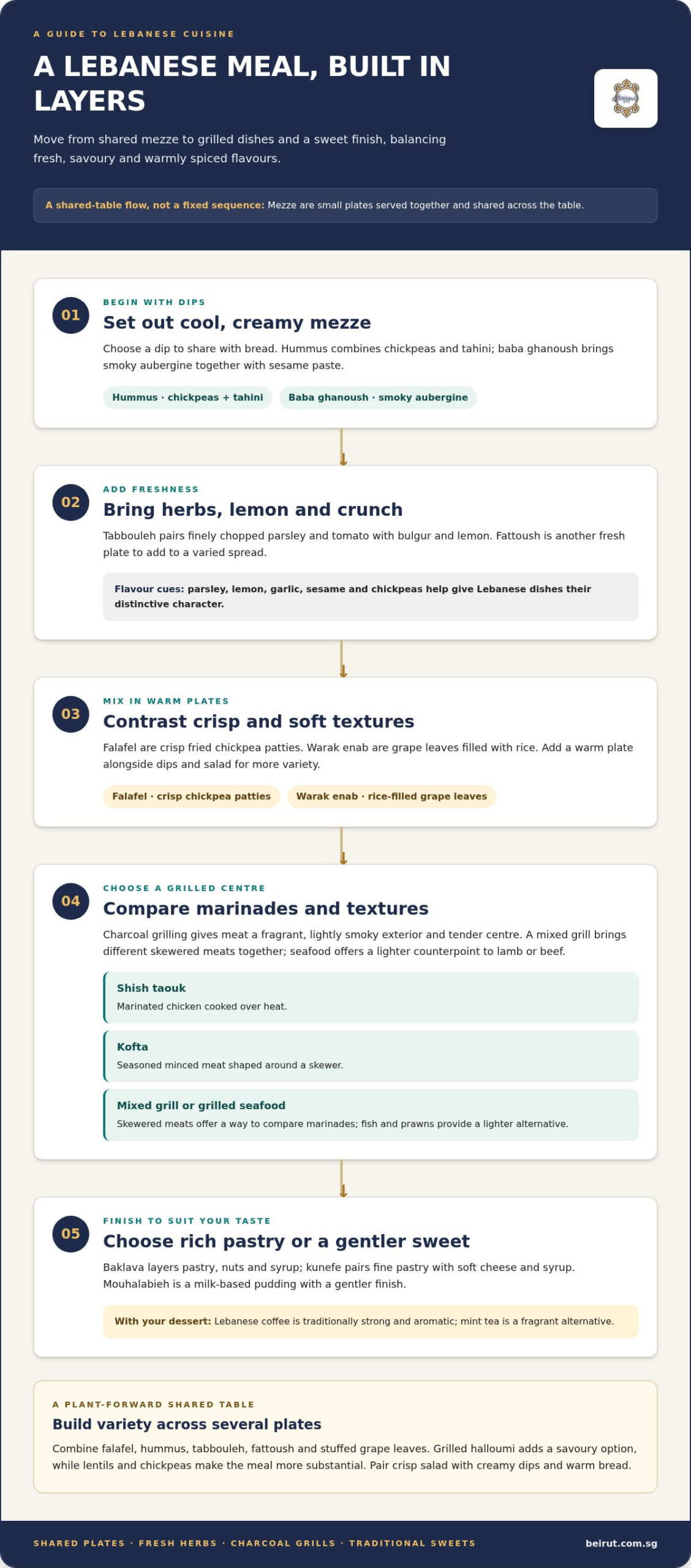
Lebanese food belongs to the Levantine culinary tradition, shaped by fresh produce, grains, herbs, dairy and olive oil. Its character comes from balancing bright, tangy flavours with savoury grilled dishes and warmly spiced preparations. A meal might move from cool dips to hot mezze, then finish with syrup-soaked pastry. Ingredients such as parsley, lemon, garlic, sesame and chickpeas give each dish distinct flavour without overwhelming it.
Mezze are small plates served together and often shared across the table rather than eaten in a fixed sequence. Hummus blends chickpeas and tahini, while baba ghanoush pairs smoky aubergine with sesame paste. Tabbouleh brings finely chopped parsley, tomato, bulgur and lemon into a fresh salad. Other familiar plates include falafel, crisp fried chickpea patties, and warak enab, grape leaves filled with rice. To explore the range, choose a dip, a salad and a warm plate to share with bread.
Grilled dishes are another defining part of the meal. Shish taouk features marinated chicken cooked over heat, while kofta is seasoned minced meat shaped around a skewer. Charcoal grilling gives meat a fragrant, lightly smoky exterior and a tender centre. Mixed grills bring different skewered meats together, making them a good choice for comparing marinades and textures. Seafood can also be grilled, with fish and prawns offering a lighter counterpoint to lamb or beef.
Vegetarian diners can build a varied meal from dishes centred on plants, grains and dairy. Falafel, hummus, tabbouleh, fattoush and stuffed grape leaves offer contrasting textures and flavours. Grilled halloumi adds a salty, savoury option, while lentils and chickpeas make the meal more substantial. Order several plates to share, combining crisp salad with creamy dips and warm bread. This approach brings variety without relying on a single large main.
Dessert brings a concentrated sweetness to the end of a Lebanese meal. Baklava layers pastry, nuts and syrup; kunefe pairs fine pastry with soft cheese and syrup. Mouhalabieh, a milk-based pudding, offers a gentler finish, often scented with floral notes. Lebanese coffee is traditionally strong and aromatic, while mint tea provides a fragrant alternative. Choose between rich pastry and a lighter, spoonable dessert to suit the end of the meal.
Turkish homestyle dishes belong to a distinct culinary tradition, though both cuisines can be enjoyed around a generous, communal table. Turkish examples include lentil soup, stuffed vegetables and slow-cooked stews; group platters may bring several preparations together for sharing. Keep the distinction clear when reading a menu: Lebanese mezze and Turkish home cooking are not interchangeable labels. To order confidently, identify the cuisine first, then choose small plates, a charcoal-grilled main or a shared platter.
2. Middle Eastern dining in Boat Quay and the CBD
In Singapore’s Boat Quay and CBD, Middle Eastern dining suits a meal shaped by the occasion. Some tables call for a quick lunch; others invite a slower evening of shared plates and conversation. Look for Lebanese, Turkish, and broader Mediterranean menus, then compare their focus. A menu centred on mezze offers a different experience from one built around grilled mains.
Lebanese menus may include falafel, hummus, tabbouleh and stuffed grape leaves for vegetarian diners. Vegan choices depend on ingredients and preparation: dishes containing yoghurt or cheese, such as labneh or halloumi, aren’t vegan. Halal diners should choose restaurants that explicitly identify their halal status rather than assuming it from the cuisine alone.
Bugis offers another neighbourhood to consider for Mediterranean and Turkish dining. Keep the traditions distinct: Turkish menus may feature homestyle stews, lentil soup, or stuffed vegetables, while Lebanese meals often centre on mezze and grilled dishes. If your group wants to compare both, decide whether cuisine or location matters most, then select a menu that suits everyone.
Turkish cuisine can also suit a late-night meal, particularly when the menu includes filling dishes such as kebabs or warm stews. For a late visit, use the restaurant’s published opening hours to plan. Menu style matters too: a platter designed for sharing works well for a group, while individual mains offer a straightforward choice for diners with different tastes.
Families can make the meal easier by choosing familiar formats. Bread, dips, grilled chicken, and rice-based dishes give younger diners approachable options beside more adventurous plates. For a shared table, order a mix of mild and boldly seasoned food, and leave space for everyone to sample. In Boat Quay or the CBD, consider travel time and the group’s preferred pace before settling on a venue.
Halal dining calls for attention to a restaurant’s stated status, not just its cuisine label. Vegetarian dishes can broaden the table, but they don’t establish that a restaurant is halal. Likewise, meat-free and vegan aren’t interchangeable: hummus may be plant-based, while a yoghurt-based dip contains dairy. Read menu descriptions carefully and choose an establishment that clearly identifies its halal offering.
For a practical neighbourhood choice, start with the group’s needs: location, cuisine, dietary preferences, and timing. Boat Quay and the CBD place Middle Eastern dining near central Singapore destinations, while Bugis adds Turkish and Mediterranean options to the mix. Compare menus before deciding whether your table wants individual mains, a family-friendly spread, or a long, leisurely dinner.
3. Middle Eastern and Mediterranean restaurants in Singapore
Singapore’s Middle Eastern and Mediterranean dining scene spans distinct culinary traditions, not one interchangeable menu. Lebanese restaurants often centre on mezze, grilled meats, herbs and shared plates. Turkish menus may lean towards kebabs, soups and homestyle stews. Mediterranean restaurants can range more broadly, reflecting cuisines from countries across the region. Compare the dishes and ingredients rather than relying on a broad label alone.
How do Lebanese restaurants in Singapore compare with other Middle Eastern restaurants? Lebanese menus commonly pair fresh salads and dips with grilled meats, while other Middle Eastern kitchens may highlight different breads, spices or cooking styles. The exact menu varies, so look for named dishes that reveal its culinary focus.
For a close-up comparison, explore Bussorah Street in Kampong Glam. Three Lebanese kitchens on the street are within 60 meters of one another, making it possible to compare menus in the same neighbourhood. A Lebanese restaurant at 72 Bussorah Street has operated since 2009. The nearby Sultan Mosque and heritage streetscape give the area a strong sense of place.
Beyond Kampong Glam, Boat Quay and the CBD offer central settings for Middle Eastern dining. Choose by occasion: a quick lunch may suit an individually served main, while an unhurried evening can make room for several shared plates. Bugis adds another option for diners considering Turkish and Mediterranean food. Distinguish those cuisines when comparing menus, since similar regional labels don’t mean identical dishes.
Opening hours and reservation options vary by restaurant, with each venue setting its own schedule and booking process. Plan around the restaurant’s published hours and use its reservation method. For a group meal, decide whether you want shared plates or individual mains before booking. That choice helps you compare menus and select a dining style that suits the table.
Vegetarian diners can look for dishes such as falafel, salads and dips, while vegan choices depend on preparation. For example, a dish containing yoghurt or cheese isn’t vegan. Halal diners should choose restaurants that clearly state their halal status; a Middle Eastern cuisine label alone doesn’t establish it. Families can also look for approachable options such as grilled fish, bread or familiar rice dishes.
To choose among Singapore’s restaurants, start with the cuisine, then narrow your search by neighbourhood, dietary needs, and meal format. Bussorah Street offers a concentrated Lebanese dining experience; Boat Quay, the CBD, and Bugis provide other settings to explore. Reading the menu closely helps distinguish Lebanese cooking from broader Middle Eastern and Mediterranean fare.
4. Levant-inspired sharing menus
A sharing menu makes the meal feel like a conversation, with dishes passed around rather than served as separate courses. In Singapore, private bookings include menus inspired by Levant flavours. This format suits a family gathering, a celebratory dinner, or a group keen to sample different preparations together. The occasion shapes the balance: a relaxed meal can linger over small plates, while a more formal gathering may favour a clear progression.
Begin with contrasting mezze, such as hummus, fattoush and warm spinach fatayer. Creamy, crisp and flaky textures create variety from the first plates. Add tabbouleh for fresh herbs and lemon, or warak enab for a savoury, rice-filled bite. A thoughtful spread doesn’t need every dish to be unfamiliar. Familiar bread and a fresh salad can help guests settle into richer flavours.
Next, choose a centrepiece that suits the group’s preferences. Charcoal-grilled meats bring a smoky note, while grilled fish offers a lighter alternative. Vegetarian diners can enjoy falafel, grilled halloumi or vegetable-based mezze alongside the main plates. For mixed groups, combining meat, seafood and plant-based choices makes the table more inclusive without separating the meal into individual menus.
Think about pacing as well as variety. Serve dips and salads first, then bring out hot mezze and grilled dishes while they’re warm. Keep sauces and bread within reach so guests can build each bite to their taste. This simple sequence helps a shared table feel abundant without crowding the opening with too many heavy dishes.
A signature dish can give the menu a memorable focal point, but supporting plates make the experience feel complete. Pair a distinctive grilled preparation with a bright salad, a creamy dip and a vegetarian option. For a family occasion, include recognisable flavours alongside dishes guests may be tasting for the first time. That balance welcomes curious diners without asking everyone to make the same choices.
For a private gathering in Singapore, ask how the sharing menu is arranged, what dishes arrive together, and whether the selection accommodates vegetarian preferences. These details affect the meal’s rhythm and the range of flavours at the table. Leave room for dessert, too: baklava offers crisp pastry and sweetness, while mouhalabieh provides a softer finish. A considered sequence turns a collection of plates into a generous Levant-inspired occasion.
5. Which Singapore restaurants offer Lebanese takeaway and delivery?
For Lebanese takeaway in Singapore, start with restaurant menus that clearly identify Lebanese dishes and ordering methods. A restaurant’s own ordering page or app menu shows whether delivery is available to an address; platform coverage depends on location. Menus may differ between dine-in and takeaway, so choose from the dishes shown for the ordering option you plan to use.
Build a travel-friendly meal around dishes that hold their texture after packing. Hummus, baba ghanoush and labneh work well as dips when packed separately from bread. Falafel, fried kibbeh and sambousek offer crisp textures, though steam can soften their exterior inside a closed container. Keep salads such as fattoush apart from dressing and crisp bread until serving.
For a more substantial order, consider grilled items such as shish taouk, lamb kofta or a mixed grill. Heat and steam continue to affect grilled meat after it leaves the kitchen, so separating sauces and sides helps preserve contrast. Grilled fish is more delicate; choose it when the route is direct and serve it promptly. Match the meal to the journey home.
Ordering for a group takes a little planning. Choose a mix of dips, salads, hot mezze and mains, then consider how each dish will be portioned and packed. A shared spread can include hummus, tabbouleh, falafel and grilled meat, with bread packed separately. For a vegetarian table, combine plant-based mezze with vegetable or cheese dishes, and distinguish vegetarian choices from vegan ones.
Before placing an order, follow a simple sequence: choose the meal occasion, decide whether you want individual mains or shared plates, then review the dish descriptions. Consider delivery distance and the number of hot or crisp items, since travel affects temperature and texture. For takeaway, collect the food close to serving time and separate dips, salads and hot dishes when unpacking.
Lebanese takeaway suits a quiet evening at home, a shared lunch or a small gathering where dishes can be set out together. Desserts such as baklava provide a compact finish, while Lebanese coffee can round out the meal. Beverage choices depend on the ordering menu and applicable delivery arrangements, so plan the food first and choose drinks through the same ordering channel.
To explore Lebanese dishes in Singapore, browse the Lebanese dining menu and choose a meal style that fits your table. A considered mix of dips, salads, grilled mains, and dessert brings the Levant’s generous spirit to a meal at home.
Beirut Grill: Mixed Grill
Beirut Grill offers a Mixed Grill for diners who want to explore Lebanese grilled cooking through a shared centrepiece. Choose it for a table seeking variety, or consider Hummus as a mezze accompaniment. Vegetarian Kebab gives plant-based diners a substantial option, while Lebanese Wine adds a regional touch to the meal. These choices make it easier to shape a table around different tastes, whether the occasion calls for a shared feast or a focused main. Start with the Mixed Grill, add a familiar dip, then choose a vegetarian alternative or Lebanese Wine to complete the spread. To explore the menu and plan your visit, visit Beirut Grill online.
Make Your Next Meal a Levantine Discovery
Choose your next meal by the experience you want: a leisurely evening of shared plates, a focused grilled main or a welcoming table where everyone can find a favourite. Exploring Lebanese cuisine in Singapore can be more than trying unfamiliar flavours; it’s a chance to savour a meal at an unhurried pace and let each dish shape the conversation.
At Beirut Grill, a Mixed Grill can anchor the table, with Hummus alongside for dipping and sharing. Lebanese Wine offers a regional pairing for guests who wish to include it. Together, these dishes make a considered starting point for an evening centred on Lebanese flavours.
Let your occasion guide the menu, whether you’re planning a gathering or simply want to explore a new dining experience. Contact Beirut Grill to plan your meal, and look forward to discovering a table that feels generous, distinctive, and distinctly Levantine.
Frequently Asked Questions
What Is Lebanese Food?
Lebanese food is Levantine cooking that balances fresh herbs, grains, vegetables, dairy and grilled dishes. Meals often bring several preparations to the table together, so diners can combine flavours in each bite. For a first taste, pair a herb-forward salad with a savoury grilled dish, then finish with a pastry such as baklava. In Singapore, menu descriptions can help distinguish Lebanese dishes from neighbouring regional traditions.
What are the best Lebanese restaurants in Singapore?
The right choice depends on the meal you want, rather than a single universal ranking. Beirut Grill is an option for diners seeking Lebanese mezze, grilled dishes and traditional desserts in one menu. To compare restaurants, consider the range of dishes, whether you prefer individual mains or sharing plates, and the drinks and desserts available. Those details help match a restaurant to a relaxed dinner, a group meal or a focused introduction to Lebanese food.
Where can I find Lebanese food in Singapore by neighbourhood?
Start with the kind of meal you have in mind, then search for Lebanese restaurants and compare their menus. Check whether a restaurant focuses on Lebanese cooking or offers a broader Middle Eastern menu, since those labels can cover different traditions. If you’re planning an evening around an attraction or meeting, consider travel time and meal format. Beirut Grill serves Lebanese dining in Singapore, with dishes suited to exploring the cuisine over a full meal.
What are popular Lebanese dishes and mezze available in Singapore?
Popular choices include hummus, falafel, tabbouleh, fattoush and grilled halloumi, alongside mains such as shish taouk and lamb kofta. Beirut Grill also offers Mixed Grill, bringing grilled selections together in one order. For dessert, baklava and kunefe offer contrasting finishes, one crisp and nutty, the other rich and sweet. For a first order, choose a dip, a fresh plate and a grilled dish to experience varied textures.
Are there Lebanese restaurants in Singapore suitable for families or group dining?
Yes. Shared mezze and group platters make Lebanese restaurants a natural fit for family meals, since diners can sample several dishes together. Beirut Grill offers Mixed Grill and Hummus, giving a group a grilled centrepiece and a dip to share. For different preferences at the table, consider adding vegetarian choices and dishes with varied textures. For a private gathering, Levant-inspired sharing menus can create a more occasion-led meal.
Which Lebanese restaurants in Singapore have vegetarian, vegan, or halal options?
Lebanese menus may include vegetarian dishes such as falafel, hummus, tabbouleh and stuffed grape leaves. Vegan choices depend on preparation, and halal diners should choose restaurants that explicitly identify their halal status.