
Most diners believe a heavy red wine is the only answer to a grilled feast, yet the true secret to Lebanese hospitality lies in a beverage’s ability to dance alongside the acidity of sumac and the punch of garlic rather than trying to overpower them. Finding exactly what to drink with lebanese food requires a shift in perspective, moving away from heavy tannins toward the refreshing liveliness found in the sun-drenched vineyards of the Bekaa Valley. You’ve likely felt the frustration of a delicate wine being completely lost against a vibrant Tabbouleh or a bold, garlicky Hummus. It’s a common challenge when facing the complex, citrus-forward palette of the Levant.
We promise to transform your next gathering into a true connoisseur’s experience. You’ll discover how to select the perfect bottle from Lebanon’s historic estates, master the traditional ritual of Arak, and find premium non-alcoholic alternatives that feel just as indulgent as a vintage red. We’ll explore the essential pairings, from the milky-white clouds of the “Lion’s Milk” to the cooling properties of Moroccan Mint Tea, ensuring every sip elevates your journey through our culinary heritage.
Key Takeaways
- Understand the golden rule of “liveliness” and how it prevents sophisticated beverages from being washed out by intense lemon and garlic.
- Master the ritual of Arak, the legendary “Lion’s Milk,” to see how its anise notes provide a refreshing bridge between complex mezze flavours.
- Uncover the ancient heritage of the Bekaa Valley to understand what to drink with lebanese food when you’re seeking a wine that honors the prestige of the Levant.
- Identify the ideal pairings for every stage of the feast, from the crunch of hot Falafel to the succulent depths of Beirut Lamb Chops.
- Discover why premium non-alcoholic options like Moroccan Mint Tea offer a sensory experience as rich and storied as any vintage.
The Philosophy of Pairing: Navigating Lebanese Flavours
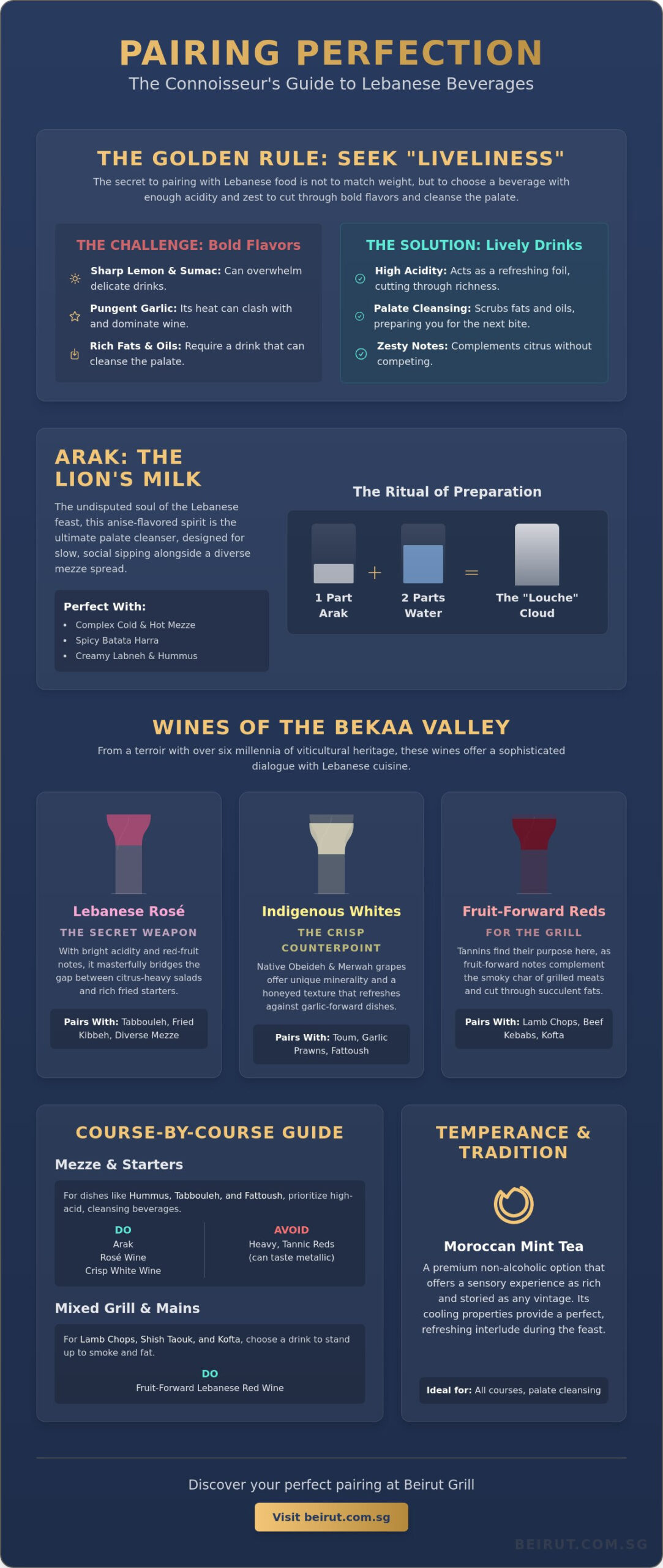
To sit before a vibrant Lebanese mezze spread is to witness a sensory tapestry where the sharp brightness of lemon and the earthy depth of tahini compete for your attention. This abundance presents a unique puzzle when deciding what to drink with lebanese food, as the traditional rules of Western pairing often falter against such bold, competing profiles. The secret lies in a concept we call “liveliness.” Instead of seeking a beverage that matches the weight of the food, one must choose a companion that possesses enough acidity and zest to cut through the richness of a silken Hummus or the pungent allure of garlic.
In the historic tradition of the Levant, beverages aren’t merely refreshments; they are essential palate cleansers that prepare the tongue for the next discovery. High-acid white wines and the anise-scented clouds of Arak serve this purpose beautifully. They scrub the palate clean of fats and oils, ensuring that the subtle nuances of fresh mint or parsley remain as crisp on the tenth bite as they were on the first. As the meal progresses from cold mezze to the robust heat of the grill, the requirements shift. Tannins, which can feel metallic when clashed with citrus-heavy starters, finally find their purpose when paired with the charred, succulent fats of Lamb Kofta or Beirut Lamb Chops.
Acidity, Spice, and Smoke
Dishes like Fattoush, laden with the tart, berry-like zing of sumac and generous glugs of lemon juice, demand a glass with equal structural integrity. A crisp, high-acid wine acts as a refreshing foil to the intensity of garlic-heavy Toum, preventing the condiment’s pungent heat from overwhelming the more delicate notes of the meal. When guests ask what to drink with lebanese food to complement the Mixed Grill, the answer lies in the interaction between smoke and fruit. The smoky char on a Beef Kebab or Shish Taouk requires a red Lebanese wine with enough fruit-forward character to bridge the gap between the scorched exterior and the tender, spiced interior of the meat.
The Lebanese Hospitality Ritual
At Beirut Grill, we view the beverage list as a direct extension of the generosity found on our plates. The transition from a refreshing, light-bodied starter to an indulgent, spiced main course is a carefully choreographed movement designed to reward your curiosity. It’s a multi-sensory journey where the condensation on a chilled glass and the aroma of toasted spices create an atmosphere of refined indulgence. This ritual honors our founding year and the generations of expertise that inform every recommendation we make, ensuring your experience is both exclusive and deeply authentic.
The Spirit of the Levant: Arak and Lebanese Wine
Nestled between two majestic mountain ranges, the Bekaa Valley serves as the verdant heart of Lebanese viticulture, boasting a heritage that stretches back over six millennia. This ancient terroir provides the definitive answer for those pondering what to drink with lebanese food, offering a portfolio of wines that are as resilient as they are refined. While international varietals like Cabernet Sauvignon and Syrah thrive in the high altitude sun, it’s the indigenous spirit and the versatile rosés that truly define the Levantine table. Each bottle tells a story of a landscape defined by sun-drenched slopes and limestone soils.
The Ritual of Arak
Arak, affectionately known as “the Lion’s Milk,” is the undisputed soul of the Lebanese feast. This potent, anise-flavored spirit is distilled from grapes and undergoes a magical transformation when prepared correctly. The connoisseur’s ritual involves pouring one part Arak followed by two parts cool water, a sequence that triggers the “louche” effect, turning the clear liquid into a milky, opaque cloud. It’s the ultimate palate cleanser. Between bites of spicy Batata Harra or creamy Labneh, a sip of Arak cuts through the oils and spices, resetting your senses for the next dish. Sharing a bottle is a social contract, a slow-paced experience that encourages lingering over a spread of Traditional Lebanese Cuisine.
Exploring Lebanese Wine Varietals
While Arak holds the cultural crown, Lebanese wine offers a sophisticated dialogue with the charcoal grill. Lebanese Rosé is often the secret weapon for a diverse mezze table. Its bright acidity and red-fruit notes bridge the gap between the citrus of Tabbouleh and the richness of Fried Kibbeh. For those seeking white wines, the indigenous Obeideh and Merwah grapes offer a unique minerality and honeyed texture that echoes the complexity of the land. These ancient grapes provide a refreshing counterpoint to the garlic-forward dishes that define our menu.
When the Mixed Grill arrives, the conversation naturally shifts to the reds. The high-altitude vineyards of the Bekaa Valley produce Cabernet Sauvignon and Syrah with incredible structure and dark-fruit spice. These wines don’t just sit alongside the meat; they elevate the charred, smoky notes of Shish Taouk and Beef Kebab. You can explore these prestigious labels on our curated beverage list, where each bottle is selected to honor the legacy of regional producers and the sensory indulgence of the Lebanese dining experience. Finding what to drink with lebanese food becomes an effortless journey when you have such a rich history of winemaking to draw from.
Course-by-Course: From Cold Mezze to Mixed Grills
As the table fills with a kaleidoscope of small plates, the sequence of your beverages must mirror the culinary ascent from garden-fresh herbs to charcoal-seared proteins. Deciding what to drink with lebanese food at this stage requires an understanding of how textures evolve throughout the meal. You aren’t just matching flavours; you’re managing the weight of the experience. The goal is to maintain a sense of refreshment even as the dishes grow more indulgent and complex in their spice profiles.
The Starter Palette
The journey begins with the creamy, tahini-rich depths of Hummus and the smoky velvet of Baba Ghanoush. These silken dips demand a beverage with high acidity and a clean finish to prevent the palate from becoming saturated. A crisp Sauvignon Blanc or a bone-dry Assyrtiko offers the necessary citrus zest to brighten the earthy chickpeas and cut through the richness of the sesame paste. When your table features the vibrant ruby glints of pomegranate in a Fattoush or the herb-heavy brightness of Tabbouleh, a dry Rosé becomes an inspired choice. Its red-fruit notes harmonize with the fruit’s sweetness while the acidity stands up to the sharp lemon dressing. For the hot mezze, particularly the golden crunch of Falafel or the squeaky, salty indulgence of Grilled Halloumi, look for a white wine with a slight mineral edge. This interaction creates a refreshing tension that prepares you for the heavier courses to follow.
Grill and Ember Pairings
When the Mixed Grill arrives, the atmosphere shifts toward the primal scent of charcoal and seared fats. This is the moment for robust red wines that can withstand the bold spice profiles of the Levant. A Syrah, with its inherent notes of black pepper and dark fruit, is the perfect companion for the aromatic Lamb Kofta. The meat’s richness finds a balance in the wine’s structured tannins. In the debate between the Beef Kebab and the Lamb Kofta, the choice of drink often hinges on weight versus spice. The Beef Kebab, typically leaner and more focused on the quality of the cut, pairs beautifully with a structured Cabernet Sauvignon that matches its density. Conversely, the Kofta’s intricate blend of herbs and spices requires the peppery lift of a Syrah or a sophisticated Bekaa Valley red blend. For those enjoying the ocean’s bounty, the delicate sweetness of charcoal-grilled prawns requires the elegant, mineral-driven lift of a chilled, dry Rosé to balance the smoky char. Each choice ensures that the intensity of the grill never masks the subtle craftsmanship of the marinade.
Temperance and Tradition: Non-Alcoholic Refreshments
Lebanese hospitality is measured by the abundance of the table, but the liquids that accompany the feast are equally vital for achieving a sense of balance. While the vineyards of the Bekaa Valley offer one path, the non-alcoholic heritage of the Levant provides a sophisticated alternative that prioritizes digestion and sensory clarity. If you’re exploring what to drink with lebanese food while seeking a clear-headed experience, these traditional preparations offer a depth of flavour that rivals any vintage. They aren’t mere substitutes; they are essential components of a multi-sensory dining experience that has been refined over centuries. Understanding these pairings is the mark of a true connoisseur who values the digestive wisdom of our ancestors.
The Art of Moroccan Mint Tea
As the richness of the Mixed Grill settles, the arrival of Moroccan Mint Tea signals a graceful shift toward reflection. This is far more than a simple infusion. It’s a cooling ritual designed to soothe the palate after the intensity of garlic and charcoal smoke. We use fresh, vibrant mint leaves steeped with green tea to create an aromatic cloud that fills the air. Interestingly, this tea is served hot even in the height of summer to aid the body’s natural digestive processes. The practiced “high pour” is a mark of expertise, where the tea is streamed from a height to aerate the liquid, creating a delicate froth and releasing the full, refreshing potential of the mint oils.
The Lebanese Coffee Ritual
No feast is truly complete without the dark, potent embrace of traditional Lebanese Coffee. Served in small, delicate cups, this brew is defined by its velvety texture and the unmistakable, exotic warmth of ground cardamom. It provides a bold, sophisticated conclusion to the meal, offering a sharp contrast to the savoury courses that preceded it. The bitter, earthy depth of the coffee acts as the perfect foil to the honeyed, nutty layers of Baklava or the warm, syrup-soaked indulgence of Kunefe. It’s a moment designed to encourage the guest to linger, honoring the timeless tradition of conversation and shared presence.
For those seeking hydration during the meal, classics like Ayran and Jallab provide regional character. Ayran, a chilled yogurt-based drink with a hint of salt, offers a creamy, cooling counterpoint to the heat of Batata Harra. Jallab, a fragrant blend of date and grape molasses infused with rose water, mirrors the floral complexity of the Levantine landscape. You can experience these authentic flavours and more by visiting us; book your experience at Beirut Grill to discover the true spirit of our heritage.
A Curated Experience at Beirut Grill
At Beirut Grill, we believe that a meal is not merely a collection of dishes but a choreographed journey through the soul of the Levant. Our beverage list is a curated testament to this philosophy, featuring a selection that spans from the milky clouds of premium Arak to the sophisticated vintages of Lebanese Wine. Choosing what to drink with lebanese food is an art form we’ve perfected through our long-standing presence in the culinary industry, ensuring every guest receives a recommendation that honors both the tradition of the dish and the curiosity of the diner. Whether you’re indulging in our signature Mixed Grill or exploring the intricate textures of our cold mezze, our cellar is designed to elevate every bite into a moment of pure sensory indulgence.
Expert Guidance for Every Guest
Our staff serves as your refined and knowledgeable hosts, possessing a seasoned expertise that allows them to navigate our extensive wine list with ease. They understand the nuances of our premium imported ingredients and how the char of the grill interacts with the tannins of a Bekaa Valley red. This commitment to authentic techniques and warm hospitality ensures that your evening is more than just a dinner; it’s an immersive journey into our heritage. By highlighting prestigious regional producers and high-status labels, we provide an experience that feels exclusive yet remains accessible to those seeking an authentic cultural voyage. We take pride in our role as curators, helping you discover exactly what to drink with lebanese food to match your personal palate and the specific intensity of your order.
The Final Note: Dessert and Digestifs
As the savoury courses conclude, the ritual transitions into the delicate sweetness of our dessert offerings. The silken, floral notes of Mouhalabieh or the warm, honeyed layers of our signature Kunefe require a final, thoughtful pairing to complete the experience. We often recommend a curated tea service or a final cup of cardamom-scented Lebanese Coffee to provide a sophisticated conclusion to the feast. These digestifs aren’t merely an afterthought but a deliberate part of the communication rhythm we establish with our guests, allowing the flavours of the meal to linger as you immerse yourself in our surroundings. To begin your own sensory journey through the best of our culinary traditions, we invite you to Reserve your table at Beirut Grill and discover the perfect harmony of food and drink.
Elevating Your Next Lebanese Feast
Mastering the art of what to drink with lebanese food is about more than just matching ingredients; it’s about honoring a heritage of hospitality that dates back thousands of years. You’ve discovered how the bright acidity of a Bekaa Valley white can lift a creamy Hummus, and why the anise-scented ritual of Arak remains the ultimate companion for a diverse mezze spread. As the meal moves toward the smoky depths of the charcoal grill, the transition to a structured red wine ensures that every spiced note of a Lamb Kofta is celebrated rather than obscured.
At Beirut Grill, we invite you to step into a prestigious destination where these traditions are preserved with meticulous care. Our historic setting provides the perfect backdrop for a multi-sensory journey, featuring expertly prepared charcoal-grilled meats and traditional mezze. We take immense pride in our curated selection of authentic Lebanese wines and Arak, served by hosts who understand the delicate balance of the Levantine table. Experience the authentic flavours and curated wine pairings of Beirut Grill. We look forward to welcoming you to a table where every sip and bite tells a story of our enduring cultural roots.
Frequently Asked Questions
What is the most traditional Lebanese drink to have with a meal?
Arak is the most traditional spirit to accompany a meal, while Lebanese wine from the Bekaa Valley is the standard alcoholic pairing. For those exploring what to drink with lebanese food without alcohol, Ayran or Lebanese Coffee are cultural staples. Arak’s anise-forward profile acts as a legendary palate cleanser between diverse mezze courses, ensuring each bite remains as vibrant as the first.
Can you drink red wine with Lebanese food?
Red wine is an exceptional choice for Lebanese cuisine, particularly when the meal transitions to robust, charcoal-grilled proteins. While lighter whites suit the starters, a structured red from the Bekaa Valley elevates the smoky char of Beef Kebab or Lamb Kofta. It’s essential to seek varietals like Syrah or Cabernet Sauvignon that possess enough fruit-forward spice to harmonize with our aromatic marinades.
What is Arak and how is it traditionally served?
Arak is a potent, grape-based spirit distilled with aniseed, known for its distinct liquorice aroma and milky transformation. It’s traditionally served by pouring one part Arak followed by two parts water into a small glass, a sequence that creates a beautiful opaque cloud. This ritual is essential for unlocking the spirit’s refreshing qualities, making it the perfect bridge between complex mezze flavours.
What are the best non-alcoholic drinks to pair with Middle Eastern food?
The best non-alcoholic pairings focus on hydration and digestive ease, such as Jallab, Ayran, or Moroccan Mint Tea. Jallab offers a fragrant sweetness from date molasses and rose water, while fresh mint tea provides a cooling finish to a heavy meal. These traditional beverages ensure that your understanding of what to drink with lebanese food remains rooted in authentic sensory indulgence.
Does Lebanese wine pair well with vegetarian mezze?
Lebanese wine is remarkably versatile and pairs beautifully with a vegetarian mezze selection like Hummus, Tabbouleh, and Spinach Fatayer. Crisp, high-acid white wines from indigenous grapes like Obeideh offer a mineral edge that brightens earthy chickpea dishes. Alternatively, a dry Lebanese Rosé provides a refreshing fruitiness that complements the tart sumac and lemon found in traditional pomegranate-topped salads.
What should I drink with a Lebanese Mixed Grill?
A robust red wine with structured tannins, such as a Bekaa Valley Syrah, is the ideal companion for a Lebanese Mixed Grill. The wine’s peppery notes and dark fruit profile stand up to the intense flavours of Shish Taouk and spiced lamb. If you prefer a traditional spirit, Arak remains a classic choice, as its cooling anise finish cuts through the rich fats of the charcoal-seared meats.
Is Lebanese coffee different from regular espresso?
Lebanese coffee is distinct from regular espresso due to its fine grind, unfiltered preparation, and the characteristic infusion of aromatic cardamom. It’s traditionally boiled in a long-handled pot, resulting in a thick, potent brew served in small cups. This preparation creates a velvety texture and a lingering spice that provides a more atmospheric conclusion to the meal than a standard espresso.
What drink goes best with Baklava or Kunefe?
Traditional Lebanese Coffee or Moroccan Mint Tea are the most sophisticated pairings for honeyed desserts like Baklava or Kunefe. The coffee’s bitter, cardamom-scented depth provides a sharp, necessary contrast to the intense sweetness of the syrup and nuts. Similarly, the refreshing notes of fresh mint tea help to cleanse the palate after the rich, buttery layers of these classic Levantine pastries.