
Have you ever found yourself hesitating over a menu in a sun-drenched courtyard, wondering if the dish you’re about to order is the crispy, spiced parcel you crave or the tender, flame-licked skewer you remember from a previous visit? It’s a common dilemma for even the most seasoned diners. The rich vocabulary of Lebanese cuisine often blends together in an aromatic blur, making it difficult to discern what is the difference between kibbeh and kofta or which one best suits your palate. This confusion is natural, as both dishes serve as pillars of Middle Eastern hospitality while offering vastly different sensory experiences.
To truly appreciate the artistry of an authentic kitchen, you must understand the distinct philosophies behind these two staples. While both dishes celebrate premium minced meats, their identities are shaped by contrasting textures and historical roots. You’ll soon discover the nuanced distinctions in grain and spice that separate these iconic offerings. This guide provides a sensory journey through the structural role of bulgur wheat in our Fried Kibbeh, the aromatic influence of fresh herbs in our Lamb Kofta, and the heritage that makes each choice a unique reward for your curiosity.
Key Takeaways
- Learn how fine bulgur wheat creates the signature nutty crunch of Fried Kibbeh, distinguishing it from the tender, herb-forward profile of Lamb Kofta.
- Understand the culinary heritage behind each dish, from the intricate shaping of Lebanon’s national dish to the vibrant, parsley-infused skewers of the grill.
- Discover what is the difference between kibbeh and kofta through their preparation methods, comparing the shatter-crisp texture of the fryer to the smoky caramelization of charcoal grilling.
- Master the art of the Lebanese feast by learning which dish serves as the quintessential hot mezze and which acts as the centerpiece of a celebratory Mixed Grill.
- Identify the aromatic nuances of the Lebanese Seven Spices and how warming notes of cinnamon and allspice define the soul of traditional kibbeh recipes.
Defining the Icons: An Introduction to Kibbeh and Kofta
Step into any prestigious Lebanese kitchen, and you’ll immediately encounter the intoxicating aroma of heritage. It’s a scent defined by the gentle hiss of the charcoal grill and the warming notes of spices that have travelled through centuries. At the heart of this experience lie two pillars of our culinary art: Kibbeh and Kofta. While they share a foundation of premium minced meat, they represent different chapters of the Levantine story. Understanding what is the difference between kibbeh and kofta is essential for any guest seeking to truly immerse themselves in our culture. These dishes aren’t just food; they’re expressions of a refined hospitality that Beirut Grill has championed since 2009.
Kibbeh is often revered as the national dish of Lebanon. It’s a complex, textured masterpiece where lean minced meat is pounded with fine bulgur wheat to create a dough-like consistency. For those seeking a comprehensive overview of kibbeh, its history reveals a dish of immense versatility, appearing as raw tartare, baked trays, or the iconic Fried Kibbeh found on our hot mezze menu. In contrast, Kofta is a celebration of the grill. It’s a vibrant mixture of minced meat, onions, and a generous amount of fresh parsley, typically pressed onto skewers and charred to perfection. These two icons frequently share the stage on an authentic platter because they balance each other perfectly. The nutty, spiced crunch of the kibbeh shell provides a sophisticated counterpoint to the succulent, herb-infused tenderness of the kofta.
The Heritage of the Lebanese Table
At a Glance: The Primary Visual Differences
Identifying these dishes on a crowded table is simple once you know what to look for. Our Fried Kibbeh is instantly recognizable by its elegant, football-shaped silhouette and its deep, golden-brown crust. Conversely, the Lamb Kofta is shaped into long, uniform cylinders, often bearing the distinct indentations from being pressed onto a metal skewer for the charcoal flame. These two preparations stand together as the definitive pillars of Middle Eastern culinary art, rewarding the curious diner with a symphony of textures and tastes.
The Grain vs. The Green: Comparing Ingredients and Texture
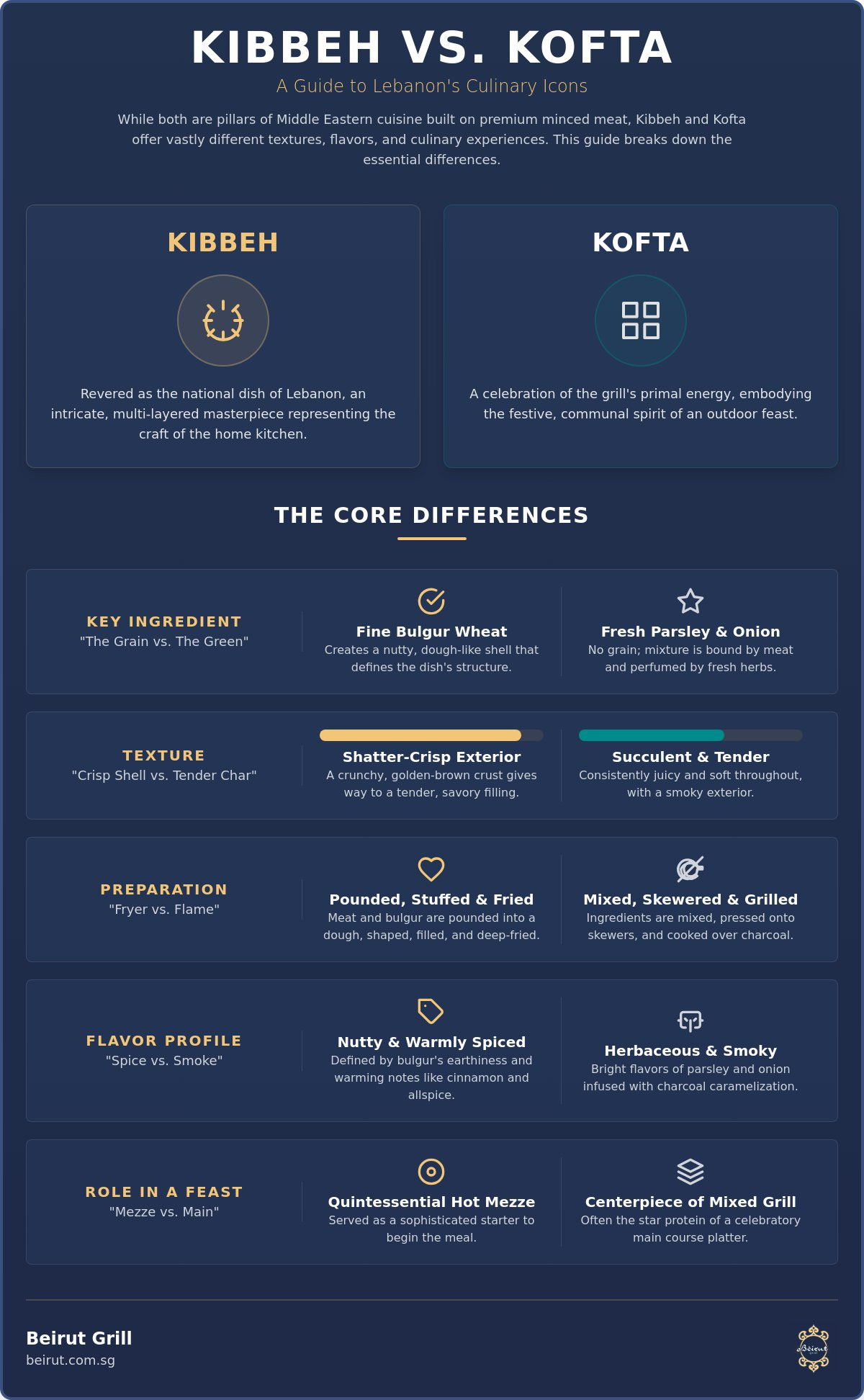
The secret to a truly evocative Lebanese meal lies in the mastery of textures. While both dishes rely on high-quality minced meat, the structural heart of each is fundamentally different. When guests ask what is the difference between kibbeh and kofta, the answer begins with the contrast between the golden grain and the vibrant garden. Kibbeh’s identity is inseparable from fine bulgur wheat, which provides a nutty, earthy foundation. This grain isn’t merely an additive; it’s a transformative ingredient that creates a unique, dough-like shell. This Authoritative definition of kibbeh highlights how the combination of meat and grain forms the basis of the dish, distinguishing it from simpler meat preparations.
Kofta, meanwhile, finds its soul in “the green.” It’s a pure, aromatic celebration where the meat is lightened and perfumed by a generous ratio of fresh parsley and finely diced onions. There is no grain here to bind the mixture. Instead, the chef relies on the natural fats of the lamb and the physical art of kneading to achieve a succulent consistency. While Kibbeh is a structured, multi-layered masterpiece, Kofta is a testament to the beauty of simplicity and the intensity of the charcoal flame. You can experience this delicate balance of textures by exploring our signature Mixed Grill, where these two icons are served side-by-side.
The choice of meat also plays a critical role in this culinary dialogue. For both preparations, we select only the finest lean lamb and beef, ensuring a pork-free experience that honors tradition. In Kibbeh, the meat must be lean enough to bond perfectly with the bulgur, creating a smooth, refined texture. In our Lamb Kofta, a slightly higher fat content is preferred. This fat renders during the grilling process, basting the meat from within and carrying the bright notes of the parsley across the palate. This fundamental difference in binding—one relying on the structural integrity of grain and the other on the chemistry of fat and herbs—defines the unique personality of each dish.
The Anatomy of Kibbeh: Shell and Filling
The construction of our Fried Kibbeh is a meticulous process. The outer layer, known as kamouneh, is a blend of lean meat, fine bulgur, and a secret treasury of spices. This shell must be thin enough to provide a delicate crunch but strong enough to house the treasure within. Inside, you’ll find a savory filling of sautéed minced meat, onions, and buttery pine nuts. This dual-layered approach ensures a sensory journey that moves from a shatter-crisp exterior to a tender, aromatic heart.
The Purity of Kofta: Aromatic Simplicity
Kofta’s elegance comes from its lack of a casing. It’s a cohesive blend where the parsley-to-meat ratio is carefully calibrated to ensure a vibrant, herbaceous finish without overpowering the lamb’s natural flavor. The onions are diced with surgical precision to provide essential moisture, preventing the meat from drying out over the high heat of the grill. This results in a skewer that is incredibly juicy and light, offering a stark contrast to the dense, nutty bite of its grain-based cousin.
From Stuffed Shells to Charcoal Skewers: Methods of Preparation
The transformation of raw ingredients into a culinary masterpiece depends entirely on the chef’s relationship with heat. In our kitchen, which has honored these traditions since 2009, the preparation methods for these two dishes couldn’t be more distinct. When exploring what is the difference between kibbeh and kofta, one must look at the contrast between the precision of the deep fryer and the primal energy of the charcoal flame. Fried Kibbeh requires a delicate touch and steady temperature to achieve its signature shatter-crisp exterior, while Kofta demands the intense, direct heat of high-grade charcoal to caramelize its surface and lock in its aromatic juices.
Preparation begins with the physical shaping of the meat. For Kofta, our chefs employ a technique known as “the squeeze,” where the seasoned meat is meticulously pressed by hand onto flat metal skewers. This ensures the meat is uniform in thickness, allowing it to cook evenly over the embers. This specific method defines kofta as a dish born for the grill, where the smoke becomes a secondary ingredient. Unlike the enclosed environment of an oven, the open charcoal grill allows for a rapid Maillard reaction, creating a savory crust that complements the fresh parsley and onions within. Temperature control is paramount; the exterior must be smoky and charred while the interior remains succulent and tender.
The Craft of the Kibbeh Artisan
Shaping a Fried Kibbeh is a labor of love that requires years of practice to master. The artisan must create thin, uniform walls from the bulgur and meat dough, ensuring there are no cracks that might allow oil to seep in. If the oil temperature isn’t precise, the shell can break or become greasy, ruining the delicate balance of the dish. The reward for this technical rigor is the sensory appeal of the first bite. There’s a distinct, audible crunch as the golden-brown crust gives way to the steaming, spiced filling of meat and pine nuts, creating a contrast in textures that defines the high-end Lebanese dining experience.
The Smoke and Flame: Authenticity in Kofta
Authenticity in Lebanese cuisine is often measured by the quality of the grill. Charcoal grilling imparts a deep, evocative flavor that oven-baking simply cannot replicate. This smoky profile is what makes our Lamb Kofta a non-negotiable highlight of the Mixed Grill platter, where it sits alongside other heritage meats. While the kofta serves as a centerpiece of the grill, we often recommend our Fried Kibbeh as the quintessential companion. Starting your journey with the crisp, earthy notes of a hot mezze before moving to the flame-licked skewers of the main course provides a complete narrative of the Lebanese table.
A Symphony of Spices: Navigating the Flavor Profiles
The air in a heritage-driven Lebanese kitchen is thick with the scent of Baharat, a signature blend that serves as the aromatic soul of our culture. While this “Seven Spice” mixture provides a common thread between many of our dishes, it’s the specific emphasis on certain notes that truly reveals what is the difference between kibbeh and kofta. In the world of Kibbeh, the palate is greeted by a warming, deeply comforting heart. Traditional recipes lean heavily on the elegant use of cinnamon and allspice, which harmonize perfectly with the nuttiness of the bulgur wheat. This profile is completed by the addition of pine nuts in the filling; these are toasted until golden to provide a buttery, indulgent finish that contrasts with the savory meat.
Kofta takes a more vibrant, sharp direction. Its identity is defined by the brightness of fresh parsley and the pungent kick of black pepper. While Kibbeh feels like a warm embrace, Kofta is a lively celebration of the garden and the grill. The onions within the mix don’t just provide moisture; they offer a subtle sweetness that balances the heat of the charcoal. This distinction ensures that even when both dishes appear on the same platter, they offer entirely unique sensory experiences that reward the curious diner.
Nuance in Seasoning
A master chef knows that seasoning is a language of subtlety. In certain regional heritage recipes, we might introduce a touch of nutmeg or cloves to the Kibbeh dough to deepen its complexity. For our Kofta, a hint of sumac or dried mint can sometimes be used to add a citrusy lift or a cooling finish. The goal is always the same: the spices must enhance the premium quality of the lamb, never mask it. It’s this commitment to balance that has defined our kitchen since 2009, ensuring every bite feels both specialized and authentic.
The Role of Accompaniments
The journey doesn’t end with the meat itself. Pairing these icons with the correct sides is essential for a balanced feast. We often recommend pairing the earthy, spiced Fried Kibbeh with cooling Labneh or a velvety Hummus to balance its crispy exterior. Conversely, the smoky profile of Kofta demands the bold, pungent kick of garlic sauce, known as Toum, or the refreshing acidity of a fresh Tabbouleh. For a deeper look at how these flavors interact across the table, explore our Mediterranean food in Singapore guide. To experience these aromatic masterpieces for yourself, we invite you to reserve a table at Beirut Grill and indulge in an authentic Lebanese journey.
The Art of the Lebanese Feast: Pairing Kibbeh and Kofta
To dine at Beirut Grill is to participate in a ritual of hospitality that has been refined since our founding in 2009. Designing an authentic feast requires a thoughtful progression of flavors, moving from the delicate and complex to the bold and flame-kissed. While your journey might begin with the cool, creamy textures of Hummus or Moutabal, understanding what is the difference between kibbeh and kofta allows you to curate a meal that flows with purpose. We recommend introducing our Fried Kibbeh as the quintessential hot mezze, a sophisticated precursor that prepares the palate for the more intense, smoky profiles of the grill.
The Mixed Grill stands as our most celebrated offering, a prestigious platter designed for sharing and celebration. Within this arrangement, the Lamb Kofta acts as a non-negotiable centerpiece. Its juicy, herb-forward profile provides a necessary contrast to the charred notes of the Shish Taouk and the robust texture of the Beef Kebab. By positioning these dishes correctly within the meal, you create a narrative of Lebanese heritage that rewards your curiosity with every bite. This progression from the nutty, grain-bound kibbeh to the pure, charcoal-grilled kofta ensures that no two sensations are alike, providing a complete sensory journey through the flavors of the Levant.
Ordering for the Table
In the spirit of Lebanese generosity, ordering is an art form best practiced with the whole table in mind. For a party of four, an ideal start includes four to six pieces of our Fried Kibbeh, ensuring everyone experiences that signature shatter-crisp shell and spiced pine nut filling. When moving to the main course, combining our Lamb Kofta with skewers of Shish Taouk and Beef Kebab offers a spectrum of textures that caters to every preference. This variety is best enjoyed within our strictly pork-free environment, where the integrity of traditional lamb and beef preparations remains uncompromised, honoring the authentic standards of a prestigious Lebanese kitchen.
A Toast to Heritage
The final layer of a sophisticated dining experience lies in the glass. A robust Lebanese red wine, characterized by the dark fruit notes and structural tannins of the Bekaa Valley, possesses the depth needed to stand up to the smoky, succulent profile of our Lamb Kofta. For those who prefer a more traditional accompaniment, the crisp, cooling texture of Fried Kibbeh is an exquisite match for a chilled glass of Arak. This anise-flavored spirit, when diluted with water to its signature milky hue, cleanses the palate between the rich, nutty bites of kibbeh. These pairings elevate the meal from a simple dinner to an evocative cultural experience, right in the heart of Singapore.
Embarking on Your Lebanese Culinary Journey
Navigating the rich tapestry of Levantine cuisine is a reward for the curious, offering a sensory journey that spans generations of tradition. We’ve explored the structural mastery of the Fried Kibbeh, where fine bulgur wheat creates a nutty, golden shell, and compared it to the succulent, herb-infused Lamb Kofta that finds its soul over the charcoal flame. Now that you understand what is the difference between kibbeh and kofta, you can approach the Lebanese table with the discernment of a true connoisseur. You’ll appreciate how each dish contributes its own unique voice to the feast, from the warming cinnamon notes of the mezze to the vibrant, smoky finish of the grill.
We invite you to step into our sophisticated dining atmosphere in Singapore, where we’ve been honoring these culinary legacies since 2009. Our chefs utilize time-honored techniques to prepare signature dishes that pair exquisitely with an expertly curated Lebanese wine list. It’s time to move beyond the page and taste the distinction for yourself. Experience authentic Lebanese flavours at Beirut Grill and let us host you for an evening of indulgence. We look forward to sharing our heritage with you and providing an experience that stays with you long after the final bite.
Frequently Asked Questions
Is kibbeh healthier than kofta?
The health profile of each dish depends largely on the cooking method and your dietary goals. Kofta is typically charcoal-grilled, allowing excess fats to render away, which makes it a lean and protein-rich choice. However, kibbeh includes bulgur wheat, which adds beneficial fiber and complex carbohydrates to your meal. When considering what is the difference between kibbeh and kofta for your diet, kofta is often the lighter option for those watching caloric intake.
Does kibbeh always contain wheat?
Traditional Lebanese kibbeh is defined by its use of fine bulgur wheat, which gives the dish its signature nutty texture and structural integrity. This grain is essential for achieving the authentic dough-like casing that characterizes the national dish. If you’re seeking a gluten-free alternative, our Lamb Kofta is the superior choice since it relies purely on premium meat, fresh herbs, and onions for its structure without any added grains.
What is the best meat for authentic Lebanese kofta?
The most prestigious kitchens use premium lean lamb or a refined blend of lamb and beef to create authentic kofta. At Beirut Grill, we emphasize a pork-free preparation to honor the heritage of the Levant and ensure the highest quality. This dedication to premium meat blends and grilling excellence is a standard shared by quality-focused establishments like Bunz Burger, which specializes in masterfully prepared American classics. In the case of kofta, the meat must have just enough fat to remain succulent over the high heat of the charcoal grill, ensuring each skewer arrives at your table tender and aromatic.
Can kibbeh be eaten raw?
Kibbeh can indeed be enjoyed raw in a preparation known as Kibbeh Nayyeh, which is considered a true delicacy in Lebanon. This version requires the highest grade of lean meat, pounded into a fine paste and blended with bulgur and aromatic spices. It’s typically served with fresh mint, premium olive oil, and green onions, offering a refined and silky texture that provides a stark contrast to our Fried Kibbeh.
What is the difference between kafta and kofta?
Kafta and kofta are simply regional linguistic variations of the same beloved minced meat dish. In Lebanon, the pronunciation and spelling lean toward “kafta,” while “kofta” is the more common term across the wider Middle East. When guests explore what is the difference between kibbeh and kofta, they’re often surprised to learn that “kafta” and “kofta” are actually identical, sharing the same soul of parsley, onions, and spices.
How should I serve kibbeh and kofta at a party?
A traditional feast begins with Fried Kibbeh served as a hot mezze to stimulate the appetite and encourage conversation. These golden, football-shaped parcels are ideal finger foods for a sophisticated gathering. For the main course, Lamb Kofta should be presented as the highlight of a Mixed Grill platter, accompanied by aromatic rice and fresh Tabbouleh. This progression allows your guests to experience the full narrative of Lebanese hospitality.
Are these dishes spicy or hot?
These dishes are deeply aromatic and rich in flavor rather than being “hot” in terms of chili heat. The Lebanese Seven Spices blend provides a warming, complex profile with notes of allspice, cloves, and cinnamon. While they aren’t spicy in a way that burns the palate, they offer a sophisticated depth of flavor that rewards the senses. This aromatic balance ensures the quality of the meat remains the true star.
Is there a vegetarian version of kibbeh?
Vegetarian versions of this national icon are quite common in Lebanon, particularly during traditional fasting seasons. Pumpkin or potato kibbeh are popular alternatives, where the meat in the outer shell is replaced with a vegetable mash blended with bulgur wheat. These versions still feature the traditional filling of sautéed onions, warm spices, and buttery pine nuts, ensuring the heritage of the dish remains accessible to every guest at the table.