
What if the smoky eggplant spread you have enjoyed for years is actually a different culinary masterpiece entirely? Many guests at a traditional Lebanese table find themselves asking what is moutabal dip and how it truly differs from the more familiar Baba Ghanoush. It is a common point of culinary confusion that often leads to a missed opportunity to savor one of the Levant’s most sophisticated and velvet-textured offerings.
You likely appreciate the deep, aromatic allure of fire-roasted vegetables, yet the specific nuances of authentic Levantine ingredients can often feel elusive. This guide will unlock the secrets of this creamy, charcoal-kissed eggplant dip, revealing why it remains the sophisticated soul of a traditional Lebanese feast. We will explore the traditional preparation methods that define its character, its natural suitability for vegetarian diets, and the perfect ways to incorporate it into your next mezze experience. By the end, you will have the knowledge to order with confidence and fully appreciate its role as the essential, silky counterpoint to robust, grilled flavors during your next visit to our prestigious destination. This exploration serves to reward your curiosity with a deeper connection to our rich culinary heritage.
Key Takeaways
- Define what is moutabal dip through its harmonious blend of fire-roasted eggplant and premium tahini, creating a texture as refined as silk.
- Master the subtle distinctions between Moutabal and Baba Ganoush to navigate any traditional mezze platter with the expertise of a seasoned culinary connoisseur.
- Uncover the secret of the fire-kissed preparation method, which uses authentic charcoal to infuse the dish with a hauntingly smoky essence.
- Identify the ideal flavor pairings and dining etiquette that transform this creamy dip into a sophisticated centerpiece of a communal Lebanese feast.
Understanding Moutabal: The Creamy Soul of the Mezze Table
Imagine a table set under the warm glow of an evening in the Levant, where the air is thick with the scent of jasmine and woodsmoke. Among the vibrant array of small plates that define the start of a meal, one dish stands out for its elegant simplicity and profound depth. To truly understand what is moutabal dip, one must first appreciate its role as the velvety, smoky emulsion that anchors the cold mezze selection. Unlike its more rustic cousins, Moutabal is a refined creation, a traditional Lebanese masterpiece crafted from fire-roasted eggplant, rich tahini, and bright lemon juice. The name itself, derived from an Arabic root meaning “spiced” or “flavored,” hints at a complexity that belies its short ingredient list, reflecting an aromatic profile that has been perfected over generations.
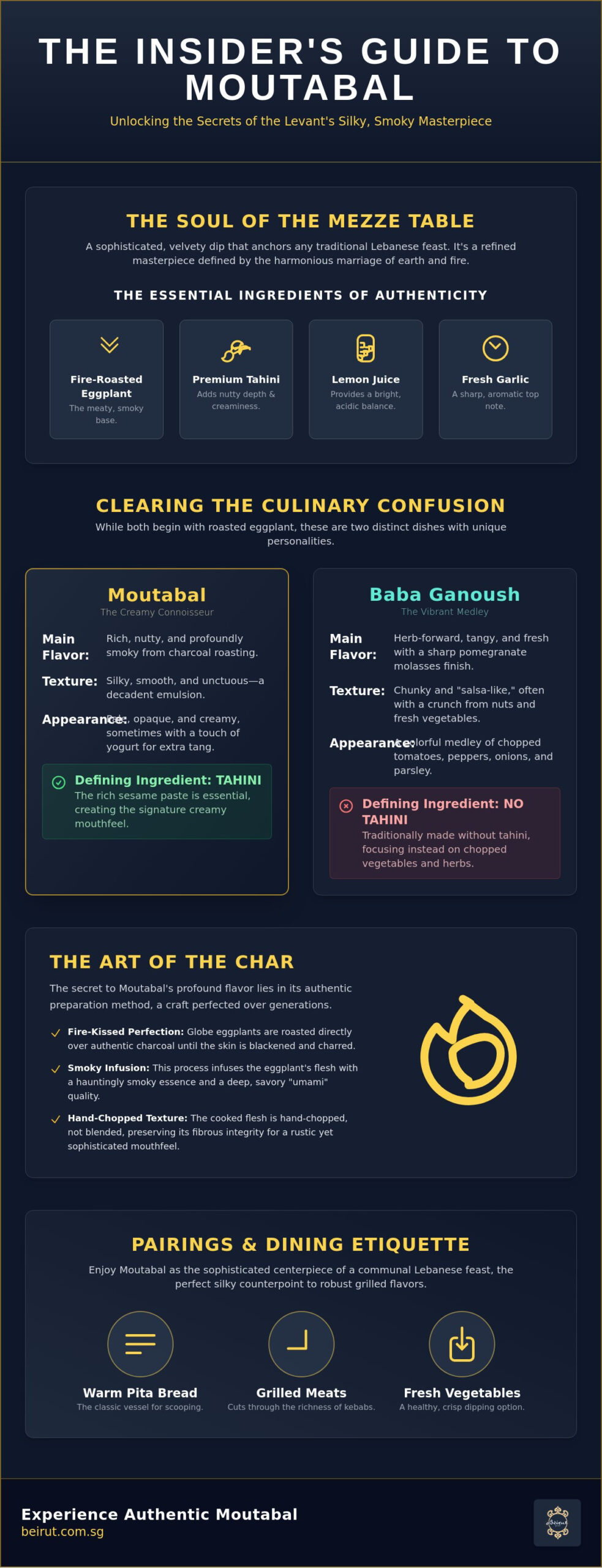
While many diners encounter eggplant spreads across different cultures, the signature inclusion of rich sesame paste, or tahini, sets this dish apart from the rest. This addition creates a luscious, pale creaminess that defines the authentic Lebanese style. For those curious about the broader regional family of these roasted vegetable dishes, exploring the nuances of Moutabal vs. Baba Ganoush reveals how subtle shifts in ingredients can create entirely different culinary personalities. At its heart, Moutabal is about the marriage of earth and fire, transformed into a dip that is as much a texture as it is a flavor.
The Essential Ingredients of Authenticity
The soul of the dish begins with the selection of the finest globe eggplants. These are chosen specifically for their meaty flesh and unique ability to absorb the hauntingly smoky notes of an open flame. This base is married to premium tahini, which acts as the source of the dip’s nutty depth and unctuous mouthfeel. To finish the composition, fresh garlic and sharp lemon provide the bright, acidic top notes necessary to balance the inherent richness of the sesame. It’s a delicate equilibrium that requires a practiced hand to master.
Texture and Flavor Profile
True Moutabal is a study in sensory contrasts. It captures the interplay between the charred, earthy essence of the blackened skin and the sweet, creamy heart of the eggplant. We believe a hand-chopped texture is vastly superior to a machine-blended puree; the former preserves the integrity of the fibers, offering a mouthfeel that is rustic yet sophisticated. This method allows the guest to experience the “umami” quality derived from the charcoal roasting process, a savory depth that makes the dip feel substantial and indulgent. Every spoonful serves as a reminder of the heritage and craftsmanship that define a truly authentic Lebanese feast.
Moutabal vs. Baba Ganoush: Clearing the Culinary Confusion
In the bustling markets of Beirut or the refined dining rooms of Singapore, a frequent question arises among those exploring Levantine cuisine: what exactly defines the difference between these two eggplant icons? While both dishes share a foundation of fire-roasted eggplant, their personalities on the palate are strikingly different. Understanding what is moutabal dip requires recognizing its decadent, opaque nature, which stands in contrast to the lighter, more “salsa-like” composition of Baba Ganoush. These are not merely variations of the same theme; they’re distinct expressions of Middle Eastern heritage.
In traditional Lebanese households, Baba Ganoush is often a vibrant medley of chopped vegetables, such as bell peppers, tomatoes, and onions, bound together with a sharp drizzle of pomegranate molasses and walnuts. It’s an herb-forward, acidic delight that cleanses the palate with every bite. Conversely, Moutabal is a study in silkiness. It’s the sophisticated, creamy cousin that prioritizes a smooth, unctuous emulsion over the chunky, salad-like textures of its counterpart. One offers a garden-fresh crunch, while the other provides a rich, smoky embrace.
The Role of Tahini and Yogurt
The presence of tahini is the defining boundary between these two classics. This rich sesame paste transforms the roasted eggplant from a simple vegetable base into a decadent spread with a remarkably smooth mouthfeel. Some chefs, honoring specific regional traditions, introduce a touch of yogurt to the mix. This provides an extra tang and a lighter, opalescent color that is visually stunning on a mezze platter. This addition makes the dip particularly appealing for those who already love the consistent, creamy nature of hummus. It’s this luxurious density that allows it to stand up beautifully against the bold, charred flavors of charcoal-grilled meats.
A Visual and Palate Comparison
To the uninitiated eye, these two might appear similar, but a closer look reveals their unique identities. We believe that recognizing these nuances rewards the curious diner with a much richer experience.
- Moutabal: Smooth, pale, and nutty. It offers an intensely smoky finish that lingers elegantly on the tongue, creating a sense of indulgence.
- Baba Ganoush: Chunky, colorful, and acidic. It’s a brighter experience, often finished with a crown of pomegranate seeds for a sudden burst of sweetness.
Choosing between them depends on the balance of your table. If you’ve selected several citrus-heavy salads or sharp pickles, the nutty depth of a Moutabal provides the perfect grounding element for your meal. For those seeking to experience these authentic nuances firsthand, we invite you to discover our curated mezze selection where heritage meets the plate in an atmosphere of warmth and hospitality.
The Art of the Char: How Authentic Moutabal is Crafted
The true essence of this dish begins long before the first guest arrives, born amidst the intense heat and crackle of an open flame. When exploring what is moutabal dip, one quickly discovers that the soul of the recipe resides in the char. The secret lies in a fearless approach to the fire; eggplants must be roasted until their deep purple skin becomes brittle, blackened, and entirely carbonized. This fire-kissed technique imparts a profound, wood-fired aroma that defines the authentic Lebanese experience, creating a sensory depth that a standard kitchen oven simply cannot replicate. It is this dedication to the flame that separates a mere spread from a true culinary masterpiece.
Once the exterior has reached its blackened peak, the transition from fire to bowl is a delicate ritual. Placing the hot, roasted vegetables into a covered container allows the residual steam to penetrate the core, a vital step that ensures the flesh becomes exceptionally tender and sweet while loosening the charred skin for removal. Following this, a critical and often overlooked stage is the thorough draining of the eggplant. We ensure every bit of excess liquid is removed to guarantee the final dip remains thick, concentrated, and rich, preventing the delicate tahini emulsion from becoming diluted or thin.
Traditional Charcoal Roasting Techniques
We utilize open flames to create the signature “Moutabal smoke” that has become a hallmark of our heritage. As the direct heat caramelizes the natural sugars within the eggplant flesh, it develops a complex sweetness that balances the bitterness of the charred skin. The process concludes with the meticulous ritual of hand-peeling the brittle exterior. By avoiding a simple rinse under water, we preserve the smokiest fibers and the precious oils that cling to the flesh. This careful handling is a testament to the expertise required to navigate the nuances of Moutabal vs. Baba Ganoush, where the preparation method is as important as the ingredients themselves.
Hand-Chopping vs. Blending
In a prestigious kitchen, the texture of the mezze is never an afterthought. While modern conveniences might suggest the use of a food processor, the “rustic” feel of hand-chopped eggplant remains the mark of an authentic destination. This manual approach prevents the risk of over-processing, a common pitfall that can turn a vibrant dip into a lifeless, watery soup. By carefully mashing the eggplant by hand, we achieve the perfect suspension of pulp within the creamy tahini. This creates a mouthfeel that is both silky and substantial, allowing the guest to appreciate the structural integrity of the vegetable alongside the velvet richness of the sesame paste. It is a labor of love that rewards the palate with every indulgent bite.
How to Enjoy Moutabal: Pairings and Dining Etiquette
As you settle into the warm hospitality of our Kampong Glam sanctuary, you’ll find that a mezze table is a living tapestry of shared experiences. Within this vibrant spread, what is moutabal dip if not the essential, cooling anchor that brings harmony to the entire meal? Traditionally presented as a cold mezze, it’s a dish intended for the slow, communal pace of dining where friends and family gather to celebrate life’s moments. You won’t find silver cutlery accompanying this bowl; instead, the etiquette of the Levant dictates the use of fresh, hand-stretched pita bread. Tearing a piece of soft, warm bread to use as a delicate scoop allows you to capture the perfect amount of velvet emulsion. This tactile tradition honors our heritage, ensuring every bite is as authentic as the recipes we’ve curated since 2009.
The Perfect Partner for the Mixed Grill
As a cornerstone of the Middle Eastern food Singapore connoisseurs seek out, Moutabal plays a vital role in balancing robust, charcoal-grilled flavors. Its dense, nutty creaminess provides the ideal counterpoint to the charred fats of a Mixed Grill. When paired with the spiced depth of Lamb Kofta or the citrus-marinated Shish Taouk, the dip cuts through the intensity of the seasonings, offering a refreshing reprieve for the palate. Discerning guests often discover it as a sophisticated, nuanced alternative to the bold punch of traditional garlic sauce. It allows the subtle, smoky essence of the eggplant to shine alongside the premium cuts of meat, creating a balanced culinary journey that rewards the visitor’s curiosity.
Beverage Pairings: From Arak to Lebanese Wine
To truly elevate the experience, the choice of beverage must be as considered as the cuisine itself. The distinctive anise notes of Arak, our traditional grape-based spirit, harmonize beautifully with the deep, wood-fired smokiness of the roasted eggplant. For those who favor the vine, a crisp, chilled Lebanese white wine from the Bekaa Valley provides a refreshing acidic contrast that lifts the richness of the tahini. If you seek a non-alcoholic tradition, our Moroccan Mint Tea serves as the ultimate palate cleanser, using fresh herbs to refresh the senses after a rich mezze course. We invite you to reserve your table at Beirut Grill to discover how these authentic pairings transform a simple dinner into a prestigious cultural journey.
Experience Authentic Moutabal at Beirut Grill
Within the vibrant heart of Singapore’s historic district, our kitchen serves as a sanctuary for those seeking the true spirit of the Levant. Since 2009, Beirut Grill has stood as a prestigious destination where the question of what is moutabal dip is answered not through words, but through the sensory indulgence of every guest. Our rendition is a heartfelt tribute to the heritage of Lebanese hospitality, honoring the time-honored methods that define our culture. We believe that true authenticity cannot be rushed, which is why every batch of our dip is infused with that unmistakable, charcoal-grilled flavor developed over an open flame. It’s a commitment to excellence that rewards the visitor’s curiosity with a taste of the Mediterranean’s most refined traditions.
Our mezze platters are meticulously designed to transport you to the heart of Beirut. Every element, from the silky texture of the eggplant to the delicate drizzle of premium olive oil, is a testament to our seasoned expertise. By anchoring our identity in our specific physical location for over fifteen years, we’ve become a hallmark of credibility for those seeking a genuine cultural journey. Here, the aroma of the grill and the warmth of our welcome create an atmosphere that is both specialized and accessible, inviting you to slow down and immerse yourself in the surroundings.
A Legacy of Flavor Since 2009
For over fifteen years, we’ve dedicated ourselves to providing an immersive Middle Eastern journey that transcends the ordinary dining experience. The “Beirut Grill difference” lies in our refusal to compromise on the smallest details. From the prestigious nature of our imported spices to the specific regional markers of our recipes, we ensure that every element reflects the premium nature of our heritage. Our pork-free menu is a curated collection where seasoned expertise meets the finest ingredients, creating a safe and welcoming space for all to indulge. When you taste our Moutabal, you aren’t just eating a dish; you’re participating in a legacy of culinary pride that has anchored our brand as a curator of authentic culture.
Plan Your Lebanese Feast
To experience the full allure of our offerings, we invite you to design a feast that celebrates the diverse textures of our traditional mezze. While the smoky essence of the eggplant provides a sophisticated start, it reaches new heights when paired with our signature Beirut Lamb Chops, which are grilled to succulent perfection. The atmosphere of our dining room is designed to be evocative and warm, allowing you to immerse yourself in surroundings that feel both exclusive and welcoming. Whether you are enjoying a glass of Lebanese Wine or a pot of Moroccan Mint Tea, the setting is as much a part of the meal as the food itself. We invite you to Book your table at Beirut Grill and savor the finest Moutabal in Singapore.
Savor the Timeless Tradition of the Levant
We have journeyed through the smoky secrets of the Lebanese table, uncovering the delicate balance of fire-roasted eggplant and rich sesame that defines this legendary spread. You now possess the culinary insight to distinguish the velvet embrace of this dish from its more rustic counterparts. Now that you understand exactly what is moutabal dip, you can approach your next communal feast with the refined confidence of a true connoisseur. Whether you are pairing it with our signature charcoal-grilled meats or enjoying it as a cooling anchor for a vegetarian spread, its sophisticated profile is a masterclass in texture and heritage.
Since 2009, we have remained a prestigious sanctuary in Singapore’s national heritage district, offering authentic Lebanese recipes perfected over decades. Our strictly pork-free menu relies on premium imported ingredients to ensure every guest experiences the highest standards of hospitality and flavor. We invite you to Reserve Your Table at Beirut Grill to indulge in our smoky, charcoal-kissed masterpiece. We look forward to welcoming you for an authentic cultural journey that rewards your curiosity and delights your senses.
Frequently Asked Questions
Is Moutabal dip vegan or vegetarian?
When exploring what is moutabal dip, many are pleased to find it’s naturally vegetarian and frequently prepared as a vegan delicacy. While the foundational ingredients are eggplant and sesame paste, some traditional Levantine kitchens incorporate yogurt to achieve a specific tang and lighter hue. It’s an indulgent choice that rewards your curiosity with a wealth of plant-based nutrients. We recommend confirming with your server to ensure the preparation aligns perfectly with your dietary preferences.
What is the main difference between Moutabal and Baba Ganoush?
The defining distinction lies in the use of tahini, which transforms Moutabal into a pale, creamy masterpiece. In contrast, Baba Ganoush is a vibrant, chunky eggplant salad often dressed with pomegranate molasses and chopped vegetables. While both share a smoky foundation, the former is prized for its silky emulsion, while the latter offers a brighter, more acidic crunch. This nuance is essential for any connoisseur of Middle Eastern cuisine to understand.
Does Moutabal contain nuts or dairy?
This spread is free from nuts, though it relies heavily on tahini, which is a rich paste made from ground sesame seeds. While sesame is a seed, those with severe allergies should always exercise caution. Regarding dairy, some authentic variations include yogurt to enhance the dip’s unctuous mouthfeel. Our knowledgeable team is always proud to share details about our ingredients to ensure your dining experience is both safe and indulgent.
How long does Moutabal stay fresh?
To maintain the integrity of its charcoal-kissed aroma, Moutabal is best enjoyed within three to five days when stored in a chilled, airtight environment. Because our recipes avoid artificial additives, the fresh lemon and garlic notes remain most vibrant during this window. Savoring the dip promptly ensures that the delicate balance of smoke and creaminess remains as evocative as the day it was crafted by our seasoned chefs.
Can I eat Moutabal if I am on a gluten-free diet?
Moutabal is naturally gluten-free, as its core components are vegetables, seeds, and citrus. This makes it an excellent choice for guests seeking to indulge without the presence of wheat. While it’s traditionally scooped with pita bread, you can easily substitute the bread with crisp vegetable crudités. This allows you to enjoy the deep, earthy flavors while adhering to a strictly gluten-free lifestyle without sacrificing the sensory experience.
What is the best bread to serve with Moutabal?
Warm, hand-stretched pita bread is the most authentic accompaniment, acting as a soft scoop for the decadent emulsion. The mild flavor of the bread serves as a neutral canvas that highlights the complex, wood-fired notes of the eggplant. For those who enjoy a bit of textural contrast, toasted pita chips can provide a delightful crunch. This pairing creates a rhythmic dining experience that encourages you to slow down and savor every bite.
Is Moutabal spicy?
This dish isn’t spicy in terms of chili heat; its allure comes from a profound, savory smokiness. The flavor profile is characterized by the nutty depth of tahini and the brightness of fresh lemon juice. It serves as a cooling, grounding element on a mezze platter, especially when enjoyed alongside more robustly seasoned meats. If you appreciate aromatic complexity without the burn of spice, this dip will certainly reward your curiosity.
Why is my Moutabal bitter?
Bitterness in this dip typically stems from two sources: over-charring the internal seeds or using eggplants that have matured too long. To avoid this, a refined host selects younger vegetables and monitors the fire with precision. When guests inquire what is moutabal dip at our heritage-rooted destination, they discover a flavor profile where bitterness is expertly avoided in favor of a smooth, umami-rich finish that reflects our expertise since 2009.