
A true Lebanese mixed grill is far more than a simple assortment of fire-kissed proteins; it is a storied map of the Levant where every charred edge and aromatic spice tells of a heritage spanning generations. When you find yourself seated before a sprawling tray of sizzling skewers, it’s natural to wonder exactly what is in a mixed grill platter and how each component contributes to the symphony of flavors. You’ve likely felt the confusion that comes with navigating different regional styles or identifying the precise spices that give the meat its distinctive, smoky allure.
We believe that an authentic dining experience is built on both clarity and tradition. You’ll soon discover the essential meats, from marinated Shish Taouk to hand-minced Lamb Kofta, along with the traditional accompaniments that define a prestigious Middle Eastern feast. We’ll explore the specific flavor profiles of the Levant, the importance of charcoal grilling, and the cooling mezze like Hummus and Tabbouleh that balance the heat of the flame. By the end, you’ll have the confidence to identify a truly authentic platter and the knowledge to appreciate the craftsmanship behind every bite.
Key Takeaways
- Discover the cultural significance of Mashawi and how it transforms a simple meal into a communal celebration of Lebanese heritage.
- Gain a precise understanding of what is in a mixed grill platter, specifically the marinated Shish Taouk and hand-minced Lamb Kofta that form its core.
- Learn why traditional accompaniments like charred vegetables and vibrant mezze are essential for balancing the rich, smoky flavors of the grill.
- Identify the hallmark techniques of a true grill master, including the non-negotiable use of natural charcoal for an authentic, aromatic finish.
- Explore how prestigious recipes and time-honored traditions bring the sensory allure of Beirut to your table at our Singapore destination.
The Essence of the Lebanese Mixed Grill Platter
Step into the heart of a Lebanese kitchen and you’ll find that the hearth is more than a tool; it’s a legacy. The Lebanese mixed grill is a curated narrative of fire and heritage. It isn’t merely a collection of proteins tossed onto a grate; it’s a deliberate symphony of textures and temperatures designed to reward the guest’s curiosity. To truly grasp what is in a mixed grill platter, one must look past the sizzle and see the centuries of Levantine history that inform every marinade. Historically, the charcoal grill served as the communal anchor of the village, a place where premium cuts were prepared with a reverence for the natural flavors of the land.
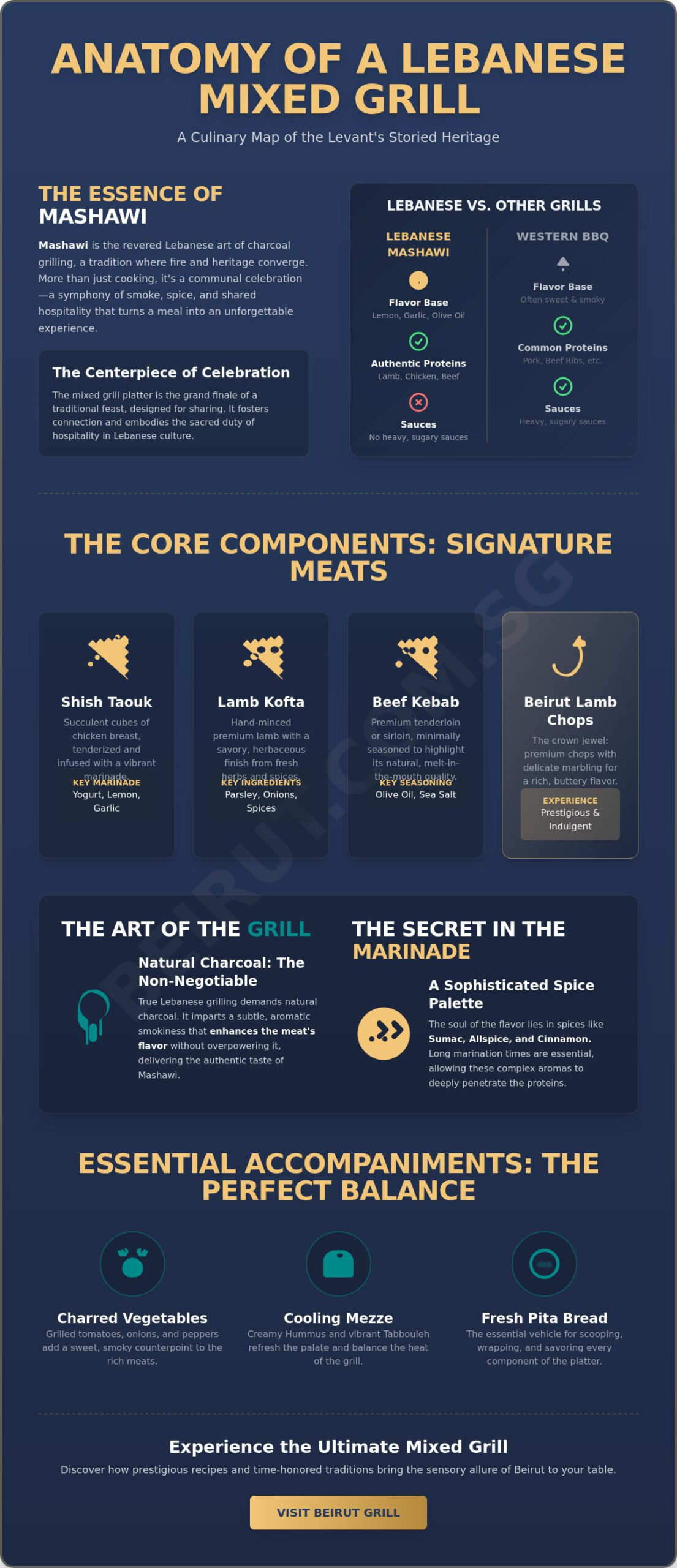
Mashawi is the Lebanese art of charcoal grilling, representing the pinnacle of outdoor culinary expertise. While the global concept of a mixed grill appears in various cultures, the Lebanese iteration is defined by an uncompromising balance between the richness of the meat and the brightness of its accompaniments. It’s a culinary journey that moves from the heat of the fire to the cooling refreshment of the garden. This balance is the hallmark of a professional platter, where the smoke of the natural charcoal enhances rather than masks the quality of the ingredients.
The Cultural Significance of Sharing
In our culture, hospitality is a sacred duty. The mixed grill platter acts as the grand finale of a traditional meal, following a parade of hot mezze like Fried Kibbeh and Spinach Fatayer. It’s the centerpiece of celebratory feasts, designed to be placed in the middle of the table where hands reach in to tear fresh pita and share the bounty. This communal style of dining fosters a sense of connection that a solitary plated meal simply cannot replicate. It’s about the collective experience of savoring the smoke, the spice, and the story of the Levant.
Distinguishing Lebanese Style from Other Grills
The Lebanese grill master approaches their craft with a different philosophy than those found in Western BBQ or even Turkish Ocakbasi. While Western styles often rely on heavy, sugary sauces, the Lebanese profile is built on lemon, garlic, and olive oil—a focus on aromatic purity that parallels the dedication to South Asian tradition found at Biryani House. We focus exclusively on the highest quality Lamb Kofta, Shish Taouk, and Beef Kebab. You won’t find pork on an authentic Lebanese platter; instead, the emphasis remains on the delicate marbling of lamb and the tenderness of yogurt-marinated chicken. This focus on specific, traditional proteins ensures that the flavor remains rooted in regional authenticity, offering a taste that is both specialized and deeply evocative of the Mediterranean coast.
The Core Components: Signature Meats and Marinades
To truly understand what is in a mixed grill platter, one must appreciate the meticulous preparation that precedes the first spark of the charcoal. Each skewer is a dedicated study in texture and aromatic depth. The centerpiece of any authentic Lebanese feast begins with Shish Taouk, where succulent cubes of chicken breast are submerged in a vibrant marinade of yogurt, lemon juice, and crushed garlic. This yogurt base is vital; it acts as a gentle tenderizer, ensuring the poultry remains moist against the intense heat of the grill. Alongside the chicken, the Lamb Kofta offers a more robust profile. This isn’t merely ground meat, but a hand-minced blend of premium lamb, finely chopped parsley, and onions, seasoned with a proprietary blend of spices that provides a savory, herbaceous finish.
The journey continues with the Beef Kebab, typically sourced from tenderloin or top sirloin to ensure a melt-in-the-mouth quality that requires minimal intervention beyond a light coating of olive oil and sea salt. For those seeking the pinnacle of indulgence, the Beirut Lamb Chops serve as the crown jewel of the platter. These chops are selected for their delicate marbling and are often the most prestigious addition to a luxury spread, offering a rich, buttery flavor that is synonymous with the high-end hospitality of the Levant. The Lebanese grill master’s expertise is best witnessed in our signature Mixed Grill, where each cut is treated as a distinct culinary event.
The Secret in the Marinade
The soul of Lebanese grilling lies in the spice cupboard. We rely on a sophisticated palette of Sumac, Allspice, and Cinnamon to create the complex flavor profiles that define our heritage. These spices are deeply rooted in the Customs & Cuisine of Lebanon, where long marination times are considered non-negotiable. By allowing the proteins to rest in a mixture of extra virgin olive oil and fresh lemon juice for up to 24 hours, the fibers break down naturally. This patience results in a level of tenderness that defines an authentic experience, distinguishing it from lesser, hurried interpretations.
Premium Meat Selection
Quality begins with the source. When determining what is in a mixed grill platter of the highest caliber, the fat content of the Lamb Kofta is a critical detail; a specific ratio is required to ensure the meat remains juicy while developing a crisp, caramelized exterior. We prioritize fresh, never-frozen proteins because the structural integrity of the meat is essential for charcoal grilling. Different cuts demand varying heat intensities. The delicate chicken requires a steady, moderate glow, while the beef and lamb chops thrive on the aggressive sear of a high-temperature flame to lock in their natural juices.
Essential Accompaniments: Beyond the Meat
While the charred proteins command the spotlight, the true depth of a Lebanese feast is revealed through its supporting cast. A common mistake when asking what is in a mixed grill platter is focusing solely on the skewers, yet the accompaniments are what transform a collection of meats into a balanced culinary experience. These elements aren’t mere garnishes; they are essential components designed to cut through the unctuous richness of the lamb and beef. At the center of this arrangement sits Toum, a cloud-like garlic emulsion that is the non-negotiable soul of the meal. Its sharp, pungent kick and velvety texture provide the perfect counterpoint to the smoky Shish Taouk, elevating the poultry’s citrus notes.
The platter’s visual and flavor profile is further enriched by a selection of charcoal-grilled vegetables. Whole tomatoes, white onions, and vibrant green peppers are placed directly over the embers until their skins blister and their natural sugars caramelize. These provide a sweet, soft contrast to the firm texture of the meats. Alongside these, you’ll find a stack of warm, pillowy Lebanese flatbread. This bread serves as the ultimate vessel, used to pull meat from the skewers and sweep up every drop of juice and sauce. To provide the necessary acidity, a curated selection of house-made pickles and fresh sprigs of mint and parsley are always present, cleansing the palate between each indulgent bite.
The Holy Trinity of Dips
No authentic Lebanese spread is complete without the creamy textures of traditional dips. Hummus and Baba Ghanoush offer a smooth, earthy foundation that complements the flame-kissed proteins. However, the discerning diner knows that Moutabal, a sophisticated smoky eggplant dip enriched with tahini and pomegranate seeds, is what truly defines a prestigious platter. These dips aren’t just sides; they’re integral to the ritual of the meal. For those interested in the broader context of these ingredients, our guide to Mediterranean Food in Singapore offers a deeper look at the heritage behind these iconic flavors.
Traditional Beverage Pairings
To fully honor the anatomy of the feast, one must consider the beverage. When you consider what is in a mixed grill platter, the drink pairing is the final brushstroke. The cooling properties of Moroccan Mint Tea are often favored during the meal to soothe the palate against the heat of the spices. For those enjoying the bold, gamey notes of grilled lamb, a robust Lebanese Red Wine from the Bekaa Valley provides a sophisticated and historical pairing. Finally, there is the ritual of Arak. Known as “Lion’s Milk” due to its milky appearance when mixed with water, this anise-forward spirit offers a crisp clarity that perfectly resets the senses for the next course of the journey.
The Art of the Charcoal Grill: Techniques and Textures
The transformation of raw, marinated proteins into a prestigious feast requires more than just heat; it requires a deep understanding of the Levantine hearth. While some might suggest that modern convenience can replicate the flavor of the flame, an authentic experience relies on the non-negotiable use of natural charcoal. This choice of fuel is what defines the smoky finish of the meal. When guests ask what is in a mixed grill platter that makes it so distinct, the answer lies in the lump charcoal that imparts a clean, wood-fired essence without the chemical aftertaste of lighter fluids. Managing these embers is a skill honed over decades, as the grill master must navigate the varying “hot spots” to ensure each cut is cooked to its specific requirement.
Achieving the perfect “char” is a delicate balancing act. The goal is to create a thin, caramelized exterior that provides a slight crunch, while maintaining a tender, drippingly juicy interior. This textural contrast is essential. If the meat is cooked too quickly, the outside burns before the center is ready; too slowly, and the proteins become parched. Once the skewers leave the heat, the ritual of resting begins. This brief pause allows the aromatic juices, infused with sumac and garlic, to redistribute throughout the meat, ensuring that every bite is as flavorful as the first. It’s this commitment to technique that elevates our authentic Lebanese dining experience above a standard barbecue.
Skewering for Success
The architecture of the skewer is just as important as the meat itself. We prefer heavy-gauge metal skewers because they act as heat conductors, cooking the meat from the inside out while the charcoal sears the surface. The arrangement is never random. Pieces of meat are often interspersed with specific segments of fat to ensure that as the fat renders, it bastes the protein in a continuous cycle of flavor. even the height of the grill is meticulously adjusted; Shish Taouk requires a slightly higher position to allow the yogurt marinade to set without scorching, whereas Beef Kebabs thrive closer to the intense glow for a rapid, high-heat sear.
Sensory Presentation
A professional platter is a multi-colored, tiered masterpiece that rewards the visitor’s curiosity before the first bite is even taken. The visual appeal of golden chicken, deep-browned lamb, and charred crimson tomatoes creates an immediate sense of indulgence. As the platter approaches the table, the aroma of sizzling fat hitting the coals and the scent of toasted spices create an atmosphere of intense anticipation. The sensory experience of a charcoal-grilled platter is a heady blend of woodsmoke, sharp garlic, and the rich, primal scent of perfectly seared meat that transports you directly to the bustling streets of Beirut.
Experience the Ultimate Mixed Grill at Beirut Grill
At the heart of our culinary destination lies a dish that embodies our entire philosophy. Our signature Mixed Grill is a curated selection of our finest cuts, designed to offer a complete sensory journey through the Levant. When you experience what is in a mixed grill platter at our table, you aren’t just tasting meat; you’re participating in a heritage that we have proudly shared with Singapore since 2009. Every element is a tribute to the hospitality of our roots, balancing professional authority with a warm, inviting atmosphere that seeks to transport every guest to the sun-drenched terraces of Lebanon.
Our strictly pork-free menu is a deliberate choice to honor the traditional dining experience of the Middle East. This allows our grill masters to focus entirely on the nuances of lamb, beef, and poultry, prepared according to time-honored recipes. The result is a meal that feels both specialized and deeply respectful of its cultural origins. We invite you to slow down and immerse yourself in a setting where the aroma of the hearth and the elegance of our service reward your curiosity and indulge your senses.
What Makes Our Platter Unique
The distinction of our platter begins with the uncompromising quality of our ingredients and the precision of our techniques. We feature our famous Beirut Lamb Chops, known for their buttery tenderness, alongside the vibrant, citrus-infused Shish Taouk that has become a hallmark of our kitchen. Every spice is sourced with a focus on regional provenance, ensuring that the baharat and sumac carry the authentic soul of Beirut. Our commitment to authentic charcoal grilling techniques remains as steadfast today as it was when we first opened our doors, ensuring that every skewer carries the irreplaceable smoky finish that defines true Mashawi. This dedication to detail ensures you know exactly what is in a mixed grill platter of the highest prestige.
Plan Your Lebanese Feast
A Lebanese feast is, by its very nature, a social event designed for connection. Our Mixed Grill is the ideal centerpiece for sharing, whether you’re hosting a high-stakes corporate gathering or a celebratory family dinner. To complete the experience, we invite you to explore our curated list of Lebanese Wines, sourced from the prestigious vineyards of the Bekaa Valley. For those who wish to deepen their understanding of this vibrant culinary landscape, our guide to Middle Eastern Food in Singapore provides a comprehensive roadmap for the modern connoisseur. Join us for a journey that rewards the palate and honors the timeless traditions of our heritage.
Embark on Your Next Culinary Journey
A true Lebanese feast is more than a simple meal; it is a storied tradition that invites you to slow down and savor the craftsmanship of the Levant. We’ve explored the meticulous balance of marinated proteins, the sharp allure of house-made Toum, and the irreplaceable smoky depth that only natural charcoal can provide. Now that you possess a refined understanding of what is in a mixed grill platter, you are ready to move beyond curiosity and into the realm of true indulgence.
Since our founding in 2009, we’ve remained dedicated to the authentic techniques and prestigious ingredients that define Middle Eastern hospitality. We invite you to immerse yourself in our sophisticated surroundings and complete your experience with our extensive selection of Lebanese Wines or the crisp, palate-cleansing ritual of Arak. Whether you are gathering for a corporate milestone or a cherished family celebration, our hearth is ready to provide a rewarding cultural journey.
Reserve Your Table at Beirut Grill and Savor the Ultimate Mixed Grill to experience the heritage of Beirut in the heart of Singapore. We look forward to hosting you for an unforgettable evening of culture and flavor.
Frequently Asked Questions
Is a mixed grill platter always spicy?
An authentic Lebanese mixed grill is typically characterized by its aromatic depth rather than aggressive chili heat. While some regional variations may include a hint of pepper, the primary flavor profile relies on a sophisticated blend of sumac, cinnamon, and allspice. These spices enhance the natural richness of the meats without overwhelming the palate, making it an accessible choice for those who prefer savory complexity over spicy intensity.
What is the best way to eat a Lebanese mixed grill?
The most traditional way to enjoy this feast is through the communal ritual of sharing. You should use pieces of warm, pillowy flatbread to grasp the meat directly from the skewers, combining each bite with a dollop of Toum or a swipe of Hummus. This method allows you to create a customized wrap with fresh herbs and pickles, ensuring every mouthful is a balanced exploration of textures and flavors.
Can a mixed grill platter be made vegetarian?
A mixed grill can certainly be adapted for vegetarian guests by featuring our specialized Vegetarian Kebab. In a traditional setting, the meat is replaced with grilled halloumi, falafel, and a bounty of charred vegetables. When considering what is in a mixed grill platter for vegetarians, the focus shifts to the variety of hot and cold mezze, such as Spinach Fatayer and Batata Harra, which provide a similarly indulgent experience.
How many people does a typical mixed grill platter serve?
The serving size of a platter depends on its specific curation, but it is generally designed to satisfy two to four guests. Because it is the centerpiece of a larger meal that includes various mezze and salads, a single platter often serves as a generous shared main course. This communal portioning reflects the spirit of Middle Eastern hospitality, where abundance is a hallmark of a prestigious dining experience.
What is the difference between a kebab and a kofta?
The primary distinction lies in the preparation and texture of the protein. A kebab typically consists of whole, marinated cubes of lamb or beef skewered and grilled to maintain their structural integrity. In contrast, a Lamb Kofta is crafted from finely minced meat mixed with onions, parsley, and a specific spice blend. This results in a softer, more delicate texture that absorbs the smoky essence of the charcoal more readily.
Why is garlic sauce (Toum) always served with the grill?
Toum is served as a necessary counterpoint to the rich, charred flavors of the grilled meats. This potent garlic emulsion provides a sharp acidity and creamy texture that cuts through the unctuousness of lamb and beef. It is particularly essential when understanding what is in a mixed grill platter of Lebanese origin, as it elevates the citrus notes of the Shish Taouk and acts as a signature flavor marker of the region.
Is the meat in a Lebanese mixed grill usually halal?
Most authentic Lebanese restaurants, including our own, prioritize halal certified meats to stay true to the cultural and religious heritage of the Levant. This commitment ensures that the dining experience remains inclusive and traditional. By focusing on premium halal proteins like lamb and beef, we maintain the integrity of the recipes while providing a reliable destination for guests seeking a specialized and authentic Middle Eastern journey.