
Could the difference between a quick, tender grain and a pleasantly chewy one come down to the size of its crack? If you’ve wondered what is bulgur wheat, the answer starts with how the wheat is prepared: the kernels are parboiled, dried and cracked. This makes bulgur a whole grain that cooks faster than ordinary cracked wheat. It’s easy to confuse with couscous, too, though couscous is pasta made from semolina rather than cracked whole wheat kernels.
Choosing the right kind and preparation method can feel confusing at first. Fine bulgur can soften in hot water, while medium and coarse grinds generally need simmering. Matching the grind to your recipe helps you get the texture you want. This guide explains how bulgur is made, how it compares with similar foods, and how to prepare and use each grind.
Bulgur has a long culinary tradition in Lebanese and wider Middle Eastern cooking, and it’s closely associated with tabbouleh. Beirut Grill lists tabbouleh among its Lebanese dishes, offering a glimpse into this food culture. Recipes and ingredients can vary, so read on to learn how this versatile grain finds its place at the table.
Key Takeaways
- Understand what is bulgur wheat and how its preparation affects its cooking time and texture compared with similar foods.
- Learn how to choose a fine, medium or coarse grind for the dish you’re preparing.
- Know what to check when cooking bulgur, including the package directions and how to finish it for a light, distinct texture.
- Explore bulgur’s place in Lebanese cooking and its association with dishes such as tabbouleh, while remembering that recipes vary.
- Find out what whole-grain status means for bulgur and why people avoiding gluten should take note.
What Is Bulgur Wheat? Origins and How It Is Made
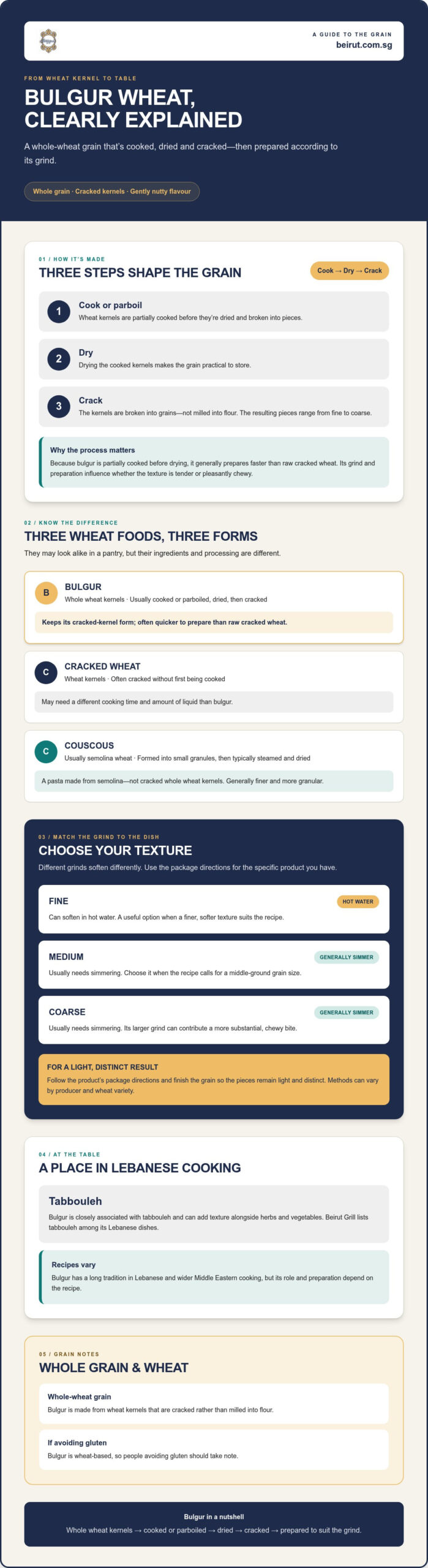
If you’re asking what is bulgur wheat, here’s the short answer: Bulgur is a whole-wheat grain made by cooking, drying and cracking wheat kernels. It’s commonly produced from durum wheat, although other wheat varieties can be used. Because the kernels are partially cooked before they’re dried and broken into pieces, bulgur is quicker to prepare than raw cracked wheat.
Bulgur has a gently nutty flavour. Its texture can range from tender to pleasantly chewy, depending on the grind and preparation. It isn’t flour: the kernels are cracked into grains rather than milled into a fine powder. The Bulgur overview offers further background on its production and place in food traditions.
Where does bulgur wheat come from?
Bulgur has a long-standing place in Middle Eastern and Mediterranean cuisines, where it’s valued as a versatile grain for everyday cooking. Its history isn’t easily traced to a single point of origin, and traditions and methods vary across the regions where it’s eaten. Drying the cooked kernels made bulgur practical to store, while partial cooking meant it could be prepared without starting with raw wheat each time.
How is bulgur wheat made?
Production generally follows three stages: wheat kernels are cooked or parboiled, dried, then cracked into pieces. The finished bulgur is sold in different grinds, from fine to coarse, which affect its texture and preparation. Processes can vary by producer and wheat variety, so check the package for instructions specific to the product you have.
Unlike flour production, which mills wheat into a powder, bulgur keeps the grain in cracked-kernel form. Those pieces give it a more substantial presence in a dish and can remain distinct after preparation. In Lebanese and wider Middle Eastern cooking, bulgur is associated with familiar preparations such as tabbouleh, where it contributes texture alongside herbs and vegetables. Its role depends on the recipe.
Bulgur Wheat vs. Cracked Wheat and Couscous: What’s the Difference?
These three ingredients may look similar in a pantry, but they’re made differently and don’t behave alike in a recipe. Bulgur is typically cooked before it’s dried and cracked. Cracked wheat is usually raw wheat kernels broken into smaller pieces. Couscous is different again: it’s made from semolina granules, not cracked whole kernels.
| Ingredient | What it’s made from | How it’s processed |
|---|---|---|
| Bulgur | Whole wheat kernels | Usually cooked or parboiled, dried and cracked |
| Cracked wheat | Wheat kernels | Cracked, often without first being cooked |
| Couscous | Usually semolina wheat | Semolina is formed into small granules, then typically steamed and dried |
Is bulgur the same as cracked wheat?
No. Both come from wheat, but their processing usually differs. Bulgur is pre-cooked before drying and cracking, whereas cracked wheat may be cracked without that cooking step. This affects how quickly each softens. Labels and production methods can vary, so check the package instead of assuming the two ingredients need the same cooking time or amount of liquid.
Is bulgur the same as couscous?
No. Couscous is typically made from semolina, a wheat product shaped into small granules. Bulgur retains the form of cracked kernels, giving it a more substantial, gently chewy bite. Couscous is generally finer and more granular. Both can accompany vegetables, herbs or sauces, but their different sizes and textures mean a direct substitution may change how a dish feels and how much liquid it needs.
For a broader guide to wheat foods, Harvard T.H. Chan School of Public Health describes bulgur among whole grains and notes its use as a precooked wheat option. This is useful context when comparing it with couscous, which is made from semolina granules rather than intact cracked kernels.
Cooking takeaway: Bulgur’s pre-cooking often makes it quicker to prepare than cracked wheat, while couscous has a different shape and texture. Follow the package directions and adjust recipes to suit the ingredient. To explore Lebanese dining, including tabbouleh listed on its menu, visit Beirut Grill’s Lebanese menu. Recipes vary, so check directly if you need to confirm a dish’s ingredients.
Bulgur Wheat Nutrition, Whole-Grain Status and Gluten
If you’re asking what is bulgur wheat from a nutrition perspective, it’s a wheat-based whole grain that provides carbohydrates, fibre and protein. Cooking and cracking the kernels doesn’t necessarily remove their main parts: bran, germ and endosperm. As with other packaged grains, processing and product specifications can differ, so check the label for details about the bulgur you buy.
Bulgur is generally a whole grain that contains gluten because it’s made from wheat. Its fibre and other nutrients may make it a nourishing ingredient for some people, but it isn’t suitable for a gluten-free diet.
Is bulgur wheat a whole grain?
Generally, yes. Bulgur is made from wheat kernels, and the bran, germ and endosperm are retained rather than separated as they may be in refined grain products. This is the basis for its whole-grain classification. Check the package if you need information about a specific product, and remember that one food alone doesn’t determine the quality of an overall diet.
Cooked bulgur’s nutrient profile varies with serving size and preparation. For a one-cup serving, approximately 182 grams, the supplied nutrition figures report about 151 calories, 8.2 grams of fibre and 5.6 grams of protein, alongside 33.9 grams of carbohydrates and 0.4 grams of fat. For additional context on bulgur’s nutrients, see WebMD’s Health Benefits of Bulgur Wheat. These figures describe a food, not a guaranteed health outcome.
Does bulgur contain gluten?
Yes. Bulgur is made from wheat and contains gluten, so people with coeliac disease or gluten sensitivity should avoid it. Cooking, drying or cracking doesn’t make it gluten-free. If dietary safety matters, read the packaging for allergen and cross-contact information, and contact the manufacturer if the label doesn’t answer your questions.
How to Prepare Bulgur Wheat: Choose the Grind and Get the Texture Right
Start by checking the grind before you reach for a kettle or saucepan. Fine bulgur can soften with hot water and suit dishes where you want a light, tender texture. Medium and coarse grains tend to keep more bite, making them common choices for heartier salads and grain dishes. These are useful starting points, not fixed rules. Follow the recipe and the directions on your particular package.
Tip: The grind affects how quickly water reaches and softens each piece. Finer grains may need only soaking, while coarser ones may need simmering. Use the package directions for the liquid amount and timing, since these can differ by grind and brand.
Which bulgur grind should you choose?
Choose fine bulgur when you want the grain to blend gently into a dish rather than stand out with a firm chew. It’s often used in preparations such as tabbouleh, though recipes and preferred textures vary. Medium or coarse bulgur gives a more pronounced, substantial bite and can work well in salads or as a grain side. If a recipe specifies a grind, use it where possible. Otherwise, check the package and consider the texture you want.
How do you cook or soak bulgur?
Some fine bulgur can be hydrated without prolonged stovetop cooking, while coarser grains may need simmering if the label recommends it. Don’t assume every grind uses the same liquid or method. For a reliable result, use this simple sequence:
- Check the grind. Identify whether the bulgur is fine, medium or coarse, and read any recipe instructions.
- Follow the package. Use its guidance for the liquid amount and whether to soak or simmer.
- Hydrate the grain. Add the recommended liquid and give the bulgur time to absorb it. If simmering, cook as directed until tender.
- Rest and fluff. Once the liquid is absorbed and the grain is tender, let it rest as directed, then gently fluff with a fork to separate the pieces.
If the grain seems firm, give it more time to absorb liquid before deciding it needs additional cooking. If it turns soft or clumps, the grind may be finer than the recipe expects, or the liquid and method may not suit that product. Use the package as your guide and adjust based on the grain’s texture rather than applying one method to every bulgur.
Curious about how grains feature in Lebanese dining? Explore Beirut Grill’s Lebanese menu, which lists tabbouleh among its offerings. Recipes vary, so check directly if you need to confirm its ingredients.
Bulgur Wheat in Lebanese Food: From Tabbouleh to Everyday Meals
In Lebanese and wider Middle Eastern cooking, bulgur brings a satisfying grain texture to familiar dishes and everyday meals. It’s commonly associated with tabbouleh, the herb-forward salad in which fine bulgur appears in many versions alongside parsley, mint, tomatoes and onion, dressed with bright, tangy flavours. Recipes differ between cooks and traditions, so the proportion and prominence of bulgur can vary.
How is bulgur used in tabbouleh?
In many recipes, fine bulgur softens among the chopped herbs and vegetables, lending a tender, gently chewy contrast without overtaking their freshness. The grain supports the herbs, while the dressing brings the flavours together. There’s no single formula, however. Some cooks favour a more herb-led salad, while others use a different balance of grain and vegetables.
Tabbouleh is listed on Beirut Grill’s menu, connecting the dish to this Lebanese culinary tradition. Its specific recipe and ingredients aren’t described here, so check directly if you need details about the dish. For a wider introduction to regional dishes and traditions, explore this Middle Eastern food guide.
What else can you serve with bulgur?
Bulgur’s mild, nutty taste makes it versatile beyond tabbouleh. Use it as a base for a vegetable salad, stir it into a soup for added substance, or serve it as a savoury side. Herbs, chopped vegetables and legumes pair naturally with its soft, pleasantly chewy texture. The grind you choose helps determine whether the finished dish feels delicate or more substantial.
These uses are part of a broader food heritage shaped by local ingredients and distinct culinary traditions. For more on the flavours and customs associated with the region, read the Mediterranean food guide. Understanding what is bulgur wheat also means recognising how a simple grain can contribute texture and character to varied dishes, rather than serving only one purpose.
To explore Lebanese dining, including tabbouleh among its listed offerings, visit Beirut Grill’s restaurant homepage. For specific ingredient or dietary information about any dish, confirm the details directly.
Bring Bulgur’s Story to Your Table
Now you know what is bulgur wheat: wheat kernels that are cooked, dried and cracked, with a tender, gently chewy character shaped by their grind. It differs from cracked wheat in its typical pre-cooking, while couscous is made from semolina granules. Choose the grind to suit your recipe, follow the package directions for soaking or simmering, and remember that bulgur contains gluten.
Bulgur’s place in Lebanese cooking offers another way to appreciate this versatile grain. Tabbouleh is commonly associated with bulgur, though recipes vary, and Beirut Grill lists tabbouleh among its Lebanese and Middle Eastern offerings. The menu also features a broad selection of mezze and charcoal-grilled dishes, bringing together a range of flavours and textures to explore.
Explore Beirut Grill’s Lebanese dining experience and discover dishes rooted in a rich culinary tradition. View the menu.
Frequently Asked Questions
What is bulgur wheat made from?
Bulgur wheat is made from wheat kernels, commonly durum wheat, although other wheat varieties can be used. The kernels are usually parboiled, dried and cracked into different grinds. Unlike wheat flour, bulgur remains in grain-like pieces. This partial cooking helps it prepare more quickly than raw cracked wheat. Processing can vary by producer, so check the package for details about the grain and preparation.
Is bulgur wheat healthy?
Bulgur can be a nutritious whole-grain choice, providing fibre and protein alongside carbohydrates. One cup of cooked bulgur, about 182 grams, contains approximately 151 calories, 8.2 grams of fibre and 5.6 grams of protein, according to the nutrition figures referenced in this article. Nutrient values can vary by product and serving size. It’s one ingredient to consider as part of a varied, balanced diet, not a cure or guarantee of health.
Is bulgur wheat gluten-free?
No. Bulgur is made from wheat and contains gluten, so it isn’t suitable for people with coeliac disease or gluten sensitivity. Cooking, drying or cracking the wheat doesn’t remove its gluten. If you need to avoid gluten, choose a suitable alternative and read packaging carefully for allergen and cross-contact information. If a label doesn’t provide enough detail for your needs, contact the manufacturer before using the product.
How do you cook bulgur wheat?
Prepare bulgur according to its grind and the package directions. Fine bulgur can often be soaked in hot water for about 10 to 12 minutes, while medium or coarse bulgur is typically simmered for about 10 to 20 minutes. These are general guides, not a substitute for the product instructions, since brands and grinds vary. Once tender and hydrated, let it rest as directed, then fluff gently with a fork.
Can you substitute couscous for bulgur wheat?
You can substitute couscous in some dishes, but it won’t give exactly the same result. Couscous is made from small semolina granules, while bulgur consists of cracked wheat kernels, so their textures differ: couscous is usually finer, and bulgur has a more substantial chew. They may also need different amounts of liquid and preparation methods. Check the package and adjust the recipe rather than assuming a direct swap will work.
What does bulgur wheat taste like?
Bulgur has a mild, gently nutty flavour that pairs well with herbs, vegetables and legumes without overwhelming them. Its texture is tender with a pleasant chew, though the final bite depends on the grind and preparation. Fine bulgur can feel softer and blend into a salad, while coarser pieces tend to remain more distinct. Properly hydrated, it adds substance while allowing the other ingredients to shine.