
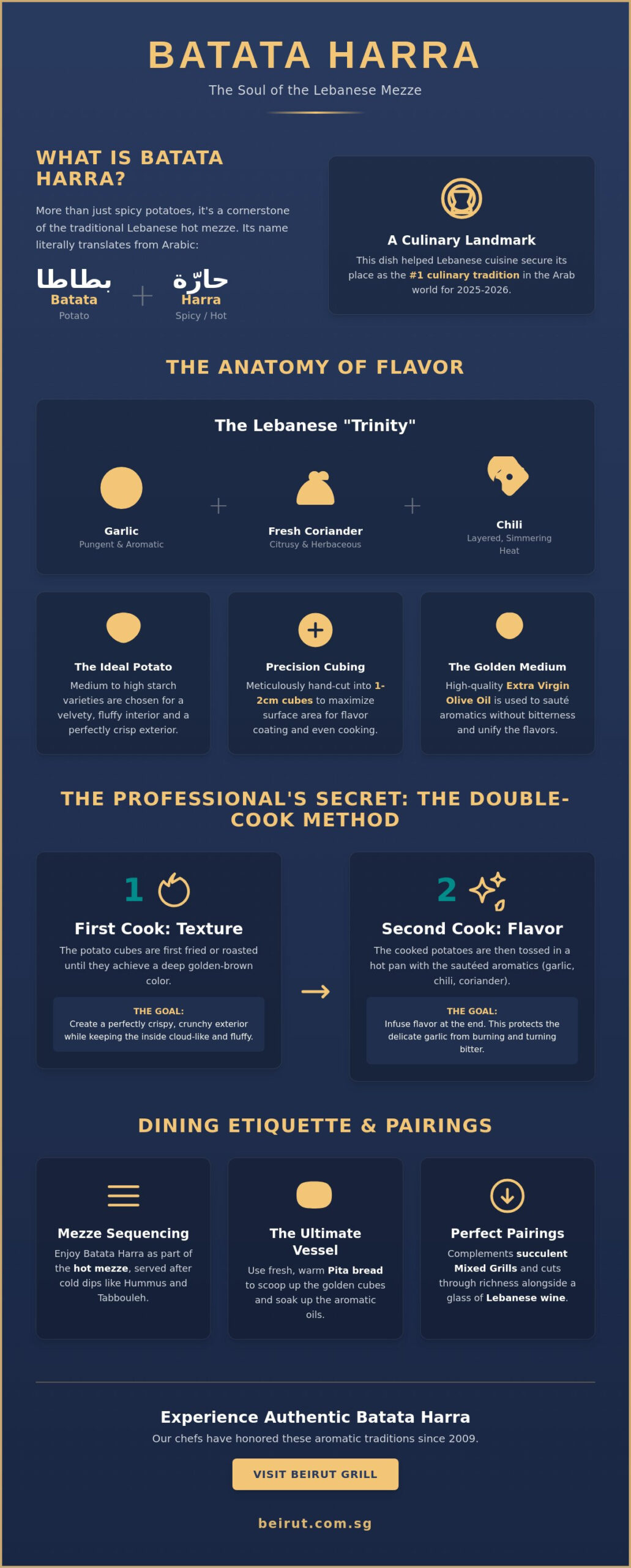
What if the true soul of the Lebanese mezze table isn’t found in the dips, but in a humble plate of golden, hand-cut cubes? Many guests arriving at our tables often ask, “what is batata harra,” curious if it’s merely another version of the spicy wedges found in Western or Indian cuisines. In reality, this dish represents a masterclass in the Levantine “Trinity” of garlic, fresh coriander, and chili. It’s a sensory journey that defines Lebanon’s aromatic identity, offering a crispy exterior that gives way to a cloud-like, fluffy center. This culinary tradition helped Lebanese cuisine secure its place as the top culinary tradition in the Arab world for the 2025 to 2026 season.
You likely appreciate the bold, healthy flavors of the Middle East, yet you may feel uncertain about the heat levels or how to properly integrate these potatoes into a traditional spread. This guide explores the deep heritage and vibrant ingredients that elevate Batata Harra from a simple side to a prestigious culinary destination. We’ll reveal the traditional techniques used to achieve its signature texture and show you how to pair it with Lebanese wine or a succulent mixed grill for the ultimate indulgent experience.
Key Takeaways
- Discover what is batata harra by exploring its literal translation and its vital role as the vibrant centerpiece of a traditional Lebanese hot mezze spread.
- Learn how selecting the ideal starch content and mastering the precise 1-2cm cubing technique creates the foundation for a superior, golden texture.
- Uncover the secrets of the professional ‘Double-Cook’ method, ensuring a velvety interior while protecting the delicate garlic aromatics from bitterness.
- Perfect your dining etiquette by learning how to sequence these spicy potatoes after cold dips like Hummus and using fresh pita as the ultimate scooping vessel.
- Appreciate the heritage of Beirut Grill, where our chefs have honored these aromatic traditions since 2009 to transport your palate to the heart of the Levant.
What is Batata Harra? The Soul of the Lebanese Mezze
High in the rugged, sun-drenched mountain regions of Lebanon, a culinary tradition was born from the earth’s most humble offerings. To understand Batata harra, one must first appreciate the linguistic simplicity of its name. In Arabic, ‘Batata’ translates directly to potato, while ‘Harra’ denotes a spirited heat or spiciness. This dish isn’t just a recipe; it’s a testament to the resourcefulness of Levantine rural life, where a few vibrant ingredients transform basic tubers into a prestigious centerpiece. It represents the very essence of Lebanon’s agricultural heritage, balancing the cooling mountain air with the fiery warmth of the kitchen.
When diners ask what is batata harra, they’re often seeking more than a list of ingredients. They’re looking for the story of a dish that anchors the traditional hot mezze spread. Unlike the complex, multi-day preparations found in royal Ottoman kitchens, this dish reflects the bold, honest character of village cooking. It relies on the pungency of garlic and the brightness of fresh coriander to create a profile that’s both rustic and refined. It’s a culinary bridge between the simplicity of the soil and the sophistication of the Lebanese table.
Etymology and Regional Variations
The linguistic journey of this dish spans the entire Arabic-speaking world, yet its heart remains firmly in the Levant. While the Lebanese version is celebrated for its heavy reliance on fresh cilantro and lemon, Syrian interpretations often lean into the deep, earthy warmth of Aleppo pepper or red pepper pastes. In Turkey, you might encounter Patatesli variations that swap the citrus for different spice blends. Each region adjusts the ‘harra’ element to suit local palates, using everything from dried chili flakes to fresh, minced green peppers to define the heat.
The Cultural Significance of the Hot Mezze
In the choreographed dance of a Lebanese feast, the transition from cold mezze to hot mezze marks a shift in the evening’s energy. After the cooling textures of Hummus and Tabbouleh have awakened the palate, the arrival of steaming Batata Harra signals a move toward more indulgent, hearty flavors. It’s a social cornerstone, designed for the communal “scoop” with fresh bread. Whether served at a modest family gathering or a prestigious wedding banquet, these golden cubes represent a shared heritage of hospitality that rewards the curious guest with every bite.
The Anatomy of Flavor: Essential Ingredients of Batata Harra
To truly grasp what is batata harra, one must look beyond the simple potato and appreciate the delicate alchemy of the Lebanese “Trinity.” This foundational trio consists of pungent garlic, vibrant fresh coriander, and the measured warmth of chili. While the potato provides the canvas, these three ingredients paint the aromatic portrait of the Levant. The soul of the dish resides in the use of fresh coriander leaves, which offer a citrusy, herbaceous lift that dried herbs simply cannot replicate. It’s this specific combination that creates the addictive fragrance that wafts through the air of a traditional Lebanese kitchen.
The choice of potato is far from accidental. Chefs typically prefer varieties with a medium to high starch content to ensure the interior remains velvety while the exterior crisps to a golden hue. Precision in preparation is vital; the potatoes are meticulously hand-cut into 1-2cm cubes. This specific size isn’t merely for aesthetics. It ensures a high surface-area-to-volume ratio, allowing the cubes to be thoroughly coated in the spiced oil. When you experience our authentic Batata Harra, you’ll notice how these uniform cubes hold their shape while soaking up the rich flavors of the sauté.
High-quality Extra Virgin Olive Oil serves as the golden medium for this transformation. It’s used to sauté the aromatics at a controlled temperature, ensuring the garlic softens into a sweet, buttery paste without ever crossing into bitterness. The oil carries the essence of the spices into every crevice of the potato, creating a unified flavor profile that’s both indulgent and refined.
The Heat Factor: More Than Just Chili
The “harra” or heat in the dish is a layered experience rather than a singular sting. Most traditional recipes utilize a combination of red pepper flakes and a touch of cayenne to build a slow, simmering warmth. This heat is deeply rooted in the regional history of the chile pepper, which transformed Middle Eastern spice palettes centuries ago. To prevent the spice from overwhelming the palate, a generous splash of fresh lemon juice is added at the final moment. This acidity cuts through the richness of the olive oil and brightens the garlic, leaving the palate refreshed and ready for the next bite.
Aromatic Additions: Beyond the Basics
While the Trinity remains non-negotiable, several prestigious variations exist across Lebanon’s diverse landscape. Some coastal regions incorporate finely diced red bell peppers to introduce a subtle, caramelized sweetness that complements the chili’s fire. Others might finish the dish with a handful of toasted pine nuts, adding a luxurious, buttery crunch that elevates the texture. While coriander seeds are sometimes used for a deeper, earthy undertone, the fresh green leaves remain the undisputed heart of the dish, providing the unmistakable fragrance that defines this iconic mezze.
Texture and Technique: The Secret to the Perfect Crunch
Technical mastery is the silent partner to the vibrant spices of the Levant. While the ingredients provide the soul, the preparation determines whether the dish achieves its iconic status on the mezze table. To truly understand what is batata harra, one must appreciate the “Double-Cook” method, a specialized process that creates a dramatic contrast between a glassy, golden exterior and a center as soft as a cloud. This isn’t merely a side of fries; it’s a carefully orchestrated transition of textures that requires patience and precision.
The process begins with parboiling the hand-cut cubes to ensure the starch is perfectly hydrated. Only after this initial stage are the potatoes subjected to high heat. At Beirut Grill, we’ve honored this tradition since 2009, ensuring every cube possesses that signature audible “snap” when your fork pierces the crust. To elevate the profile even further, a brief finish over a restaurant-grade charcoal grill can impart a delicate, whisper-thin layer of smokiness that anchors the bright herbs to the earthiness of the potato.
Temperature control remains the most vital element of the sauté. Garlic is a temperamental aromatic; if the oil is too hot, the cloves turn bitter and acrid, ruining the delicate balance of the Lebanese Trinity. The goal is a gentle infusion, where the oil becomes a fragrant vehicle for the coriander and chili without scorching the solids. It’s a sensory reward that begins long before the first bite, as the aroma of toasted herbs fills the air, promising an indulgent experience that’s both rustic and deeply sophisticated.
Frying vs. Roasting: A Culinary Debate
The path to the perfect crunch often divides traditionalists and modernists. The classic deep-fry method remains the gold standard for achieving a uniform, shattering crispness and that coveted deep-amber hue. However, many contemporary kitchens now favor high-heat roasting. This alternative offers a lighter, health-conscious Mediterranean profile while still allowing the natural sugars in the potato to caramelize. Regardless of the method, the surface must be sufficiently textured to ensure the herb-infused dressing adheres to every corner of the cube rather than pooling at the bottom of the plate.
The Art of the ‘Sauté’ Finish
The defining moment of the dish occurs when the steaming, hot potatoes meet the cooled garlic and herb oil. This thermal shock allows the potatoes to “drink” the flavors, pulling the essence of the coriander and chili deep into the crust. Timing is everything here. The fresh coriander must only touch the heat for a matter of seconds; any longer, and it loses its vibrant green luster and citrusy punch. The final result should look effortlessly “tossed,” with the emerald herbs and crimson chili flakes clinging to the golden cubes in a beautiful, chaotic display of authentic Lebanese hospitality.
How to Enjoy Batata Harra: Pairings and Etiquette
Dining in the Lebanese tradition is a carefully choreographed experience where the sequence of dishes matters as much as the ingredients themselves. When guests ask what is batata harra, they’re often introduced to it as the vibrant transition between cooling starters and hearty main courses. In a traditional mezze spread, these spicy potatoes follow the cold dips like Hummus and Moutabal. This specific order allows the palate to settle and appreciate the subtle tahini notes before the arrival of the bold, garlic-infused cubes. It’s a rhythm of hospitality that ensures each flavor is appreciated in its proper context, moving seamlessly from garden-fresh textures to fire-kissed aromatics.
To eat like a local, you should master the ‘Pita Pocket’ technique. Tear a piece of warm, fresh Lebanese bread and use it as a gentle scoop to capture the potato cubes along with their precious herb oil. If the chili provides a spirited warmth, balance the experience with cooling agents. A dollop of creamy Labneh or a crisp cucumber salad provides the necessary contrast to the potato’s heat. This deliberate interplay of temperatures and textures is a hallmark of a sophisticated Middle Eastern food Singapore dining experience, where every bite is designed to reward the curious guest.
Beverage Pairings: Lebanese Wine and Arak
Pair these potatoes with a crisp Lebanese white wine, specifically those crafted from ancient Obeideh or Merwah grapes, to cut through the richness of the olive oil. For a truly authentic journey, choose Arak. This potent, anise-flavored spirit, known as the ‘Lion’s Milk,’ is traditionally served diluted with water and ice. Its botanical profile complements the pungent garlic and fresh coriander perfectly, acting as a refreshing counterpoint to the chili’s heat. If you prefer a non-alcoholic end-note, Moroccan Mint Tea offers a refreshing, aromatic finish that cleanses the palate after the bold spices of the Levant.
Dietary Versatility: A Vegan Masterpiece
Beyond its sensory allure, the dish is celebrated for its natural inclusivity and health-conscious profile. It stands as a pinnacle of vegetarian Middle Eastern food, being inherently vegan and gluten-free in its traditional preparation. It appeals to the modern palate without sacrificing a single drop of its ancient heritage or rustic soul. This versatility ensures that every guest, regardless of dietary preference, can indulge in the prestigious flavors that have defined Lebanese mountain cooking for generations.
Experience this masterpiece of heritage and flavor for yourself. Secure your reservation at Beirut Grill to enjoy the ultimate Lebanese potato dish prepared with seasoned expertise.
Experience Authentic Batata Harra at Beirut Grill
Since our founding in 2009, Beirut Grill has stood as a prestigious bastion of Levantine culture, offering a sanctuary where heritage and hospitality converge. For those who have journeyed through this guide seeking to understand what is batata harra, the final destination is a sensory immersion within our sophisticated dining room. We don’t merely prepare a recipe; we curate an experience that honors the rugged mountain traditions of Lebanon. Every plate we serve is a testament to our unwavering commitment to authenticity, ensuring that the legacy of the Lebanese table is preserved for a discerning audience that values culinary excellence.
Our signature rendition of these iconic spicy potatoes begins with a deep devotion to the handmade. We reject the clinical uniformity of mass production, choosing instead to hand-cut each potato cube to ensure a rustic, authentic texture that holds its own against the heat of the pan. This dedication extends to our selection of aromatics, where only the most vibrant, fresh coriander is selected to provide that essential citrusy lift. When positioned alongside our signature Mixed Grill, the Batata Harra acts as a spirited companion; its spiced warmth perfectly complements the succulent, charred flavors of our premium grilled meats.
The atmosphere at Beirut Grill is designed to slow the world down, allowing you to immerse yourself in the rich textures of our environment. From the moment you arrive, the scent of toasted garlic and fresh herbs signals the start of a journey that rewards your curiosity. It’s a physical and culinary landscape that feels both exclusive and welcoming, positioning our restaurant as more than just a place to eat, but as a destination that celebrates the soul of the Middle East.
A Legacy of Lebanese Hospitality
Our chefs possess a seasoned expertise in balancing the ‘Harra’ to suit a sophisticated national palate. It’s a delicate dance of heat that provides a layered warmth without ever overwhelming the palate. This precise balance is the reason our spicy potatoes remain a cherished guest favorite year after year. As you dine, the sensory-rich environment of our heritage-rooted space transports you, with every golden crunch of the potato echoing the timeless hospitality of a refined Lebanese home.
Your Invitation to the Levant
We invite you to step away from the urban bustle and lose yourself in the evocative flavors of the Levant. Beyond our iconic potatoes, our menu offers a complete cultural journey, allowing you to explore the full spectrum of our mezze, from the crisp, herb-filled Falafel to the salty, caramelized perfection of our Grilled Halloumi. Each dish is a carefully crafted chapter in a story of pride and indulgence that we have been sharing for over fifteen years. Reserve your experience at Beirut Grill today and discover why we remain the premier curator of authentic Lebanese culture and cuisine.
Savor the Spirit of the Lebanese Table
From the rugged mountain slopes to the prestigious mezze spreads of today, these golden cubes remain a symbol of rustic elegance. You’ve discovered how the harmonious balance of the Lebanese Trinity and the technical precision of the double-cook method define the soul of this dish. Truly understanding what is batata harra involves more than knowing its ingredients; it’s about embracing a legacy of hospitality that has flourished for centuries. This sensory journey rewards your curiosity with a symphony of garlic, fresh coriander, and a spirited heat that lingers beautifully on the palate.
At Beirut Grill, we’ve dedicated ourselves to preserving these culinary secrets since 2009. Our chefs utilize authentic heritage techniques and premium imported ingredients to curate a pork-free menu that transports you directly to the heart of the Levant. Whether you’re seeking a light, vegetarian indulgence or the perfect companion to a succulent Mixed Grill, our kitchen is ready to welcome you. Reserve Your Authentic Lebanese Feast at Beirut Grill and immerse yourself in an atmosphere where every detail celebrates the enduring charm of Lebanon. We look forward to hosting you soon.
Frequently Asked Questions
Is Batata Harra very spicy?
Batata Harra offers a spirited, layered warmth rather than an overwhelming sting. While the name translates to “spicy potatoes,” the heat level is designed to be approachable and balanced. Chefs achieve this by using red pepper flakes and cayenne, which are immediately brightened by a final splash of fresh lemon juice. This acidity tempers the spice, ensuring the dish remains an indulgent experience that rewards the palate without masking the delicate garlic and coriander notes.
Is Batata Harra vegan and gluten-free?
Yes, this iconic dish is inherently vegan and naturally gluten-free in its traditional preparation. Since it relies on fresh vegetables, aromatic herbs, and high-quality Extra Virgin Olive Oil, it perfectly suits a plant-based Mediterranean diet. It stands as a pinnacle of inclusive Lebanese hospitality, allowing every guest to partake in our rich culinary heritage without compromise. At Beirut Grill, we take pride in maintaining these ancient standards for our discerning guests.
What is the difference between Batata Harra and regular potato wedges?
The primary distinction lies in the “Lebanese Trinity” of garlic, fresh coriander, and chili. When guests ask what is batata harra, they’re discovering a dish defined by 1-2cm hand-cut cubes rather than large, thick wedges. Unlike Western wedges which often rely on simple salt or dried seasonings, these potatoes are sautéed in an aromatic-infused oil that penetrates the crust. This creates a complex, fragrant profile that regular wedges simply cannot replicate.
Can I eat Batata Harra as a main course?
While traditionally served as a cornerstone of the hot mezze spread, it can certainly be enjoyed as a light, plant-based main course. Its hearty texture and bold flavors make it a satisfying choice for those seeking a vegetarian feast. To create a complete meal, we recommend pairing it with our fresh Tabbouleh or Fattoush salad. The cooling greens provide a sophisticated contrast to the spirited warmth of the golden potato cubes.
What are the best dips to eat with Lebanese spicy potatoes?
Creamy, cooling dips like Hummus and Labneh are the premier companions for these spicy potatoes. The velvety texture of chickpea puree or strained yogurt provides a luxurious counterpoint to the crispy, spiced exterior of the potato. Many guests also find that the earthy notes of Moutabal complement the garlic-heavy profile of the dish. These pairings reflect the social nature of the Lebanese table, where diverse textures are designed to be shared and enjoyed together.
Why is my Batata Harra soggy instead of crispy?
Sogginess typically occurs if the potatoes aren’t properly parboiled or if the sautéing oil isn’t at the correct temperature. Achieving the signature “shattering” crust requires the double-cook method, ensuring the interior is fluffy before the exterior is crisped over high heat. Additionally, overcrowding the pan can cause the potatoes to steam rather than fry. Precision and patience are the secrets to maintaining that evocative crunch that defines a prestigious mezze experience.
What kind of oil is traditionally used for Batata Harra?
High-quality Extra Virgin Olive Oil is the traditional choice for sautéing the aromatics and finishing the dish. This oil acts as a fragrant vehicle, carrying the essence of the garlic and coriander into every crevice of the potato. While some modern kitchens use neutral oils for the initial fry to achieve a golden hue, the final sauté must involve olive oil to provide the authentic, rich flavor profile that characterizes the culinary traditions of the Levant.
Is Batata Harra served hot or cold?
Batata Harra is traditionally served hot, straight from the pan, or at a comfortable room temperature. As a vital component of the hot mezze category, it’s designed to bring a steaming, aromatic energy to the table after the cold dips have been enjoyed. However, its robust flavors hold up remarkably well as it cools. This makes it a versatile staple for both prestigious banquets and casual family gatherings in the Lebanese countryside.