
A vivid salad dressing is one of the most rewarding pomegranate molasses uses, but this thick, sweet-tart syrup also adds depth to meat and seafood marinades and glazes. Its concentrated fruitiness balances savoury ingredients and gives dressings a tangy, rounded finish. Start with a little, then adjust to taste.
If you’ve mainly thought of it as a finishing drizzle, you’re not alone. Pomegranate molasses has more to offer: its syrupy texture clings to ingredients, while its sweet-and-sour flavour lifts a salad without relying on vinegar alone.
Try it in dressings for crisp vegetables, tomatoes and grains, or in marinades and glazes for grilled meat and seafood. Its flavour and consistency affect the result, so use it thoughtfully in your home cooking or take inspiration from the Lebanese dishes at Beirut Grill.
Key Takeaways
- Use the syrup’s sweet-tart character to add depth to meat and seafood marinades, or brush it on as a glaze for a glossy finish.
- Because its thick consistency clings to ingredients, start with a small amount and balance its intensity with other flavours.
- Whisk it with extra virgin olive oil and sea salt for a simple dressing, or use it to bring tang to tomato and crunchy salads.
- Explore how its concentrated pomegranate flavour can complement savoury dishes, from grains and pulses to hummus and roasted vegetables.
1. Glazes and marinades for meat and seafood
Among practical pomegranate molasses uses, marinades bring sweet-sour depth to chicken, beef or duck. Stir the syrup with olive oil, crushed garlic and spices, then coat the meat. Allspice complements it in a chicken marinade, while it can provide the sour element in a Persian goat kebab marinade. Set aside some unused mixture for glazing, and brush it on near the end of cooking for a glossy coating.
For seafood, pair pomegranate molasses with sumac in a barbecue prawn marinade. With fish, brush on a thin glaze near the end of cooking so the fruit’s flavour complements the delicate flesh. Grilled fish fillet suits this sweet-tart contrast. Quail can also take a sticky glaze, and lamb meatballs pair well with the syrup’s concentrated fruitiness.
Roasted Brussels sprouts make a vivid vegetable pairing. Toss them with olive oil and salt, roast until browned and tender, then finish with a light drizzle. Their savoury edges balance the syrup’s tart sweetness, making a distinctive side for roast chicken or grilled lamb. For an even coating, loosen the molasses with olive oil before tossing.
Two more pomegranate molasses uses are in dressings and cakes. Whisk the syrup with extra virgin olive oil and sea salt for a tangy dressing, or spoon it over tomatoes. For cakes, add it to the batter or use it as a topping for concentrated fruit flavour. Start with a little, then adjust to balance sweetness and acidity.
Chicken, beef, duck, lamb, fish, prawns and roasted Brussels sprouts all pair well with pomegranate molasses. For marinades, combine it with oil and seasonings. For salad dressings, whisk it with olive oil and salt.
These glazes suit different cooking methods. The New York Times Cooking recipe for Pomegranate-Glazed Lamb Meatballs takes 20 minutes. A barbecue-ribs recipe uses 1 cup of pomegranate molasses barbecue sauce and bakes the glazed ribs for 20 minutes with the underside facing up. For duck, the recipe slow-bakes duck Marylands for four hours with duck fat, spices and pomegranate molasses, allowing the flavours to develop gradually.
Pomegranate molasses can also give quail a sticky coating, and it can caramelise on fish as it cooks. These uses show how the syrup adds a glossy finish as well as concentrated sweet-tart flavour to meat and seafood.
2. Sweet and tart flavour and ketchup-like consistency
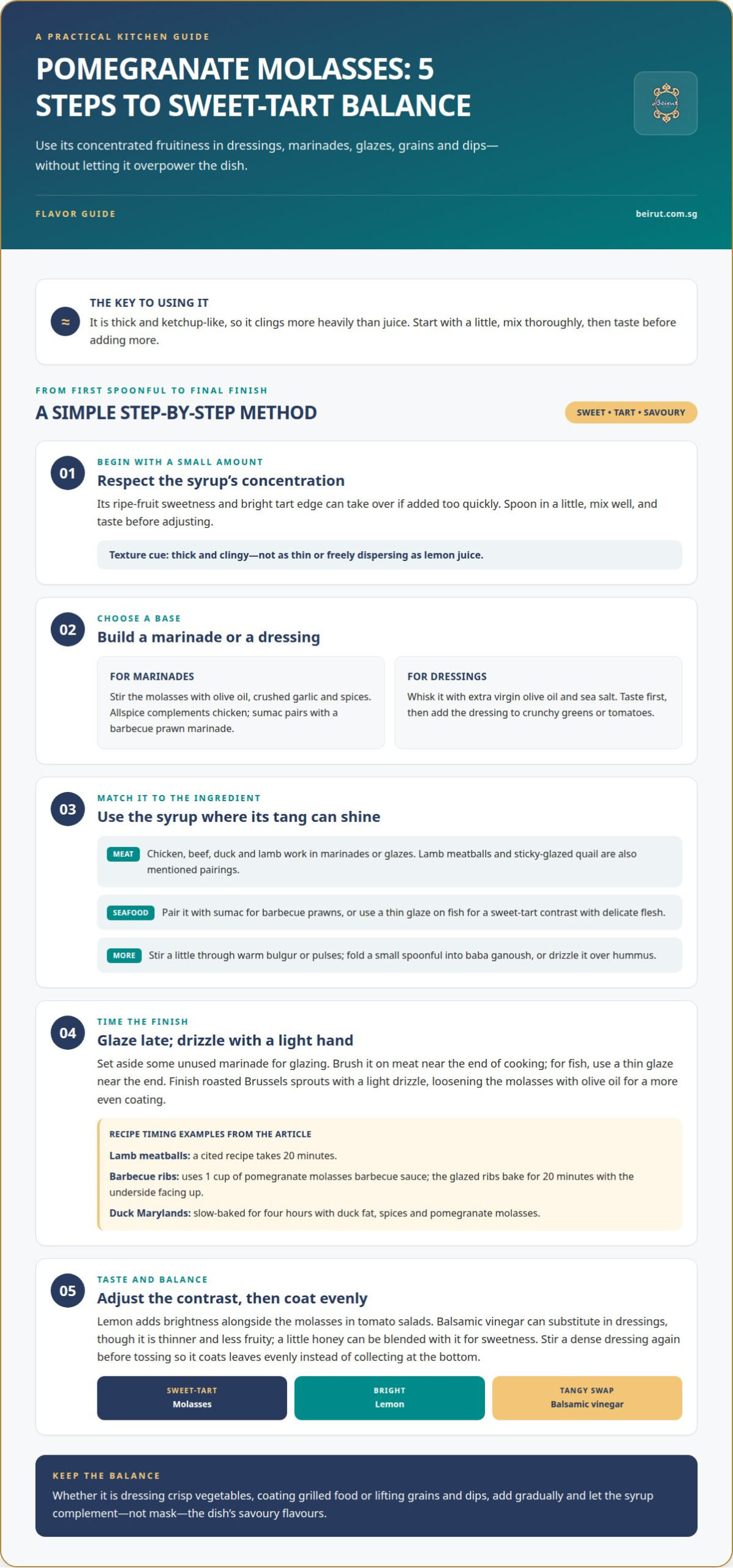
Pomegranate molasses brings ripe-fruit sweetness and a bright, tart edge. Its thick, ketchup-like consistency makes it easy to spoon or stir, but it coats ingredients more heavily than juice. Start with a little, mix thoroughly, then taste before adding more. This helps the syrup complement savoury flavours instead of taking over the dish.
Grains and pulses take well to its concentrated tang. Stir a little into cooked bulgur while it’s still warm so the grains absorb the flavour evenly. For Turkish kisir, combine bulgur with tomato paste, olive oil, herbs, lemon juice and seasonings, then add pomegranate molasses for a sweet-and-sour note. It also works in lentil or chickpea dishes, where its fruitiness cuts through earthy flavours.
Roasted vegetables offer another useful canvas. Toss carrots with olive oil, salt and pomegranate molasses before roasting, or drizzle it over walnut-stuffed eggplant rolls just before serving. The syrup’s tartness offsets the vegetables’ mellow sweetness, and its texture gives each bite a glossy finish. Add it gradually: it can cling in a dense layer rather than disperse like lemon juice.
For dips, fold a small spoonful into baba ganoush with roasted aubergine, olive oil and sea salt. You can also finish hummus with a delicate drizzle for contrast with its creamy, savoury flavour. Muhammara, made with roasted peppers and walnuts, is another natural match: the molasses deepens its fruitiness and balances the nuts’ richness. These combinations make mezze with distinct sweet, tart and savoury layers.
To explore how a tangy accent sits alongside chargrilled flavours, enjoy Lebanese-inspired dishes at the table. A measured touch of molasses can bring grains, pulses, vegetables, and dips into balance without masking their defining flavours.
Stir pomegranate molasses through grains, lentils and other pulses for a tangy lift. A Turkish-style tabouleh can use balsamic vinegar and pomegranate molasses for a sweet-and-sour flavour.
Mix it into baba ganoush with roasted aubergine, olive oil and sea salt, or drizzle it over hummus, including hummus served on toast. It also works as a finishing touch for hummus.
3. Adding pomegranate molasses to salad dressings
One pomegranate molasses use worth trying is a dressing for crunchy greens. Whisk the syrup with extra virgin olive oil and sea salt, then taste before adding it to the bowl. Its dense texture can settle, so stir again before tossing. Coat the leaves evenly to keep each bite balanced and prevent the dressing collecting at the bottom.
Tomatoes are an easy place to begin. Drizzle the syrup over fresh or cooked tomatoes, or use it in place of balsamic vinegar. For a more layered plate, combine tomatoes with oregano, sumac, lemon and olive oil. Lemon brings brightness, while the molasses adds a rounded sweet-tart note. Roasted beetroot also works well with a dressing of yogurt and walnuts.
What can you substitute for pomegranate molasses? Balsamic vinegar gives dressings a similar tang, though it’s thinner and less fruity. For sweetness, blend it with a little honey, then taste and adjust.
How much should you use? Start with a small spoonful, whisk it into the dressing, then taste before adding more. The amount depends on the syrup’s intensity and the tartness of ingredients such as lemon.
How should you store it after opening? Keep the molasses in a tightly sealed jar in the refrigerator. Storage guidance varies: one recipe recommends refrigeration for up to 6 months, while a reply advises using a tight jar within 2 months.
Another pomegranate molasses use is dressing a bulgur salad. Stir it through warm grains, then add herbs and chopped vegetables. In cauliflower and cranberry salad, a little syrup can bring the tart fruit and savoury vegetables together without masking their individual flavours.
4. What is pomegranate molasses and what does it taste like?
Pomegranate molasses is made by simmering pomegranate juice until it reduces to a thick syrup. Sugar is sometimes added, so bottles can vary in sweetness and tartness. Though the name may suggest familiar treacle, its defining flavour comes from concentrated pomegranate, not cane syrup. Its deep colour and glossy texture make even a small drizzle visible on a plate.
Its flavour balances ripe fruit with a bright, tangy edge. It may taste sweet at first, then leave a pleasant sourness that sharpens rich or earthy foods. Added sugar softens the acidity; longer reduction concentrates the juice and creates a denser, more intense syrup. Taste it before cooking, then consider how it will balance the dish’s salt, oil, citrus or other sweet ingredients.
Its consistency shapes how it behaves. Unlike pomegranate juice, the syrup clings to roasted vegetables, grains and meat, while a thinner liquid disperses more readily. Stir it into warm bulgur for an even coating, or thin it with olive oil when you want dressing to spread across salad leaves. A spoonful can also add brightness to hummus or roasted aubergine without making the mixture watery.
Think of it as both a seasoning and a finishing touch. In savoury dishes, its acidity cuts through richness, while its fruit notes add depth that plain vinegar may not provide. On tomatoes, it supplies a concentrated sweet-sour accent; in a marinade, it adds flavour and helps a glaze cling. Add it gradually, tasting as you go, because its intensity varies with its sweetness and thickness.
To experience how a tangy accompaniment can balance savoury flavours, enjoy grilled fish fillet as part of a meal. The same sweet-tart principle can help you decide where pomegranate molasses belongs: use it to brighten a dish, not bury its other flavours.
Beirut Grill
At Beirut Grill, explore how savoury dishes, mezze and bright flavours come together at the table. A Mixed Grill or Vegetarian Kebab offers a range of savoury profiles to consider alongside the sweet-tart ideas in this guide, while Hummus provides a creamy mezze counterpart. Lebanese Wine can complete the meal.
These dishes offer ways to explore contrast and balance; this does not mean pomegranate molasses is used in each one. After trying the syrup in your own marinades or dressings, a meal at Beirut Grill can bring fresh inspiration for your next pairing.
Contact Beirut Grill to plan your Lebanese dining experience.
Let Your Next Meal Inspire You
Let your next meal turn curiosity into cooking instinct. Rather than treating pomegranate molasses as a fixed recipe ingredient, consider how its character might suit the flavours already on your table. The most memorable pomegranate molasses uses often emerge through small, thoughtful experiments that reflect your palate.
Dining can offer another kind of inspiration: notice which textures, aromas, and savoury notes make a meal feel balanced to you. That attention can shape what you try at home, whether you’re planning a relaxed supper or a more elaborate spread. In Singapore, Beirut Grill offers a setting to enjoy Lebanese cuisine and find fresh ideas for your next gathering.
Carry that curiosity into your next meal, and let each new combination teach you something about your taste. Contact Beirut Grill to arrange your dining experience, and enjoy discovering where your appetite leads.
Frequently Asked Questions
How is pomegranate molasses used in cooking?
Use it as a concentrated seasoning, adding a little to a savoury sauce or pan juices near the end of cooking. Stir thoroughly, taste, then adjust the salt or acidity so the fruit’s tang complements the other ingredients. For a simple finishing touch, drizzle it over cooked tomatoes or roasted vegetables just before serving, letting the syrup accent the dish without dominating it.
Can pomegranate molasses be used in desserts and drinks?
Yes. Drizzle it over Greek yogurt, cheesecake, ice cream or pavlova to balance sweetness with its tart fruit flavour. It can also finish faloodeh, a frozen dessert with rice vermicelli and orange-blossom water. For a drink, stir a little into sparkling water; its thick texture may need extra mixing. Add gradually and taste as you go, since the syrup’s sweetness and acidity shape the result.