
What if the most prestigious offering on a Lebanese table isn’t the flame-seared mixed grill, but a delicate, hand-rolled parcel no larger than a finger? While many diners encounter generic stuffed leaves in modern markets, they often miss the soul of traditional warak enab, a dish that demands hours of patient labor for a few moments of sensory bliss. It’s a culinary art form that transforms humble grape leaves into a sophisticated narrative of heritage and hospitality.
You’ve likely felt the frustration of seeking that authentic, melt-in-the-mouth texture only to find versions that lack the vibrant acidity or the rich, spiced depth of a true Beirut kitchen. We promise to deepen your understanding of this iconic dish, from its historical roots to the meticulous preparation methods that define its quality. We’ll explore the nuances between the warm, meat-filled varieties and the zesty vegetarian options, ensuring you can identify and appreciate the genuine artistry behind every roll.
Key Takeaways
- Understand why traditional warak enab is considered the soul of the Lebanese table, representing a timeless legacy of hospitality and meticulous craft.
- Distinguish between the chilled, zesty Bi Zeit and the warm, savory Bi Lahm to better navigate authentic mezze menus and flavor profiles.
- Gain insight into the delicate process of selecting tender, veinless vine leaves and the aromatic secrets behind a masterfully seasoned Hashweh filling.
- Learn to enhance the sophisticated flavors of stuffed grape leaves by pairing them with the structured acidity and heritage of world-class Lebanese wine.
- Discover where to find this heritage-rich experience in Singapore, where the atmosphere and culinary execution mirror the prestige of a traditional Beirut home.
The Timeless Legacy of Traditional Warak Enab
To sit at a Lebanese table is to participate in an ancient ritual of generosity and grace. The “Sifrah,” or the formal dining table, is never truly complete without the presence of traditional warak enab. These hand-rolled treasures serve as the quintessential centerpiece of the Lebanese mezze, appearing as either a chilled, zesty starter or a warm, comforting main. Originating in the heart of the Levant, the practice of stuffing vine leaves has evolved into a sophisticated art form that defines the region’s culinary identity. The sensory experience is immediate and unforgettable. It begins with the bright, sharp tang of fresh lemon that awakens the palate, followed by the luxurious, velvet finish of premium olive oil that lingers long after the first bite.
Within the broader tapestry of Lebanese culinary traditions, these parcels are far more than a mere appetizer. They are a profound symbol of hospitality and a marker of prestige. Preparing them is an act of devotion, often requiring hours of focused, rhythmic effort to yield a single platter. This significant investment of time is a “labor of love” that signals deep respect for the guest, elevating a simple meal into a prestigious cultural journey. It’s a dish that rewards the curious diner with layers of history and flavor hidden beneath a tender, emerald exterior.
Etymology and Cultural Significance
The name itself carries a poetic simplicity. In Arabic, “Warak” translates to leaves and “Enab” refers to the grape. Together, they represent the harvest of the vine and the resourcefulness of the Mediterranean kitchen. In Lebanon, this dish is often reserved for special guests and significant family gatherings because of the sheer labor involved. The act of rolling each leaf by hand is a meditative process passed from one generation to the next. It’s a testament to the host’s dedication, ensuring that every guest feels the warmth and heritage of a true Lebanese home.
Warak Enab vs. Dolma: The Lebanese Distinction
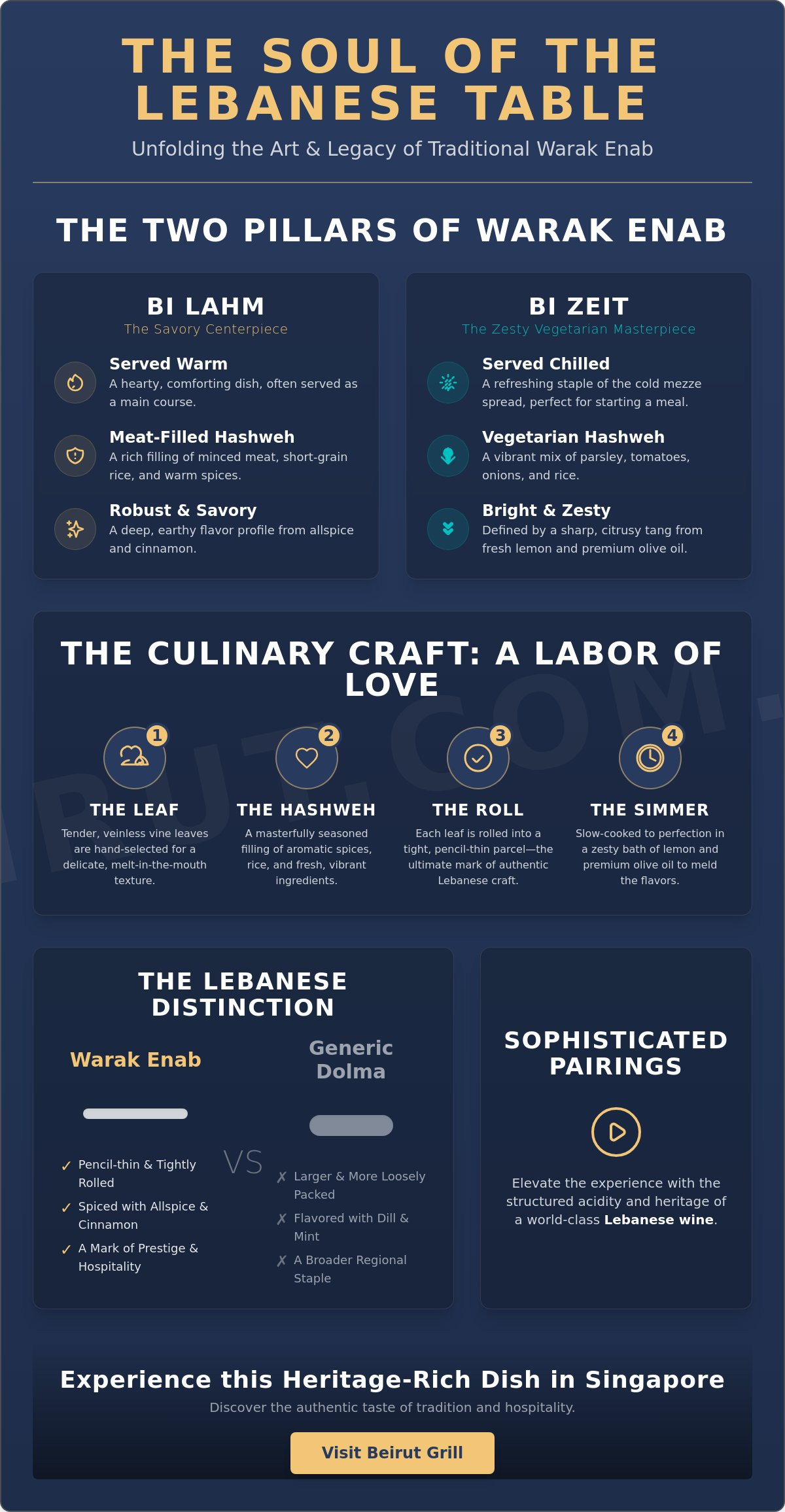
While the term “dolma” is frequently used as a generic label for stuffed vegetables across the Mediterranean, the Lebanese version possesses a distinct, refined identity. Unlike the larger, more loosely packed Greek or Turkish varieties, traditional warak enab is characterized by a remarkably thin, tight roll, often no thicker than a pencil. The flavor profile is equally specific. While other regional versions might lean heavily on dill or mint, the Lebanese palate favors a warm, aromatic blend of allspice and cinnamon. This choice of spices creates a sophisticated depth that distinguishes it from its regional cousins, offering a nuanced taste that is both earthy and ethereal.
Bi Lahm vs. Bi Zeit: Understanding the Two Pillars of Stuffed Grape Leaves
In the vibrant tapestry of Lebanese gastronomy, traditional Warak Enab is divided into two distinct expressions: Bi Zeit and Bi Lahm. These aren’t just variations; they represent different moments in the day and different seasons of the soul. While the vegetarian Bi Zeit is a refreshing staple of the chilled mezze spread, the meat-filled Bi Lahm is a warm, celebratory centerpiece. The textures differ significantly. The oil-based version is tender and velvety, while the meat version offers a firmer, more robust bite. In a traditional household, the choice between them often follows the rhythm of the year, with the lighter Bi Zeit dominating the sun-drenched summer months and the hearty Bi Lahm providing comfort during cooler family gatherings.
Distinguishing between these two pillars is essential for any connoisseur of Levantine food. It isn’t merely about the presence of meat, but about an entirely different philosophy of seasoning and temperature. If you’re looking to experience these refined flavors first-hand, the authentic Warak Enab at our establishment offers a perfect introduction to these two pillars of Lebanese cuisine.
Warak Enab Bi Zeit: The Vegetarian Masterpiece
Literally translating to “in oil,” this version of traditional warak enab is a triumph of fresh, garden-led ingredients. The stuffing, or Hashweh, is a vibrant mixture of finely chopped parsley, ripe tomatoes, onions, and short-grain rice. The secret to its sophisticated profile lies in the quality of the olive oil. Only premium, cold-pressed oil will do, as it emulsifies with the lemon juice during the slow simmering process to create a zesty, silken sauce. This cold mezze staple is defined by its bright, citrusy tang, making it a perfect palate cleanser before a main course of grilled prawns or grilled halloumi. It’s a dish that celebrates the purity of the vine and the citrus groves of the Mediterranean coast.
Warak Enab Bi Lahm: The Hearty Heritage
The warm variety, Bi Lahm, is a testament to the richness of Lebanese heritage. It features a savory blend of spiced ground lamb or beef mixed with rice, seasoned with the characteristic warmth of allspice and cinnamon. The preparation is an architectural feat. Traditional cooks layer tender lamb chops at the bottom of the heavy cooking pot before tightly packing the rolled leaves on top. As the dish simmers for hours over a low flame, the meat juices and rendered fats rise through the layers, infusing each leaf with an incredible depth of flavor. The result is a meltingly tender parcel that carries the essence of the meat, often served alongside a dollop of cool labneh to balance the savory richness.
The Culinary Craft: From Vine to Table
The creation of traditional warak enab begins long before the first roll is formed. It starts with the discerning eye of a master chef selecting the perfect vine leaves. Only the most tender, light green leaves are chosen; they must be supple and nearly veinless to ensure a delicate texture that yields easily to the bite. These premium leaves act as the silken skin of the dish, protecting the precious Hashweh within. In an era where rising costs of essential ingredients like beef and high-quality rice impact kitchens across the Levant, the selection of these pristine leaves remains a non-negotiable standard for an authentic experience. Each leaf is a canvas, requiring a steady hand and a deep respect for the raw materials.
Preparation of the Hashweh is a study in aromatic precision. The short-grain rice is carefully rinsed and tossed with a fragrant blend of spices, where the warmth of allspice meets the subtle sweetness of cinnamon. This mixture isn’t merely a filling; it’s the heart of the dish that must be balanced with surgical accuracy. The slow-simmering process that follows is a test of patience, often stretching over several hours to allow the flavors to marry and the leaves to reach a state of melting tenderness. The finale of this process is a moment of high drama in a Lebanese home. The heavy pot is inverted onto a large serving platter in a swift, practiced motion. This “flipping” reveals a steaming, perfectly structured tower of emerald rolls, often crowned with the tender succulent meats or vegetables that lined the base.
The Art of the Perfect Roll
Achieving the signature slender shape of traditional warak enab requires a specific three-step technique. First, the leaf is placed veiny side up on a flat surface, ensuring the smooth, glossy side faces outward for a sophisticated presentation. Second, the chef calibrates the filling, placing a small, precise amount of Hashweh near the stem. This is crucial; too much rice will cause the leaf to burst as the grains expand during the simmer. Finally, the “cigar” technique is employed, tucking the sides in tightly and rolling upward to create a firm, elegant parcel that holds its shape through the long cooking hours.
Layering and Simmering Secrets
The architecture of the cooking pot is as important as the roll itself. A protective layer of sliced potatoes or tomatoes is placed at the base, serving as a buffer against the heat and preventing the delicate leaves from scorching. To ensure the rolls don’t unravel, heavy ceramic plates are placed directly on top of the leaves as weights, keeping them submerged in the cooking liquid. In the final stages of the simmer, a “lemon-garlic bath” is introduced to the pot. This infusion of fresh citrus and crushed garlic provides the sharp, vibrant finish that defines the Lebanese palate, cutting through the richness of the olive oil or meat juices.
Sophisticated Pairings: Elevating the Warak Enab Experience
A true Lebanese feast is a deliberate progression of flavors, where each dish serves a specific purpose in the greater narrative of the meal. Within this context, traditional warak enab functions as a vital anchor, providing the necessary acidity and herbal depth to balance the richer offerings of the table. Whether you’re enjoying the chilled, oil-rich Bi Zeit or the warm, savory Bi Lahm, the experience is profoundly elevated by the right accompaniment. These pairings aren’t accidental. They’re the result of centuries of refinement in Mediterranean dining rooms, where the goal is to cleanse the palate and sharpen the senses for the next course. Experience the art of the perfect pairing by exploring our full selection of Lebanese Wine and authentic mezze at our destination today.
The role of traditional beverages in this experience is primarily one of palate cleansing. Because the grape leaves are often simmered in a potent bath of lemon and garlic, the accompanying drink must have enough structure to stand up to that vibrancy. A well-chosen pairing doesn’t just sit alongside the food; it interacts with it, pulling out the subtle notes of the vine and the spices hidden within the rice. It transforms a simple appetizer into a sophisticated culinary event that rewards the diner’s curiosity.
The Arak and Wine Connection
The relationship between traditional spirits and these stuffed vine leaves is one of sensory harmony. Arak, the clear, anise-flavored spirit of Lebanon, is the classic companion for a mezze spread. Its bold, licorice-like notes provide a striking counterpoint to the earthy herbs found in the stuffing. When you sip a chilled glass of Arak alongside a lemony Bi Zeit, the spirit’s milk-white infusion cuts through the richness of the olive oil, leaving the palate refreshed. For those who prefer the vine’s other fruit, a crisp Lebanese White or a dry Rosé offers a similar brilliance. The structured acidity in these wines mirrors the citrus profile of the traditional warak enab, creating a seamless bridge between the glass and the plate.
Complementary Mezze Pairings
To achieve a balanced table, one must consider the interplay of textures. A silk-smooth bowl of Hummus provides the perfect creamy contrast to the firm, fibrous texture of the grape leaves. While the warak enab offers a sharp tang, the chickpeas and tahini offer a grounding, nutty finish. For those who lean into the vibrant citrus notes, pairing these leaves with a fresh Fattoush creates a double-citrus experience that is incredibly invigorating. If your preference is the meat-filled Bi Lahm, a side of cool Labneh is indispensable. The thick, strained yogurt softens the warmth of the allspice and cinnamon, rounding out the spice profile and adding a luxurious mouthfeel to the heritage-rich meat parcels.
Lebanese Hospitality at Beirut Grill: Our Signature Mezze
Nestled within the vibrant cultural heart of Singapore, Beirut Grill stands as a prestigious sanctuary for those seeking the true essence of Levantine flavors. Since our founding in 2009, we’ve dedicated ourselves to preserving the sophisticated art of the Lebanese table. Our traditional warak enab is more than just an item on the menu; it’s a hand-rolled tribute to the patience and heritage of our ancestors. When you step into our dining room, you’re greeted by an atmosphere of refined elegance that mirrors the prestigious homes of Beirut. It’s a destination where the clink of glasses and the aroma of spiced meats create a rhythmic, storytelling quality that transports every guest to the Mediterranean coast.
We invite you to experience the full breadth of our culinary expertise by pairing our delicate grape leaves with our signature Mixed Grill. The contrast between the zesty, tender parcels and the flame-seared, succulent meats provides a narrative of balance that defines our cuisine. Every dish we serve is a result of seasoned expertise, ensuring that your journey through our menu is both authentic and indulgent. We take immense pride in our role as curators of culture, offering an experience that rewards the diner’s curiosity with every meticulously prepared course.
Our Commitment to Authenticity
Our kitchen is a bastion of tradition, operating as a strictly pork-free environment to honor the authentic standards of Lebanese gastronomy. This commitment allows the purity of our premium ingredients to shine, from the cold-pressed olive oil to the aromatic spices in our Hashweh. Guests who order our cold mezze platter embark on a sensory journey, discovering the vibrant textures of Hummus, Moutabal, and our traditional warak enab. By maintaining these high standards since 2009, we’ve established a reputation for reliability and culinary excellence that distinguishes us within the regional dining landscape.
A Feast for the Senses
In the spirit of Lebanese hospitality, our meals are designed for sharing, encouraging a sense of connection and communal joy. This tradition of the “Sifrah” is best enjoyed with our curated selection of Lebanese wines, sourced from prestigious regional producers, or a steaming pot of Moroccan Mint Tea. Whether you’re here for a celebratory feast or a quiet, indulgent evening, the flow of our service is designed to slow you down and immerse you in the surroundings. We invite you to become part of our story and discover the soul of the Levant in every bite. Book your table at Beirut Grill to experience traditional Warak Enab and the very best of Lebanese hospitality today.
Savor the Legacy of the Lebanese Table
The journey from a sun-drenched vineyard to a hand-rolled parcel of traditional warak enab is one defined by patience and prestige. You now understand the nuanced differences between the zesty, chilled Bi Zeit and the warm, spice-infused Bi Lahm, as well as the meticulous craft required to produce the perfect slender roll. These dishes aren’t merely food; they’re an invitation to experience the soul of Levantine hospitality. By pairing these treasures with a crisp Lebanese wine or a chilled glass of Arak, you elevate a simple meal into a sophisticated cultural celebration that honors centuries of heritage.
Since 2009, Beirut Grill has remained a dedicated curator of these ancient traditions in Singapore. Our strictly pork-free kitchen ensures every bite of our hand-rolled mezze meets the highest standards of authenticity. Whether you’re drawn by the tang of fresh lemon or the richness of slow-simmered meats, we invite you to take your place at our table. Experience the authentic flavors of Lebanon at Beirut Grill and discover why our heritage-rich cuisine remains a premier destination for the discerning diner. We look forward to hosting you for an unforgettable sensory journey.
Frequently Asked Questions
Is traditional warak enab served hot or cold?
Traditional warak enab is served either hot or cold depending on the specific preparation style used in the kitchen. The vegetarian version, known as Bi Zeit, is traditionally chilled or served at room temperature to highlight its bright, lemony acidity and the silkiness of the olive oil. In contrast, the meat-filled Bi Lahm variety is served warm, allowing the savory juices and spiced fats to remain tender and indulgent for the guest.
What is the difference between Lebanese warak enab and Greek dolmades?
The primary distinctions lie in the physical structure and the aromatic profile of the stuffing. Lebanese versions are rolled significantly thinner and tighter than their Greek counterparts, often resembling slender cigars. While Greek dolmades frequently feature dill, mint, and sometimes a creamy avgolemono sauce, the Lebanese palate relies on a warm, earthy blend of allspice and cinnamon to create a sophisticated and distinct depth of flavor.
Can warak enab be made vegan or vegetarian?
The Bi Zeit preparation is a celebrated vegan masterpiece in Lebanese culinary heritage. This version utilizes a vibrant mixture of short-grain rice, finely chopped parsley, tomatoes, and onions, all bound together by premium cold-pressed olive oil. It’s a plant-based staple that offers a complex, zesty flavor profile without the need for animal products, making it a versatile and inclusive choice for any sophisticated mezze spread.
How many calories are typically in a serving of stuffed grape leaves?
A typical serving of five to six pieces generally ranges between 150 and 250 calories, though this varies based on the richness of the olive oil or the type of meat used. The vegetarian rolls tend to be lighter, focusing on nutrient-dense greens and rice, while the meat-filled versions provide a more calorie-dense experience. It’s a balanced dish that offers healthy fats and complex carbohydrates in a single, hand-rolled parcel.
What are the main spices used in Lebanese warak enab?
The signature soul of the traditional warak enab comes from a precise blend of allspice and cinnamon. These two spices provide a warm, aromatic foundation that distinguishes the dish from other Mediterranean varieties. Some family recipes might include a hint of black pepper or a touch of seven-spice, but the dominance of allspice ensures a profile that is both earthy and ethereal, perfectly complementing the tang of fresh lemon.
How long does it take to cook traditional warak enab?
The cooking process is a slow, rhythmic affair that typically requires between ninety minutes and three hours of simmering over a gentle flame. This extended time is necessary to ensure the vine leaves reach a meltingly tender consistency and the rice fully absorbs the savory liquids. It’s a test of patience that rewards the host with a deeply infused dish where every ingredient has harmonized perfectly within the heavy cooking pot.
Is warak enab gluten-free?
The ingredients used in traditional warak enab are naturally gluten-free. The stuffing relies on short-grain rice rather than wheat-based grains, and the outer casing is a pure grape leaf. This makes it an excellent choice for guests with gluten sensitivities who still wish to indulge in a prestigious and authentic cultural journey. We always recommend checking specific preparation methods if you’re dining in a modern restaurant setting to ensure no cross-contamination exists.
What should I serve with stuffed grape leaves for a full meal?
For a truly immersive feast, we suggest pairing these leaves with a robust Mixed Grill or succulent Beirut Lamb Chops. Complementary mezze like creamy Hummus or zesty Fattoush provide essential textural contrasts that round out the dining experience. To finish the meal with a touch of elegance, a glass of Lebanese Wine or a pot of Moroccan Mint Tea serves as the perfect digestive, lingering long after the last plate is cleared.