
What if the most prestigious and indulgent feast on a Lebanese table didn’t require a single cut of meat? For many, the search for a truly satisfying vegetarian mezze platter ends in a collection of uninspired sides rather than a cohesive culinary journey. You likely recognize the frustration of staring at a menu, unsure how the creamy tang of Labneh should dance with the citrus notes of Tabbouleh, or which hot small plates turn a simple snack into a grand banquet. It’s a common struggle to find meat-free options that feel like a deliberate, high-end experience rather than a culinary afterthought.
Since 2009, we’ve curated these sensory experiences to reward your curiosity and transport you to the heart of the Levant. This guide promises to transform your understanding of the “Mezze Table” ritual, moving beyond simple dips to explore a rich tapestry of heritage ingredients. We’ll demystify traditional pairings, from the smoky allure of charcoal-grilled Moutabal to the delicate folds of Warak Enab. You’ll gain the knowledge to order with the refined confidence of a true connoisseur, identifying the authentic textures and imported spices that make a vegetarian feast feel entirely complete and deeply satisfying.
Key Takeaways
- Master the philosophy of the Lebanese “Mezze Table,” a social ritual where sharing small plates creates a profound sense of connection and hospitality.
- Identify the essential elements of an authentic vegetarian mezze platter, including the “Holy Trinity” of dips and the vibrant, herb-heavy crunch of Tabbouleh and Fattoush.
- Navigate the rhythmic flow of a traditional meal by understanding how to balance the textures and temperatures of both hot and cold small plates.
- Elevate your dining experience with traditional etiquette, from the art of using pita bread as a utensil to selecting the perfect pairing of Arak or Lebanese wine.
- Gain the confidence to order at a Lebanese restaurant by recognizing the high-end, imported ingredients that signal true culinary expertise.
The Art of the Mezze: More Than Just an Appetizer
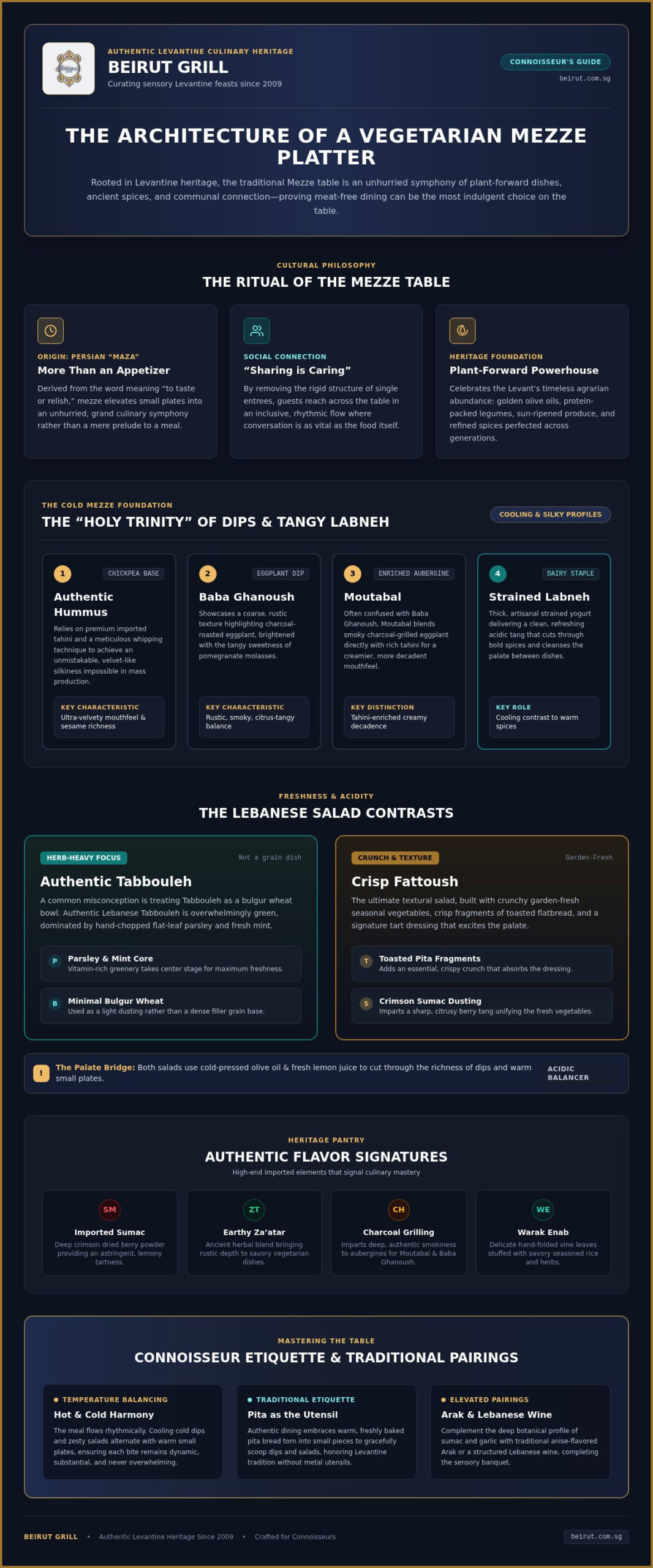
To step into a traditional Lebanese dining room is to enter a world where time slows and the table becomes a canvas for community. At the center of this experience lies the mezze, a word derived from the Persian maza, meaning to taste or relish. While Western palates often view a “starter” as a mere prelude to a main course, the traditional mezze dining culture elevates these small plates into a grand, unhurried symphony. A well-crafted vegetarian mezze platter isn’t just a collection of appetizers; it’s the heart of the meal itself. This ancient tradition, rooted deeply in Levantine heritage, serves as a testament to the region’s legendary hospitality. It reflects a philosophy where the act of eating is inseparable from the act of connecting with those around you.
The Cultural Significance of Sharing
In Lebanese culture, we believe that “sharing is caring.” This isn’t a modern cliché but a lived reality that has defined our tables for centuries. A mezze spread encourages a rhythmic, social flow where conversation is as essential as the food. The host takes great pride in curating a balanced selection, ensuring that every guest feels honored and satisfied. By removing the rigid structure of individual entrees, the mezze table invites everyone to linger, reach across the table, and indulge in a collective discovery of flavors. It’s an inclusive ritual that turns a simple dinner into a prestigious social event, rewarding the visitor’s curiosity with every bite.
Why Vegetarian Mezze is a Culinary Powerhouse
The brilliance of a vegetarian mezze platter lies in its vibrant reliance on the earth’s bounty. For generations, the Levant has championed a naturally plant-forward diet, utilizing golden olive oils, protein-rich legumes, and sun-ripened produce. This isn’t a trend; it’s our history. We don’t just serve vegetables; we celebrate them through sophisticated seasoning and traditional techniques. The sharp, lemony tang of sumac and the earthy depth of za’atar transform humble ingredients into culinary masterpieces. When you explore our offerings at Beirut Grill, you’re tasting a legacy of spice that has been refined since our founding in 2009. From the smoky depth of charcoal-grilled eggplant to the crisp snap of fresh herbs, these dishes prove that meat-free dining can be the most indulgent choice on the menu. Every bowl of creamy dip or zesty salad serves as a reminder that true luxury is found in the purity and authenticity of the ingredients.
Essential Components of an Authentic Vegetarian Mezze Platter
To curate an authentic vegetarian mezze platter is to understand the delicate balance between the earth’s bounty and the chef’s mastery. Each dish serves a specific purpose, whether it’s to provide a cooling contrast or a sharp, acidic bite. At the center of this arrangement sits the “Holy Trinity” of Lebanese dips, accompanied by vibrant salads and warm, savory bites that ensure the meal feels both diverse and substantial. This is not a random assortment of appetizers; it is a choreographed sequence of flavors designed to satisfy the soul as much as the palate.
The Silkiness of Cold Mezze
The foundation of any prestigious spread begins with the silkiness of cold mezze. A truly authentic Levantine hummus relies on the quality of premium tahini and a precise, velvet-like texture that store-bought varieties simply cannot replicate. While many diners confuse our eggplant offerings, the distinction is vital for the connoisseur. Baba Ghanoush offers a rustic, smoky profile often brightened by pomegranate molasses, whereas Moutabal is enriched with tahini for a creamier, more indulgent mouthfeel. To complete this cooling quartet, we include Labneh, a thick, strained yogurt that provides a refreshing tang to balance the richer spices found elsewhere on the table.
The Crunch and Zest of Lebanese Salads
No table is complete without the verdant brightness of our traditional salads. Tabbouleh is a vitamin-rich herb salad, not a grain dish, where finely chopped parsley and mint take center stage over a mere dusting of bulgur wheat. In contrast, Fattoush provides a robust crunch, featuring garden-fresh vegetables and crispy fragments of toasted pita bread. Both are unified by a dressing of cold-pressed olive oil and fresh lemon juice, often dusted with the deep crimson tang of sumac. These acidic notes act as a bridge to the warm components of the meal, cutting through richness and refreshing the palate.
The experience deepens with the arrival of warm staples that provide texture and heat. Our golden, herb-flecked Falafel and the salty, squeaky indulgence of Grilled Halloumi provide the necessary heartiness that makes this meat-free feast feel like a full banquet. Between these rich bites, traditional pickles and cured olives serve as essential palate cleansers, resetting your senses for the next discovery. If you wish to taste these elements in their most authentic form, you can explore our menu to see how we’ve honored these recipes since 2009. By focusing on high-end imported ingredients and traditional techniques, we ensure that every component of your vegetarian mezze platter tells a story of heritage and pride.
Balancing Textures and Temperatures: Hot vs. Cold Mezze
The progression of an authentic Lebanese feast follows a deliberate, rhythmic cadence. We begin with the cooling, velvet textures of cold mezze to awaken the senses before introducing the complex, savory warmth of our hot offerings. This transition is essential for a balanced vegetarian mezze platter, ensuring that the palate isn’t overwhelmed but rather guided through a curated journey of temperatures. It’s during this phase that we introduce the bold heat of Batata Harra, where cubed potatoes are sautéed with garlic, coriander, and chili to provide a necessary spicy profile that contrasts beautifully with the creamier dips. Adopting this Mediterranean dietary pattern ensures a meal that is as nutritionally balanced as it is culturally rich.
The Savory Warmth of Pastries and Legumes
As the meal unfolds, the table is graced with artisanal pastries that showcase the delicate mastery of our kitchen. The Spinach Fatayer, with its signature triangular shape and thin, golden crust, offers a zesty filling of sumac-spiced greens and onions. These hand-folded treasures are a hallmark of Lebanese craftsmanship, representing centuries of culinary tradition. Alongside these, we often serve Sambousek, providing a satisfying crunch that gives way to a rich, savory center of cheese or seasoned vegetables. These dishes highlight the protein-dense nature of Levantine cuisine, particularly when paired with our crispy, herb-flecked Falafel. Even the Warak Enab, or stuffed grape leaves, take on a different character when served warm, their rice and herb filling absorbing the subtle oils of the pot.
The Role of the Grill in Vegetarian Dining
The true soul of our kitchen resides in the traditional charcoal grill. While many associate the grill exclusively with meats, it’s perhaps most transformative when applied to vegetables. The intense, dry heat imparts a unique smoky allure that penetrates deep into the produce, coaxing out natural sugars and elevating a simple vegetarian mezze platter to a prestigious dining experience. Consider the Grilled Halloumi; when kissed by the fire, this Cypriot cheese develops a charred, golden exterior while remaining indulgent and soft inside. It serves as the ultimate meat-free “steak,” rewarding the guest’s curiosity with its salty depth and resilient texture. To understand how these ancient fire-cooking methods define our heritage, you can explore our detailed guide on Mediterranean food in Singapore. Since 2009, we’ve remained dedicated to these charcoal techniques, ensuring that every warm plate carries the authentic whisper of Lebanese history.
Elevating the Experience: Pairings and Etiquette
To truly honor a vegetarian mezze platter, one must embrace the unhurried elegance of Lebanese dining etiquette. This is a communal ritual where the “etiquette of the spread” dictates a graceful approach; rather than filling a single plate to the brim, guests are encouraged to take small portions of various dishes throughout the evening. This ensures that every flavor remains distinct and every texture is appreciated at its peak. Central to this experience is the humble pita bread, which serves as more than just a side. In a traditional setting, we use torn fragments of warm bread as a natural utensil, employing a “scooping” method to capture the perfect ratio of velvet dip and vibrant garnish. It’s a tactile, intimate way to engage with the food that rewards the diner’s patience and curiosity.
Lebanese Wine and Arak Pairings
The sensory allure of the meal is profoundly heightened by the presence of authentic regional beverages. Lebanese white wines, celebrated for their high acidity and mineral notes, are the ideal companion for the lemon-heavy profiles of a vegetarian mezze platter. These wines cut through the richness of tahini-based dips like Moutabal while complementing the citrus zest of our salads. For a more traditional experience, we offer Arak, the prestigious anise-flavored spirit of the Levant. When diluted with water, it turns a milky white and serves as a powerful palate cleanser, refreshing the senses between the cold and hot courses. If your spread features the fresh tang of Labneh and Tabbouleh, a crisp Lebanese rosé offers a floral, berry-forward balance that is simply unmatched. To explore curated selections and discover exceptional bottles for dining and entertaining, learn more about finding the ideal vintage.
The Finishing Touch: Tea and Coffee
As the savory journey concludes, the transition toward the sweeter notes of the evening is signaled by our signature hot beverages. The pouring of Moroccan Mint Tea is a spectacle in itself, traditionally poured from a height to aerate the infusion and create a delicate froth. This process releases the aromatic oils of the fresh mint, providing a soothing end to a complex meal. Alternatively, the bold, cardamom-infused profile of Lebanese Coffee offers a sophisticated intensity. This thick, dark brew is a hallmark of our hospitality, designed to be sipped slowly while lingering over conversation. These rituals aren’t merely about thirst; they are the final, elegant strokes on the canvas of a Lebanese feast. To immerse yourself in these traditions and taste the heritage we’ve preserved since 2009, book your table at Beirut Grill today and experience the true art of the mezze.
Experience Authentic Mezze Heritage at Beirut Grill
Since our inception in 2009, Beirut Grill has stood as a beacon of Levantine culture and a prestigious destination for culinary explorers. We invite you to step beyond the ordinary and immerse yourself in a world where every vegetarian mezze platter is a curated masterpiece of heritage. Our commitment to authenticity isn’t merely a promise; it’s a practice we’ve refined over more than a decade of service. By utilizing traditional charcoal-grilling techniques and high-end imported spices, we’ve secured our reputation for providing an unmatched flavor profile. To truly appreciate the depth of this culinary tradition, you can explore our comprehensive Middle Eastern food in Singapore guide, which offers further context on the historical significance of our offerings.
A Sophisticated Setting for Social Dining
Our dining environment is meticulously designed to transport you to the heart of the Levant, providing an atmospheric backdrop that feels both exclusive and welcoming. The physical space mirrors the richness of the cuisine, creating a rhythmic storytelling quality from the moment you arrive. Whether you’re planning an intimate date or a grand gathering with a large group, our menu facilitates the social ritual that defines our culture. Our strictly pork-free kitchen ensures an inclusive experience, allowing diverse groups of friends and colleagues to dine together with absolute peace of mind. Our staff act as refined hosts, taking great pride in their expertise as they guide you through our extensive mezze selection. They’ll help you navigate the nuances between a smoky Moutabal and a zesty Fattoush, ensuring your journey is as educational as it is indulgent.
Commitment to Authenticity and Quality
The secret to our longevity lies in an unwavering dedication to sourcing the finest ingredients. We believe that a true Lebanese feast is only as good as its foundational components. This is why we import premium chickpeas, velvet-smooth tahini, and cold-pressed olive oil directly from prestigious regional producers. These high-status markers distinguish our kitchen as a curator of culture rather than just a provider of food. Our signature charcoal-grilled vegetarian options carry a depth of flavor that only authentic fire-cooking can provide, rewarding the guest’s curiosity with every bite. We invite you to book your experience and discover for yourself why we remain the definitive choice for a vegetarian mezze platter that honors the soul of Lebanese hospitality. Allow us to host your next social gathering and share the vibrant, sensory-rich legacy we’ve built since 2009.
Embrace Your Next Culinary Voyage
To master the Lebanese table is to understand that dining is an act of storytelling. You’ve journeyed through the rhythmic flow of a traditional feast, moving from the cooling silk of cold dips to the smoky, charcoal-grilled warmth of hot small plates. An authentic vegetarian mezze platter proves that meat-free dining can be the most indulgent choice on the menu, provided it’s crafted with the right heritage and premium imported ingredients. By embracing the etiquette of the scoop and the art of the pairing, you’re no longer just a guest; you’re a participant in a centuries-old cultural ritual.
Since our founding in 2009, we’ve taken immense pride in preserving these prestigious traditions for our guests. Whether you’re seeking a lively social gathering or an intimate evening, our destination offers a sanctuary of authentic flavors. With our strictly pork-free menu and a prestigious selection of Lebanese wines, every visit rewards your curiosity with a deep sense of place. It’s time to move beyond the guide and experience the allure for yourself.
Book Your Authentic Lebanese Feast at Beirut Grill and let us transport you to the heart of the Levant. We look forward to hosting your next discovery.
Frequently Asked Questions
What is the difference between Baba Ghanoush and Moutabal?
The primary difference lies in the texture and the ingredients used to complement the smoky, charcoal-grilled eggplant. Baba Ghanoush is a rustic, chunky blend typically enriched with pomegranate molasses, walnuts, and fresh vegetables for a tangy finish. Moutabal, however, is characterized by its velvet-like silkiness, achieved by blending the eggplant with premium tahini and lemon juice. Both are essential components of a prestigious vegetarian mezze platter that rewards the palate with deep, earthy complexity.
Is a vegetarian mezze platter suitable for vegans?
Many traditional Lebanese small plates are naturally plant-based, making our selection an excellent choice for vegan guests. Staples like Hummus, Falafel, Tabbouleh, and Warak Enab are crafted without any animal products. However, some items like Labneh, Grilled Halloumi, and cheese-filled Sambousek contain dairy. We recommend informing your host of your dietary preferences so they can curate a spread that honors both your lifestyle and our rich, storied culinary heritage.
How many people does a standard mezze platter serve?
The beauty of the mezze ritual is its inherent flexibility for any group size. While a single platter is often designed for two to three guests to share as an indulgent appetizer, a more extensive selection of hot and cold plates can easily serve as a complete banquet for large parties. Since 2009, we’ve specialized in these social dining experiences, ensuring that our portions encourage the traditional “sharing is caring” philosophy that defines the Levant.
Which Lebanese wine pairs best with a vegetarian spread?
High-acid Lebanese white wines or crisp rosés are the most prestigious companions for a vegetarian spread. The citrus-forward notes of a Sauvignon Blanc or a regional blend from the Bekaa Valley cut through the richness of tahini-based dips and balance the sharp tang of sumac in our salads. If your platter features heavier charcoal-grilled items, a light-bodied red can also provide a sophisticated contrast. These pairings elevate the meal into a truly unhurried, sensory journey.
What are the most essential spices in a vegetarian mezze platter?
Sumac and za’atar are the defining pillars of our flavor profiles, providing the signature tang and earthy depth that characterize Lebanese cuisine. Sumac offers a bright, lemony acidity to salads like Fattoush, while za’atar, a blend of wild thyme and toasted sesame, adds a complex herbal note to warm breads and dips. Other essential spices include cumin for our protein-dense Falafel and cardamom, which infuses our traditional Lebanese Coffee with its prestigious and aromatic allure.
Can I eat a mezze platter as a main course?
While culinary traditions vary across the Levant, we’ve remained dedicated to a strictly pork-free menu since our founding in 2009. This commitment ensures that our authentic heritage is accessible to a diverse range of guests seeking a high-end Middle Eastern experience. We focus on the purity of our ingredients, from charcoal-grilled vegetables to premium imported spices, maintaining an inclusive environment where the focus remains entirely on the artistry and hospitality of our traditional Lebanese offerings.
What should I drink with mezze if I don’t want alcohol?
For those seeking a non-alcoholic accompaniment, Moroccan Mint Tea and Lebanese Coffee offer a sophisticated sensory experience. Our tea is traditionally poured from a height to aerate the fresh mint and sugar, creating a refreshing palate cleanser during the meal. Alternatively, our bold, cardamom-infused coffee provides a prestigious finish to your feast. These beverages aren’t just drinks; they are integral parts of the unhurried dining ritual that has defined our hospitality for over a decade.