
Not every mixed grill earns its reputation. In a city as culinarily adventurous as Singapore, the search for the best mixed grill Singapore has to offer can lead you down a frustrating path of overcooked chicken, under-seasoned kofta, and platters that arrive looking generous but leave you feeling short-changed. The problem is rarely the concept; it’s the execution.
You already know what a great mixed grill should feel like: a sprawling, fragrant platter where every cut arrives tender, smoky, and alive with spice. That instinct is right. The disappointment comes when a kitchen substitutes authentic technique for convenience, swapping the slow kiss of charcoal for a flat-top grill and calling it done.
This guide reveals what separates a truly exceptional Lebanese mixed grill from an ordinary one, exploring the charcoal-fired traditions, marination philosophy, and heritage expertise that define the standard. From the secrets behind perfectly balanced Lamb Kofta to the culinary legacy that Beirut Grill has built since 2009, you’ll discover exactly what to look for, and where to find it.
Key Takeaways
- A truly exceptional mixed grill is rooted in Lebanese Mashawi tradition, where the platter functions as a cultural centerpiece of hospitality, not merely a collection of grilled meats.
- The secret to tender, aromatic cuts lies in Lebanese marination philosophy — specifically the use of acidity and the layered complexity of Sabaa Baharat, the legendary seven-spice blend.
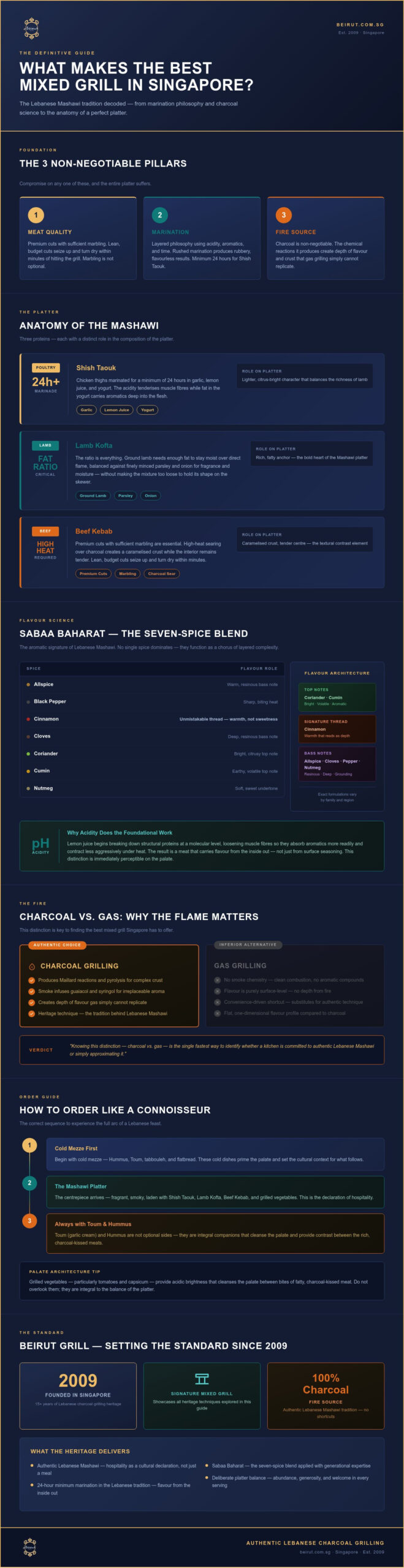
- Charcoal is non-negotiable: the chemical reactions it produces create a depth of flavour and crust that gas grilling simply cannot replicate, and knowing this distinction is key to finding the best mixed grill Singapore has to offer.
- Ordering like a connoisseur means understanding the sequence — cold mezze first, then the platter, always accompanied by Toum and Hummus — to experience the full arc of a Lebanese feast.
- Beirut Grill has been setting the standard for authentic Lebanese charcoal grilling since 2009, offering a signature Mixed Grill that showcases the heritage techniques explored throughout this guide.
What Defines the Best Mixed Grill in Singapore?
At its heart, a mixed grill is one of the oldest communal dining traditions in the world. In Lebanese culinary culture, the Mashawi, meaning “things grilled over fire,” represents far more than a cooking method. It’s a declaration of hospitality. When a platter arrives at the table laden with skewered meats, the implicit message is abundance, generosity, and welcome. Understanding this cultural weight is the first step toward recognising what separates a genuinely exceptional platter from a mediocre imitation.
Each pillar is non-negotiable. Compromise on any one of them, and the entire platter suffers.
The Essential Components of an Authentic Platter
Three proteins anchor every serious Lebanese mixed grill:
- Shish Taouk: Chicken thighs marinated for a minimum of 24 hours in a blend of garlic, lemon juice, and yogurt. The acidity tenderises the muscle fibres while the fat in the yogurt carries the aromatics deep into the flesh. Rushed marination produces rubbery, flavourless results.
- Lamb Kofta: The ratio here is everything. Ground lamb needs enough fat content to stay moist over direct flame, balanced against finely minced parsley and onion that provide fragrance and moisture without making the mixture too loose to hold its shape on the skewer.
- Beef Kebab: Premium cuts with sufficient marbling are essential. High-heat searing over charcoal creates a caramelised crust while the interior remains tender. Lean, budget cuts seize up and turn dry within minutes of hitting the grill.
Why “Mixed” Means More Than Just Variety
The genius of the Mashawi platter lies in its architecture. Poultry, lamb, and beef each carry different fat profiles and textures, and eating them together creates a complexity that no single protein can achieve alone. The richness of lamb kofta is cut by the lighter, citrus-bright character of Shish Taouk. Grilled vegetables, particularly tomatoes and capsicum, provide an acidic brightness that cleanses the palate between bites of fatty, charcoal-kissed meat.
This is why the best mixed grill Singapore diners seek isn’t simply about quantity. It’s about deliberate balance, a platter composed with the same care a chef applies to a single fine-dining plate, just expressed through fire, smoke, and the ancient language of Lebanese hospitality.
The Anatomy of Lebanese Grilling: Marination and Technique
Behind every platter that earns the title of best mixed grill Singapore has to offer, there’s a disciplined, almost scientific approach to preparation that begins long before the coals are lit. Lebanese grilling tradition isn’t improvised. It’s a system of layered decisions, each one compounding the last, where the chemistry of the marinade is as deliberate as the heat of the fire.
Acidity does the foundational work. Lemon juice and, in some preparations, a touch of vinegar, begin breaking down the structural proteins in meat at a molecular level, loosening the muscle fibres so they absorb aromatics more readily and contract less aggressively under heat. The result isn’t just tenderness; it’s a meat that carries its flavour from the inside out rather than relying solely on surface seasoning. This distinction is immediately perceptible on the palate.
Equally critical is the role of Sabaa Baharat, the legendary seven-spice blend that defines the aromatic signature of Lebanese Mashawi. While exact formulations vary by family and region, the blend typically draws from allspice, black pepper, cinnamon, cloves, coriander, cumin, and nutmeg. No single spice dominates. Instead, they function as a chorus, with warm, resinous bass notes from allspice and cloves supporting the brighter, more volatile top notes of coriander and cumin. The cinnamon thread running through it all is what gives Lebanese grilled meat its unmistakable character, a warmth that reads as depth rather than sweetness.
Temperature control is where many kitchens quietly fail. Chicken, lamb, and beef don’t share the same ideal cooking window. Chicken requires sustained, moderate heat to cook through without drying its surface. Lamb kofta benefits from higher initial heat to set the crust quickly, locking in the fat that keeps it moist. Beef kebab demands the most aggressive sear available, which is why meat quality and grading matters so profoundly here; well-marbled cuts withstand direct flame without seizing, while lean cuts tighten and toughen within seconds. Managing these three proteins simultaneously on a single charcoal grill is a genuine skill, not a convenience.
Resting the meat after cooking is the final, non-negotiable step. Cutting into a kebab immediately off the coals releases the juices that have been driven toward the centre by heat. A brief rest of three to five minutes allows those juices to redistribute throughout the muscle, ensuring every bite is as succulent as the first.
The Secret Behind Shish Taouk Succulence
Yogurt-based marinades outperform straight acid marinades for chicken because the lactic acid in yogurt works more gently, tenderising without turning the surface mushy. The fat content simultaneously carries fat-soluble aromatics, particularly paprika, garlic, and a measured whisper of cinnamon, deep into the flesh. Twenty-four hours of marination is the industry gold standard, the minimum window at which these flavours genuinely penetrate rather than simply coat the surface.
Crafting the Perfect Lamb Kofta
Hand-mincing or coarse-grinding lamb preserves a coarser, more irregular texture that grips the skewer and creates varied surface area for char to develop. Finely minced parsley and raw onion introduce moisture and cut through the natural gaminess of lamb, while a pinch of sumac adds a citrus-edged tartness that lifts the entire mixture. Fat content is structural, not indulgent; without sufficient fat distributed through the grind, the kofta desiccates over direct coals within minutes, losing both moisture and the silky mouthfeel that defines the dish at its best.
Understanding these techniques transforms how you evaluate any platter. If you’re ready to experience them executed with over fifteen years of heritage expertise, explore the Beirut Grill menu and see how tradition translates to the table.
Charcoal vs. Gas: Why the Flame Matters for Your Grill
The Maillard reaction is where the story begins. When proteins and sugars on the surface of meat are exposed to temperatures above 140°C, they undergo a cascade of chemical transformations that produce hundreds of distinct flavour and aroma compounds simultaneously. Charcoal reaches and sustains surface temperatures that gas burners, constrained by their design, simply cannot match with the same consistency. That temperature differential produces the deep, mahogany-coloured crust that distinguishes a premium platter from a pallid imitation.
The second distinction is arguably more profound. When fat drips from a skewer onto live charcoal, it vaporises instantly, producing aromatic smoke compounds, primarily guaiacol and syringol, that rise back into the meat and bind to its surface. This is the mechanism behind the smoky depth that no gas grill can replicate. Gas burners vaporise dripping fat too, but the resulting smoke carries fewer of these aromatic compounds and dissipates before it can meaningfully penetrate the protein. The difference isn’t subtle. It’s the difference between a platter that lingers in memory and one that’s forgotten by the time you reach the car park.
The Flavor Profile of Traditional Mashawi
Identifying a charcoal-grilled platter requires knowing what to look for. The crust should carry a distinct “char note,” a slightly bitter, deeply savoury edge that cuts through the richness of lamb fat and amplifies the citrus brightness of a Shish Taouk marinade. High charcoal heat also locks in moisture faster than gas, because the rapid surface sear creates a barrier before the interior juices have time to migrate outward. The sensory result is immediate: the aroma that hits you when a platter arrives at the table should carry woodsmoke, caramelised protein, and spice in equal measure. That layered fragrance is the hallmark of a serious grill kitchen, and it’s one of the clearest signals you’ve found the best mixed grill Singapore has to offer.
Why High-End Restaurants Stick to the Pit
Charcoal grilling is labour-intensive by nature. Coals must be prepared, managed, and replenished throughout service, and the heat zones across a charcoal pit are never uniform. That variability demands a skilled griller who reads the fire intuitively, adjusting the position of each skewer in real time to account for hot spots and cooling zones. It’s this human expertise, accumulated over years of practice, that gas grilling eliminates and, in doing so, diminishes.
Beirut Grill has maintained its commitment to traditional charcoal grilling since 2009, treating the pit not as an operational inconvenience but as the non-negotiable foundation of every platter that leaves the kitchen. That choice reflects a philosophy: authentic Lebanese Mashawi isn’t a product you can streamline without losing what makes it worth ordering in the first place.
This dedication to authentic methods is a hallmark of great grill houses worldwide. For those who want to see how these standards are applied to other cuisines, you can explore All You Can Eat and Premium Korean BBQ & Sushi Dining at Prime No. 7, a premier destination that mirrors this commitment to quality and tradition.
How to Order and Pair Your Mixed Grill Like a Connoisseur
The platter itself is only half the story. How you sequence the meal, what surrounds it on the table, and what you drink alongside it determines whether you experience a genuinely transcendent Lebanese feast or simply a good plate of grilled meat. Most diners skip straight to the main event. That’s the first mistake.
In Lebanese dining culture, the meal unfolds in deliberate stages. Cold mezze arrives first, not as a formality, but as a functional act of preparation. The acidity of a Fattoush salad, the richness of Hummus, and the smoky depth of Baba Ghanoush prime the palate before the charcoal-kissed proteins arrive. Eating them in sequence creates a sensory arc; eating them simultaneously collapses it.
Mezze Pairings That Elevate the Meat
Three mezze dishes earn their place at every serious Mashawi table:
- Hummus: Used not merely as a dip but as a creamy, tahini-rich base that tempers the char notes of grilled beef. Dragging a piece of Beef Kebab through a generous scoop of Hummus softens the intensity of the crust while the chickpea richness amplifies the spice profile beneath it.
- Fattoush: The toasted bread shards and sumac-dressed vegetables deliver a sharp, acidic crunch that cuts through lamb fat between bites, resetting the palate in a way that water simply can’t. It’s the most underestimated item on the table.
- Baba Ghanoush: Because it’s fire-roasted itself, Baba Ghanoush adds a secondary smoky register to the meal that deepens the overall charcoal character of the platter without competing with it.
Toum, the whipped garlic sauce, is non-negotiable alongside Shish Taouk. Its sharp, emulsified intensity amplifies the citrus brightness of the yogurt marinade and provides the kind of clean, punchy contrast that makes each subsequent bite feel as vivid as the first.
For carbohydrates, warm pita remains the traditional vehicle, ideal for wrapping kofta or scooping mezze. Saffron rice offers a more substantial base and its floral, slightly sweet character provides an interesting counterpoint to the savouriness of grilled lamb.
The Lebanese Wine Experience
Lebanon’s Bekaa Valley produces wines of genuine distinction, and their affinity for grilled meat isn’t coincidental. Bold reds from producers like Ksara or Château Musar carry enough tannin structure and dark fruit depth to stand alongside the richness of Lamb Kofta without being overwhelmed by it. Crisp, mineral-edged whites work beautifully with the lighter, citrus-forward profile of Shish Taouk, cutting through the yogurt marinade and refreshing the palate between bites.
Arak, the anise-flavoured spirit that’s been Lebanon’s national drink for centuries, plays a specific culinary role. Diluted with ice water and drunk slowly throughout the meal, its sharp anise character dissolves grilled fats on the palate in a way that wine cannot replicate. It’s the traditional companion to Mashawi for a reason.
Ordering with this kind of intentionality is what transforms a good dinner into the best mixed grill Singapore experience you’ll remember. View the full Beirut Grill menu to plan your sequence before you arrive.
Experience the Signature Mixed Grill at Beirut Grill
Since 2009, Beirut Grill has been doing something quietly remarkable in Singapore’s dining landscape: holding the line on authenticity when convenience would have been far easier. Over fifteen years of service, the kitchen’s commitment to traditional Lebanese Mashawi has never been renegotiated. The charcoal pit still burns. The marinades still demand their full twenty-four hours. The spice blends are still built on the same Sabaa Baharat foundations that Lebanese grill masters have trusted for generations.
That longevity isn’t incidental. It’s the product of a deliberate philosophy: that the best mixed grill Singapore has to offer cannot be assembled from shortcuts, and that diners who understand the difference will always return to the kitchen that refuses to take them.
Our Masterpiece: The Beirut Mixed Grill Platter
The signature Mixed Grill brings together three anchoring proteins: Shish Taouk, Lamb Kofta, and Beef Kebab, each prepared according to the heritage techniques detailed throughout this guide. Yogurt-marinated chicken thighs arrive with that characteristic golden char. The Lamb Kofta carries the silky, fat-rich mouthfeel that only a properly balanced grind can produce. The Beef Kebab delivers the deep, mahogany crust that only live charcoal can create.
For those who want to push the feast further, the Beirut Lamb Chops represent the natural elevation. Grilled over charcoal to a precise blush of pink, they bring an additional register of richness and depth to the platter that transforms a generous meal into something genuinely celebratory.
Every item on the menu is strictly pork-free, and ingredient sourcing reflects the same premium standard the kitchen has maintained since its founding. There are no concessions made for cost at the expense of quality.
Plan Your Lebanese Culinary Journey
Beirut Grill’s atmosphere is designed to slow the evening down. The setting creates a sophisticated retreat from the pace of the city, the kind of space where a corporate dinner unfolds with ease and a national celebration finds its natural home. The hospitality is immersive in the truest sense: it carries the warmth and generosity that define Lebanese culture at the table.
Complete the arc of the meal properly. After the platter, Baklava arrives with its honey-drenched layers of pastry and nut, a counterpoint of sweetness to the savoury intensity of the grill. A glass of Moroccan Mint Tea closes the evening with fragrant, palate-cleansing clarity.
This is the full Lebanese feast, executed with fifteen years of expertise behind every skewer. Reserve your table at Beirut Grill today and experience the tradition for yourself.
Your Table at Singapore’s Finest Lebanese Grill Awaits
The search for the best mixed grill Singapore has to offer ends where authenticity begins: with live charcoal, twenty-four-hour marinades, and a kitchen that hasn’t compromised its standards since 2009. You now know what separates a genuinely exceptional Mashawi platter from an ordinary one, the chemistry of Sabaa Baharat, the irreplaceable character of charcoal smoke, and the deliberate sequencing that transforms a meal into a feast.
Beirut Grill brings all of it together. A strictly pork-free menu built on premium ingredients, a signature Mixed Grill executed with fifteen years of heritage expertise, and a Lebanese wine list curated to complement every cut on the platter. These aren’t selling points; they’re the natural result of a kitchen that refuses to cut corners.
The coals are already burning. The only thing missing is you.
Reserve your table at Beirut Grill today and discover what an authentic Lebanese Mashawi experience truly tastes like.
Frequently Asked Questions About the Best Mixed Grill in Singapore
What is typically included in a Mixed Grill platter in Singapore?
An authentic Lebanese Mixed Grill platter centres on three proteins: Shish Taouk (yogurt-marinated chicken), Lamb Kofta (spiced ground lamb on skewers), and Beef Kebab. Grilled vegetables such as tomatoes and capsicum typically accompany the meats, alongside warm pita bread and dipping sauces like Toum and Hummus. The combination is deliberate, balancing different fat profiles and textures rather than simply offering variety for its own sake.
Is the Mixed Grill at Beirut Grill halal-friendly?
Beirut Grill maintains a strictly pork-free menu across all its offerings, including the signature Mixed Grill. Diners seeking pork-free Lebanese cuisine will find the entire menu aligned with that requirement. For specific halal certification queries, it’s always advisable to contact the restaurant directly before your visit to confirm the most current information.
What is the difference between Shish Taouk and a standard chicken kebab?
The distinction lies almost entirely in the marination. Shish Taouk uses a yogurt-based marinade where lactic acid gently tenderises the chicken while fat carries aromatics, including garlic, lemon, paprika, and a whisper of cinnamon, deep into the flesh over a minimum of 24 hours. A standard chicken kebab typically relies on a thinner, oil-based seasoning applied shortly before cooking, which coats the surface without penetrating the muscle. The result on the palate is fundamentally different.
Which mezze dishes pair best with grilled lamb and beef?
Baba Ghanoush is the natural companion to grilled lamb because its fire-roasted smokiness deepens the charcoal character of the meat rather than competing with it. Hummus works brilliantly alongside Beef Kebab, its creamy tahini richness tempering the intensity of a charred crust. Fattoush, with its sumac-dressed vegetables and toasted bread, provides the sharp acidic crunch that cuts through lamb fat between bites, resetting the palate in a way that no other dish on the table can replicate.
Why is charcoal grilling better than gas for Middle Eastern meats?
Charcoal grilling produces two things gas simply can’t match: higher, more consistent surface temperatures that drive the Maillard reaction deeper, creating a genuinely caramelised crust, and aromatic smoke compounds generated when fat drips onto live coals. Those compounds bind to the meat’s surface and create the layered, smoky depth that defines an authentic Mashawi platter. Gas burners vaporise dripping fat too, but the resulting smoke carries far fewer of these aromatic compounds. The difference is immediate and unmistakable on the palate.
Can a Mixed Grill platter be shared among a large group?
Absolutely, and in Lebanese dining culture, that’s precisely the intention. The Mashawi tradition is built around communal generosity, with the platter functioning as a centrepiece that anchors the table. For larger groups, ordering multiple platters alongside a spread of cold mezze dishes, such as Hummus, Fattoush, and Moutabal, creates the kind of abundant, convivial feast that the tradition was designed to produce. Beirut Grill’s setting is well-suited to group dining, from corporate dinners to celebratory gatherings.
What beverage best complements a Lebanese meat feast?
Arak, Lebanon’s anise-flavoured spirit, is the traditional companion to Mashawi for a functional reason: diluted with ice water, its sharp anise character dissolves grilled fats on the palate between bites in a way wine can’t replicate. For those preferring wine, bold reds with sufficient tannin structure stand up to the richness of Lamb Kofta, while crisp whites complement the citrus-forward brightness of Shish Taouk. Beirut Grill’s Lebanese wine list is curated specifically to work alongside the platter’s varied protein profiles.
How long does it take to prepare an authentic charcoal-grilled platter?
The preparation timeline begins long before the coals are lit. Shish Taouk requires a minimum of 24 hours of marination for the yogurt and aromatics to genuinely penetrate the chicken rather than simply coat it. Kofta and kebab preparations also involve advance seasoning and resting. Once service begins, the live charcoal itself needs time to reach the correct temperature before any meat goes on the grill. This is why finding the best mixed grill Singapore has to offer means finding a kitchen that respects that timeline rather than compressing it.