
A true Lebanese feast isn’t just a meal. It’s a choreographed ritual where the table becomes a landscape of shared history and sensory indulgence. When you’re tasked with organizing lebanese food for large groups, the pressure to balance abundance with elegance can feel overwhelming. You might worry about the delicate dance of ordering enough Mixed Grill to satisfy the meat lovers while ensuring your vegetarian guests feel equally celebrated with vibrant plates of Tabbouleh and Fattoush. It’s common to feel a bit of trepidation about managing diverse dietary needs or mastering the unspoken etiquette of the communal Middle Eastern table.
We’re here to ensure your next gathering is a seamless, impressive event that transports your guests to the heart of Beirut. You’ll discover how to curate a sophisticated, communal Lebanese dining experience that satisfies diverse palates and celebrates the art of the shared table. This guide explores everything from balancing signature skewers with silk-smooth Hummus and Moutabal to selecting the perfect bottle of Arak or a refined red from the Bekaa Valley to elevate the evening.
Key Takeaways
- Understand the foundational philosophy of ‘Karam’ to transform a simple dinner into a generous, ice-breaking celebration of shared heritage.
- Apply the “Golden Ratio” of cold and hot mezze to curate a balanced spread of lebanese food for large groups that honors both vegetarian and meat-loving guests.
- Master the presentation of the Mixed Grill centerpiece, ensuring your Shish Taouk and Lamb Kofta are served with the timing and flair of a seasoned host.
- Elevate the atmosphere with sophisticated beverage pairings, utilizing Lebanon’s prestigious winemaking history to offer your guests a truly immersive cultural journey.
- Simplify your hosting duties through a professional consultation, ensuring every detail from group size to dietary requirements is managed with effortless precision.
The Philosophy of the Lebanese Feast: Why It Is Perfect for Large Groups
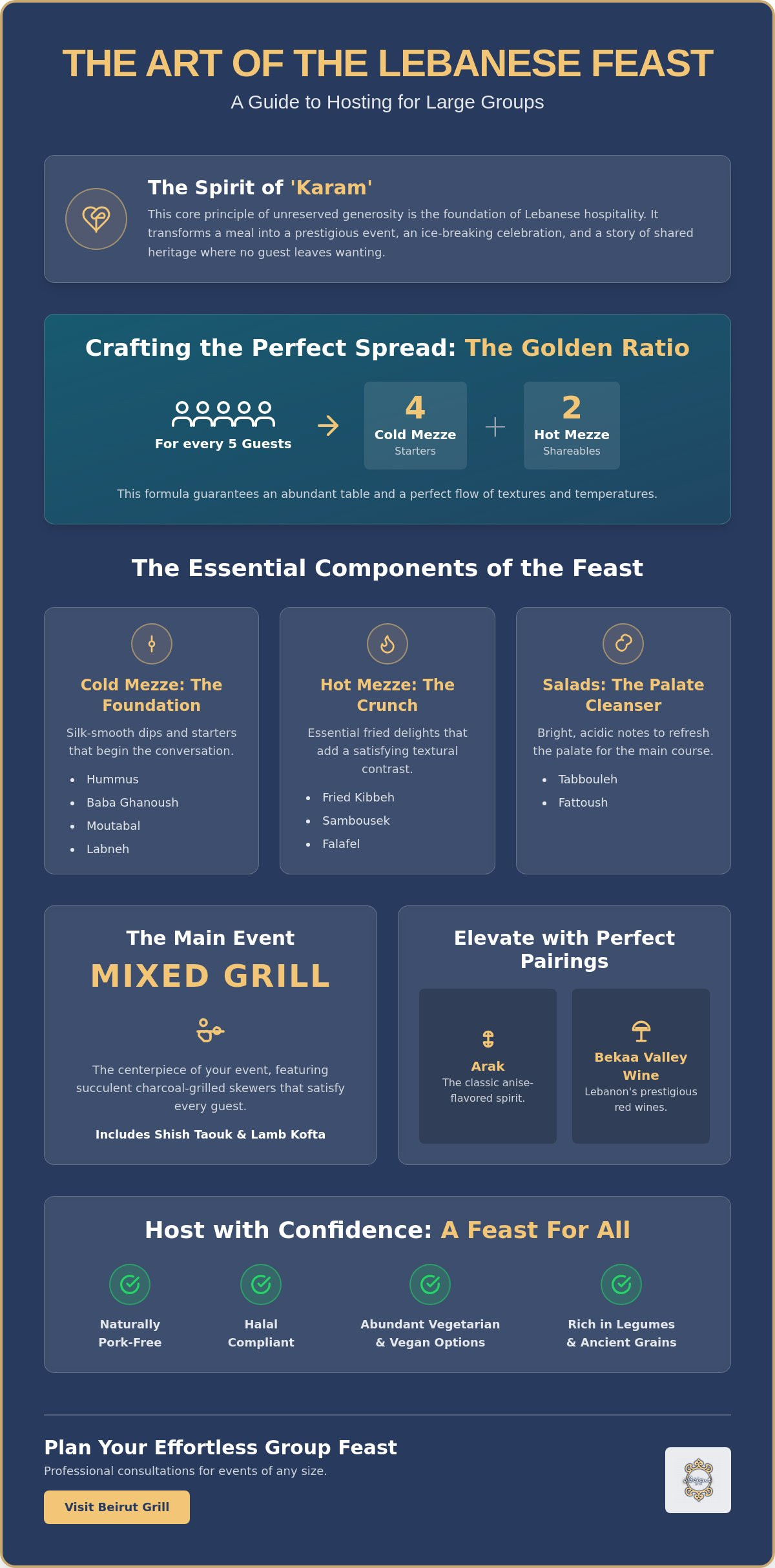
To understand the allure of a Lebanese feast, one must first grasp the concept of Karam. This ancient principle of unreserved generosity forms the bedrock of our hospitality. It’s an ethos that dictates the table should never look empty and no guest should ever leave wanting. When organizing lebanese food for large groups, this philosophy transforms a simple meal into a prestigious event. Unlike the sterile nature of traditional catering, a heritage-rooted feast invites guests into a story that spans centuries. It’s a celebration of abundance that rewards the visitor’s curiosity through a sensory-rich environment where every dish tells a tale of regional pride.
The communal nature of this cuisine naturally breaks the ice. There is an inherent warmth in the way dishes are presented, designed to be explored collectively rather than consumed in isolation. This creates a rhythmic, storytelling quality to the evening. Guests aren’t just eating; they’re participating in a shared ritual that has anchored Levantine social life for generations. By choosing this path, you position yourself as a refined host who values authenticity and the deep-rooted connections that only a truly shared table can foster. To explore other venues that prioritize this same vibrant social energy, you can discover Kiss My Brass, a destination celebrated for its lively atmosphere and live music.
Communal Dining as a Social Catalyst
The Mezze spread acts as a vibrant, edible landscape that naturally encourages conversation. By its very design, sharing small plates removes the rigid boundaries of individual ordering. There’s a subtle psychological shift when guests begin passing bowls of silk-smooth Hummus or plates of Warak Enab. This physical movement creates a choreographed dance of interaction, forcing a departure from isolated dining into a collective culinary journey. It breaks the ice more effectively than any formal introduction could. You’ll find that the simple act of reaching for the same plate of Fried Kibbeh or Sambousek sparks immediate, effortless dialogue across the table.
Dietary Inclusivity Without Compromise
Rooted in the sun-drenched bounty of the Levant, Lebanese cuisine relies heavily on vibrant vegetables, protein-rich legumes, and ancient grains. This makes it an exceptionally inclusive choice for diverse crowds. Because our kitchen is naturally pork-free and emphasizes halal-compliant preparations, you can host with absolute confidence. From the crisp crunch of Falafel to the smoky depths of Baba Ghanoush, the menu offers abundance for vegetarians and meat-eaters alike. In 2026, the inherent adaptability of Lebanese flavors ensures that every guest, regardless of their specific dietary restrictions, finds themselves presented with a feast that feels curated specifically for them rather than as an afterthought. It’s the most versatile choice for managing the complex dietary needs of modern groups without sacrificing a drop of culinary sophistication.
Designing the Mezze Spread: A Framework for Large Groups
To curate a truly authentic experience when serving lebanese food for large groups, one must master the architectural balance of the table. We often recommend the Golden Ratio. For every five guests, aim for a selection of four cold mezze and two hot mezze. This formula ensures the table feels abundant from the moment guests are seated while allowing the hot dishes to arrive as a sensory crescendo. This structured approach prevents the common fear of under-ordering and guarantees a steady flow of textures and temperatures that keep the palate engaged throughout the evening.
The foundation of any prestigious spread lies in the contrast between the velvety and the crisp. While cold dips provide a cooling base, the “crunch factor” is essential for a satisfying meal. Incorporating Fried Kibbeh and Falafel adds a necessary rhythmic break to the meal. These textures are best balanced by the bright, acidic notes of a well-crafted Tabbouleh or the sumac-dusted crunch of Fattoush. These salads serve as a vital palate cleanser, preparing your guests for the heavier, charcoal-grilled meats that typically follow.
Cold Mezze: The Conversation Starters
The journey begins with the foundational “Big Three”: Hummus, Baba Ghanoush, and Moutabal. These silk-smooth preparations are non-negotiable for a shared table. For those seeking a deeper cultural immersion, we recommend exploring the smoky profile of Moutabal alongside the cooling, strained tang of Labneh. This Guide to Traditional Lebanese Cuisine highlights how these starters set the emotional tone for the feast. You can find more detailed flavor profiles in our guide to Mediterranean food in Singapore, which explores the heritage behind these iconic recipes.
Hot Mezze: Building Momentum
As the initial conversation flows, the arrival of hot mezze builds a new layer of excitement. Grilled Halloumi remains a superlative choice for large groups; its high-protein profile and salty finish make it a universal favorite for vegetarians and meat-eaters alike. For effortless group sharing, Spinach Fatayer and Sambousek offer perfect, bite-sized portions that are easy to distribute across a long table. We often suggest adding Batata Harra to the mix. These spicy, aromatic cubed potatoes provide a warm, garlic-infused kick that bridges the gap between the lighter starters and the main course. If you are ready to begin planning your own event, you can explore our full menu of authentic Lebanese offerings to find the perfect combination for your guests.
The Mixed Grill Masterpiece: The Centerpiece of Your Event
As the initial excitement of the mezze settles, the true heart of the feast arrives. The Mixed Grill is a grand assembly of charcoal-grilled mastery, acting as the definitive anchor when serving lebanese food for large groups. This isn’t just about volume; it’s about a choreographed presentation of diverse proteins that caters to every preference at the table. By centralizing the main course on grand, shared platters, you eliminate the frantic energy of individual orders and replace it with a sense of collective indulgence.
This approach is the most efficient way to serve high-quality protein to a large gathering without sacrificing the premium nature of the ingredients. A well-constructed platter allows guests to explore different textures and flavor profiles at their own pace. It transforms the meal into a curated exploration of the Levant, where the smoky allure of the grill serves as a recurring signature of the brand’s identity and heritage.
The secret to this experience is the traditional use of charcoal. Unlike modern gas grills, the intense, dry heat of charcoal creates a specific sensory allure. It produces a delicate char that locks in natural juices while imparting a complex, smoky depth. This evocative aroma acts as a social signal, grounding the event in a specific geographic and culinary context that guests will remember long after the final bite.
The Signature Meats: Shish Taouk and Lamb Kofta
Within this grand assembly, the Shish Taouk stands out for its remarkable succulence. Marinated for hours in a refined blend of citrus and garlic, the chicken skewers emerge from the flames tender and bright. Complementing this is the Lamb Kofta, which represents the art of spice blending. Minced lamb is combined with fresh parsley and onions, creating a rich, aromatic profile that is both specialized and accessible. Alongside the Beef Kebab, these meats form the foundational anatomy of the traditional Lebanese platter. The unmistakable aroma and depth of charcoal-grilled meats remain the definitive hallmark of an authentic Lebanese restaurant in 2026.
Seafood and Premium Cuts
To elevate the event into a truly prestigious destination experience, consider incorporating Beirut Lamb Chops. These premium cuts are celebrated for their tenderness and offer a high-status marker for any host who wishes to reward their guests’ curiosity. For those seeking a lighter alternative, the addition of Grilled Prawns or a Grilled Fish Fillet provides a sophisticated variety. These seafood options, kissed by the same charcoal flames, offer a delicate counterpoint to the richer meats. When paired with the vibrant salads and dips discussed earlier, these premium cuts ensure the table remains a landscape of diverse, indulgent choices that satisfy every palate. This focus on diverse, indulgent choices is what defines a truly world-class dining destination; for those seeking other specialized culinary experiences like kosher Japanese-fusion, G7 Rooftop offers a premier menu that captures this same spirit of quality and inclusivity.
Elevating the Experience with Lebanese Wine and Spirits
To host an authentic feast is to curate more than just a menu; it is to offer a liquid history that spans five millennia. Lebanon’s 5,000-year winemaking heritage provides a sophisticated talking point that immediately elevates the evening. When you’re selecting beverages for lebanese food for large groups, the choice of wine is paramount. The bold, structured profiles of Lebanese reds are designed to stand up to the intense, smoky flavors of charcoal-grilled meats while providing a refreshing counterpoint to the bright acidity of Tabbouleh and Fattoush.
For a truly traditional group toast, the ritual of Arak is essential. Often called “Lion’s Milk,” this anise-flavored spirit undergoes a captivating transformation when water is added, turning from crystal clear to a cloudy, milky white. Serving Arak is a celebratory gesture that signals a deep respect for heritage. It’s a specialized experience that rewards the visitor’s curiosity, offering a potent, refreshing palate cleanser that bridges the gap between the savory mezze and the grand main course.
The Sophistication of Lebanese Wine
The unique terroir of the Bekaa Valley, with its high altitude and sun-drenched slopes, produces wines of exceptional character. High-status labels from prestigious producers like Chateau Musar, Chateau Ksara, or Chateau Kefraya serve as hallmarks of credibility for any host. A robust Lebanese Red Wine, often a blend of Cinsault, Cabernet Sauvignon, and Syrah, is the perfect companion for the Mixed Grill. The tannins and dark fruit notes harmonize beautifully with the spiced Lamb Kofta and succulent Shish Taouk. You can explore more about the intricate beverage culture of the Levant in our Middle Eastern food in Singapore guide, which delves into the nuances of regional pairings.
Traditional Tea and Coffee Service
As the feast draws to a close, the communication rhythm slows down, encouraging guests to linger over traditional service. The theatricality of Moroccan Mint Tea, poured from a height to create a delicate foam, provides a visual spectacle for large groups. This is followed by the arrival of Lebanese Coffee, a thick, aromatic brew that serves as the final, bold note of the evening. These beverages are the essential partners for our sweet offerings; the honeyed layers of Baklava and the warm, cheese-filled indulgence of Kunefe require the bitter, herbal contrast that only traditional tea and coffee can provide. To ensure your guests enjoy this full sensory journey, reserve your table at Beirut Grill and let us curate a beverage experience that honors our ancient roots.
Planning Your Group Feast at Beirut Grill
Since our founding in 2009, Beirut Grill has stood as a bastion of authentic hospitality, offering a prestigious destination for those seeking to host an unforgettable event. When you’re arranging lebanese food for large groups, the process should be as seamless as the dining experience itself. Our approach begins with a dedicated consultation where we address the nuances of your group size and any specific dietary requirements. Because our kitchen maintains a strict pork-free commitment, you can host with the absolute certainty that your menu is inclusive for all guests, particularly for national or corporate events with diverse cultural backgrounds.
The journey continues with the selection of your culinary framework. You might choose one of our curated set menus, designed to showcase a balanced progression of flavors, or opt for a customized Mezze spread that reflects your guests’ specific curiosities. Finally, we coordinate the beverage pairings and the celebratory dessert service. Whether you’re pouring a final round of Arak or preparing for the theatrical arrival of Lebanese Coffee, every detail is managed with professional authority and warm, inviting hospitality. This progression mirrors the actual experience of a guest arriving at and enjoying a meal, ensuring a logical and immersive flow of information and flavor.
Customizing Your Group Menu
Achieving a sophisticated balance requires a mix of our most iconic offerings. While the Mixed Grill often serves as the grand centerpiece, incorporating lighter, protein-rich options like Falafel ensures a rhythmic variety that satisfies every palate. For guests following a meat-free path, the inclusion of a specialized Vegetarian Kebab allows them to participate fully in the charcoal-grilled experience without compromise. We often suggest planning for the “Kunefe finale” early in the consultation. This warm, cheese-filled pastry, soaked in aromatic syrup, remains a superlative group favorite that provides a decadent conclusion to the evening’s narrative.
The Beirut Grill Experience
Stepping into our dining room transports your group from the urban bustle directly to the heart of the Levant. Our long-standing presence in the industry, anchored by our 2009 founding, serves as a hallmark of credibility and seasoned expertise. We don’t merely provide a meal; we curate a cultural journey through sensory-rich language, imported ingredients, and an atmosphere of pride and indulgence. By anchoring your event to our specific physical location, you provide your guests with a sense of place and heritage that standard catering cannot replicate. Book your next large group feast at Beirut Grill to experience the art of the shared table in its most refined form.
Crafting Your Legacy of Hospitality
Hosting a feast of this magnitude is an opportunity to create a lasting legacy of hospitality. By mastering the delicate balance of the cold and hot mezze spread and anchoring the table with the smoky mastery of the Mixed Grill, you ensure every guest feels truly celebrated. When selecting lebanese food for large groups, the key lies in an inclusive approach that respects diverse dietary needs without compromising on the indulgent, sensory-rich quality of the cuisine. It’s about more than sustenance; it’s about the rhythmic, storytelling quality of a shared table that transports your guests to the heart of the Levant.
Since 2009, we’ve dedicated ourselves to this authentic ritual, providing a prestigious destination where cultural journey and culinary excellence meet. Our strictly pork-free menu ensures seamless, inclusive group dining for every guest, regardless of their background. To elevate the evening, we offer a curated selection of prestigious Lebanese wines and Arak that functions as a high-status marker for your event. We invite you to step into our heritage-rooted atmosphere and let us handle the intricate details of your next feast. Plan Your Authentic Lebanese Group Feast at Beirut Grill and prepare for an evening of unparalleled indulgence.
Frequently Asked Questions
How many mezze dishes should I order for a group of 10?
We typically recommend selecting eight to ten varieties of mezze for a group of ten guests. This creates an abundant landscape of flavors that allows everyone to sample a diverse range of textures without over-crowding the table. By balancing five cold starters like Hummus and Moutabal with four hot options such as Fried Kibbeh and Sambousek, you ensure a rhythmic flow that rewards your guests’ curiosity throughout the first course.
Is Lebanese food suitable for vegetarians in a large group?
Lebanese cuisine is exceptionally well-suited for vegetarians because it’s deeply rooted in the use of fresh legumes, grains, and seasonal vegetables. When you’re arranging lebanese food for large groups, you can easily create a prestigious spread where meat-free guests feel fully celebrated. Dishes like Falafel, Spinach Fatayer, and Grilled Halloumi provide high-protein, indulgent alternatives that are just as central to the feast as our charcoal-grilled meats.
What is the difference between Shish Taouk and Lamb Kofta?
The primary difference lies in the cut of meat and the specific spice profile used. Shish Taouk consists of succulent cubes of chicken breast that have been marinated in a refined blend of garlic and citrus before being grilled. Lamb Kofta is a more specialized preparation where minced lamb is combined with fresh parsley, onions, and aromatic regional spices. Both are hallmarks of our charcoal-grilled mastery, offering distinct yet complementary sensory experiences.
Do I need to order individual mains or a Mixed Grill for the whole table?
The Mixed Grill is the superlative choice for communal dining as it acts as a grand, shared centerpiece. Ordering individual mains can lead to a fragmented experience; however, a shared platter encourages the passing of plates and collective indulgence. This approach is not only more efficient for the kitchen but also creates a more atmospheric and inclusive environment where guests can sample Beef Kebab, Shish Taouk, and Lamb Kofta at their own pace.
What are the best Lebanese wines to pair with grilled meats?
Robust red wines from the Bekaa Valley are the most sophisticated choice for pairing with our charcoal-grilled selections. Prestigious labels that utilize Syrah or Cabernet Sauvignon grapes offer the structured tannins and dark fruit notes needed to harmonize with the smoky depth of the grill. These high-end labels serve as a hallmark of credibility for any host, elevating the meal into a truly prestigious cultural journey.
Is the menu at Beirut Grill suitable for those requiring pork-free options?
Our entire kitchen maintains a strict pork-free commitment to ensure our hospitality is inclusive for all guests. Since our founding in 2009, we’ve remained deeply rooted in authentic Lebanese traditions, which naturally exclude pork products. This makes our restaurant a reliable destination for corporate gatherings and national groups seeking a specialized dining experience that respects diverse cultural and religious requirements.
Can you accommodate dietary restrictions like gluten-free or nut allergies in group settings?
We’re proud to accommodate specific dietary needs through a professional consultation prior to your event. Many of our foundational dishes, including our silk-smooth Hummus and charcoal-grilled meats, are naturally gluten-free. While nuts are a traditional element in Levantine sweets, our knowledgeable hosts can guide you in selecting a menu that ensures every guest enjoys a safe and indulgent feast without compromise.
What is the traditional way to end a Lebanese group meal?
A traditional Lebanese feast concludes with a deliberate slowing of the communication rhythm, centered around coffee and sweets. We recommend the “Kunefe finale” or a platter of honeyed Baklava to provide a decadent, sweet conclusion. This is traditionally served alongside a thick, aromatic Lebanese Coffee or the theatrical service of Moroccan Mint Tea, encouraging your guests to linger and savor the final notes of the evening.