
What if the secret to the world’s most coveted hummus isn’t found in a high-speed blender, but in the patient, centuries-old traditions of a Levantine kitchen? Most of us have encountered the disappointment of a gritty, “gloopy” dip or one where a sharp, raw garlic bite masks the delicate earthiness of the chickpeas. It’s a common frustration for those seeking that elusive, cloud-like texture found in the prestigious dining rooms of the Middle East. We understand that achieving this balance of flavor and form is an art that requires both specialized knowledge and the finest imported ingredients.
In this guide, we’ll peel back the layers of this ancient craft to reveal how you can identify truly world-class, restaurant-quality results. Since our founding in 2009, we’ve served as a curator of authentic culture in Singapore, and today we’re sharing the professional techniques that define our signature style. You’ll discover the cultural heritage of this iconic mezze, the science behind achieving perfect silkiness, and the secrets to selecting a premium tahini brand. We will also explore how to serve this cornerstone of the table as part of a complete meal, pairing it with charcoal-grilled delicacies like Lamb Kofta or Shish Taouk for a truly indulgent experience.
Key Takeaways
- Understand the historical significance of hummus bi tahini as the essential foundation of Lebanese mezze and its deep roots in Levantine culture.
- Learn why selecting specific small, skinless chickpeas and mastering the “Golden Ratio” of premium tahini are non-negotiable steps for achieving professional results.
- Discover the transformative power of the baking soda technique and why overcooking your pulses is the secret to a grit-free finish.
- Master the art of traditional Lebanese presentation, including the ideal serving temperature and the use of sensory garnishes like sumac and pine nuts.
- Uncover how a patient 24-hour preparation cycle ensures the superior silkiness that has distinguished our authentic offerings since 2009.
The Heritage of Authentic Hummus: More Than Just a Chickpea Dip
To understand the true soul of Levantine cuisine, one must first respect the chickpea. Known formally as hummus bi tahini, which translates from Arabic as “chickpeas with tahini,” this dish is far more than a simple puree. Its origins are woven into the historical fabric of the Levant, where it has served as a nutritional cornerstone for centuries. The Heritage of Authentic Hummus reveals a legacy spanning millennia, evolving from a humble ancient staple into a sophisticated culinary craft. While supermarket shelves are now crowded with industrial variations laden with preservatives, the artisanal version remains a pure expression of heritage. It relies on the marriage of premium chickpeas, rich sesame paste, and the bright acidity of fresh lemon.
The Cultural Significance of the Mezze Table
In Lebanese culture, the mezze table is a theatre of hospitality, and hummus is its undisputed protagonist. It’s often called the “mother” of all cold mezze, acting as the foundational anchor for a spread of Tabbouleh, Labneh, and Warak Enab. There’s a specific ritual to the “first dip,” where the communal tearing of warm bread signifies the start of a shared journey. This act of dining facilitates deep social bonding, turning a simple meal into a collective celebration. Authenticity isn’t just about flavor; it’s about preserving the integrity of a 2000-year-old pulse that has nourished generations. When you taste a version crafted with patience, you aren’t just eating a dip; you’re participating in a living history.
The Global Journey to Singapore’s Dining Scene
The allure of the Mediterranean diet has transformed how diners in Singapore approach their wellness. As health-conscious individuals seek out protein-rich, plant-based alternatives, the demand for authentic Levantine flavors has surged across the nation. Local palates have become increasingly sophisticated, moving away from the gritty, processed spreads found in plastic tubs toward heritage-driven recipes. Since 2009, we’ve seen a shift where guests prioritize the sensory experience of premium imported ingredients over convenience. This evolution reflects a broader desire for culinary transparency and a return to traditional methods that reward the curious diner. Whether paired with our signature Shish Taouk or enjoyed as part of a vegetarian feast, the dish continues to bridge the gap between ancient tradition and modern vitality.
The Anatomy of Perfection: Essential Ingredients for Restaurant-Quality Hummus
Creating a masterpiece begins with the raw materials. In our kitchen, we don’t view the selection of components as a simple checklist, but as a curation of excellence. While home cooks often reach for convenient canned varieties, true artisans understand that the foundation of world-class hummus lies in the specific variety of chickpea used. Small, dried chickpeas, particularly those known for their thin skins and high starch content, are essential. When these pulses are soaked and prepared correctly, they provide the structural integrity required for a truly velvety finish. Understanding these Essential Ingredients for Restaurant-Quality Hummus is the first step toward moving beyond a simple bean dip and into the world of fine Levantine dining.
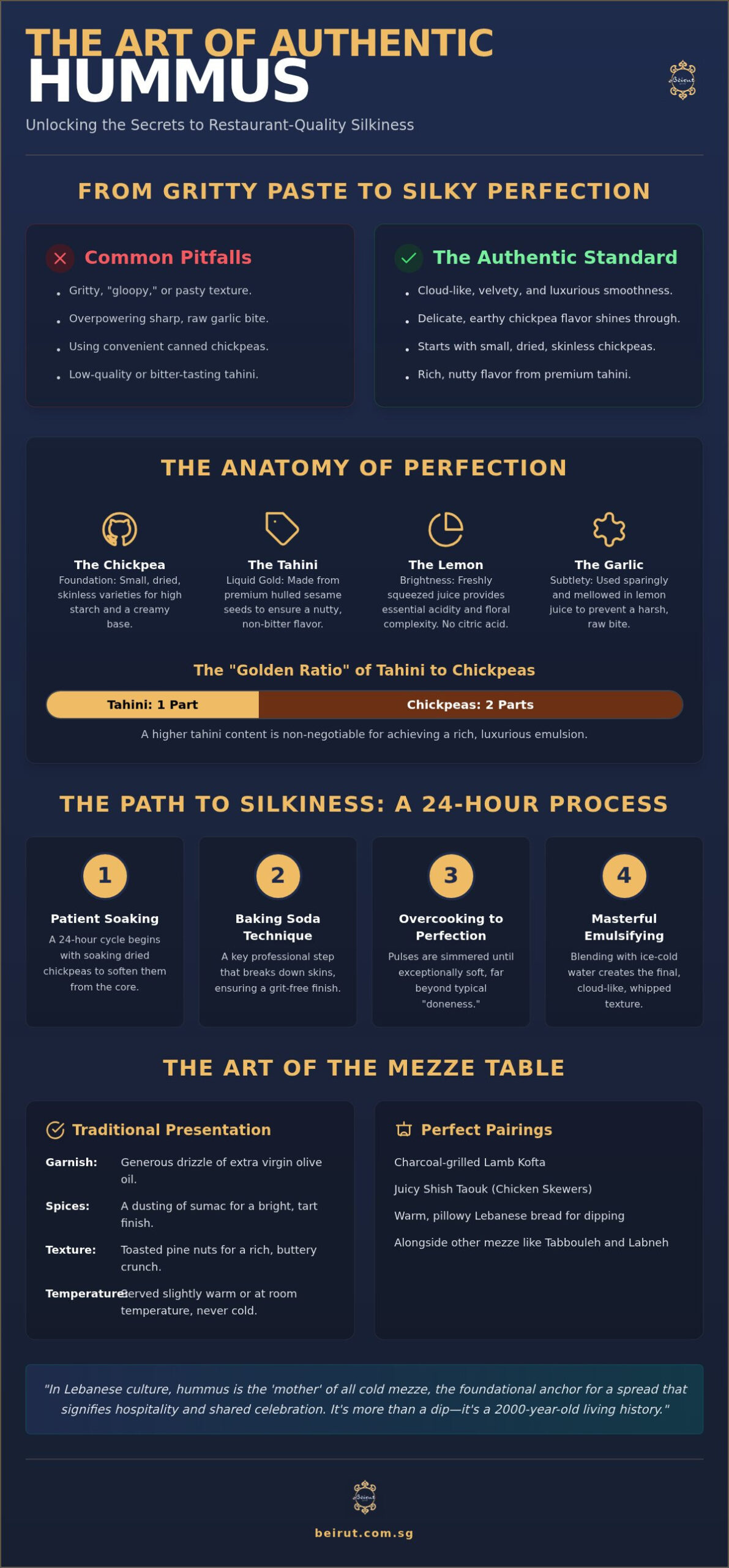
Balance is the ultimate goal. The “Golden Ratio” of tahini to chickpeas is what separates a gritty spread from a luxurious emulsion. In high-end preparations, the tahini content is significantly higher than in industrial versions, sometimes reaching a one-to-two ratio. This richness must be countered by the sharp, bright acidity of fresh-squeezed lemon juice. We avoid citric acid entirely; it lacks the floral complexity that fresh citrus provides. Then, there’s the garlic paradox. To avoid the aggressive, bitter “bite” that often ruins homemade versions, we use garlic sparingly and often mellow it by macerating it in lemon juice before blending. This technique ensures the garlic whispers its presence rather than shouting over the delicate nuttiness of the sesame.
Selecting the Right Tahini
Tahini is the “liquid gold” that defines the character of the dish. We prioritize tahini made from hulled sesame seeds, as the hulls introduce a bitterness and texture that disrupt the desired silkiness. A premium tahini should have a light, toasted-beige hue and a pourable, almost fluid consistency. If it’s too thick or smells of old oil, it won’t ever emulsify properly. High-quality sesame paste has a sweet, nutty aroma that should transport you to the sun-drenched fields where the seeds were harvested.
Water and Temperature: The Hidden Ingredients
The most guarded secret in professional kitchens is the use of ice water during the final blending stage. Adding a few splashes of near-freezing water causes the fats in the tahini to emulsify rapidly, creating a light, airy, and almost fluffy texture. This temperature control is vital for “swoopability,” ensuring the spread holds its shape on the plate while remaining soft to the touch. You might be tempted to blend olive oil into the mix, but we advise against it. High-speed blades can cause olive oil to oxidize and turn bitter. Instead, we reserve our finest extra-virgin oils for a generous garnish at the end. To experience this level of precision firsthand, we invite you to explore our menu and taste the difference that artisanal care makes.
The Secret Techniques for Silkiness: Peeling, Simmering, and Emulsifying
The journey to a truly world-class plate begins long before the first guest arrives. While the origin of hummus can be traced back to 13th-century culinary manuscripts, the modern pursuit of silkiness has become a technical obsession. At Beirut Grill, we’ve refined a 24-hour preparation cycle since 2009 to ensure every serving meets our prestigious standards. The first secret lies in the “Baking Soda Trick.” Adding a pinch of alkaline baking soda to the boiling water raises the pH level. This chemically breaks down the pectin in the chickpea skins, allowing them to soften to a near-liquid state.
Patience is the second ingredient. We practice “simmering to oblivion,” where the chickpeas are cooked well beyond the point of being tender. They must be so soft they collapse under the slightest pressure. This overcooking is the only way to guarantee a grit-free finish that mimics the elegance of a fine mousse. Once cooked, the emulsification process begins. Instead of tossing everything into a bowl at once, we create a “Tahini Cream” first. By whipping the tahini with lemon juice and a splash of water before adding the pulses, we create a stable, airy base that prevents the final mixture from feeling heavy or “gloopy.”
To Peel or Not to Peel?
Manual peeling is a romantic notion, but it’s often impractical for high-volume, professional kitchens. While individual peeling ensures zero skin remains, the baking soda boil method provides a more efficient path to the same luxurious result. By effectively dissolving the skins during the simmer, we achieve a superior silkiness without the labor-intensive handwork. Simmering the beans until they are literally falling apart is the definitive “over-boil” method that stands as the standard for restaurant-quality texture.
Achieving the “Cloud-Like” Fluffiness
The choice of equipment is vital. While a traditional food processor is suitable for rustic textures, a high-speed blender is required for the aerodynamic fluffiness we demand. During the blending phase, we introduce ice cubes one by one. This sudden drop in temperature shocks the fats in the tahini, forcing them into a stable, white emulsion that traps tiny air bubbles. You’ll know your hummus has reached the perfect state when the surface takes on a glossy, satin sheen and forms soft, pillowy peaks. Finally, we let the mixture rest in the fridge for 24 hours. This allows the flavors to settle and the texture to firm up, rewarding the visitor’s curiosity with a truly indulgent experience.
Beyond the Dip: How to Serve Hummus in a Traditional Lebanese Mezze
Presentation is the final movement in the symphony of Levantine dining. To simply place a bowl of hummus on the table is to ignore the rich visual and textural heritage of the Lebanese feast. A true artisan treats the surface of the spread as a canvas. We use the back of a heavy spoon to create deep, concentric ridges, a technique designed to trap pools of vibrant extra-virgin olive oil. The “Garnish Gallery” then adds the final layers of complexity. A dusting of tart, crimson sumac provides a floral acidity, while a handful of whole, tender chickpeas and buttery toasted pine nuts introduce essential structural contrast. Unlike the ice-cold versions found in western supermarkets, traditional Lebanese etiquette prefers the dish served at room temperature or slightly cool, allowing the nuanced flavors of the tahini and lemon to breathe.
The relationship between the spread and its companions is one of perfect equilibrium. The rich, creamy profile of the chickpea puree serves as the ideal counterpoint to the sharp, herb-forward acidity of Tabbouleh or the zesty crunch of Fattoush. It’s a dance of textures where the pillowy softness of fresh pita bread acts as the only acceptable vessel. This bread isn’t merely a side; it’s a tool used to scoop and sweep, ensuring every mouthful contains the perfect ratio of garnish, oil, and puree.
The Art of the Mezze Platter
A prestigious mezze spread relies on a carefully curated balance of flavors. We often position our signature chickpea spread alongside the smoky, charred depth of Baba Ghanoush to provide a sensory journey through the Levant. While Labneh offers a tangy, concentrated yogurt finish and Moutabal brings an additional layer of roasted eggplant richness, it’s the foundational presence of the chickpea that anchors the table. This visual masterpiece is completed with traditional garnishing techniques that reward the guest’s curiosity and appetite alike.
Pairing with Hot Mezze
The versatility of the dish truly shines when introduced to hot mezze. The earthy, herb-infused crunch of Falafel requires the smooth, cooling buffer that only a world-class puree can provide. Similarly, the spiced exterior of Fried Kibbeh finds its match in the gentle nuttiness of the chickpeas. In more indulgent preparations, the spread serves as a luxurious bed for Spiced Lamb or the crispy, garlic-flecked cubes of Batata Harra. This interplay of temperatures and textures is a hallmark of authentic hospitality. To experience this traditional harmony in a setting that honors these roots, we invite you to book your table and join us for an authentic Lebanese feast.
Experience the Gold Standard: Authentic Hummus at Beirut Grill
Since our founding in 2009, Beirut Grill has stood as a bastion of Levantine tradition in the heart of Singapore. While others might look for shortcuts, we’ve remained steadfast in our commitment to the 24-hour preparation cycle required for truly artisanal hummus. This isn’t just a business process; it’s a labor of love that respects the patience of our ancestors. We refuse the use of preservatives or industrial thickeners, relying instead on the pure emulsification of premium chickpeas and high-grade tahini. This dedication has established us as a national destination for connoisseurs who recognize that authenticity cannot be rushed. Every batch we prepare is a tribute to the culinary heritage that defines our identity.
The Ultimate Charcoal-Grilled Pairing
The true magic of our mezze is revealed when it meets the intense, smoky heat of our traditional charcoal grill. We believe that the cool, velvety texture of our signature spread is the essential companion to the charred perfection of our meats. The tender, spice-marinated Shish Taouk offers a bright, citrusy profile that cuts through the richness of the sesame paste beautifully. Likewise, our signature Lamb Kofta and hummus have become the “power couple” of our menu, where the earthy spices of the meat find a smooth, nutty sanctuary. To elevate this experience further, we recommend exploring our selection of Lebanese Wine. These labels provide the structural elegance needed to balance such a robust, heritage-driven Mixed Grill feast.
Join Us for an Immersive Culinary Journey
Stepping into our dining room is an invitation to slow down and immerse yourself in a world of refined hospitality. The sensory allure of our environment, from the rhythmic clinking of glasses to the aroma of sizzling meats, sets the stage for a meal that is both exclusive and welcoming. We take immense pride in being a specialized host for those seeking an authentic cultural journey. Every plate we serve is a testament to our longevity and our unwavering respect for the culinary arts of Lebanon. We invite you to reserve your table at Beirut Grill to experience Singapore’s finest hummus and discover the gold standard of Levantine cuisine for yourself.
Embrace the Art of the Levantine Table
The journey from a humble ancient staple to a world-class masterpiece is one defined by patience, precision, and a deep respect for heritage. You’ve discovered that achieving the perfect silkiness in hummus isn’t merely a matter of ingredients, but a technical craft involving temperature control and the chemistry of the “over-boil.” This dish remains the beating heart of the mezze experience, a tactile bridge between the storied past of the Levant and the vibrant dining scene of modern Singapore. It’s a culinary ritual that rewards the curious and invites the guest to linger over a shared feast of charcoal-grilled meats and heritage-driven appetizers.
As a bastion of authentic Lebanese culture since 2009, we invite you to witness these traditions firsthand. Our kitchen remains a 100% Pork-Free environment, where every plate is expertly prepared by masters of Levantine mezze who refuse to compromise on quality. We welcome you to experience the hospitality that has defined us for over a decade. Book Your Authentic Lebanese Feast at Beirut Grill Today and indulge in a sensory journey that celebrates the true soul of Lebanon. We look forward to hosting you for a meal that is as prestigious as it is welcoming.
Frequently Asked Questions
What makes Lebanese hummus different from other varieties?
This dish is distinguished by its exceptionally smooth, airy texture and a higher proportion of premium tahini compared to other regional styles. While some varieties favor a coarser mash, the Lebanese tradition demands a velvety emulsion that feels light on the palate. This style prioritizes a delicate balance of toasted sesame, bright citrus from fresh lemons, and a subtle garlic presence that never overpowers the foundational earthy flavor of the chickpeas.
Is hummus healthy for a daily diet?
Authentic hummus is an excellent addition to a balanced daily diet as it serves as a nutrient-dense source of plant-based protein and dietary fiber. The inclusion of high-quality tahini provides heart-healthy monounsaturated fats, while the chickpeas offer essential vitamins and minerals. Because it’s naturally low in sugar and has a low glycemic index, it helps maintain stable energy levels, making it a sophisticated choice for those seeking both indulgence and wellness.
Can I make hummus without a high-speed blender?
You can certainly prepare this artisanal spread using a standard food processor or even a traditional mortar and pestle for a more rustic, “village-style” texture. However, achieving the ultra-refined, cloud-like silkiness found in prestigious Lebanese establishments often requires the sheer power of a high-speed blender to fully emulsify the fats and fibers. If using a processor, we recommend extending the blending time and incorporating ice cubes to help smooth out the consistency as much as possible.
How long does fresh, authentic hummus last in the refrigerator?
This artisanal spread typically maintains its peak flavor and texture for three to five days when stored in a cold refrigerator. Since authentic recipes avoid industrial preservatives, the natural ingredients will eventually begin to lose their vibrancy and develop a sharper acidity over time. For the most indulgent experience, we suggest consuming it within the first 48 hours, as this is when the balance of lemon, garlic, and sesame remains at its most harmonious.
Why is my homemade hummus always gritty compared to restaurant versions?
The grit often found in homemade versions usually stems from the chickpea skins not being sufficiently broken down during the cooking process. Professional chefs overcome this by simmering the pulses with a pinch of baking soda until they are “over-boiled” and literally falling apart. This ensures that even the most stubborn fibers are softened. Additionally, failing to create a stable tahini emulsion before adding the beans can result in a texture that feels heavy rather than velvety.
What are the best traditional toppings for a hummus bowl?
Traditional Lebanese garnishes are designed to provide a sensory contrast to the creamy base. We recommend a generous well of premium extra-virgin olive oil, a dusting of tart crimson sumac, and a handful of toasted pine nuts for a buttery crunch. Adding a few whole, tender chickpeas in the center provides a textural reminder of the dish’s origin, while fresh parsley can add a bright, herbaceous finish that rewards the visitor’s palate.
Is the hummus at Beirut Grill suitable for vegetarians and vegans?
Yes, our signature hummus is a 100% plant-based offering that is perfectly suited for both vegetarians and vegans. We take immense pride in using only traditional ingredients: chickpeas, tahini, fresh lemon juice, and garlic. Since our entire menu has been strictly pork-free since 2009, guests can enjoy our mezze with complete confidence. It remains a foundational element of our vegetarian feast, often paired with Falafel or our signature Vegetarian Kebab for a complete meal.
How do I properly store hummus to maintain its creamy texture?
To preserve that coveted “swoopable” texture, store your spread in an airtight glass container to prevent it from absorbing other refrigerator odors. A professional secret is to smooth the surface and pour a very thin layer of olive oil over the top before sealing. This creates a natural barrier against air, preventing the surface from drying out or forming a skin. When you’re ready to serve, simply stir the oil back in to restore its glossy sheen.