
What if the beige, gritty paste found in supermarket aisles isn’t actually hummus at all, but a pale imitation of a 13th-century culinary masterpiece? You’ve likely felt that sting of disappointment when a bland, store-bought tub fails to deliver the sun-drenched flavors of the Beqaa Valley. It’s a common frustration to seek a velvety, divine texture only to be met with something uninspired and gritty.
Since 2009, Beirut Grill has stood on historic Bussorah Street as a guardian of these ancient culinary traditions; today we’re pulling back the curtain on what makes our mezza truly critically acclaimed. You’ll learn to identify the artisanal techniques that create a mouth-watering, majestic spread and how to properly enjoy it within a traditional Lebanese feast. We’ll explore the “Holy Trinity” of ingredients that transform humble chickpeas into a sophisticated cultural ritual, ensuring you never settle for an inferior experience again.
Key Takeaways
- Discover the etymological roots and cultural identity of authentic hummus as a sophisticated, velvety emulsion of chickpeas and tahini.
- Learn why the geographic origin of chickpeas and the quality of sesame paste are vital for achieving a divine, non-bitter flavor profile.
- Identify the unique characteristics of Lebanese-style spreads, focusing on their signature high tahini ratio and ultra-smooth texture.
- Master traditional presentation techniques using sumac and fresh parsley, paired perfectly with warm, pillowy pita bread.
- Understand the award-winning heritage of Beirut Grill and their dedication to preserving Lebanese culinary secrets since 2009.
Defining Hummus: The Sophisticated Heart of Lebanese Mezza
With the majestic Sultan Mosque as a backdrop on historic Bussorah Street, the air at Beirut Grill often carries the intoxicating scent of warm pita and rich tahini. At the center of every table sits a masterpiece: a velvety emulsion of chickpeas, tahini, lemon, and garlic. To the uninitiated, it’s merely a dip; to those who appreciate authentic Lebanese culture, it’s the sophisticated heart of the mezza spread. This dish isn’t just food, it’s a sensory journey that begins the moment the plate touches the table.
The word itself, derived from Arabic, literally translates to “chickpea.” While many sources provide a comprehensive overview of hummus and its basic ingredients, the true essence lies in the artisanal balance of its components. It isn’t just a recipe; it’s a centuries-old heritage that has been refined over generations. At Beirut Grill, we’ve honored this legacy since 2009, ensuring that every serving reflects the award-winning standards our guests expect.
Picture the golden pool of premium olive oil shimmering under the warm, inviting lights of our boutique dining room. A dusting of crimson paprika and a sprinkle of sumac provide a sharp, evocative contrast to the creamy, off-white surface. It’s a mouth-watering sight that signals the beginning of a divine dining experience, inviting you to slow down and savor every bite. The aroma of fresh garlic and nutty sesame paste creates an allure that rewards the visitor’s curiosity before they even take their first taste.
A Centuries-Old Heritage
The Levant region has served as the cradle of chickpea cultivation for millennia, with archaeological evidence of the legume dating back to 8,000 BC. What began as a simple, nutritious staple for rural communities eventually evolved into a critically acclaimed art form within the royal courts of the Middle East. Over the centuries, the preparation became a symbol of hospitality and heritage, representing the resilience and culinary pride of the Beqaa Valley. This longevity is a testament to the dish’s perfection; it’s a culinary constant in an ever-changing world.
The Cultural Significance of the Mezza Ritual
In Lebanese culture, dining isn’t a rushed necessity but a deliberate social connection. Hummus facilitates this “slow dining” philosophy by acting as the undisputed anchor of the mezza spread. It’s usually the first dish to arrive, inviting guests to break bread together, and often the last to leave the table. This communal ritual encourages visitors to soak up the ambiance and engage in the art of conversation. It’s a practice of pride and indulgence that transforms a simple meal into an authentic Middle Eastern journey.
The Anatomy of Authenticity: Ingredients and Artisanal Technique
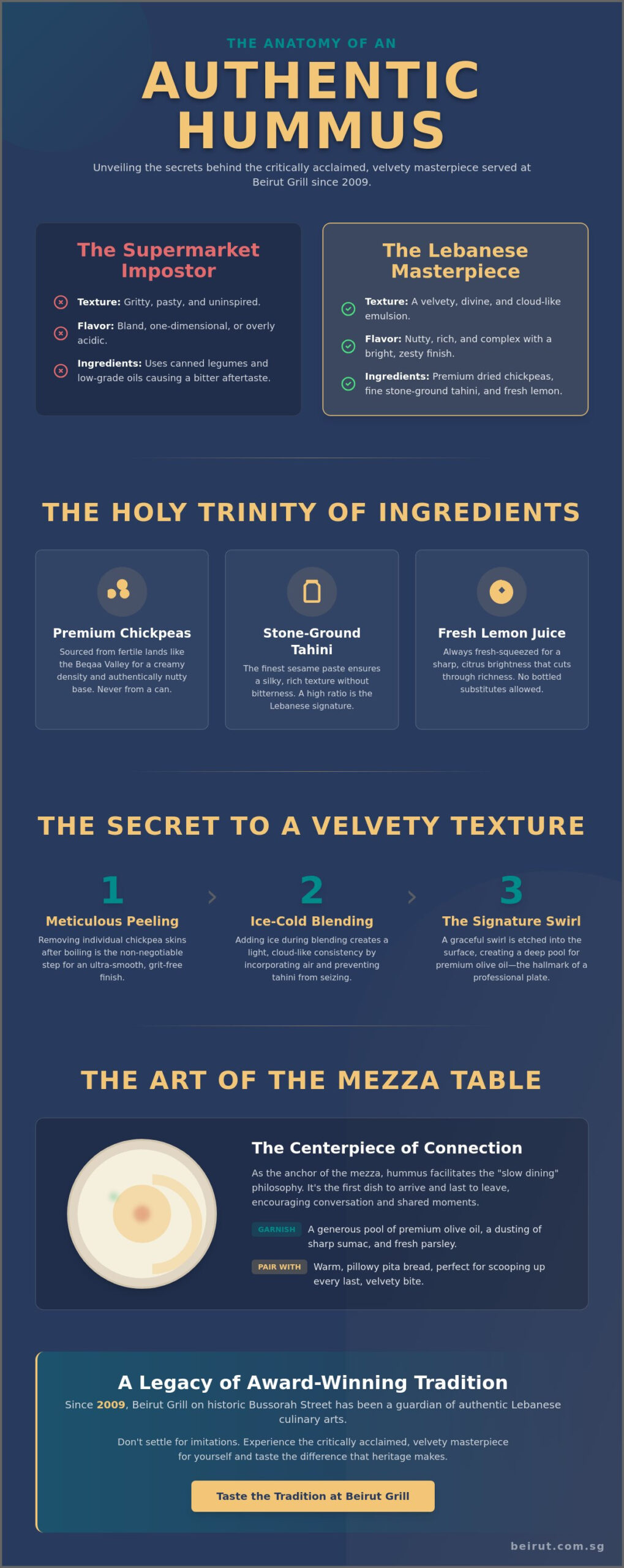
Achieving a divine hummus requires more than a simple recipe; it demands an obsession with the quality of every single component. While supermarket versions often rely on generic canned legumes, the Lebanese tradition dictates a more rigorous standard. We source premium dried chickpeas, often from the fertile soils of the Beqaa Valley, which offer a creamy density that mass-produced varieties simply can’t replicate. This dedication to sourcing ensures that the base of the mezza remains authentically nutty and substantial.
The role of tahini is equally critical. We select only the finest sesame paste, stone-ground to ensure a silky texture without the bitter aftertaste found in lower-grade oils. While scientific research often highlights the dish as a healthy food choice rich in plant-based proteins, our artisanal focus is on sensory indulgence. This richness is then brightened by the sharp, citrus zest of fresh-squeezed lemons. We never use bottled juice, as the volatile oils from a freshly sliced lemon provide a necessary brightness that cuts through the dense sesame. Garlic is added with a gentle hand, acting as a subtle aromatic whisper that enhances the chickpeas rather than overpowering the palate.
The Secret of the Velvety Texture
True mastery is revealed in the texture. Our chefs employ the labor-intensive technique of removing individual chickpea skins after boiling, a step that guarantees an ultra-smooth finish. During the blending process, we introduce a specific amount of ice to the emulsion. This temperature control prevents the tahini from seizing and incorporates air, creating a light, cloud-like consistency. You’ll recognize a professional-grade plate by its signature hallmarks: a deep, graceful swirl etched into the surface and a generous pool of oil waiting to be scooped.
The Golden Ratio: Balancing the Holy Trinity
Balancing the “Holy Trinity” of chickpeas, tahini, and lemon is a delicate dance. Too much tahini masks the earthiness of the bean; too little results in a thin, uninspired paste. This equilibrium is finally sealed with a pour of premium extra virgin olive oil. This oil isn’t a garnish but a fundamental ingredient that binds the flavors together. If you’re curious to experience this award-winning balance for yourself, you might reserve a table at our boutique space on Bussorah Street to witness the ritual firsthand.
Hummus vs. The World: Navigating Styles and Quality
Walking through the vibrant corridors of historic Bussorah Street, one realizes that not all Mediterranean spreads are created equal. While the global market treats hummus as a generic category, the Lebanese style represents a specific, critically acclaimed standard of excellence. It’s defined by a higher tahini ratio and a texture so velvety it feels like silk on the palate. Unlike Palestinian versions that often celebrate a chunky, rustic bite or Turkish styles frequently served warm with melted butter, our Lebanese tradition pursues a refined, airy elegance that has made it a staple of divine dining.
Understanding the cultural significance of hummus helps a discerning diner spot the difference between a soulful preparation and an industrial product. The “store-bought” myth suggests that convenience can replicate artisanal quality, yet industrial processing often kills the soul of the dish. Mass-produced versions rely on excessive vinegar to mimic the brightness of fresh lemon or use artificial thickeners like xanthan gum to compensate for low-quality legumes. These additives leave a metallic or overly acidic aftertaste, a far cry from the mouth-watering balance found in a traditional kitchen.
Identifying “fake” versions requires a keen eye for red flags. If the color is overly yellow or gray, or if the texture feels gummy rather than creamy, it’s likely a product of industrial shortcuts. Authentic Lebanese preparation results in a pale ivory hue, a visual hallmark of the premium sesame paste we’ve used since our establishment in 2009. This commitment to purity is what separates a hidden gem from a common commodity.
Lebanese Authenticity vs. Modern Fusion
We take immense pride in defending the traditional recipe against modern “fusion” trends like chocolate or dessert variations. To us, authenticity isn’t a marketing buzzword; it’s a commitment to the guests who seek an authentic Middle Eastern journey. Since 2009, Beirut Grill has remained a guardian of heritage in Singapore’s culinary scene. Maintaining these standards is essential in a globalized world, ensuring that the legacy of the Levant remains untainted by fleeting fads that disregard centuries of culinary wisdom.
The Professional Kitchen Standard
A Lebanese chef evaluates a batch with the same scrutiny a sommelier gives a prestigious vintage from Chateau Musar. We look for a specific “peak” strength; the spread should hold its shape when swirled but melt instantly upon tasting. One “chef’s secret” is the precise temperature of the chickpeas during the blending process. If they’re too hot, the tahini becomes oily; if they’re too cold, the emulsion won’t reach that signature fluffiness. This small-batch approach creates a sensory allure that mass production simply cannot match.
The Art of the Mezza Table: How to Serve and Pair Hummus
Within the intimate, candlelit corners of our boutique restaurant, the presentation of hummus is treated as a visual poem. A masterfully prepared plate isn’t complete without its traditional adornments, which provide both a textural contrast and a vibrant aesthetic. We crown our spread with a dusting of tart, crimson sumac and smoky paprika, followed by a handful of tender, whole chickpeas and finely chopped fresh parsley. These garnishes aren’t mere decorations; they’re essential components that invite the diner to explore the dish’s depth. This meticulous attention to detail is a hallmark of the finest mediterranean food singapore has to offer.
The ritual of the mezza table demands that the bread be as critically acclaimed as the dip itself. At Beirut Grill, we serve pita that is steaming hot and pillowy, providing a soft, warm vessel for the cool, creamy spread. Cultural etiquette dictates a specific “scoop” technique, using a small piece of bread as a delicate utensil to capture the perfect ratio of chickpeas, oil, and spice. This communal style of eating encourages guests to slow down and indulge in the shared experience, turning a simple meal into a celebrated social connection.
The Perfect Mezze Ensemble
To truly appreciate the versatility of the spread, one must understand its place within the wider mezza landscape. Pairing it with tabbouleh is essential; the sharp, herbaceous freshness of the parsley cleanses the palate between rich bites of tahini. For those seeking a satisfying crunch, falafel and hummus remain an inseparable duo, offering a mouth-watering play of textures. You can complete this vegetarian journey by balancing these savory notes with the salty, squeaky indulgence of grilled halloumi cheese, creating a harmonious feast that honors our Levantine roots.
Beverage Pairings for the Connoisseur
A divine dining experience is often defined by the drinks that accompany it. A crisp, dry white wine from the Beqaa Valley, such as a selection from Chateau Kefraya, provides a majestic acidity that cuts through the richness of the sesame. For a more traditional ritual, many guests choose Arak. This anise-flavored “Lion’s Milk” is served with ice and water, offering a refreshing palate cleanser that complements the garlic’s aromatic heat. If you prefer a non-alcoholic option, a steaming pot of Moroccan Mint Tea provides a soothing, fragrant end to a long, indulgent mezza lunch. To experience these traditions in the heart of Kampong Glam, reserve your table today and join our legacy of authentic hospitality.
Beirut Grill: A Legacy of Award-Winning Hummus Since 2009
Nestled in the heart of the historic Kampong Glam district, Beirut Grill stands as a testament to the enduring allure of Lebanese heritage. Since 2009, we’ve welcomed guests into a space that feels like a private villa in the Beqaa Valley, offering a sanctuary of taste amid the vibrant energy of Singapore. It’s more than a restaurant. Our hummus is the cornerstone of this experience, a dish that has been critically acclaimed for over 15 years due to its unwavering adherence to artisanal standards. It’s the result of a legacy built on reliability and a deep pride in our cultural roots.
The preparation in our kitchen follows a deliberate and atmospheric rhythm, designed to preserve the integrity of every ingredient. Our chefs’ dedication to the “slow-prep” method means we never rush the soaking or the blending process. We use only premium imported chickpeas and stone-ground tahini to ensure that every serving is a divine dining experience that transports you across the globe. As you sit on historic Bussorah Street, the majestic Sultan Mosque provides a scenic stage for a meal that is as much about the environment as it is about the sensory details of the food.
Artisanal Preparation in the Heart of Singapore
Our commitment to authenticity is reflected in every choice we make, from the sourcing of our spices to the traditional charcoal techniques used at the grill. This focus on heritage ensures that our mezza remains a mouth-watering highlight for every visitor. By maintaining these high-status markers of Lebanese cuisine, we provide a “hidden gem” experience that feels both exclusive and welcoming. We invite you to slow down and soak up the ambiance of our boutique dining room, where the history of the location meets the excellence of our award-winning kitchen.
Your Invitation to a Lebanese Journey
We invite you to discover why Beirut Grill is considered a premier destination by those seeking an authentic Middle Eastern journey. Our menu is entirely pork-free, focusing on the rich, savory depth that only traditional methods can provide. While the hummus is a masterpiece in its own right, it finds its perfect companion in our signature Mixed Grill, where the smoky aromas of the meat complement the creamy, nutty notes of the dip. This harmony of flavors is what defines us as a staple for middle eastern food singapore. Step inside, engage your curiosity, and allow us to host you in a way that only a decade of seasoned expertise can provide.
Savor the Legacy of the Levant
Authentic hummus is far more than a simple dip; it’s a sophisticated emulsion that honors centuries of Levantine tradition. You’ve discovered how the “Holy Trinity” of premium chickpeas, stone-ground tahini, and fresh lemon creates a velvety texture that industrial versions simply can’t replicate. By understanding the cultural etiquette of the mezza table and the importance of artisanal techniques, you’re now prepared to appreciate the depth of a truly divine spread. These methods have defined our kitchen since 2009, ensuring every bite is a mouth-watering tribute to our heritage.
With the majestic Sultan Mosque standing as a backdrop to our home on historic Bussorah Street, we invite you to experience these authentic recipes curated by our master chefs. Beirut Grill remains a critically acclaimed “hidden gem” in Singapore, offering a transportive escape that rewards your curiosity with every plate. Don’t settle for the ordinary when an award-winning Middle Eastern journey awaits. It’s time to soak up the ambiance and indulge in the finest hospitality our boutique space has offered for over 15 years.
Reserve Your Table at Beirut Grill and Experience Divine Lebanese Mezza and begin your own culinary journey today.
Frequently Asked Questions
Is hummus healthy and what are its nutritional benefits?
Hummus is a nutritional powerhouse, providing 8 grams of plant-based protein and 6 grams of fiber per 100-gram serving. This divine blend supports heart health and stable blood sugar levels. It’s a staple of the Mediterranean diet, which a 2013 study in the New England Journal of Medicine linked to a 30% reduction in cardiovascular risk. Enjoying this spread offers a mouth-watering way to nourish your body while indulging in our heritage.
What is the difference between hummus and Baba Ghanoush?
The primary difference lies in the base ingredient; hummus is crafted from boiled chickpeas, while Baba Ghanoush features smoky, roasted eggplant. Both share a divine foundation of tahini, garlic, and lemon. At Beirut Grill, we ensure each mezza dish retains its unique identity. The chickpea spread offers a creamy, nutty density, whereas Baba Ghanoush provides a lighter, charred flavor profile that rewards the visitor’s curiosity and appetite for authenticity.
Is hummus always vegan and gluten-free?
Authentic Lebanese recipes are 100% naturally vegan and gluten-free. They consist solely of plant-based ingredients like legumes, sesame paste, and citrus. Since our establishment in 2009, we’ve maintained a pork-free kitchen that honors these inclusive traditions. This makes the mezza spread an ideal choice for diners with specific dietary preferences seeking a divine and authentic Middle Eastern journey in the heart of Singapore’s historic Kampong Glam district.
How long can fresh, authentic hummus be stored?
According to 2023 food safety standards, fresh artisanal hummus stays at its peak for 3 to 5 days when refrigerated. To preserve its velvety texture and mouth-watering aroma, you should keep it in an airtight container with a thin layer of olive oil on top. Because we avoid the industrial preservatives found in 85% of supermarket tubs, our spread is best enjoyed shortly after its preparation on historic Bussorah Street.
Can I make hummus without tahini?
You can create a chickpea dip without tahini, but it won’t be the authentic Lebanese style that has made us a “hidden gem.” Tahini provides the signature nutty creaminess and divine mouthfeel that defines the dish. Without this premium sesame paste, the emulsion lacks the rich complexity that has made our mezza critically acclaimed since 2009. For an authentic experience, the “Holy Trinity” of chickpeas, lemon, and tahini is non-negotiable.
What is the best bread to serve with authentic Lebanese hummus?
The undisputed companion for this spread is fresh, pillowy pita bread served steaming hot. In our boutique space, we serve our bread warm to ensure it acts as the perfect vessel for the “scoop” technique. The soft texture of the bread contrasts beautifully with the silky emulsion. While some suggest crackers or vegetables, only warm pita provides the authentic, transportive experience of a traditional Lebanese feast under the majestic Sultan Mosque.
Why is my homemade hummus grainy compared to restaurant versions?
Homemade versions are often grainy because the chickpea skins haven’t been removed before blending. Professional chefs often spend over 30 minutes peeling chickpeas or use a pinch of baking soda during boiling to soften the skins. Another secret is adding ice cubes during the blending process. This creates a light, airy emulsion that results in the velvety, mouth-watering texture our guests have loved for over 15 years.
Does authentic Lebanese hummus contain cumin?
Traditional Lebanese recipes generally do not contain cumin. While regional variations in other countries might use the spice, the Lebanese style focuses on the purity of tahini and the brightness of fresh lemon. We prefer to let the quality of our Beqaa Valley-inspired ingredients shine. This results in a cleaner, more sophisticated flavor profile that has been a hallmark of our award-winning boutique dining experience since 2009.