
Since our doors first opened on historic Bussorah Street in 2009, we’ve observed that a truly divine beef kebab is never just about the heat; it’s a delicate symphony of Beqaa Valley spices and the patient, smoky whisper of charcoal. You’ve likely felt the disappointment of a dry, tough skewer or a bland piece of meat that lacks the soulful depth of authentic Lebanese cuisine. It’s frustrating when you’re seeking a premium dining experience but end up with confusion between a minced Kafta and a cubed skewer. We understand that longing for a meal that transports you straight to the heart of Beirut.
In this guide, we’ll reveal the secrets to achieving that award-winning tenderness, from selecting the finest cuts of tenderloin to mastering the traditional spice blends that have made us a critically acclaimed destination for over 15 years. You’ll discover how to distinguish between regional styles, master the art of the charcoal grill, and pair your feast with the perfect Lebanese mezza. We’re inviting you to explore the culinary heritage that defines our boutique experience right here in Singapore.
Key Takeaways
- Uncover the heritage of Laham Mashwi and the cultural significance of charcoal grilling in creating an authentic Middle Eastern sensory experience.
- Learn the structural and flavour differences between a premium beef kebab and traditional lamb kofta to find your perfect culinary match.
- Master the balance of the Lebanese spice cabinet, using aromatic dry rubs like sumac and cloves to enhance rather than mask the meat.
- Discover the art of the Lebanese feast by pairing your grilled mains with essential mezze and prestigious red wines from the Beqaa Valley.
- Identify the hallmarks of a divine dining experience at Beirut Grill, a hidden gem on Singapore’s historic Bussorah Street since 2009.
What is an Authentic Lebanese Beef Kebab?
Nestled in the shadow of the majestic Sultan Mosque since 2009, Beirut Grill has served as a sanctuary for those seeking the genuine flavors of the Levant. An authentic Lebanese beef kebab, known traditionally as Laham Mashwi, is far removed from the mass-produced skewers found in local food courts. It represents a culinary art form where premium cubes of beef are transformed by the ancient alchemy of charcoal and smoke. This isn’t merely food; it’s a storied tradition that rewards the visitor’s curiosity with every succulent bite.
In Lebanese culture, the act of grilling over hot coals is a sacred gesture of hospitality. It’s a sensory experience that signals a celebration, whether in the lush Beqaa Valley or on the vibrant streets of Singapore. Unlike the generic, processed meats often labeled as “skewered meat” in fast-food outlets, the authentic version demands high-quality cuts like ribeye or sirloin. These premium selections ensure every mouthful is tender and rich, reflecting the award-winning standards expected of a divine dining experience. The smoke from the charcoal infuses the meat with a depth of flavor that modern gas grills simply cannot replicate.
The Origins of Laham Mashwi
The history of kebabs traces back to the nomadic tribes of the Levant, where soldiers used their swords to grill fresh meat over open campfires. While lamb was historically common, beef rose to prominence as a symbol of prosperity and a staple for celebratory feasts in Lebanese households. The traditional beef kebab serves as the essential cornerstone of the Lebanese ‘Mixed Grill’ experience, anchoring the meal with its robust and smoky profile.
Key Characteristics of a Perfect Skewer
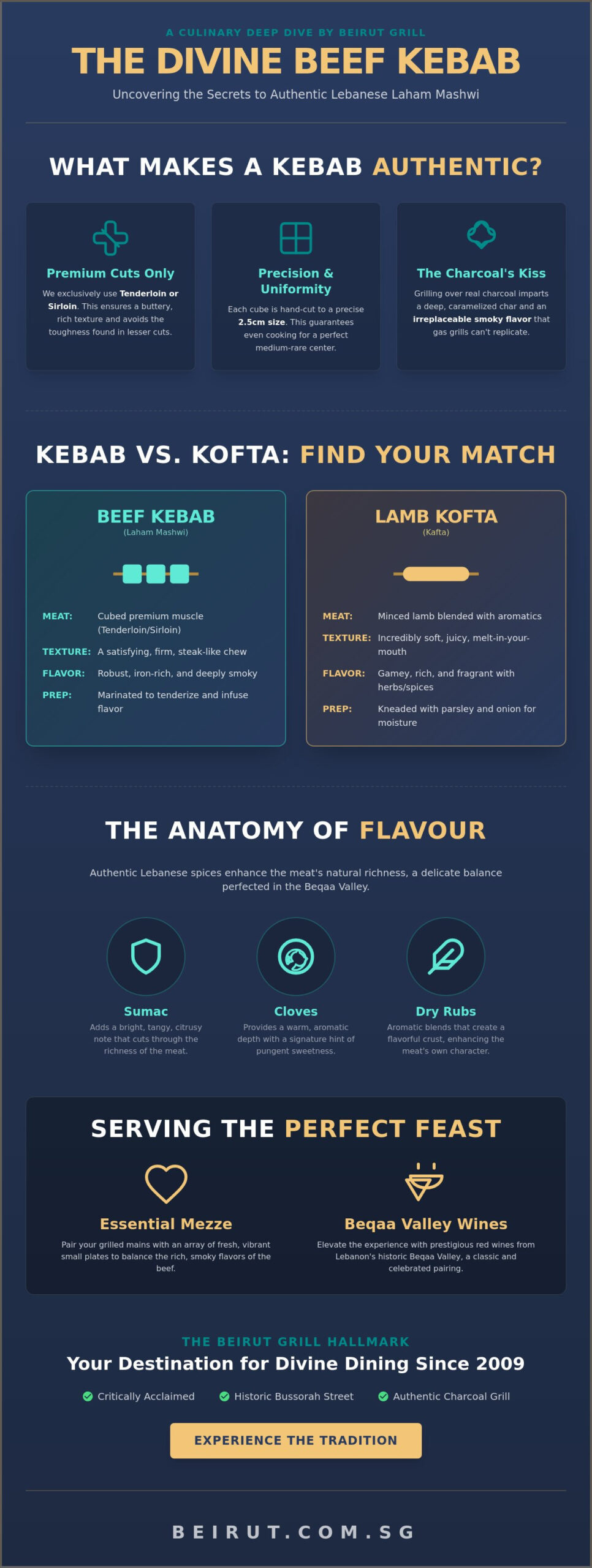
Achieving the perfect beef kebab requires a delicate balance of heat and timing. The exterior should boast a deep, caramelized char that yields to a succulent, medium-rare interior. A thin, intentional fat cap is vital; it renders during the high-heat process to baste the meat from within. This ensures the beef remains moist despite the intense charcoal fire. Chefs must cut each cube to a uniform size, typically 2.5 centimeters, to guarantee that every piece reaches the ideal temperature simultaneously.
- Texture: A crisp, smoky exterior with a buttery, tender center.
- Uniformity: Precisely hand-cut cubes for even heat distribution.
- Quality: Exclusively using ribeye or sirloin to avoid the toughness found in lesser cuts.
By maintaining these strict standards on historic Bussorah Street, we ensure that our guests experience more than just a meal. They embark on a cultural journey that has been refined over centuries and perfected in our kitchen since 2009.
Beef Kebab vs. Lamb Kofta: Which Should You Choose?
Nestled along the historic Bussorah Street, our guests often find themselves torn between two icons of the Lebanese grill. The beef kebab represents the purist’s approach to fire-cooked meat. It consists of prime cuts of whole muscle, typically tenderloin or sirloin, cubed and skewered to perfection. Contrast this with the Lamb Kofta, a delicate blend of minced meat and hand-picked aromatics. While the beef offers a robust, iron-rich profile that stands up to the intense char of the coals, the lamb provides a gamey, fatty richness that coats the palate in a way only traditional Middle Eastern fats can.
The mouthfeel of these two dishes creates entirely different dining experiences. You’ll find a satisfying, steak-like chew in a well-prepared beef kebab, offering a sense of indulgence for those who appreciate the structure of a premium cut. The kofta, however, is prized for its melt-in-mouth quality. It’s soft, juicy, and yields instantly to the fork. Choosing between them usually comes down to whether you crave the bite of a steak or the spiced complexity of a traditional mince.
Texture and Preparation Differences
Achieving the perfect beef kebab requires a deep understanding of marination. Since 2009, we’ve perfected a secret blend of spices and oils that tenderize the muscle fibers without masking the meat’s natural integrity. It’s a process of patience. Lamb kofta relies instead on a precise meat-to-fat ratio to ensure moisture. We knead fresh parsley and finely diced onions directly into the mince, creating a succulent texture that stays moist over the high heat of the grill. If you’re looking for a lighter journey, Shish Taouk serves as the citrusy, lean chicken alternative that often completes a traditional Lebanese platter.
Flavour Pairings for Each Meat
Your choice often depends on what else sits on your table. Beef kebabs demand sharp, vibrant accompaniments to balance their density. We recommend pairing them with onions soaked in lemon juice or a heavy dusting of tart, purple sumac. Lamb kofta, with its inherent richness, finds its best friend in creamy, cooling elements. A dollop of nutty tahini or a side of thick, strained labneh balances the spice profile beautifully and cuts through the fat.
If the decision remains difficult, our critically acclaimed Mixed Grill platter offers the ultimate resolution. It allows you to experience the textural contrast of whole-muscle beef alongside the spiced indulgence of kofta, all served with the majestic Sultan Mosque as your backdrop. This variety has been a cornerstone of our menu since we first opened our boutique space, ensuring every guest finds their perfect match in the heart of Singapore.
The Anatomy of Flavour: Spices and Marination
Since establishing our kitchen on historic Bussorah Street in 2009, we’ve understood that a true Lebanese beef kebab is a study in restraint and respect for the ingredient. Unlike Western barbecue styles that often smother meat in thick, sugary glazes, the authentic Lebanese approach relies on a sophisticated dry rub and oil-based infusion. This method ensures the premium cuts of beef remain the protagonist of the dish, while the spices act as a supporting cast that elevates the natural umami profile. Our award-winning chefs believe that a heavy sauce only serves to hide the quality of the meat, whereas a traditional marinade celebrates it.
The science of this process is as precise as it is ancient. We use a calculated amount of acidity, typically from fresh lemon juice or organic vinegar, to gently break down the tough connective tissues and muscle fibres. This natural tenderisation happens without masking the beef’s inherent richness. Resting the meat post-marination is a non-negotiable step in our kitchen. Allowing the beef to sit for at least six hours ensures the spices penetrate beyond the surface, creating a depth of flavour that lingers long after the final bite.
The Essential Lebanese Spice Blend
The soul of our beef kebab lies in a spice cabinet that mirrors the vibrant markets of Beirut. Sumac is the undisputed star here, offering a sharp, citrusy profile that cuts through the fat of the beef with a bright, astringent finish. We balance this with the ‘warm’ notes of allspice, cinnamon, and a touch of cloves, which provide that unmistakable Middle Eastern aroma. The perfect marinade is a delicate balance of acidity and earthiness that respects the beef. This blend creates a complex sensory experience that feels both grounded and exotic, transporting diners from the heart of Singapore to the sun-drenched Beqaa Valley.
Techniques for Maximum Juiciness
Achieving a succulent result requires more than just good ingredients; it demands technical mastery. We adhere strictly to the ‘Salt Rule,’ which dictates that salt should only be added shortly before grilling or as part of a long-term brine. Salting too early can draw out precious moisture, leaving the meat parched. Instead, we use high-quality Lebanese olive oil as a conductor. This oil carries the fat-soluble flavours of the spices deep into the meat while acting as a protective barrier against the intense heat of the grill. To ensure a divine dining experience, we source only the finest imported spices, as the potency of these ingredients is what separates a standard meal from an award-winning one. The same charcoal mastery and citrus-infused marination philosophy that defines our beef also extends to our perfectly grilled prawns, where the interplay of fire and fresh ingredients is equally transformative.
- Sumac: Adds a tart, ruby-red brightness without the liquid volume of extra juice.
- Olive Oil: Creates a sear that locks in juices while distributing heat evenly.
- Resting Time: Essential for protein relaxation and flavour absorption.
Serving the Feast: Traditional Sides and Wine Pairings
Since 2009, the dining experience at our historic Bussorah Street location has been defined by more than just the main course. A true beef kebab is never a solitary star; it’s the centerpiece of a carefully orchestrated culinary symphony. In Lebanese culture, the transition from the grill to the table involves a specific architecture of flavors that balance the intense, smoky char of the meat with vibrant acidity and velvet-smooth textures.
The Mezze Architecture
A Lebanese feast begins with the mezza, a collection of small plates designed to wake up the senses. Tabbouleh provides the essential counterpoint to charcoal-grilled beef. Its sharp lemon dressing and fresh parsley cut through the richness of the fat, cleansing the palate with every forkful. We recommend starting with our Hummus, a silky blend that serves as the primary foundation for your meal. This creamy necessity acts as a cooling base for every wrap, while Baba Ghanoush adds a secondary layer of smokiness that echoes the heat of the grill. To assemble the perfect bite, take a piece of warm pita, spread a thick layer of garlic sauce (Toum), add your beef, and finish with a charred onion or tomato.
Sophisticated Beverage Pairings
The bold profile of a beef kebab requires a beverage that can match its intensity. We curate our cellar with selections from the Beqaa Valley, a region that has produced world-class vintages for over 6,000 years. A robust red wine, such as the critically acclaimed Chateau Musar or a bottle from Chateau Kefraya, offers the tannic structure needed to stand up to charred proteins. These wines carry notes of dark fruit and spice that mirror the complex Lebanese marinades.
For those seeking the most authentic experience, Arak is the definitive choice. Known as “Lion’s Milk” because of its cloudy white appearance when mixed with water, this anise-flavored spirit serves as a traditional palate cleanser between different meat courses. It’s a sensory ritual that prepares you for the next savory discovery. To conclude the evening, the gentle steam of Moroccan Mint Tea provides a soothing finale. This digestive tradition, served in delicate glassware, helps settle the stomach after a heavy grill session. You can experience these timeless traditions firsthand by choosing to book a table at Beirut Grill and indulging in a divine dining experience under the shadow of the Sultan Mosque.
Savouring the Divine: The Beirut Grill Experience
With the majestic Sultan Mosque as a backdrop, Beirut Grill has stood as the custodian of authentic Lebanese grilling on historic Bussorah Street since 2009. The moment you step onto the terrace, the sensory allure of the charcoal grill takes hold. You’ll encounter mouth-watering aromas of searing meats and toasted spices that define this boutique space. This isn’t just another restaurant in Singapore’s crowded dining scene; it’s a seasoned veteran that has spent over 15 years perfecting the art of the fire. The experience is designed to transport you, offering a rhythmic, storytelling quality that begins the second you see the glowing embers of the grill.
Award-Winning Heritage Since 2009
The longevity of Beirut Grill is a testament to its reliability and uncompromising standards. Since opening its doors in 2009, the restaurant has used traditional techniques passed down through generations. They import key ingredients and spices directly from the Beqaa Valley, ensuring every plate delivers a divine and culturally accurate experience. The signature beef kebab remains a cornerstone of the menu, celebrated for its tender texture and deep, smoky infusion. For those who want the full culinary narrative, the Mixed Grill provides a majestic showcase of their skills. This critically acclaimed platter brings together the beef kebab, succulent beirut lamb chops, and marinated chicken tawook, serving as the ultimate introduction to their award-winning heritage.
Atmosphere and Hospitality
The interior offers a sophisticated yet warm environment, making it a premier choice for high-stakes corporate dinners or romantic special occasions. It feels like a hidden gem tucked away from the city’s frantic pace, where the hospitality is as rich as the food. By maintaining a strictly pork-free menu, Beirut Grill ensures an inclusive and authentic Middle Eastern journey for the diverse Singaporean community. Every detail, from the curated selection of Lebanese wines to the deliberate flow of service, is designed to transport you to the heart of Beirut. It’s an invitation to slow down and soak up the ambiance of a truly unique destination. Beyond the grill’s celebrated beef and lamb, seafood lovers will find equal mastery in our Lebanese charcoal grilled prawns, a testament to the same heritage and technique that defines every dish we serve.
Ready to experience the majestic flavours of Lebanon? Whether you are planning a celebratory feast or a quiet dinner, the divine aromas of our charcoal grill await. Book a table today to discover why Beirut Grill remains a landmark of authentic Levantine cuisine in Singapore.
Embark on Your Lebanese Culinary Odyssey
Mastering the perfect beef kebab requires more than just a high-heat grill; it demands a deep respect for the ancestral marination techniques and hand-picked spice blends that define the Levant. You’ve discovered the nuanced differences between authentic skewers and lamb kofta, alongside the essential role of pairing your meal with a crisp Lebanese wine or traditional arak. Since 2009, Beirut Grill has served as a guardian of these traditions on historic Bussorah Street, offering a critically acclaimed Mixed Grill that remains a favorite for Singapore’s discerning food lovers. Every dish we serve is a tribute to the vibrant flavors of the Beqaa Valley, prepared with the same passion we’ve held for over 15 years.
The journey from the streets of Beirut to the shadow of the majestic Sultan Mosque is one best experienced through the senses. It’s an invitation to slow down, enjoy the aromatic smoke of the grill, and indulge in a glass of Chateau Musar or Chateau Kefraya. Book Your Divine Dining Experience at Beirut Grill to taste the heritage for yourself. We can’t wait to share our table with you for an unforgettable evening.
Frequently Asked Questions
What is the best cut of beef for kebabs?
The best cut for a beef kebab is undoubtedly the sirloin or ribeye, as these premium cuts offer the perfect balance of marbling and tenderness. At Beirut Grill on historic Bussorah Street, we’ve sourced high-quality grass-fed beef since 2009 to ensure every bite melts on the tongue. A 2.5cm cube of sirloin provides enough surface area for a beautiful char while keeping the succulent center intact during the grilling process.
How long should you marinate beef for the best flavour?
You should marinate your beef for 12 to 24 hours to achieve the most profound depth of flavor and ideal tenderness. This duration allows traditional Lebanese spices like sumac and seven-spice to penetrate the meat fibers deeply. While a quick 2-hour soak adds surface taste, a full day in the refrigerator transforms the texture into something truly divine. It’s the secret to the mouth-watering experience our guests have enjoyed for over 15 years.
What is the difference between a kebab and a shish kabob?
A shish kabob refers specifically to meat grilled on a skewer, while “kebab” serves as a broad umbrella term for various grilled meat dishes in Middle Eastern cuisine. The word “shish” originates from the Turkish word for sword or skewer. In our kitchen, we honor this ancient tradition by hand-threading each piece of beef to ensure even cooking over the open flames. This meticulous process creates a rhythmic, storytelling quality on every plate we serve.
Is beef kebab healthier than other grilled meats?
Beef kebabs are often healthier than processed grilled meats because they use whole muscle cuts and involve no deep-frying or heavy batters. Grilling on a rack allows excess fat to drip away, reducing the calorie count compared to pan-searing in oil. A standard 150-gram serving of grilled beef provides roughly 30 grams of protein and essential iron. This makes it a nutritious and indulgent choice for health-conscious diners seeking an authentic Middle Eastern journey in Singapore.
Can I make authentic Lebanese beef kebabs in an oven?
You can recreate the essence of an authentic beef kebab in a domestic oven by using the broiler setting at its highest temperature, typically 230°C. Place the skewers on a wire rack over a baking tray to mimic the intense airflow of a professional grill. While it lacks the smoky allure of charcoal, this method achieves a respectable char in approximately 12 minutes. This approach brings a taste of Beirut into your Singaporean kitchen without requiring outdoor equipment.
What are the most common vegetables used on a beef skewer?
Red onions, green bell peppers, and firm cherry tomatoes are the most traditional vegetables found on a classic beef skewer. These choices aren’t merely decorative; they provide a necessary acidic contrast to the rich, savory meat. We recommend cutting your vegetables into 3cm pieces so they char at the same rate as the beef cubes. This ensures a harmonious blend of textures and flavors that rewards the visitor’s curiosity with every single bite.
Why is charcoal grilling better than gas for kebabs?
Charcoal grilling is superior because it imparts a distinct smoky aroma and reaches temperatures exceeding 370°C, which is essential for a perfect sear. Gas grills often struggle to replicate this intense, dry heat. This traditional method, which we’ve perfected on Bussorah Street since 2009, ensures the meat caramelizes quickly, locking in juices that a standard gas flame might evaporate. The result is a critically acclaimed flavor profile that transports you directly to the Beqaa Valley.
What wine goes best with a Lebanese beef kebab?
A full-bodied Lebanese red wine from the Beqaa Valley, such as a 2017 Chateau Musar or a Chateau Kefraya, pairs exquisitely with a beef kebab. The robust tannins and spicy notes of these prestigious wines complement the charred exterior and rich spices of the meat. This pairing elevates a simple meal into a sophisticated dining experience that honors our heritage. It’s a hallmark of credibility for anyone seeking an authentic Middle Eastern journey in Singapore. If you’re equally passionate about mastering the art of Lebanese grilling at home, our guide to perfect Beirut lamb chops reveals the same 24-hour marination ritual and charcoal techniques that define our award-winning kitchen.