
Most home cooks treat halloumi as a simple side, but in the hands of a master, it transforms into a smoky, golden centerpiece that defines the Lebanese table. You have likely felt the frustration of a beautiful slice of cheese tearing against the grill grates or turning into a squeaky, rubbery disappointment that loses its allure before it even reaches the plate. It’s a common struggle that often discourages even the most passionate hosts from serving this Mediterranean treasure at their dinner parties.
The good news is that the best way to grill halloumi is not a matter of luck, but a precise marriage of heat management and heritage. Since 2009, Beirut Grill has been a prestigious destination for those seeking the perfect charcoal-kissed char, and we are ready to share the professional secrets to achieving a crisp, bronzed exterior and a soft, warm center every time. In this masterclass, you will discover the authentic Lebanese techniques, specific spice pairings, and timing secrets that ensure your halloumi is never anything less than extraordinary. We will guide you through the sensory journey of the grill, giving you the confidence to serve this indulgent classic with pride.
Key Takeaways
- Master the art of preparation by slicing your halloumi into generous planks and allowing it to reach room temperature for a flawlessly creamy center.
- Learn why medium-high heat and a precise 45-degree angle are essential components of the best way to grill halloumi for professional char marks.
- Elevate your culinary presentation by serving the cheese immediately with a drizzle of pomegranate molasses to balance its traditional salinity.
- Discover how authentic charcoal-grilling techniques, perfected since 2009, create the sensory experience that defines true Lebanese hospitality.
Understanding the Squeak: What Makes Halloumi Unique?
In the sun-drenched culinary landscapes of the Levant, halloumi is more than a simple appetizer; it is a testament to centuries of dairy craftsmanship. This semi-hard, unripened brined cheese traces its noble heritage back to Cyprus, though it has long been a cherished staple in Lebanese hospitality. Traditionally, it’s crafted from a sophisticated blend of goat and sheep milk, which provides a depth of flavor that cow milk alone cannot replicate. To truly appreciate what is Halloumi cheese?, one must look past its humble appearance to the ancient methods that define its character and remarkable resilience under fire.
The hallmark of a perfectly prepared slice is its signature “squeak,” a delightful sensory marker that signals a dense protein structure and absolute freshness. This resistance occurs because the cheese curd is heated in its own whey during production, a specific step that creates a high melting point and allows it to withstand the intense heat of a professional grill without losing its form. This structural integrity is exactly what makes it such a prestigious centerpiece for a vegetarian mezze spread.
The Science of the High Melting Point
Unlike cheddar or mozzarella, which succumb to the heat and dissolve into a pool of oil, halloumi maintains its architectural integrity even under duress. This resilience is the direct result of an alkaline environment during the cheese-making process, which prevents the protein fibers from breaking down. When these fibers meet the searing surface of a hot grill, they tighten rather than collapse. Understanding this reaction is essential for the best way to grill halloumi, as it facilitates the Maillard reaction; the chemical transformation that produces that coveted, deep-golden crust while the interior remains supple, warm, and indulgent.
Choosing the Best Halloumi for Grilling
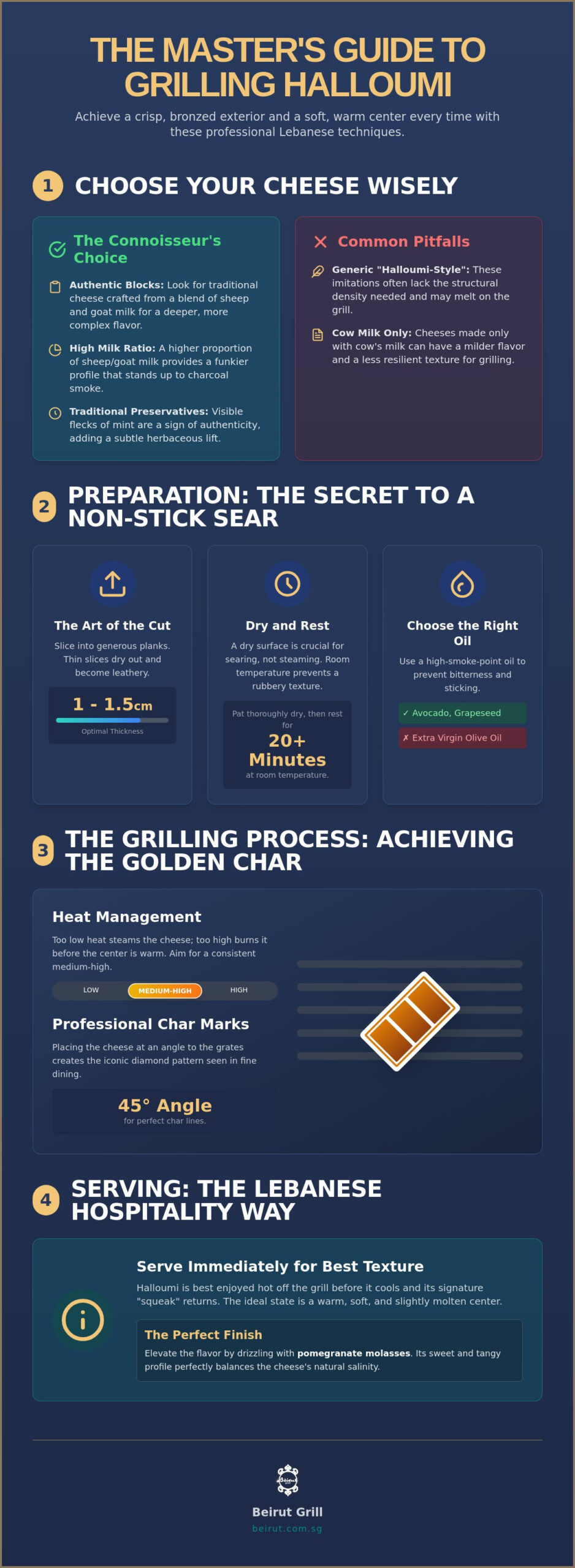
Selecting the right block is the first step in honoring the heritage of Lebanese cuisine. When browsing for the finest specimens, look for authentic blocks that feature visible flecks of mint, which serves as a traditional preservative and adds a subtle, herbaceous lift to the salty profile. A higher ratio of sheep and goat milk is often preferred by connoisseurs for its more evocative, slightly funky flavor profile that stands up beautifully to the allure of charcoal smoke. When you are looking for the best way to grill halloumi at home, it’s wise to avoid generic “halloumi-style” cheeses. These imitations often lack the structural density required for high-temperature cooking and may have lower melting thresholds that lead to a messy, disappointing result on your grill grates.
Preparation: The Secret to a Non-Stick Sear
Achieving that elusive, professional-grade crust requires more than just a hot surface; it demands a meticulous approach to preparation. Excellence begins long before the cheese touches the charcoal. To master the best way to grill halloumi, you must treat the preparation with the same reverence a jeweler treats a gemstone, ensuring every surface is primed for the fire.
The best way to grill halloumi starts with a bone-dry surface. Brined cheeses are naturally saturated, and if you fail to pat the planks dry with paper towels, you’ll end up steaming the cheese rather than searing it. This moisture barrier prevents the Maillard reaction from taking hold, leaving you with a pale, unappealing texture. Once dried, allow the cheese to sit at room temperature for at least 20 minutes. Placing cold cheese directly onto a hot grill causes the protein fibers to contract too violently, which often results in the dreaded rubbery texture.
Choosing the right oil is equally critical for a successful crust. While extra virgin olive oil is a staple of the Mediterranean pantry, its low smoke point makes it a poor choice for the high heat required here. It tends to burn and turn bitter before the cheese is fully bronzed. Instead, lightly coat your halloumi with a high-smoke-point oil like avocado or grapeseed. This creates a thin, protective film that encourages a non-stick release from the grates while facilitating an even, golden-brown finish.
The Art of the Cut
Slicing the block is a delicate ritual that determines the final mouthfeel of the dish. Thin slices are prone to drying out, turning into tough, leathery strips that lack the creamy heart we strive for. Aim for generous planks between 1cm and 1.5cm thick. This specific thickness allows the exterior to develop a deep bronze while the interior softens into a molten delight. If you prefer a more playful presentation, threading smaller cubes onto skewers to create a Vegetarian Kebab is a fantastic way to maximize the surface area for charring while maintaining that signature soft center.
Pre-Grill Flavor Infusions
Flavor should be layered with patience and intent. While the cheese is still dry, consider dusting it with a fine layer of dried za’atar or a pinch of Aleppo pepper. These dry aromatics toast instantly against the heat, releasing a fragrance that evokes the warmth of Lebanese heritage. Avoid wet marinades or fresh garlic before the cheese hits the grill, as these will only burn or cause the cheese to stick. Instead, use a microplane to add lemon zest just before cooking to provide a bright, citrusy lift that cuts through the rich salinity of the cheese.
The Grilling Process: Achieving the Golden Char
As the charcoal embers reach their peak glow, the true transformation of the cheese begins. This stage is where the meticulous preparation described earlier meets the ancient power of fire. To master the best way to grill halloumi, you must approach the heat with a balance of professional authority and quiet patience. The goal is to trigger the Maillard reaction, a chemical alchemy that occurs when the protein and sugars in the cheese react to intense heat, creating a complex, savory crust that contrasts beautifully with the creamy interior.
Before the first plank touches the grate, ensure your grill has reached a medium-high temperature of approximately 200°C. Place each slice at a precise 45-degree angle to the grates. This isn’t merely for aesthetic appeal; it ensures the heat is distributed across enough surface area to create those professional, deep-bronze grill marks. Once the cheese is down, you must leave it undisturbed for at least 90 seconds. Resisting the urge to poke or move the cheese allows the crust to form fully. You’ll know it’s ready when the halloumi releases naturally from the grates. If it resists, it’s telling you it needs more time in the fire.
Charcoal vs. Gas: The Professional Edge
While a gas grill offer convenience, the best way to grill halloumi involves the evocative, smoky depth that only charcoal can provide. At Beirut Grill, where we have specialized in charcoal-grilling techniques since 2009, we understand that the smoke is an ingredient in itself. When the fats from the sheep and goat milk begin to render and drip onto the coals, they release a fragrant vapor that perfumes the cheese. If flare-ups occur, simply move the planks to an indirect heat zone. This technique is particularly useful for the thicker 1.5cm planks we recommend, ensuring the center softens without the exterior charring too aggressively.
Troubleshooting Common Grilling Mistakes
Even with careful attention, the grill can be unpredictable. If you notice moisture or whey leaking from the cheese, your grill isn’t hot enough; the cheese is boiling rather than searing. Increase the heat immediately to save the texture. If the cheese begins to soften too much and lose its shape, a quick “cold shock” by moving it to a cooler part of the grill or a chilled plate can help it firm up. For those struggling with sticking, ensure the grates are meticulously clean. A quick rub with an oil-soaked paper towel mid-process can fix sticking grates and ensure your next batch achieves that flawless, golden release.
Serving and Pairing: The Lebanese Hospitality Way
The best way to grill halloumi culminates in a fleeting window of perfection that demands immediate attention. Once those golden planks leave the charcoal, the interior remains in a molten, supple state for only a few precious minutes. In the spirit of true Lebanese hospitality, or Karam, the cheese should be presented while it still carries the fragrant whisper of the fire. To balance the inherent salinity of the brine, we recommend a delicate drizzle of premium pomegranate molasses or a touch of high-altitude honey. This sweet acidity creates a sophisticated counterpoint to the smoky, savory crust you have so carefully cultivated.
In the traditional Lebanese mezze spread, the best way to grill halloumi involves surrounding it with vibrant, acidic companions that cut through its rich, buttery density. Freshly torn mint leaves and slices of vine-ripened heirloom tomatoes provide a cooling contrast that refreshes the palate between indulgent bites. For those looking to curate a complete sensory journey at home, our Middle Eastern Food in Singapore guide offers a comprehensive look at the various textures and flavors that define a prestigious Mediterranean table.
Authentic Accompaniments
A truly evocative dining experience requires the right supporting elements to elevate the main event. Serving your halloumi alongside warm, stone-baked pita bread and a generous swirl of creamy Hummus allows guests to create their own perfect morsels. The addition of pickled turnips or a simple squeeze of fresh lemon provides the essential brightness needed to reset the taste buds. While halloumi shines as a standalone mezze, it also functions as a prestigious vegetarian centerpiece when included in a Mixed Grill, offering a substantial and satisfying alternative to traditional meats.
For those who appreciate the broader world of Mediterranean grilled specialties and tapas, salsatapas.com offers further inspiration for pairing these bold flavors and exploring Iberian culinary traditions.
Beverage Pairings: Wine and Arak
A meal of this caliber deserves a beverage that honors its cultural roots. A crisp, mineral-forward Lebanese white wine is an exceptional choice, as its bright acidity effortlessly slices through the richness of the sheep and goat milk. For a more traditional experience, one might turn to Arak, the potent, anise-flavored spirit known affectionately as “Lion’s Milk.” When diluted with water and ice, its milky opalescence and cooling finish provide a rhythmic balance to the warm, salty cheese. To conclude the indulgence, a pot of Moroccan Mint Tea serves as a gentle digestive, cleansing the palate with its herbaceous warmth. Experience the gold standard of hospitality by joining us for our signature Grilled Halloumi, served with the professional precision our heritage demands.
Experience Professional Grilling at Beirut Grill
Since our founding in 2009, Beirut Grill has stood as a guardian of Levantine culinary traditions in the heart of Singapore. While mastering the best way to grill halloumi is a rewarding pursuit for the home cook, there is an undeniable magic that occurs in a professional kitchen dedicated to the ancient art of the charcoal fire. Our chefs have spent over a decade refining the delicate balance of heat and timing; they ensure every slice of cheese served to our guests achieves the gold standard of texture and flavor that only years of experience can produce.
The sensory allure of our heritage-rich environment provides the perfect backdrop for an indulgent meal. As you step into our space, the fragrance of smoldering charcoal and exotic spices transports you far from the city streets. We source the finest imported ingredients to ensure every bite remains authentic, from the specific salinity of our premium halloumi to the vibrant herbs in our mezze. This commitment to quality extends across our entire menu, where you can explore other charcoal-grilled signatures like our succulent Lamb Kofta and tender Shish Taouk, each prepared with the same reverence for tradition.
A Prestigious Destination for Mediterranean Flavors
We invite you to embark on an immersive culinary journey that moves seamlessly from chilled, refreshing mezze to the robust intensity of our signature grills. Our menu is meticulously curated to be pork-free, adhering to traditional standards that welcome a diverse audience seeking genuine flavors in a sophisticated setting. To see how we achieve the perfect char and explore the wider landscape of our offerings, visit our Mediterranean Food in Singapore page. It serves as a definitive guide to the heritage we proudly preserve every day for our guests.
Plan Your Visit
Whether you’re planning a celebratory feast with loved ones or a sophisticated corporate gathering, our restaurant offers an atmosphere of refined indulgence. We recommend making a reservation to ensure your place at our table, where the hospitality is as warm as the embers in our grill. Allow us to host you for an evening where every detail is a tribute to our longevity and expertise in Lebanese cuisine. It’s the best way to grill halloumi and enjoy the true spirit of the Middle East without leaving the city. Book your table at Beirut Grill today and experience the ultimate expression of the charcoal-grilling craft.
Master the Art of the Lebanese Grill
Mastering the culinary nuances of this ancient cheese allows you to transform a simple appetizer into a prestigious centerpiece for any gathering. By respecting the unique protein structure of the curd and embracing the precision of a 45-degree sear, you ensure every slice offers that signature golden crust and a supple, molten heart. You’ve learned that the best way to grill halloumi requires a balance of patience and heat; it’s about the silence of those first 90 seconds on the grate and the vibrant, acidic pairings that define Lebanese hospitality.
While home grilling offers a wonderful sensory journey, there’s no substitute for the seasoned expertise of a master. Since 2009, Beirut Grill has been Singapore’s premier destination for those who appreciate the allure of authentic charcoal-grilled meats and mezze. We invite you to immerse yourself in our heritage-rich surroundings and enjoy our signature dishes alongside an extensive selection of imported Lebanese wines. Experience authentic charcoal-grilled halloumi at Beirut Grill and let us transport you to the heart of the Levant. We look forward to welcoming you to our table for an evening of true Mediterranean indulgence.
Frequently Asked Questions
Why does my halloumi always turn out rubbery?
A rubbery texture is typically the result of overcooking or using a heat source that is too low, which causes the cheese to boil in its own moisture. To avoid this, you must use high heat to sear the exterior rapidly before the protein fibers tighten too much. This ensures a crisp, bronzed crust while the interior remains supple and indulgent rather than tough.
Do I need to soak halloumi in water before grilling?
Soaking is not a technical requirement, though it’s a useful technique if you wish to mellow the intense saltiness of the brine. If you find the flavor too sharp, a fifteen minute bath in lukewarm water can soften the profile. However, you must ensure the cheese is patted bone-dry afterward; any lingering moisture will steam the cheese and ruin your chances of a perfect sear.
Can you grill halloumi without oil?
You can grill halloumi without oil due to its natural fat content, but a light coating of a high-smoke-point oil is the best way to grill halloumi for a professional finish. The oil acts as a conductive medium that facilitates the Maillard reaction, ensuring an even, golden-brown char across the entire surface. It also provides a protective barrier that prevents the delicate cheese from tearing against the grill grates.
How long does grilled halloumi stay fresh?
Grilled halloumi is a fleeting delicacy that is best enjoyed immediately while the center is still warm and molten. While you can store leftovers in an airtight container in the refrigerator for up to three days, the texture will inevitably become firm and lose its allure. If you must save it, a quick flash in a hot pan can restore some of its suppleness, though it won’t match the original charcoal-kissed experience.
Is grilled halloumi healthy?
Halloumi is an excellent, protein-rich centerpiece that offers a substantial vegetarian alternative to traditional meats. It is a prestigious source of calcium and essential minerals, fitting perfectly into the celebrated Mediterranean diet. While it’s high in sodium due to its heritage as a brined cheese, it’s a wholesome choice when balanced with the fresh vegetables and vibrant salads found in a traditional Lebanese mezze.
What is the best thickness for halloumi slices on the grill?
The gold standard for halloumi planks is a thickness between 1cm and 1.5cm. This specific measurement is crucial because it provides enough structural integrity to withstand the heat without drying out. Thinner slices tend to become leathery and tough, whereas these generous planks allow for a deep, smoky crust to form while the heart of the cheese remains soft and creamy.
Can I grill halloumi on a George Foreman or electric grill?
You can certainly use an electric grill, though you’ll miss the evocative depth of a charcoal fire. To succeed, you must preheat the plates to their maximum setting to ensure an immediate sear. Because these grills often apply heat to both sides simultaneously, the cooking time is much shorter; keep a watchful eye to ensure the cheese doesn’t overcook and lose its signature molten center.
What is the difference between halloumi and paneer for grilling?
The distinction lies in the heritage of the ingredients and the resulting sensory profile. Halloumi is a salty, brined cheese crafted from sheep and goat milk, offering a complex, savory depth and a signature squeak. Paneer is a mild, unsalted cow’s milk cheese from South Asia. While both resist melting, halloumi develops a far more indulgent, golden crust and a rich, creamy interior that defines the Lebanese table.