
Have you ever wondered why a quick “kebab” so often fails to capture the soulful, aromatic depth of a true Levantine feast? It’s easy to feel lost among generic Mediterranean menus that lack the specific regional identity and sophisticated spice profiles of the best arabic cuisine. You’ve likely experienced the disappointment of a meal that lacks the warmth and heritage that should accompany every bite of traditional food.
We understand that finding an authentic experience requires more than just a menu; it requires a destination rooted in history and pride. In this guide, we’ll explore the rich heritage and regional diversity that elevate a meal from mere sustenance to a prestigious cultural journey. You’ll learn to distinguish between regional styles, master the art of ordering a multi-course Lebanese feast, and discover the essential dishes that have defined our legacy since 2009. From the silky textures of artisanal Hummus to the charred perfection of our Beirut Lamb Chops, we’re pulling back the curtain on the world’s most evocative culinary traditions, right here in the historic heart of Bussorah Street.
Key Takeaways
- Distinguish between the diverse culinary landscapes of the Levant, North Africa, and the Arabian Peninsula to appreciate the true breadth of Arabic heritage.
- Learn why Beirut is celebrated as the culinary capital of the Arab world, where traditional roots meet the sophisticated influence of French service.
- Gain the confidence to order a multi-course feast by understanding the rhythmic transition from cold and hot mezze to the final main course.
- Identify the essential pillars that define the best arabic cuisine, including the use of imported aromatic spices and the mastery of charcoal-based cooking.
- Discover a premier destination in Singapore that has been dedicated to preserving authentic Lebanese flavors and traditional techniques since 2009.
What Defines the Best Arabic Cuisine in 2026?
Stepping into a space where the air is thick with the scent of smoldering oak and the bright, citrusy notes of crushed sumac, one begins to understand that Arab cuisine is far more than a collection of recipes. It’s a vast, living tapestry that stretches across the sun-drenched Levant, the rugged peaks of North Africa, and the ancient trade routes of the Arabian Peninsula. In 2026, the global palate has shifted toward a deeper appreciation for this heritage, recognizing it as a pinnacle of healthy, sophisticated dining that rewards the visitor’s curiosity. At its heart lies ‘Al-Maza,’ the joy of sharing and variety. This isn’t just about food; it’s an immersive experience of hospitality where every dish invites a story. Finding the best arabic cuisine today means seeking out this specific harmony of history, technique, and the warm welcome of a knowledgeable host who understands the weight of their cultural roots.
The Three Pillars of Authentic Arabic Cooking
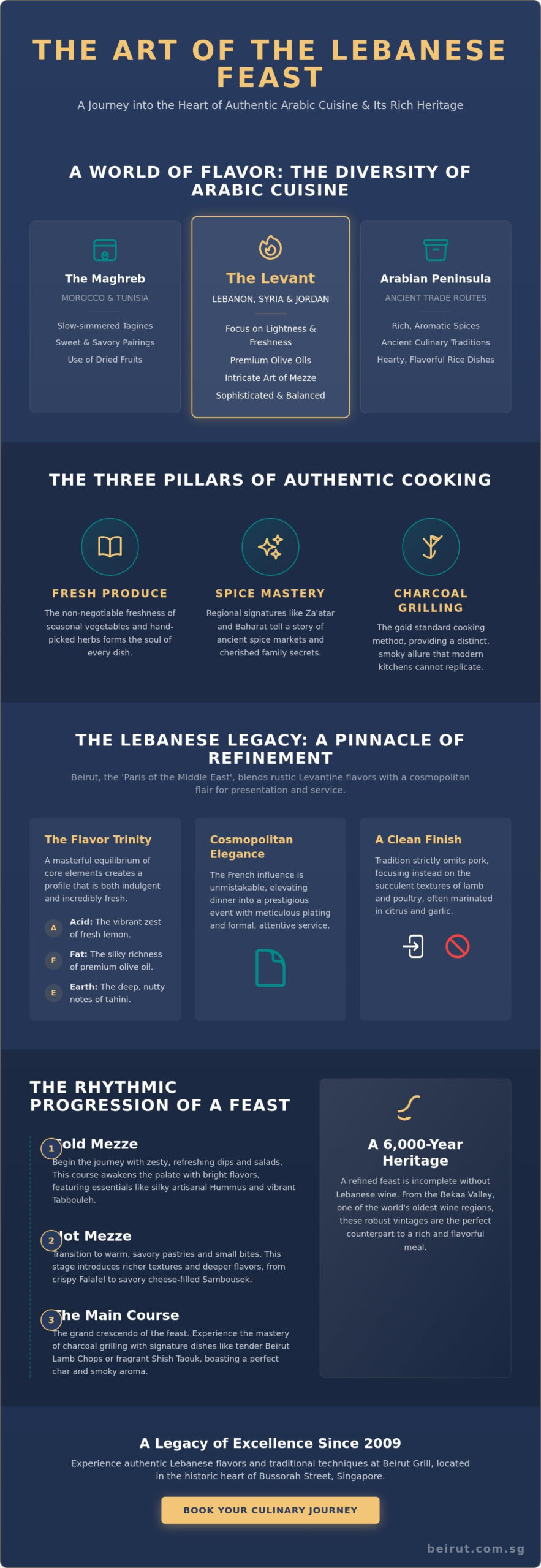
True culinary authority rests on the quality of ingredients and the patience of the chef. The first pillar is the non-negotiable freshness of produce, where seasonal vegetables and hand-picked herbs aren’t just garnishes but the soul of the dish. Imagine the snap of a garden-crisp cucumber or the fragrance of parsley chopped moments before serving. Next is spice mastery. Blends such as za’atar and Baharat aren’t merely seasonings; they’re regional signatures that tell a story of ancient spice markets and family secrets. Finally, there’s the role of fire. Traditional charcoal grilling remains the gold standard, providing a distinct, smoky allure to meats and vegetables that modern gas kitchens can’t hope to achieve.
Levantine vs. Maghrebi Traditions
While the Maghreb traditions of Morocco and Tunisia offer the slow-simmered comfort of tagines and the sweetness of dried fruit pairings, the Levant represents a different level of culinary polish. The heritage of Lebanon, Syria, and Jordan is defined by its lightness, its heavy reliance on premium olive oils, and the intricate artistry of the mezze table. This style emphasizes a rhythmic progression of flavors, from zesty dips to warm, savory pastries. It’s this specific Levantine style, with its focus on balance and variety, that’s often celebrated as the best arabic cuisine for those seeking a sophisticated, multi-course journey that feels both exclusive and welcoming.
The Lebanese Legacy: The Pinnacle of Middle Eastern Refinement
Beirut has long been celebrated as the culinary capital of the Arab world, a title earned through centuries of cultural refinement. This city, often called the ‘Paris of the Middle East,’ serves as a bridge between ancient Levantine traditions and modern gastronomic elegance. It’s here that the best arabic cuisine found its most sophisticated voice, blending the rustic, sun-drenched flavors of the countryside with a cosmopolitan flair for presentation and service. The French influence is unmistakable, manifesting in the meticulous plating and the formal, attentive service that elevates a dinner into a prestigious event. Unlike other regional styles, Lebanese tradition strictly omits pork, focusing instead on the succulent textures of lamb and poultry, often marinated in citrus and garlic to achieve a bright, clean finish.
The Sophistication of Beirut’s Culinary Scene
The roots of this hospitality stretch back to ancient trade routes, where the rich heritage of medieval Arab cuisine first began to flourish. Lebanese chefs have mastered a delicate equilibrium between three core elements: the vibrant ‘acid’ of fresh lemon, the silky ‘fat’ of premium olive oil, and the deep ‘earth’ of nutty tahini. This trinity creates a flavor profile that is both indulgent and incredibly fresh. At our home on Bussorah Street, we’ve honored this balance since 2009, ensuring that every meal is treated as a sensory journey rather than just sustenance. Whether it’s the tender Beirut Lamb Chops or the fragrant Shish Taouk, the goal is always to transport the guest to a sun-drenched balcony overlooking the Mediterranean.
Lebanese Wine: A 6,000-Year Heritage
A refined feast is incomplete without its liquid counterpart. The Bekaa Valley stands as one of the world’s oldest wine-producing regions, with a history of viticulture dating back six millennia. This ancient terroir produces Lebanese Wine that possesses a unique, robust character, perfectly suited to cut through the richness of grilled meats and the zesty acidity of mezze. For those seeking the ultimate traditional palate cleanser, we serve Arak, the legendary ‘Lion’s Milk.’ This anise-flavored spirit, when diluted with water, turns a milky white and provides a cooling contrast to the warmth of the spices. It’s this dedication to authentic pairing that defines a truly premium dining experience that rewards the visitor’s curiosity.
The Art of the Feast: Mezze and the Signature Mixed Grill
A traditional feast is an carefully choreographed performance, where the table becomes a canvas of color and fragrance. To experience the best arabic cuisine, one must embrace the rhythmic progression of the meal, a journey that begins with the cool, refreshing notes of the cold mezze before building toward the smoky intensity of the charcoal grill. This isn’t a dining experience to be rushed. Instead, it’s a deliberate celebration of ‘Al-Maza,’ where variety and sharing are the primary virtues. The transition from zesty salads to warm, savory pastries requires a certain patience, allowing each layer of flavor to settle before the next arrives. It’s this communal spirit that transforms a simple dinner into a prestigious cultural event.
Mastering the Mezze Table
The journey starts with the Cold Mezze, a vibrant selection designed to awaken the palate. Essential to this stage are our house-made dips, such as the velvety Hummus and the smoky Baba Ghanoush, each crafted with premium tahini and imported olive oil. These are accompanied by the bright, herbaceous crunch of Tabbouleh and the zesty, sumac-dusted Fattoush. For those seeking vegetarian excellence, this stage is a haven. Dishes like the tender Warak Enab (stuffed grape leaves) and the creamy Labneh demonstrate that plant-based dining can be both sophisticated and deeply indulgent.
As the conversation flows, the Hot Mezze arrives to introduce warmth and texture. This middle course features the iconic Fried Kibbeh, with its crisp bulgur shell, and the golden, flakey Sambousek. We often suggest the Grilled Halloumi or the spicy, garlic-tossed Batata Harra to provide a savory bridge to the main event. Pacing is key here; the goal is to sample the breadth of the menu without losing your appetite for the masterpieces yet to come.
The Charcoal-Grilled Masterpieces
The true climax of the evening is the arrival of the grills, where the ancient role of fire takes center stage. Our Mixed Grill is the ultimate expression of this technique, a curated platter that showcases the mastery of our chefs over the charcoal flames. Each component requires a specific touch. The Lamb Kofta is a delicate balance of finely minced meat, fresh parsley, and onions, while the Shish Taouk relies on a patient marination in garlic and lemon to achieve its signature tenderness. Using traditional charcoal rather than gas ensures a distinct, smoky allure that defines the best arabic cuisine. Whether you’re savoring the robust Beef Kebab or our signature Beirut Lamb Chops, the result is a charred perfection that honors our heritage and rewards your curiosity with every succulent bite.
Criteria for the Best Arabic Dining Experience in Singapore
In an urban landscape as diverse as Singapore, identifying the best arabic cuisine requires a discerning eye for detail and a palate tuned to authenticity. A premium experience is defined by more than just a menu; it’s an unwavering commitment to ingredient purity and ancestral methods. This begins with the non-negotiable use of imported spices from regional hubs and cold-pressed, premium olive oils that carry the weight of the Levantine sun. True cultural authority is found in the adherence to pork-free and halal standards. These pillars ensure that the table remains a place of inclusive hospitality, where every guest can indulge without hesitation in a setting that feels both specialized and accessible.
How to Spot Authentic Preparation
Diners seeking the best arabic cuisine should look for specific sensory markers that separate the artisanal from the generic. Consider the texture of the Hummus. It should be a silky, velvety emulsion of chickpeas and tahini. A grainy or watery consistency suggests a lack of patience in the kitchen. Next, observe the ‘char’ on your grills. Natural charcoal fires produce a distinct, smoky aroma and a specific sear that gas flames simply cannot replicate. Finally, examine the Tabbouleh. In a kitchen that respects heritage, herbs are hand-chopped with precision. Pre-cut parsley is a culinary sin that leads to bruising and bitterness, whereas hand-chopping preserves the vibrant, aromatic oils that define this refreshing salad.
The Significance of Lebanese Hospitality
The spirit of ‘Ahlan wa Sahlan’, a warm welcome that translates to ‘you have come to your family and a plain of ease’, is the heartbeat of our tradition. Service shouldn’t feel transactional. Instead, it should mirror the experience of being hosted in a prestigious private home, where the staff acts as a knowledgeable guide through the culinary landscape. From our historic location on Bussorah Street, we seek to transport every visitor through this immersive atmosphere. For those who wish to deepen their understanding of these traditions, our Middle Eastern Food Singapore Guide offers a comprehensive look at the nuances of the connoisseur’s journey. We invite you to reserve your table and experience a level of hospitality that has been our hallmark since 2009.
Beirut Grill: A Legacy of Arabic Culinary Excellence Since 2009
Nestled in the vibrant architectural landscape of Bussorah Street, Beirut Grill stands as a prestigious landmark for those seeking the best arabic cuisine in Singapore. Since our founding in 2009, we’ve remained steadfast in our mission to act as a cultural bridge, transporting our guests to the heart of the Levant through every sensory detail. This commitment to excellence was recently honored when we were named the Best Middle Eastern Restaurant 2024 at the Epicurean Star Awards. Our kitchen is a place of pride and indulgence; it’s where the ancient art of charcoal-grilling is treated not merely as a technique, but as a sacred tribute to our heritage. We invite you to slow down and immerse yourself in an environment where professional authority meets a warm, inviting hospitality that rewards your curiosity.
Signature Dishes that Define Our Heritage
Every plate we serve is a testament to our specialized expertise and the premium nature of our ingredients. The Beirut Lamb Chops are a masterclass in tenderness, having been marinated in a proprietary blend of herbs and spices imported directly from Beirut before meeting the intense heat of the charcoal. Our signature Hummus is equally essential to the experience. It’s crafted using traditional methods to ensure a velvet-smooth finish that sets the standard for the best arabic cuisine. For the ultimate enthusiast, the indulgent Mixed Grill offers a comprehensive selection of our finest meats. This platter showcases the smoky allure and charred perfection that only a true charcoal fire can provide, ensuring a meal that is both specialized and deeply satisfying.
Beyond the Meal: A Cultural Journey
A true Lebanese feast is a rhythmic progression that extends far beyond the main course. To complement the rich flavors of our grills, we offer a curated beverage list featuring high-end labels. You might pair your feast with a robust Lebanese Wine from the historic Beqaa Valley or perhaps a glass of Arak, the traditional ‘Lion’s Milk’ palate cleanser. As the evening matures, the atmosphere shifts toward a quiet indulgence. We suggest finishing your journey with the soothing notes of Moroccan Mint Tea or a cup of strong, aromatic Lebanese Coffee. No visit is complete without sampling our authentic Kunefe or the delicate, honeyed layers of our Baklava. This is more than a dinner; it’s a prestigious destination that has been a hallmark of credibility for over a decade. We invite you to reserve your table at Beirut Grill for an authentic Arabic experience and join us in the heart of Singapore’s most historic district.
Embark on Your Next Culinary Odyssey
We’ve explored how the best arabic cuisine is defined by its respect for ancestral fire and the rhythmic joy of sharing. You now know that a true feast is a deliberate progression from the zesty brightness of cold mezze to the smoky, charred perfection of the mixed grill. Refined dining isn’t just about the food on the plate; it’s about the heritage of the Bekaa Valley and the warm, knowledgeable host who guides your journey. Authenticity lives in the silky texture of the hummus and the hand-chopped freshness of the herbs.
Since 2009, we’ve been proud to serve as a prestigious destination where these traditions are preserved with unwavering integrity. From our authentic charcoal-grilling techniques to our premium Lebanese wine selection, every detail is designed to reward your curiosity. We invite you to step into our home on Bussorah Street and discover a world of sensory indulgence that transcends the ordinary.
Experience the Best Arabic Cuisine in Singapore at Beirut Grill
Your table awaits in the heart of our historic home.
Frequently Asked Questions
What is the difference between Lebanese and general Arabic food?
Lebanese cuisine is a specific and highly refined subset of the broader Arabic culinary landscape. While the term “Arabic food” encompasses a vast geography from the Maghreb to the Arabian Peninsula, the Lebanese tradition is celebrated for its sophisticated focus on the Levant’s fresh produce, premium olive oils, and vibrant citrus. It’s often regarded as the most elegant expression of the best arabic cuisine due to its intricate mezze rituals and the historical influence of French service standards.
What are the must-try dishes for someone new to Arabic cuisine?
Diners beginning their journey should start with a balanced selection of mezze followed by a signature charcoal grill. We recommend beginning with our velvet-smooth Hummus and zesty Fattoush to awaken the senses. For the main course, the Shish Taouk or our signature Beirut Lamb Chops provide a perfect introduction to traditional spice marinations and the art of the fire. This progression offers a complete sensory journey through our heritage and culinary pride.
Is Arabic food always spicy or hot?
Arabic cuisine focuses on aromatic complexity and depth of flavor rather than aggressive chili heat. While we use a rich palette of spices like sumac, za’atar, and cumin, these are chosen for their fragrance and earthy notes. You’ll find that dishes like Batata Harra offer a gentle, savory spice, but the overall profile is expertly balanced by cooling elements like Labneh and fresh herbs. It’s an indulgent experience that favors subtle harmony over overwhelming fire.
What makes a Lebanese Mixed Grill different from other grilled meats?
The distinction lies in the meticulous marination process and the use of authentic charcoal heat. Our Mixed Grill isn’t merely a collection of meats; it’s a curated showcase of Lamb Kofta, Beef Kebab, and Shish Taouk, each treated with specific regional herbs. Hand-turning these cuts over smoldering coals achieves a charred perfection and smoky allure that modern gas grills can’t replicate. It has been a hallmark of our specialized expertise since 2009.
What are the best vegetarian options in Arabic cuisine?
Arabic cuisine is naturally inclusive and offers a prestigious array of plant-based masterpieces that reward the visitor’s curiosity. Vegetarian guests can indulge in a feast of Falafel, Spinach Fatayer, and Grilled Halloumi. The mezze table is especially generous, featuring classics like Tabbouleh, Moutabal, and tender Warak Enab. These dishes prove that the best arabic cuisine is a haven for plant-based diners, offering flavors that are both sophisticated and deeply satisfying.
Why is charcoal grilling so important in Arabic cooking?
Charcoal provides a distinct, smoky allure that is fundamental to the traditional flavor profile of the Levant. The intense, dry heat of natural charcoal sears the meat instantly, locking in essential juices while imparting a subtle wood-fired fragrance. This ancient technique is a non-negotiable standard in our kitchen on Bussorah Street. It ensures that every kebab and lamb chop carries the authentic signature of our cultural roots and a quality that rewards the discerning palate.
How do I pair wine with Arabic mezze?
The key is to select wines that mirror the vibrant acidity and herbal notes found in the dishes. Our curated selection of Lebanese Wine from the Beqaa Valley is crafted for this specific purpose. A crisp white or a dry rosé beautifully complements the lemon and garlic in Hummus and Tabbouleh. For the richer, charcoal-grilled meats, a robust red provides the necessary structure to balance the smoky intensity of the meal, creating a prestigious dining harmony.
What is the traditional way to end an Arabic meal?
A traditional conclusion involves a deliberate slowing of the pace with artisanal sweets and warm, aromatic beverages. Guests typically enjoy a piece of authentic Kunefe or the honey-layered perfection of Baklava. This is followed by the restorative ritual of Moroccan Mint Tea or a cup of strong Lebanese Coffee. It’s a rhythmic end to the feast that encourages guests to linger in their surroundings and fully immerse themselves in the spirit of our hospitality.