
A shared table can turn a meal into an invitation: to talk, taste, and feel at ease with one another. The art of sharing food lies in these small exchanges, from passing a dish to offering someone a first taste of something unfamiliar. Together, they make dining feel less like a transaction and more like a moment of connection.
It’s easy to see why a meal with others can feel welcoming, yet sharing also calls for trust and consideration. A new dish may seem more approachable when everyone can sample it, while thoughtful gestures help guests feel included without putting them on the spot.
Discover how shared meals create space for conversation and stronger relationships, how to make unfamiliar flavours easier to try, and how simple table manners can build trust. From a relaxed spread of mezze to a lingering meal in Singapore, the way food is offered and enjoyed together can shape the whole experience.
Key Takeaways
- Make room for conversation by slowing down, putting distractions aside, and showing interest in everyone at the table.
- Let diners sample unfamiliar dishes in small tastes, so curiosity feels inviting rather than pressured.
- Use serving utensils and offer portions considerately to help everyone feel comfortable sharing.
- Notice the small gestures, including who gets the last piece, that can turn a meal into a moment of trust and connection.
Sharing meals and building relationships
A dinner shared across several dishes gives conversation a natural rhythm: guests can pass plates, offer tastes, and respond together. These small exchanges make connection part of the meal.
Connecting Through Shared Meals
Eating together means sharing a table and a moment, with food offering an easy focus for conversation. Passing a bowl or asking what someone thinks of a dish creates simple openings to speak and listen. This can help when guests are still getting acquainted: discussing a flavour gives everyone a subject, while taking turns serving helps each person feel included.
Sharing Meals Across Generations
A meal across generations brings relatives of different ages and experiences into the same conversation. A grandparent might describe a dish remembered from childhood, while a younger guest shares a new favourite. These exchanges give family traditions room to be retold and adapted. Invite everyone to contribute a memory or preference, so no generation is treated only as an audience.
Family Meals and Communication
Family meals offer regular opportunities to share news, listen, and notice how others are doing. At dinner, an open question such as “What made you laugh today?” can invite more than a one-word reply. Putting phones aside and letting each person finish speaking keeps attention on the conversation. Small, repeatable habits help relatives share everyday details, not just major announcements.
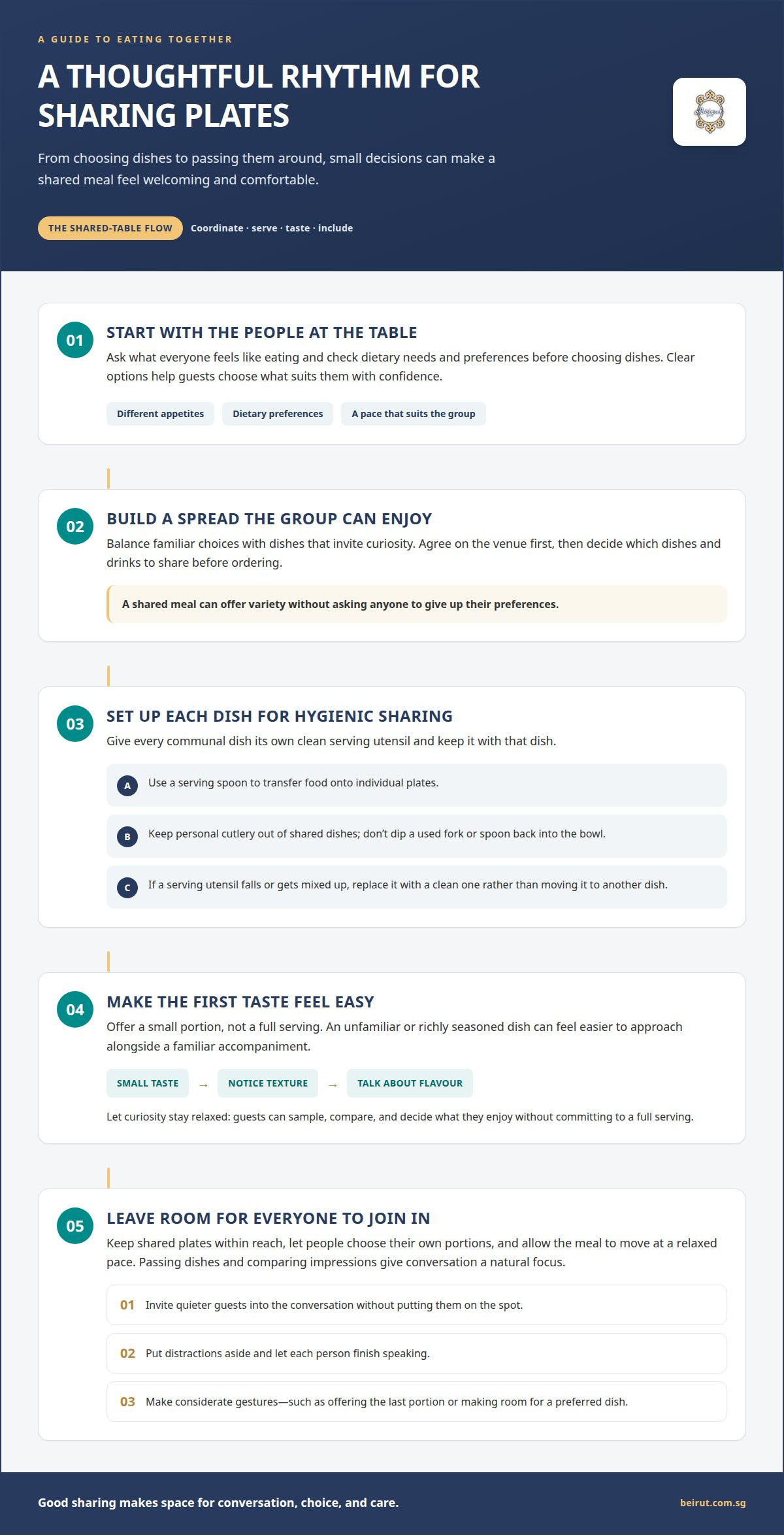
Hosts can plan for different dietary needs by asking guests about restrictions and preferences before choosing dishes. Offer clearly identified options and keep serving utensils separate, so guests can choose what suits them with confidence.
Shared meals can help people feel considered: offering the last portion, making room for someone’s preferred dish, or inviting a quieter guest to speak are practical gestures of care. Together, these choices make the table welcoming while letting each diner participate at their own pace.
Trying unfamiliar foods while dining in a group
At a shared table, a first taste can feel like a small group discovery. A spoonful offered by a friend can make an unfamiliar flavour easier to approach.
Communal Dining and Sharing Plates
Communal dining is a meal where diners share dishes rather than keeping every plate to themselves. It lets guests sample and compare flavours, then decide what they enjoy without committing to a full serving. There is no single cultural origin: sharing food is a longstanding practice in many cultures. Chinese banquets, for example, are meals designed to be shared.
For a first taste, invite friends to serve a small portion and describe what they notice. Someone unsure about a richly seasoned dish can start with a bite alongside a familiar accompaniment. That keeps discovery relaxed and gives the table an easy topic: texture, aroma, and the flavour that stands out.
Hygiene When Sharing Food
For hygienic sharing, use serving utensils for communal dishes instead of personal cutlery. Place a clean spoon beside a shared bowl and use it to transfer food to individual plates. This avoids dipping a used fork or spoon back into the dish.
Keep each serving utensil with its own plate, especially when several dishes are on the table. If a spoon falls or becomes mixed up, replace it with a clean one rather than returning it to another dish. These clear habits help guests share comfortably without interrupting the meal.
Outdoor dining and cooking add another way to take part. At a garden meal, for example, guests might watch food cook, then pass prepared dishes around the table. Keep shared plates within easy reach and provide separate serving utensils, so diners can choose portions without crowding the cooking area. The aromas and open setting can make tasting part of the occasion.
To explore a Singapore setting for food shared across the table, consider a Lebanese dining experience with friends.
Eating out as a shared experience
Anthropologists call eating together “commensality,” a practice that turns a meal into a social occasion. In a restaurant, the shared experience includes choosing dishes, noticing what arrives, and setting the pace together. The table becomes a conversation in motion, with each choice influencing what everyone tastes next.
Ordering as a group calls for a little coordination. Start by asking what the table feels like eating, then balance familiar choices with dishes that invite curiosity. One person might prefer grilled flavours, while another wants something lighter. Agreeing on a mix makes the meal feel collective without asking anyone to give up their preferences.
Shared dining also changes the rhythm of a restaurant visit. Rather than each diner finishing a separate plate, guests can pause between dishes, compare impressions, and decide whether to order more. Passing a plate gives conversation a natural focus and can help quieter guests join in with a simple contribution.
In Singapore, common settings for dining together include hawker centres, food courts, and restaurants with tables suited to groups. Meal costs vary by venue, dish selection, portion size, and drinks. To keep spending comfortable, agree on the kind of venue first, then decide how many dishes and drinks to share before ordering.
A shared meal works best when the group makes room for different appetites and habits. One guest may want to linger over conversation, while another prefers a quicker meal. Set a relaxed pace, place dishes within everyone’s reach, and let people choose their own portions. These small decisions help the outing feel welcoming rather than tightly planned.
Dining out can make ordinary decisions memorable: choosing a dish together, discovering an unexpected favourite, or recalling a lively conversation on the way home. The restaurant provides the setting, but each person helps create the occasion. That is the quiet pleasure of sharing a meal, bringing friends closer without needing a special celebration.
Food sharing, trust, and social connection
Offering a dish can signal welcome, while accepting a taste shows willingness to join the table. These gestures matter because they involve choice and consideration: a host offers, a guest accepts or declines, and everyone learns how others prefer to participate. Trust grows through mutual respect, not pressure to eat everything nearby.
In Singapore, diners may hesitate to claim the last portion for fear of appearing greedy. A simple offer, such as asking who would enjoy it, makes the choice clear. If nobody wants it, leave it rather than turning politeness into an obligation.
Ideas about food and belonging vary across cultures. Some communities see eating the same food together as a way of creating kinship beyond biological family ties. At a shared table, guests can respect different customs by asking before serving, explaining unfamiliar dishes, and accepting a polite refusal. These small courtesies help people connect without assuming everyone shares the same expectations.
For food safety at a shared meal, use clean serving utensils and keep personal cutlery out of communal dishes. Serve soup with its own ladle, for example, and replace a utensil if it falls or gets mixed with another dish. Clear habits protect comfort and show care for everyone at the table.
In Singapore, a practical approach to surplus is to separate untouched food before serving and avoid offering plate remnants for donation. For organised food donations, follow the receiving organisation’s handling instructions; don’t assume leftovers are suitable simply because they look untouched.
A University of Chicago negotiation study found that pairs sharing a bowl of chips and salsa reached a deal earlier than pairs with separate bowls. A shared dish can create a small sense of cooperation, but considerate boundaries matter just as much. To put that spirit into practice over a meal, plan a shared dining experience.
Beirut Grill
Beirut Grill offers a welcoming setting for putting shared dining into practice while serving customers across Singapore. Hummus gives the table a dish to pass around, while a Mixed Grill lets diners explore a range of grilled flavours together. A Vegetarian Kebab offers another choice for guests who prefer a meat-free dish.
For friends or family curious about Lebanese food, sharing several dishes can make the meal feel exploratory without requiring everyone to choose the same thing. Pass plates around, take a little at a time, and let conversation guide what the group enjoys. Lebanese Wine can accompany the meal for those who would like it.
For a shared meal shaped by Lebanese flavours, contact Beirut Grill.
Make the Next Meal a Shared One
The next shared table doesn’t need a special occasion. Choose a dish that invites everyone to take part, make room for different preferences, and let conversation unfold at its own pace. The art of sharing food becomes meaningful through these choices, turning an ordinary meal into an opportunity to welcome someone, reconnect, or explore new flavours together.
At Beirut Grill, Hummus and Mixed Grill bring different tastes to the centre of the table, while Lebanese Wine offers an option to accompany the meal. Let your group decide what to share and how slowly to savour it. A relaxed approach leaves space for every guest to enjoy the gathering in their own way.
Plan a meal with Beirut Grill, and make room for good food, generous conversation, and a memorable evening together.
Frequently Asked Questions
What does “the art of sharing food” mean?
The art of sharing food means treating a meal as an exchange, not simply dividing portions. It includes offering choices, receiving a dish graciously, and allowing guests to decide what suits them. For example, a host might describe a dish’s flavour and let each person choose whether to sample it. Care and consideration matter as much as what’s served.
What are common etiquette rules for sharing food at a meal?
Follow the host’s cues, take a modest first serving, and leave enough for others before returning for more. If you’re unsure whether a dish is shared or reserved, ask rather than reaching across someone’s place setting. At a potluck, label the dish you brought and mention its ingredients. These simple courtesies help guests navigate different expectations comfortably.
What are popular shared dining formats, such as family-style, potluck, and communal dining?
Family-style dining places prepared dishes on the table for guests to serve themselves. At a potluck, each guest contributes a dish, so the host can coordinate categories such as appetisers or desserts. Communal dining can mean sharing dishes within a group or sitting at a common table with other diners. The format shapes how food is chosen and how conversation flows.
What are the benefits of sharing food for social connection and wellbeing?
Sharing food can create a comfortable setting for attention, conversation, and belonging. A guest unsure about joining a discussion might begin by asking about a dish or sharing a recipe memory. These exchanges give people a natural way to participate and learn about one another. The value lies in making time for company, rather than expecting a meal to solve every difficulty.