
While many mistakenly order a “Turkish” brew, the true connoisseur knows that a cup of authentic lebanese coffee is a distinct masterpiece of balance and aromatic depth. Since 2009, we’ve watched guests on historic Bussorah Street pause as the scent of freshly ground cardamom wafts from our kitchen, signaling the start of a centuries-old tradition. You likely appreciate the warmth of a post-meal drink, yet you might feel a slight hesitation when the small, handleless cup arrives at a fine-dining table. It’s common to wonder about the etiquette or the specific intensity of the flavor profile.
We’ll demystify this ancient tradition to ensure you feel entirely at home during your next visit to a high-end Lebanese restaurant. This guide reveals the meticulous preparation techniques used in the Beqaa Valley and the refined social rituals that define Middle Eastern hospitality. You’ll learn the secret behind the perfect cardamom ratio and the proper way to accept a refill with grace. We’re taking you on a sensory journey through the history, preparation, and sophisticated etiquette of Lebanon’s most iconic beverage.
Key Takeaways
- Understand the profound cultural significance of “Ahlan wa Sahlan” and why this brew remains the ultimate symbol of Middle Eastern hospitality.
- Master the technical nuances of the Rakweh and the importance of the ultra-fine powder grind required to achieve a traditional, velvet-textured finish.
- Learn the sophisticated social rituals of the Finjan, including the proper way to handle your cup as the definitive seal to a divine meal.
- Discover the art of the perfect pairing by matching the bold, aromatic notes of lebanese coffee with the honeyed sweetness of Baklava and Kunefe.
- Explore how Beirut Grill has preserved these time-honoured brewing traditions on Singapore’s historic Bussorah Street since 2009.
The Essence of Lebanese Coffee: A Ritual of Hospitality
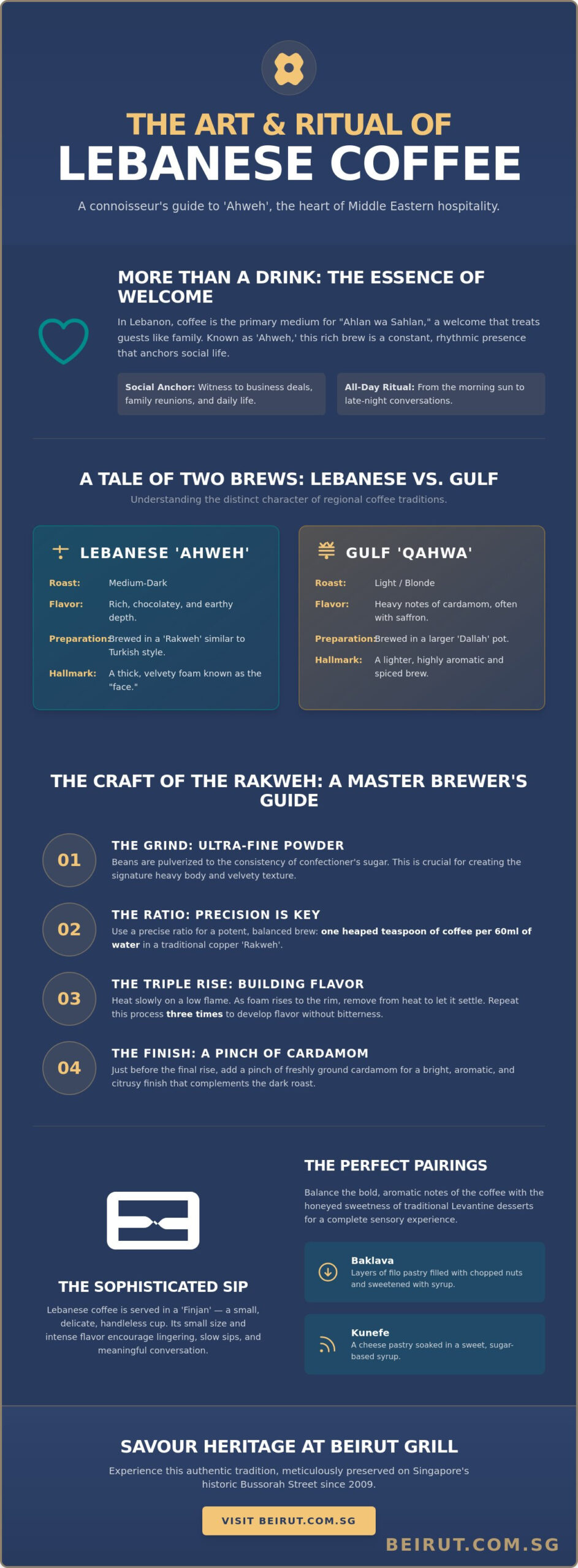
With the majestic Sultan Mosque as a backdrop on historic Bussorah Street, the air around Beirut Grill has been thick with the intoxicating aroma of spice and roasted beans since 2009. This fragrance signals the arrival of lebanese coffee, a beverage that transcends simple refreshment to become the very soul of Levantine culture. Known locally as “Ahweh,” this strong, unfiltered brew is the primary medium through which the Lebanese people express “Ahlan wa Sahlan,” a phrase embodying a welcome that treats a guest like family. It’s a tradition that has anchored social life for centuries, acting as the silent witness to every business deal, family reunion, and neighborhood gossip session.
The history of coffee in Lebanon is a narrative of trade and transformation. While the beans arrived via ancient Ottoman routes, the Lebanese people refined the preparation into a distinct art form. Unlike the quick, functional caffeine hits found in Western cafes, Ahweh is served throughout the entire day. It greets the morning sun to sharpen the senses, concludes a lavish mezza feast to aid digestion, and punctuates late-night conversations under the stars. It’s a constant, rhythmic presence in the home and the marketplace alike.
The Symbolism of the Small Cup
In the refined setting of our boutique dining room, you’ll notice that lebanese coffee is never presented in a large, modern mug. It’s poured into a “finjan,” a delicate, handleless cup designed to fit perfectly in the palm. This small vessel is a deliberate choice that dictates the pace of the encounter. Because the coffee is intense and concentrated, small sips are a necessity, which naturally encourages guests to linger and engage in prolonged, meaningful conversation. The “Ahweh” ritual serves as the cornerstone of Lebanese hospitality, transforming a simple caffeine fix into a sacred bond between host and guest.
Lebanese vs. Arabic Coffee: Understanding the Nuance
Distinguishing between regional styles requires a keen palate and an appreciation for heritage. While the linguistic roots of Qahwa, Kahwa, and Ahweh are identical, the liquid in the cup varies significantly across the Middle East. In the Gulf regions, coffee is often a light, blonde roast infused with heavy notes of cardamom and saffron. Lebanon, however, maintains a preference for medium-dark roasts that offer a chocolatey, earthy depth without the bitterness of a burnt bean. This specific style draws heavily from traditional Turkish coffee preparation, utilizing the iconic long-handled “rakweh” to achieve a thick, velvety foam known as the “face.” This foam is the hallmark of a master brewer, ensuring that every cup served at Beirut Grill is as visually stunning as it is delicious.
The Craft of the Rakweh: How Traditional Coffee is Prepared
To master lebanese coffee, one must first respect the precision of the grind. Unlike the coarse textures found in Western brewing methods, these beans are pulverized into an ultra-fine powder that resembles the consistency of confectioner’s sugar. This allows the coffee to dissolve partially and create the signature heavy body that has defined Levantine hospitality for centuries. At Beirut Grill, we’ve upheld these standards on historic Bussorah Street since 2009, ensuring every cup reflects this meticulous heritage.
The vessel of choice is the rakweh, a long-handled pot traditionally forged from hammered copper. This specific material is essential for its superior heat conductivity; it ensures the brew heats evenly across the base without scorching the delicate powder. For a balanced, bold result, the ratio is typically one heaped teaspoon of coffee to 60 milliliters of water. This concentration creates a potent elixir that honors the social and cultural importance of coffee within the daily lives of the Lebanese people.
The preparation requires a watchful eye and a steady hand. Once the mixture is placed over a low flame, the “rising” technique begins. As the coffee reaches a simmer, it begins to foam and rise toward the rim of the rakweh. The pot is removed momentarily to let the grounds settle, then returned to the heat. This process is repeated three times. This rhythmic aeration develops the flavor profile without introducing the burnt notes common in rushed preparations. Just before the final rise, a pinch of freshly ground cardamom is introduced to provide a bright, citrusy finish.
The Importance of the “Face” (Foam)
A cup served without the “Wesh,” or creamy foam, is often viewed as a social faux pas in a traditional setting. This delicate layer of micro-bubbles indicates the freshness of the beans and the skill of the brewer. To preserve the foam when serving multiple guests, the first spoonful of froth is often shared among the cups before the liquid is poured. It’s a gesture of respect that ensures every guest enjoys the richest part of the brew. You can experience this authentic ritual firsthand at Beirut Grill, where our team treats every pour as a performance.
The Role of Cardamom
Cardamom is the signature aromatic that distinguishes Lebanese coffee from its neighbors. Beyond its ability to balance the intense bitterness of a dark roast, the spice is prized for its traditional health benefits, including aiding digestion and acting as a natural breath freshener. In Lebanese culture, the citrusy notes of the spice provide a sophisticated counterpoint to the earthy depth of the beans. This infusion transforms a simple caffeine hit into a divine, multi-layered sensory journey.
Lebanese Coffee Etiquette: A Guide for the Sophisticated Diner
Nestled in the vibrant heart of historic Bussorah Street, the ritual of lebanese coffee serves as a sacred punctuation mark to a meal. At Beirut Grill, we’ve upheld this tradition since 2009, treating the final pour as a “seal” of hospitality. This isn’t a beverage to be rushed. It’s a transition from the savory indulgence of our mezze to a state of reflective calm. Understanding the etiquette behind the cup transforms a simple drink into a sophisticated cultural exchange that honors centuries of Levantine heritage.
Holding the “finjan,” the traditional handleless porcelain cup, requires a specific grace. You should grasp the rim and the very bottom of the base using your thumb and index finger. This technique keeps your fingers away from the heat of the liquid while providing a secure grip. As you sip, you’ll notice the texture changes. The “bottoms up” rule in Lebanon is actually a cautionary one; you must stop drinking before you hit the thick, muddy sediment at the base. This layer, as detailed by the Food Heritage Foundation, is essential for the brewing process but isn’t meant for consumption. To signal you’ve had your fill, don’t just set the cup down. Give the finjan a gentle, rhythmic tilt from side to side to communicate that your thirst is quenched.
The Finjan and the Pour
The tradition begins with the host pouring for the guest, a gesture of service that defines Middle Eastern warmth. We ensure the cup is filled exactly 50 percent of the way. This isn’t a sign of scarcity; rather, it allows the intense aroma to bloom within the cup and ensures the liquid cools to an ideal sipping temperature quickly. During a traditional service, you’ll hear the rhythmic “clink” of the long-handled rakwe pot hitting the porcelain finjan. This sound is a sensory invitation, signaling that a fresh, aromatic brew is ready for your enjoyment.
Coffee and Conversation
In the bustling landscape of Singapore, our dining room offers a rare invitation to linger. Whether it’s a high-stakes business negotiation or a relaxed family gathering, lebanese coffee acts as a social lubricant. Rushing through your cup is often viewed as a sign that the company isn’t to your liking. Instead, the service is designed to encourage guests to soak up the ambiance of our boutique space. At Beirut Grill, we view this final course as a divine dining experience that rewards your curiosity, turning a brief visit into a memorable journey through Lebanese culture.
The Perfect Pairings: Enhancing the Sensory Experience
Since 2009, Beirut Grill has stood as a bastion of authenticity on historic Bussorah Street. Here, the ritual of lebanese coffee acts as the final, elegant chapter of a sensory journey. After indulging in a signature Mixed Grill, the transition to coffee marks a shift from the robust, smoky flavors of charcoal-grilled meats to a moment of quiet reflection. This transition isn’t accidental. It’s a curated pause. A small glass of ice-cold water always precedes the first sip. This serves a vital purpose; it cleanses the palate, ensuring the intricate notes of the dark roast and aromatic cardamom are fully appreciated without any lingering oils from the preceding feast.
Sweet Indulgences
The bold, intentional bitterness of the brew finds its perfect counterpart in the honeyed layers of our house-made Baklava. While the syrup and crushed pistachios provide a rich, floral sweetness, the coffee’s intensity cuts through the sugar, creating a sophisticated, balanced finish. For those seeking a more decadent pairing, the warm, melted cheese and semolina crust of Kunefe offer a creamy synergy with the intense brew. At Beirut Grill, we also honor the tradition of serving premium Medjool dates or dried apricots. These natural sugars provide a subtle, earthy lift that highlights the spice profile of the beans without overwhelming the senses.
Coffee vs. Other Middle Eastern Drinks
While Moroccan Mint Tea offers a refreshing, herbal lift often enjoyed during the heat of the day, the choice of lebanese coffee is the definitive evening choice for its digestive qualities. The concentrated oils and the stimulating effect of the caffeine help settle the stomach after a rich Lebanese feast. It differs from Turkish coffee primarily through the Lebanese preference for a specific cardamom-to-coffee ratio, resulting in a brew that’s more fragrant and less earthy. For a truly authentic Singapore experience, guests often transition from a glass of anise-flavored Arak during their mezza to a hot coffee to close the night.
| Feature | Lebanese Coffee | Turkish Coffee | Arak |
|---|---|---|---|
| Primary Flavor | Cardamom & Dark Roast | Pure Ground Beans | Aniseed & Grape |
| Preparation | Unfiltered, Rakweh-boiled | Unfiltered, Sand-heated | Distilled with Water |
| Best For | Post-Meal Digestion | Social Gatherings | Mezza Accompaniment |
Experience the divine harmony of traditional flavors by booking your next authentic Lebanese dining experience at our award-winning restaurant.
Savouring Heritage at Beirut Grill: An Authentic Singapore Experience
Since our establishment in 2009, Beirut Grill has remained a cornerstone of authentic Levantine culture on Singapore’s historic Bussorah Street. We don’t merely serve a beverage; we invite you into a living heritage. Our commitment to traditional brewing methods ensures that every pot of lebanese coffee captures the soul of Beirut. We meticulously source our premium Arabica beans and high-grade cardamom to achieve a profile that is both robust and elegantly spiced. This dedication to quality has allowed us to maintain our reputation as a critically acclaimed destination for those seeking the true flavors of the Middle East.
The sensory atmosphere at Beirut Grill is designed to transport you. As you sit within our boutique space, the scent of freshly ground spices mingles with the warm Singapore air. It is a place where time slows down, allowing guests to appreciate the intricate layers of our heritage. By adhering to the same standards we set in 2009, we ensure that every visitor experiences the same “divine” hospitality that has earned us our award-winning status over the years.
The Final Note of a Lebanese Feast
In our culture, a meal is a story that requires a perfect conclusion. Integrating coffee into a full menu experience is vital to the ritual. After indulging in our smooth Hummus and the charred, succulent perfection of our Mixed Grill, the arrival of the coffee pot signals a shift from the feast to reflection. We believe the importance of authenticity in every small cup we serve cannot be overstated. It provides a balanced, digestive finish that cleanses the palate and lingers in the memory. This transition reflects the traditional hospitality of the Beqaa Valley, brought to life with precision in the heart of Singapore.
A Hidden Gem for Coffee Lovers
Beirut Grill serves as a sophisticated environment that rewards the curious diner. Located against the backdrop of the majestic Sultan Mosque, our restaurant offers a sanctuary of refined indulgence. You will experience the “divine” hospitality that has made us a premier destination for locals and travelers alike. Whether you are finishing a multi-course dinner or seeking a quiet moment of cultural connection, our space provides the ideal setting. We invite you to book your table at Beirut Grill to experience authentic Lebanese coffee and discover why we have been a beloved fixture of the historic Kampong Glam dining scene since 2009.
Begin Your Journey into the Heart of Levantine Tradition
Embracing the deep-rooted traditions of the Middle East means more than just sipping a beverage; it involves understanding a legacy of hospitality. From the precise craft of the rakweh to the nuanced etiquette of a sophisticated diner, every cup tells a story of cultural pride. It’s a sensory journey where the aroma of cardamom meets the warmth of a shared moment. You’ve explored the history and the pairings that make this ritual unique, and now it’s time to taste the heritage for yourself.
Since 2009, Beirut Grill has stood as a critically acclaimed destination on historic Bussorah Street, bringing authentic traditional brewing techniques to the heart of Singapore. We pride ourselves on being a hidden gem where the majestic Sultan Mosque serves as your backdrop. Our commitment to excellence transforms a simple break into a divine dining experience. We invite you to soak up the atmosphere and discover why our lebanese coffee remains a hallmark of our award-winning service. We look forward to welcoming you to our table for an unforgettable encounter with Lebanese culture.
Book Your Authentic Lebanese Dining Experience
Frequently Asked Questions
What is the difference between Lebanese coffee and Turkish coffee?
Lebanese coffee is typically characterized by a lighter or medium roast and a generous infusion of cardamom compared to the often darker, smokier Turkish roasts. Since 2009, Beirut Grill has honored this distinction by brewing our coffee in a traditional long-handled rakweh to preserve its floral notes. While both styles use a pulverized, powder-like grind, the Lebanese version focuses on a bright, spiced profile that reflects the vibrant heritage of the Levant.
Is Lebanese coffee stronger than regular espresso?
Lebanese coffee is more concentrated than a standard espresso because the fine grounds remain in the water during the boiling process. This unfiltered method results in a higher density of dissolved solids and a more robust body in every 60ml serving. It’s a potent, evocative drink that provides a lingering energy, perfect for those seeking a sophisticated alternative to the common lattes found elsewhere in Singapore.
Why is there sediment at the bottom of my Lebanese coffee cup?
The sediment is a natural result of the traditional brewing process where pulverized coffee beans are boiled directly with water and never filtered. You’re meant to let the cup sit for about 60 seconds to allow these grounds to settle before taking your first sip. This thick layer at the base is an essential part of the ritual, often used in the historic practice of cup reading to glimpse into the future.
Do you add milk or cream to Lebanese coffee?
You don’t add milk or cream to authentic Lebanese coffee because it obscures the delicate balance of the bean’s acidity and the cardamom’s warmth. The tradition is to enjoy it black, perhaps sweetened with a touch of sugar during the boiling process. At our boutique location on historic Bussorah Street, we serve it in its purest form to ensure you experience the full sensory depth of the premium beans.
How much caffeine is in a small cup of Lebanese coffee?
A standard 60ml cup of Lebanese coffee contains approximately 40mg to 65mg of caffeine depending on the specific blend of Arabica beans used. Because the beans are ground so finely, the water extracts a significant amount of caffeine very quickly during the boil. This makes it a surprisingly powerful beverage despite its petite size, providing a sharp mental clarity that complements a heavy mezza feast.
Can I order Lebanese coffee without cardamom?
Yes, you can certainly order your coffee without cardamom, though the spice is a hallmark of Lebanese hospitality and heritage. Most authentic suppliers in Singapore provide both “with cardamom” and “plain” options to suit different palates. While the cardamom adds a majestic, cooling finish to the drink, a plain brew allows the nutty, chocolatey undertones of the medium-roasted beans to take center stage.
Why is a glass of water served with Lebanese coffee?
A glass of water is served to cleanse your palate so you can fully appreciate the intricate flavors of the coffee with every sip. Drinking water before the coffee prepares the tongue, while drinking it after helps wash away the fine silt left behind by the unfiltered grounds. This practice is a staple of the divine dining experience we’ve curated since 2009, ensuring guests feel truly welcomed and refreshed.
Is Lebanese coffee the same as Arabic coffee?
Lebanese coffee is a specific regional style within the broader category of Arabic coffee, distinguished by its roast level and serving method. While Gulf-style Arabic coffee is often light, yellowish, and infused with saffron, the Lebanese variety is darker and served in a small finjan cup. It represents a unique culinary identity that we proudly showcase against the majestic backdrop of the Sultan Mosque.