
The secret to the most seductive Lebanese dip isn’t found in a gentle simmer or a careful fold, but in the deliberate, blackened destruction of an eggplant’s skin over an open flame. Since 2009, we’ve honored this ritual at Beirut Grill, where the primal scent of charcoal defines our culinary identity. You’ve likely tasted the pale, uninspired imitations found in grocery aisles, or perhaps you’ve struggled with a homemade version that turned out disappointingly bitter and watery. It’s a common frustration to seek the deep, soulful essence of authentic baba ghanoush only to find a dish that lacks the necessary character and smoky depth.
In this guide, you’ll discover the sensory secrets and traditional techniques that transform the humble eggplant into a legendary masterpiece. We’ll clarify the frequent confusion between this dish and its creamier cousin, Moutabal, while revealing the markers of true quality that only a seasoned host can provide. You’ll learn to master the ancestral charring process and understand how to pair this dip within a prestigious feast of Shish Taouk and fine Lebanese wine. From the history of the Levant to your own table, prepare to indulge in a cultural journey that rewards your curiosity with every velvet bite.
Key Takeaways
- Uncover the evocative etymology of the “spoiled father” and why this indulgent dish is celebrated as the refined caviar of the Levant.
- Master the ancestral art of charcoal-charring to ensure your baba ghanoush possesses the soulful, smoky essence that defines authentic Lebanese cuisine.
- Recognize the distinct culinary markers that separate a traditional eggplant salad from the velvety, tahini-rich profile of a classic Moutabal.
- Learn the proper etiquette of the mezze table, from using warm pita as a natural scoop to selecting the perfect Lebanese wine for pairing.
- Appreciate the dedication to heritage and traditional preparation methods that have defined the Beirut Grill standard since our founding in 2009.
The Essence of Baba Ghanoush: More Than Just an Eggplant Dip
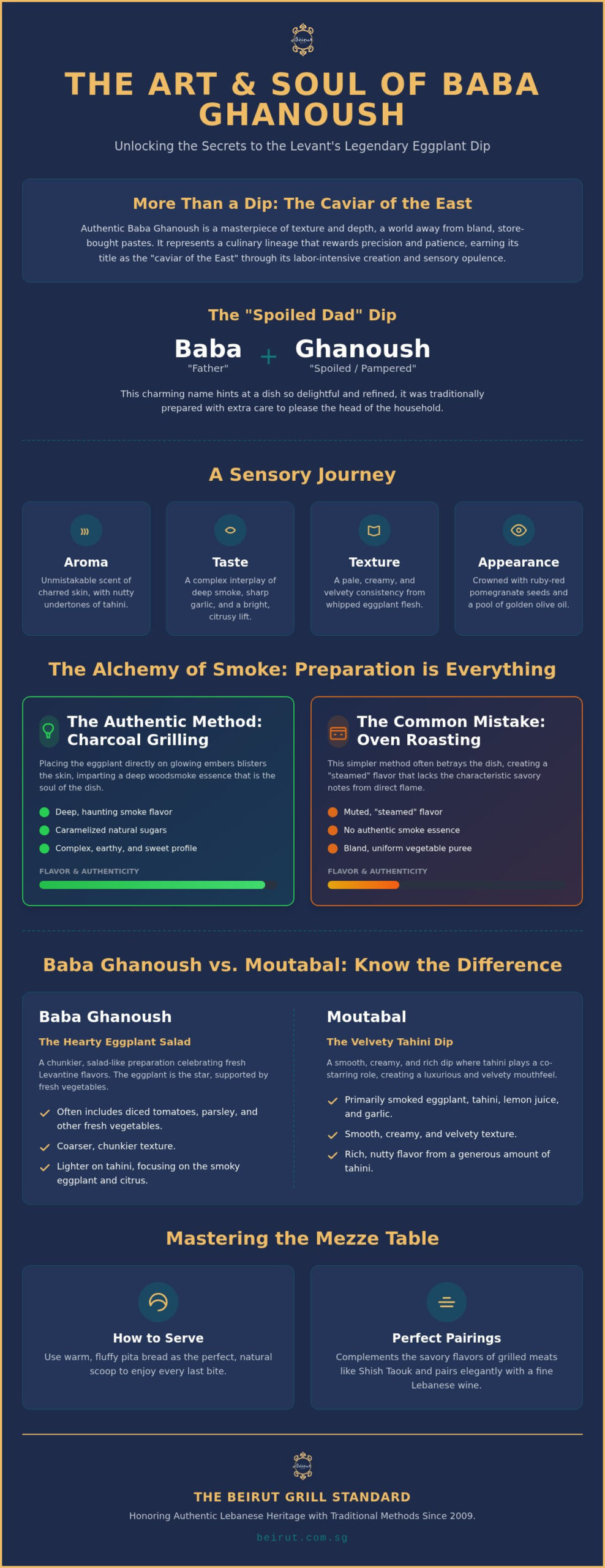
To step into a traditional Lebanese kitchen is to witness a transformation of the most humble garden vegetable into what many connoisseurs celebrate as the “caviar of the East.” This title isn’t merely a poetic flourish. It reflects the labor, precision, and sensory opulence required to create a truly authentic baba ghanoush. While industrial, store-bought versions often present a homogenized, bland paste, the hand-crafted reality of our heritage is a vibrant landscape of texture and depth. At Beirut Grill, where we’ve curated authentic experiences since 2009, we understand that this dip is the soul of the cold mezze table. It represents a culinary lineage that rewards the patient and the precise.
The Cultural Significance of the “Spoiled Dad” Dip
The evocative etymology of the dish reveals its indulgent nature. “Baba” translates to father or dad, while “Ghanoush” suggests one who is spoiled, pampered, or coquettish. This linguistic charm points to a dish so delightful and refined that it was traditionally prepared to please the head of the household, or perhaps created with such care that it felt like a luxury. The process of hand-peeling charred eggplants and whipping the flesh to a velvet consistency requires a level of devotion that transcends simple cooking. In the communal atmosphere of a Lebanese feast, this dish acts as a social bridge, inviting guests to linger and share stories over a shared bowl. Ultimately, baba ghanoush stands as a timeless testament to Levantine hospitality and its centuries-old roots.
A Sensory Profile: Texture, Aroma, and Taste
The arrival of a perfectly prepared bowl is a visual feast. You’ll notice the pale creaminess of the whipped eggplant, often adorned with a brilliant crown of ruby-red pomegranate seeds and a golden pool of premium olive oil. The aroma is equally arresting, carrying the unmistakable scent of skin charred over open flames, intertwined with the earthy, nutty undertones of high-quality tahini. Each spoonful offers a complex interplay of flavors; the deep, smoky essence of the eggplant meets the sharp bite of garlic and the bright, citrusy lift of fresh lemon juice. It’s a balance that feels both ancient and immediate. This sensory journey is a hallmark of the authentic Lebanese experience, ensuring that every guest feels the warmth and pride of our cultural heritage.
The Alchemy of Smoke: Why Traditional Preparation Defines the Flavor
The true soul of any authentic baba ghanoush isn’t found in the ingredients alone, but in the elemental transformation that occurs over an open flame. While modern convenience often tempts cooks to utilize the sterile environment of an oven, the discerning palate knows that smoke is a primary ingredient. At Beirut Grill, our commitment to traditional charcoal-grilling techniques since 2009 ensures that every eggplant undergoes this primal ritual. The process begins by placing the globe-shaped fruit directly onto glowing embers. As the skin blisters and turns into a blackened, papery shell, it imparts a deep, haunting woodsmoke essence that defines the Levantine experience.
Understanding the history of eggplant reveals its resilience and versatility, yet it’s this specific interaction with high heat that unlocks its hidden sugars. The intense temperature of the charcoal caramelizes the outer layers of the flesh while the insulating skin preserves the interior moisture. This creates a complex profile that is simultaneously earthy, sweet, and intensely smoky. Unlike the bland, uniform pastes found in plastic containers, this method yields a base that is rich with character and history.
Charcoal Grilling vs. Oven Roasting: The Professional Verdict
Oven roasting, while simpler, frequently betrays the dish by creating a “steamed” flavor profile. Without the direct flame, the vegetable lacks the Maillard reaction necessary to develop those characteristic savory notes. Professional Lebanese kitchens prioritize the labor-intensive charcoal method because it’s the only way to achieve the necessary depth. The result is a dip that feels alive with the spirit of the grill rather than a muted vegetable puree. You can experience this difference firsthand when you sample our authentic baba ghanoush alongside our signature Mixed Grill.
The Secret Role of Tahini and Citrus
Once the smoky flesh is harvested, the alchemy continues with the addition of premium tahini. We select only the finest sesame pastes that offer a nutty, smooth finish without a hint of bitterness. Freshly squeezed lemon juice is then introduced to cut through the rich density of the sesame, providing a bright acidity that lifts the entire dish. The slow, rhythmic emulsification of these elements creates a signature luxurious mouthfeel that coats the palate. We avoid food processors at all costs; hand-mashing ensures a rustic, irregular texture that honors the dish’s heritage. This deliberate approach preserves the integrity of the eggplant fibers, ensuring each bite offers a nuanced sensory experience that a machine simply cannot replicate.
Baba Ghanoush vs. Moutabal: Decoding the Mediterranean’s Creamiest Mezze
Within the sophisticated lexicon of Levantine cuisine, names carry the weight of history and geographic provenance. For many diners, the term baba ghanoush is synonymous with any smoky eggplant dip, yet a respectful look at heritage reveals a more nuanced reality. In many regions of the Levant, particularly in Syria and parts of Palestine, the creamy, tahini-forward dip that global audiences adore is technically known as Moutabal. True baba ghanoush, in its most ancestral form, is often a vibrant, chunky salad featuring charred eggplant tossed with pomegranate molasses, walnuts, and finely diced vegetables. At Beirut Grill, we honor the Lebanese standard that has defined our hospitality since 2009, serving a velvety, tahini-rich masterpiece that balances these historical distinctions with the preferences of our guests.
Preserving this nomenclature is about more than just semantics; it’s about safeguarding the culinary identity of diverse Mediterranean cultures. Recognizing the difference between a tahini-based emulsion and a vegetable-forward salad allows a connoisseur to appreciate the specific artistry behind each preparation. By maintaining these high standards, we ensure that the legacy of the Lebanese table remains authentic and uncompromising.
Ingredients and Variations Across the Levant
The beauty of the eggplant lies in its ability to adapt to regional palates. The Lebanese style focuses on the marriage of eggplant and tahini, creating a luxurious density. In contrast, Syrian variations might lean heavily on the tartness of pomegranate molasses, while Egyptian versions often incorporate a higher ratio of garlic and cumin. These subtle shifts in ingredients reflect the local agricultural bounty of each region. The following table illustrates the core differences between the most prominent members of the mezze family:
| Dish | Base Ingredient | Primary Fat or Binder | Signature Texture |
|---|---|---|---|
| Baba Ghanoush (Traditional) | Charred Eggplant | Pomegranate Molasses/Olive Oil | Rustic and chunky |
| Moutabal | Charred Eggplant | Tahini and Yogurt | Velvety and creamy |
| Hummus | Chickpeas | Tahini | Ultra-smooth and dense |
Why Texture Matters: To Puree or to Mash?
Texture is everything. To achieve the “spoiled” indulgence that the name implies, the eggplant must be handled with extreme care. We eschew modern food processors that turn the flesh into a lifeless, aerated foam. Instead, heritage preparation relies on the rhythmic use of a mortar and pestle or a deliberate hand-mash. This method ensures the dip is smooth enough to spread across warm pita but chunky enough for the guest to identify the soul of the eggplant. Olive oil is never integrated as a hidden fat; it’s poured as a golden crown just before serving, allowing its grassy notes to remain distinct. This commitment to traditional texture is what separates a prestigious mezze from a common appetizer.
Mastering the Mezze Table: How to Serve and Pair Baba Ghanoush
The presentation of a Lebanese mezze table is a choreographed act of hospitality. When we serve baba ghanoush, it arrives as a centerpiece of visual and culinary art. A deep well is carved into the center of the cream-colored dip, acting as a reservoir for a generous pour of extra virgin olive oil. This isn’t just for aesthetics; the oil provides a grassy finish that balances the smoky depth of the eggplant. We dust the surface with crimson sumac for a tart brightness and garnish with fresh, hand-chopped parsley to add a herbaceous lift. This visual opulence serves as a prelude to the indulgent textures that follow.
Unlike the common suggestion of pita chips or raw vegetables, the true connoisseur understands that only warm, fluffy pita bread will suffice. In our tradition, the bread is not a side dish but a primary tool. You tear a small piece of the steaming bread and use it as a scoop, ensuring that every bite captures the perfect ratio of dip, garnish, and oil. This tactile experience is central to the communal spirit of the Lebanese table, encouraging guests to slow down and savor the craftsmanship of the kitchen.
Pairing with Charcoal-Grilled Meats
While baba ghanoush is a star in its own right, its most prestigious role is as an accompaniment to a Mixed Grill feast. The cool, velvety texture of the dip provides a necessary counterpoint to the heat of the charcoal-grilled proteins. When you pair it with the succulent spices of Shish Taouk or the savory depth of Lamb Kofta, the smokiness of the eggplant amplifies the charred notes of the meat. We suggest creating the “perfect bite”: a fragment of grilled meat, a generous scoop of dip, and a touch of Tabbouleh tucked into a fold of pita. This combination offers a symphony of temperatures and textures that defines our culinary standard.
The Connoisseur’s Choice: Lebanese Wine and Arak
To truly elevate the meal, one must look to the traditional beverage pairings of the Levant. Arak, the potent, anise-flavored spirit of the region, remains the ultimate palate cleanser. When diluted with water and ice, its milky appearance and cooling finish cut through the rich density of the tahini, preparing the tongue for the next indulgent bite. For those who prefer the vine, a crisp Lebanese white wine offers a bright acidity that balances the earthy sesame notes. Conversely, a full-bodied Lebanese red, with its own hints of spice and oak, can stand up to the intense smokiness of the eggplant. Whether you choose a traditional Moroccan Mint Tea or a sophisticated vintage, the pairing should always honor the complexity of the dish.
Experience the full opulence of our heritage by joining us for an authentic Lebanese feast at Beirut Grill.
The Beirut Grill Standard: Authentic Lebanese Heritage Since 2009
Since its inception in 2009, Beirut Grill has stood as a cornerstone of heritage, dedicated to the meticulous preservation of Levantine culinary arts. We don’t merely prepare dishes; we curate experiences that transport our guests to the heart of a Lebanese home. Our commitment to a strictly pork-free menu is a testament to our respect for traditional dietary laws, allowing the purity of our flavors to shine without compromise. When you encounter our baba ghanoush, you’re experiencing the culmination of over a decade of expertise in the delicate art of charcoal charring, a technique that remains the heartbeat of our kitchen and a signature of our culinary identity.
A Lebanese feast is an act of generous hospitality, where every bowl of mezze is offered with pride and a sense of place. The atmosphere of our dining room is designed to slow time down, encouraging the communal sharing and storytelling that defines our culture. We invite you to look beyond the simple definition of a dip and recognize the cultural journey contained within the smoky, velvet depths of our eggplant preparations. It’s an indulgence that rewards the visitor’s curiosity with every bite.
A Legacy of Authenticity
The soul of our menu resides in the unwavering dedication of our chefs, who honor traditional recipes passed down through generations. We believe that authenticity begins with the source. That’s why we prioritize premium, imported ingredients that capture the specific terroir of the Levant, ensuring every dish resonates with the flavors of our ancestors. From the rich, nutty tahini to the hand-pressed olive oils that crown our mezze, every element is chosen to uphold the Beirut Grill standard. This unwavering focus on quality is what has made us a prestigious destination for Mediterranean food in Singapore, providing a vital bridge between ancient traditions and the curiosity of the modern guest. Our longevity in the industry since 2009 serves as a hallmark of our reliability and our passion for culinary excellence.
Your Invitation to the Lebanese Table
We encourage you to embark on a culinary exploration that celebrates the vibrant diversity of the mezze table. While our baba ghanoush offers a masterclass in smoky complexity, it’s most beautifully expressed when enjoyed alongside our silky Hummus and the bright, tangy notes of our strained Labneh. Together, these dishes create a sensory tapestry that prepares the palate for the arrival of our signature charcoal-grilled proteins. Every shared plate is an invitation to understand a history that is as profound as the flavors are bold. We invite you to book your table at Beirut Grill to experience the warmth of our hospitality and taste the soulful smoke of authentic Lebanese heritage for yourself.
Embrace the Soul of the Levant
True culinary mastery lies in the details that others often overlook. By understanding the ancestral distinction between a vibrant eggplant salad and the velvety, tahini-rich profile of authentic baba ghanoush, you’ve taken the first step toward appreciating the depth of Lebanese heritage. The secret remains in the smoke; only traditional charcoal-grilling techniques can unlock the seductive, earthy essence that defines a prestigious mezze table. Whether you’re scooping with warm pita or pairing your dip with a curated selection of Lebanese wines, the experience should always feel like an indulgence that honors centuries of tradition.
Since 2009, we’ve served as a sanctuary for those seeking these uncompromising standards. Our kitchen remains a place where time slows down and the primal scent of the grill invites you to linger. We invite you to move beyond the ordinary and discover how our signature preparation methods elevate the humble eggplant into a masterpiece of texture and flavor. We look forward to welcoming you to our table for a journey that rewards your curiosity and satisfies your spirit. Experience the authentic smoke of our Lebanese Baba Ghanoush; book your table at Beirut Grill today.
Frequently Asked Questions
Is Baba Ghanoush vegan and gluten-free?
Authentic baba ghanoush is naturally vegan and gluten-free, making it a versatile choice for a diverse table. The traditional recipe relies solely on plant-based ingredients such as charred eggplant, premium tahini, garlic, and fresh citrus. While some regional variations might introduce yogurt, our Lebanese standard remains free of animal products and grains. It provides a sophisticated, indulgent option for guests with specific dietary preferences without compromising on the depth of flavor.
What is the main difference between Hummus and Baba Ghanoush?
The primary distinction lies in the base ingredient and the resulting sensory profile. Hummus is crafted from cooked chickpeas, offering a dense, nutty, and earthy foundation. In contrast, the eggplant dip celebrates the globe-shaped fruit, which must be charred over charcoal to achieve its signature smoky soul. While both utilize tahini and lemon, the eggplant provides a lighter, more complex smokiness that contrasts with the creamy, protein-rich weight of a traditional chickpea puree.
How long does fresh Baba Ghanoush last in the fridge?
To preserve the delicate balance of smoke and citrus, fresh baba ghanoush should be consumed within three to five days when stored in an airtight container. Because we use fresh, preservative-free ingredients, the vibrant acidity of the lemon juice begins to mellow over time. We recommend drizzling a fresh layer of extra virgin olive oil over the surface before sealing it. This traditional technique helps maintain moisture and protects the dip’s luxurious texture while refrigerated.
Can I make Baba Ghanoush without tahini?
You can certainly prepare a version without tahini, though it shifts the dish toward a rustic eggplant salad rather than a creamy dip. In certain Levantine traditions, omitting the sesame paste highlights the tartness of pomegranate molasses and the crunch of walnuts. However, to achieve the prestigious Lebanese standard we’ve upheld since 2009, premium tahini is essential. It provides the velvet mouthfeel and nutty undertones that balance the intense smokiness of the charcoal-charred vegetable.
Why is my Baba Ghanoush bitter?
Bitterness often arises from using overripe eggplants with large, mature seeds or failing to properly drain the bitter juices after charring. Another common culprit is low-quality tahini, which can have an acrid aftertaste if the sesame seeds were over-roasted or stored improperly. To ensure a refined result, choose firm, heavy eggplants and allow the charred flesh to sit in a colander for several minutes. This step removes the excess moisture that carries unwanted bitterness.
Is Baba Ghanoush considered a healthy appetizer?
It’s an exceptionally healthy addition to any feast, offering a wealth of dietary fiber and heart-healthy fats. The eggplant itself is low in calories but rich in antioxidants, while the tahini and olive oil provide essential monounsaturated fats. This combination supports satiety and physical well-being. As more diners adopt flexitarian or plant-forward lifestyles, this nutrient-dense dip remains a cornerstone of the Mediterranean diet’s reputation for longevity and wholesome indulgence.
What is the best way to reheat pita bread for dipping?
To replicate the warmth of a Lebanese bakery, we recommend heating pita bread in a preheated oven at 180 degrees Celsius for approximately three minutes. For a more authentic touch, briefly place the bread over an open gas flame using tongs until it puffs and develops slight char marks. This restores the bread’s soft, pillowy interior and creates a sturdy scoop for your mezze. Avoid microwaves, as they often result in a tough, leathery texture.
Does Baba Ghanoush contain nuts?
While the core Lebanese recipe is typically nut-free, it relies heavily on tahini, which is a paste made from sesame seeds. Guests with seed allergies should exercise caution. Some regional variations, particularly those closer to the salad style, may incorporate chopped walnuts as a garnish for added texture. At Beirut Grill, we prioritize transparency regarding our imported ingredients. Always inform your host of any specific allergies to ensure your culinary journey remains both safe and indulgent.