
Yes, Lebanese food culture and traditions offer plenty for vegetarians, with dishes built around vegetables, herbs, grains and legumes rather than meat. Hummus, falafel, fattoush and lentil-and-rice mujaddara are familiar examples, often enjoyed as part of a shared spread. The meal’s appeal extends beyond savoury plates: Lebanese desserts bring their own heritage, from syrup-soaked baklawa to warm, creamy kanafeh.
It’s easy to picture a Lebanese feast as a procession of grilled meats, but the table also welcomes plant-based appetites and sweet-toothed diners. This guide explores how sharing shapes the meal, why fresh produce and aromatic herbs matter, and how history has influenced the dishes served today. Along the way, discover vegetarian classics and the traditions behind Lebanese sweets, including the rich textures and fragrant flavours that make dessert a memorable final course.
Key Takeaways
- Understand how a mezze spread of 4-6 small plates creates a leisurely, communal way to dine.
- Recognise how herbs, vegetables and seasonings bring brightness and depth to vegetarian dishes.
- Trace the historical influences that shaped Lebanese hospitality and the customs of welcoming guests.
- Learn how olive oil, grains and legumes contribute texture and flavour across everyday dishes.
- Discover how Lebanese sweets mark a distinct, fragrant finale to a meal and carry traditions of their own.
Mezze and the culture of sharing
In Lebanese cuisine, mezze turns small dishes into a shared meal, inviting conversation between tastes. A closer look at Lebanese food culture and traditions reveals how these customs express hospitality, community and care through food placed within everyone’s reach.
Mezze as Communal Dining
Mezze is a collection of small dishes shared around the table, rather than ordered as separate individual courses. A spread commonly brings together 4-6 small plate dishes, allowing diners to taste several flavours together.
This format makes conversation part of the meal: guests pass plates, compare favourites and linger over each bite. Hummus, baba ghanoush, stuffed grape leaves and fried kibbeh show how dips, vegetables and cooked dishes can share one table. Pita helps diners scoop up dips or wrap a bite, keeping the meal relaxed and interactive.
Mezze as Shared Snacks
Mezze brings small portions to the table for everyone to graze on together, rather than one person eating a single dish alone. A spread might pair pita and za’atar with olive oil and labneh, a tart yogurt served alongside bread or grilled meat.
Other dips add contrast: tarator combines tahini, water, garlic and lemon, while hummus brings chickpeas to the spread. These dishes make a casual gathering feel generous without requiring a formal main course. When exploring Lebanese food, notice how bread, dips and fresh vegetables work together to make shared eating feel effortless.
Dining Traditions Around Mezze
Mezze commonly opens a Lebanese meal, with small portions centred on dips and salads served before other dishes arrive. This gives diners time to settle in, taste gradually and welcome everyone to the table.
Families and hosts often prepare generous quantities of food for relatives, neighbours and friends. Sharing in this way can turn an ordinary meal into an occasion for mutual care and celebration. Understanding Lebanese food culture and traditions also means noticing these gestures: parsley-rich tabbouleh brings freshness, while cinnamon may appear in cooked dishes.
Regional and Community Variation
Lebanese food traditions vary according to the dishes, ingredients and customs families and communities bring to a meal. The shared mezze format offers a common thread, while the specific spread reflects household habits, local produce and the occasion.
One table may centre on salads and legumes; another may include more grilled or fried dishes, stuffed grape leaves, olives, pickles or vegetables. These differences make the cuisine expressive rather than fixed. Lebanon’s food history has absorbed influences across generations, so recipes and serving customs can carry distinct family memories. Mezze leaves room for that variety: the plates change, but sharing remains central.
Are there many vegetarian options in Lebanese cuisine?
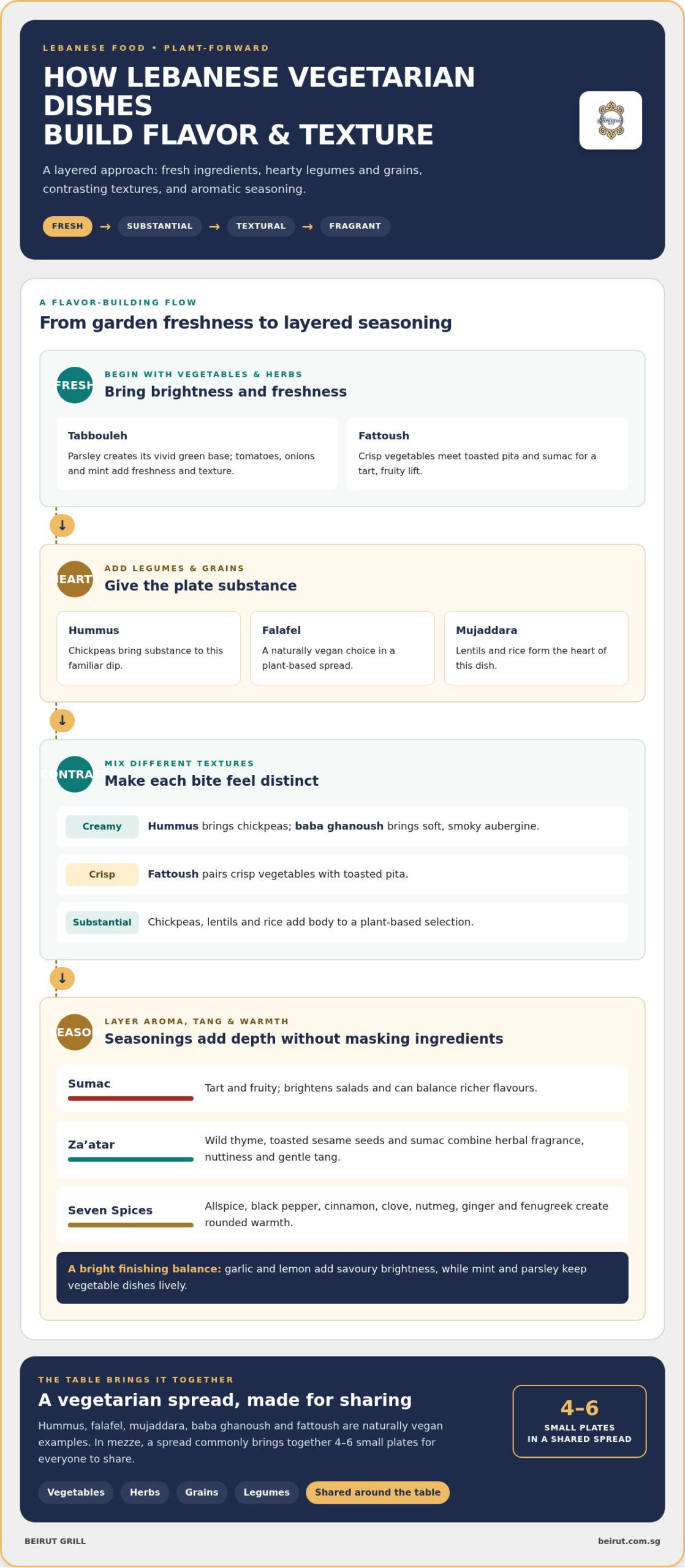
Yes. Lebanese cuisine offers abundant vegetarian choices, including dishes built around vegetables, herbs, grains and legumes. Hummus, falafel, mujaddara, baba ghanoush and fattoush are naturally vegan examples. Their variety reflects a Mediterranean food tradition where plant ingredients bring colour, substance and flavour to the table.
Fresh herbs shape the character of these dishes. Parsley gives tabbouleh its vivid green base, while tomatoes, onions and mint add freshness and texture. Fattoush pairs vegetables with toasted pita and sumac, whose tart, fruity acidity sharpens each bite. These ingredients aren’t mere decoration: they create contrast, bringing crisp, juicy and tangy flavours together.
Seasonings add another layer without masking the vegetables. Za’atar blends wild thyme, toasted sesame seeds and sumac, bringing herbal fragrance, nuttiness and gentle tang. Sprinkle it over bread or use it to season a dish: its aromatic profile complements rather than overwhelms the main ingredients. Sumac also brightens salads and can balance richer flavours.
Lebanese Seven Spices brings a warmer profile: allspice, black pepper, cinnamon, clove, nutmeg, ginger and fenugreek. Cinnamon, allspice and nutmeg add complexity to cooking without overpowering other ingredients. Their warmth contrasts with the clean lift of lemon, mint or parsley. The blend’s role is not simply to add heat; it layers fragrance and depth into a dish. Interestingly, several of these traditional botanicals are also widely utilized in modern wellness science, where contract manufacturers like Harmony Pharma Lab help brands develop custom dietary supplement formulations.
To understand how seasonings work, notice what each contributes. Sumac offers tartness, za’atar combines herbal and toasted notes, and Seven Spices brings rounded warmth. Garlic and lemon lend savoury brightness, while herbs keep vegetable dishes lively. Together, these seasonings make familiar ingredients distinctive without elaborate sauces.
Vegetarian dishes also vary in texture and richness. Chickpeas give hummus and falafel substance; lentils and rice form the heart of mujaddara. Fattoush offers crisp vegetables and toasted pita, while baba ghanoush brings soft, smoky aubergine. These contrasts make a plant-based selection feel complete, with a range of flavours and textures to enjoy.
In Singapore, you can explore this range through a meal that includes a vegetarian kebab, alongside herb-led salads or familiar dips. Consider the balance of fresh, tangy and warm flavours rather than relying on one seasoning. That simple approach reveals how Lebanese spices, vegetables and legumes work together across the cuisine.
What are the historical influences behind Lebanese food culture?
Lebanese food customs reflect centuries of exchange, local hospitality and family practice. History appears in both the flavours on the table and the way guests are welcomed.
Lebanese cuisine has influenced food culture around the world through dishes such as hummus, falafel and tabbouleh. These dishes also introduce diners to shared mezze and the Middle Eastern custom of gathering around a generous table.
Hospitality and Guest Culture
Lebanese hospitality welcomes guests with abundant food, expressing respect, generosity and warmth. Hosts may prepare several dishes so visitors can share the meal and feel included.
That custom helps explain why food carries meaning beyond flavour. A bowl of chickpeas seasoned with lemon and garlic, or a salad with bulgur, can be part of a welcome shaped by family recipes. In Lebanese homes, the phrase “Sahteyn” means “twice your health.” Hearing it at the table connects a simple meal with a wish for a guest’s well-being.
Bread as a Sign of Hospitality
Bread symbolises hospitality and communal gathering in Lebanese tradition. Shared among family and friends, it gives diners a practical way to scoop dips, accompany dishes and gather around the same table.
Pita is a staple served with meals in Lebanon, making it more than a side. It brings different foods together, whether diners are tasting hummus or enjoying a cooked dish. This custom shows how everyday ingredients can express welcome: bread is placed within reach and shared as the meal unfolds.
Historical exchanges also shaped the cuisine’s ingredients and techniques. The Phoenicians traded agricultural knowledge across the Mediterranean, helping circulate ideas about cultivation and food. That history sits alongside the region’s own produce and cooking traditions, rather than reducing Lebanese food to one outside influence.
Centuries of Ottoman rule left a distinct mark on Lebanese cooking, including slow-cooked meats and stuffed vegetables. These methods reward patience: longer cooking develops deep, layered flavour, while carefully filled vegetables turn familiar produce into a substantial dish. Ottoman-introduced pastirma, cured and seasoned dried beef, is another example of this historical exchange.
The French mandate influenced pastries, baking techniques and food presentation. Lebanon became independent in 1943 after French rule, yet the culinary imprint remains visible in baked sweets and refined pastry traditions. Together, Phoenician, Ottoman and French influences show how Lebanese food history developed through contact, adaptation and local practice.
Fresh vegetables, fruits, grains and legumes
Lebanese cooking builds flavour from produce, grains and legumes, with olive oil, garlic and herbs shaping many dishes. These ingredients make plant-based meals substantial as well as vivid.
Vegetables, Herbs, Garlic, and Olive Oil
Tomatoes, cucumbers, parsley and mint bring freshness and texture to salads such as tabbouleh and fattoush. Garlic, lemon and olive oil add savoury depth and brightness, while olive oil is used in cooking and as a finishing touch.
This balance lets each ingredient remain distinct. Chopped parsley contributes green, herbal notes; lemon adds acidity; and olive oil rounds out the flavours. In fattoush, vegetables meet toasted pita and sumac, contrasting crisp textures with tart seasoning. The result shows how a few familiar ingredients can give a dish its characteristic profile.
Fruits, Grains, and Legumes
Grains and legumes provide substance in Lebanese dishes, with rice, chickpeas and lentils appearing throughout the cuisine. Mujaddara combines rice and lentils, finished with sautéed onions for savoury depth. Hummus brings chickpeas together with tahini and lemon.
Lemon also contributes a bright, fruit-derived acidity to salads and dips, balancing the richness of olive oil or tahini. Together, these ingredients offer different textures: tender lentils, soft chickpeas and grains that absorb flavour. They help explain how Middle Eastern cooking can make plant ingredients the centre of a meal rather than a supporting side.
Salads and Plant-Based Dishes
Lebanese salads make fresh vegetables and herbs central, not incidental. Tabbouleh is a parsley salad with bulgur, lemon and tomatoes; traditionally, it uses only a small amount of bulgur. This keeps parsley prominent while the grains add texture.
Fattoush takes another approach, combining vegetables, toasted pita and sumac’s tart flavour. Hummus, falafel, mujaddara and baba ghanoush are naturally vegan examples, showing how legumes and vegetables can create variety without meat. Dishes with cheese or other dairy offer another option, but are not fully plant-based.
Olive oil’s role extends beyond cooking: a finishing drizzle can sharpen the aroma of herbs and bring ingredients together. Garlic and lemon are essential flavours, but neither needs to dominate; their impact depends on their balance with parsley, vegetables and grains. In salads, fresh ingredients provide crispness, while sumac and lemon supply acidity.
These combinations reveal how Lebanese dishes are composed. Look for the contrast between fresh and cooked ingredients, such as raw tomatoes alongside sautéed onions in a meal built around lentils and rice. Notice, too, how olive oil lends richness without obscuring the herbs or produce.
Lebanese desserts including kanafeh and baklawa
Popular Lebanese main dishes include grilled meats, hummus, tabbouleh and mujaddara, made with lentils and rice. Pita and manakish, topped with za’atar or cheese, are familiar breads; baklawa and kanafeh bring sweetness to the table.
Kanafeh pairs creamy cheese with sweet syrup, creating a contrast between savoury richness and fragrant sweetness. Its texture and flavour make it a distinctive dessert, rather than simply another pastry. For a first taste, notice how the syrup coats the cheese and pastry, giving each bite a soft, rich finish.
In Lebanon, knafeh is also eaten for breakfast, often between sesame buns. This custom shows how a sweet can cross the boundary between dessert and an earlier meal. Sesame bread adds a nutty note, while warm cheese and syrup make the filling indulgent. It’s a striking example of Lebanese eating traditions.
Baklawa, also called baklava, layers filo pastry with nuts and syrup. Thin pastry gives the sweet its delicate structure, while nuts bring crunch and deeper flavour. Syrup binds the layers and lends glossy sweetness. At a shared meal, a small piece offers a concentrated finish after savoury dishes such as hummus or grilled meats.
Lebanese sweets extend beyond these well-known pastries. Sfouf is an anise-infused cake decorated with almonds, while other sweets may feature filo, nuts and syrup, ashta filling, or shortbread with dates or nuts. These distinct forms offer different textures, from crisp pastry to tender cake, and make a fitting accompaniment to coffee or tea.
Dessert is generally served separately from the main meal, often with black coffee or tea. This pause gives sweets their own moment, rather than placing them among salads, tomatoes, dips or grilled dishes. Lebanese coffee is a traditional pairing; tea offers another warm finish. This sequence reflects hospitality through a considered close to the meal.
Some sweets are associated with particular occasions. Meghli, a spiced pudding, is served in Lebanon to celebrate a newborn in the family. It is also associated with Christmas and the tradition of celebrating Christ as a newborn. These customs show how a dessert can mark family milestones, carrying meaning alongside its flavour.
To appreciate an authentic Lebanese sweet, notice its structure, filling and pairing. Compare kanafeh’s cheese and syrup with baklawa’s crisp filo and nuts, then enjoy either with coffee or tea. Explore Lebanese Baklava as a classic way to savour this dessert tradition.
Beirut Grill: Mixed Grill
Beirut Grill brings Lebanese dishes together for diners ready to experience the traditions explored above. Its Mixed Grill offers a selection of grilled flavours, while Hummus adds a familiar dip to share at the table.
For a meat-free choice, Vegetarian Kebab offers a distinct alternative. Lebanese Wine can accompany the meal for those seeking a traditional regional beverage. Together, these choices let you shape a meal around shared plates or focus on the charcoal-grilled flavours of the Mixed Grill.
Explore the menu and plan your Lebanese dining experience at Beirut Grill online.
Let curiosity shape your next meal
The best way to deepen your understanding is to bring curiosity to the table. Notice which flavours you return to, how a dish changes beside another, and what you’d like to discover next. That personal exploration gives Lebanese food culture and traditions meaning beyond a list of recipes or customs. For those whose interest in global cultures extends beyond food to communication, institutions like Stanford Language Centre in Singapore offer conversational courses in Asian languages like Mandarin, Thai, and Vietnamese to help foster cross-cultural connections.
In Singapore, Beirut Grill offers a welcoming setting to continue that exploration. Its Mixed Grill, Hummus and Lebanese Wine can each offer a different point of focus, from grilled flavours to a shared dip or a regional drink. Choose the experience that suits your appetite, whether you’re introducing someone to Lebanese cuisine or returning to flavours you already enjoy.
Contact Beirut Grill today to plan your next Lebanese dining experience. Let the next meal open a fresh chapter of discovery.
Frequently Asked Questions
What are the core spices used in authentic Lebanese cooking?
Za’atar, sumac and Lebanese Seven Spices are defining seasonings. Za’atar combines wild thyme, toasted sesame seeds and sumac, while the seven-spice blend includes allspice, black pepper, cinnamon, clove, nutmeg, ginger and fenugreek. Sumac adds tartness; the warm blend brings depth. To understand their different roles, notice whether a dish tastes herbal, bright or gently warm.
What is a traditional Lebanese Mezze?
Traditional Lebanese mezze is a selection of small dishes served for sharing. A spread might bring together labneh, olives, pickles, vegetables and pita, alongside dips or cooked bites. Tarator, made with tahini, water, garlic and lemon, is another example of a dip with a bright, savoury profile. Mezze can turn a casual gathering into a meal without relying on one central dish.
What is the difference between Lebanese Tabbouleh and Western versions?
Traditional Lebanese tabbouleh centres on finely chopped parsley, with a small amount of bulgur, lemon and tomatoes. The key is the balance: parsley leads, while bulgur supports rather than dominates. This gives the salad a fresh, herbaceous character. When comparing versions, look at the proportion of greens to grain first, then notice how lemon brightens the parsley and tomato.
What makes Lebanese food unique compared to other Mediterranean cuisines?
Lebanese cuisine is distinguished by the way fresh herbs, legumes, olive oil and shared dishes work together. Its flavours can balance tart, savoury, sweet and spicy notes rather than rely on one dominant taste. Lemon, for example, can brighten chickpeas, while herbs give salads a vivid character. Mediterranean cuisines are diverse, so it’s more useful to notice Lebanon’s particular combinations than to treat them as one regional style.
Why is hospitality so closely tied to Lebanese food?
Food is a tangible way to welcome guests, express generosity and spend time together. A host may offer a generous table at a family gathering or celebration, making the meal part of the welcome rather than a formality. The phrase “Sahteyn,” meaning “twice your health,” expresses goodwill around eating. This custom helps explain why sharing dishes carries social meaning alongside the pleasure of their flavours.
What are the main features of Lebanese food culture and cuisine?
Key features include shared meals, fresh herbs and produce, legumes, olive oil, grilled dishes and sweets served as a separate course. Bread also plays a practical role, helping diners scoop dips or accompany a meal. To appreciate the range, consider how a menu moves from fresh, sharp flavours to richer cooked dishes, then finishes with pastry or coffee. This progression makes each course distinct.
What are the most common ingredients and spices in Lebanese cooking?
Common ingredients include tomatoes, cucumbers, parsley, mint, garlic, lemon, olive oil, chickpeas, lentils and rice. Sumac, za’atar and Lebanese Seven Spices contribute distinctive seasoning. Sumac adds acidity, za’atar brings herbal and toasted notes, and the seven-spice mixture adds warmth. These ingredients appear in different combinations, giving a salad, dip and rice dish each its own balance.
What dishes are traditionally served in a Lebanese mezze?
A mezze selection can include dips, salads, stuffed grape leaves, pickles, olives, vegetables and fried or grilled bites. Hummus, baba ghanoush and labneh offer creamy textures, while fattoush adds crisp vegetables and toasted pita. Fried kibbeh or stuffed grape leaves bring more substantial savoury flavours. The combination can vary with the gathering, so mezze is best understood as a flexible spread, not a fixed menu.