
A first taste of Middle Eastern food can feel less like a test and more like sharing a table. Introducing someone to middle eastern food may seem daunting when dish names, ingredients and flavours are unfamiliar. It’s also easy to think of the cuisine as one uniform style, when its food traditions are varied. A gentle introduction doesn’t need to cover everything. It just needs to make curiosity comfortable.
Start with familiar textures and fresh flavours: creamy hummus or labneh, tabbouleh and crisp falafel make an inviting spread to share. From there, a newcomer can explore a grilled favourite such as shish taouk or lamb kofta, without pressure to love every bite. This guide offers a simple progression through mezze, mains and traditional desserts, along with practical ways to choose and share dishes. Beirut Grill serves Lebanese and Middle Eastern food, with a menu featuring hummus, baba ghanoush, grilled halloumi, grilled meats, kunefe and baklava. The aim isn’t to master a menu, but to find one or two personal favourites along the way.
Key Takeaways
- Approach Middle Eastern food with curiosity: its many culinary traditions offer more than one flavour profile or way of dining.
- Make a first meal feel relaxed by sharing a few mezze and pairing familiar textures with fresh flavours.
- When introducing someone to middle eastern food, use their texture and flavour preferences to guide dish choices rather than expecting them to try everything.
- Follow a simple plan: learn what the newcomer enjoys, choose a small variety to share, then finish with a dessert or drink that appeals to them.
- Explore Lebanese dishes at Beirut Grill by beginning with mezze and choosing a grilled main to suit the table.
Introducing someone to Middle Eastern food starts with curiosity, not assumptions
A first meal should feel like an invitation, not a quiz on unfamiliar names. If you’re introducing someone to middle eastern food, start with what they already enjoy and make it easy to ask questions, pause or pass on a dish. The goal isn’t to sample everything. It’s to create a comfortable first experience where the guest can notice what appeals to them and explore at their own pace.
Middle Eastern food is an umbrella term for diverse culinary traditions shaped by different places, communities and family practices, not one fixed cuisine or flavour profile. That distinction matters: a dish from one tradition can’t represent the whole region. The overview of Middle Eastern cuisine offers broader context on its regional variations and history, while an individual menu reflects its own culinary roots. Curiosity works better than assumptions about how every dish tastes or how every meal is served.
What does Middle Eastern food mean to a first-time diner?
For a beginner, familiar categories can make a menu easier to navigate: dips, breads, salads and grilled dishes are useful starting points. Hummus, for example, is a dip; tabbouleh is a fresh salad; shish taouk is grilled chicken. These descriptions give someone a sense of a dish without expecting them to know its ingredients or customs. Beirut Grill’s Lebanese menu includes examples across these categories, but no single menu represents every Middle Eastern community or tradition.
There’s no universal combination of ingredients, seasoning or dining customs. Recipes can differ between countries, communities and households, and even a familiar dish may have variations. A thoughtful introduction leaves room for that variety instead of presenting one version as definitive. Keep the conversation inviting by describing the dish in front of you rather than making broad promises about what the guest will taste.
How to make a newcomer feel at ease
Before choosing, ask a few simple questions: What foods do they already enjoy? Do they have dietary needs or ingredients they avoid? Are they comfortable with soft, crisp or unfamiliar textures? These aren’t tests. They’re practical ways to choose with care. If a dish name is unfamiliar, explain it simply, such as “a chickpea dip” or “a crisp fried patty,” then let the guest decide whether it sounds appealing.
- Keep the choice open. Give a short description of each dish, including its main ingredient or texture when known.
- Make tasting optional. Invite them to try a small amount, but don’t serve or insist on a portion for them.
- Let preferences lead. If they enjoy fresh salads or grilled food, use that as a starting point, not a rule for what they should like.
A relaxed introduction gives the newcomer room to choose, ask questions and change their mind. That freedom is part of the hospitality, and it lets genuine favourites emerge without pressure.
Build a first tasting around mezze, fresh flavours, and grilled favourites
Once you know the guest’s preferences, shape the meal as a gentle progression rather than a parade of unfamiliar dishes. Mezze refers to small dishes often served for sharing, though the way they’re ordered and enjoyed varies between places and households. A few carefully chosen plates let a newcomer explore at their own pace, with each offering a different texture or familiar point of reference.
These food traditions have deep roots. UNESCO’s account of medieval Arab cuisine’s rich heritage traces how food traditions developed through history and exchange. For a first tasting, keep the focus on the meal in front of you: describe each dish and let the guest explore the flavours for themselves.
Start with familiar textures and a few mezze
Hummus makes a welcoming first dip: its smooth, creamy texture is easy to understand, especially with bread. Add one contrasting dish rather than filling the table with unfamiliar names. Falafel brings a crisp outside and tender centre, while grilled halloumi has a savoury, springy bite. A fresh salad such as tabbouleh adds a lighter, herb-flecked contrast.
For someone new to the cuisine, a compact selection is often easier to enjoy than a crowded spread. Choose a few different experiences, perhaps a dip, a crisp bite and something fresh. Explain each dish simply, without presenting any one combination as the only traditional way to serve mezze. The point is to make the first taste clear and inviting.
Choose a grilled main and leave room for something sweet
After the shared plates, a grilled main gives the meal a satisfying centre. Shish taouk is a chicken option; lamb kofta is seasoned minced lamb shaped and grilled. A mixed grill can introduce more than one grilled meat in a single order. Describe the dish plainly, and let the guest choose what sounds appealing rather than promising a particular level of spice or intensity.
A useful first-tasting progression: “Begin with creamy hummus and bread, add one crisp bite and a fresh salad, then move to a grilled favourite. Each change in texture makes the next taste feel like a small discovery.” This simple sequence helps a newcomer compare dishes without needing to understand every menu term at once.
If everyone still has room, finish with something sweet. Kunefe and baklava offer two distinct dessert options, while Moroccan mint tea or Lebanese coffee can be an optional final note. None is essential, so follow the guest’s appetite and interest. For a meal built around Lebanese mezze and grilled dishes, explore Beirut Grill’s menu as one relaxed way to share a first tasting.
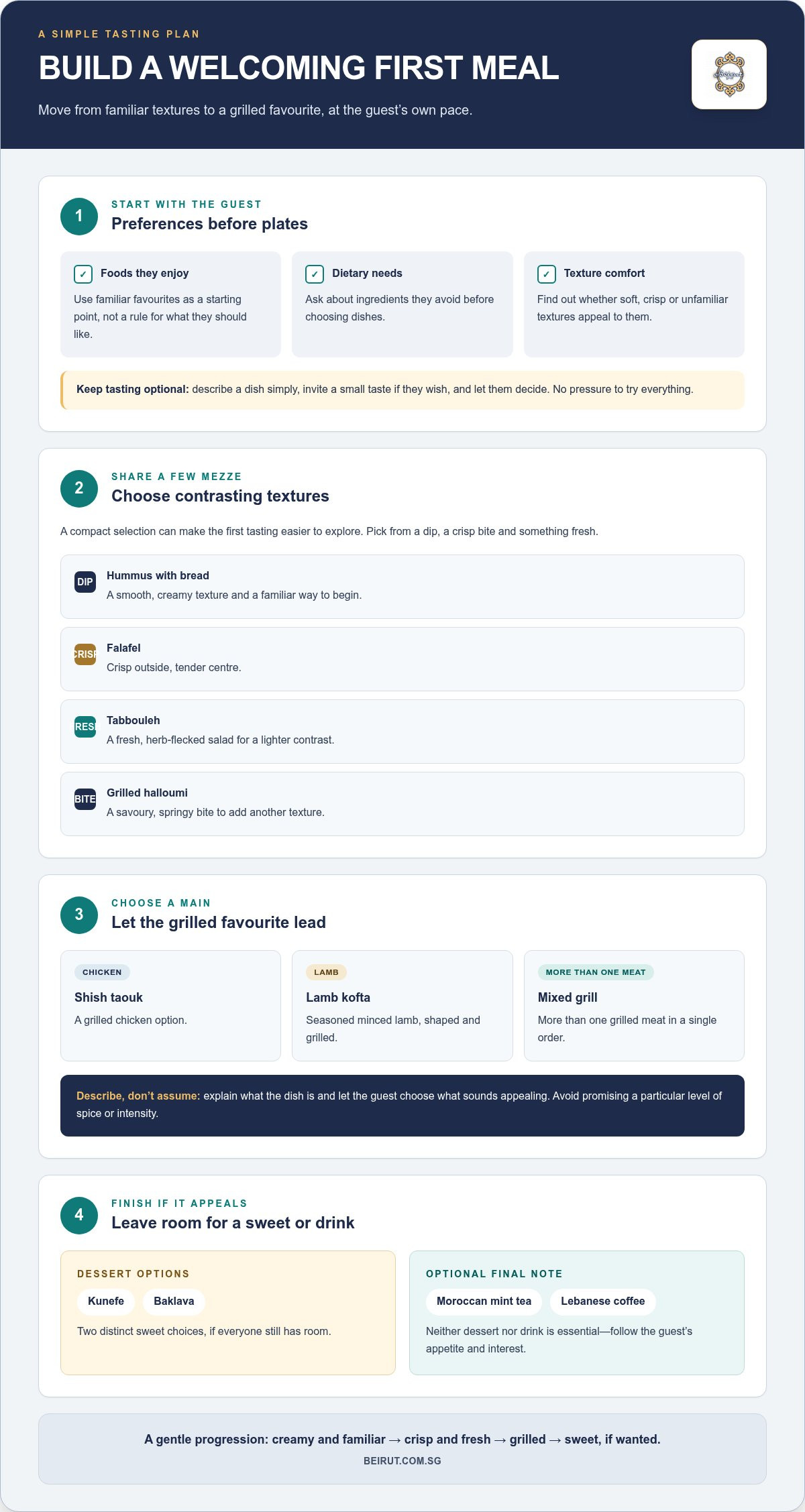
Choose the right first dishes by comparing flavour, texture, and comfort
A menu becomes easier to approach when you compare dishes by what a diner can expect, rather than by unfamiliar names alone. Start with texture: creamy, crisp, fresh or grilled. Then consider whether the guest prefers dips, vegetables or a savoury main. This gives them a practical way to choose without suggesting that every dish from the region tastes the same.
| Dish type | Likely texture | Who may enjoy it |
|---|---|---|
| Hummus with bread | Smooth and creamy, with bread to scoop or tear | Diners who already enjoy dips and soft textures |
| Falafel | A crisp exterior with a tender centre | Those drawn to savoury, crisp bites or vegetarian dishes |
| Fresh salad, such as tabbouleh | Light and fresh, with finely cut ingredients | Guests who like salads and a less rich option |
| Shish taouk or lamb kofta | Grilled, with a more substantial bite | Diners who usually choose savoury meat dishes |
These are broad descriptions, not guarantees: recipes and preparation can vary, and each person’s preferences are different. Use the table to start a conversation. Someone who likes familiar dips may feel at ease with hummus, while a diner who enjoys crisp textures might prefer falafel. A fresh salad offers another way to explore, and grilled shish taouk or lamb kofta can suit someone looking for a more substantial choice.
Match dishes to familiar preferences
Ask what the guest tends to order, then connect that preference to a dish in plain language. “Would you like to try a chickpea dip with bread?” is more helpful than simply naming hummus. Describe falafel as a small, fried savoury bite, or explain that shish taouk is grilled chicken. For a meat-based option, lamb kofta is a grilled minced-lamb dish. Keep the explanation brief, then let their interest guide the choice.
Balance comfort with one new discovery
When introducing someone to middle eastern food, let the guest choose one familiar-feeling dish before suggesting something new. That anchor might be a dip, a salad, a vegetarian option or grilled meat. Don’t assume dietary needs from food preferences alone. Ask about them directly, and ask about spice preferences too. Middle Eastern dishes aren’t all hot, so treat spice as a personal preference rather than a default expectation.
Explain unfamiliar names without turning the meal into a lesson. Offer a small taste when sharing makes that possible, and leave the portion decision to the diner. If a dish doesn’t appeal, move on easily. Choosing with comfort in mind makes discovery feel natural, not like a challenge.
Use these simple steps to make a first Middle Eastern meal welcoming
A thoughtful first meal is less about serving a perfect spread and more about making each choice clear. Whether you’re dining out, ordering takeaway, arranging delivery or cooking at home, leave room for conversation. The steps below offer a flexible plan, not a checklist the guest has to complete.
A low-pressure plan for the first meal
- Ask what feels comfortable. Check for dietary needs and ingredients the guest avoids, then ask what textures they usually enjoy. A preference for dips, fresh salads, crisp bites or grilled food can help narrow the choices without making assumptions about what they’ll like.
- Choose a small, varied selection. Pick a mezze or dip, add a fresh dish and consider an optional main. At home, set out a few dishes at once. When dining out or ordering in, choose a modest selection and add more only if everyone wants it.
- Explain each dish as it arrives. Keep descriptions simple and useful. Say what a dish is made from or how it’s prepared, if you know, rather than listing unfamiliar terms. Then let the guest decide whether to taste it and give them time to enjoy what they’ve chosen.
- Offer a finish, not an obligation. If the guest is still interested, suggest a dessert such as kunefe or baklava, or a drink such as Moroccan mint tea or Lebanese coffee. A sweet course or traditional drink can round out the meal, but it’s fine to stop when everyone is satisfied.
Make sharing comfortable for everyone
Shared plates can make a meal feel convivial, but they’re one way to dine, not a rule. At home, place dishes in the middle if the guest enjoys sharing, or serve individual portions if that feels more comfortable. In a restaurant, let each person choose a main and add a shared dish only if the table wants one. The meal should suit the people gathered, not an expectation about how a cuisine must be eaten.
Hospitality also means leaving the decision with the guest. Don’t urge them to taste every plate, finish a portion or declare a favourite. Let a curious question lead to a brief explanation, and let silence or a polite “no, thank you” be enough. That ease can make the experience feel generous rather than performative.
For a first meal built around Lebanese dishes, Beirut Grill offers reservations, takeaway and delivery, so you can choose a setting that suits the occasion. Explore Beirut Grill’s Lebanese dishes and choose a few for a welcoming first table.
Try Lebanese dishes at Beirut Grill for a first taste
A restaurant menu can turn broad curiosity into a meal with clear, inviting choices. Beirut Grill brings together Lebanese and Middle Eastern dishes, from mezze and grilled favourites to traditional desserts and Lebanese beverages. Serving diners since 2009, the restaurant offers a way to explore these flavours without expecting a newcomer to know every dish in advance. A few well-chosen plates can make that first experience distinctive and easy to approach.
A first meal featuring Beirut Grill favourites
For a gentle beginning, consider hummus, a smooth dip, or falafel, a savoury fried chickpea dish. They offer different textures and familiar ways to start: scoop a dip with bread or try a crisp bite. If the diner would like to explore beyond mezze, shish taouk is grilled chicken, while lamb kofta offers a grilled lamb choice. A mixed grill can bring together a selection of grilled meats for those who want variety in their main.
These choices create contrast across the table, from creamy hummus to crisp falafel and the more substantial texture of grilled dishes. They’re options to explore, not promises that every guest will prefer a particular flavour or texture. Let the newcomer choose what sounds appealing, and keep descriptions straightforward. If they’d like a sweet finish, kunefe is one traditional dessert to consider. It can round off the meal, but there’s no need to add dessert if everyone is content.
For someone introducing someone to middle eastern food, a menu with approachable starting points and room to explore can make choosing feel less daunting. The guest might stick with one familiar-feeling dish or branch out to something new. Either choice makes for a successful first taste when it’s guided by curiosity rather than pressure.
Continue exploring at your own pace
The experience doesn’t have to end with the food. Beirut Grill’s menu also includes Lebanese beverages, such as Lebanese wine and Lebanese coffee, as well as Moroccan mint tea. These are optional ways to extend the meal and discover more of the menu. The right finish is simply the one the guest wants.
There are several ways to enjoy the dishes together. Beirut Grill offers reservations for dining out, along with takeaway and delivery, so you can choose a meal setting that suits the occasion. Whether you’re sharing mezze at a table or enjoying selected dishes elsewhere, keep the invitation relaxed and let the guest set the pace.
Ready to make a first taste a welcoming Lebanese meal? Explore Beirut Grill and plan your first taste.
Let curiosity lead to the next shared meal
A first taste can be the beginning of a new ritual: choosing a dish together, noticing what surprises you and letting that discovery shape the next meal. Rather than trying to cover a whole culinary tradition in one sitting, build on what the guest enjoyed and leave space for their tastes to change. That’s the pleasure of introducing someone to middle eastern food: each shared meal can open a different door, with no need to rush through it.
For your next table, let the newcomer help choose what to explore. A familiar favourite can sit alongside something they haven’t tried, turning the menu into an invitation rather than an assignment. Explore Beirut Grill’s menu and plan your first taste, then enjoy discovering what you’ll both want to return to.
Frequently Asked Questions
Is Middle Eastern food always spicy?
No. Middle Eastern food isn’t uniformly hot, and seasoning varies by dish, recipe and cook. If you’re introducing someone to middle eastern food, ask whether they enjoy chilli or prefer milder seasoning, then choose together. A diner who wants to avoid heat can focus on options described as creamy, fresh, savoury or grilled rather than assuming every dish has the same spice level.
What should someone try first when eating Middle Eastern food?
Start with something similar to a food they already enjoy. Hummus with bread may suit someone who likes dips, while falafel can appeal to a diner curious about a crisp savoury bite. A fresh salad or grilled main adds another option. There’s no required first dish, so let the guest decide whether to sample more after hearing a simple description.
Can vegetarians find something to eat in Middle Eastern cuisine?
Yes, vegetarian dishes can be part of a Middle Eastern meal, though ingredients and preparation vary across recipes and menus. At Beirut Grill, hummus, falafel and grilled halloumi are options to explore. If a dietary restriction is important, review the ingredients and preparation of each dish rather than relying on its name alone. A vegetarian diner can then choose according to their needs and preferences.
How do you order mezze for someone new to Middle Eastern food?
Begin with a modest selection and choose dishes with different ingredients or textures. One person might pick a dip while the newcomer chooses a fresh or crisp option. Explain unfamiliar names in everyday language, and let everyone decide what to taste and how much. Mezze is often shared, but there’s no obligation to share plates if individual portions feel more comfortable.
What is the difference between hummus and baba ghanoush?
Hummus is a dip made with chickpeas, while baba ghanoush is made with aubergine. Their main ingredients give a newcomer an easy point of comparison: one is chickpea-based, the other aubergine-based. Recipes can differ, so don’t treat one preparation as universal. If both are on the table, a small taste of each lets the diner decide which they prefer.
What does mezze mean?
Mezze means a selection of small dishes served as part of a meal or to sample a range of foods. Depending on the menu and tradition, the selection may include dips, salads and other bites. For a newcomer, the helpful part is flexibility: choose only a few dishes that sound appealing. There’s no need to order a wide spread or try every plate.
Is Middle Eastern food the same across every country and culture?
No. Middle Eastern food describes varied cuisines, not one uniform menu. Dishes, ingredients, cooking methods and dining customs can differ between countries, communities and families. A Lebanese meal, for example, is one way to explore the region’s food, not a template for every tradition. When describing a meal, name the dishes and their origins where known rather than generalising about the whole region.
What drink or dessert can finish a first Middle Eastern meal?
Choose according to the diner’s appetite and taste. Dessert and drinks are optional. Beirut Grill serves kunefe and baklava, as well as Lebanese coffee and Moroccan mint tea. Someone who prefers a lighter finish might choose a drink, while another diner may enjoy dessert or neither. Offering a choice keeps the end of the meal relaxed and avoids suggesting there’s one fixed way to finish.