
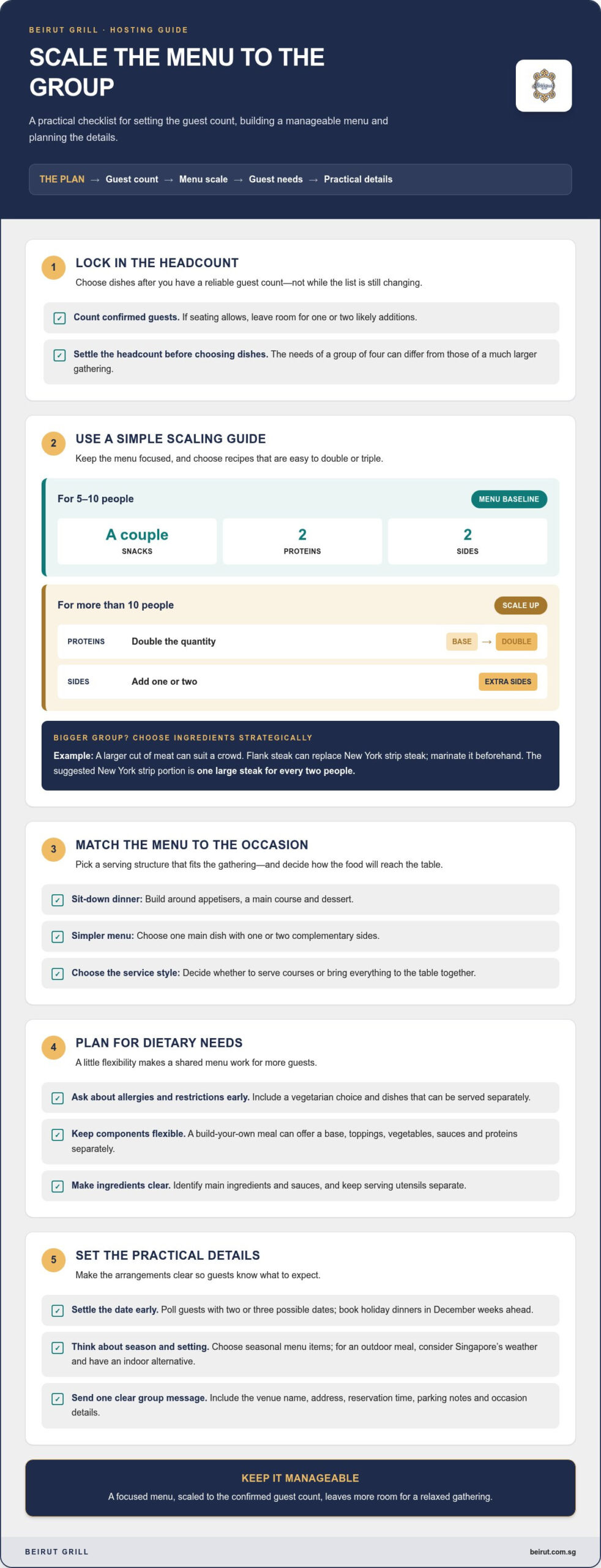
A crowd doesn’t need a complicated menu; it needs a plan that scales. To decide how to plan a menu for a group dinner, count confirmed guests, choose dishes that can be prepared in larger batches, and keep the menu balanced. For five to 10 people, serve a couple of snacks, two proteins and two sides; for more than 10, double the proteins and add one or two sides.
It’s easy to assume that cooking for more guests means making more dishes, but a few flexible choices can make the evening smoother for everyone. This guide explains how to scale a menu, plan around dietary needs and set clear expectations about shared food and payment. You’ll also find practical ideas for a relaxed dinner, including grill-based dishes that let the food take centre stage without keeping the host away from the table.
Key Takeaways
- Match the menu to the occasion: light fare suits a casual gathering, while a sit-down dinner can follow an appetiser, main course and dessert.
- Use build-your-own dishes to give guests flexibility, and plan around any allergies or dietary restrictions on the guest list.
- Agree in advance whether food will be shared and how the bill will be handled, so expectations are clear before everyone sits down.
- For a relaxed grill-based dinner, keep the menu manageable and choose dishes that let the host spend more time with guests.
1. Planning menus for small dinner parties and larger crowds
The question of how to plan a menu for a group dinner gets easier once the guest count is settled. Count confirmed guests rather than waiting for every possible reply, and leave room for one or two likely additions if seating allows. A gathering of 14 can have different restaurant options from a group of four. Whether you’re hosting ten, twenty or forty people, settle the headcount before choosing dishes.
Scale the menu to the occasion, then choose recipes that are easy to double or triple. For a dinner party of five to 10 people, plan at least a couple of snacks, two proteins and two sides. For more than 10, double the quantity of proteins and add one or two sides. Larger gatherings can also suit bigger cuts of meat and less expensive ingredients. For example, flank steak can replace New York strip steak; marinate it beforehand. The suggested New York strip portion is one large steak for every two people.
Plan for dietary needs from the start. Ask guests about allergies and restrictions, then include a vegetarian choice and dishes that can be served separately. For casual gatherings where takeout simplifies hosting, looking at how restaurants like Manny & Olga’s Pizza pair crowd-pleasing combos with gluten-free options offers a useful model for keeping diverse eaters satisfied. For a sit-down dinner, build the menu around appetisers, a main course and dessert. For a simpler plan, choose one main dish with one or two complementary sides. Decide whether to serve courses or bring everything to the table together.
For a celebration, settle the date and practical details early. Poll guests with two or three possible dates, and book holiday dinners in December weeks ahead. Choose seasonal menu items to support freshness and help manage the budget. If the meal is outdoors, consider how Singapore’s weather could affect the setting and have an indoor alternative. Send a final group message with the venue name, address, reservation time, parking notes and occasion details, so everyone knows where they’re coming and when.
2. Selecting build-your-own dishes for varied dietary needs
A build-your-own meal lets guests assemble plates from clearly separated dishes. Set out a base such as rice or flatbread, then offer toppings, vegetables, sauces and proteins in separate bowls. For a casual dinner, guests might pair grilled chicken with salad, herbs and dressing, choosing only the components that suit them. This gives the table a shared centre without requiring every plate to be identical.
Ask about allergies and dietary restrictions in advance, and invite guests to explain what they need rather than relying on labels such as “vegetarian.” Their answers will help you choose starters, main components and accompaniments thoughtfully. A vegetarian guest may want a substantial source of protein, while another guest may need to avoid a specific ingredient. Make a simple list of each requirement and the dishes it affects.
Keep ingredient information visible. Place a card beside each dish naming its main ingredients, such as chicken, nuts or dairy, and identify sauces separately. Separate serving utensils make it easier to choose components without reaching through a mixed platter. If a dish contains several ingredients, keep its recipe or ingredient list nearby so you can answer questions accurately. Don’t describe a dish as suitable for someone’s needs unless you know what went into it.
For a restaurant meal, guests with allergies or strict dietary preferences should review the menu before arriving and speak directly with the server. For a home gathering, share the planned menu beforehand and ask whether the dishes will work for them. Include a straightforward alternative, such as plain rice and vegetables, rather than expecting someone to make a meal from sides that don’t suit their needs.
Separate components can make a generous table feel welcoming, not clinical. Explore Lebanese dining in Singapore for inspiration on bringing a variety of flavours to a shared meal.
3. Setting expectations about payment and shared food
Tell guests how the bill will be handled before the gathering. Clarify whether everyone pays individually or contributes to the guest of honour’s meal, and share the plan in advance. Separate checks may take longer or may not be available, depending on the restaurant’s policy. For a shared meal, explain whether dishes will be divided evenly or ordered for the table. Agreeing on these details helps guests focus on the food and conversation, rather than sorting out payment at the end.
Match the serving style to the room. For a seated meal, place shared platters within easy reach and let guests pass them around. A few shareable starters can set a generous tone before the main dishes arrive. If guests will be standing and mingling, choose bite-sized food they can manage while holding a drink. Keep plates and napkins near the food, so guests don’t have to cross a busy room carrying a glass.
Reduce last-minute cooking by preparing suitable dishes a day or two ahead. Julienne vegetables for seared tuna can be prepared the day before, while mashed or roast potatoes can be partly prepared three hours before serving. Keep hot dishes hot and cold dishes chilled, and replenish serving platters rather than leaving food out throughout the gathering. In a warm Singapore season, thoughtful timing matters: finish each dish near serving time and keep the kitchen organised.
For children, choose plain or bite-sized food that’s easy to manage, such as small pieces of bread, fruit or mild cheese. At the table, make presentation practical as well as elegant: arrange dim sum in groups of three, or place similar pieces together on a platter. Use a serving spoon for each dish, and position sauces separately so guests can add them to taste. A clear layout brings convenience to the table and keeps hosting calm, whether guests are eating seated or moving between conversations.
4. Casual and grill-based dinner party menus
For a relaxed dinner party, build the menu around grilled meat or fish, shared mezze and a sweet finish. Hummus, grilled halloumi, grilled prawns and grilled fish bring distinct flavours without requiring several courses. Guests can help themselves while the host keeps the evening informal and unhurried. This combination also offers guests who prefer seafood or meat a choice beyond a single centrepiece, much like how modern seafood venues such as South Sailor craft shareable menus that bring fresh fish and vibrant flavours together for group dining.
Keep the cooking plan focused. Choose one challenging dish at most, then pair it with simple items that need little attention as guests arrive. If serving steak, slice it into 1-inch pieces for easier sharing. Set out warm plates, serving utensils and small dishes for sauces before grilling begins. That preparation keeps the food moving from grill to table, rather than leaving guests waiting while the host searches the kitchen.
Balance a smoky main course with cool, crisp accompaniments and a dessert that needs no last-minute cooking. For example, serve grilled prawns with fresh salad, then offer baklava after the main course. If guests will mingle, arrange bite-sized portions on accessible platters. For a seated meal, bring larger dishes to the table and let everyone serve themselves. Either format makes a casual meal feel abundant without adding another course.
Popular group dinner menu ideas in Singapore can draw on Lebanese mezze and grilled favourites, with options such as hummus, grilled fish and halloumi. For a more substantial shared feast, combine grilled meat and seafood with salads, then finish with a traditional dessert.
Prefer to leave the grill and table service to a restaurant? Enjoy a Lebanese grill dinner with friends and family.
Beirut Grill: Mixed Grill
Beirut Grill is a natural option when you’d rather enjoy a group meal than manage every dish at home. Mixed Grill gives the menu a Lebanese centrepiece, while Hummus and Vegetarian Kebab offer choices for different tastes around the table. Lebanese Wine can accompany the meal for guests who enjoy wine.
Choose this option for a casual gathering where the focus is conversation, shared flavours and time together, not coordinating the grill and kitchen. Keep your menu decisions in mind: let guests know the meal’s direction and share relevant dietary information as you organise the evening. The result is a dinner with a clear culinary focus and less cooking for the host.
Visit Beirut Grill’s website to explore the menu for your gathering.
Make the gathering the easy part
The best way to decide how to plan a menu for a group dinner is to shape it around the kind of evening you want: lively and informal, or leisurely and centred on the table. Once the menu is settled, focus on being present with your guests. A shared meal should leave room for conversation, relaxed servings and the small moments that make a gathering feel personal.
For an evening out, Beirut Grill brings Lebanese flavours to the table with Mixed Grill, Hummus and Lebanese Wine. It’s a fitting choice when you’d rather spend the occasion together than oversee the cooking at home.
Contact Beirut Grill for dinner, and start planning a gathering your guests can savour.
Frequently Asked Questions
How do you cook for a crowd?
When cooking for a crowd, choose recipes that scale well and don’t demand constant attention. A practical way to plan a menu for a group dinner is to give each dish a clear role: prepare one ahead, finish another just before serving, and set the rest on the table ready to share. Keep the cooking sequence simple, and avoid scheduling several dishes that need the oven or stovetop at the same time.
How many dishes should you plan for a group dinner?
Let the serving style guide how many dishes you make. A family-style meal benefits from enough variety for guests to share, while a plated meal can feel complete with fewer, carefully chosen components. Decide what each dish contributes, such as freshness, richness or a sweet finish. If two dishes serve the same purpose, remove one instead of adding choices that complicate preparation.
How much food per person should you prepare for a group dinner?
Estimate portions based on the menu, meal timing and number of courses. A substantial main needs a different share of the total food than a light starter or side. Write down the confirmed guest count, assign a portion of each dish per person, then multiply by the number attending. If several dishes are served together, allow for guests choosing a mix rather than taking a full portion of everything.
How do you ask guests about dietary restrictions and allergies?
Ask directly and privately when guests receive the invitation or RSVP, and ask them to name the specific ingredient or restriction. For example: “Do you have any allergies or dietary requirements I should plan around?” Follow up about which dishes or ingredients matter instead of relying on broad labels. At a restaurant, guests with allergies or strict dietary preferences should speak directly with the server before ordering.
How do you choose a menu that accommodates different diets?
Choose a menu with components guests can combine instead of making every dish a fixed mixture. Plain rice, vegetables and separately presented sauces offer more choice than a single prepared bowl. Consider the needs shared across the guest list, then label ingredients clearly. Keep utensils with their dishes so guests can serve themselves without mixing components.
How do you plan a balanced group dinner menu with appetizers, mains, sides and dessert?
Balance the menu by varying flavour, texture and richness. Pair a savoury appetiser with a main that anchors the table, then choose sides that add freshness or contrast. Finish with a dessert that feels different from the earlier courses, such as a gently sweet option after a richly flavoured meal. This gives each course a clear purpose without making the menu feel repetitive.