
The soul of a true Lebanese mezze isn’t found in the sharp blades of a food processor, but in the patient, blackened ritual of an open flame. You’ve likely felt the frustration of a dip that’s too watery, overly bitter, or lacks that elusive, deep-seated smokiness that defines a professional culinary experience. If you’ve been searching for how to make authentic baba ghanoush that bridges the gap between a simple puree and the sophisticated, indulgent depth of a traditional spread, you’ve arrived at the right destination.
In this guide, we draw upon the rich heritage of Beirut Grill, a prestigious destination in Singapore since 2009, to reveal the professional secrets to achieving a velvet, chunky-yet-creamy texture. We promise to teach you the precise charring techniques and ingredient balances required to create a magnificent centerpiece for your next gathering. We will walk through the selection of premium eggplant, the traditional hand-mashing method, and the final aromatic touches that elevate this dish into a work of art.
Key Takeaways
- Master the ancestral ritual of charring eggplants over a direct flame to infuse your dip with a professional, smoky depth.
- Learn how to make authentic baba ghanoush by embracing the art of hand-mashing, which ensures a traditional, chunky-yet-creamy texture.
- Discover why the quality of your tahini is the defining factor in balancing rich nuttiness against unwanted bitterness.
- Elevate your presentation with the well technique, creating a scenic reservoir for premium olive oil and vibrant pomegranate arils.
- Explore the heritage of Beirut Grill, where our chefs have utilized traditional charcoal pits since 2009 to set the benchmark for Lebanese excellence.
The Soul of the Mezze: What is Authentic Baba Ghanoush?
Within the sun-drenched courtyards of the Levant, the arrival of a mezze spread marks the beginning of a sensory journey. At the heart of this ritual sits a dish of incomparable depth. To truly understand What is Baba Ghanoush?, one must look beyond the sterile, refrigerated tubs found in modern supermarkets. Authentic Lebanese baba ghanoush is a masterclass in balance, offering a flavor profile that is profoundly smoky, earthy, and nutty, yet finished with a bright, citrusy lift that awakens the palate. It’s a dish that demands respect for its ingredients and patience in its preparation.
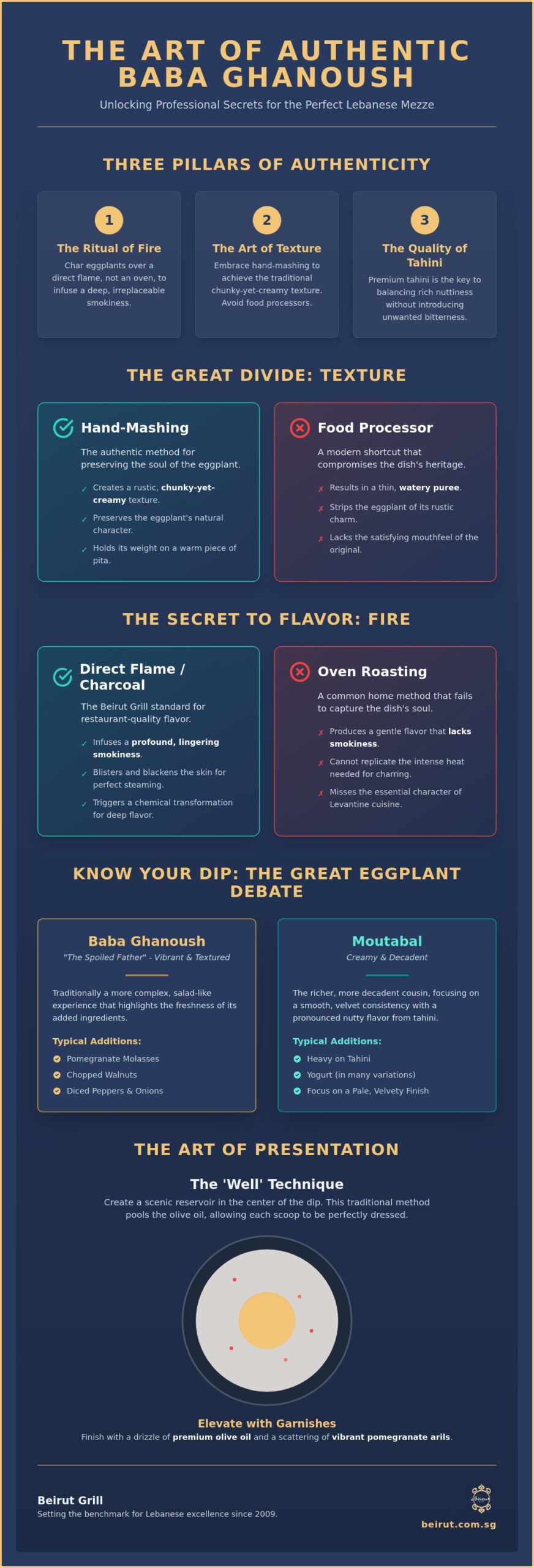
The secret to how to make authentic baba ghanoush lies in the preservation of texture. While it’s tempting to reach for a food processor, doing so is a betrayal of the dish’s heritage. High-speed blades strip the eggplant of its character, creating a thin, watery puree that lacks the rustic charm of a hand-mashed dip. In our kitchen at Beirut Grill, established in 2009, we treat the eggplant as the protagonist. It should be chunky enough to hold the weight of a warm piece of pita, yet creamy enough to melt away, leaving behind the ghost of the charcoal fire.
The ‘Spoiled Father’ Etymology and Heritage
The name itself, “Baba Ghanoush,” translates from Arabic to “spoiled father” or “pampered daddy.” This whimsical title speaks to the indulgent nature of the dip, suggesting a dish so tender and rich that it was fit to be served to the patriarch of the family. For generations, this recipe has served as a cornerstone of Lebanese hospitality, a gesture of welcome that transcends simple nourishment. Since our founding in Singapore, we’ve carried this tradition forward, ensuring that every guest feels that same sense of specialized care and cultural pride that defines a Levantine home.
Baba Ghanoush vs. Moutabal: Clearing the Confusion
Even seasoned diners often find themselves navigating a cloud of confusion when distinguishing between these two iconic eggplant dips. While they share a base of charred eggplant, the nuances in their composition are significant. To help you identify these treasures on a menu, consider these distinctions:
- Moutabal: This is typically the creamier, more decadent cousin. It leans heavily on tahini and, in many regional variations, includes a spoonful of yogurt to achieve a pale, velvet consistency.
- Baba Ghanoush: Traditionally, this version is more vibrant and textured. It often incorporates pomegranate molasses, chopped walnuts, or diced vegetables like peppers and onions, creating a more complex, salad-like experience.
At Beirut Grill, we celebrate both preparations, honoring the specific regional markers that make each one a unique pillar of our pork-free, heritage menu. By understanding these subtle differences, you’re not just following a recipe; you’re participating in a culinary legacy that rewards curiosity with flavor.
The Ritual of Fire: How to Achieve Professional Smokiness
The secret to restaurant-quality flavor isn’t found in a spice jar. It’s born from the violent, purifying heat of a direct flame. While many home recipes suggest a gentle oven roast, this method often fails to capture the soul of the Levant. Authentic flavor requires the skin to blister and blacken until it resembles carbonized parchment. This intense heat triggers a chemical transformation, infusing the creamy flesh within with a deep, lingering smokiness that an oven simply cannot replicate. It’s the essential first step in understanding how to make authentic baba ghanoush that carries the weight of tradition.
Mastering this technique starts with choosing your heat source. A gas burner or a charcoal grill is ideal. You want the fire to lick the skin, creating a charred barrier that steams the interior to a velvet consistency. For those following an authentic baba ghanoush recipe, this stage is the most critical. It’s the defining moment where a simple vegetable is elevated into a masterpiece of Lebanese culinary art, rewarding the patient cook with a complexity that lingers long after the meal is finished.
Charcoal Grilling: The Beirut Grill Standard
At Beirut Grill, we have honored the tradition of charcoal-grilling since our founding in 2009. The air in a professional Lebanese kitchen is thick with the scent of burning wood and roasting vegetables, a sensory prelude to the feast ahead. Charring is the deliberate process of carbonizing the exterior to steam the interior. This method allows the smoke to penetrate the pores of the eggplant, seasoning the pulp from the inside out before it ever touches a grain of salt.
Step-by-Step: From Raw Eggplant to Smoky Pulp
The process requires a watchful eye and a steady hand. Follow these steps to ensure a perfect result every time:
- Pricking the skin: Use a fork to pierce the eggplant in several places. This allows steam to escape and prevents the vegetable from exploding under high pressure.
- The ‘collapse’ test: Rotate the eggplant every few minutes over the flame using long tongs. You’ll know it’s ready when the skin is completely charred and the body feels soft, deflated, and heavy.
- The resting period: Place the hot eggplant in a bowl and cover it with plastic wrap or a lid for ten minutes. This creates a steam chamber that loosens the skin, making the peeling process effortless and clean.
Always prioritize safety when working with high heat. If you lack a gas stove or grill, you can roast the eggplant under a high broiler, though you’ll miss the authentic charcoal aroma. To compensate, a tiny drop of high-quality liquid smoke or a pinch of smoked paprika can offer a subtle nod to the traditional fire. While you can replicate these steps at home, you may wish to experience the charcoal difference firsthand at our heritage destination in the heart of the city.
Ingredients and the Art of Hand-Mixing
Once the eggplant has surrendered its moisture and absorbed the essence of the flame, the delicate assembly of the dip begins. In the Lebanese tradition, the list of ingredients is intentionally brief, allowing the smoky profile of the vegetable to remain the protagonist. Achieving the perfect balance in how to make authentic baba ghanoush requires a commitment to quality that transcends the average pantry. We focus on the “Holy Trinity” of Lebanese flavors: premium tahini, freshly squeezed lemon juice, and pungent garlic, all bound together by the silken thread of high-quality Extra Virgin Olive Oil.
The choice of tahini is perhaps the most critical decision in this process. A low-grade sesame paste can introduce a harsh, metallic bitterness that masks the eggplant’s natural sweetness. Instead, seek out tahini that is pale, pourable, and possesses a deep, toasted nuttiness. When combined with the bright acidity of lemon and the sharp bite of garlic, it creates a velvet backdrop for the charred pulp. At Beirut Grill, we’ve sourced our ingredients with this same specialized care since 2009, ensuring every mezze dish reflects the prestigious standards of our heritage.
Selecting the Perfect Eggplant
The foundation of a superior dip starts at the market. While large eggplants are tempting, they often harbor a multitude of bitter seeds that can ruin the texture of your baba ghanoush. We prefer smaller, firmer Italian or globe eggplants for their dense flesh and minimal seed count. To ensure you’re choosing the freshest produce, look for these specific quality markers:
- The Weight Test: The vegetable should feel surprisingly heavy for its size, indicating a high moisture content that will steam beautifully over the fire.
- The Shiny Skin Rule: A taut, mirror-like skin is a hallmark of freshness; dull or wrinkled skin suggests the eggplant is past its prime and may have a spongy, dry interior.
- Firmness: A gentle press of the thumb should leave no lasting indentation, signaling a vibrant, healthy cell structure.
The Manual Method: Fork vs. Mortar and Pestle
If you desire the “gluey,” homogenized texture of a commercial spread, the food processor is your tool. However, to capture the rustic, sophisticated soul of a traditional Lebanese kitchen, you must put the machinery away. High-speed blades break down cell walls too aggressively, releasing excess moisture and creating a thin, unappealing puree. Using a sturdy fork to mash the eggplant allows you to control the “chunky-creamy” balance, preserving the integrity of the smoky fibers.
To avoid overwhelming the dish with raw “bites” of garlic, we recommend crushing your cloves into a smooth paste with a pinch of salt before incorporating them. This ensures the garlic’s warmth is distributed evenly throughout the dip. This manual ritual is an act of hospitality, a way to slow down and honor the ingredients just as our chefs do every day in the heart of Singapore. By embracing these traditional techniques, you aren’t just making a dip; you’re curating an authentic cultural journey for your guests.
The Lebanese Feast: Serving and Pairing Your Creation
The final presentation of your dip is an invitation to indulge. Once you’ve mastered how to make authentic baba ghanoush, the focus shifts to the theater of the table. A shallow ceramic bowl becomes a canvas for textures and colors. Use the back of a large spoon to sweep the dip into a smooth, swirling circle, creating a deep, central reservoir known as “the well.” This hollow is then filled with a generous pour of golden Extra Virgin Olive Oil, which catches the light and pools beautifully against the ivory texture of the eggplant. Scatter a handful of ruby-red pomegranate arils and finely chopped parsley across the surface to provide a vibrant, acidic contrast to the earthy, smoky base.
A traditional Lebanese spread is a sophisticated symphony of balanced flavors. Your baba ghanoush should sit proudly alongside a velvet bowl of Hummus and the sharp, herbaceous crunch of Tabbouleh. The brightness of fresh mint and parsley isn’t just a decorative choice; it cuts through the richness of the tahini, refreshing the palate between every decadent bite.
Lebanese Wine and Spirits Pairings
The smoky depth of charred eggplant finds its perfect match in the high-altitude vineyards of the Bekaa Valley. A crisp, acidic Lebanese White Wine serves as a refined counterpoint to the creamy tahini, cleansing the tongue with every sip. For a truly traditional experience, we serve Arak, often referred to as “Lion’s Milk.” This potent, anise-flavored spirit turns a milky white when diluted with water and ice. Its cooling, licorice-like notes dance elegantly with the charred aroma of the eggplant, creating a pairing that is both historic and refreshing. At Beirut Grill, our curated beverage list acts as a guide for enthusiasts seeking to replicate this prestigious harmony at home.
Completing the Spread with Grilled Meats
While baba ghanoush shines as a standalone mezze, it truly excels as a companion to charcoal-grilled specialties. It is the essential sidecar to a Mixed Grill, providing a cooling, silken contrast to the robust spices of Lamb Kofta or the charred exterior of Shish Taouk. The dip acts as a natural sauce, softening the intensity of the grill and adding a layer of earthy complexity to every forkful of meat. To experience this balance of hot and cold mezze in its most authentic form, we invite you to reserve a table at our historic Singapore location and immerse yourself in the full Lebanese journey.
Savoring Heritage at Beirut Grill
Since our founding in 2009, Beirut Grill has served as a prestigious anchor for Levantine culture in the heart of Singapore. We believe that a true meal is a narrative, told through the scent of burning charcoal and the warmth of shared mezze. While this guide provides the technical foundation for how to make authentic baba ghanoush, there is a level of depth that can only be achieved through the seasoned hands of a Lebanese-trained culinary team. We invite you to step into our world, where the physical environment and the sensory details of our cuisine transport you directly to the vibrant streets of Beirut. Every dish we serve is a reflection of our pride in our longevity and our commitment to an authentic, pork-free heritage menu.
The mastery of the flame is a ritual we perform daily, utilizing techniques passed down through generations. Our Baba Ghanoush is not merely a side dish; it is a specialized experience that rewards the guest’s curiosity with layers of smoke and silk. It stands as a testament to our role as a curator of authentic culture, offering a sensory journey that begins the moment you enter our doors. By anchoring our identity to our specific physical location, we’ve created a destination where the physical surroundings are as evocative as the culinary offerings themselves.
The Professional Difference
Our kitchen houses traditional charcoal pits that reach temperatures far beyond the capabilities of a standard home range. This intense, direct heat is the only way to achieve the total carbonization of the eggplant skin required for that signature restaurant-quality aroma. Our Lebanese-trained culinary team possesses the seasoned expertise to identify the exact moment an eggplant has reached its peak of tenderness. To maintain our standard of excellence, Beirut Grill sources specific tahini from prestigious regional producers to ensure a consistent, nutty profile that is never marred by bitterness. This dedication to high-status markers and premium ingredients distinguishes our mezze from any other in the city.
Plan Your Visit for an Authentic Journey
Before you embark on your own culinary journey at home, we encourage you to experience the gold standard of Lebanese hospitality. Our Baba Ghanoush acts as the perfect silken companion to our signature charcoal-grilled Shish Taouk, creating a balance of heat and creaminess that is the hallmark of a refined feast. The atmosphere of our dining room, rich with the history of our 2009 founding, rewards the visitor’s curiosity with an exclusive yet welcoming embrace. It’s an environment designed to slow you down and encourage immersion in your surroundings. Book your table at Beirut Grill for an authentic Lebanese feast and discover the true soul of the mezze table firsthand.
Bringing the Essence of the Levant to Your Table
Mastering the art of the Lebanese mezze is a journey that rewards the patient and the curious. By embracing the traditional ritual of fire and the tactile joy of hand-mashing, you’ve unlocked the secrets of the Levant. You now understand how to make authentic baba ghanoush that honors the “spoiled father” heritage through a perfect balance of smoky depth and velvet texture. It’s a culinary skill that transforms a simple meal into an evocative celebration of place and history, inviting your guests to linger over every bite.
While your home kitchen is a wonderful place for exploration, the full sensory allure of a professional charcoal pit remains a unique indulgence. Since 2009, we’ve remained a prestigious destination in Singapore for those seeking the true gold standard of heritage dining. Our 100% pork-free menu and signature charcoal-grilled techniques ensure an experience that feels both exclusive and deeply authentic. We invite you to Experience the authentic taste of Lebanon at Beirut Grill. Step into our atmospheric surroundings and let us transport you through the very flavors you’ve now learned to admire.
Frequently Asked Questions
Why is my baba ghanoush bitter and how can I fix it?
Bitterness typically arises from using overripe eggplants with large seeds or low-quality tahini that has turned rancid. To fix a bitter dip, try adding a small squeeze of extra lemon juice or a tiny pinch of salt to balance the palate. For future batches, always select smaller, firmer eggplants with glossy skin to ensure the seeds haven’t developed a harsh, peppery flavor.
Can I make baba ghanoush without tahini?
You can omit tahini, but the resulting dish will lack the signature nutty depth and velvet creaminess of the authentic Lebanese version. Without this sesame paste, the preparation is closer to a simple eggplant salad rather than a traditional dip. If you’re seeking a sesame-free alternative, a dollop of thick Greek yogurt can provide a similar richness, though it technically moves the dish toward a Moutabal profile.
How long does homemade baba ghanoush last in the fridge?
Homemade baba ghanoush remains fresh and safe to eat for three to four days when stored in an airtight container. Because the smoky aroma is volatile, it’s best enjoyed within the first 48 hours for the most evocative sensory experience. To prevent the dip from oxidizing and turning a dull grey, smooth the surface and cover it with a thin layer of premium olive oil before sealing.
Is baba ghanoush healthy and what are its nutritional benefits?
Baba ghanoush is an exceptionally healthy mezze choice, offering a wealth of dietary fiber and heart-healthy monounsaturated fats from tahini. Eggplants provide essential antioxidants like nasunin, which protects brain cell membranes, while garlic and lemon juice offer immune-boosting properties. When you learn how to make authentic baba ghanoush, you’re mastering a nutrient-dense dish that aligns perfectly with a wholesome, plant-based lifestyle.
What is the best type of eggplant to use for baba ghanoush?
Smaller Italian or globe eggplants are the gold standard for this dip because they possess fewer seeds and a creamier, denser flesh. These varieties respond beautifully to the intense heat of a charcoal flame, resulting in a pulp that is luscious rather than spongy. When selecting your produce, look for eggplants that feel heavy for their size, as this indicates the moisture content necessary for a professional texture.
Can I freeze baba ghanoush for later use?
Freezing is not recommended because the delicate emulsion of tahini, lemon, and eggplant pulp often separates and becomes grainy upon thawing. If you wish to save time, you can freeze the charred and peeled eggplant pulp on its own for up to three months. When you’re ready to serve, simply thaw the pulp and whisk in fresh garlic, tahini, and lemon to maintain the dish’s prestigious quality.
Why is my dip watery and how do I thicken it?
A watery consistency usually happens when the eggplant isn’t sufficiently drained or if it was blended too aggressively in a food processor. To thicken your dip, place the roasted pulp in a fine-mesh strainer for at least 15 minutes before mashing to allow excess juices to escape. If the finished dip still feels thin, incorporating an extra tablespoon of high-quality tahini will help bind the ingredients into a rich, spreadable texture.
Is baba ghanoush vegan and gluten-free?
Traditional Lebanese baba ghanoush is naturally vegan and gluten-free, as it relies entirely on plant-based ingredients and contains no wheat products. This makes it a versatile and inclusive centerpiece for any sophisticated mezze spread. At Beirut Grill, we’ve honored these dietary-friendly heritage recipes since 2009, ensuring our pork-free menu remains a reliable destination for guests seeking a truly authentic cultural journey in Singapore.