
A traditional Lebanese mezze is not merely a selection of appetizers; it’s a choreographed social ritual where the sequence of flavors matters as much as the conversation flowing across the table. When the surface disappears beneath vibrant bowls of Hummus and silk-smooth Labneh, the sheer abundance of a Levantine spread can feel beautifully overwhelming. You might find yourself wondering which plate to reach for first or how to use a fragment of warm flatbread with the proper etiquette. We understand that mastering how to eat mezze style is about more than just satisfying hunger; it’s about embracing a heritage of hospitality that’s been refined over generations.
In this guide, you’ll learn the art of the Lebanese feast, from the cooling opening notes of Fattoush to the savory crescendo of Lamb Kofta and Shish Taouk. We’ll explore the essential social flow of the meal, including the traditional transition from cold to hot plates and the sophisticated pairing of dishes with a chilled glass of Arak. By the time the last piece of Baklava is served, you’ll possess the confidence to navigate any menu with the grace of a true connoisseur, turning a simple dinner into a prestigious cultural journey.
Key Takeaways
- Master the rhythmic progression of a Lebanese feast by learning exactly how to eat mezze style, beginning with crisp salads to awaken your palate.
- Discover why the “Holy Trinity” of dips, featuring Hummus and Moutabal, forms the soul of a meal rooted in ancient hospitality and generosity.
- Learn the sophisticated etiquette of the “scoop,” using warm pita bread as a refined tool to enjoy communal dishes with grace.
- Understand the transition from cold starters to the smoky, charcoal-grilled excellence of the Mixed Grill for a complete sensory experience.
- Gain the confidence to share a feast with elegance, ensuring every guest enjoys the abundance of the table through traditional Lebanese norms.
The Philosophy and Art of Mezze Dining
To truly understand The Philosophy and Art of Mezze, one must look beyond the individual plates and see the table as a living canvas of Levantine hospitality. In Lebanon, mezze is far more than a collection of appetizers designed to sharpen the appetite. It’s a complete, immersive culinary institution rooted in the ancient virtues of generosity and abundance. While Western dining often follows a linear path from starter to main, the Lebanese tradition transforms the spread into an entire meal where the variety of flavors creates a symphonic experience. This is the foundation of learning how to eat mezze style; it’s an invitation to slow down and let the meal unfold over hours rather than minutes.
Time is the most important ingredient in this ritual. In a world that often prioritizes speed, the mezze table demands a deliberate pause. It’s a “slow dining” experience where the arrival of each dish is timed to encourage lingering. You aren’t just consuming food; you’re participating in a heritage where the act of eating is inseparable from the act of being present with others.
Mezze vs. Tapas: Understanding the Lebanese Difference
While many compare these small plates to Spanish tapas, the experience is fundamentally different. Tapas often imply a transient, bar-hopping energy where a few bites are paired with a quick drink. In contrast, a Lebanese mezze feast is a stationary, evolving event. It’s a smorgasbord that demands your full attention as the table is continuously replenished with a balance of textures and temperatures. You’ll move from the chilled creaminess of Labneh to the crisp, hot crunch of Falafel. The acidity of lemon and sumac in a Tabbouleh serves to cleanse the palate between bites of rich, olive oil-soaked Hummus, creating a rhythmic harmony that defines how to eat mezze style with sophistication.
The Social Significance of the Shared Table
The communal table serves as a physical bridge between guests, where every dish passed from hand to hand is a gesture of connection. In a traditional Middle Eastern setting, the host takes immense pride in ensuring the table never looks empty. An empty plate would signal a lapse in hospitality, so the spread remains lush and inviting throughout the evening. This cultural depth is precisely what attracts the growing Middle Eastern food Singapore connoisseur scene. Diners today seek more than just sustenance; they crave the social ‘flow’ that only a shared feast can provide. Mastering the mezze ritual means understanding that the conversation is as vital an ingredient as the garlic or tahini, turning a simple dinner into a prestigious social bond.
The Essential Components of an Authentic Lebanese Spread
A true Lebanese spread is a curated tapestry of colors and aromas, where each dish serves a specific purpose in the dining narrative. At its heart lies the ‘Holy Trinity’ of silken dips: Hummus, Baba Ghanoush, and Moutabal. While many guests confuse the latter two, the discerning palate recognizes Moutabal by its creamy tahini base and smoky eggplant, while Baba Ghanoush delights with a rustic medley of tomatoes, peppers, and pomegranate molasses. These staples are more than just accompaniments; they are the canvas upon which the meal is built. Understanding the Essential Components of a Mezze Spread allows you to appreciate the deliberate balance of flavors that defines how to eat mezze style with true sophistication.
Freshness acts as the unwavering pillar of this culinary architecture. Tabbouleh, with its finely chopped parsley and bright lemon notes, and Fattoush, crowned with crisp pita chips and a dusting of tangy sumac, aren’t merely salads. They’re essential palate cleansers, their vibrant acidity cutting through the richness of the tahini and olive oil. As the meal progresses, the table shifts toward the warmth of the grill. Succulent skewers of Shish Taouk and perfectly seasoned Lamb Kofta arrive, their charred exteriors whispering of traditional charcoal flames. For those who prefer a meat-free journey, the golden crunch of Falafel and the salty, squeaky indulgence of Grilled Halloumi remain non-negotiable icons of the feast.
Cold Mezze: The Foundation of Freshness
The journey often begins with the cooling touch of Labneh, a thick, strained yogurt drizzled with golden olive oil and often a sprinkle of dried mint. It provides a soothing counterpoint to the bolder spices of the hot dishes. Nearby, you’ll find Warak Enab, delicate grape leaves hand-stuffed with rice and herbs, offering a tender, zesty bite. The golden thread connecting these dishes is the use of premium, cold-pressed olive oil, which imparts a fruity depth to every cold preparation. If you’re seeking to experience this level of authenticity, you might reserve a table at an established Lebanese destination to see these traditions in practice.
Hot Mezze: Texture and Warmth
As the conversation deepens, the hot mezze brings a shift in texture and temperature. The Fried Kibbeh is perhaps the most celebrated achievement of Lebanese kitchens, featuring a crisp, football-shaped shell of bulgur and meat that hides a spiced, aromatic center. Pastry also plays a starring role; Sambousek offers a savory meat filling in a flaky crescent, while Spinach Fatayer provides a tart, citrusy burst within a soft dough. No spread is complete without Batata Harra. These cubes of spicy potatoes, tossed with garlic and fresh coriander, offer a comforting heat that keeps the rhythm of the meal alive. Mastering the order of these elements is the key to understanding how to eat mezze style as a seasoned guest.
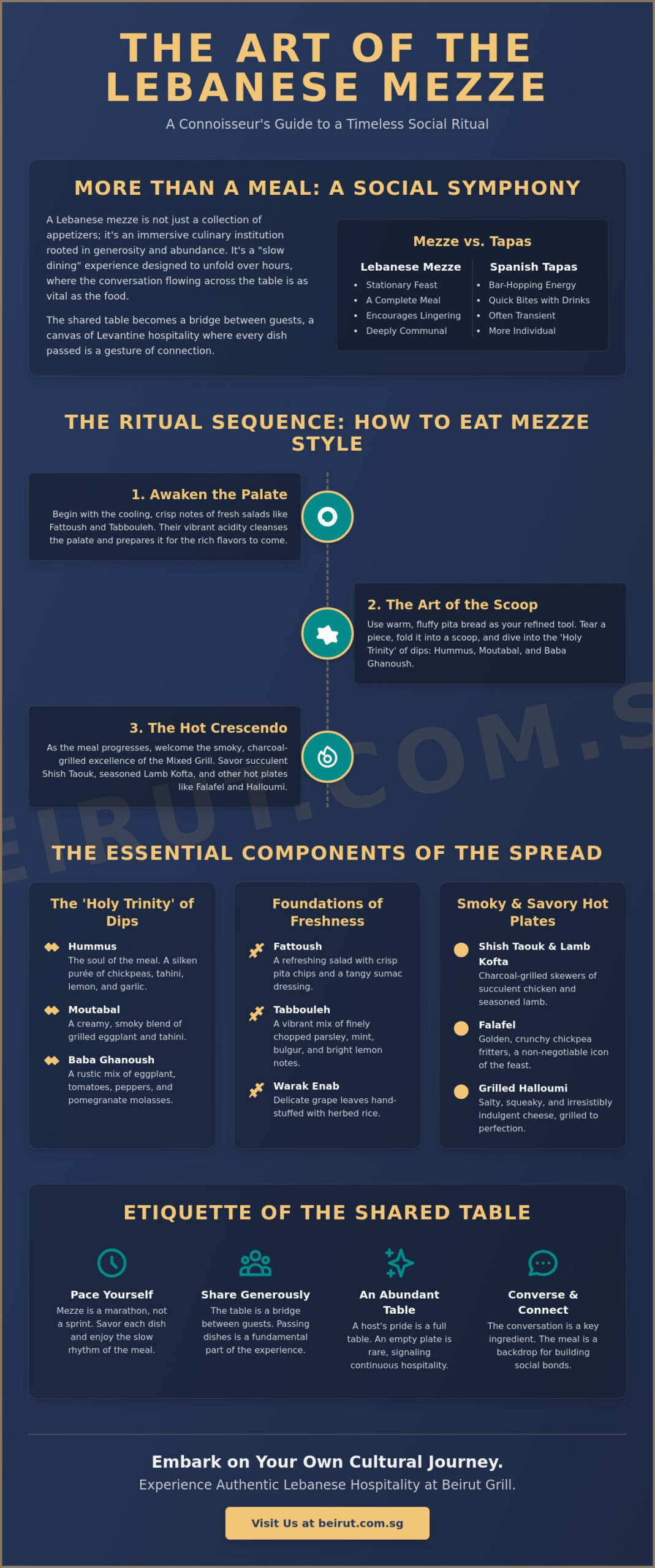
The Ritual Sequence: How to Eat Mezze Style in 2026
A true Lebanese feast is a narrative told in stages, where the order of arrival is as deliberate as the seasoning. To master how to eat mezze style in 2026, one must respect the traditional choreography that guides the diner from the garden to the grill. This sequence isn’t just about etiquette; it ensures the palate remains sharp and the appetite is sustained through an evening of indulgence. Unlike a western three-course meal, the mezze table evolves, with new flavors arriving just as the previous ones have been fully appreciated.
The ritual begins with the lightest elements. Start with the vibrant acidity of Tabbouleh or Fattoush. These salads act as a refreshing prelude, using lemon and sumac to awaken the taste buds. Next, introduce the creamy foundations: silken Hummus and smoky Moutabal. These are served with warm, pillowy pita, allowing you to appreciate the cooling textures before the meal gains heat. The experience then transitions through the following stages:
- The Hot Vegetarian Bridge: Golden, spiced Falafel and the savory richness of Grilled Halloumi provide a textural shift.
- The Savory Pastry: Bites of Spinach Fatayer or meat-filled Sambousek add a flaky, indulgent dimension.
- The Grills: The crescendo features charcoal-grilled proteins like Shish Taouk and Lamb Kofta, often accompanied by garlic toum.
- The Conclusion: The meal ends with the palate-cleansing ritual of Moroccan Mint Tea or a potent cup of Lebanese Coffee.
Why Sequence Matters for Digestion and Flavor
The arrangement of dishes is far from accidental. The high acidity found in early salads like Tabbouleh prepares the stomach for the richer, olive oil-heavy dips and grilled meats to follow. This temperature transition, moving from chilled Labneh to hot, spiced Batata Harra, keeps the dining experience dynamic and prevents palate fatigue. By alternating between zesty greens and creamy tahini, you ensure every bite feels as impactful as the first. It’s a method refined over centuries to maximize both enjoyment and comfort.
Pacing Your Feast: The Two-Hour Rule
In a Lebanese home, a meal that ends quickly is a meal that lacked soul. We encourage guests to embrace the two-hour rule, lingering over each plate to allow for conversation and digestion. There’s a persistent myth that an empty plate is the goal; in reality, a mezze table should always look abundant, a testament to the host’s generosity. Slow dining is the ultimate luxury, an intentional surrender of time that allows every nuanced spice and shared story to be fully savored. This deliberate pace is what transforms a simple dinner into a prestigious cultural event, proving that how to eat mezze style is as much about the clock as it is about the cuisine.
Cultural Etiquette and the Sophistication of Pairing
The true grace of a Lebanese feast lies in the unspoken rules that govern the table, transforming a shared meal into a display of mutual respect and refined taste. Beyond the sequence of plates, understanding how to eat mezze style requires an appreciation for the communal spirit. It is a dance of hands and conversation, where the etiquette of sharing is just as vital as the spices in the kitchen. In this environment, every gesture, from the way you break your bread to the manner in which you pour the Arak, reflects a deep-seated heritage of hospitality.
The Bread Technique: More Than Just a Side
In the absence of traditional silverware, warm, pillowy pita bread serves as your primary utensil. The technique is a practiced art; one must tear a small, manageable piece and use the “pinch and scoop” method to gather dips like Hummus or Baba Ghanoush. This approach ensures you capture the perfect ratio of silken tahini and golden olive oil in every bite. Etiquette dictates that bread should always be broken with the hands, never cut with a knife, symbolizing the organic connection between the diner and the earth. To maintain the sanctity of the communal spread, double-dipping is strictly avoided. Instead, guests are encouraged to take a modest portion onto their individual side plates, ensuring the central bowls remain pristine for everyone to enjoy.
Arak and Wine: Elevating the Sensory Experience
No mezze experience is complete without the ritual of Arak, often referred to as “The Lion’s Milk.” This potent, anise-flavored spirit is a masterclass in chemistry and tradition. It is never consumed neat; instead, it is diluted with water, typically in a one-to-two ratio, which triggers the “louche” effect. This process turns the clear liquid into a milky, opaque cloud that is as visually captivating as it is refreshing. The cooling anise notes are essential for cutting through the rich fats of a Mixed Grill or the savory intensity of Fried Kibbeh. You can experience this authentic pairing ritual firsthand by joining us for an evening of traditional hospitality.
For those who prefer the vine, the prestigious heritage of the Bekaa Valley offers a sophisticated alternative. Lebanese Wine is among the oldest in the world, with robust reds and crisp rosés that are specifically crafted to complement the complex acidity and herb-forward profiles of mediterranean food Singapore enthusiasts have come to adore. Whether you are sipping a cedar-aged red or a chilled Arak, the goal is to enhance the sensory journey. As the savory plates are cleared, the transition to Moroccan Mint Tea or a thick, cardamom-scented Lebanese Coffee signals the final, lingering chapter of the evening, allowing the flavors of the feast to settle into memory.
The Beirut Grill Experience: A Legacy of Authentic Hospitality
Since our establishment in 2009, Beirut Grill has served as a sanctuary for those seeking a genuine connection to Levantine heritage. Celebrating over 15 years of culinary excellence, we have meticulously preserved the rituals of the Lebanese table within an environment that balances professional authority with a warm, inviting hospitality. Here, the question of how to eat mezze style is answered not through words, but through the sensory experience of a meal that honors the slow, deliberate pace of Beirut’s finest dining rooms. Our commitment to a strictly pork-free menu ensures that we uphold the highest Middle Eastern standards, providing an inclusive yet uncompromisingly authentic environment for every guest who walks through our doors.
Our Signature Mezze and Charcoal Grills
At the core of our kitchen lies the ancient art of the charcoal grill, a technique that requires both patience and precision. The Mixed Grill is a testament to this tradition, where the smoky allure of the embers infuses every cut of meat with a depth of flavor that modern ovens cannot replicate. The Beirut Lamb Chops, marinated in a secret blend of spices and grilled to succulent perfection, stand as a signature of our house. Alongside them, the Shish Taouk offers a tender, garlic-kissed journey that pairs beautifully with our house-made Tabbouleh. Every bowl of our velvet-smooth Hummus is prepared with the precision of a craft, serving as the essential foundation for your feast. To elevate the experience, our Arak selection is widely regarded as the finest in the national dining scene, offering the perfect “Lion’s Milk” ritual to accompany your meal.
Planning Your Next Gathering
Whether you are orchestrating a prestigious corporate dinner or an intimate family celebration, our atmosphere is designed to transport you to the heart of the Levant. The rhythmic flow of a mezze feast naturally fosters connection, making it the ideal choice for gatherings that value conversation as much as cuisine. Discovering how to eat mezze style within our walls is more than a lesson in etiquette; it’s an immersion into a legacy that has thrived for over 15 years. As the evening matures and the savory plates are cleared, the final act of indulgence arrives. Our Kunefe, with its warm, melting cheese and golden pastry, or the delicate, honeyed layers of our Baklava, provide the ultimate conclusion to your journey. We invite you to book your sensory experience today and discover why we remain a hallmark of authenticity and a curator of Lebanese culture.
Embrace the Art of the Lebanese Feast
Mastering the nuances of the Levantine table transforms a simple dinner into a prestigious cultural journey. By respecting the traditional progression from cooling salads to smoky charcoal grills, you honor a heritage of hospitality that’s been refined over centuries. You now possess the specialized knowledge of how to eat mezze style, from the delicate “pinch and scoop” bread technique to the rhythmic ritual of an Arak pairing. These rituals are more than just rules; they’re the keys to unlocking a deeper connection with those seated around you, turning every shared plate into a celebrated social bond.
Since our founding in 2009, we’ve remained dedicated to preserving these authentic standards for every guest who enters our doors. Whether it’s the aromatic allure of our authentic charcoal-grilled meats or our meticulously curated selection of Lebanese wine and Arak, every detail is designed to transport you to the heart of Beirut. We invite you to step into our world and put your new connoisseur skills into practice. Book Your Authentic Lebanese Feast at Beirut Grill today and begin your next sensory journey. We look forward to welcoming you to the table.
Frequently Asked Questions
How many mezze plates should I order for two people?
A selection of four to six plates is typically ideal for two guests to experience a balanced variety of flavors. This allows you to sample the essential textures, from silken dips to crisp pastries, without overwhelming the table. We recommend a curated mix of two cold items, such as Hummus and Fattoush, paired with three or four hot selections like Falafel or Batata Harra for a complete journey.
Is mezze considered a starter or a main course?
Mezze is a versatile institution that can serve as either an elaborate precursor to grills or a complete, satisfying meal in itself. In a traditional Lebanese setting, the sheer abundance of small plates often replaces the need for a singular main course. The rhythmic flow of dishes ensures that diners remain engaged and satisfied throughout the evening, regardless of whether larger proteins follow.
What is the difference between Hummus and Moutabal?
Hummus is a velvet-smooth blend of chickpeas and tahini, while Moutabal is a creamy dip crafted from smoky, fire-roasted eggplant and tahini. While both share a nutty undertone from the sesame paste, Moutabal offers a deeper, earthier profile. These two staples are the foundational pillars of the spread, and understanding their distinct characters is a key part of learning how to eat mezze style with true sophistication.
Can I eat mezze if I am a vegetarian or vegan?
Lebanese cuisine is naturally inclusive, offering a prestigious array of plant-based dishes that require no modification. Iconic staples like Tabbouleh, Warak Enab, and Falafel are traditionally vegan, while Grilled Halloumi and Labneh provide indulgent options for vegetarians. The Lebanese table is built on the bounty of the earth, ensuring that those following plant-based lifestyles can enjoy the full spectrum of our hospitality.
What is Arak and how should I drink it with my meal?
Arak is a potent, clear spirit flavored with anise, often called “The Lion’s Milk” for the opaque cloud it forms when mixed. You should always drink it diluted with two parts water and served over ice to appreciate its cooling properties. The refreshing anise notes are specifically designed to cut through the richness of olive oil and charcoal-grilled meats, acting as a sophisticated palate cleanser between bites.
What is the proper way to use pita bread when eating mezze?
Pita bread serves as your primary utensil, designed to be torn into small pieces with your hands rather than cut with a knife. Use a fragment of the warm bread to “pinch and scoop” a modest portion of dip or salad from the communal bowl. This tactile method is the most authentic way to enjoy the meal, ensuring you capture the perfect balance of garnish and sauce in every bite.
Do I need to use cutlery for a traditional Lebanese mezze?
Cutlery is rarely required for the mezze portion of the feast, as the dishes are designed for hand-held enjoyment or scooping with bread. While you may prefer a fork for larger items like Beirut Lamb Chops, the small plates encourage a more tactile and communal experience. Embracing this traditional approach is essential for anyone mastering how to eat mezze style as a seasoned cultural traveler.
What are the most popular hot mezze dishes to try first?
Fried Kibbeh and Sambousek are the quintessential choices for those beginning their journey into hot mezze. These savory, spiced pastries offer a satisfying crunch that contrasts beautifully with the earlier cold dips. For a more adventurous start, we suggest the spicy, garlic-tossed Batata Harra or the golden, squeaky Grilled Halloumi, both of which are beloved staples that showcase the vibrant heritage of our kitchen.