
A search for a authentic lebanese restaurant can bring up plenty of options, but a rating rarely explains how a meal will unfold. It won’t tell you whether the menu works for a group, how to build a balanced spread, or what to try beyond familiar hummus. To choose well, look for concrete details about the dishes, cooking style and ways to share.
A good choice should suit both the occasion and the people at your table. This guide explains how to read a Lebanese menu, combine mezze with charcoal-grilled dishes, and plan a spread for different tastes and appetites. Beirut Grill’s Lebanese and Middle Eastern menu includes tabbouleh, lamb kofta, mixed grill, kunefe, Lebanese wine, coffee and tea. Use the menu and the practical tips below to shape a meal that feels right for your group.
Key Takeaways
- Look beyond ratings when choosing a lebanese restaurant arab street; compare the menu and dining style with your occasion.
- Build a Lebanese meal around shared mezze, then balance fresh and savoury flavours with charcoal-grilled dishes.
- Compare menu variety, sharing style and setting to find a restaurant that suits your gathering.
- Ask your group about meat, vegetarian and seafood preferences before choosing shared dishes and dessert.
- Explore Beirut Grill’s menu of Lebanese mezze, charcoal-grilled dishes, seafood, desserts and beverages.
What Makes a Lebanese Restaurant in Singapore Worth Choosing?
A high star score might catch your eye, but it says little about whether the menu invites sharing, how dishes are prepared, or whether the meal suits your occasion. If you’re searching for a lebanese restaurant arab street, compare the restaurant’s actual menu and dining style with what your group wants.
A considered choice brings together food, hospitality and a setting that suits the people at your table, not just a score on a screen. Start with four practical questions: Is there enough variety for your group? Are the cooking methods clear? Does the menu work for sharing? Does the overall dining style fit the occasion? The answers give you more useful information than broad claims about authenticity.
Which restaurant details matter beyond ratings?
Start with specific menu items. Hummus and baba ghanoush offer two different dips, while tabbouleh adds a fresh, herb-led contrast. A menu that includes mezze, grilled meat, seafood and vegetarian dishes gives a group more ways to find common ground. For a broader introduction to regional dishes and traditions, explore the Middle Eastern food guide.
Next, look at how dishes are prepared. A clear mention of charcoal grilling tells you more about a main than a general promise of authenticity. Consider the dining format as well. Smaller plates suit diners who like to taste and share, while individual grilled dishes may work better for guests who prefer to choose their own main. Lebanese cuisine is known for its fresh ingredients and diverse dishes.
Ratings and reviews can offer context, but they describe individual experiences. A score can’t tell you whether the menu has enough variety for your group or whether the dining style suits a quiet catch-up. Read reviews for details about dishes, service and atmosphere, then compare those observations with the menu and your plans.
What should first-time diners expect from Lebanese hospitality?
Think of the table as a shared invitation. Mezze lets everyone sample different flavours, from creamy labneh to crisp falafel and the fresh crunch of fattoush. A grilled dish can add savoury, smoky notes alongside the brighter starters. There is no single formula: choose a spread that suits the group and gives each plate a distinct role.
The occasion can help guide the order. For a lively meal, choose several plates to share. For a relaxed dinner with varied appetites, combine mezze with individual mains. If you’re celebrating, consider whether the group would enjoy finishing with dessert and Lebanese coffee. These choices can’t predict every part of a visit, but they help you select a meal with intention. Look for specific details that match the gathering you have in mind.
How a Lebanese Meal Moves from Mezze to the Main Course
A Lebanese meal often begins with mezze, small dishes placed at the centre of the table to share. Rather than treating every starter as a separate course, diners can taste, compare and pass plates around, discovering how flavours complement one another. Mezze makes a meal a shared tasting, bringing different Lebanese flavours together before the main course.
For anyone searching “lebanese restaurant arab street”, understanding this rhythm makes a menu easier to navigate. Begin with a few complementary plates, then choose a more substantial dish according to appetite and preference. You don’t need to order everything. A thoughtful selection offers contrast without overcrowding the table.
How do mezze and mains work together?
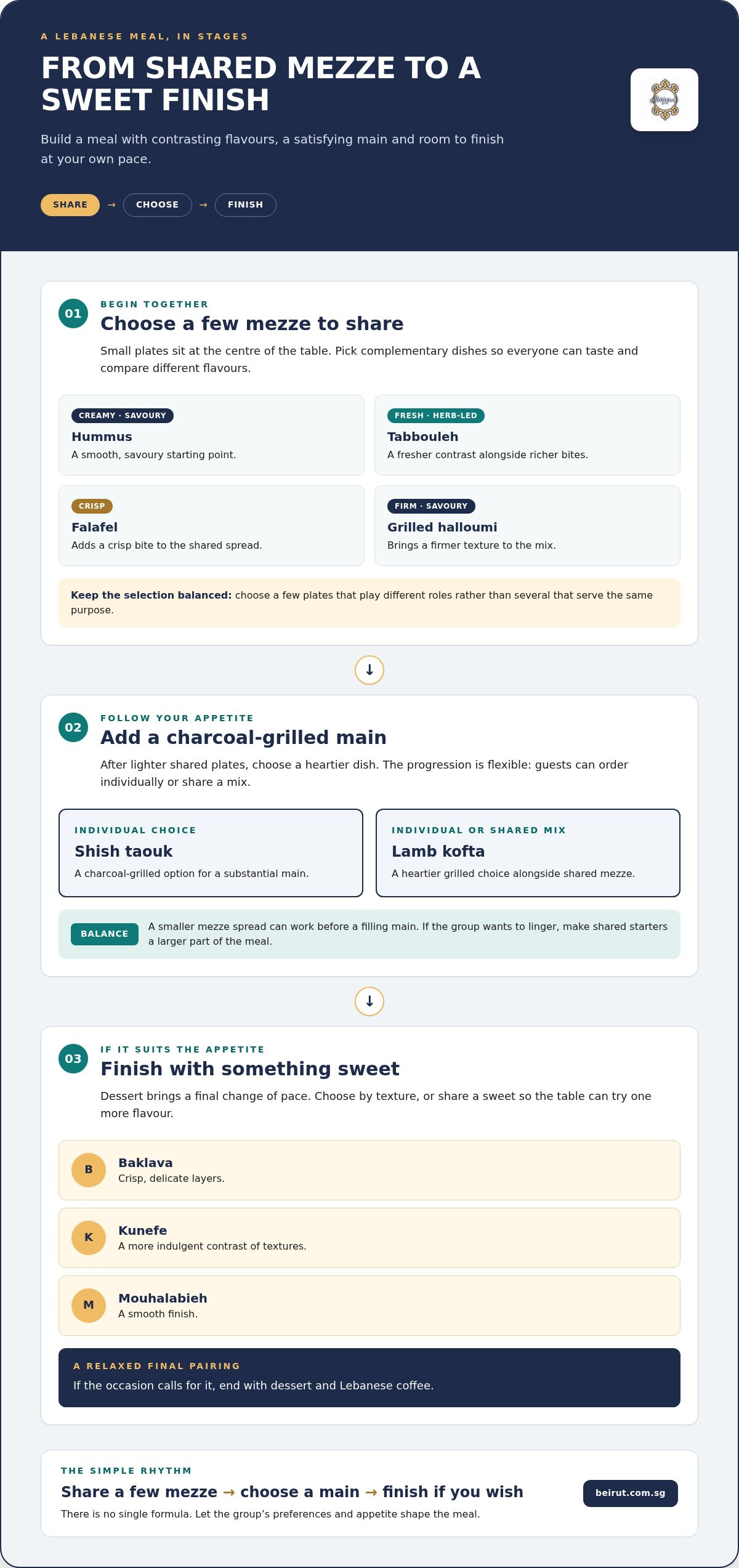
At Beirut Grill, hummus brings a creamy, savoury note, while tabbouleh offers a fresher, herb-led contrast. Falafel adds a crisp bite, and grilled halloumi brings a firmer, savoury texture. Together, these mezze give diners a range of flavours to try before the main course. Choose a few that appeal to the group rather than ordering several dishes that serve the same purpose.
For a heartier next course, charcoal-grilled shish taouk and lamb kofta offer substantial alternatives to lighter shared plates. Diners can choose mains individually or select a mix to sample different styles. Let appetite guide the balance: a smaller mezze spread may be enough before a filling main, while a group that wants to linger can make shared starters a larger part of the meal.
The progression is flexible, not a strict sequence. If diners have different preferences, begin with a few dishes the table can share, then let each person decide how much more they’d like. This gives first-time diners a simple way to explore and lets the group discover favourites together. Beirut Grill’s mezze and charcoal-grilled dishes make it easy to shape the meal around the occasion.
How can dessert complete a Lebanese meal?
Dessert adds a final change of pace. Baklava suits diners drawn to crisp, delicate layers; kunefe offers a more indulgent contrast of textures, while mouhalabieh makes for a smooth finish. Sharing a dessert lets the table try one more flavour without making the meal feel overly formal. For a closer look at this beloved sweet, explore the guide to kunafa.
Build the meal in stages: choose mezze with contrasting textures, decide whether you want individual mains or a shared mix, then leave room for something sweet if it suits your appetite. To see dishes that can bring those stages together, explore Beirut Grill’s menu.
How to Compare Lebanese Restaurants for Your Occasion
The right choice depends on more than cuisine. A relaxed meal with friends, a family gathering and a celebratory dinner each call for a different balance of menu choice, sharing style and atmosphere. If you’re comparing a lebanese restaurant arab street with other options, start with the occasion, then consider how each menu and dining style fits your group.
For a group meal, prioritise menu variety, a sharing style your guests enjoy, an atmosphere suited to the occasion and a plan that works for everyone. This keeps the decision grounded in what your table needs rather than in a ranking alone.
| Occasion | Menu variety | Sharing style | Atmosphere | Practical arrangements |
|---|---|---|---|---|
| Casual meal | Look for a few options to suit different appetites. | Choose a relaxed mix of shared and individual dishes. | A comfortable setting for an unhurried catch-up. | Agree on a time and how the group will get together. |
| Family gathering | Prioritise meat, vegetarian and seafood choices. | Shared plates can help everyone sample the meal. | Choose a setting that works for the family’s mix of ages. | Plan the meal around the group’s preferences and appetites. |
| Celebratory dinner | Look for enough variety to build a full meal, including dessert. | Decide whether the group prefers shared plates or individual mains. | Choose a mood that feels fitting for the occasion. | Coordinate the group’s preferences before choosing dishes. |
| Colleague meal | A broad selection helps accommodate different tastes. | Choose a format that leaves room for conversation. | Consider how lively or relaxed the group wants the evening to feel. | Agree on timing and dining preferences before the meal. |
Which dining priorities change with the occasion?
For an informal gathering, flexibility often matters most. A menu with dishes to share and substantial individual choices lets diners settle into the meal at their own pace. For a family gathering, consider the range of preferences around the table, including vegetarian and seafood choices as well as meat. For colleagues, variety can make choosing dishes easier, while a comfortable format leaves room for conversation. A celebration brings atmosphere into focus: think about the mood you want and the group’s tastes. Beirut Grill’s menu spans mezze, charcoal-grilled dishes, seafood and desserts, giving diners several ways to shape the meal.
How should diners interpret reviews and restaurant claims?
Read reviews for details that match your planned meal. A comment about a particular dish or a lively dining room may be useful if that aspect matters to your group. But one diner’s experience does not guarantee the same experience for every table. Star scores and review counts can offer context, yet they don’t explain whether a menu suits your guests or its format fits the occasion. Compare reviews with the restaurant’s own menu and information, and treat scores as snapshots rather than fixed facts.
Before deciding, bring your priorities together: the kind of meal you want, the variety your guests need and the setting that feels right. This simple check turns browsing into a more confident choice.
How to Plan a Lebanese Restaurant Visit for a Group
A group meal comes together more easily when you make decisions in a useful order. Start with the occasion, find out what guests enjoy, choose a sharing plan that allows for different appetites, then agree on how to structure the meal. This helps distinguish a birthday dinner from a casual catch-up while making room for everyone at the table.
- Choose the occasion. Decide whether you’re planning a relaxed meal, a family gathering or a celebration. That sets the mood and helps the group decide whether to focus on shared plates, individual mains or both.
- Gather preferences. Ask who would enjoy meat, vegetarian dishes or seafood, and whether the group wants dessert. This quick conversation can prevent the meal from leaning too heavily in one direction.
- Plan the meal. Pick shared mezze to begin, then leave room for mains that suit different tastes and appetites. Decide together whether dessert and drinks are part of the occasion.
- Choose a dining format. Agree on the kind of meal the group wants, then use the menu to plan the dishes and drinks that fit.
How can a group build a meal everyone can enjoy?
Begin with a few mezze chosen for variety, rather than ordering several plates that fill the same role. Hummus offers a familiar, creamy starting point; falafel brings a crisp, savoury bite, while grilled halloumi adds a more substantial vegetarian choice. Then consider mains individually or as a shared selection, guided by the group’s preferences and appetite. Leave room for baklava, kunefe or mouhalabieh if dessert appeals, and include Lebanese coffee or Moroccan mint tea if a warm finish suits the gathering.
This approach gives diners choices without requiring everyone to order alike. Guests can sample a little, settle on a favourite and still choose a main that matches their appetite. For a mixed group, a range of flavours can feel more welcoming than choosing one centrepiece dish for the whole table.
Which practical arrangements make the visit easier?
Decide what kind of meal the group wants before choosing dishes. For a shared spread, select several mezze with different textures and flavours, then add mains according to appetite. If guests prefer individual orders, start with a smaller selection of starters and let each person choose a main. For any group, agreeing on dietary preferences and whether to include dessert makes menu planning more straightforward.
Before settling on the order, align the group on the occasion and key food preferences. A brief message can clarify who wants vegetarian dishes, seafood or meat, and whether dessert belongs in the plan. With those choices settled, explore Beirut Grill’s dining experience and choose dishes that bring your group together.
Why Beirut Grill Is a Considered Lebanese Dining Choice
Choosing a restaurant is easier when its menu and dining style align with the meal you have in mind. For anyone searching “lebanese restaurant arab street”, Beirut Grill offers Lebanese and Middle Eastern cuisine through shared mezze, charcoal-grilled dishes, seafood, traditional desserts and Lebanese beverages. The meal might be a few plates shared over a relaxed dinner or a fuller spread for a group.
Beirut Grill was founded in 2009 and serves Lebanese and Middle Eastern food. Its menu gives diners different ways to shape a meal, from the first mezze to a sweet finish, rather than relying on a single type of dish.
What distinguishes Beirut Grill’s menu and heritage?
Begin with mezze such as hummus, tabbouleh and falafel, then move towards a heartier dish. Mixed grill brings together a range of charcoal-grilled flavours, while shish taouk and lamb kofta offer distinct choices for diners drawn to grilled chicken or lamb. Seafood extends the selection with grilled prawns and grilled fish fillet, so the table can accommodate different preferences without losing the meal’s shared spirit.
The menu includes Lebanese wine, along with traditional desserts such as baklava, kunefe and mouhalabieh. Lebanese coffee and Moroccan mint tea can round out the gathering. Beirut Grill describes its menu as pork-free; that description should not be taken to mean the restaurant is halal-certified.
What is the next step for planning a visit?
Use the official website to view the menu and decide which dishes suit your occasion. Once you know who’s coming, consider whether you’d like to share mezze, choose individual grilled mains, include seafood or make room for dessert. A little thought beforehand makes it easier to choose a meal that feels personal to the group.
Whether you’re discovering Lebanese cuisine for the first time or returning to familiar flavours, Beirut Grill brings together a menu suited to exploring at the table. Discover Beirut Grill and plan your dining experience.
Make Your Next Meal a Shared Discovery
Choose your next Lebanese meal around the people at your table: the flavours they’re curious about, the dishes they’d enjoy sharing and the kind of occasion you’re marking. If “lebanese restaurant arab street” is part of your search, use the menu to find a meal that feels considered, not simply convenient. Beirut Grill brings together Lebanese and Middle Eastern cuisine, mezze, grilled dishes, seafood, desserts and Lebanese beverages.
Before you gather, explore the menu and decide what would make the occasion feel complete, from a few plates to share to a leisurely finish over coffee or tea. Then make the experience your own, whether you’re introducing someone to Lebanese flavours or returning to dishes you love. Explore Beirut Grill’s menu and plan your meal. Discover Beirut Grill and plan your Lebanese dining experience.
Frequently Asked Questions
Is Lebanese food spicy?
Not necessarily. Lebanese dishes can feature fragrant herbs and spices, garlic, citrus or chilli, but heat varies by recipe and preparation. The cuisine name alone won’t tell you how hot a dish is. If you prefer milder flavours, read the menu descriptions and choose dishes that sound appealing rather than assuming every seasoned dish will be fiery. This is especially helpful when ordering for a group with different spice preferences.
Can vegetarians find satisfying food at a Lebanese restaurant?
Yes. Beirut Grill’s menu includes meat-free options such as hummus, falafel, tabbouleh, fattoush and grilled halloumi, offering different textures and flavours to build a fuller meal. If your search for “lebanese restaurant arab street” has brought you to Beirut Grill, use the menu descriptions to plan a mix of dishes. Check individual descriptions against your own dietary requirements, since preferences and restrictions can differ.
Is Beirut Grill’s menu pork-free?
Yes. Beirut Grill describes its dining experience as strictly adhering to a pork-free menu. Pork-free and halal-certified are not interchangeable terms, so a pork-free description doesn’t establish certification. If you have specific dietary or religious requirements, use the restaurant’s published menu information to assess the details that matter to you. Clear distinctions help you make an informed choice without assuming that one dietary description automatically means another.
What is usually included in a Lebanese mixed grill?
A mixed grill generally brings several grilled items together, giving diners a range of savoury flavours and textures in one meal. The exact selection varies by restaurant and menu, so the name alone doesn’t guarantee particular items. Beirut Grill’s menu includes shish taouk, lamb kofta and beef kebab as grilled options; treat these as examples of dishes on the menu, not a promise of what comes in a specific mixed grill.
Does Beirut Grill offer takeaway or delivery?
Beirut Grill’s menu is available on its official website, where you can explore the dishes and plan what to order. When choosing a meal, consider whether your group would enjoy shared mezze, individual mains, seafood or dessert. Reviewing the menu directly helps you make choices based on the dishes that appeal to you.
What drinks can accompany a Lebanese meal?
Beirut Grill’s listed beverages include Lebanese wine, arak, Lebanese coffee and Moroccan mint tea. The right choice depends on your preference and the kind of meal you’re planning: you might choose a non-alcoholic drink or explore a Lebanese beverage from the menu. If you’re dining with others, consider a few different drinks so guests can choose what suits them, without assuming a particular pairing is essential.
Can I enjoy Lebanese food if I have never tried mezze before?
Absolutely. Mezze is an approachable way to sample dishes without committing to a single unfamiliar flavour. You might begin with hummus, then add a second plate with a different taste or texture, such as falafel or tabbouleh. For a first meal, choose a small selection that genuinely interests you and use the menu descriptions to guide your next choice. There’s no need to know every dish before you begin.