
A richer bowl isn’t necessarily the one with more ingredients. The difference in homemade vs restaurant hummus taste comes down to balance: tahini brings nutty depth and creaminess, while salt, lemon, spices and garlic shape whether each mouthful feels rounded or bright. Texture matters too, from silky-smooth to gently rustic.
Restaurant hummus can seem especially lush, while homemade hummus lets you adjust the flavour to your liking. Start with the tahini: a recipe using one can of chickpeas calls for ½ cup, but balance the amount against the lemon, salt and other seasonings.
This guide explores how tahini affects richness, why chickpea preparation changes texture, and how to adjust salt, lemon, spices and garlic without letting one note dominate. You’ll come away with a clearer sense of what creates that memorable, creamy finish, and how the contrasting qualities of homemade and restaurant hummus can each make a bowl satisfying.
Key Takeaways
- Whisk tahini with water before blending it into the chickpeas for a lighter, more cohesive texture.
- Taste tahini before using it, since bitterness or grit can carry through the finished hummus.
- Add salt, lemon and spices gradually, tasting as you go to keep the flavours in balance.
- Let minced garlic sit with lemon juice for 10 minutes or longer to soften its sharpness.
1. Adding tahini for creaminess and sesame flavor
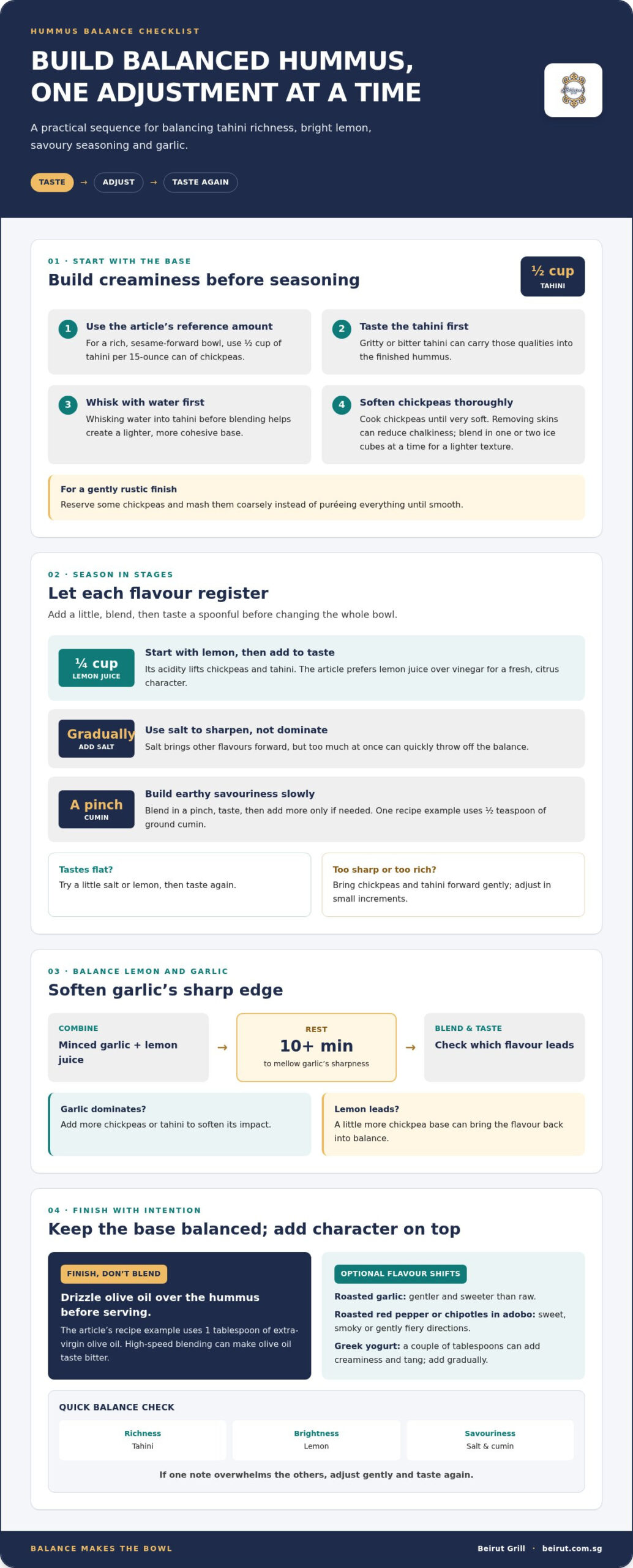
For a rich, sesame-forward bowl, use ½ cup of tahini per 15-ounce can of chickpeas. Tahini contributes an earthy, nutty flavour, while its paste-like body helps give hummus a fuller texture. Before adding it, taste a small amount: gritty or bitter tahini can make those qualities noticeable in the finished dip. To build a lighter, cohesive base, whisk water into the tahini first, then blend it with the chickpeas.
Does using dried chickpeas instead of canned chickpeas improve hummus taste? It can. Dried chickpeas may produce hummus that tastes fresher and feels creamier, with less graininess. Whichever you use, cook the chickpeas until very soft before blending. For a more textured result, reserve some and mash them coarsely instead of puréeing everything until smooth.
What makes restaurant hummus taste creamier or richer? Tahini is a key contributor, and the texture also depends on how thoroughly the chickpeas are softened and blended. Whisking a little water into tahini helps it emulsify, while salt and lemon balance its richness. Restaurant recipes vary, so these ingredients explain a common style of richness, not a universal recipe.
For a simple seasoning example, add ½ teaspoon of ground cumin to bring out the chickpeas’ savoury, earthy character. The recipe also uses 1 tablespoon of extra-virgin olive oil, but keep it for the finish: drizzle it over the hummus before serving instead of blending it in. High-speed blending can make olive oil taste bitter. That glossy topping adds aroma and richness at the surface, while coarsely mashed chickpeas offer contrast beneath it.
2. Tahini’s role in hummus flavour and texture
Tahini adds more than richness: its earthy sesame flavour gives hummus a rounded, savoury centre. Too little can leave the chickpeas dominant; too much can make the sesame taste heavy. For homemade hummus, taste after blending, then add small amounts of lemon or salt if the tahini overwhelms the other flavours. Restaurant hummus can taste fuller because of the balance among its ingredients, not just one.
How do restaurants make hummus smoother and fluffier? Removing chickpea skins reduces chalkiness, while adding one or two ice cubes at a time as you blend can help create a lighter texture. These techniques work at home too, where you can adjust the consistency gradually.
Garlic changes the character of hummus. Roasted garlic, baked until completely soft, tastes gentler and sweeter than raw garlic, adding depth without the same sharp bite. For a different profile, try roasted red pepper or chipotles in adobo. Each brings its own flavour, shifting the hummus from sesame-led and mellow to sweet, smoky or gently fiery.
Other additions create more variations. A couple of tablespoons of Greek yogurt can make hummus lighter, creamier and tangier. Add it gradually and taste as you go: the tang can complement tahini, but too much may move the bowl away from its classic sesame-and-chickpea character.
How long does homemade hummus keep, and does its taste change over time? Covered leftovers can be kept in the refrigerator for up to one week. Resting it overnight can deepen the flavour as the ingredients meld. Taste again before serving and adjust the seasoning if needed.
To compare these textures and flavours with a restaurant-prepared bowl, explore Lebanese hummus.
3. Adjusting hummus seasoning with salt, lemon, and spices
Season hummus in stages, tasting after each addition. Start with ¼ cup of lemon juice, then add more to taste. Lemon’s acidity lifts the chickpeas and tahini, keeping the flavour bright rather than heavy. If you’re using one acidic ingredient, lemon juice is preferred over vinegar for its fresh, citrus character. Add salt gradually, since it sharpens other flavours and can quickly dominate.
Taste a small spoonful before changing the whole bowl. If it seems flat, try a little salt or lemon; if it feels too sharp, gently bring the chickpeas and tahini forward. Adjusting in stages gives each flavour room to register, especially when the chickpeas or tahini already have a pronounced taste.
Cumin is a classic choice: it deepens savouriness and complements the chickpeas’ earthy flavour. Add a pinch, blend, then taste before adding more. For a fragrant finish, warm a couple of tablespoons of olive oil with za’atar or another spice blend until aromatic, then spoon it over the hummus. Infused oil lets the spices perfume the surface without overwhelming the base.
What are common homemade hummus mistakes that affect taste? Adding too much salt, lemon or spice at once can throw off the balance, while underseasoning leaves chickpeas tasting dull. Don’t try to correct a flat batch with a large splash of lemon alone. Taste first, then adjust salt and acidity in small increments.
For store-bought hummus, use the same tasting method: add salt, lemon juice and spices gradually, mixing between additions. A plain tub can take on a brighter character with lemon, or a warmer, more savoury finish with cumin. Note what you add, so the next bowl starts closer to your preferred balance. In Singapore’s warm climate, serve the seasoned hummus promptly after preparation for its freshest flavour.
4. Balancing lemon and garlic
Lemon and garlic can make hummus taste vivid or harsh, depending on how they meet. Mince the garlic, combine it with lemon juice, and let the mixture rest for 10 minutes or longer. This resting step mellows the garlic’s sharp edge before it joins the chickpeas, creating a more rounded flavour than adding freshly minced garlic straight to the blender.
After resting, blend the lemon-garlic mixture into the hummus, then taste a small spoonful. Notice whether citrus brightness or lingering garlic heat comes through first. If garlic dominates, add more chickpeas or tahini to soften its impact. If the lemon is too forward, a little more chickpea base can bring the flavour back into balance.
Consider the texture as you taste. Smooth hummus carries lemon and garlic evenly, while a coarser blend may make small garlic pieces more noticeable. For a consistently gentle flavour, mince the garlic finely and mix it into the lemon juice before blending. This gives the citrus time to temper the garlic and helps avoid sharp pockets in the finished dip.
Homemade and restaurant hummus can differ in how the garlic’s intensity and the lemon’s brightness are balanced. A pronounced garlic note suits a bold, savoury dip, while a lighter hand lets the chickpeas and sesame stay in the foreground. Make one adjustment at a time and taste again; changing both lemon and garlic together makes it harder to tell what improved the balance.
For a meal that brings bright mezze flavours to the table, enjoy the Grilled Fish Fillet alongside a balanced hummus.
Extra tahini can make store-bought hummus creamier and more nutty, while salt and lemon juice can balance its richness. Roasted garlic is recommended over raw garlic because roasting mellows its strength and brings out sweetness; roasted red peppers or chipotles in adobo can replace it.
Beirut Grill: Mixed Grill
Beirut Grill offers a natural next step when you’d like to compare the balanced flavours of restaurant hummus with a full Lebanese meal. Known for bringing hummus to the table alongside its signature Mixed Grill, it makes it easy to enjoy the creamy, sesame-rich mezze with a more substantial centrepiece.
For a different pairing, choose the Vegetarian Kebab, or complement your meal with Lebanese Wine. These options offer distinct ways to explore hummus as part of a broader spread, from savoury accompaniments to a relaxed dinner. The Mixed Grill is a fitting choice when you want to enjoy hummus as part of a restaurant meal rather than taste the dip on its own.
Explore the menu and online offerings at beirut.com.sg to discover more about their authentic dishes.
Let your next tasting shape your palate
Rather than treating homemade and restaurant hummus as rivals, use each bowl to discover the texture and flavour you enjoy most. The homemade vs restaurant hummus taste comparison becomes more rewarding when you notice how the setting shapes your impression: hummus enjoyed as part of a meal can feel different from a taste on its own. Let that experience guide your preference, rather than a fixed idea of what the “right” hummus should be.
In Singapore, Beirut Grill serves Hummus alongside its Mixed Grill, with Lebanese Wine as another way to round out the meal. Choose this combination when you’d like to enjoy hummus within a broader Lebanese dining experience, rather than focusing on the dip alone. Each dish brings a different note to the table, inviting you to savour the meal at an unhurried pace.
Contact Beirut Grill about hummus and plan your next taste of Lebanese hospitality. Let curiosity lead the way, and enjoy discovering the style that speaks to you.
Frequently Asked Questions
How does homemade hummus taste compared with restaurant hummus?
Homemade hummus can be tailored to your preferred texture and intensity, while a restaurant bowl reflects the kitchen’s chosen style. For a useful homemade vs restaurant hummus taste comparison, serve both in the same way. Try them with the same bread or vegetables, then notice differences in smoothness, sesame depth and seasoning. This helps keep serving temperature and accompaniments from distracting from the flavour.
How do tahini brands and quantities affect hummus flavour?
Tahini varies in roast character, texture and sesame intensity, so the same quantity can taste different from jar to jar. Sample each tahini with a little plain chickpea mash before using it in a full batch. If the flavour is powerful, use less; if it tastes mild, increase it gradually. This side-by-side test helps you distinguish the tahini’s character from the rest of the recipe.
How do lemon juice, garlic, salt, and olive oil change hummus flavour?
Lemon brings a bright, citrus note; garlic adds a lingering savoury edge; salt makes flavours more distinct; and olive oil gives a rounded finish. Taste a small portion before adjusting the whole bowl. Notice what lingers after each bite, whether it’s sharp citrus, persistent garlic or a mellow finish. The aftertaste can guide your next adjustment more clearly than aroma alone.
Can homemade hummus match the taste of popular restaurant hummus in Singapore?
Yes, you can tune homemade hummus toward qualities you enjoy in a restaurant bowl. For a homemade vs restaurant hummus taste test, focus on one reference point at a time, such as a pronounced sesame note or especially smooth texture. Keep the chickpea base and serving style consistent as you refine the flavour. The goal is a version that suits your palate, not a replica of every restaurant’s recipe.