
Most seafood enthusiasts believe that a pristine catch requires nothing more than a simple squeeze of lemon, yet the true mastery of the Levantine coast lies in the daring union of charcoal fire and sesame velvet. You likely appreciate the delicate flake of a premium catch, but perhaps you’ve hesitated to prepare a grilled fish fillet with tahini for fear of masking the natural flavors or creating a dish that feels too heavy. It’s a valid concern for any discerning diner who values the balance of authentic Mediterranean seasonings over sheer intensity.
In this exploration of Samke Harra, we’ll reveal the sophisticated techniques used to ensure your fish remains succulent while the tahini sauce achieves a perfect, non-bitter silkiness. You’ll discover the deep cultural heritage behind this coastal staple and learn why global culinary trends in 2026 continue to celebrate the health-driven, sustainable appeal of authentic Levantine seafood. We’ll show you how to balance smoky heat with creamy richness, and finally, we’ll guide you to the most prestigious destination in Singapore to experience this heritage dish as it was meant to be enjoyed.
Key Takeaways
- Uncover the historical roots of Samke Harra and how the coastal traditions of Tripoli and Beirut shaped this iconic “spicy fish” masterpiece.
- Identify the specific fish varieties and charcoal grilling techniques required to achieve a succulent interior and a perfectly charred, smoky crust.
- Learn the secret to emulsifying lemon and sesame into a silky sauce that complements a grilled fish fillet with tahini without any bitterness.
- Discover how to elevate your dining experience by pairing Mediterranean seafood with mineral-rich white wines from the Bekaa Valley or a glass of traditional Arak.
- See why the heritage-led techniques at Beirut Grill, a Singapore landmark since 2009, offer the most authentic encounter with Lebanese seafood artistry.
The Heritage of Samke Harra: Lebanons Gift to Seafood Lovers
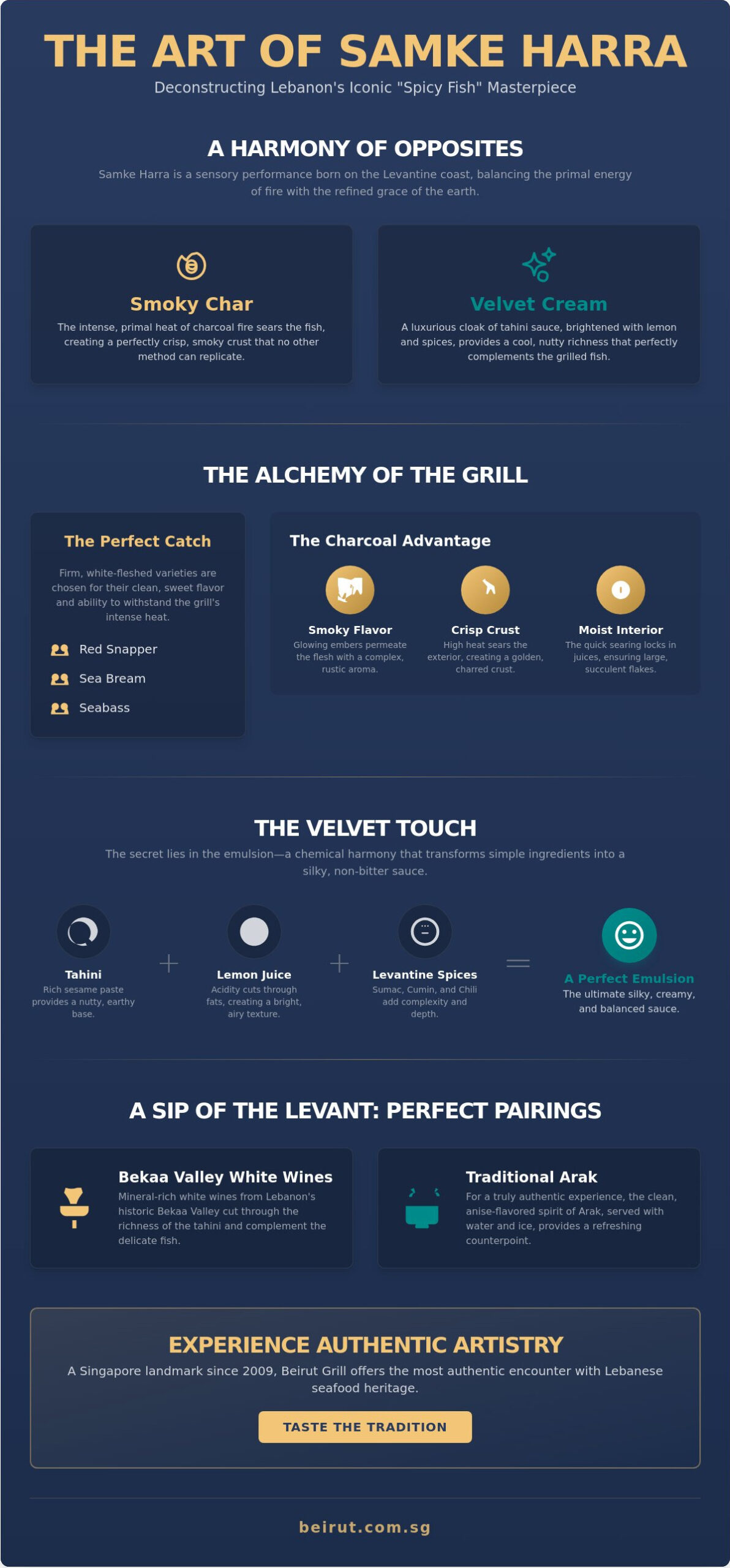
Along the sun-drenched shores of the Levant, where the Mediterranean Sea meets ancient limestone cliffs, a culinary tradition was born that marries the primal energy of fire with the refined grace of the earth. This is the story of Samke Harra. Translated literally as “spicy fish,” this dish represents the pinnacle of coastal Lebanese cuisine. It isn’t merely a meal; it’s a sensory performance. In the historic ports of Tripoli and the vibrant harbors of Beirut, fishermen have long celebrated their daily catch by subjecting it to the intense heat of charcoal, only to temper that fire with a luxurious, velvety cloak of tahini.
This iconic preparation serves as the centerpiece of any sophisticated Mediterranean seafood feast. The allure lies in the evocative contrast between the scorched, smoky skin of the fish and the cooling, nutty richness of the sauce. While many cultures treat fish with a light hand, the Lebanese tradition embraces bold complexity. The dish balances the sharp bite of chili and the earthy depth of traditional spices, creating a profile that is both rustic and deeply refined. As we look toward the culinary landscape of 2026, the global interest in Levantine cuisine continues to soar, driven by a desire for authentic, health-conscious seafood that rewards the curious palate.
The Evolution of a Coastal Classic
Tahini began its life as a humble sesame paste, often reserved for simple dips or breakfast spreads. In the hands of Lebanese masters, it transformed into a sophisticated warm emulsion. By incorporating regional treasures like tart sumac and aromatic cumin, they defined a flavor profile that remains unmistakably Levantine. While traditional preparations often utilized the whole fish, the modern preference for a grilled fish fillet with tahini offers a more elegant dining experience. It allows for a precise char and ensures every forkful is saturated with the spiced sauce, removing the distraction of bones and focusing entirely on the harmony of flavors.
Why Tahini and Fish are a Match Made in the Levant
The success of this pairing rests on a fascinating chemical harmony. The natural acidity of fresh lemon juice is essential; it cuts through the dense fats of the sesame seeds, transforming the tahini into a bright, airy blanket. This nuttiness provides a magnificent counterpoint to the delicate sweetness of premium white fish. When you take a bite, the experience is transformative. The perfect mouthful is a deliberate blend of charcoal char, the prickle of spice, and the soothing silk of the cream. It’s this specific balance that makes the grilled fish fillet with tahini a timeless signature of our culinary heritage.
The Alchemy of the Grill: Achieving the Perfect Char and Flakiness
The transformation of a pristine catch into a culinary masterpiece begins long before the sauce is poured. It starts with the primordial dance of heat and wood. While modern kitchens often rely on the sterile efficiency of gas, the authentic soul of Lebanese coastal cooking is found in the glowing embers of a charcoal fire. This artisanal approach is what distinguishes a standard meal from a true grilled fish fillet with tahini. The fire provides a subtle, pervasive smoke that permeates the flesh, creating a complex flavor profile that no stovetop can replicate. It’s a delicate balance; you want the flame high enough to sear the exterior into a crisp, golden crust while the interior remains a sanctuary of moisture.
Mastering this technique is essential for those who value the health benefits of the Mediterranean diet, which emphasizes high-quality proteins prepared with minimal intervention. To achieve the desired results, one must look for specific visual and tactile cues. A perfectly grilled fillet should appear opaque throughout, yet glisten with its natural juices. When pressed lightly with a fork, the flesh should separate into large, succulent flakes. This level of precision ensures that the fish can stand up to the rich, nutty sauce without losing its individual character.
Selecting the Catch: Quality Matters
The foundation of this dish is the fish itself. For the best results, we favor firm, white-fleshed varieties that can withstand the intensity of the grill without disintegrating. Red Snapper, Sea Bream, and Seabass are the preferred choices in our kitchen. These species offer a clean, slightly sweet flavor that acts as a perfect canvas for Mediterranean seasonings. Freshness is non-negotiable; the eyes must be clear and the scent should be reminiscent of a clean sea breeze. Proper preparation involves patting the skin dry and ensuring the fillet is at room temperature to guarantee even heat distribution across the grate.
Mastering the Charcoal Flame
The “skin-on” approach is often debated, but for charcoal grilling, leaving the skin intact provides a natural heat shield that protects the delicate meat. To prevent sticking, the grill must be meticulously cleaned and seasoned with a light brush of oil. We utilize a “sear and rest” method: a quick, high-heat sear to lock in flavors, followed by a brief resting period away from direct heat. This allows the internal juices to redistribute, ensuring your grilled fish fillet with tahini remains tender and moist. If you’re looking to experience the true depth of Levantine flavors, understanding these technical nuances is the first step toward appreciation.
The Velvet Touch: Mastering the Tahini and Lemon Emulsion
A common hesitation among those new to Levantine seafood is the fear that tahini might be too heavy or bitter for a delicate catch. It’s a valid concern if one only considers the raw, earthy paste found in a jar. However, in the hands of a seasoned Lebanese chef, tahini is a shapeshifter. When raw, it is dense and assertive. Once it meets the sharp, bright acidity of fresh lemon juice, it undergoes a radical chemical transformation. This emulsion is the soul of a masterful grilled fish fillet with tahini. It doesn’t merely sit atop the fish; it penetrates the charred surface, creating a sophisticated bridge between the primal smoke of the charcoal and the natural sweetness of the sea.
Achieving this balance requires more than a simple stir. It’s a process of coaxing the sesame fats into a state of airy grace. By introducing crushed garlic and a selection of warm, aromatic spices, the sauce evolves from a simple dip into a complex glaze. This “velvet touch” ensures the sauce coats the fish with a luxurious consistency, providing richness in every bite without ever drowning the subtle flavors of the snapper or seabass. It’s this precision that defines the culinary heritage we’ve curated at Beirut Grill since 2009.
The Secret of the Tarator Sauce
In our kitchen, this emulsion is known as Tarator. It’s a traditional Lebanese blend of premium tahini, pungent garlic, sea salt, and a generous amount of lemon. Beginners often panic during the “seizing” phase, where the sauce suddenly turns thick and grainy as the first drop of liquid hits the sesame oil. The remedy is a steady, patient stream of water and vigorous whisking until the mixture breaks into a smooth, pale cream. The result is a sauce that acts as a silken cloak for the grilled fillet. To truly appreciate this texture, many guests find that Grilled Lebanese Bread is the indispensable companion for capturing every drop of the emulsion.
Garnishing for Texture and Vibrancy
To complete the sensory journey of the grilled fish fillet with tahini, we layer the dish with contrasting textures. Toasted pine nuts are a non-negotiable addition, offering a buttery crunch that punctuates the softness of the fish. We finish the plate with a dusting of ruby-red sumac for a citrusy tang and a handful of fresh flat-leaf parsley for a grassy, vibrant pop. For a more contemporary twist, a delicate drizzle of pomegranate molasses can be added. This provides a sweet-tart dimension that cuts through the garlic, ensuring the palate remains refreshed and ready for the next indulgent forkful.
A Sip of the Levant: Pairing Your Grilled Fish with Lebanese Wine and Arak
To dine on the Lebanese coast is to understand that a meal is incomplete without the right liquid companion. Since our founding in 2009, Beirut Grill has sought to preserve this essential harmony by curating a cellar that speaks of the Bekaa Valley’s sun-drenched terroir. When you sit down to a grilled fish fillet with tahini, your choice of beverage is as critical as the spice blend itself. The rich, earthy profile of sesame requires a partner that can offer both contrast and complement; a role traditionally filled by the storied wines and spirits of our homeland. This isn’t just about thirst; it’s about the elevation of flavor.
The global arak market is estimated to reach $16.19 billion in 2026, reflecting a rising international appreciation for these traditional spirits. This growth mirrors a broader trend toward authentic, culturally rooted dining experiences where the beverage tells as much of a story as the plate. In Lebanon, the ritual of the table is a slow, deliberate affair. The right pairing ensures that the last bite of your meal is as vibrant and exciting as the first, maintaining a clean palate despite the luxurious weight of the tahini emulsion.
Lebanese White Wines: From Bekaa to Your Glass
The high-altitude vineyards of the Bekaa Valley produce some of the world’s most resilient and characterful white wines. For a dish as nuanced as the grilled fish fillet with tahini, we recommend ancient indigenous varietals such as Obaideh or Merwah. These grapes produce wines with a distinct minerality and crisp acidity that effortlessly slices through the creaminess of the tahini. It’s a pairing that highlights the sweetness of the fish while refreshing the palate. To deepen your understanding of these labels, you might explore our Lebanese wine guide, which details the 2.8% growth in market sophistication expected through 2026.
The Ritual of Arak
If you prefer a more traditional experience, Arak remains the quintessential accompaniment to any Lebanese seafood feast. Known affectionately as “Lion’s Milk” for the milky white cloud that forms when the clear spirit meets water and ice, Arak is a master of palate cleansing. Its potent anise notes provide a sharp, cooling counterpoint to the warm spices and charred exterior of the fish. This slow-sipping ritual encourages a deliberate pace, allowing you to savor the interplay between the anise and the nuttiness of the tahini. We invite you to reserve your table at Beirut Grill to experience this authentic coastal tradition firsthand.
Experience Authentic Seafood Artistry at Beirut Grill
In the heart of Singapore’s vibrant culinary landscape, a sanctuary exists for those who seek the true essence of Levantine heritage. Since 2009, Beirut Grill has served as a prestigious destination where the ancient traditions of the Mediterranean coast are meticulously preserved. It’s here that the smoky whispers of the charcoal grill meet the refined elegance of historic Beirut. When you dine with us, the grilled fish fillet with tahini isn’t just a menu item; it’s a centerpiece of a cultural journey. We take immense pride in our role as the city’s premier destination for authentic Lebanese seafood, where every plate is a tribute to the soul of the Levant.
Our commitment to excellence is found in the details. We utilize traditional techniques and premium, imported ingredients to ensure that the flavors you experience are indistinguishable from those found in the finest coastal kitchens of our homeland. The atmosphere we’ve cultivated is immersive and transportive, designed to reward your curiosity with sensory-rich descriptors of a world far beyond our urban borders. To truly appreciate the depth of what we offer, we invite you to explore our full Mediterranean food experience, which serves as an authoritative guide to the flavors and heritage we hold dear.
A Menu Crafted with Passion and Heritage
Our culinary offerings are a testament to the diversity of Lebanese culture. While the grilled fish fillet with tahini captures the delicate spirit of the sea, it sits proudly alongside legendary signatures like our Mixed Grill and succulent Shish Taouk. Every dish we serve is strictly pork-free, maintaining the authentic integrity of our culinary roots. This dedication to purity, combined with the professional hospitality that has defined us since 2009, ensures that every visit feels like an invitation into a refined and knowledgeable home. It’s a specialized experience that remains accessible to all who value quality and seasoned expertise.
Join Us for an Unforgettable Evening
The allure of Beirut Grill lies in the deliberate, atmospheric rhythm of the evening. The scent of the charcoal grill mingles with the vibrant aromas of a fresh mezze spread, creating a sensory backdrop that is both indulgent and evocative. Whether you’re hosting a corporate heritage dinner or celebrating a private milestone, our dining room offers a prestigious setting that honors the occasion. We encourage you to immerse yourself in the surroundings and discover the artistry of our kitchen. Book your table at Beirut Grill today and experience the definitive soul of Lebanese coastal cuisine in Singapore.
Embark on Your Own Coastal Odyssey
The journey from the historic ports of Tripoli to the sophisticated tables of modern Singapore is one defined by the mastery of fire and the silkiness of sesame. You’ve discovered how the grilled fish fillet with tahini serves as a bridge between these worlds, balancing the intense char of the charcoal flame with the cooling elegance of a traditional Tarator emulsion. This dish is far more than a recipe; it’s a testament to a lifestyle that honors the sea’s bounty through the lens of ancient Levantine wisdom. By understanding the nuances of mineral-heavy wines and the palate-cleansing power of Arak, you’re now prepared to appreciate this heritage at its most profound level.
Since 2009, we’ve remained dedicated to these authentic Lebanese charcoal-grilling techniques, ensuring every guest experiences a true sense of place. Our extensive, curated list of Lebanese wine and Arak stands ready to elevate your meal into a storied celebration of culture. We invite you to join us at our home on Bussorah Street to witness this culinary artistry firsthand. Reserve your sensory journey at Beirut Grill today and let us transport you to the sun-drenched shores of the Levant. We look forward to welcoming you to our table.
Frequently Asked Questions
What is the difference between Samke Harra and regular grilled fish with tahini?
Samke Harra is distinguished by its vibrant heat and complex spice profile, whereas a standard grilled fish fillet with tahini might focus purely on the creamy sesame finish. While both celebrate the marriage of sea and soil, Samke Harra incorporates chili, garlic, and warm spices like cumin to create its signature “spicy” character. This layered approach ensures every bite offers a sophisticated balance of fire and silk that defines the Lebanese coast.
Which type of fish fillet is best suited for Lebanese tahini sauce?
Firm, white-fleshed varieties like Red Snapper, Sea Bream, or Seabass are the premier choices for this preparation. These species possess a resilient structure that withstands the intensity of charcoal grilling without losing their delicate moisture. Their subtle sweetness provides a perfect canvas for the assertive, nutty notes of the tahini, ensuring the fish remains the star of the plate rather than being overwhelmed by the sauce.
Can I make the tahini sauce ahead of time, or should it be fresh?
You can certainly prepare the tahini emulsion up to twenty-four hours in advance, provided it’s kept in a cool, airtight environment. Because tahini is a natural oil-based product, it may thicken or seize while resting. Simply whisk in a small amount of room-temperature water or fresh lemon juice just before serving to restore its signature velvety consistency and bright, citrusy aroma that complements the smoky fish.
Is grilled fish with tahini a healthy option for a Mediterranean diet?
This dish is an exemplary pillar of the Mediterranean diet, offering a wealth of lean protein and heart-healthy monounsaturated fats. The tahini provides essential minerals like calcium and magnesium, while the charcoal-grilled fish delivers vital omega-3 fatty acids. It’s a nourishing choice that prioritizes longevity and wellness without sacrificing the indulgent, sensory pleasures of a refined coastal feast shared among friends and family.
What side dishes traditionally accompany grilled fish in Lebanon?
Traditional accompaniments include vibrant, herb-forward salads like Tabbouleh or Fattoush, which provide a refreshing acidity to cut through the rich sauce. For a more substantial spread, we often suggest Batata Harra or a smooth plate of Hummus. These sides honor the heritage of the Levant by offering a diverse range of textures and temperatures that complement the warmth of the grilled seafood and the coolness of the tahini.
How do I prevent my tahini sauce from becoming too bitter?
Bitterness is typically avoided by selecting premium, lightly toasted sesame paste and using a generous hand with fresh lemon juice. The acidity of the lemon acts as a natural counterbalance to the earthy depth of the tahini. If the sauce feels too intense, gradually incorporating water during the whisking process will mellow the flavor profile while achieving that desired silken texture that coats the fish without masking its flavor.
Does Beirut Grill offer gluten-free options for their grilled seafood?
Our grilled seafood preparations are naturally gluten-free, as we rely on fresh ingredients and traditional spices rather than wheat-based fillers. Guests with specific sensitivities can enjoy our Grilled Fish Fillet or Grilled Prawns with complete confidence. We recommend informing our hospitable staff of any dietary requirements so they can ensure your experience is as safe as it is indulgent within our sophisticated dining environment.
Can I pair red wine with grilled fish fillet and tahini?
While white wines from the Bekaa Valley are the classic choice, a very light, low-tannin red can occasionally suffice for those who prefer it. However, the bold anise notes of Arak or a crisp, mineral-heavy white remain the most authentic partners for a grilled fish fillet with tahini. These traditional beverages are specifically designed to cleanse the palate and enhance the delicate nuances of the Mediterranean catch without overpowering the creamy sauce.