
A first taste of Lebanese food doesn’t have to begin with an unfamiliar dish. Convincing your team to try Lebanese food is easier when you start with familiar favourites: creamy hummus, crisp tabbouleh, golden falafel and char-grilled chicken. Together, they introduce the cuisine’s lively mix of fresh herbs, citrus, grilled flavours and shareable mezze.
It’s understandable if colleagues hesitate when a menu feels unfamiliar or dietary needs differ across the table. This guide suggests approachable first choices, explains what to expect from Lebanese dishes and covers vegetarian and halal considerations to help everyone find a comfortable starting point. You’ll also see how mezze turns a meal into a relaxed tasting experience, with small plates to share and compare. From the first dip of pita to a fragrant cup of mint tea, a varied spread makes it easy to explore together.
Key Takeaways
- Introduce Lebanese cuisine through familiar flavours and dishes such as hummus, falafel, fattoush and mixed grills.
- Choose approachable first dishes that let colleagues discover Lebanese cooking at their own pace.
- Build a varied spread with vegetarian choices, and make dietary preferences part of the meal plan.
- Use shared mezze to create an easy, sociable way for the team to taste and compare different dishes.
1. What Is Lebanese Food?
Lebanese food brings together fresh herbs, grains, vegetables, dips and grilled dishes, with flavours shared across the Mediterranean and the Middle East. Hummus is a familiar introduction: chickpeas blended with tahini, often served with pita bread. Falafel offers another accessible taste, with crushed chickpeas formed into patties, fried and commonly served in pita with vegetables and tahini sauce.
Salads add brightness alongside richer bites. Tabbouleh combines bulgur, tomatoes, onions, cucumber, finely chopped herbs and lemon, with parsley lending a fresh, aromatic character. Fattoush takes a different approach, mixing vegetables with pieces of baked or fried pita for a crisp contrast. These dishes show how grains, herbs, citrus and bread can shape a meal without relying on heavy sauces.
For a group in Singapore, a Lebanese restaurant serving shared mezze alongside mixed grills offers an easy format: guests can sample several dishes at the table, then choose grilled food to suit their tastes. Compared with Singaporean food, Lebanese cooking has some familiar elements, including rice, fresh herbs and grilled meats, but its mezze spreads, tahini and pita make for a distinct combination. Across Middle Eastern cuisines, shared plates and grilled dishes are common threads, while ingredients and preparations vary by place.
Common ingredients include chickpeas, parsley, bulgur, lemon, olive oil and tahini. Tahini is made from sesame, while bulgur and pita contain wheat, so these ingredients matter to diners avoiding them. Hummus and falafel often include tahini; tabbouleh commonly contains bulgur, and fattoush may include pita. Naming the dish and its ingredients helps colleagues choose with more confidence.
Lebanese fattoush includes baked or fried pita, crushed and mixed into the salad. This affects its texture: the bread becomes part of each serving rather than sitting alongside the vegetables. Its crispness comes through with the other ingredients, not as a separate side. At a shared table, fattoush offers a way to enjoy bread within the salad itself, complementing other mezze rather than repeating a dip or grilled dish.
2. Lebanese dishes for first-time diners
Start with recognisable flavours, then add something new alongside them. Shish taouk is chicken marinated with lemon, garlic, paprika, yoghurt and tomato paste before grilling. Its citrus and savoury notes make it a useful first choice for colleagues who prefer familiar grilled food. Falafel brings a crisp chickpea option, while pita and a dip make an easy accompaniment. To convince your team to try Lebanese food, present these as choices, not a tasting challenge.
For colleagues who prefer mild flavours, suggest grilled fish or chicken with fresh vegetables. Keep sauces separate so diners can decide how much to add. A spread of falafel, hummus and tabbouleh also lets the team sample several dishes in smaller portions. This gives first-time diners room to discover what they enjoy without committing to one unfamiliar main.
Mezze can make a team meal relaxed and varied. Warak enab are grape leaves stuffed with rice, while fried kibbeh offers a crisp, savoury bite. Lebanese kibbeh also has vegetarian versions made with ingredients such as potatoes, pumpkin or tomatoes. For a lighter contrast, spinach fatayer brings a savoury pastry option, while grilled halloumi offers a rich, salty bite.
Fish lovers can try sayadieh, a Lebanese dish combining fish and rice with caramelised vegetables and spices such as cinnamon, caraway, cumin and coriander. It provides an alternative to grilled meat. For a Singapore team lunch, pair a shared starter with individual mains, such as grilled fish, falafel or a vegetarian kebab. A practical approach to convincing your team to try Lebanese food is to offer variety while letting each colleague choose a comfortable starting point.
For vegan diners, ingredients matter: butter, yoghurt, cheese and ghee can appear in baked dishes and other preparations. A concise way to explore the options is to browse Lebanese dishes for a team meal, then build the table around your group’s preferences.
3. Halal-friendly and vegetarian options
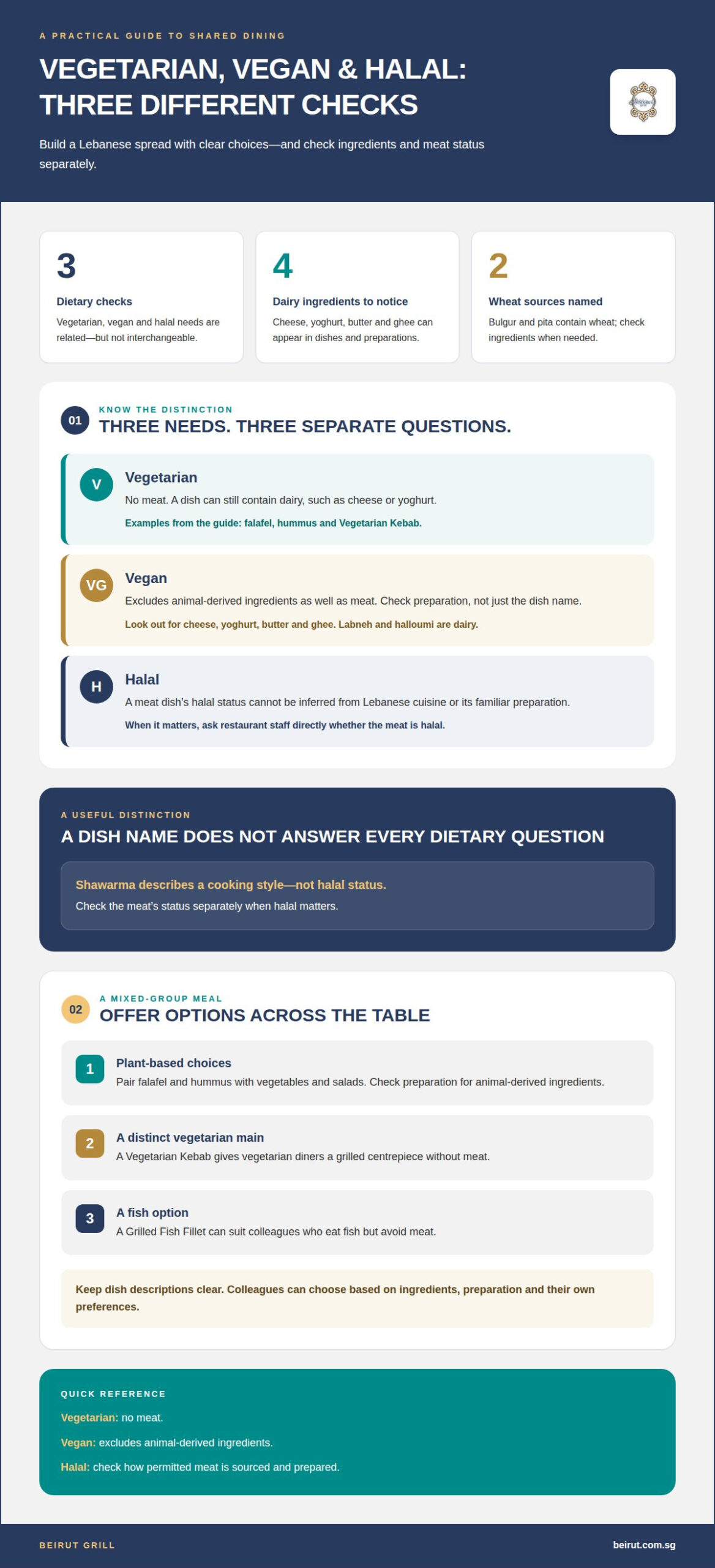
Lebanese cuisine offers plenty of plant-based dishes, but vegetarian and vegan choices aren’t always the same. Falafel, made from chickpeas, can be a satisfying meat-free option. Hummus, vegetables, olive oil and herbs add variety, while a Vegetarian Kebab gives colleagues a grilled centrepiece without meat. For vegans, the ingredients matter as much as the dish name.
Look for dairy ingredients in particular. Cheese, yoghurt, butter and ghee can appear in Lebanese dishes, including baked foods and breakfast items. Labneh is dairy, and halloumi is cheese, so neither suits a vegan meal. A vegetarian dish may still contain one of these ingredients. Check the preparation to choose according to dietary needs, rather than relying on a dish’s name alone.
Halal-friendly choices need separate consideration: meat’s halal status cannot be inferred from Lebanese cuisine or a familiar preparation. When that status matters, ask restaurant staff directly whether the meat is halal. For a mixed group, serve vegetarian dishes alongside meat options, so colleagues can choose what suits their preferences. Shawarma, for example, describes a cooking style, not halal status.
For a Singapore team meal, a practical spread could pair falafel and hummus with a Vegetarian Kebab, plus vegetables and salads. Colleagues who eat fish but avoid meat can choose a Grilled Fish Fillet, while vegetarian diners have a distinct main. Garlic and olive oil bring aromatic depth to many preparations, but they don’t answer questions about dairy or meat status. Clear dish descriptions help everyone make an informed choice.
Keep the distinction simple: vegetarian means no meat, vegan also excludes animal-derived ingredients, and halal concerns how permitted meat is sourced and prepared. These preferences can overlap, but they aren’t interchangeable. A cheese dish, for example, can be vegetarian without being vegan, while a meat dish needs its own halal consideration.
4. Lebanese mezze and shared starters
In Lebanese dining, mezze are hot or cold appetizers that bring a social rhythm to the meal. Instead of choosing a single starter, colleagues can pass around several plates and taste at their own pace. A table might begin with hummus, labneh and baba ghanoush, then add crisp pastries or warm bites. This shared format makes a first Lebanese meal feel like a guided tasting.
Each plate offers a different texture and flavour. Baba ghanoush pairs roasted eggplant with tahini, while labneh brings a tangy, creamy contrast. Warak enab, grape leaves filled with rice, adds a tender bite; spinach fatayer contributes pastry and savoury filling. For fresh crunch, fattoush combines vegetables with crisp pita. Together, these dishes show how herbs, vegetables, bread and spices shape a Middle Eastern spread.
For a team, aim for variety rather than ordering several similar dips. Pair a creamy plate with a salad, a pastry and a hot starter, then add a main for anyone who wants a fuller meal. Lebanese mezze suits a leisurely shared meal, but works for lunch too: colleagues can sample small portions without everyone needing the same dish.
Mezze also gives the meal a natural progression. Begin with cool spreads and fresh salad, follow with warm pastries or grilled dishes, then finish with dessert. Baklava offers layers of filo and nuts with fragrant syrup; Lebanese coffee makes a fitting final cup. A breakfast-style spread can also include manoushe, flatbread topped with za’atar, for a more casual tasting.
To bring that shared experience to your table, explore Lebanese mezze and starters, and choose a combination of fresh, crisp and warm dishes for your group.
Lebanese meals commonly include hot or cold appetizers called mezze, reflecting the social role of the cuisine. Lebanese baba ghanoush is an eggplant-and-tahini dip, usually served with pita bread and olive oil. Lebanese labneh is a tangy, creamy cheese made from sheep’s or goat’s milk, often served as a spread for pita. Muhammara combines roasted red peppers, garlic, pomegranate molasses, ground walnuts and warm spices.
Beirut Grill: Lebanese Wine
Beirut Grill offers teams a welcoming way to explore Lebanese flavours together. A Mixed Grill brings several grilled choices to the table, while Hummus makes a familiar starting point for sharing. Vegetarian Kebab gives meat-free diners a substantial option, and Lebanese Wine can accompany the meal for colleagues who enjoy wine.
For a balanced group order, pair shared Hummus with a Mixed Grill and Vegetarian Kebab, so colleagues can choose according to their preferences. Add Lebanese Wine to the table for a more leisurely dining experience. These dishes make it easy to turn an introduction to Lebanese cuisine into a meal the team can enjoy together.
For your team’s next Lebanese meal, contact Beirut Grill.
Make the First Meal a Shared Experience
A team meal can be more than a break in the working day. It can give colleagues a chance to discover new flavours together, share preferences and make room at the table for different appetites. The key to convincing your team to try Lebanese food is to make the invitation feel open, not like a test of anyone’s adventurousness. Let each person set their own pace, whether that means sampling a new dish or choosing a familiar favourite.
For a gathering in Singapore, Beirut Grill offers options to shape that experience, from Hummus for sharing to Mixed Grill and Lebanese Wine. Choose a meal that suits your group’s occasion, then let conversation unfold around the table. Contact Beirut Grill to plan a team meal, and give your colleagues a welcoming first taste of Lebanese hospitality.
Frequently Asked Questions
What Lebanese dishes are best for first-time diners?
Choose a crisp bite, a familiar main and a sweet finish, rather than asking everyone to try the same dish. Sambousek or spinach fatayer offers a pastry-led introduction, while kunefe makes a distinctive dessert to share. This sequence lets first-time diners explore different textures and flavours at a comfortable pace, with savoury and sweet choices on the table.
What are popular Lebanese dishes to share with a group?
Build a shared spread with contrasting textures: combine fried kibbeh and warak enab with fresh salad, then let each person select a main. At Beirut Grill, Hummus can anchor the starters, while a Mixed Grill gives the table a selection of grilled flavours. This keeps the meal sociable without requiring every colleague to choose the same dish.
How can I introduce Lebanese food to a team with different dietary needs?
Gather dietary preferences before choosing dishes, then include clearly distinct meat-free options such as falafel or Vegetarian Kebab. Beirut Grill’s menu is pork-free, but that alone doesn’t establish whether meat is halal. If halal status matters to a colleague, ask restaurant staff directly about the meat. For vegan diners, account for dairy ingredients such as cheese, butter and yoghurt.