
The best red wine with lamb may not be the boldest bottle on the shelf. A rich roast can welcome firm tannins, while smoky charcoal-grilled chops or warmly seasoned kofta may suit a more supple, savoury red. If labels and grape names make choosing feel harder than it should, start with what’s on the plate.
The lamb’s cut, cooking method, seasoning, and sauce all help determine the match. Tannins can balance the meat’s richness, while acidity adds freshness, but too much weight can overwhelm a delicate preparation. This guide compares red wine styles with roasted, grilled, and spiced lamb to help you choose with confidence. Beirut Lamb Chops and Lamb Kofta offer two Lebanese dishes to consider, and Lebanese wine brings another option to the table. You don’t need to memorise a cellar’s worth of labels: notice what stands out in the dish and use that to guide your choice.
Key Takeaways
- The best red wine with lamb depends on the dish’s intensity, preparation, and seasoning, not simply on the meat.
- Char, slow cooking, and herbs each bring different flavours to the glass. Match the wine’s weight and character to the plate.
- Compare wines by body, fruit, and tannin. Cabernet Sauvignon is one option for robust lamb, not a universal match.
- Before choosing, note the lamb’s sauce, seasoning, and char, then factor in your own taste.
- Lebanese wine is an option to explore with Lebanese dishes such as Lamb Kofta, Beirut Lamb Chops, and Mixed Grill.
Why Does Red Wine Work So Well with Lamb?
Pairing means matching a wine’s structure and flavour to a dish. Lamb’s savoury richness can work well with red wine: ripe fruit brings contrast, acidity adds freshness, and tannin gives the pairing structure. The best red wine with lamb depends on more than the meat itself. The cut, cooking method, seasoning, sauce, and your own taste all influence which glass feels harmonious.
Consider the whole plate. Simply seasoned lamb lets the meat’s flavour lead, while garlic, herbs, warm spices, or a rich sauce add other notes for the wine to meet. Charcoal brings smoky, toasted flavours; gentle roasting tends to produce a softer profile. Match these details so the wine accompanies the dish rather than competing with it. The broader principles of wine and food pairing include considering weight, acidity, alcohol, and tannin together.
A good pairing brings red wine’s fruit, freshness, and grip together with lamb’s savoury richness, without letting either take over. That’s the aim, not a rule that every lamb dish needs the fullest red.
How lamb’s flavour meets red wine’s structure
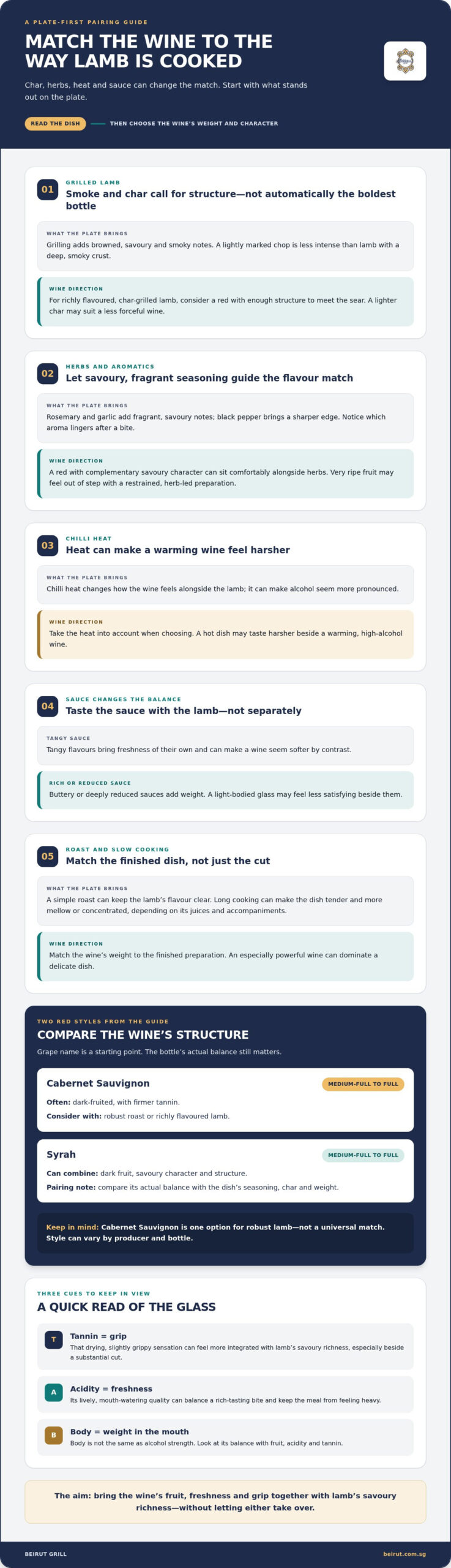
Tannin is the drying, slightly grippy sensation often noticed on the gums after a sip of red wine. Lamb’s savoury richness can make firm tannins feel more integrated, especially alongside a substantial cut. Acidity is the lively freshness that makes a wine seem mouth-watering. It can balance a rich-tasting bite and keep the meal from feeling heavy.
Body describes how weighty or light a wine feels in the mouth. It isn’t the same as alcohol strength: a wine can feel full without seeming hot, and a higher-alcohol wine doesn’t automatically suit every rich dish. Look at the balance between fruit, acidity, tannin, and body.
Why there is no single perfect pairing
Simply seasoned lamb lets the meat’s savoury character lead, while herbs, spice, or sauce bring extra flavours into the pairing. A bold, tannic red might suit robust lamb, but its grip could distract from a more delicate preparation. Bright fruit and freshness may work better when the seasoning is lively.
Cooking matters as much as the cut. Roasting, grilling, and slow cooking change the lamb’s texture and flavour. Smoky char creates a different impression from a gently cooked surface. Start by noticing what stands out, then choose a wine that balances rather than overwhelms it. Let preference have the final say: the most satisfying match is the one you enjoy with the meal.
How Lamb’s Cooking Method and Seasoning Change the Wine Match
A lamb chop marked by charcoal tastes different from a gently roasted shoulder or meat cooked slowly until tender. The cut matters, but so do the cooking surface, cooking time, seasoning, and sauce. Lamb preparation and seasoning influence wine choice as much as the cut itself. Start with those details, then choose a wine that complements the dish’s strongest flavours.
Grilled lamb, roast lamb, and slow-cooked dishes
Grilling creates savoury, smoky notes and a browned exterior. These flavours can stand up to a red with enough structure, particularly in a richly flavoured dish such as charcoal-grilled Lamb Kofta or Beirut Lamb Chops. Consider the intensity of the sear: a lightly marked chop may call for a less forceful wine than lamb with a deep, smoky crust.
Roasting and slow cooking offer useful contrasts, not automatic pairing instructions. A simple roast can keep the meat’s flavour clear, while long cooking may make the texture tender and the dish more mellow or concentrated, depending on its juices and accompaniments. An especially powerful wine can dominate a delicate preparation. Match the wine’s weight to the finished dish, not just the name of the cut.
Herbs, spice, and sauce change the equation
Seasoning can redirect a pairing. Rosemary and garlic bring fragrant, savoury notes; black pepper adds a sharper edge. A wine with complementary savoury character can sit comfortably alongside these flavours, while very ripe fruit may feel out of step with a restrained, herb-led preparation. Notice what lingers in the aroma after a bite.
Spice deserves particular attention. Chilli heat can make alcohol feel more pronounced, so a hot dish may taste harsher alongside a warming, high-alcohol wine. Tangy sauces bring freshness of their own and can make a wine seem softer by contrast. Rich, buttery, or deeply reduced sauces add weight, which may make a light-bodied glass feel less satisfying. Taste the sauce with the lamb, not separately.
Imagine the same chop served three ways: simply grilled, coated with garlic and herbs, or accompanied by a spicy sauce. With the first, consider smoke and savouriness; with the second, aromatic detail; with the third, the balance of heat and fruit. The best red wine with lamb keeps these elements in balance without masking the meat or making the seasoning feel sharper.
At the table, notice whether char, herbs, heat, or sauce leads each mouthful, then adjust your choice accordingly. For a Lebanese meal centred on charcoal-grilled lamb, Beirut Grill’s lamb dishes offer a chance to put that approach into practice.
Which Red Wine Styles Pair Best with Lamb?
The best red wine with lamb matches the wine’s structure to the dish, rather than relying on the grape name alone. A robust, char-grilled preparation can suit a wine with more body and tannin; gently seasoned lamb may call for a softer touch. Use the table as a starting point, not a guarantee. Style varies by producer and bottle, so judge the wine’s actual balance.
| Red wine style | Typical body | Fruit and tannin | Lamb preparations to consider |
|---|---|---|---|
| Cabernet Sauvignon | Medium-full to full | Often dark-fruited, with firmer tannin | Robust roast or richly flavoured lamb |
| Syrah | Medium-full to full | Can combine dark fruit with savoury character and structure | Char-grilled lamb or strongly seasoned preparations |
| Merlot | Medium to full | Often rounder in feel, with softer tannin | Roast lamb with moderate seasoning |
| Pinot Noir | Light to medium | Typically lighter in body, with fresh fruit and gentler tannin | Delicately prepared lamb or subtle seasoning |
When a fuller-bodied red may suit the dish
For lamb with deep savoury flavour or pronounced char, a structured red can hold its own beside the meat. Cabernet Sauvignon is one possibility for a robust roast. Syrah can suit grilled lamb when the bottle’s savoury character and firmness complement the smoke. Neither is a universal answer: a very forceful wine may overshadow milder lamb, so compare the intensity of the dish and the bottle.
When a softer or lighter red may be the better choice
With gentle seasoning or a less intense preparation, a softer profile can keep the lamb at the centre of the plate. Merlot may offer a rounder-feeling alternative to a more tannic red, while Pinot Noir’s lighter body can suit delicately prepared lamb. These are broad tendencies, not promises about every bottle. Consider the wine’s body and grip, then trust the balance you enjoy.
Use grape names as signposts. Cabernet Sauvignon, Syrah, Merlot, and Pinot Noir each cover a range of styles shaped by the producer and individual bottle. Wines made from the same grape won’t necessarily taste or feel alike. When choosing from a list, look beyond the name: is the wine light or substantial, soft or firm? Then compare that impression with the lamb’s preparation.
As a practical guide, choose more structure for richly flavoured lamb and consider a gentler red when the seasoning and cooking are restrained. The right match should make the wine and dish feel more complete together, not turn the pairing into a test of wine rules.
How to Choose and Serve Red Wine with Lamb
A confident pairing starts with the plate, not the label. Notice whether the lamb is mild or deeply savoury, how it was cooked, and what the seasoning and sauce contribute. The best red wine with lamb is a flexible match: it should support the dish’s prominent flavours while still being enjoyable on its own.
A simple decision process for choosing a bottle
Move from the lamb’s character to the wine’s style, then consider the preferences around your table. This quick check helps narrow the options without turning dinner into a test of wine knowledge.
- Start with the preparation. Decide whether the lamb is delicate, richly flavoured, or strongly seasoned. Note any smoky char, which can make the dish feel more intense.
- Match the wine’s weight. For a substantial, savoury preparation, consider a fuller-bodied red with more structure. For gentler flavours, a softer or lighter style may let the lamb shine.
- Factor in the details. Rosemary, garlic, pepper, chilli, and sauce can all shift the balance. A lively sauce may call for a different style than a rich, concentrated one.
- Choose for the people at the table. Consider whether diners enjoy firm tannins, softer textures, or brighter fruit. Treat the bottle as a considered match, not a strict formula.
Practical rule: match the wine to the lamb’s strongest flavour, then choose a style you genuinely enjoy drinking. If you’re deciding between two options, think about which is less likely to overpower the food. A bolder red may suit deeply savoury lamb, while a softer option can work better with restrained seasoning.
Serving red wine alongside lamb
Follow the bottle’s serving guidance and avoid serving red wine overly warm. Excessive warmth can make the alcohol feel more prominent and the flavours less composed. Pour a small taste with the lamb before settling into the meal. Notice whether the wine’s fruit, freshness, and structure sit comfortably beside the meat, seasoning, and sauce.
If the wine seems too sharp or heavy, return your attention to the dish. Pepper or chilli may heighten a wine’s warmth, while a rich sauce can make a lighter glass seem less substantial. You don’t need to change the bottle to learn from the pairing. A few bites and sips can show which qualities you’d prefer next time.
For a Lebanese meal, charcoal-grilled lamb and Lebanese wine bring food and drink from a shared culinary tradition to the table. Enjoy Lebanese wine with lamb at Beirut Grill, alongside dishes such as Lamb Kofta, Beirut Lamb Chops, or Mixed Grill.
Enjoy Lebanese Wine with Lamb at Beirut Grill
Pairing principles come alive at the table, where lamb’s preparation and seasoning meet a wine’s character. Beirut Grill serves Lebanese wine alongside Lebanese and Middle Eastern dishes. Consider the dish’s intensity, seasoning, and char, then choose a wine style that feels balanced with those flavours rather than treating any bottle as a guaranteed match.
Bring pairing principles to Lebanese lamb dishes
Lamb Kofta shows how seasoning can influence a pairing as much as the meat itself. Notice its savoury character and aromatic or spiced notes, then choose a wine that complements rather than competes with them. The aim isn’t to guess a recipe or follow a fixed rule. Pay attention to what stands out in each bite.
Beirut Lamb Chops offer a grilled-lamb example. Char and a browned surface can lend a dish more savoury intensity, which may suit a red with enough structure to hold its place. The right balance still depends on the preparation and the bottle. If the lamb is gently seasoned, a softer style may feel more harmonious than a particularly forceful red.
Mixed Grill brings a different consideration: several flavours share the table, so one wine has to work across more than a single bite. A balanced, adaptable choice can be more rewarding than choosing a wine for only the most intense element. Taste it with the lamb, then with the other grilled items, and notice whether it remains pleasant alongside the range of flavours.
Make wine part of the wider meal
Lebanese wine is a natural option to explore alongside Lebanese food, without needing to begin with a grape name or label. Let the meal guide you: consider the lamb, then the seasonings and accompaniments around it. For broader culinary context, the Middle Eastern food guide offers a wider look at the dishes and traditions that shape the table.
Shared culinary traditions also invite curiosity beyond a single dish. The Mediterranean food guide provides another perspective on the region’s varied flavours and food heritage. These connections can make choosing a glass feel less like a technical exercise and more like part of enjoying the meal.
There’s no need to find a supposedly perfect bottle. Start with the lamb’s character, taste thoughtfully, and let personal preference complete the pairing. Explore Beirut Grill’s Lebanese dining and wine offerings.
Let Your Next Glass Begin with the Dish
For your next lamb meal, treat the pairing as an invitation to explore, not a test with one correct answer. Notice what changes from the first bite to the last: the warmth of the seasoning, the depth of the char, or the way a sauce shapes the dish. Those observations can help you discover what the best red wine with lamb means for your own palate.
At Beirut Grill, Lebanese wine accompanies a pork-free menu rooted in Lebanese and Middle Eastern dining. Let the meal set the pace, savour each pairing, and stay open to a glass that surprises you. Explore Beirut Grill’s Lebanese dining and wine offerings, and make your next meal a chance to find a match you’ll remember.
Frequently Asked Questions
Is Pinot Noir too light to pair with lamb?
No. Pinot Noir can suit lamb, particularly when the dish is gently seasoned and its flavours aren’t dominated by a heavy sauce or deep char. Taste it alongside the meat before serving a full glass. If the lamb is richly flavoured, a lighter Pinot Noir may feel overshadowed, so consider a more structured bottle or a less intense preparation.
Can Cabernet Sauvignon pair with grilled lamb chops?
Yes. Cabernet Sauvignon can work with grilled chops if the meat’s savoury flavour and char are pronounced enough to meet the wine’s structure. Heavy pepper or chilli can make a firm, powerful bottle feel more forceful, while gentler seasoning may favour a softer red. Taste the chop and wine together, then let the overall balance guide your choice.
How much red wine should I serve with lamb?
A practical starting pour is about 150 ml per person; a 750 ml bottle provides roughly five pours at that size. You can begin with a smaller pour so everyone can taste the wine with the lamb before deciding whether they’d like more. The amount to set aside depends on how many people are drinking wine and what else you’re serving, so treat the estimate as a guide rather than a fixed rule.
What red wine goes well with spicy lamb?
For spiced lamb, consider a savoury Syrah or a Grenache-based blend, then account for the level of chilli heat. Spice can make alcohol seem more warming, so a wine that feels balanced and not overly hot may be easier to enjoy. If the dish is particularly fiery, take a small sip with a bite first; the sauce and seasoning can change how the wine comes across.
Does Lebanese wine pair with lamb?
Yes, Lebanese wine can be a fitting choice with lamb, especially as part of a Lebanese meal. Consider whether the wine’s body and structure suit the lamb’s preparation and whether its character appeals to you. Lebanese wine encompasses different styles, so let the individual bottle and dish guide the decision rather than assuming every wine will taste or pair alike.
Should red wine be chilled before serving with lamb?
Not every red needs chilling, and serving one refrigerator-cold can mute its aromas. Follow the bottle’s serving guidance. Lighter, fresher reds may benefit from a brief chill, while fuller styles are generally best served cool rather than warm. If the room is warm, a short time in the refrigerator can help bring the wine down. Taste it and let it adjust in the glass.
What happens if red wine tastes too tannic with lamb?
If the wine feels drying or grippy, try another sip with a bite of lamb rather than tasting it on its own. If it still dominates, the bottle may be too firm for the dish or your preference. Set it aside and choose a softer red for the meal. Next time, look for gentler tannins or a less assertive style instead of trying to force the match.