
A true Lebanese meal isn’t measured by the weight of a single plate, but by the rhythmic arrival of countless small treasures that turn a table into a living map of the Levant. It’s natural to feel a moment of hesitation when faced with a sprawling menu of unfamiliar terms, fearing that a haphazard selection might disrupt the delicate harmony of your spread. You want more than just food; you seek a communal experience where every dip of bread and shared platter tells a story of heritage. Discovering the best lebanese appetizers to share allows you to move past the menu’s complexity and embrace the indulgent spirit of the mezze table.
This guide reveals the essential cold and hot mezze that transform a simple dinner into a sophisticated celebration of flavor and culture. We’ll explore the ‘must-try’ dishes, from the velvet texture of Moutabal and Labneh to the golden, spiced crunch of Sambousek and Falafel. By understanding the traditional etiquette of the feast, you’ll gain the confidence to order a balanced selection that pairs the brightness of Fattoush with the savory depth of Fried Kibbeh or Batata Harra, creating a prestigious dining experience that rewards your curiosity and transports your guests.
Key Takeaways
- Embrace the philosophy of mezze as a slow, social ritual where a table of abundant small plates fosters deep connection and conversation.
- Curate a balanced spread by selecting the best lebanese appetizers to share, alternating between cooling dips like Moutabal and the crispy, spiced layers of hot mezze.
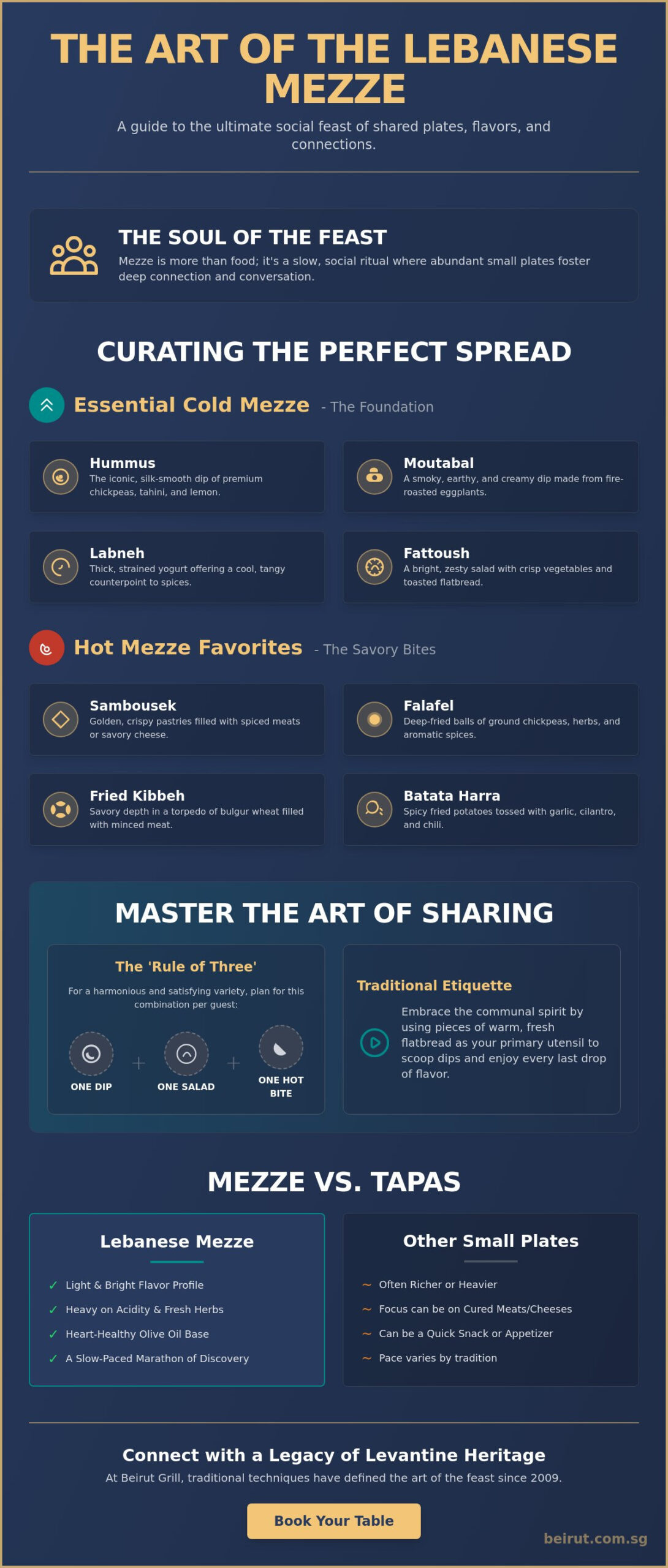
- Learn to navigate the ‘Rule of Three’—one dip, one salad, and one hot bite per guest—to ensure a harmonious and satisfying variety for the entire group.
- Master traditional sharing etiquette, including the art of using flatbread as a communal utensil to enjoy every drop of authentic flavor.
- Connect with a legacy of Levantine heritage at Beirut Grill, where traditional techniques have defined the art of the feast since 2009.
The Soul of Lebanese Dining: Why Mezze is the Ultimate Social Feast
In the heart of Lebanese culture, the table serves as a sanctuary where time slows down and the rush of the outside world is forgotten. The Soul of Lebanese Dining: Why Mezze is the Ultimate Social Feast is found in the mezze, a collection of small dishes designed for communal indulgence and long, winding conversation. It’s an experience that values the presence of friends over the speed of service. Every bowl and platter placed before you is an invitation to linger, to taste, and to connect.
To a Lebanese host, an empty spot on the table is unthinkable. Hospitality is synonymous with abundance; it’s a point of pride that the spread must be lush, vibrant, and ever-present. This philosophy ensures that the best lebanese appetizers to share aren’t just food, but a physical gesture of welcome and generosity. You’ll find a sensory playground in these offerings. There’s the sharp, refreshing zest of freshly squeezed lemon, the velvet creaminess of tahini, and the earthy hum of aromatic spices like cumin and cinnamon. While these dishes often act as a sophisticated precursor to a robust Mixed Grill, they possess the culinary depth to stand alone as a complete, standalone feast that rewards the curious palate.
The Historical Roots of Lebanese Appetizers
The diverse ingredients found on a modern Lebanese table are echoes of a complex Levantine history. For centuries, the crossroads of ancient trade routes brought exotic spices and techniques that local families refined into a distinct culinary language. Authenticity here relies entirely on the seasons. Fresh parsley, sun-ripened tomatoes, and crisp cucumbers aren’t merely garnishes. They’re the essential foundation of every recipe. Sharing these preparations fosters a profound sense of community, anchoring every guest to a shared heritage that has been passed down through generations of kitchen hearths.
Mezze vs. Tapas: Understanding the Lebanese Difference
While many cultures enjoy the concept of small plates, the Lebanese palate is uniquely defined by its brightness and health-conscious profile. Unlike the often rich or heavy profiles found in other traditions, mezze leans heavily on acidity, fresh herbs, and heart-healthy fats like premium cold-pressed olive oil. The pacing is also distinct. A Lebanese meal is a marathon of discovery, not a quick snack. Staple ingredients like pungent garlic and tart sumac create a flavor profile that’s both invigorating and deeply satisfying. It’s a deliberate, atmospheric rhythm that encourages you to savor your best lebanese appetizers to share while immersing yourself in the company of those around you.
Essential Cold Mezze: The Foundation of Every Lebanese Table
The dining ritual begins not with a heavy main, but with a vibrant array of cold mezze that awakens the palate. These dishes serve as the essential foundation of any authentic spread, offering a refreshing contrast to the Hot Mezze Favorites that follow. This first act is defined by brightness, acidity, and a luxurious creaminess that prepares the senses for the feast ahead. It’s a deliberate progression designed to slow the guest down and encourage immersion in the shared experience.
When selecting the best lebanese appetizers to share, the journey often starts with the “Big Three” dips. These are complemented by zesty salads and cooling elements like Labneh, a thick, strained yogurt that acts as a soothing counterpoint to the bold spices and garlic found throughout the meal. The presence of these cold plates ensures the table remains abundant and visually stunning from the moment you sit down.
The Creamy Classics: Hummus and Its Variations
A perfect Hummus is a masterpiece of balance. It should possess a silk-smooth texture, achieved through a precise ratio of premium chickpeas, rich tahini, and a sharp hit of lemon. While the classic version is a global icon, the Hummus Beiruti offers a more adventurous profile, infused with fresh parsley, garlic, and a hint of spice. The traditional etiquette is simple yet tactile: use a piece of warm, freshly baked pita to scoop the dip in a sweeping motion, ensuring every bite carries a pool of golden olive oil.
Smoky and Earthy: The Eggplant Dips
The eggplant is a cornerstone of the Levantine table. To achieve the necessary depth of flavor, the fruit is charcoal-roasted until the skin charrs, imparting a haunting smoky aroma. While Baba Ghanoush is often chunky and vegetable-forward, Moutabal is its more indulgent cousin, blended with tahini to create a creamy, decadent dip. These are often crowned with ruby-red pomegranate seeds, providing a sweet pop of color that elevates the presentation. You can sample these authentic textures by visiting Beirut Grill for a truly immersive experience.
Zesty Salads: Tabbouleh vs. Fattoush
A common misconception is that Tabbouleh is a grain salad. In a traditional Lebanese kitchen, it’s an effervescent herb salad where finely chopped parsley takes center stage, accented by mint, tomato, and just a whisper of bulgur. Fattoush, by contrast, is celebrated for its crunch. It features a medley of garden-fresh vegetables tossed in a dressing spiked with sumac, a tart, burgundy spice. The addition of toasted pita chips provides a textural contrast that cuts through the richness of subsequent meat courses, ensuring the palate remains refreshed.
Hot Mezze Favorites: Crispy, Savory, and Irresistible Bites
As the cooling dips and zesty salads of the first act are savored, the table undergoes a sensory shift with the arrival of the hot mezze. This “warm heart” of the meal introduces complex, cooked textures and savory proteins that prepare the palate for the robust grills to follow. Selecting the best lebanese appetizers to share often involves choosing items that offer a satisfying crunch and a depth of spice. These dishes are more than just starters; they represent the artisanal skill of the Lebanese kitchen, where every fold of pastry and every spiced filling is a testament to culinary heritage.
While the cold mezze provides a refreshing foundation, the hot selections bring a sense of indulgence and comfort. From the legendary Fried Kibbeh, often called Lebanon’s national dish, to the vibrant kick of Batata Harra, these bites add layers of warmth to the communal experience. They’re designed to be passed around, encouraging guests to sample a variety of flavors that range from the earthy and herbaceous to the salty and charred.
The Golden Crunch: Falafel and Kibbeh
The hallmark of a masterfully prepared Falafel is the contrast between its deeply bronzed, crispy exterior and its vibrant, herb-green interior. These chickpea patties are a vegetarian staple, best enjoyed when dipped into a nutty tahini sauce. Alongside them, Fried Kibbeh showcases incredible craftsmanship. Each torpedo-shaped shell is a delicate blend of bulgur and finely minced meat, encasing a savory core of spiced lamb and pine nuts. For the ultimate flavor profile, a touch of creamy garlic sauce or a dip into fresh Labneh provides a cooling counterpoint to the rich, spiced meat.
Savory Pastries: Sambousek and Spinach Fatayer
Authentic Lebanese pastries are defined by their flaky, artisanal dough and precise fillings. Sambousek, typically filled with spiced minced lamb and toasted nuts, offers a savory, hand-held indulgence that’s perfect for a shared feast. In contrast, the Spinach Fatayer provides a tangy, vegetarian alternative. These triangular parcels are stuffed with fresh spinach, onions, and a generous dusting of sumac, which imparts a signature citrusy brightness. Their small, portable nature makes them an essential component of the social ritual, allowing guests to sample different textures without feeling overwhelmed.
From the Grill: Halloumi and Warak Enab
The heat of the grill transforms simple ingredients into prestigious delicacies. Grilled Halloumi is a sensory delight, prized for its unique “squeaky” texture and the salty char it acquires over the flames. It’s a dish that demands to be eaten immediately while the cheese is still supple. Similarly, while Warak Enab (stuffed grape leaves) are often served cold, enjoying them warm reveals a different dimension of flavor. The heat softens the rice and accentuates the richness of the olive oil and spices. These grilled and warmed offerings provide a seamless transition to the main courses, such as the Mixed Grill or Beirut Lamb Chops.
Mastering the Art of the Share: Etiquette and Flavor Pairings
The true mastery of a Lebanese feast lies in the curation of the table, where the host acts as a conductor of flavors and textures. Ordering a mezze spread shouldn’t feel like a chaotic exercise in guesswork. Instead, it’s a deliberate social framework. To avoid the common pitfall of an unbalanced table, seasoned diners often follow the “Rule of Three.” By selecting one dip, one salad, and one hot bite per person, you ensure a tapestry of tastes that satisfies without overwhelming. This structured approach allows you to identify the best lebanese appetizers to share while maintaining the variety that defines Levantine hospitality.
Etiquette at a Lebanese table is rooted in the concept of the “common plate.” While individual plates are provided, the focus remains on the center of the table. Bread is your primary utensil; it’s used to pinch, scoop, and sweep up every morsel of Hummus or Moutabal. There’s a specific rhythm to the meal that rewards patience. You’ll always begin with the cooling, acidic notes of the cold mezze before transitioning to the savory warmth of the hot bites. This progression builds a culinary momentum that culminates in the arrival of the Mixed Grill or Beirut Lamb Chops. To experience this authentic ritual in its most prestigious form, you can reserve your table at Beirut Grill and let our knowledgeable hosts guide your selection.
The Connoisseur’s Guide to Beverage Pairing
The right beverage doesn’t just accompany the food; it elevates the entire sensory experience. Lebanese Wine, particularly the robust reds from the historic Bekaa Valley, possesses the structure to stand up to spiced meats like Lamb Kofta and Beef Kebab. For a more traditional journey, the Arak ritual is essential. Known as “Lion’s Milk” for the milky white cloud that forms when water meets the clear spirit, its potent anise notes serve as a sophisticated palate cleanser. If you prefer a non-alcoholic path, the refreshing qualities of Moroccan Mint Tea or the deep, cardamom-scented notes of Lebanese Coffee provide a dignified finish to the meal.
Building a Balanced Mezze Board for Groups
A successful mezze board is a study in contrast. You want to ensure a mix of textures: the creamy velvet of Labneh, the sharp crunch of Fattoush, and the salty, “squeaky” char of Grilled Halloumi. This diversity ensures that every guest finds something to indulge in. One of the greatest strengths of this cuisine is its natural inclusivity. Lebanese tradition inherently favors vegetarian and vegan guests, with dishes like Falafel, Spinach Fatayer, and Warak Enab offering substantial, protein-rich options that never feel like an afterthought. When hosting, remember that presentation is paramount. Arrange your best lebanese appetizers to share with an eye for color, using garnishes of sumac, fresh mint, and pomegranate seeds to create a spread that is as visually stunning as it is delicious.
Elevating Your Experience: Authentic Lebanese Appetizers at Beirut Grill
In the historic heart of Singapore’s Kampong Gelam district, Beirut Grill has cultivated a legacy of excellence since its founding in 2009. As a premier destination for those seeking the best lebanese appetizers to share, we provide a sophisticated sanctuary where heritage and hospitality converge. Our environment is meticulously designed to be both exclusive and welcoming, offering a pork-free menu that caters to the refined requirements of corporate luncheons and intimate family celebrations alike. From the first dip of Hummus to the final bite of our signature Mixed Grill, every moment is an invitation to indulge in a culinary journey that honors the traditions of the Levant. We believe that a meal is a prestigious event, one that rewards the visitor’s curiosity through elevated flavors and a rhythmic, storytelling atmosphere.
The longevity of our brand is rooted in a deep pride for our cultural roots. By anchoring our identity to our specific physical location on Bussorah Street, we’ve become a hallmark of credibility for diners who demand authenticity. We don’t merely serve dishes; we curate an experience where texture, temperature, and tradition are in perfect harmony. This commitment ensures that every guest feels like a privileged participant in a social ritual that has defined Middle Eastern life for centuries.
A Legacy of Flavor Since 2009
The secret to our enduring presence lies in an unwavering commitment to authenticity. We source high-end, imported ingredients directly from prestigious regional producers to ensure that every bowl of Moutabal and every plate of Fried Kibbeh reflects the true soul of Lebanon. Our chefs are masters of the charcoal grill, utilizing time-honored techniques to impart that essential smoky aroma to our meats and vegetables. For those wishing to deepen their understanding of this rich culinary landscape, our Middle Eastern Food Singapore Guide offers a broader context for the flavors we celebrate daily. This dedication to artisanal preparation distinguishes us as a curator of culture rather than merely a provider of food, ensuring every bite is an indulgence in quality.
Your Invitation to a Lebanese Culinary Journey
Stepping into Beirut Grill is a sensory experience designed to transport you far beyond the city’s streets. The atmospheric dining room, characterized by its elegant decor and warm lighting, serves as the perfect backdrop for the communal spirit of a mezze feast. We encourage groups to gather and share in the abundance of our table, where the best lebanese appetizers to share become a catalyst for deep connection and conversation. Whether you’re rediscovering the zesty tang of Fattoush or exploring the salty char of Grilled Halloumi, our seasoned hosts are here to ensure your experience is nothing short of superlative. We invite you to reserve your table at Beirut Grill to experience the most authentic Lebanese appetizers in Singapore and write your own chapter in our long-standing story of hospitality.
Embrace the Tradition of the Shared Table
The art of the mezze is a profound testament to the belief that food is most meaningful when shared. By mastering the balance between velvet-smooth cold dips and the golden, spiced crunch of hot bites, you transform a simple evening into a prestigious cultural celebration. You’ve discovered how selecting the best lebanese appetizers to share creates a rhythmic dining experience that honors centuries of Levantine heritage. This journey is best enjoyed slowly, where the arrival of each common plate encourages connection and rewards your curiosity.
Since 2009, Beirut Grill has remained a dedicated curator of this authentic experience, serving as a reliable destination for those who value tradition and quality. Our pork-free menu and curated selection of Lebanese Wine and Arak provide the sophisticated environment your next communal feast deserves. We invite you to Book Your Authentic Lebanese Mezze Experience at Beirut Grill and immerse yourself in the warmth of our hospitality. The table is set, and a world of flavor awaits your arrival.
Frequently Asked Questions
What are the most popular Lebanese appetizers for beginners?
Hummus, Falafel, and Fattoush are the quintessential starting points for any guest new to the Levant. These dishes offer a gentle introduction to the flavor profiles of the region without being overwhelming. Hummus provides a creamy base, while Falafel offers a satisfying crunch. Fattoush introduces the signature zesty brightness of sumac and lemon that defines our culinary heritage.
Is Lebanese mezze suitable for vegetarians and vegans?
Yes, Lebanese cuisine is naturally one of the most inclusive traditions for plant-based diners. Many of the best lebanese appetizers to share, such as Tabbouleh, Warak Enab, and Batata Harra, are prepared using only fresh vegetables, grains, and premium olive oil. It’s a prestigious way for vegetarian and vegan guests to enjoy an abundant feast without any modifications to traditional recipes.
How many appetizers should I order for a group of four?
Identifying the best lebanese appetizers to share for a group of four involves ordering approximately 10 to 12 small plates to ensure abundance. Following the “Rule of Three” per person allows you to sample a diverse range of textures and temperatures. A balanced selection might include three dips, two salads, and five or six hot bites like Sambousek or Grilled Halloumi.
What is the difference between Hummus and Hummus Beiruti?
The primary difference lies in the infusion of fresh herbs and extra garlic in the Beiruti version. While our classic Hummus is a silk-smooth blend of chickpeas and tahini, the Hummus Beiruti is topped with a vibrant mixture of chopped parsley and pungent garlic. It’s a bolder, more textured experience that rewards those seeking a more intense and herbaceous flavor profile.
Why is Arak traditionally served with Lebanese appetizers?
Arak is served because its potent anise notes act as a sophisticated palate cleanser between diverse courses. As you move between the cooling creaminess of Moutabal and the savory depth of Lamb Kofta, the “Lion’s Milk” refreshes the senses. This traditional spirit cuts through the richness of olive oil and grilled meats, ensuring every bite of your feast feels as invigorating as the first.
Are Lebanese appetizers spicy?
Lebanese appetizers generally prioritize aromatic depth and zesty brightness over intense heat. While most dishes are mild and fragrant, certain items like Batata Harra (spicy potatoes) or the garlic-heavy Hummus Beiruti offer a gentle kick. The focus remains on a harmonious balance of lemon, garlic, and sumac rather than overwhelming the palate with chili, making it accessible for all guests.
What is the best way to eat Lebanese dips?
The most authentic way to enjoy dips like Baba Ghanoush or Labneh is by using warm pita bread as a communal utensil. You should tear a small piece of bread and use it to scoop the dip in a sweeping motion. This technique allows you to capture a generous amount of the dip along with the pool of premium olive oil and garnishes at the center.
Can mezze be eaten as a main course?
Absolutely, mezze is frequently enjoyed as a standalone feast rather than just a precursor to grills. In Lebanese culture, the sheer variety and abundance of small plates provide a complete nutritional and sensory experience. By ordering a comprehensive spread of cold and hot mezze, guests can enjoy a satisfying, communal meal that celebrates the full spectrum of Levantine culinary artistry.