
What if the most potent superfood in the Mediterranean isn’t the sun-ripened grape itself, but the vibrant emerald leaf that cradles the harvest? If you’ve ever sat before a shimmering platter of hand-rolled mezze and wondered, are grape leaves good for you, you aren’t alone. Many guests feel a pull between the allure of traditional flavors and concerns about sodium levels in canned varieties or the hidden calories in stuffed versions. It’s natural to seek clarity when balancing a love for heritage with the demands of a modern, health-conscious lifestyle.
This guide will reveal the impressive nutritional secrets of Warak Enab, moving beyond the surface to explore a profile rich in vitamins, minerals, and cardioprotective antioxidants. You’ll learn how our traditional Lebanese preparation methods, honed since 2009, prioritize fresh ingredients and premium olive oil to preserve the leaf’s natural integrity. We’ll show you how to distinguish between processed shortcuts and authentic culinary craft, ensuring these ancient treasures fit perfectly into your wellness journey. From their anti-inflammatory properties to their role as a sophisticated start to a feast, you’re about to discover why grape leaves are a vital gift from the Levantine soil.
Key Takeaways
- Delve into the impressive density of Vitamin K and Vitamin A found in these tender leaves, offering vital support for bone density and immune strength with minimal caloric impact.
- Uncover the therapeutic potential of stilbenes and flavonoids, the powerful antioxidants that provide natural anti-inflammatory protection at a cellular level.
- Confirm that the answer to are grape leaves good for you lies in the authenticity of the preparation, favoring traditional Lebanese techniques over high-sodium, mass-produced alternatives.
- Learn why the “Zait” method and the use of premium olive oil are essential for transforming simple foliage into a cornerstone of a healthy, sophisticated diet.
- Discover how to integrate this ancient superfood into a curated mezze experience, honoring a culinary legacy of wellness that Beirut Grill has championed since 2009.
The Ancient Allure of Grape Leaves: A Nutritional Overview
For millennia, the emerald canopies of Mediterranean vineyards have offered more than just sun-drenched fruit. Within the delicate, veined structure of the grapevine’s foliage lies a culinary treasure that Lebanese culture has perfected over generations. We call this gift Warak Enab. It’s a cornerstone of the cold mezze selection here at Beirut Grill, where we’ve honored these traditional preparations since 2009. When guests ask, are grape leaves good for you, they’re often surprised to learn that these tender wrappers are among the most nutrient-dense greens available. While many vegetables lose their appeal when cooked, these leaves thrive, offering a sophisticated bite that’s as healthy as it is evocative of our Levantine heritage.
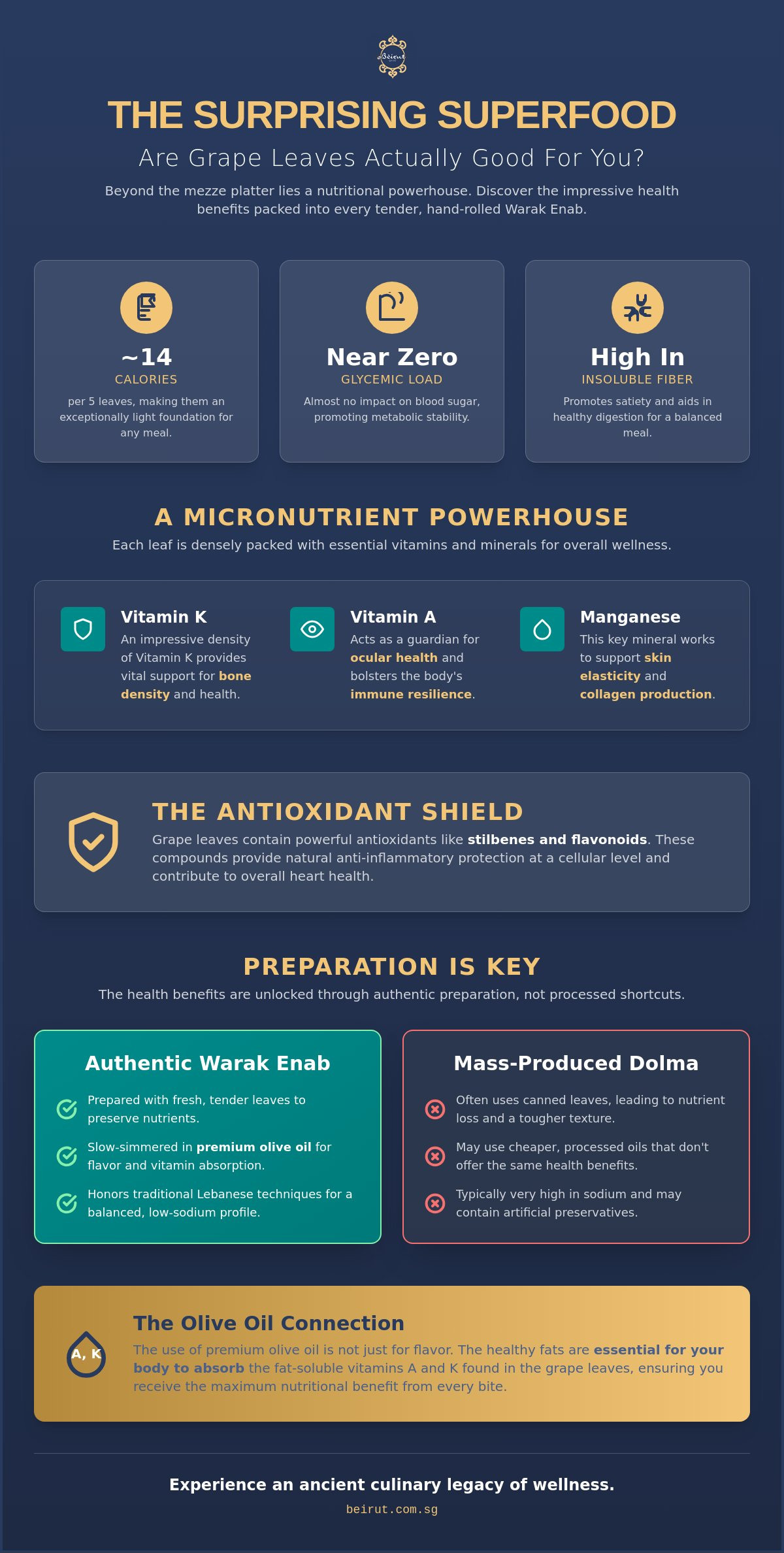
The nutritional profile of these leaves is a study in efficiency. Five of these delicate, hand-rolled leaves contain approximately 14 calories, a figure that highlights their status as an exceptionally light foundation for a prestigious meal. This Nutritional Overview of Grape Leaves underscores how their historical role as a dietary staple is backed by a complex chemical composition. Unlike heavier appetizers that might weigh down the palate, Warak Enab provides a high fiber-to-calorie ratio. This specific structure promotes early satiety, allowing you to enjoy the full breadth of a Lebanese feast while maintaining a sense of lightness and well-being.
A Low Glycemic Index Superfood
In a world where many appetizers cause a rapid spike in blood sugar, grape leaves stand apart as a beacon of metabolic stability. They possess a glycemic load of nearly zero, which means they’ve almost no impact on your glucose levels. This makes them an ideal choice for those focused on insulin sensitivity or long-term weight management. Glycemic Load is a ranking system for carbohydrate-containing foods that measures how much a specific serving size of food raises blood sugar levels. By choosing Warak Enab as your prelude to a Mixed Grill, you’re setting a balanced stage for the richer, charcoal-grilled flavors to follow. It’s a thoughtful way to indulge in heritage without compromising your wellness goals.
The Fiber Factor in Mezze
The secret to the satisfying nature of a traditional Lebanese spread often lies in the high concentration of insoluble fiber found in these leaves. While common greens like spinach or kale are frequently lauded for their roughage, grape leaves offer a unique, sturdy texture that holds up beautifully to slow simmering in premium olive oil and fresh herbs. This fiber doesn’t just aid in digestive regularity; it acts as a natural pace-setter for your dining experience. By slowing the absorption of accompanying mezze dishes like Hummus or Moutabal, the fiber ensures you reach a comfortable level of fullness. It’s a functional elegance that allows you to immerse yourself in our culture’s hospitality while supporting a modern, healthy lifestyle.
A Nutritional Powerhouse: Essential Vitamins and Minerals
Beyond the delicate texture and tangy profile of our hand-rolled Warak Enab, the true allure of these leaves lies in their concentrated micronutrient profile. When guests ask are grape leaves good for you, they’re often looking for a justification to indulge in another serving. The answer is found in the dense, fat-soluble vitamins tucked within each leaf. These emerald wrappers are remarkably high in fiber, folate and vitamins A and K, providing a foundation for wellness that few other greens can match. Vitamin A acts as a silent guardian for ocular health and immune resilience, while Manganese works to support skin elasticity and collagen production. This mineral is particularly vital for those who appreciate the intersection of culinary tradition and modern skincare science.
In the Lebanese kitchen, we never serve these leaves bare. The traditional preparation of Warak Enab involves a gentle simmering in premium olive oil. This isn’t merely a choice of flavor; it’s a piece of culinary wisdom passed down through generations. The healthy fats in the oil are essential for the body to absorb the fat-soluble vitamins, specifically Vitamin A and Vitamin K, found in the leaf’s fibers. This natural synergy ensures that every bite is as bio-available as it is delicious. It’s a sophisticated way to nourish the body while honoring the heritage of the Levant.
The Role of Vitamin K and Bone Longevity
Vitamin K is often the unsung hero of the regional diet, playing a critical role in bone mineralization and effective blood clotting. If you’re wondering are grape leaves good for you, consider that a standard serving of five leaves can provide nearly 30% of your daily required intake of this vital nutrient. When these leaves are enjoyed alongside a selection of our Grilled Halloumi, the calcium from the cheese and the Vitamin K from the leaves create a prestigious partnership for bone longevity. It’s a functional elegance that supports the body’s structure through simple, time-honored ingredients.
Iron and Magnesium: Energy and Recovery
For the active individual, grape leaves serve as an exceptional functional recovery food. They contain plant-based iron, which is vital for oxygen transport and maintaining energy levels throughout a busy day. While plant iron is sometimes more difficult for the body to process, our traditional recipe includes a generous infusion of fresh lemon juice. The Vitamin C in the citrus acts as the necessary catalyst for iron absorption. Additionally, the magnesium content helps soothe muscle tension and manage the stresses of modern life. This makes Warak Enab more than just an appetizer; it’s a curated source of vitality that prepares you for the feast ahead.
Therapeutic Benefits: Anti-Inflammatory and Heart Health
While the vibrant tang of a hand-rolled Warak Enab delights the palate, the true mastery of this dish lies in its invisible biological shield. When guests at Beirut Grill explore our cold mezze, they often ask, are grape leaves good for you in a way that transcends simple nutrition? The answer is found in a sophisticated array of stilbenes and flavonoids. These phytochemicals act as the architects of the leaf’s therapeutic power, offering a level of cellular protection that few other greens can claim. Recent research from 2024 has measured total phenolic levels in fresh leaves as high as 14.22 mg/g, a concentration that positions this Levantine staple as a premier source of dietary antioxidants.
The beauty of these compounds is their ability to combat oxidative stress, the silent driver of cellular aging and chronic disease. According to the Nutritional and Phytochemical Composition of Grape Leaves, the high antioxidant capacity found in the foliage supports the body’s natural defense systems. By choosing authentic Lebanese preparations, you’re not just enjoying a heritage recipe; you’re engaging in a functional dining experience that rewards your curiosity with genuine heart-protective benefits. It’s a testament to the wisdom of our ancestors, who recognized the vine’s leaves as a source of vitality long before modern labs confirmed their chemical complexity.
Combatting Chronic Inflammation
The Mediterranean diet has long been celebrated for its ability to lower systemic inflammation, a benefit deeply rooted in the consumption of polyphenols. Grape leaves specifically target inflammatory pathways, quieting the biological markers associated with chronic discomfort. Antioxidants function as biological scavengers that neutralize unstable free radicals before they can damage healthy cells. This protective action is particularly effective when the leaves are prepared with the premium olive oil we’ve sourced at Beirut Grill since 2009, as the healthy fats further enhance the anti-inflammatory response within the body.
Support for Venous Insufficiency
In traditional Levantine medicine, grape leaf extracts were often used to treat swelling and the sensation of “heavy legs.” Modern science now validates these ancient remedies, highlighting the leaf’s ability to improve circulation and support venous health. The flavonoids in the leaves help strengthen the walls of the veins, reducing leakage and swelling in the lower extremities. If you’ve ever wondered are grape leaves good for you from a cardiovascular perspective, their ability to promote healthy blood flow and protect the lining of the heart’s vessels provides a resounding confirmation. This makes Warak Enab an essential, heart-healthy beginning to any prestigious meal.
Warak Enab vs. Generic Dolma: The Healthiest Preparation
When you encounter stuffed leaves in a supermarket, they’re often presented in heavy tins, submerged in industrial brines and low-grade vegetable oils. While convenient, these mass-produced versions rarely allow the question are grape leaves good for you to be answered with a resounding yes. The high sodium content and preservatives used in commercial canning can overshadow the leaf’s natural vitality. At Beirut Grill, we approach this dish as a labor-intensive craft. Authentic Lebanese Warak Enab is defined by its freshness, where the integrity of the leaf is protected by the quality of the ingredients tucked inside.
The true distinction lies in the “Zait” method. In the Levant, “B’zeit” translates to “in oil,” referring to the vegetarian preparation served cold as part of a prestigious mezze spread. Unlike the meat-filled versions, these are simmered slowly in a vibrant mixture of fresh lemon juice and premium olive oil. This slow-cooking process allows the leaves to soften while absorbing heart-healthy fats, creating a texture that’s indulgent without being heavy. We’ve stayed true to these traditional techniques since 2009, ensuring that every hand-rolled leaf remains a vessel for wellness rather than a source of hidden additives.
A common concern for health-conscious diners is the “rice objection.” In a generic dolma, rice often serves as a cheap filler. However, a traditional Lebanese recipe reverses this priority. We use a generous ratio of finely chopped parsley, sun-ripened tomatoes, and onions, where the rice acts merely as a light binder. This ensures each bite is packed with:
- Parsley: A concentrated source of Vitamin C and antioxidants.
- Tomatoes: Rich in lycopene for heart health.
- Onions: Providing quercetin for natural immune support.
The Importance of Premium Olive Oil
The quality of the oil is the deciding factor in the nutritional value of the dish. We use only premium olive oil, which is rich in monounsaturated fats that facilitate the absorption of the leaf’s fat-soluble vitamins. This commitment to quality is what defines the best Mediterranean food in Singapore. Without these healthy fats, your body can’t fully access the Vitamin K and Vitamin A we discussed earlier, making the choice of oil a critical health decision.
Fresh Herbs: More Than Just Flavour
The infusion of fresh mint and parsley provides more than just a cooling aroma; these herbs possess natural antimicrobial properties that support digestive health. We balance this with a heavy hand of fresh lemon juice, which acts as a natural preservative and provides a significant Vitamin C boost. This sharp, citrusy profile eliminates the need for the excessive salt found in commercial versions. Experience the vibrant, clean flavors of our authentic, hand-rolled Warak Enab at Beirut Grill for a truly healthy start to your meal.
Experiencing Authentic Wellness at Beirut Grill
While the clinical data confirming are grape leaves good for you is undeniably persuasive, the true essence of this superfood is best understood through the act of dining. At Beirut Grill, we believe that nutrition shouldn’t be a clinical pursuit but a celebrated part of a prestigious cultural journey. Our hand-rolled Warak Enab represents a commitment to these ideals, serving as a vibrant bridge between ancient Levantine wisdom and your modern wellness goals. Since 2009, we’ve stood as custodians of these heritage-rich recipes, ensuring that every leaf we serve preserves the nutritional integrity and evocative flavors of our homeland.
Imagine the scene as a curated platter of cold mezze arrives at your table, the emerald sheen of the grape leaves catching the soft light of our atmospheric dining room. This experience is designed to slow you down, inviting you to savor the complexity of our premium olive oil and the sharp brightness of fresh lemon. It’s a setting that rewards your curiosity, offering a physical environment that mirrors the health-giving properties of the cuisine itself. By choosing to dine with us, you’re embracing a lifestyle that values both the physical benefits of the Mediterranean diet and the soul-nourishing power of authentic hospitality.
A Legacy of Authentic Lebanese Hospitality
Our kitchen operates within a strictly pork-free environment, upholding the clean dietary standards that are central to our identity. This dedication to traditional techniques allows us to offer an experience that feels both exclusive and deeply authentic. For those seeking to deepen their understanding of our culinary landscape, we invite you to explore our wider perspective on Middle Eastern food in Singapore. It’s a journey through a world where every ingredient is selected for its quality and its story.
The Perfect Healthy Start
We recommend Warak Enab as the quintessential healthy start to a balanced feast. To maximize your nutritional intake, consider pairing these antioxidant-rich leaves with our lean, charcoal-grilled proteins like Shish Taouk. This combination provides a perfect harmony of complex carbohydrates, healthy fats, and high-quality protein. Your meal can be further enriched with other nutrient-dense staples from our cold mezze selection, such as our silky Hummus or the herb-heavy Tabbouleh. Reserve your table at Beirut Grill to experience authentic Warak Enab and discover a new standard for sophisticated, health-conscious dining.
Embrace the Heritage of Levantine Wellness
The journey from the sun-drenched vine to the hand-rolled perfection of Warak Enab reveals a truth known to Lebanese families for centuries. These emerald leaves are more than a culinary vessel; they’re a concentrated source of vitality that bridges the gap between ancient tradition and modern health. By understanding the dense concentration of Vitamin K and the potent anti-inflammatory stilbenes found within, the answer to are grape leaves good for you becomes a cornerstone of your lifestyle. Authentic preparation is the final, essential key to unlocking these therapeutic benefits without the interference of industrial additives.
Since 2009, we’ve remained dedicated to the traditional, pork-free standards that define true Levantine hospitality. We invite you to experience the sensory allure of our cold mezze, where every leaf is expertly crafted using premium olive oil and the freshest herbs. It’s time to reward your curiosity with a meal that nourishes both the body and the spirit in a setting of refined elegance. Indulge in Authentic Lebanese Mezze at Beirut Grill and begin your own chapter of this healthy, heritage-rich story today.
Frequently Asked Questions
Are stuffed grape leaves high in calories?
Stuffed grape leaves are remarkably low in calories, especially when prepared in the traditional Lebanese “B’zeit” style. A single hand-rolled leaf typically contains between 30 and 45 calories. Our recipe at Beirut Grill favors a high volume of fresh parsley and sun-ripened tomatoes, ensuring the rice remains a light binder rather than a heavy filler. This balance allows you to indulge in several rolls while maintaining a light and sophisticated palate.
Can grape leaves help with weight loss?
These leaves are an exceptional ally for weight management because of their high fiber content and low energy density. The insoluble fiber expands slightly in the digestive tract, which signals to the brain that you’re satisfied earlier in the meal. By starting your dinner with our Warak Enab, you naturally reduce the urge to overindulge in heavier courses later. It’s a functional way to enjoy our heritage while supporting your wellness goals.
Are grape leaves suitable for a keto or low-carb diet?
Grape leaves fit comfortably into most low-carb lifestyles, though strict keto followers should enjoy them in moderation. While the traditional stuffing includes a small amount of rice, the high fiber content helps mitigate the impact on your daily carb count. If you’re wondering are grape leaves good for you while on keto, they provide essential minerals and healthy fats from olive oil that are vital for metabolic stability.
What is the difference between Lebanese Warak Enab and Greek Dolmades?
Do grape leaves contain a lot of sodium?
Authentic, freshly prepared grape leaves contain very little sodium compared to the mass-produced versions found in tins. We avoid the harsh chemical brines used in industrial canning, relying instead on fresh herbs and citrus to create a deep, resonant flavor. This makes our Warak Enab a safe and delicious option for guests who are mindful of their salt intake or blood pressure. It’s the difference between a processed shortcut and a heritage craft.
Are grape leaves good for people with diabetes?
These leaves are highly recommended for those managing diabetes because they possess a glycemic load of nearly zero. They don’t cause the rapid blood sugar spikes associated with many other appetizers. The presence of fiber further slows the digestion of the meal, providing a steady release of energy. It’s a sophisticated choice that ensures every guest can participate in the joy of a shared Lebanese meal without compromising their health.
Can I eat grape leaves if I have a gluten intolerance?
Yes, our Warak Enab is naturally gluten-free and safe for guests with celiac disease or gluten intolerances. The traditional stuffing is composed entirely of rice, fresh vegetables, and aromatic herbs. We take great pride in maintaining a clean, pork-free kitchen where heritage recipes are prepared with the utmost care. This ensures that every guest can experience the physical and cultural benefits of our cuisine without concern for hidden grains.
How many grape leaves should I eat for health benefits?
Consuming five to seven leaves as part of a mezze spread is sufficient to enjoy their significant health benefits. This serving size provides a potent dose of Vitamin K and antioxidants without being overly filling. If you’re asking are grape leaves good for you in specific quantities, this amount offers a perfect balance of micronutrients to complement your main course. It’s a thoughtful way to begin your journey through our menu.