
Imagine a sun-drenched afternoon where the air is thick with the scent of charcoal and spices, and a platter of golden, hand-crafted pastries arrives at your table. You reach for a stuffed parcel, but a question lingers: what if the very soul of the dish changes with the simple fold of the dough? Many enthusiasts of Middle Eastern cuisine find themselves pausing at this crossroads, wondering are fatayer and sambousek the same or if they offer entirely different sensory experiences. It’s a natural curiosity, especially when both represent the pinnacle of Lebanese hospitality and culinary artistry.
In this connoisseur’s guide, you’ll discover the nuanced differences in dough, filling, and heritage that distinguish these two iconic pillars of the mezze table. We’ll demystify the confusion between fried precision and baked airiness, ensuring you never fear ordering a redundant spread again. From the tang of hand-crafted Spinach Fatayer to the savory depth of a Lamb Sambousek, we provide the knowledge needed to distinguish them by sight and taste. You’ll also learn how to pair these delicacies with traditional beverages like Arak or Lebanese wine to elevate your next authentic cultural journey.
Key Takeaways
- Distinguish between the airy, oven-baked yeast dough of Fatayer and the thin, golden-fried crunch of unleavened Sambousek.
- Identify signature fillings like the tart spinach and pine nuts in Fatayer versus the savory, spiced minced lamb found in Sambousek.
- Resolve the common confusion over are fatayer and sambousek the same by understanding their unique roles and textures in the traditional Lebanese mezze.
- Master the art of the mezze table by pairing these warm pastries with refreshing dishes like Hummus and Tabbouleh for a perfectly balanced palate.
- Discover the cultural significance of these hand-crafted staples and their place in the heritage-rich dining experience at Beirut Grill since 2009.
Defining the Pillars of the Lebanese Mezze Table
Step into any home or restaurant in the Levant, and you’ll find that the table isn’t merely a place to eat; it’s a stage for a profound social ritual. At the center of this experience lies the mezze, a curated collection of small plates designed to encourage lingering conversation and shared joy. Among the most beloved items are the stuffed pastries that guests often find themselves debating. A common question arises when these golden parcels arrive: are fatayer and sambousek the same, or do they represent distinct culinary philosophies? To the untrained eye, they might appear as simple stuffed dough, but they serve as essential, contrasting pillars of the Lebanese culinary heritage.
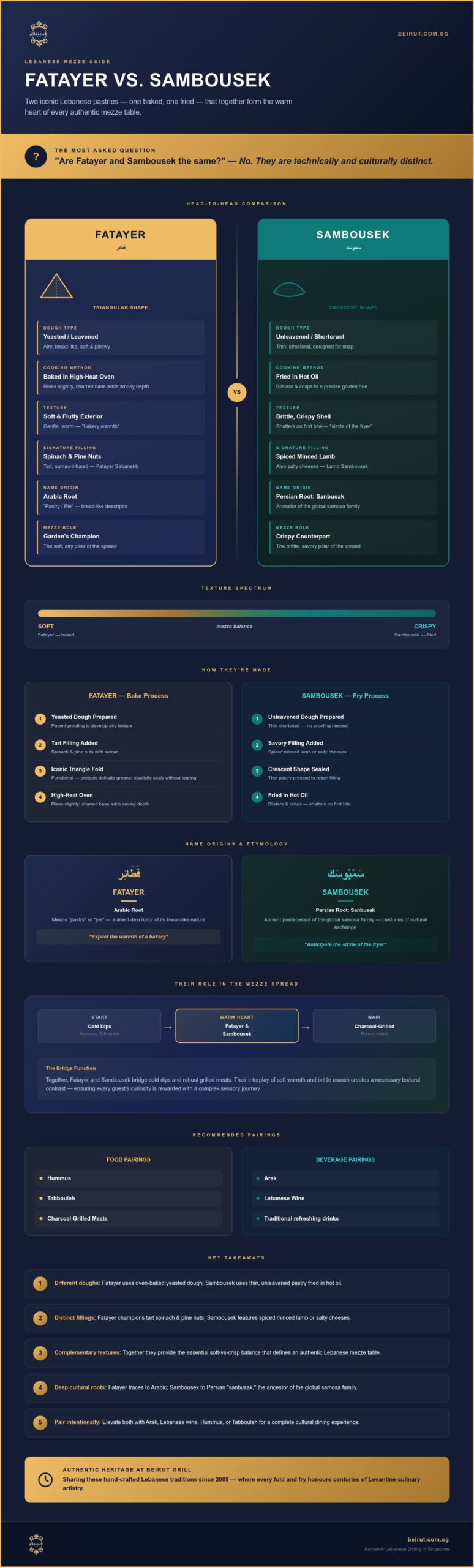
A fatayer is fundamentally defined by its soft, pillowy yeast dough. Typically baked in a high-heat oven, these triangular or crescent-shaped pies are the garden’s champions, often cradling tart spinach or zesty herbs. In contrast, the sambousek is the mezze’s crispy counterpart. It features a thinner, unleavened pastry that’s traditionally fried to a precise golden hue, offering a satisfying crunch that gives way to indulgent fillings of spiced minced lamb or salty cheeses. While both are convenient “pocket” foods, their presence on the table is strategic, providing a necessary balance between the soft and the crisp.
The Etymology of Levantine Pastries
Language offers a map of a dish’s historical journey across the Middle East. The word “Fatayer” is derived from the Arabic root for pastry or pie, a direct descriptor of its bread-like nature. Meanwhile, “Sambousek” shares its linguistic ancestry with the Persian sanbusak, the ancient predecessor to the global samosa family. These names aren’t just labels; they signal the preparation style. When you hear “fatayer,” expect the warmth of a bakery; when you hear “sambousek,” anticipate the sizzle of the fryer. Understanding these roots helps connoisseurs appreciate the centuries of cultural exchange that have refined these recipes since Beirut Grill first began sharing these traditions in 2009.
Mezze: More Than Just Appetizers
The philosophy of the mezze spread is rooted in the art of hospitality. It’s a deliberate progression of flavors and textures designed to stimulate the palate. Within this framework, fatayer and sambousek act as the “warm heart” of the feast. They bridge the gap between cold dips like Hummus and the robust, charcoal-grilled meats that follow. An authentic spread demands variety. The soft, yeasted bite of a Spinach Fatayer provides a gentle contrast to the brittle, savory shell of a Lamb Sambousek. This interplay of temperatures and textures ensures that every guest’s curiosity is rewarded with a complex, sensory journey that celebrates the richness of Lebanese culture.
The Technical Distinction: Dough Composition and Cooking Methods
To understand why those who ask are fatayer and sambousek the same are often met with a knowing smile from a chef, one must look closely at the dough. The secret lies in the foundation. Fatayer relies on a living, breathing yeast dough. It requires a patient proofing process to develop its signature airy texture, resulting in a bread-like pocket that remains soft even after its journey through a high-heat oven. This yeasted base is essential for absorbing the bright juices of the filling without losing its structural integrity. While guests often wonder are fatayer and sambousek the same, the difference is clear once you touch the dough.
Sambousek follows a different path toward perfection. Its dough is typically unleavened, leaning toward a shortcrust or very thin pastry that prioritizes structural snap over bread-like volume. Instead of the oven’s dry heat, it finds its destiny in hot oil. This frying process causes the thin layer to blister and crisp, creating a brittle, savory shell that shatters delightfully upon the first bite. While both might look like simple stuffed pastries, they represent technically distinct masterpieces of Levantine culinary engineering.
The Mastery of the Bake: Fatayer Sabanekh
The iconic triangular fold of the spinach fatayer isn’t just for aesthetics; it’s a functional design that protects the delicate greens inside. A yeasted dough is vital here because it provides the elasticity needed to stretch and seal the tart filling without tearing. When placed in a high-heat oven, the dough rises slightly, creating a soft, pillowy exterior with a characteristic charred base that adds a whisper of smoky depth. Fatayer Sabanekh is a baked Levantine triangle with a tart, sumac-infused heart.
The Science of the Crunch: Fried Sambousek
If the fatayer is about the soft embrace of bread, the sambousek is about the thrill of the crunch. The thin, unleavened dough reacts instantly to the heat of oil, sealing the juices of spiced lamb or salty cheese within a golden, blistered armor. The meticulous crimp or braid along the edge is more than a decorative touch; it’s a structural necessity to prevent the filling from escaping during the rapid frying process. This traditional method achieves a textural contrast that is essential to the mezze experience, providing a sharp, savory counterpoint to the velvet-smooth dips found on a traditional Lebanese table.
A Symphony of Fillings: From Tart Spinach to Savory Lamb
While the architecture of the dough sets the stage, the true soul of these pastries resides in their meticulously curated fillings. If you find yourself still wondering are fatayer and sambousek the same, the answer is revealed the moment the steam rises from a broken crust. One represents the bright, sun-soaked gardens of the Levant, while the other embodies the rich, savory indulgence of a heritage-rich feast. This distinction in flavor profile is as vital as the cooking method itself, ensuring that each bite offers a unique sensory reward for the curious diner.
The contrast between these two pillars is a deliberate choice in Lebanese hospitality. By offering both, a host provides a spectrum of taste that ranges from the acidic and refreshing to the warm and indulgent. This variety is what transforms a simple meal into a prestigious event, a philosophy we have upheld at Beirut Grill since 2009. Whether you lean toward the botanical or the robust, understanding the ingredients within is the key to mastering the mezze table.
The Zesty Soul of Spinach Fatayer
The Spinach Fatayer stands as a masterclass in botanical balance. To create this iconic dish, fresh spinach leaves are hand-selected and wrung dry with precision, ensuring the yeasted dough remains pillowy rather than soggy. The secret to its vibrant profile is a heavy hand of sumac, a traditional spice that offers a sharp, citrusy tartness that dances on the palate. This acidity is perfectly countered by the addition of golden pine nuts, which provide a buttery, toasted finish and a sophisticated textural contrast. It’s an essential choice for those who value a lighter, vegetable-forward beginning to their culinary journey.
Lamb and Cheese: The Richness of Sambousek
In contrast, the Sambousek is a vessel for deep, savory complexity. The traditional lamb version features premium minced meat sautéed with translucent onions and a bespoke blend of Baharat. This Middle Eastern seven-spice mixture, containing notes of allspice, cloves, and cinnamon, infuses the meat with a warmth that lingers beautifully. For a different kind of indulgence, the cheese-filled variant utilizes salty blends of Halloumi or Feta, resulting in a molten interior that yields satisfyingly to the tooth. When these rich fillings meet the brittle, golden-fried shell, they create a concentrated “flavor bomb” that provides a robust counterpoint to lighter appetizers.
The Art of the Mezze: When to Choose Fatayer vs. Sambousek
To curate a truly authentic Levantine experience, one must look beyond individual ingredients and embrace the symphony of the spread. Guests frequently ask are fatayer and sambousek the same when faced with a menu of stuffed treasures. While we’ve explored their technical differences, their true brilliance is revealed through their placement within the meal. A balanced mezze table should feature both to provide a necessary variety of textures; the soft, pillowy rise of a Fatayer acts as a gentle companion to the brittle, golden snap of a Sambousek. This interplay is what defines the prestigious dining culture we’ve cultivated since 2009.
Begin your journey by pairing the Spinach Fatayer with cold mezze such as Hummus or a bright, citrusy Tabbouleh. The tartness of the sumac in the pastry echoes the lemon in the salads, creating a refreshing start. As the meal progresses toward the charcoal-grilled mains, the Sambousek takes center stage. Its savory, spiced lamb filling provides a cohesive bridge to robust dishes like Shish Taouk or Lamb Kofta. This progression ensures the palate is continually engaged by shifting temperatures and intensities, rewarding the visitor’s curiosity with every bite.
Pairing with Lebanese Spirits and Wine
The choice of beverage is a ritual that elevates the meal from a simple dinner to a prestigious occasion. Arak, with its distinct anise notes, is the traditional partner for the herb-heavy Fatayer; the spirit’s milky finish cuts through the acidity of the spinach. For the indulgent Lamb Sambousek, we recommend a robust Lebanese Red from the Bekaa Valley. These wines possess the structure to stand up to the warm spices of the Baharat. To conclude the savory portion of the feast, a glass of Moroccan Mint Tea serves as an elegant palate cleanser, preparing you for the sweetness of Kunefe.
Etiquette and Sharing the Feast
Authentic Lebanese dining follows a deliberate order of operations. We always serve cold mezze first to awaken the senses, followed by hot mezze like Fatayer and Sambousek. Many newcomers wonder are fatayer and sambousek the same in terms of etiquette, but both are designed for effortless sharing. In a traditional setting, it’s perfectly respectful to use your hands; breaking a warm pastry in half allows the aroma to escape, heightening the sensory experience. These pastries aren’t just appetizers; they’re essential sides that complete a Mixed Grill experience. To witness this mastery of flavor first-hand, we invite you to book a table at Beirut Grill and immerse yourself in our heritage.
Experiencing Authentic Heritage at Beirut Grill
Since our doors first opened in 2009, Beirut Grill has stood as a bastion of Levantine culture, inviting guests to transcend the ordinary and immerse themselves in the rich tapestry of Middle Eastern flavors. While theoretical knowledge helps answer the question are fatayer and sambousek the same, the true distinction is best understood through the senses. As you enter, the evocative aroma of our charcoal-grilled kitchen greets you, mingling with the comforting scent of freshly baked yeast dough rising in the oven. We take immense pride in our pork-free menu, ensuring that every national diner can enjoy our authentic offerings within a warm, sophisticated environment designed to transport the guest to the heart of Beirut.
A Legacy of Lebanese Hospitality
Our kitchen is a sanctuary of tradition where every Spinach Fatayer and Sambousek is meticulously hand-crafted by seasoned experts. Our chefs employ centuries-old techniques to fold each pillowy triangle and braid every golden half-moon with artisanal precision. We believe that true authenticity begins with the source. This is why we curate premium, imported ingredients, from the sharpest sumac to specialized Lebanese cheeses, ensuring every bite resonates with the weight of heritage. By balancing professional culinary authority with the hospitality of a refined host, we position ourselves as more than a restaurant; we are a prestigious destination for those seeking a sensory journey through the physical and culinary landscape of the Middle East.
Your Invitation to the Table
Whether you’re hosting an elegant corporate dinner or a milestone celebration, the full mezze spread offers a social ritual that encourages connection and indulgence. Our Lamb Sambousek serves as the ultimate savory companion to our signature Mixed Grill, providing a brittle, golden contrast to the tender, charcoal-infused meats. We invite you to explore our comprehensive menu, moving from the velvet-smooth textures of Hummus to the warm, spiced heart of our pastries. For those looking to deepen their appreciation of this vibrant culinary landscape, our Mediterranean Food in Singapore Guide offers further insights into the heritage and flavors that define our table. Your curiosity is rewarded here through elevated flavors and seasoned expertise.
Master the Art of the Lebanese Mezze Table
As the aromatic steam of the charcoal grill fades and the last notes of Arak linger, you now possess the refined knowledge to navigate the nuances of the Levantine table with absolute confidence. You’ve discovered that the airy, oven-baked yeast dough of the Fatayer and the golden, fried precision of the Sambousek are not merely variations of a theme, but essential, contrasting pillars of a true feast. While guests often ask are fatayer and sambousek the same, you understand that one celebrates the bright, sumac-infused garden while the other embodies savory, spiced indulgence. This mastery of texture and flavor is what distinguishes a simple meal from a prestigious culinary journey.
Since 2009, we have curated these heritage-rich experiences for those seeking an authentic cultural odyssey. Our pork-free menu ensures a welcoming environment for every guest, while our hand-picked selection of Lebanese wines and Arak provides the perfect accompaniment to our hand-crafted pastries. We invite you to reward your curiosity and experience this sensory allure first-hand at our table. Book Your Authentic Lebanese Feast at Beirut Grill and let us transport you through the timeless, indulgent flavors of Lebanon.
Frequently Asked Questions
Is Fatayer always triangular and Sambousek always half-moon shaped?
While these are the traditional silhouettes, variations do exist across regional households. The triangular fold of the Fatayer is specifically designed to keep the moist spinach filling from escaping during the bake. Sambousek is typically shaped into a half-moon with a decorative crimped or braided edge. This seal is crucial for protecting the savory lamb or cheese while it fries to a perfect golden crunch.
Are Fatayer and Sambousek suitable for vegetarians?
Yes, both offer delightful options for those on a plant-based diet. Spinach Fatayer is the quintessential vegetarian choice, featuring a tart blend of greens and pine nuts. For Sambousek, the cheese-filled version provides a savory, salty interior that is entirely meat-free. At Beirut Grill, we ensure our pastries are prepared with traditional techniques and a pork-free menu, making them accessible to a wide range of national diners.
What is the difference between Fatayer and Sfiha?
The primary distinction lies in the presentation and the dough. While people often wonder are fatayer and sambousek the same, Sfiha is a different category altogether. Fatayer is a closed, stuffed pastry that hides its filling within a yeasted pocket. Sfiha, often called Lahm bi Ajeen, is an open-faced meat pie where the spiced lamb is spread directly onto a thin, flatbread-like base before baking.
Can Sambousek be baked instead of fried?
Sambousek can be baked for a lighter alternative, though it won’t have the signature brittle crunch of the traditional version. Frying is the heritage-rich method that creates the golden, blistered shell essential to the mezze experience. If you choose to bake them at home, brushing the dough with a little oil or egg wash will help achieve a deeper color, though the texture will remain softer than the authentic fried variety.
What are the most common spices used in Lebanese pastries?
Lebanese pastries rely on a sophisticated palette of regional spices to achieve their depth. Sumac is the star of the Fatayer, providing a sharp, citrusy acidity that cuts through the bread-like dough. For meat-filled pastries like Lamb Sambousek, we use Baharat, a traditional seven-spice blend. This mixture typically includes allspice, black pepper, cinnamon, cloves, cumin, coriander, and nutmeg, creating a warm and evocative aroma that defines our authentic kitchen.
How should I store and reheat Fatayer or Sambousek at home?
To preserve their integrity, store these pastries in an airtight container in the refrigerator for up to three days. When reheating, avoid the microwave as it can make the dough rubbery. Instead, use an oven or air fryer at 180°C for a few minutes. This method restores the soft rise of the Fatayer and the brittle snap of the Sambousek, ensuring the sensory experience remains as close to a fresh restaurant serving as possible.
Are these pastries served as a main course or an appetizer?
These delicacies are traditionally served as part of a mezze, which functions as a collection of appetizers or small sharing plates. In Lebanese culture, they are the warm heart of the spread, enjoyed before the main charcoal-grilled meats. While they aren’t typically a standalone main course, incorporating them into a comprehensive feast with Hummus, Tabbouleh, and a Mixed Grill creates a substantial and heritage-rich dining experience for any occasion.
What is the best sauce to dip Sambousek in?
While many connoisseurs prefer to enjoy Sambousek plain to appreciate the spiced meat or salty cheese, they pair beautifully with creamy accompaniments. A dollop of Labneh or a light garlic sauce can provide a cooling contrast to the warm, fried pastry. At Beirut Grill, we find that the flavors are already so robust that they stand alone, though they are often enjoyed alongside refreshing sips of Arak or a crisp Lebanese wine.