
What if the most sophisticated plant-based dining experience isn’t found in a modern laboratory, but within the sun-drenched heritage of the Levant? Many guests seeking high-quality vegan food often find themselves choosing between uninspired “fake meat” burgers or sterile, casual cafes that lack the soul of a true culinary destination. It’s a common frustration to settle for a meal that feels like a dietary compromise rather than a prestigious cultural event.
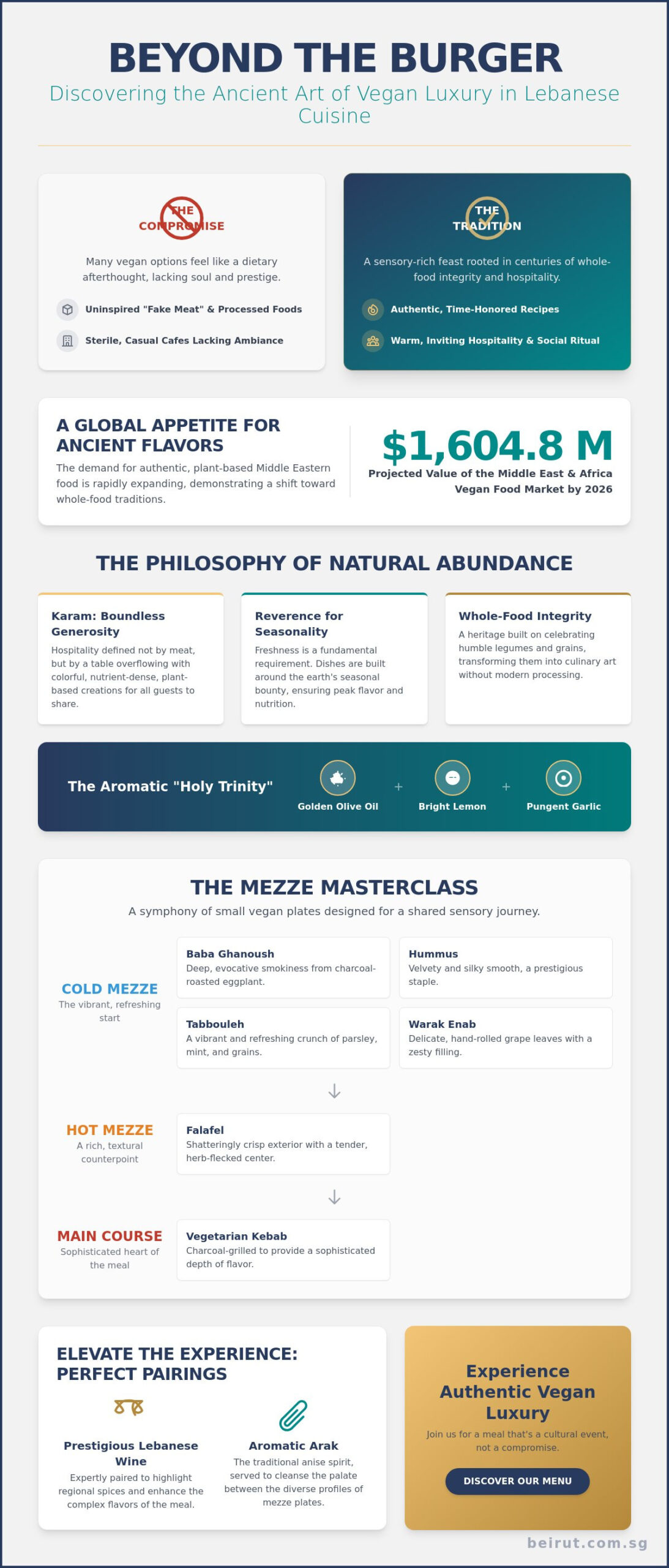
We believe you deserve a sensory-rich experience where health and indulgence coexist in a setting of warm, inviting hospitality. This guide will show you how centuries of Lebanese tradition offer the world’s most authentic plant-based dining, rooted in a deep respect for seasonal bounty. With the Middle East and Africa vegan food market valued at 1,604.8 million dollars in 2026, the global appetite for these ancient flavors is clearer than ever. You’ll discover the prestigious history behind staples like velvety Baba Ghanoush and hand-rolled Warak Enab, learning how to enjoy a meal that’s both healthy and deeply satisfying. From the first pour of Lebanese Coffee to the vibrant crunch of Fattoush, we’re inviting you on a journey through a heritage that celebrated the power of plants long before it became a modern global movement.
Key Takeaways
- Uncover the ancient Levantine traditions that transform humble legumes and grains into a prestigious foundation for modern plant-based excellence.
- Master the art of the mezze ritual, learning how to balance the sensory profiles of authentic vegan food such as smoky Baba Ghanoush and vibrant Tabbouleh.
- Discover how charcoal grilling techniques elevate hearty dishes like the Vegetarian Kebab, providing a sophisticated depth of flavor that rivals any traditional main course.
- Learn to enhance your meal with expert pairings of prestigious Lebanese Wine and aromatic Arak, designed to cleanse the palate and highlight regional spices.
- Gain insights into identifying an authentic dining environment, where a commitment to heritage and traditional recipes creates a truly inclusive and indulgent atmosphere.
The Ancient Roots of Plant-Based Excellence in Lebanese Cuisine
Nestled between the azure Mediterranean and the rugged peaks of Mount Lebanon, the Levant has spent millennia perfecting the art of the plant-based feast. To understand the true depth of vegan food, one must look back to these fertile valleys where legumes and grains were never just basic sustenance. They were the foundation of a civilization’s culinary pride. While much of today’s market is saturated with highly processed meat substitutes, the heritage of Lebanese cuisine offers a refreshing return to whole-food integrity. This is a tradition where the earth’s bounty is treated with the same reverence as the finest silks or rare spices.
In the heart of a Lebanese home, hospitality is governed by the spirit of karam, a sense of boundless generosity. This abundance isn’t measured by the presence of meat. Instead, it’s defined by a table overflowing with colorful, nutrient-dense creations that naturally invite every guest to the feast. It’s an inclusive philosophy that has always placed the guest’s comfort and the land’s health at the center of the dining experience, long before modern dietary labels existed.
The Philosophy of Natural Abundance
The Lebanese kitchen operates with a reverent focus on seasonality. Freshness isn’t a modern marketing buzzword; it’s a fundamental requirement. The “holy trinity” of golden olive oil, bright lemon, and pungent garlic serves as the aromatic backbone for nearly every dish, creating a profile that is both light and deeply satisfying. Because the region’s culinary evolution was never centered on pork dishes, chefs and home cooks alike redirected their creative energy toward elevating the garden’s bounty. This historical focus transformed simple vegetables into high-status culinary art, proving that true luxury doesn’t require animal products.
Heritage Beyond the Modern Trend
Consider the humble chickpea or the earthy lentil. These staples have graced the tables of prestigious ancient feasts for millennia. They weren’t mere side dishes. They were the stars of the show. Techniques like slow-simmering in traditional vessels or charcoal-roasting over open flames imbue these ingredients with a smoky, evocative complexity that modern processing simply cannot replicate. Each bite of velvety Hummus or a hearty, grain-based dish carries the weight of this ancestral history. Today, the presence of Middle Eastern food in Singapore serves as a bridge to this ancient past, inviting a new generation of connoisseurs to experience true plant-based luxury. By choosing these time-honored recipes, you aren’t just following a trend; you’re participating in a sophisticated legacy of vegan food that prioritizes wellness and flavor.
The Mezze Masterclass: A Symphony of Small Vegan Plates
To dine in the Lebanese tradition is to embrace the mezze, a curated ritual that transcends the simple act of eating. It’s a sophisticated social experience where the table becomes a vibrant canvas of colors, textures, and aromas. Unlike the solitary “vegan burger” found in many modern establishments, a true Lebanese spread is deeply rooted in plant-based traditions, offering a staggered progression of flavors designed to be shared and savored over hours. This communal approach transforms vegan food into a prestigious event, where each small plate tells a story of regional pride and seasonal abundance.
The journey usually begins with cold mezze, where the contrast between the silkiness of Hummus and the deep, evocative smokiness of Baba Ghanoush sets the stage. As the meal progresses, hot mezze arrive to provide a textural counterpoint. The authentic Falafel, for instance, offers a shatteringly crisp exterior that gives way to a tender, herb-flecked center. These dishes aren’t merely appetizers; they’re the heart of the meal, demonstrating that plant-derived ingredients can achieve a level of complexity usually reserved for high-end gastronomy. To truly appreciate this balance, one should experience the expertly curated selection at Beirut Grill, where every plate reflects a commitment to heritage.
The Art of the Dip: Hummus and Moutabal
Creating the perfect Hummus is a meticulous process that requires patience and precision. It’s about achieving a velvet-like texture through the careful emulsification of premium tahini, fresh lemon juice, and the finest chickpeas. In contrast, Moutabal relies on the transformative power of fire. We char the eggplants until the skin is blackened, infusing the flesh with a rich, charred profile that distinguishes it from its smoother cousin. By using imported spices and traditional techniques, these signature dips elevate vegan food to a status of pure indulgence.
Vibrant Greens and Zesty Salads
No mezze spread is complete without the essential acidic balance provided by traditional salads. In a true Tabbouleh, parsley is the undisputed star, not the grain. We hand-chop the herbs with precision to preserve their delicate essential oils, ensuring a burst of freshness in every bite. Meanwhile, the Fattoush salad introduces a delightful tang through the use of ruby-red sumac and the crunch of toasted pita. These salads act as palate cleansers, their bright notes cutting through the richness of the dips and fried mezze. This careful orchestration of flavors ensures that the meal remains light yet deeply satisfying, rewarding the curiosity of every guest.
Main Course Innovation: Moving Beyond the Salad Stereotype
Many diners mistakenly believe that choosing vegan food requires a sacrifice of the robust, smoky satisfaction typically associated with a traditional main course. We take immense pride in dismantling this misconception by showcasing the hearty, indulgent side of Levantine cuisine. In our kitchen, a main dish is not defined by the presence of meat, but by the mastery of heat, the precision of spice, and a deep respect for texture. A Lebanese feast offers substance that rivals any conventional grill, proving that plant-based dining can be both filling and prestigious.
The centerpiece of this experience is often the Vegetarian Kebab, a dish that commands the same respect as its carnivorous counterparts. To complement these grilled masterpieces, we serve Batata Harra, or spicy potatoes. These cubes of golden-fried joy are tossed with fresh cilantro, garlic, and a hint of chili, providing a flavor-dense experience that anchors the meal. It’s this combination of charred intensity and spiced density that transforms a simple dinner into a memorable cultural journey.
The Power of the Charcoal Grill
The charcoal grill is the beating heart of our culinary tradition. When fresh vegetables like bell peppers, onions, and zucchini are subjected to the intense, dry heat of the coals, a transformation occurs. This high-heat searing caramelizes the natural sugars within the produce, creating a complex sweetness and an evocative smokiness. We season our grills with a signature blend of cumin, coriander, and Aleppo pepper to enhance this effect. This process imparts a deep “umami” profile that no processed, store-bought patty can replicate, rewarding the visitor’s curiosity with every charred, succulent bite.
Hearty Staples: Falafel and Beyond
Traditional Lebanese recipes rely on ingredients that are excellent sources of plant-based protein and fiber, ensuring that every guest leaves the table feeling fully satisfied. The authentic Falafel is a prime example of this nutritional mastery. Crafted from a blend of chickpeas and broad beans, it must be shatteringly crisp and golden-brown on the outside, while remaining a vibrant, herb-flecked green on the inside. Similarly, Warak Enab, or stuffed grape leaves, offers a nutrient-dense main option. These delicate parcels are hand-rolled with a savory mixture of rice, tomatoes, and parsley, then slow-simmered until they achieve a tender, melt-in-the-mouth consistency. By focusing on these time-honored staples, we provide vegan food that feels like a prestigious indulgence rather than a dietary restriction.
Elevating the Experience: Lebanese Wine and Sensory Pairings
A truly prestigious dining experience extends far beyond the edges of the plate. It’s a multisensory journey where the bouquet of a vintage, the ritual of a pour, and the evocative atmosphere of a heritage-rich setting converge to heighten every flavor. When enjoying sophisticated vegan food, the right beverage pairing doesn’t just accompany the meal; it illuminates the subtle complexities of Levantine spices. From the first sip of a crisp white wine to the final, aromatic dregs of a cardamom-infused coffee, every element is designed to transport the guest to the sun-drenched terraces of the Mediterranean.
One cannot discuss the sensory landscape of Lebanon without mentioning Arak, the region’s legendary anise-flavored spirit. Often referred to as “the lion’s milk,” Arak is traditionally served with water and ice, turning a milky white as it’s prepared. Its clean, licorice-like notes serve a vital function during a long mezze feast, acting as a sophisticated palate cleanser. Between helpings of smoky Baba Ghanoush or zesty Tabbouleh, a sip of Arak sharpens the senses, ensuring that each new dish is experienced with the same intensity as the first. To experience these traditional pairings in an environment of refined hospitality, we invite you to explore our curated beverage list and discover the perfect companion for your feast.
A Curated List of Lebanese Vintages
The Bekaa Valley stands as one of the world’s oldest and most prestigious wine-producing regions, with a viticultural history stretching back over five millennia. The unique terroir, characterized by high altitudes and limestone-rich soil, produces wines of exceptional character and elegance. When navigating a plant-based menu, consider these pairings:
- Crisp Whites: A vibrant Lebanese Sauvignon Blanc or a local blend offers the bright acidity needed to complement the citrus-forward notes of a Fattoush salad.
- Full-Bodied Reds: For the deep, charred “umami” of a charcoal-grilled Vegetarian Kebab, a robust red from a prestigious estate provides the necessary structure and hints of dark fruit to stand up to the smokiness.
- Rosé Elegance: A dry, pale rosé acts as a versatile bridge between the various textures of a diverse mezze spread.
The Ritual of Tea and Coffee
As the meal draws to a close, the transition from savory to sweet is marked by time-honored rituals that slow the pace and encourage lingering conversation. The service of Moroccan Mint Tea is a theatrical event in itself; the tea is poured from a significant height to aerate the brew, creating a delicate froth and releasing the cooling aroma of fresh mint. This provides a refreshing, sophisticated conclusion that cleanses the palate without the need for heavy, sugary additions. For those seeking a final, powerful punch of flavor, Lebanese Coffee is served in small, ornate cups. This intense, unfiltered brew is traditionally infused with cardamom, offering a fragrant and stimulating end to a luxurious cultural journey. These beverages are not mere afterthoughts; they’re the final, essential notes in a symphony of vegan food and heritage.
Beirut Grill: Your Destination for Authentic Vegan Luxury
Since 2009, Beirut Grill has stood as a bastion of Levantine culture, serving as a prestigious destination where history and hospitality meet. We don’t merely provide a meal; we act as a refined curator of a legacy that spans millennia. Our commitment to a strictly pork-free, authentic menu ensures a purity of flavor that naturally accommodates those seeking the most sophisticated vegan food. Guests are transported to the vibrant, sun-drenched streets of the Levant through an environment that rewards curiosity with authentic architectural details and a deliberate, atmospheric rhythm. It’s a place designed to slow the world down, allowing the sensory details of the cuisine to take center stage.
The experience of dining with us mirrors the journey of a guest arriving in a traditional Lebanese home. From the warm, inviting greeting to the final aromatic notes of coffee, every detail is orchestrated with pride. We position ourselves as a sanctuary for those who refuse to settle for generic plant-based options, offering instead a menu where the garden’s bounty is treated with the same reverence as the most sought-after spices. This dedication to excellence has cemented our reputation as a reliable and seasoned expert in the industry.
A Legacy of Authenticity
Our culinary team possesses a deep-seated expertise in balancing ancient recipes with the modern desire for plant-based wellness. By using traditional techniques and premium ingredients imported directly from prestigious regional producers, we maintain a standard of quality that has made us a cornerstone for mediterranean food in Singapore. We understand that true luxury lies in the integrity of the ingredient. Whether it’s the specific tahini used in our dips or the hand-picked herbs in our salads, our focus remains on delivering an experience that feels both exclusive and deeply rooted in a sense of place.
Planning Your Vegan Feast
To fully appreciate the depth of our offerings, we recommend a “Mezze to Grill” progression. This traditional flow of information and flavor ensures a balanced and indulgent meal. Start your journey with the silkiness of our signature Hummus and the vibrant, herb-flecked crunch of Falafel. As the meal unfolds, the Batata Harra offers a flavor-dense experience that perfectly bridges the gap between small plates and the charcoal-grilled Vegetarian Kebab. This sequence allows you to discover the full spectrum of vegan food within our heritage, from the light and zesty to the smoky and substantial. Whether you’re planning a quiet evening of discovery or a prestigious special occasion, we invite you to book a table and immerse yourself in a curated feast that honors both health and indulgence.
Step into a Legacy of Plant-Based Indulgence
As the lingering aroma of cardamom and charcoal fades, it’s clear that the Levant offers much more than just a dietary alternative. You’ve discovered how ancient traditions transform humble legumes and seasonal produce into a prestigious culinary event. By moving beyond processed substitutes, you embrace a heritage where health and indulgence are woven into the very fabric of hospitality. Whether it’s the silkiness of a perfectly emulsified dip or the complex “umami” of a flame-seared vegetable, this journey proves that authentic vegan food is a celebration of life itself.
Since our founding in 2009, we’ve remained dedicated to curating these cultural stories through a strictly pork-free, authentic menu. We invite you to slow down and immerse yourself in our award-winning Lebanese hospitality, where every detail is designed to transport you. Experience the finest vegan Middle Eastern feast at Beirut Grill and discover why our tables have been a destination for connoisseurs for over a decade. We look forward to welcoming you into our heritage.
Frequently Asked Questions
Is traditional Middle Eastern food naturally vegan-friendly?
Traditional Lebanese cuisine is fundamentally plant-forward, relying on a sun-drenched foundation of grains, legumes, and golden olive oil. This heritage makes it an ideal destination for anyone seeking vegan food that feels like a prestigious indulgence rather than a dietary restriction. Many of our most beloved staples, from hand-rolled Warak Enab to slow-simmered bean stews, have been naturally plant-based for centuries.
What are the best vegan protein sources in Lebanese cuisine?
Chickpeas and lentils serve as the primary protein anchors in our culinary heritage, providing a hearty and nutrient-dense base for many dishes. You’ll find a substantial protein profile in a velvety bowl of Hummus or a plate of our signature Falafel. These ingredients ensure a balanced and satisfying meal that honors the body while rewarding the palate with complex, earthy flavors.
Can I find gluten-free vegan options at a Lebanese restaurant?
Many of our plant-based offerings are naturally free from gluten, particularly our selection of cold mezze and charcoal-grilled vegetables. Guests can indulge in the smokiness of Baba Ghanoush or the spiced delight of Batata Harra without concern. While Tabbouleh traditionally contains bulgur, we offer a wide variety of zesty salads and grain-free options to ensure an inclusive and sophisticated dining experience.
How is authentic Lebanese falafel different from store-bought versions?
Authentic Lebanese falafel is distinguished by its vibrant green interior, achieved through a high concentration of fresh parsley and coriander. Unlike dense, flour-heavy versions found in supermarkets, our recipe uses soaked dried chickpeas and broad beans seasoned with aromatic spices. We fry each portion to order, ensuring a shatteringly crisp exterior that yields to a light, aerated center.
What Lebanese wine pairs best with a vegan mezze platter?
A crisp Lebanese white wine from the high-altitude vineyards of the Bekaa Valley is an exquisite companion for a plant-based spread. Its vibrant acidity cuts through the richness of tahini-based dips, while dry rosés offer a versatile bridge for a diverse range of vegan food flavors. For a truly traditional experience, the anise-forward profile of Arak serves as a sophisticated palate cleanser between plates.
Is hummus considered a main dish or a side in authentic dining?
In a traditional setting, Hummus is a central pillar of the mezze ritual rather than a mere accompaniment. It acts as a shared centerpiece that bridges the gap between various textures and aromas on the table. Its presence signifies a commitment to abundance and hospitality, serving as a versatile anchor that guests return to throughout the duration of the feast.
Are there any traditional Lebanese desserts that are vegan?
While many Levantine pastries use honey or ghee, our culture has always celebrated the natural sweetness of the land’s bounty. A traditional conclusion to a meal often involves a selection of premium dates, dried figs, and roasted nuts. These offerings align with our whole-food philosophy, providing a refined and naturally indulgent end to your cultural journey without the need for dairy.
How does charcoal grilling affect the nutritional value of vegetables?
Charcoal grilling uses intense, direct heat to sear the exterior of vegetables rapidly, which helps to lock in their natural juices and essential vitamins. This time-honored technique caramelizes the natural sugars to create a deep, evocative flavor while maintaining the structural integrity of the produce. It’s a method that prioritizes both sensory appeal and nutritional density, proving that healthy dining can be truly indulgent.