
What if the secret to a truly divine dining experience isn’t found in a complex sauce, but in a centuries-old Cypriot treasure that thrives under the intense heat of a charcoal grill? Many food enthusiasts across Singapore often struggle with halloumi cheese becoming overly rubbery or unpleasantly salty in their home kitchens. It’s a common frustration for those who appreciate the heritage of Middle Eastern cuisine but find the specific chemistry of this squeaky delight elusive. At Beirut Grill, where we’ve curated authentic Levantine flavors since 2009, we believe every ingredient tells a story of place and artistry.
You’ll learn to master the perfect golden-brown crust and understand the science of why this unique cheese refuses to melt like its peers. This guide explores the rich cultural history of this Mediterranean staple, provides technical secrets for achieving a flawless sear, and introduces sophisticated pairings that transport your palate to the sun-drenched shores of the Levant.
Key Takeaways
- Journey through the Mediterranean heritage of this “squeaky treasure,” exploring the traditional artisanal blend of goat and sheep milk that defines its character.
- Understand the unique science that allows halloumi cheese to withstand high temperatures, resulting in a perfectly caramelized Maillard crust without losing its shape.
- Gain expert techniques for mastering the charcoal grill, from selecting the right cooking fats to achieving a flawless, golden-brown finish and the perfect texture.
- Explore sophisticated pairing secrets that balance salty and sweet, transforming this versatile cheese into the star of a divine Lebanese mezza spread.
- Experience the legacy of Beirut Grill’s signature preparation, a refined culinary staple of Singapore’s historic Bussorah Street since 2009.
The Origins and Heritage of Halloumi Cheese
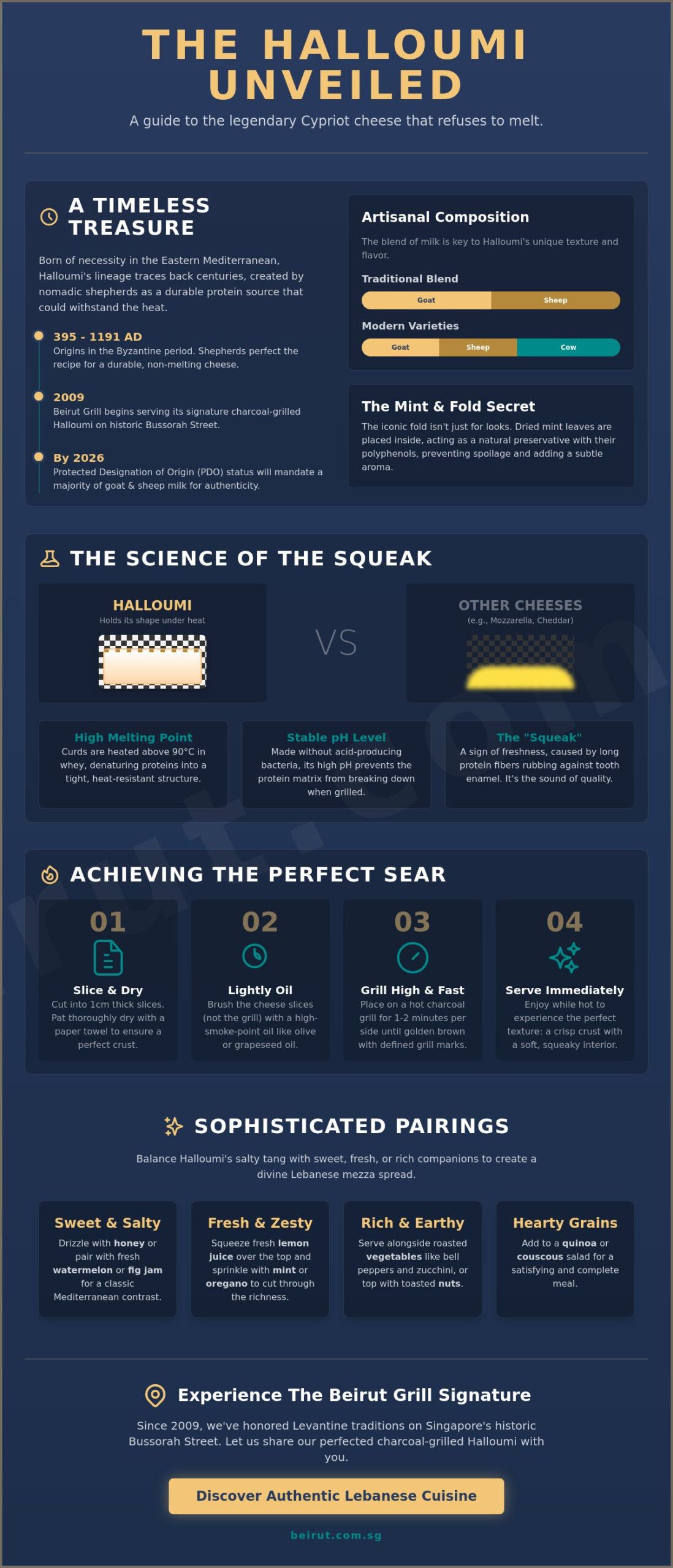
Deep within the sun-drenched landscapes of the Eastern Mediterranean, halloumi cheese emerged as a culinary masterpiece born of necessity. This semi-hard, unripened brined cheese has sustained generations, tracing its lineage back to the medieval Byzantine period between 395 and 1191 AD. For the nomadic shepherds of the region, creating a durable protein source that could withstand the heat without immediate refrigeration was vital. They perfected a recipe using a robust blend of goat and sheep milk, though modern varieties often include cow milk to meet contemporary global demand. This unique composition gives the cheese its famous high melting point, allowing it to be grilled or fried to golden perfection without losing its structural integrity.
The distinctive characteristics of this “squeaky treasure” are not merely aesthetic choices. Its folded appearance and the inclusion of dried mint are signatures of ancient preservation methods that have survived the test of time. When you explore The Origins and Heritage of Halloumi Cheese, you’re tasting a tradition that has remained largely unchanged for centuries. At Beirut Grill, where we’ve celebrated authentic Lebanese flavors on historic Bussorah Street since 2009, we respect these time-honored techniques that transform simple curds into a divine dining experience.
A Tale of Two Cultures: Cyprus and the Levant
The history of halloumi is a beautiful tapestry woven between Cyprus and the Levant. Its etymology reflects this shared heritage, evolving from the Egyptian Arabic word “khallum” to the Greek “halloumi.” While Cyprus is its recognized birthplace, the cheese became an essential staple across Lebanese and Middle Eastern tables, often serving as the centerpiece of a traditional mezza. Quality standards are becoming even more stringent for importers in Singapore and beyond. By 2026, the Protected Designation of Origin (PDO) status will fully dictate that authentic versions must contain a majority of goat and sheep milk, ensuring the heritage remains untainted by industrial shortcuts.
The Traditional Brining and Folding Process
Artisan production relies on a meticulous technique where curds are heated in their own whey, a process that creates the cheese’s signature elastic texture. Before being submerged in a heavy salt-brine, the cheese is hand-folded into its iconic semi-circle shape. This isn’t just for visual appeal. Traditional makers place dried mint leaves inside the fold because mint contains natural polyphenols that act as a preservative. This prevents spoilage while infusing a subtle, cooling aroma into the heart of the block. This intensive salt-brining process provides the halloumi cheese with its incredible longevity and that sharp, tangy finish that perfectly balances the richness of the Mediterranean diet.
Why Halloumi Doesn’t Melt: The Science Behind the Squeak
Since 2009, guests at Beirut Grill on historic Bussorah Street have marveled at the golden-brown slabs of halloumi cheese served hot from our kitchen. Unlike mozzarella or cheddar that collapse into a puddle, halloumi holds its shape with stubborn pride even when exposed to intense flames. This resilience allows our chefs to sear it until a savory, caramelized crust forms. This transformation is the Maillard reaction, where amino acids and sugars react under heat to create the complex, nutty flavor profile that defines our grilled appetizers. Why Halloumi Doesn’t Melt is rooted in its unique production method, where the curd is poached in hot whey before being placed in brine.
Protein Structures and High-Heat Cooking
During the artisanal crafting process, the cheese curds are heated to temperatures often exceeding 90 degrees Celsius. This intense heat denatures the proteins, creating a tightly knit structure that resists flowing when reheated later. Because halloumi is made without the acid-producing bacteria found in melting cheeses, its internal pH remains high, preventing the protein matrix from breaking down. The resilient texture is forged by a strong protein-whey bond that creates a heat-resistant scaffold within the cheese.
The Sensory Experience of the Squeak
The characteristic “squeak” is a hallmark of freshness that delights the palate during a divine dining experience. This sound occurs when long-chain protein fibers rub against the smooth enamel of your teeth, creating a rhythmic friction. As the cheese ages or the pH level drops, this sound often diminishes, making a loud squeak a reliable indicator of a high-quality, young halloumi. If you find the sensation too intense, soaking the slices in a splash of lemon juice for 10 minutes can soften the fibers and temper the sound.
While halloumi shares non-melting traits with Indian Paneer or Latin American Queso Blanco, its briny depth and elastic bite are entirely distinct. While Paneer is often pressed and crumbly, halloumi remains juicy and springy. It is the undisputed “squeaky treasure” of the Mediterranean. You can experience this culinary phenomenon firsthand by sampling our signature grilled halloumi while soaking up the ambiance under the shadow of the Sultan Mosque.
- Maillard Reaction: Creates the iconic golden crust.
- High pH Level: Prevents the cheese from liquefying.
- Protein Friction: The source of the famous auditory squeak.
Mastering the Art of Grilling and Searing Halloumi
Since 2009, Beirut Grill has served as a sanctuary for those seeking the authentic flavors of the Beqaa Valley in the heart of Singapore. Achieving the perfect sear on halloumi cheese is a ritual that balances heat with timing. It begins with the precise preparation of the curd itself. You should slice the cheese into uniform pieces, aiming for a thickness of exactly 1cm. This specific measurement ensures that the exterior develops a robust, golden crust while the heart remains tender and elastic. It’s the secret to that iconic texture our guests have adored for over a decade.
Managing the intensity of the brine is a hallmark of a seasoned chef. If you prefer a milder profile, soak the slices in a bowl of cold water for 15 to 20 minutes before cooking. This draws out the excess salt used in the traditional preservation process. Pat them dry thoroughly with a lint-free cloth or paper towel. Moisture is the enemy of a crisp finish. When selecting your cooking fat, consider the desired flavor profile. Dry searing in a high-quality non-stick pan allows the natural milky fats to caramelize. Alternatively, a light brush of premium olive oil adds a layer of Mediterranean richness that complements the salty notes of the cheese.
Pan-Searing vs. Charcoal Grilling
On historic Bussorah Street, we often contrast the precision of the skillet with the soul of the flame. Pan-searing in a heavy cast-iron pan produces a uniform, glass-like crust that offers a satisfying crunch. It’s an accessible kitchen technique that rewards patience and steady temperature control. Charcoal grilling, however, is where the magic of the Levant truly awakens. The radiant heat from the coals imparts a sophisticated, smoky aroma that lingers on the palate. You must maintain a medium-high temperature; heat that’s too aggressive will char the outside before the center has a chance to soften into a molten delight.
Common Preparation Mistakes to Avoid
The most frequent error is overstaying the welcome on the heat. Overcooked halloumi loses its signature “squeak” and becomes tough, resembling rubber more than a divine mezza. You should pull the slices from the grill the moment they reach a deep amber color. Because the proteins in halloumi cheese begin to set as they cool, you must serve it immediately. Waiting even five minutes can diminish the sensory experience. Finally, avoid using excessive oil. The cheese possesses its own internal fats; adding too much liquid can boil the cheese rather than sear it, masking the delicate grassy notes of the goat and sheep milk blend.
Beyond the Grill: Creative Pairings and Serving Suggestions
Against the majestic backdrop of the Sultan Mosque on historic Bussorah Street, we’ve spent years since 2009 perfecting the art of the Mediterranean feast. While halloumi is divine when simply grilled, its true magic lies in its remarkable versatility. This golden, squeaky treasure serves as a culinary bridge between savory and sweet. Drizzling warm halloumi cheese with aromatic honey or a tart pomegranate molasses creates a sophisticated profile that dances on the palate. For a refreshing contrast, try pairing the salty cubes with chilled watermelon. The fruit’s crisp hydration cuts through the richness of the cheese perfectly, making it a favorite for Singapore’s tropical climate.
Beyond appetizers, halloumi transforms vegetarian entrees. Its dense, “meaty” texture provides a satisfying bite that pleases even the most dedicated carnivores. In traditional Lebanese households, it’s a breakfast icon. We often serve it alongside soft-boiled eggs and briny olives for a protein-rich start to the day. This cheese doesn’t just sit on the plate; it commands attention as the star of the meal.
Halloumi in a Traditional Mezza Spread
Our award-winning mezza experience centers on balance. We recommend pairing the warmth of grilled halloumi cheese with the vibrant, citrus-forward notes of authentic Tabbouleh. The parsley’s freshness cleanses the palate between bites of the savory cheese. It also acts as a beautiful companion to velvet-smooth authentic Lebanese hummus or smoky Baba Ghanoush. For those seeking a lighter, protein-packed vegetarian feast, halloumi offers a delightful alternative to crispy falafel, ensuring every guest feels indulged.
Sophisticated Beverage Pairings
To elevate your dining experience, look toward the Beqaa Valley. A crisp Lebanese white wine or a delicate Rosé from Chateau Kefraya provides the necessary acidity to balance the cheese’s saltiness. For a truly traditional experience, pair your mezza with Arak. The distinct anise notes of this “Lion’s Milk” slice through the fat of the cheese with clinical precision. If you prefer a non-alcoholic digestive, our Moroccan Mint Tea offers a fragrant, soothing end to a late-night feast. These pairings are designed to slow you down and encourage you to soak up the ambiance of our boutique space.
Ready to experience these authentic flavors yourself? Book your table at Beirut Grill and discover why we’ve been a hidden gem on Bussorah Street for over a decade.
The Charcoal-Grilled Halloumi Experience at Beirut Grill
Nestled along the vibrant, historic Bussorah Street, Beirut Grill has remained a dedicated curator of Lebanese heritage since 2009. Our signature halloumi cheese isn’t just a dish; it’s a sensory journey back to the sun-drenched hills of the Levant. We prepare each slice with meticulous care, grilling it until the exterior achieves a perfect golden-brown lattice while the interior retains its iconic, satisfying squeak. Served alongside crisp, hand-picked vegetables and finished with a delicate drizzle of premium extra virgin olive oil, it represents the pinnacle of Mediterranean simplicity. This award-winning approach has made our establishment a cornerstone for those seeking an authentic taste of the Middle East in Singapore.
Our Heritage-Driven Culinary Approach
Our chefs remain steadfast in their use of traditional charcoal grills to prepare our halloumi cheese. This age-old method imparts a distinctive, smoky depth that modern gas stoves simply cannot replicate. By sourcing premium ingredients directly from the region, we ensure that every bite carries the authentic spirit of the Mediterranean. This dedication to quality is a central pillar of our philosophy regarding Middle Eastern food Singapore, where we bridge the gap between historic traditions and the local dining scene. Our kitchen team draws on years of collective experience to balance the natural saltiness of the cheese with the nuanced aromas of the open flame. We believe that the best flavors come from respecting the ingredients and the time-honored techniques passed down through generations.
A Divine Dining Destination for Connoisseurs
With the majestic Sultan Mosque as your backdrop, soaking up the evocative ambiance of our restaurant becomes an integral part of the meal. Beirut Grill is often described by our regulars as a hidden gem, a place where the hustle of the city fades into the background. Our pork-free menu ensures an inclusive environment for diverse groups to gather and share in the joy of a curated mezza selection. Whether you’re a seasoned connoisseur or a curious newcomer, the indulgence of our critically acclaimed hospitality awaits. The combination of rhythmic Lebanese music, the scent of charcoal, and the sight of historic architecture creates a truly transporting atmosphere. We invite you to secure your table for a divine dining experience that rewards your curiosity with the finest flavors of Lebanon. It’s a space designed for lingering conversations and the celebration of authentic culinary artistry.
Savor the Golden Squeak on Historic Bussorah Street
From its ancient heritage in the Mediterranean to the fascinating science behind its signature texture, halloumi cheese remains a versatile masterpiece of the culinary world. You’ve discovered how its unique high melting point allows for a perfect golden crust and why creative pairings can elevate a simple mezza into a gourmet feast. Understanding the craftsmanship behind this cheese is only the beginning of the journey.
Located on historic Bussorah Street with the majestic Sultan Mosque as your backdrop, Beirut Grill has been perfecting the art of Lebanese hospitality since 2009. Our award-winning kitchen utilizes traditional charcoal-grilling techniques to bring out the smoky, indulgent flavors of this Mediterranean treasure. To complete your sensory journey, you can pair your meal with a selection from our curated cellar of Lebanese wines or a glass of traditional Arak. It’s a divine dining experience that rewards your curiosity with every bite.
Experience the authentic taste of Charcoal-Grilled Halloumi at Beirut Grill
We look forward to welcoming you for an unforgettable Middle Eastern journey right here in the heart of Singapore.
Frequently Asked Questions
Is halloumi cheese healthy?
Halloumi cheese provides a significant nutritional boost when enjoyed as part of a balanced Mediterranean diet. A standard 100g serving contains 22 grams of protein and roughly 700 milligrams of calcium; this fulfills 70 percent of your daily recommended calcium intake. While it’s high in sodium, its role in Lebanese cuisine since our opening in 2009 emphasizes quality and authentic heritage over quantity.
Can you eat halloumi cheese raw?
You can eat halloumi cheese raw, though its signature magic truly awakens under the flame. In its uncooked state, the texture is firm and the flavor is intensely salty. Most connoisseurs in Singapore prefer it grilled or pan fried. The heat softens the interior and creates a divine, golden crust that heightens the sensory experience and provides that iconic squeaky texture.
Why is halloumi cheese so salty?
The intense saltiness of halloumi cheese stems from the traditional brining process used to preserve it in the warm Mediterranean climate. Typically, this cheese contains a 3 percent salt concentration to ensure longevity. If you find the flavor too sharp, soaking the block in fresh water for 20 minutes reduces the sodium level significantly before you begin the cooking process.
How do you store halloumi cheese after opening?
Store your cheese in the refrigerator submerged in its original brine or a light saltwater solution after opening. This method keeps the cheese moist and flavorful for up to 14 days. If you’ve discarded the liquid, wrap the block tightly in parchment paper followed by an airtight container to prevent it from drying out or absorbing other scents in your kitchen.
Is halloumi cheese suitable for vegetarians?
Most halloumi cheese sold in Singapore supermarkets today is suitable for vegetarians because producers use microbial rennet. Historically, traditional recipes relied on calf rennet, so you should check the label for a specific vegetarian certification. At Beirut Grill, we take pride in sourcing authentic ingredients that respect diverse dietary preferences while maintaining our high standards of award-winning Lebanese hospitality.
What is the best substitute for halloumi cheese?
Paneer is the most effective substitute for halloumi cheese because it shares a similarly high melting point. While paneer lacks the same salty punch, it won’t melt into a puddle when grilled at high temperatures. Other options include Queso Blanco or firm Tofu, though neither captures the exact squeak that has made this cheese a treasure on historic Bussorah Street.
How long should you grill halloumi for?
Grill your cheese for approximately 2 to 3 minutes on each side over medium-high heat. You’re looking for a deep, golden-brown char that signals the exterior has caramelized perfectly. This short duration ensures the inside becomes soft and pliable without losing its structural integrity, providing that mouth-watering contrast our guests have loved since we established our kitchen in 2009.
Can halloumi cheese be frozen?
You can freeze halloumi cheese for up to 6 months without compromising its unique texture. Wrap the block tightly in cling wrap and place it in a heavy-duty freezer bag to prevent freezer burn. When you’re ready to indulge, thaw it in the refrigerator for 24 hours. This allows the moisture to redistribute, ensuring it remains perfect for the grill or pan.